
How Long Do Probiotics Take to Work in Dogs? Timeline & Signs
Written by: Dr. Akram Khan, DVM
Medically Reviewed by: Dr. Muhammad Saeed, PhD
Last updated on September 08, 2026
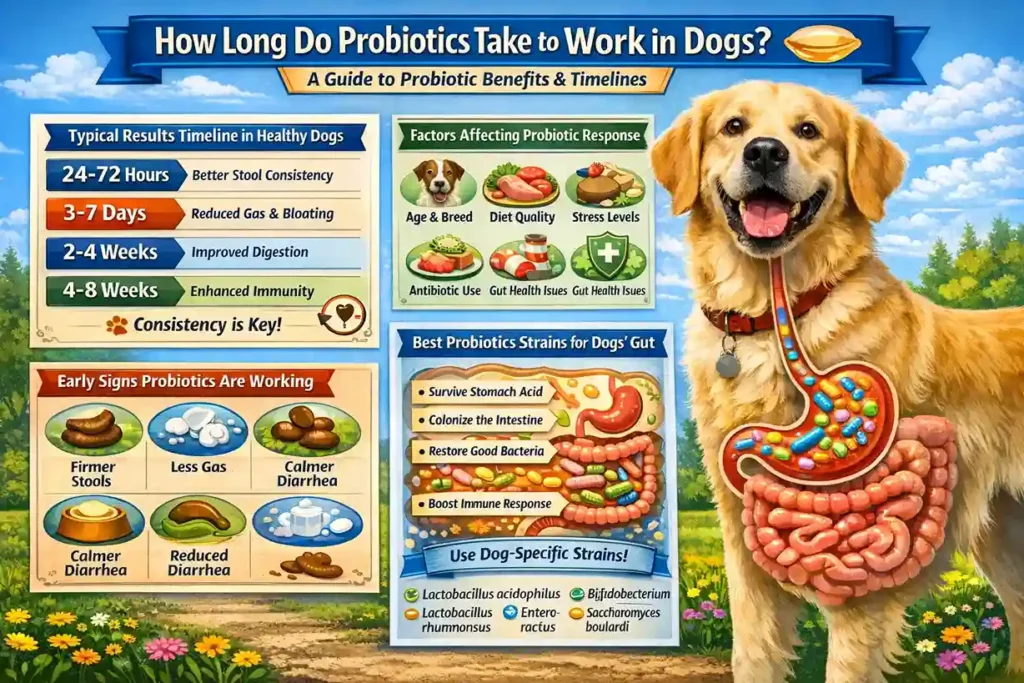
When your pet is dealing with a sudden bout of loose stool, it is natural to wonder how fast do probiotics stop diarrhea in dogs and how long can a dog have diarrhea before it becomes a serious medical concern? Many pet parents are looking for how long for probiotics to work in dogs to bring their companion some much-needed relief. While minor issues like a flare-up from a sensitive stomach can settle down fairly quickly, deeper issues like chronic dog colitis or recovery from severe ADHD dogs require a more patient approach. Achieving a healthy fecal score and lasting wellness involves a step-by-step internal recovery process, which varies depending on several critical biological factors.
How long do probiotics take to work in dogs?
Probiotics may start working in dogs within 24–72 hours for mild diarrhea or loose stool. Gas and bloating may improve within 3–7 days, while gut balance, immune support, and long-term digestive benefits usually take 2–8 weeks. Results depend on the probiotic strain, dose, diet, and the dog’s health condition.
Quick Timeline: When Dog Probiotics May Start Working
Dog probiotics do not work at the same speed for every dog. The timeline depends on the cause of the problem, the probiotic strain, CFU dose, diet, stress level, antibiotic use, and whether the dog has a short-term upset stomach or a chronic digestive condition.
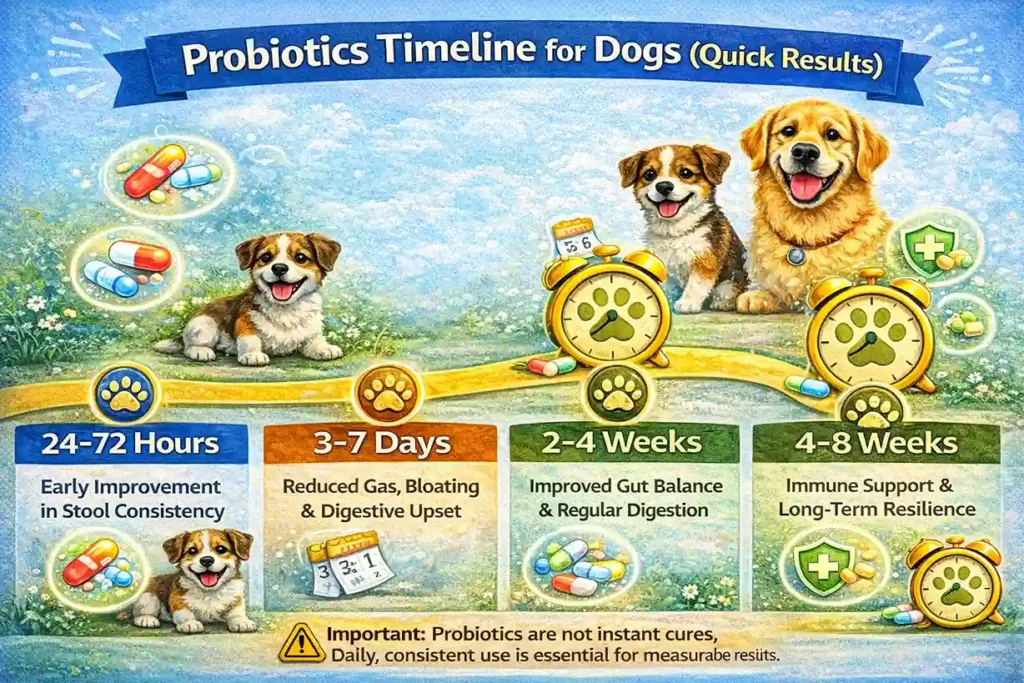
A simple timeline looks like this:
- 24–72 hours: mild loose stool may start improving
- 3–7 days: gas, bloating, and stomach gurgling may reduce
- 1–2 weeks: stool consistency may become more stable
- 2–4 weeks: gut balance and digestion may improve
- 4–8 weeks: longer-term digestive and immune support may become clearer
If your dog has bloody diarrhea, repeated vomiting, weakness, dehydration, black stool, severe lethargy, or symptoms that worsen, do not wait for probiotics to work. Contact a veterinarian.
How Long Do Probiotics Take to Work in Dogs With Diarrhea?
For mild diarrhea or loose stool, dog probiotics may start helping within 24–72 hours. Some dogs show firmer stool quickly, especially when diarrhea is related to stress, diet change, antibiotics, or a mild gut imbalance.
However, probiotics do not stop every type of diarrhea. Diarrhea caused by parasites, infections, pancreatitis, toxin exposure, foreign objects, AHDS, food intolerance, IBD, or other disease may need veterinary treatment.
Probiotics may work faster when:
- The diarrhea is mild
- The dog is still eating and drinking
- There is no blood in the stool
- Vomiting is absent or mild
- The probiotic is dog-specific
- The dose follows the product label
- The diet is gentle and consistent
Call a veterinarian if diarrhea lasts more than 24–48 hours, becomes watery or bloody, comes with vomiting, or affects a puppy, senior dog, small dog, or dog with chronic illness.
How Long Does Probiotic Paste Take to Work in Dogs?
Probiotic paste for dogs is often used for short-term digestive upset because it is easy to give and may include probiotics, prebiotics, binders, or gut-support ingredients.
Some dogs may show stool improvement within 24–72 hours, especially with mild loose stool. Gas, bloating, and stomach rumbling may take several days to improve.
The response depends on:
- the cause of diarrhea
- product ingredients
- dose by body weight
- how often the paste is given
- whether vomiting is present
- whether the dog is eating and drinking
- whether another disease is causing symptoms
If a probiotic paste does not help within a few days, or symptoms worsen, veterinary advice is needed. Paste should not be used as a substitute for emergency care when diarrhea is bloody, black, watery, repeated, or linked with weakness or vomiting.
What Are Probiotics for Dogs?
Probiotics for dogs are dog-specific supplements containing live beneficial microorganisms designed to support the canine gut microbiome.
These beneficial bacteria help:
- Restore gut flora balance
- Improve digestion and nutrient absorption
- Support immune system regulation
- Reduce diarrhea, gas, bloating, and gut inflammation
- Stabilize stool consistency
Unlike fermented foods or yogurt, dog-specific probiotics contain strains proven to survive stomach acid and colonize the canine intestine effectively.
How Long Do Probiotics Take to Work in Dogs?
Typical Results Timeline in Healthy Dogs
- 24–72 hours:
Early improvement in stool consistency (especially during mild diarrhea) - 3–7 days:
Reduced gas, bloating, stomach gurgling, and digestive discomfort - 2–4 weeks:
Improved gut balance, more regular bowel movements, better digestion - 4–8 weeks:
Long-term benefits such as immune support, reduced inflammation, and improved gut resilience
🐶 Important: Probiotics are not instant cures. Daily, consistent use is essential for measurable results.
Why Some Dogs Respond Faster Than Others
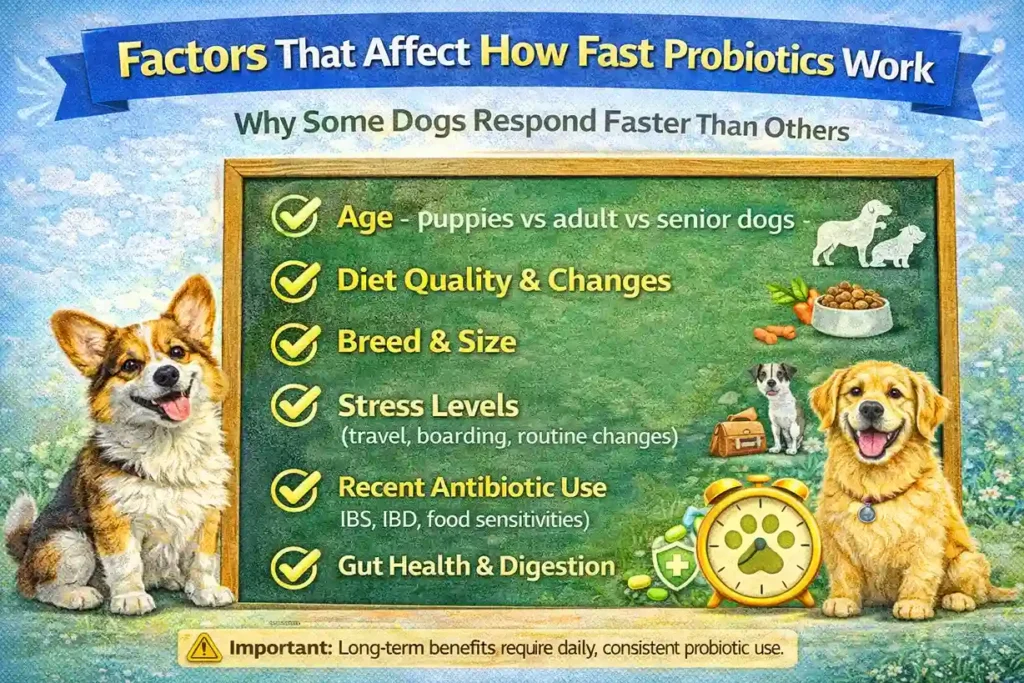
Not all dogs respond at the same speed. The probiotic response timeline varies based on several biological and lifestyle factors.
Key Factors That Affect How Fast Probiotics Work
- Age (puppies vs adult dogs vs senior dogs)
- Size and breed
- Diet quality and recent diet changes
- Stress levels (travel, boarding, routine changes)
- Antibiotic use and recovery phase
- Existing gut imbalance, IBS, IBD, or food sensitivities
- Immune system strength
Dogs recovering from antibiotic-associated diarrhea or stress-related digestive upset often respond faster—especially when probiotics are paired with prebiotics or synbiotics.
What Changes Should You Expect First?
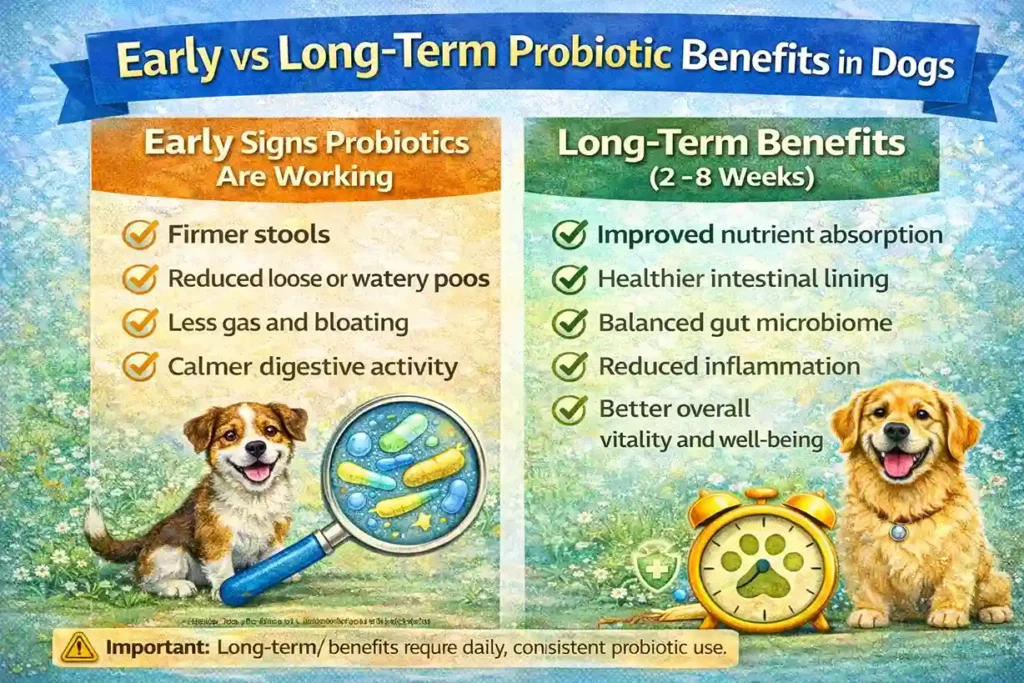
Early Signs Probiotics Are Working (First 7 Days)
- Firmer stools
- Reduced loose or watery poos
- Less gas and bloating
- Calmer digestive activity
Long-Term Benefits (2–8 Weeks)
- Improved nutrient absorption
- Healthier intestinal lining
- Balanced gut microbiome
- Reduced inflammation
- Better overall vitality and well-being
Signs Probiotics Are Working in Dogs
You may notice several signs that probiotics are helping your dog’s digestion.
Early signs may include:
- firmer stool
- fewer loose stools
- less gas
- less bloating
- less stomach gurgling
- better appetite
- more normal bathroom routine
Longer-term signs may include:
- more consistent stool quality
- fewer digestive flare-ups
- better tolerance during diet transitions
- improved recovery after antibiotics
- less stress-related digestive upset
- improved overall gut stability
A helpful way to track progress is to monitor stool consistency, frequency, gas, appetite, energy, vomiting, and any mucus or blood in the stool.
If the stool becomes worse, watery, bloody, black, or jelly-like, stop guessing and call your veterinarian.
How Probiotics Work Inside the Canine Digestive System
After ingestion, probiotics travel through the stomach and reach the small intestine and colon, where they interact with existing gut bacteria.
Their key actions include:
- Restoring beneficial bacteria populations
- Supporting digestive enzyme activity
- Enhancing gut barrier integrity
- Modulating immune responses
- Suppressing harmful bacteria growth
Over time, this leads to more stable digestion and improved stool quality.
Best Probiotic Strains for Faster Results in Dogs
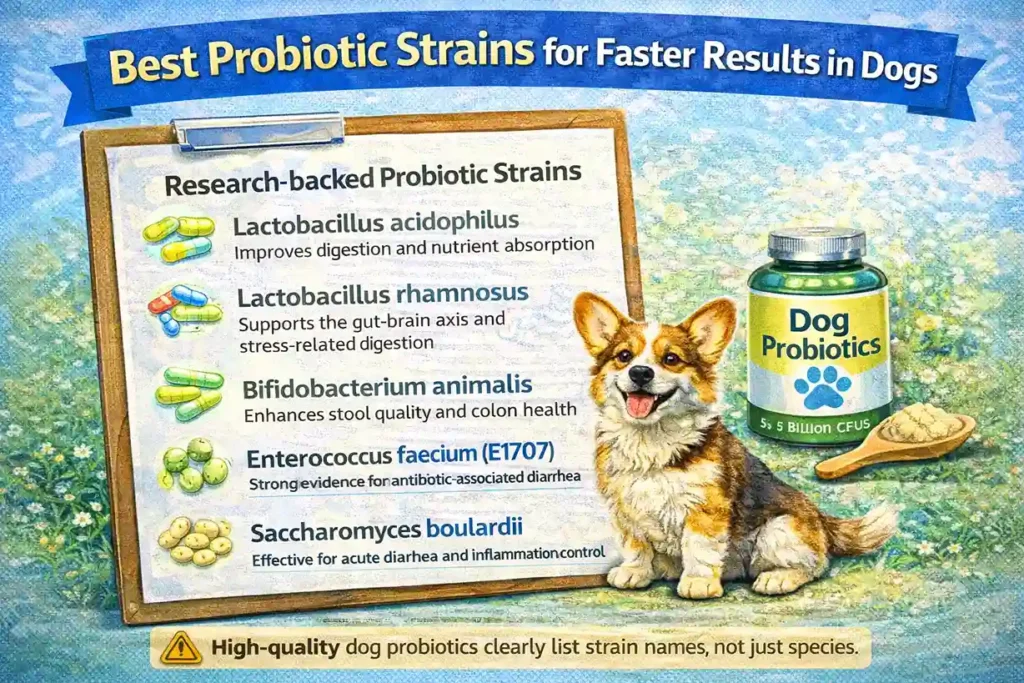
Probiotic benefits are strain-specific, not generic. Using the right strains dramatically affects how quickly results appear.
Research-Backed Probiotic Strains for Dogs
- Lactobacillus acidophilus – Improves digestion and nutrient absorption
- Lactobacillus rhamnosus – Supports the gut–brain axis and stress-related digestion
- Bifidobacterium animalis – Enhances stool quality and colon health
- Enterococcus faecium (E1707)—Strong evidence for antibiotic-associated diarrhea
- Saccharomyces boulardii – Effective for acute diarrhea and inflammation control
High-quality dog probiotics clearly list strain names, not just species.
Dosage, CFU Count, and Why They Matter
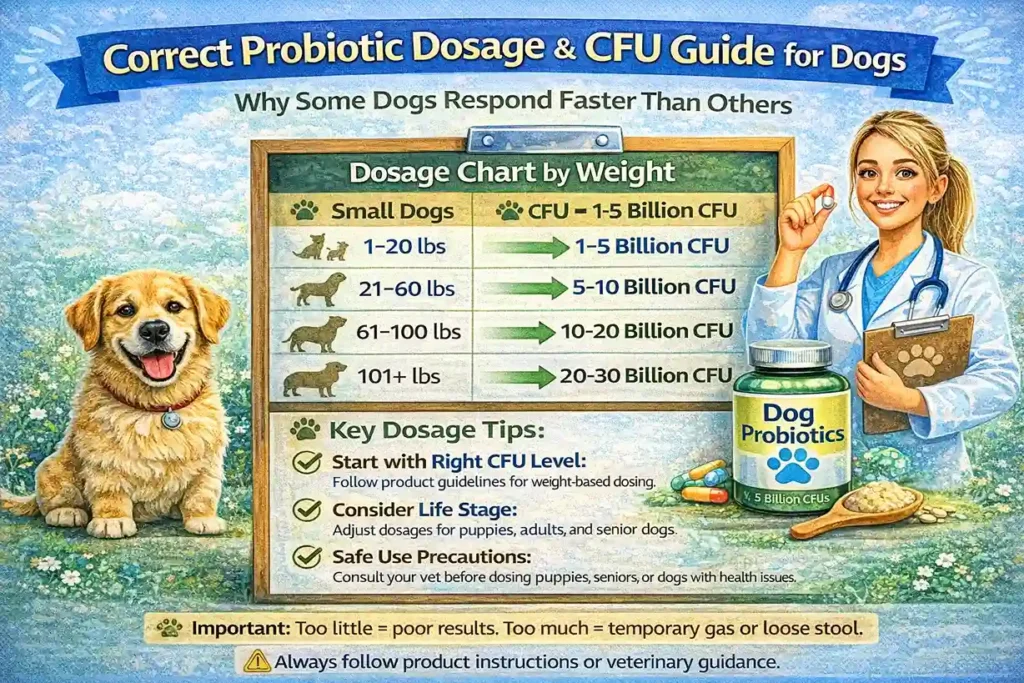
Key Dosage Considerations
- CFU count (colony-forming units)
- Dog’s body weight
- Life stage (puppy, adult, senior)
- Health condition and severity
Too little = poor results
Too much = temporary gas or loose stools
⚠️ Always follow product instructions or veterinary guidance.
What Time of Day Should I Give My Dog Probiotics?
The best time of day to give your dog probiotics is the time you can give them consistently. For most dogs, probiotics are commonly given with a meal because food can make them easier to tolerate.
You can give probiotics:
- with breakfast
- with dinner
- mixed into food
- at the time recommended on the label
- at the time your veterinarian recommends
If your dog is taking antibiotics, ask your veterinarian about timing. In many cases, probiotics are separated from antibiotics by a few hours so the antibiotic is less likely to interfere with the probiotic.
Consistency matters more than the exact hour of the day.
Should Dogs Take Probiotics With Food or on an Empty Stomach?
Many dogs tolerate probiotics better with food. Giving probiotics with a meal may reduce stomach upset and make powders, capsules, chews, or paste easier to take.
Giving probiotics with food may be better if:
- Your dog has a sensitive stomach
- Your dog gets nausea easily
- The product label says to mix with food
- Your dog refuses capsules or powders alone
- Your dog is starting probiotics for the first time
Some probiotic products may be designed for use with or without food. Always follow the label instructions.
If your dog vomits after taking probiotics on an empty stomach, try giving the next dose with food and ask your veterinarian if vomiting continues.
Powder, Paste, Chews, or Capsules: Which Works Fastest?
No probiotic form is automatically the fastest for every dog. The most important factors are strain, CFU dose, product quality, dog weight, and the cause of the digestive problem.
Probiotic paste:
Often used for short-term loose stool or acute digestive upset. It may be easy to give and may include additional gut-support ingredients.
Probiotic powder:
Easy to mix with food and useful for daily dosing. It can be good for dogs that eat reliably.
Probiotic chews:
Convenient for picky dogs, but check the ingredients, calories, and CFU amount.
Probiotic capsules:
Useful for some medium- or large-sized dogs, but may be harder to give to picky dogs.
The best product is the one that matches your dog’s condition, weight, tolerance, and veterinarian’s advice. Do not choose only by marketing claims like “fastest” or “strongest.”
Best Forms of Probiotics for Dogs
Different dogs tolerate different probiotic formats.
Common Dog Probiotic Forms
- Probiotic powder (easy to mix with food)
- Probiotic chews or soft chews (high compliance)
- Probiotic paste (acute digestive upset)
- Probiotic capsules
- Shelf-stable probiotics (better storage and consistency)
📌 Choose vet-approved, dog-specific probiotics, not human supplements.
Can Diet Speed Up Probiotic Results?
Yes—diet plays a major role in probiotic effectiveness.
Probiotics work best alongside:
- Prebiotics (fuel for good bacteria)
- Synbiotics (probiotics + prebiotics)
- Adequate dietary fiber
- High-quality dog food
- Minimal artificial fillers and additives
Fermented foods may help in small amounts but should not replace probiotic supplements.
Safety, Side Effects, and When to See a Vet
Most dogs tolerate probiotics very well.
Possible Mild Side Effects
- Temporary gas
- Mild bloating
- Short-term stool changes
Consult a veterinarian if:
- Diarrhea lasts longer than 48 hours
- Blood or mucus appears in stools
- Your dog has chronic IBS or IBD
- You are dosing puppies or senior dogs
- Symptoms worsen instead of improving
Can Probiotics Cause Diarrhea in Dogs?
Yes, probiotics can sometimes cause temporary loose stool or diarrhea, especially when started too quickly, given at a high dose, or combined with a sudden diet change.
Possible reasons include:
- dose started too high
- The dog has a sensitive stomach
- added prebiotics or fiber in the product
- dairy or flavoring ingredients
- Multiple supplements started at once
- The original illness is worsening
Mild gas or soft stool may improve as the dog adjusts. But stop and ask a veterinarian if diarrhea becomes watery, bloody, or black; severe; or comes with vomiting, weakness, dehydration, or loss of appetite.
Probiotics are usually well tolerated, but they are not risk-free for every dog, especially dogs with immune suppression, critical illness, severe GI disease, or chronic conditions.
When Probiotics Are Not Enough
Probiotics can support gut balance, but they cannot treat every digestive problem. Some dogs need veterinary diagnosis and treatment instead of waiting for supplements to work.
Do not rely only on probiotics if your dog has:
- bloody diarrhea
- black or tarry stool
- repeated vomiting
- severe lethargy
- weakness or collapse
- pale gums
- dehydration
- abdominal pain
- diarrhea lasting more than 24–48 hours
- weight loss
- poor appetite
- symptoms in a puppy or senior dog
- known IBD, pancreatitis, kidney disease, or immune problems
Probiotics are supportive care. They are not a replacement for veterinary treatment when warning signs are present.
Final Verdict: How Long Should You Wait Before Seeing Results?
Most dogs show noticeable improvement within 3–7 days, while full digestive and immune benefits develop over 4–8 weeks of consistent use.
Best Results Come From:
✔ Dog-specific probiotics
✔ Research-backed strains
✔ Correct CFU dosage
✔ Daily consistency
✔ Veterinary guidance
When used correctly, probiotics support healthier digestion, reduced diarrhea, improved stool quality, immune balance, and long-term gut health.
Medical Disclaimer
This content is for educational purposes only and does not replace professional veterinary advice. Always consult a licensed veterinarian for diagnosis and treatment.
Frequently Asked Questions (FAQs)
How long do probiotics take to work in dogs?
Probiotics may start helping mild loose stool within 24–72 hours. Gas and bloating may improve within 3–7 days, while gut balance and longer-term digestive support may take 2–8 weeks.
How long do probiotics take to work in dogs with diarrhea?
For mild diarrhea, some dogs improve within 24–72 hours. If diarrhea is watery, bloody, repeated, or comes with vomiting, weakness, or dehydration, contact a veterinarian instead of waiting.
How long does probiotic paste take to work in dogs?
Probiotic paste may help mild loose stool within 24–72 hours, depending on the product and cause of diarrhea. If symptoms worsen or do not improve, ask a veterinarian.
What time of day should I give my dog probiotics?
Give probiotics at a consistent time each day. Many owners give them breakfast or dinner. If your dog is taking antibiotics, ask your veterinarian whether to separate the doses by a few hours.
Should I give my dog probiotics with food or on an empty stomach?
Many dogs tolerate probiotics better with food. Mixing probiotics with a meal may reduce stomach upset and make the product easier to give. Always follow the product label.
How often should I give my dog probiotics?
Many dog probiotics are given once daily, but frequency depends on the product label, dog weight, and reason for use. Dogs with diarrhea, antibiotics, IBD, or chronic digestive issues may need vet-guided dosing.
Can probiotics cause diarrhea in dogs?
Yes, some dogs may develop temporary loose stool, gas, or bloating when starting probiotics. If diarrhea becomes severe, bloody, watery, or comes with vomiting or weakness, call a veterinarian.
How do I know probiotics are working for my dog?
Signs may include firmer stool, less gas, less bloating, fewer loose stools, better appetite, and more regular bathroom habits. Long-term improvement may take several weeks.
How long should a dog stay on probiotics?
Short-term digestive upset may need probiotics for 7–14 days, while antibiotic recovery may take a few weeks. Chronic gut problems may require longer use under veterinary guidance.
When should I stop probiotics and call a vet?
Stop guessing and call a vet if your dog develops bloody stool, black stool, repeated vomiting, severe diarrhea, dehydration, weakness, pale gums, poor appetite, or symptoms lasting more than 24–48 hours.