
How to Tell If Dog Diarrhea Is From Parasites
Written by: Dr. Akram Khan, DVM
Medically Reviewed by: Dr. Khalid Mehmood, PhD (Assistant Professor in Clinical Veterinary Medicine)
Last updated on October 20, 2026
How to Tell If Dog Diarrhea Is from Parasites
If you are wondering how to tell if dog diarrhea is from parasites, the first signs are usually changes in your dog’s stool, energy, and appetite. Dog diarrhea from parasites can happen when organisms like Giardia, hookworms, roundworms, whipworms, or coccidia irritate the intestines and interfere with normal digestion. Common intestinal parasite symptoms in dogs may include watery diarrhea, weight loss, bloating, vomiting, dehydration, and dog diarrhea with mucus and blood. Because these signs can look similar to food intolerance, bacterial infection, or stress-related stomach upset, a fecal test for dog parasites is often the most reliable way to confirm the cause. In this guide, you’ll learn the warning signs, how vets diagnose parasite-related diarrhea, the common treatment options, and practical steps to help prevent reinfection.
Dog diarrhea may be caused by parasites if your dog has watery stool, mucus or blood in poop, weight loss, vomiting, bloating, low energy, or dehydration. Common parasites include Giardia, hookworms, roundworms, whipworms, and coccidia. A veterinarian can confirm the cause with a fecal test, Giardia antigen test, or PCR test.
What Are the Symptoms of Dog Diarrhea from Parasites?
What Are the Most Common Signs of Intestinal Parasites in Dogs?
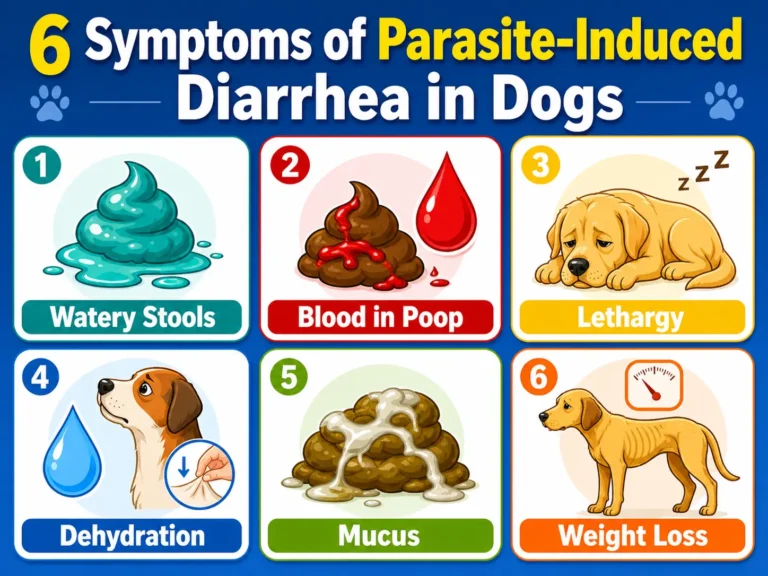
Unexpected diarrhea characterized by variable stool consistency—from soft, watery stools to mucous or bloody feces—is frequently seen with intestinal parasite infections. Clinical symptoms often include:
- Acute or intermittent diarrhea
- Stool containing mucus or blood
- Weight loss or poor body condition
- Lethargy or low energy
- Abdominal discomfort
- Dehydration and electrolyte imbalance
Cryptic or mild infections can present with inconsistent shedding of parasites (e.g., Giardia duodenalis), making signs intermittent and elusive without rigorous testing.
Why Are Puppies More Likely to Get Diarrhea from Parasites?
Younger dogs and animals with suppressed immunity are more likely to show pronounced symptoms due to high parasite burdens and less developed immune defenses. A field study in Germany documented high rates of endoparasitic infections in young dogs, underscoring the clinical importance of early screening.
What Causes Dog Diarrhea from Intestinal Parasites?
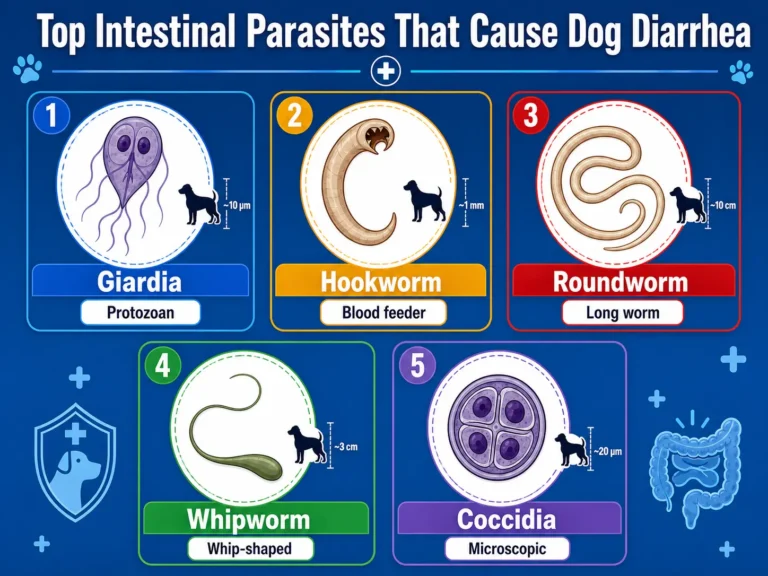
Dog diarrhea caused by intestinal parasites is typically due to infections from Giardia, hookworms, roundworms, whipworms, or coccidia. These parasites disrupt the intestines, leading to symptoms like watery diarrhea, blood or mucus in stools, dehydration, and weight loss. Parasites are typically contracted from contaminated water, soil, or feces. Proper fecal testing is critical to diagnosing the cause, and appropriate treatment usually involves antiparasitic medications and supportive care.
Which Parasites Cause Diarrhea in Dogs?
Can Giardia Cause Diarrhea in Dogs?
Giardia duodenalis—a flagellated protozoan parasite commonly implicated in watery diarrhea in dogs.
Dogs typically ingest infectious cysts from contaminated water, soil, or feces. Once in the intestine, the parasite adheres to mucosa, disrupting nutrient absorption and intestinal integrity.
Can Hookworms Cause Bloody Diarrhea in Dogs?
Ancylostoma caninum, Uncinaria stenocephala — blood feeding nematodes that can cause diarrhea, anemia, and protein loss.
Hookworm infection can present with dark, tarry stools (melena) when bleeding is significant.
Can Whipworms Cause Chronic Diarrhea in Dogs?
Trichuris vulpis—a whipworm residing in the colon and associated with chronic diarrhea often containing mucus and blood. Diagnosis relies on fecal flotation methods due to intermittent shedding.
Can Roundworms Cause Diarrhea in Puppies and Adult Dogs?
Toxocara canis—one of the most common intestinal nematodes in dogs worldwide, associated with diarrhea, poor condition, and zoonotic risk (visceral larva migrans).
Can Coccidia Cause Diarrhea in Puppies?
Coccidia are single-celled protozoans that can cause diarrhea with mucus, especially in young dogs.
Why Do Parasites Cause Diarrhea in Dogs?
Parasites disrupt normal intestinal function by:
- Damaging the intestinal mucosa and microvilli
- Triggering inflammation and immune responses
- Altering fluid and electrolyte balance
- Competing for nutrients
Protozoans like Giardia cause malabsorption and secretory diarrhea, while helminths (worms) physically irritate and damage the bowel wall, leading to fluid secretion and dysmotility.
How Do Vets Diagnose Dog Diarrhea from Parasites?
What Is a Fecal Test for Dog Parasites?
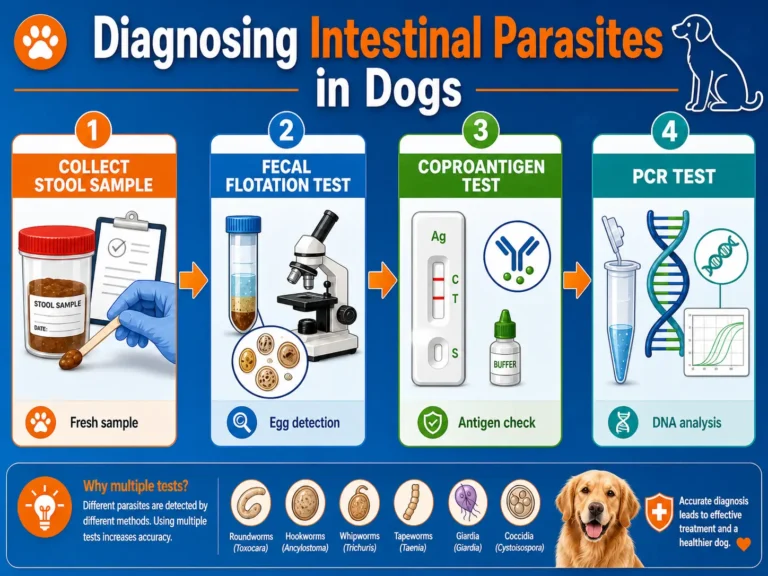
Traditional microscopic examination of feces remains the gold standard for detecting eggs, oocysts, and cysts of intestinal parasites. Centrifugal flotation using zinc sulfate solutions enhances recovery of ova and cysts.
Tip: Routine yearly fecal exams should be standard for all dogs, with more frequent evaluations in high risk groups.
Can a Giardia Antigen Test Find Parasites in Dog Poop?
Tests targeting parasite-specific antigens in stools (e.g., coproantigen immunoassays) can improve detection rates, particularly for Giardia, where cyst shedding may be intermittent.
When Does a Dog Need a PCR Test for Intestinal Parasites?
Polymerase chain reaction (PCR) methods are precise for identifying specific parasite DNA in stools, aiding differential diagnosis. While more expensive, PCR can be invaluable in persistent or complex cases.
What Is the Best Treatment for Giardia Diarrhea in Dogs?
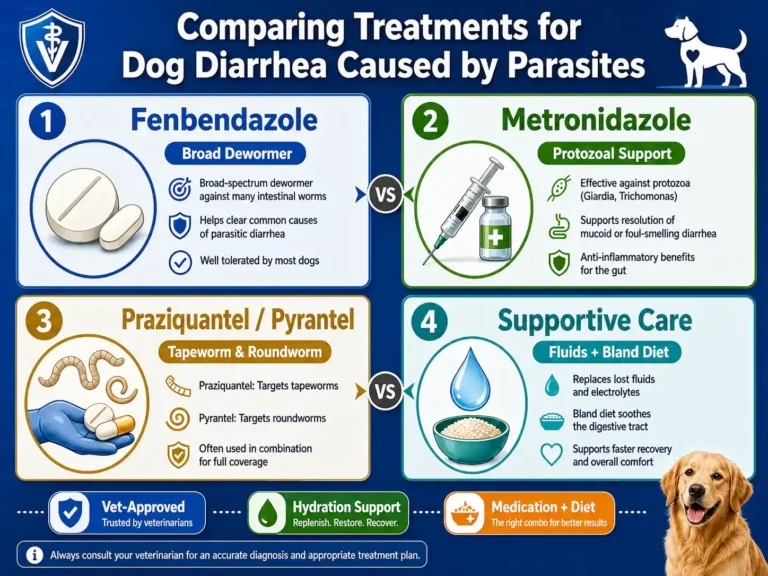
Do Fenbendazole and Metronidazole Treat Giardia in Dogs?
- Fenbendazole—a broad-spectrum anthelmintic effective against Giardia and common nematodes.
- Metronidazole—an antimicrobial agent with anti-parasitic activity; often used in combination with fenbendazole for enhanced efficacy.
Which Dewormer Treats Hookworms, Roundworms, and Whipworms in Dogs?
- Fenbendazole—effective against roundworms, hookworms, whipworms, and certain tapeworms.
- Praziquantel / Pyrantel—used depending on parasite species identified.
Note: Over-the-counter dewormers may fail to treat all parasites. Always base treatment on veterinarian-directed diagnosis.
What Can I Give My Dog for Diarrhea from Parasites?
In moderate to severe diarrhea cases:
- Fluid therapy (oral or IV) for dehydration
- Electrolyte correction
- Highly digestible diets temporarily to support intestinal healing
- Probiotics under veterinary guidance to help restore gut flora.
How Do You Know If Dog Parasites Are Gone After Treatment?
Should My Dog Be Retested After Parasite Treatment?
After treatment:
- Recheck fecal testing 2–4 weeks post-therapy confirms parasite clearance.
- Additional courses of medication may be needed for persistent infestations.
- Adjust the parasite prevention program based on lifestyle, exposure risk, and region.
How Can I Prevent Dog Diarrhea from Parasites?
How Often Should Dogs Get Fecal Tests for Parasites?
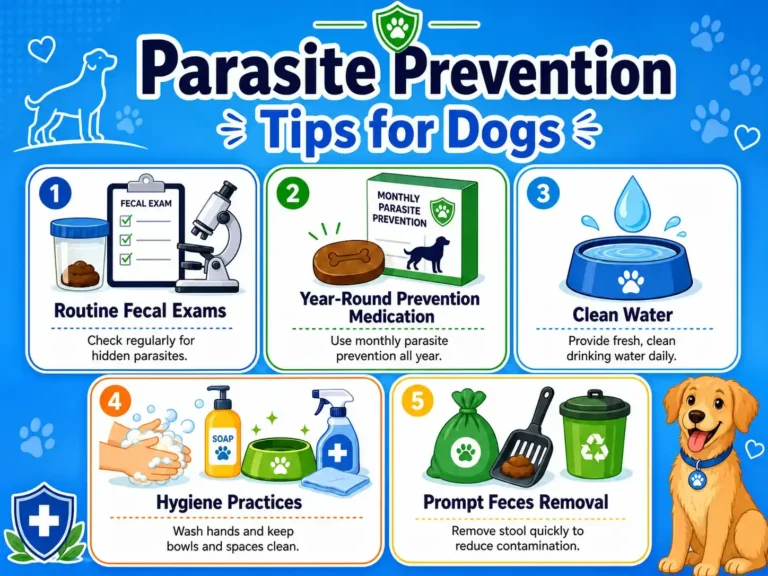
Proactive strategies reduce reinfection risk:
- Routine fecal exams (at least annually)
- Year-round parasite prevention products
- Prompt removal of feces in yards and parks
- Clean water and sanitation
- Avoidance of untreated water sources (ponds, puddles)
- Hygiene practices for owners.
Important Veterinary Warning
Do not diagnose or treat intestinal parasites based on symptoms alone. Diarrhea, vomiting, weight loss, and changes in stool can have many causes. A veterinarian may recommend fecal testing or other diagnostic tests to identify the underlying problem and select appropriate treatment.
Medications such as fenbendazole and metronidazole are not interchangeable, and their use depends on the suspected or confirmed condition. Do not assume that every dog with suspected parasites needs either medication or a combination of both. Never start, combine, reuse, or change the dose or duration of antiparasitic drugs or antibiotics without veterinary guidance.
Seek prompt veterinary care if your dog has persistent or worsening diarrhea, repeated vomiting, loss of appetite, or signs of dehydration. Bloody or black, tarry stools, severe weakness, collapse, or significant abdominal pain warrant urgent veterinary assessment. Puppies and dogs with existing health problems may need earlier attention. Do not wait for symptoms to resolve on their own when warning signs are present.
Medical Disclaimer
The information in this article is provided for general educational purposes only. It is not intended to replace professional veterinary advice, diagnosis, or treatment.
Although this guide discusses common signs of intestinal parasites in dogs, symptoms alone cannot reliably confirm a parasitic infection or identify the specific organism responsible. Accurate diagnosis may require a veterinary examination, fecal testing, and, in some cases, additional or repeat testing.
Treatment must be individualized according to the parasite involved, the dog’s age, weight, health status, diagnostic findings, and response to previous treatment. Only a qualified veterinarian can determine which medication is appropriate and establish its dose, frequency, and duration. This article does not provide an individualized treatment plan or recommend self-medication.
If your dog has diarrhea lasting more than 48 hours, contact your veterinarian for guidance. Seek care sooner if symptoms worsen or any warning signs develop. Never give human medications or leftover veterinary drugs unless your veterinarian specifically instructs you to do so.
To reduce the risk of reinfection and protect people and other animals, promptly remove dog feces, clean contaminated areas appropriately, wash your hands after handling waste, and follow your veterinarian’s advice about hygiene, parasite control, and any recommended follow-up testing.
Please consult your veterinarian whenever you are concerned about your dog’s health. Parasite-associated diarrhea remains a crucial and common health concern in canine practice. Early detection, precise diagnostics, and evidence-based treatment protocols greatly improve outcomes and reduce the risk of reinfection and zoonotic spread. This comprehensive guide synthesizes current veterinary research and clinical best practices into a clear, actionable framework for both clinicians and informed dog owners.
Medical Disclaimer
This article is intended for informational purposes only and should not replace professional veterinary advice. Always consult with a qualified veterinarian for diagnosis and treatment of your pet’s health concerns.
Frequently Asked Questions:
Q1: What causes dog diarrhea from parasites?
Dog diarrhea caused by intestinal parasites is usually due to infections from parasites like Giardia, hookworms, roundworms, and whipworms.
Q2: How can I tell if my dog has diarrhea from parasites?
Look for symptoms such as watery or bloody stools, mucus in the feces, weight loss, lethargy, and dehydration.
Q3: How do vets diagnose dog diarrhea caused by parasites?
Veterinarians use fecal tests, coproantigen immunoassays, and PCR testing to detect parasites in your dog’s stool.
Q4: What is the treatment for dog diarrhea caused by Giardia?
Treatment usually involves medications like fenbendazole and metronidazole, along with supportive care for hydration.
Q5: Can my dog get parasites from staying indoors?
Yes, parasites can be brought indoors on shoes, clothing, or through other pets.
Q6: How can I prevent my dog from getting intestinal parasites?
Ensure regular fecal exams, provide year-round parasite prevention, and avoid untreated water sources.
Q7: Are parasites in dogs zoonotic?
Some parasites, like Giardia and hookworms, can be transmitted to humans through contact with infected feces.
References:
Ciuca, L., Pepe, P., Bosco, A., Cacciò, S. M., Maurelli, M. P., Sannella, A. R., Vismarra, A., Cringoli, G., Kramer, L., Rinaldi, L., & Genchi, M. (2021). Effectiveness of fenbendazole and metronidazole against Giardia infection in dogs monitored for 50-days in home-conditions. Frontiers in Veterinary Science, 8, 626424. DOI: 10.3389/fvets.2021.626424
- Uehlinger, F. D., Naqvi, S. A., Greenwood, S. J., McClure, J. T., Conboy, G., O’Handley, R., & Barkema, H. W. (2017). Comparison of five diagnostic tests for Giardia duodenalis in fecal samples from young dogs. Veterinary Parasitology, 244, 91–96. DOI: 10.1016/j.vetpar.2017.07.030
- Symeonidou, I., Gelasakis, A. I., Miliotou, A. N., Angelou, A., Arsenopoulos, K. V., Loukeri, S., & Papadopoulos, E. (2020). Rapid on-site diagnosis of canine giardiosis: Time versus performance. Parasites & Vectors, 13, 544. DOI: 10.1186/s13071-020-04422-6
- López-Arias, Á., Villar, D., López-Osorio, S., Calle-Vélez, D., & Chaparro-Gutiérrez, J. J. (2019). Giardia is the most prevalent parasitic infection in dogs and cats with diarrhea in the city of Medellín, Colombia. Veterinary Parasitology: Regional Studies and Reports, 18, 100335. DOI: 10.1016/j.vprsr.2019.100335
- Traversa, D. (2012). Pet roundworms and hookworms: A continuing need for global worming. Parasites & Vectors, 5, 91. DOI: 10.1186/1756-3305-5-91
- Saleh, M. N., Gilley, A. D., Byrnes, M. K., & Zajac, A. M. (2016). Development and evaluation of a protocol for control of Giardia duodenalis in a colony of group-housed dogs at a veterinary medical college. Journal of the American Veterinary Medical Association, 249(6), 644–649. DOI: 10.2460/javma.249.6.644
- Ballweber, L. R., Xiao, L., Bowman, D. D., Kahn, G., & Cama, V. A. (2010). Giardiasis in dogs and cats: Update on epidemiology and public health significance. Trends in Parasitology, 26(4), 180–189. DOI: 10.1016/j.pt.2010.02.005
- Tangtrongsup, S., & Scorza, V. (2010). Update on the diagnosis and management of Giardia spp. infections in dogs and cats. Topics in Companion Animal Medicine, 25(3), 155–162. DOI: 10.1053/j.tcam.2010.07.003
- Bowman, D. D., & Lucio-Forster, A. (2010). Cryptosporidiosis and giardiasis in dogs and cats: Veterinary and public health importance. Experimental Parasitology, 124(1), 121–127. DOI: 10.1016/j.exppara.2009.01.003
- Scorza, A. V., Buch, J., Franco, P., McDonald, C., Chandrashekar, R., & Lappin, M. R. (2021). Evaluation for associations amongst Giardia duodenalis assemblages and diarrhea in dogs. Veterinary Parasitology, 300, 109581. DOI: 10.1016/j.vetpar.2021.109581