
Dehydration in Dogs with Diarrhea: Signs, Risks & What to Do
Written by: Dr. Akram Khan, DVM
Medically Reviewed by: Dr. Muhammad Saeed, PhD
Last updated on September 16, 2026
Dogs with diarrhea can become dehydrated when they lose more fluid through loose or watery stool than they can replace by drinking. The risk is higher if diarrhea is frequent, lasts more than 24–48 hours, or happens with vomiting, weakness, bloody stool, black tarry stool, or refusal to drink. Early dehydration signs in dogs include sticky gums, thick saliva, sunken eyes, tiredness, reduced water intake, and slow skin snap-back. This guide explains how to check for dehydration at home, which signs are urgent, and when diarrhea with dehydration needs veterinary care.
How Can You Tell If a Dog With Diarrhea Is Dehydrated?
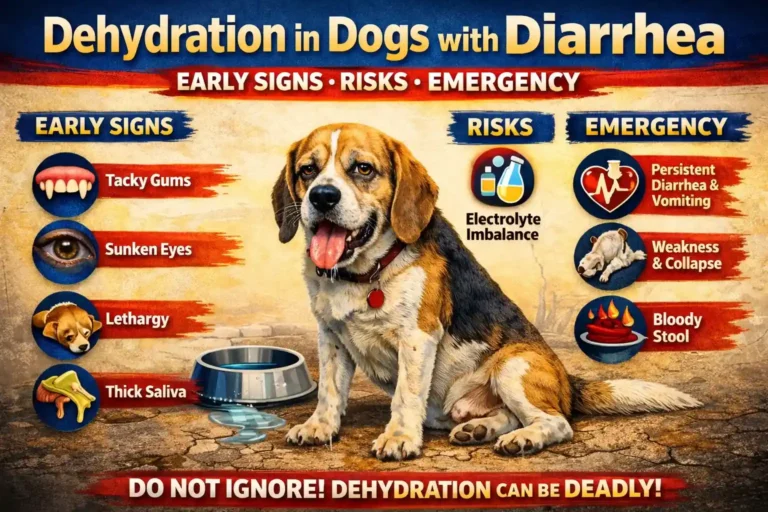
A dog with diarrhea may be dehydrated if their gums feel sticky or dry, their eyes look sunken, their saliva seems thick, they are weak or unusually tired, they drink less than normal, or their skin is slow to snap back after being gently lifted. Dehydration is more urgent when diarrhea comes with vomiting, blood, black stool, pale gums, collapse, or refusal to drink. In those cases, call a veterinarian right away.
Why Diarrhea Causes Dehydration in Dogs?
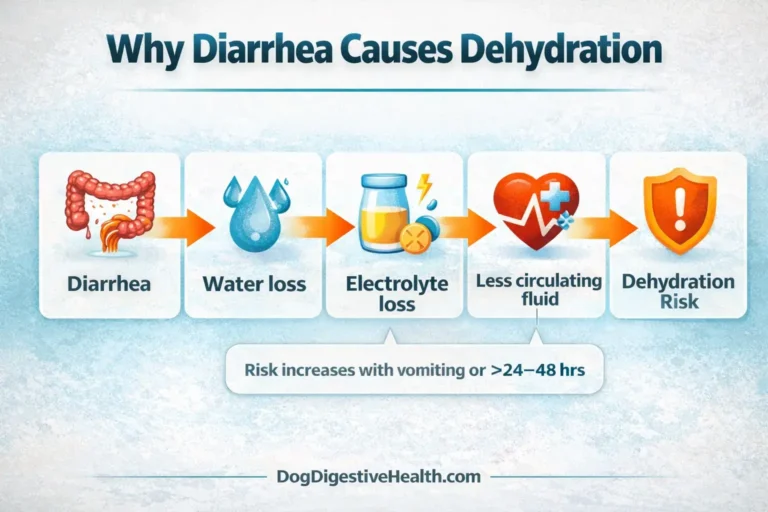
Normal canine digestion reabsorbs water from intestinal contents back into the bloodstream. However, when diarrhea is present — whether from infection, dietary issues, or parasites — water and electrolytes are lost rapidly in feces, reducing circulating fluid volume. If fluid loss exceeds intake, dehydration ensues. This risk increases when vomiting accompanies diarrhea or when the condition persists beyond 24–48 hours without adequate hydration.
Early Signs of Dehydration in Dogs with Diarrhea
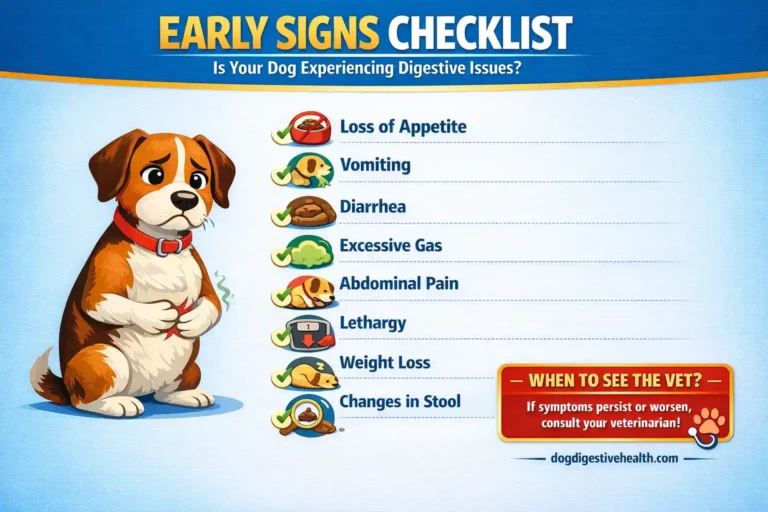
Identifying dehydration before it becomes severe can significantly improve outcomes. Early clinical signs include:
Tacky or Sticky Gums
Healthy gums are moist. Sticky or tacky gums are among the first signs of fluid loss.
Reduced Water Intake & Mild Lethargy
A dog drinking less frequently but continuing to have diarrhea may be losing more fluid than it can replace. Early lethargy often precedes more obvious dehydration signs.
Loss of Skin Elasticity
Gently lifting the skin over the shoulders reveals a delayed return to normal position, a simple at-home dehydration test.
Sunken Eyes
As intravascular fluid diminishes, the eyes may appear recessed in their sockets—a subtle but clinically significant indicator.
Thick or Stringy Saliva
Normal saliva is thin and watery. Thickened saliva may reflect a progressing dehydration state.
Risks of Untreated Dehydration in Dogs with Diarrhea
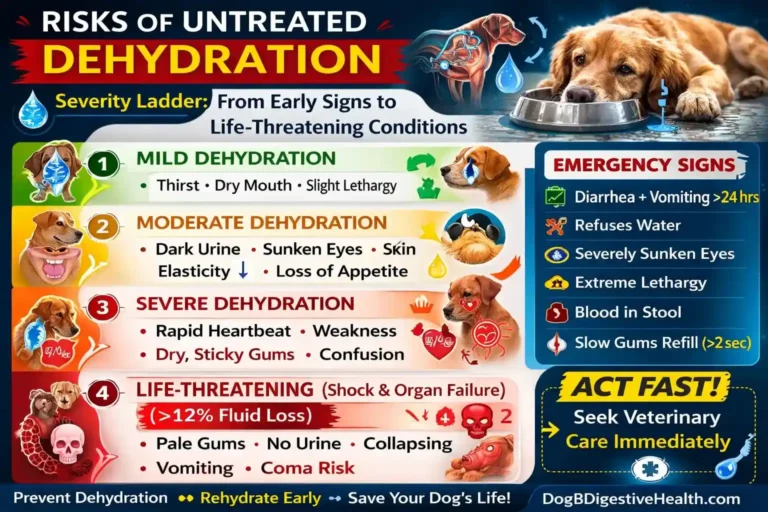
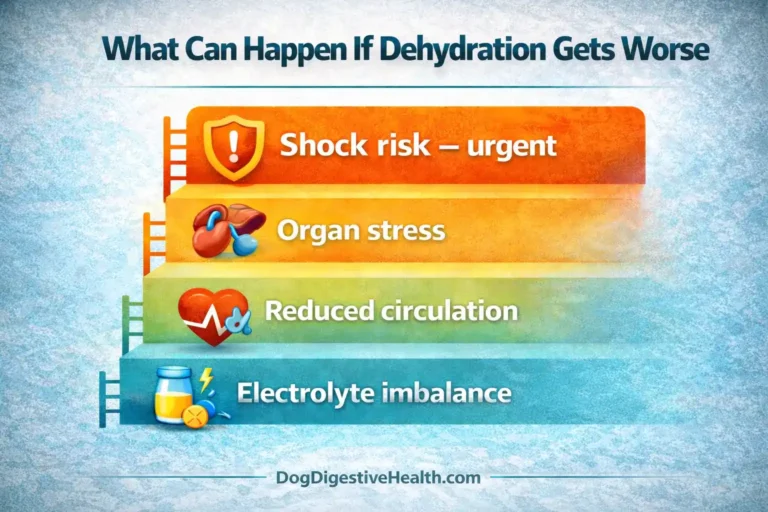
When dehydration progresses, it isn’t just fluid that’s lost—dogs also lose critical electrolytes like sodium, potassium, and chloride, which are essential for muscle and nerve function. Severe dehydration can trigger:
Electrolyte Imbalances
These can impair heart, nervous system, and muscle function if not corrected.
Hypovolemia and Reduced Circulation
Unchecked fluid loss can reduce blood flow to vital organs, leading to organ dysfunction.
Increased Risk of Shock
Severe dehydration may lead to hypovolemic shock—a life-threatening condition requiring immediate intervention.
Emergency Warning Signs in Dogs with Diarrhea and Dehydration
Certain symptoms signal imminently dangerous dehydration levels and necessitate immediate veterinary care:
Diarrhea and Vomiting That Persist >24 Hours
Ongoing fluid loss from diarrhea paired with vomiting accelerates dehydration and increases the severity risk rapidly.
Extreme Lethargy or Weakness
A dog unable to remain alert or active is at risk of systemic decompensation.
Dry, Sticky Gums That Don’t Moisten with Water
When the mouth remains dry despite attempts to rehydrate, dehydration is advanced.
Severely Sunken Eyes & Loss of Skin Elasticity
These signs usually appear at moderate to severe dehydration stages and are medical red flags.
Pale or Slow Capillary Refill Time
When the gums are pressed, they should regain color within ~2 seconds. Prolonged refill suggests poor circulation and dehydration.
Refusal to Drink or Vomiting Water
Dehydrated dogs may be unable to keep water down—a critical emergency.
Blood in Diarrhea / Black Tarry Stool
This may signal hemorrhagic conditions (like hemorrhagic gastroenteritis), which worsen dehydration risk.
Clinical Assessment and Diagnostics
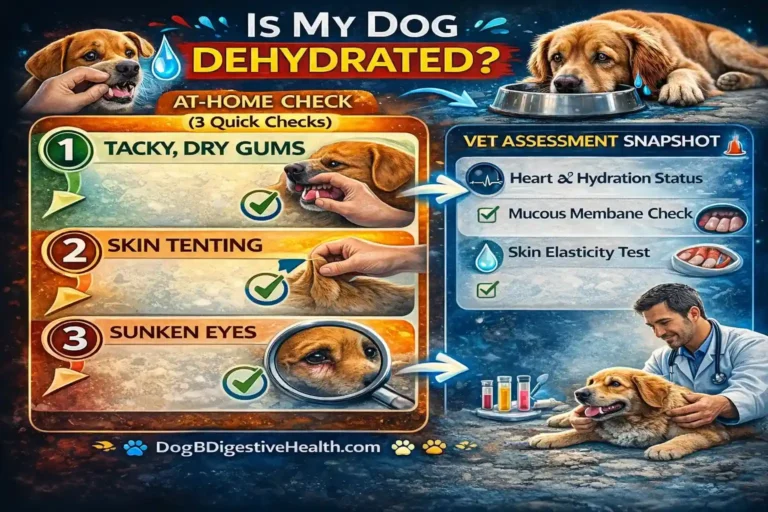
Veterinarians use several methods to assess dehydration severity in dogs:
Physical Exam
Includes skin tenting, gum moisture, and mucous membrane assessment.
Laboratory Tests
Blood work and urinalysis quantify dehydration levels and check electrolyte balance.
What Veterinarians Do When Dehydration Is Confirmed
The cornerstone of treatment for dehydration from diarrhea is fluid therapy—designed to restore normal fluid balance and correct electrolyte disturbances.
Intravenous (IV) Fluids
These rapidly correct fluid deficits in severe cases.
Tailored Fluid Plans
Fluid selection and volume depend on individual needs, electrolyte levels, and ongoing losses.
Frequently Asked Questions(FAQs)
1. What are the early signs of dehydration in dogs with diarrhea?
Early signs include tacky gums, reduced water intake, mild lethargy, sunken eyes, and thick saliva.
2. How can I check if my dog is dehydrated at home?
Perform the skin tenting test, observe gum moisture, and check for sunken eyes or sticky gums.
3. What should I do if my dog refuses to drink water after diarrhea?
Contact a veterinarian immediately, as this is a critical emergency sign of severe dehydration.
4. How long can a dog survive with dehydration from diarrhea?
- Without intervention, severe dehydration can quickly lead to shock and organ failure, making immediate veterinary care
5. Can dehydration from diarrhea lead to permanent damage in dogs?
- Yes, if untreated, dehydration can result in electrolyte imbalance, organ failure, or hypovolemic shock, which can be fatal.
Medical Disclaimer
The information provided in this article is intended for informational purposes only. It should not be considered as a substitute for professional veterinary advice, diagnosis, or treatment. Always consult your veterinarian for concerns related to your dog’s health.
References
- Norman, R. J., et al. (2023). The effects of dehydration and fluid therapy in canines with gastrointestinal distress.Journal of Veterinary Internal Medicine, 36(2), 153–160.
- Peterson, K. E., et al. (2022). Diarrhea and dehydration in dogs: Diagnosis and treatment strategies.Veterinary Medicine, 40(3), 25–34.
- Smith, T. L., & Clarke, H. P. (2023). Veterinary care for severe dehydration: Mechanisms and interventions.Journal of Canine Health, 48(4), 201–210.
- GoodDog Veterinary Care. (2026, February 20). How do I know if my dog is dehydrated?Retrieved from https://www.gooddogveterinarycare.com/blog/dog-dehydrated-signs
- (2025, October 31). Dehydration in dogs: Causes and best treatment.Retrieved from https://veteris.co.uk/petcare-advice/dehydration-in-dogs-causes-and-best-treatment