
Why Is My Dog’s Poop Black and Tarry? Causes & Emergency Signs
Written by: Dr. Muhammad Ihsan Ullah, PhD
Medically Reviewed by: Dr. Khalid Mehmood, PhD
Last updated on November 03, 2026
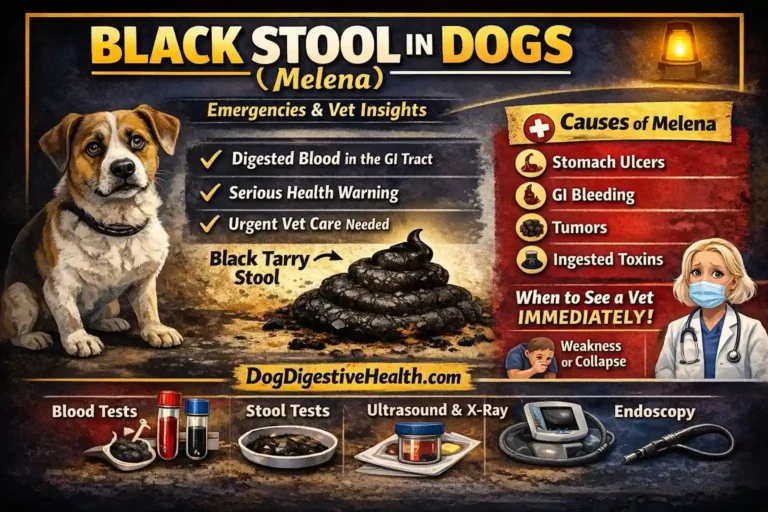
Black stool in dogs, also known as melena, can indicate digested blood in the gastrointestinal tract and may be a sign of bleeding higher up in the stomach or intestines. Tarry, sticky, or unusually dark stool should be taken seriously, especially if it occurs with vomiting, weakness, pale gums, loss of appetite, or abdominal discomfort.
Quick Answer: What Does Black Tarry Stool Mean in Dogs?
Black tarry stool in dogs can mean melena, which is stool that contains digested blood. It often looks black, sticky, shiny, tar-like, and foul-smelling. Melena is concerning because it may point to bleeding in the stomach or upper small intestine.
Not every dark stool is melena. Some foods, iron supplements, activated charcoal, or certain medicines can darken stool. But true melena usually has a sticky tar-like texture and an unusually bad smell.
If your dog has black tarry stool with vomiting, weakness, pale gums, collapse, loss of appetite, belly pain, or repeated black stool, contact a veterinarian immediately.
What Does Black Stool in Dogs Mean?

Black, tarry stool in dogs can indicate digested blood in the feces, a condition known as melena. However, not every dark-colored stool is caused by gastrointestinal bleeding.
- The medical term used by veterinarians for this condition is melena.
- Melena indicates that blood has passed through part of the upper digestive tract, allowing digestive enzymes to alter the color and texture of the blood.
- Dog owners often describe melena as:
- black tarry stool
- sticky black poop
- dark shiny feces
- foul-smelling black stool
The appearance of melena differs from normal dark stool caused by food or supplements because true melena usually has a sticky, tar-like texture.
What Is Melena in Dogs?
Melena in dogs means black, tarry stool caused by digested blood passing through the digestive tract. The blood usually comes from the upper gastrointestinal tract, such as the stomach or small intestine, before it changes color during digestion.
Dog owners may describe melena as:
- black tarry stool
- sticky black poop
- shiny black feces
- dark stool with a tar-like texture
- black diarrhea
- foul-smelling black stool
Melena is different from bright red blood in dog poop. Bright red blood usually suggests bleeding closer to the colon, rectum, or anus. Black tarry stool suggests the blood has been digested before leaving the body.
Because melena can be linked with internal bleeding, it should not be ignored.
What Does Melena Look Like in Dogs?
Melena in dogs usually looks darker and stickier than normal poop. It may appear black, tar-like, shiny, thick, sticky, or very foul-smelling.
Signs that dark stool may be melena include:
- black or nearly black color
- sticky or tar-like texture
- shiny surface
- strong foul odor
- stool that looks like black paste
- stool that sticks to grass, bedding, or the floor
- black diarrhea or very dark loose stool
Normal dark brown stool is usually not as sticky, shiny, or tar-like. If you are unsure, take a clear photo of the stool and call your veterinarian. A photo can help the vet decide how urgent the situation may be.
Do not wait if your dog also has vomiting, weakness, pale gums, collapse, belly pain, or repeated black stool.
Is Black Stool in Dogs an Emergency?

Black stool in dogs can be a medical emergency because it may indicate internal bleeding in the digestive tract.
Situations where melena may require urgent veterinary care include:
- persistent black tarry stool
- weakness or lethargy
- vomiting or vomiting blood
- pale gums
- collapse or severe fatigue
- abdominal pain
- loss of appetite
If a dog shows these symptoms along with black sticky stool, veterinarians consider the possibility of gastrointestinal hemorrhage, severe ulcers, toxin exposure, or systemic disease.
Black Stool in Dog but Acting Normal: Should You Worry?
Yes, black stool can still be concerning even if your dog is acting normal. Some dogs may seem okay early in the problem, especially before blood loss becomes severe.
A dog may still eat, walk, and behave normally while melena is starting. But if the stool is truly black, sticky, tar-like, and foul-smelling, it may still indicate digested blood.
Call your vet if:
- Black stool happens more than once
- The stool is sticky or tar-like
- Your dog recently took NSAIDs, steroids, bismuth, iron, or other medicines
- Your dog may have eaten something toxic
- appetite decreases
- vomiting starts
- Gums look pale
- Your dog becomes weak or tired
If the stool is only dark brown and your dog recently ate a new food, treat, iron supplement, charcoal product, or dark-colored food, the cause may be less serious. But true black tarry stool should be checked.
Why Is My Dog’s Poop Black and Tarry?
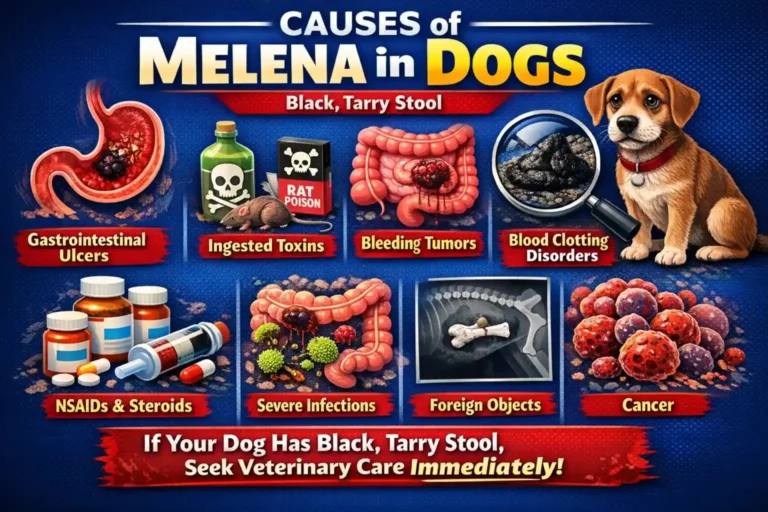
When owners search “why is my dog’s poop black and sticky,” veterinarians investigate several potential causes of melena.
Possible causes include:
- gastrointestinal bleeding
- stomach ulcers
- duodenal ulcers
- swallowed blood from the mouth or respiratory tract
- tumors within the digestive tract
- severe gastrointestinal inflammation
- clotting disorders
- ingestion of toxins
- medication-related stomach injury
- foreign objects damaging the digestive lining
The key diagnostic point is that melena indicates digested blood, which usually originates from the upper gastrointestinal tract.
Dog Poop Black but Not Tarry: Is It Still Melena?
Dog poop that is black but not tarry may or may not be melena. Texture matters. True melena is usually black, sticky, shiny, tar-like, and very foul-smelling.
Black or dark stool that is not tarry may be caused by:
- dark-colored food
- liver treats
- iron supplements
- activated charcoal
- bismuth-containing products
- sudden diet changes
- mild digestive upset
However, early melena may not always look perfect or obvious. If the stool is black and your dog has vomiting, weakness, pale gums, appetite loss, belly pain, or repeated episodes, treat it as concerning.
A safe rule is this: if the stool is black and you cannot clearly explain it by food or medicine, call your veterinarian.
What Vets Check for Black Stool in Dogs
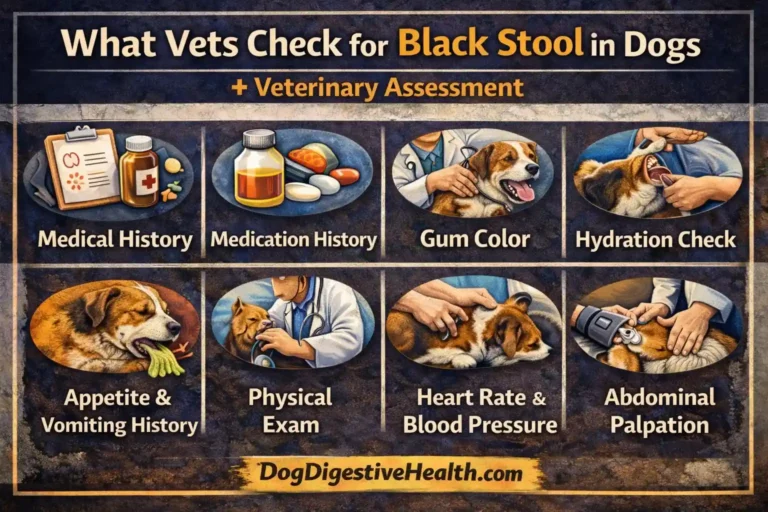
Veterinarians investigate melena by performing a structured diagnostic evaluation.
Initial veterinary assessment may include:
- medical history review
- medication exposure history
- toxin exposure evaluation
- appetite and vomiting history
- physical examination
- gum color and anemia assessment
- abdominal palpation
- hydration evaluation
- heart rate and blood pressure check
These steps help veterinarians determine whether gastrointestinal bleeding is likely and how urgent the situation is.
What Tests Do Vets Use for Melena in Dogs?
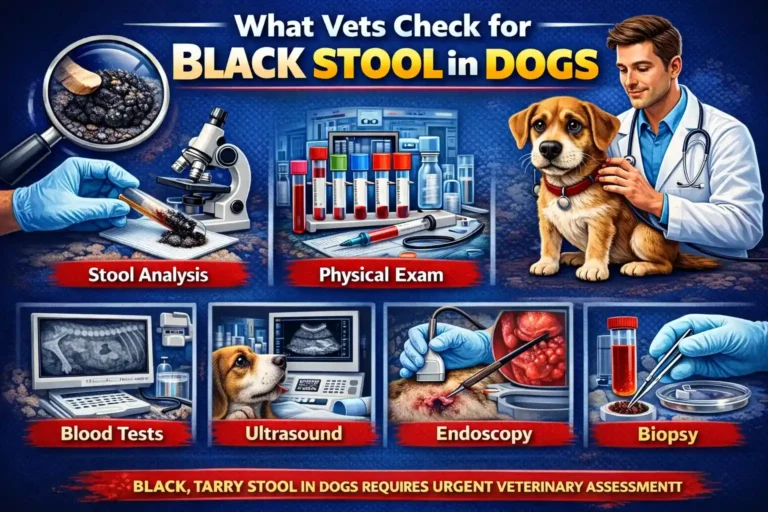
Diagnostic testing may be necessary to confirm the cause of black stool.
Common veterinary diagnostic tests include
Blood Tests
- Complete Blood Count (CBC)
- Packed Cell Volume (PCV)
- Serum chemistry profile
These tests help detect:
- anemia
- infection
- organ dysfunction
- electrolyte imbalance
Stool Tests
- fecal parasite examination
- fecal occult blood testing
These tests help detect:
- parasites
- hidden blood in stool
Imaging Tests
Veterinarians may use imaging to locate the source of bleeding.
Common imaging tools include
- abdominal ultrasound
- abdominal X-rays
These tests can identify:
- foreign objects
- intestinal inflammation
- tumors
- organ abnormalities
Endoscopy
Endoscopy allows veterinarians to:
- inspect the stomach and upper intestines
- identify ulcers or lesions
- Collect tissue samples if necessary
In complex cases, referral clinics may also use video capsule endoscopy to identify bleeding sources in the digestive tract.
Melena in Dogs Treatment: What Happens Next?
Treatment for melena in dogs depends on the cause. Melena is a sign, not a final diagnosis. The veterinarian first checks whether the dog is stable and whether blood loss, dehydration, shock, or anemia is present.
Treatment may include:
- physical examination
- bloodwork to check anemia and organ function
- stool testing
- medication history review
- checking for toxin or NSAID exposure
- abdominal imaging if needed
- IV fluids if the dog is dehydrated or weak
- stomach-protective medication when appropriate
- treatment for ulcers, parasites, toxins, tumors, clotting problems, or other causes
- hospitalization in serious cases
Do not give human stomach medicine, pain medicine, or leftover antibiotics without veterinary guidance. Some human medicines can worsen bleeding or cause toxicity in dogs.
The most important step is finding the source of the bleeding and treating the underlying cause.
How Vets Differentiate Melena From Normal Dark Stool
Not every dark stool is melena.
Veterinarians must rule out harmless causes of dark stool, such as:
- iron supplements
- medications containing bismuth
- certain foods
- dietary changes
To confirm melena, veterinarians assess:
- stool color
- stool texture
- stool odor
- clinical symptoms
- diagnostic test results
The more tarry, sticky, and foul-smelling the stool appears, the greater the concern for digested blood in the digestive tract.
When Should You Go to the Vet Immediately?
Dog owners should seek veterinary care immediately if they observe:
- black tarry stool
- repeated episodes of melena
- vomiting or vomiting blood
- weakness or collapse
- pale gums
- severe lethargy
How Long Can Melena Last in Dogs?
Black, tarry stool may persist for a period after gastrointestinal bleeding has stopped. However, ongoing or repeated melena requires veterinary evaluation because bleeding may still be occurring.
Can Melena Be Deadly in Dogs?
Yes, melena can be deadly in dogs if it is caused by serious internal bleeding, severe ulcers, toxin exposure, clotting disorders, cancer, or another major disease. The danger depends on how much bleeding is happening and what is causing it.
Emergency signs include:
- repeated black tarry stool
- vomiting blood or coffee-ground material
- pale or white gums
- collapse
- weakness
- fast breathing
- severe lethargy
- belly pain
- refusal to eat
- black stool with diarrhea
- signs of shock
A single dark stool is not always life-threatening, but true melena should be taken seriously. Early veterinary care can prevent a serious condition from becoming worse.
Medical Disclaimer:
This article is intended for educational purposes only and should not replace professional veterinary advice. If your dog has black stool, vomiting, weakness, or other concerning symptoms, contact a veterinarian immediately.
Frequently Asked Questions (FAQs)
What does black stool in dogs mean?
Black stool in dogs may mean digested blood is present in the stool. This is called melena and may point to bleeding in the stomach or upper small intestine.
What is melena in dogs?
Melena in dogs is black, tarry, sticky stool caused by digested blood. It is different from normal dark brown stool because it often looks shiny, tar-like, and smells very foul.
What does black tarry stool mean in dogs?
Black tarry stool in dogs may mean there is bleeding inside the digestive tract. It can be linked with ulcers, toxins, medication injury, tumors, clotting problems, or other serious conditions.
Is black stool in dogs an emergency?
Black tarry stool can be an emergency, especially if it happens repeatedly or comes with vomiting, weakness, pale gums, collapse, belly pain, or loss of appetite.
My dog has black stool but is acting normal. Should I worry?
Yes, you should still pay attention. Some dogs act normal early in the problem. If the stool is truly black, sticky, tar-like, or foul-smelling, call your veterinarian.
Can food cause black stool in dogs?
Yes, some foods, iron supplements, activated charcoal, bismuth products, or dark treats can make stool look darker. But true melena is usually sticky, tar-like, shiny, and foul-smelling.
What is the difference between melena and fresh blood in dog stool?
Melena is black, tarry stool from digested blood, often linked with upper digestive bleeding. Fresh red blood usually comes from the lower intestine, colon, rectum, or anus.
What causes melena in dogs?
Possible causes include stomach ulcers, upper GI bleeding, toxins, NSAID or medication injury, swallowed blood, tumors, clotting disorders, parasites, severe inflammation, or foreign objects.
How do vets diagnose melena in dogs?
Vets may use physical examination, gum color check, blood tests, stool tests, medication history, abdominal X-rays, ultrasound, or endoscopy depending on the dog’s signs.
Can melena be deadly in dogs?
Yes, melena can be deadly if it is caused by serious bleeding, shock, toxins, ulcers, cancer, or clotting disorders. Prompt veterinary care is important.
References:
- Cornell University College of Veterinary Medicine. Diarrhea. Riney Canine Health Center. https://www.vet.cornell.edu/departments-centers-and-institutes/riney-canine-health-center/canine-health-topics/diarrhea
- Blois, S. (2025). Gastrointestinal Ulcers in Small Animals. Merck Veterinary Manual. https://www.merckvetmanual.com/digestive-system/diseases-of-the-stomach-in-small-animals/gastrointestinal-ulcers-in-small-animals
- Safrany, B., et al. (2023). Plasma urea:creatinine ratio as a biomarker of gastrointestinal bleeding in dogs with anaemia. Veterinary Medicine and Science, 9(6), 2576–2585. https://doi.org/10.1002/vms3.1286
- Defarges, A., Stiller, J., & Solomon, J. A. (2023). Gastrointestinal angiodysplasias diagnosed using video capsule endoscopy in 15 dogs. Journal of Veterinary Internal Medicine, 37(2), 428–436. https://doi.org/10.1111/jvim.16677
- VCA Animal Hospitals. Gastroduodenoscopy. VCA Animal Specialty Group. https://vcahospitals.com/animal-specialty-group/departments/internal-medicine/gastroduodenoscopy