
Blood in Dog Stool: What It Means & When to Call a Vet
Written by: Dr. Akram Khan, DVM
Medically Reviewed by: Dr. Khalid Mehmood, PhD
Last updated on November 09, 2026
Seeing blood in your dog’s stool is never something to ignore, even if your dog seems normal at first. Blood in dog poop may appear as bright red streaks, bloody diarrhea, mucus with blood, or black tarry stool, and each pattern can point to a different part of the digestive tract. Common causes include colitis, parasites, stress, diet changes, infections, foreign objects, AHDS/HGE, or bleeding higher in the stomach or intestines. If your dog is pooping blood but acting normal, monitor closely and contact your vet if it happens again. Seek urgent care right away if there is a large amount of blood, black stool, vomiting, weakness, dehydration, pale gums, puppy diarrhea, senior dog diarrhea, or symptoms lasting more than 24 hours.
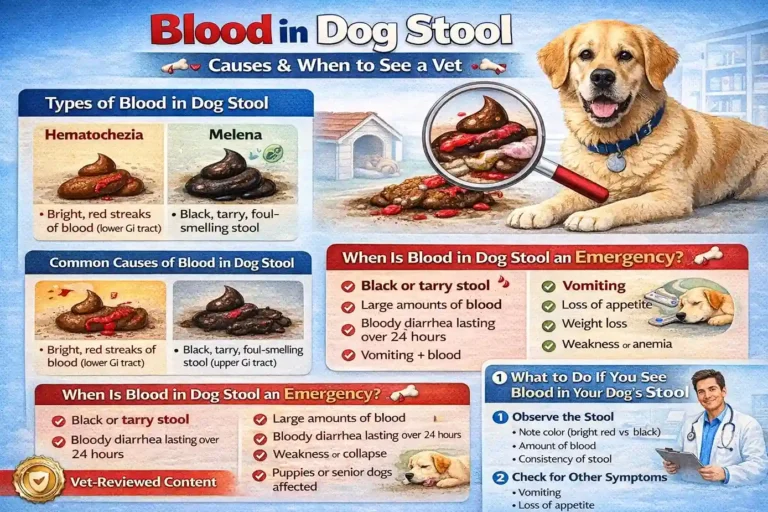
Dog Pooping Blood But Acting Normal: Should You Worry?
Yes, you should still take blood in dog poop seriously even if your dog is acting normal. Some dogs may look bright, eat normally, and still have irritation, colitis, parasites, stress-related diarrhea, anal irritation, or early digestive disease.
A small streak of bright red blood once may be less urgent if your dog is otherwise normal, but it should still be monitored closely.
Call your veterinarian if:
- blood appears more than once
- The amount of blood increases
- Diarrhea develops
- Mucus appears with blood
- Your dog starts vomiting
- appetite decreases
- Your dog seems tired or weak
- Your dog is a puppy, a senior dog, or has a chronic disease
- The stool becomes black or tarry
Do not assume “acting normal” means the problem is harmless. It only means your dog is not showing obvious systemic illness yet.
Bright Red Blood vs Black Tarry Stool in Dogs
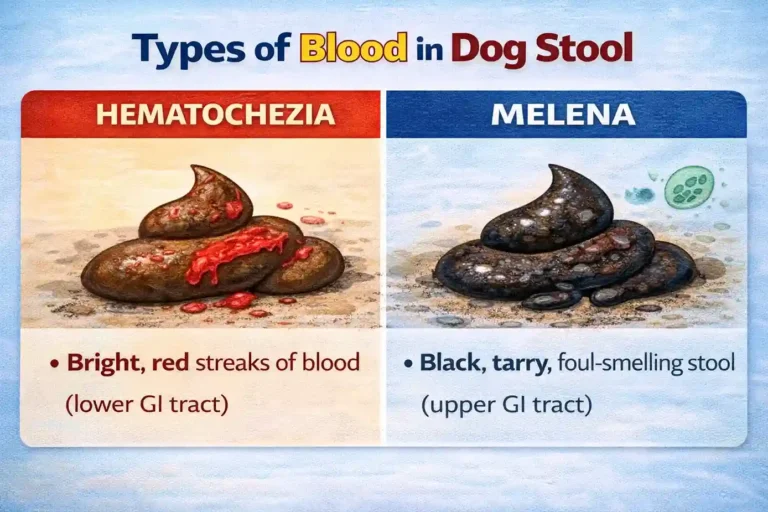
The color of the blood can help suggest where the bleeding may be coming from.
Bright red blood in dog stool is called hematochezia. It usually means fresh blood is coming from the lower digestive tract, such as the colon, rectum, or anus.
Bright red blood may appear as:
- red streaks on formed stool
- drops of blood after pooping
- red mucus
- bloody diarrhea
- blood on the outside of stool
Black tarry stool is called melena. It usually means blood has been digested before leaving the body, which may suggest bleeding from the stomach or small intestine.
Black tarry stool may look:
- black
- sticky
- shiny
- tar-like
- foul-smelling
- dark like coffee grounds or black paste
Black tarry stool is generally more urgent than a tiny streak of fresh red blood because it may point to internal bleeding higher in the digestive tract. If you see black stool, repeated blood, vomiting, weakness, pale gums, or collapse, seek veterinary care immediately.
Blood and Mucus in Dog Stool
Blood and mucus in dog stool often suggest irritation or inflammation in the colon. This pattern is commonly seen with colitis, stress-related diarrhea, parasites, food intolerance, sudden diet changes, infections, or inflammatory bowel disease.
Mucus may look like:
Blood with mucus may appear as red streaks, red jelly, or small amounts of fresh blood mixed with soft stool.
Possible causes include:
- stress colitis
- dietary indiscretion
- parasites
- sudden food change
- bacterial or viral infection
- food sensitivity
- inflammatory bowel disease
- anal gland or rectal irritation
If blood and mucus happen once and your dog is acting normal, monitor closely and call your vet if it repeats. If it comes with vomiting, weakness, dehydration, fever, black stool, or large amounts of blood, seek urgent care.
Dog Poop Like Jelly With Blood
Dog poop that looks like jelly with blood can be alarming. It often means mucus and blood are present together, usually from irritation or inflammation in the colon. However, it can also occur with more serious digestive problems.
Jelly-like blood in dog poop may be linked with:
- colitis
- stress diarrhea
- parasites
- sudden diet changes
- food intolerance
- infections
- AHDS/HGE
- intestinal inflammation
A small amount of red mucus may not always be an emergency if your dog is bright and eating. But large amounts of bloody jelly, repeated episodes, watery bloody diarrhea, vomiting, weakness, or dehydration can be urgent.
Call a veterinarian immediately if jelly-like bloody stool is:
- repeated
- watery
- large in amount
- paired with vomiting
- paired with lethargy
- seen in a puppy or senior dog
- associated with pale gums or collapse
Common Causes of Blood in Dog Stool
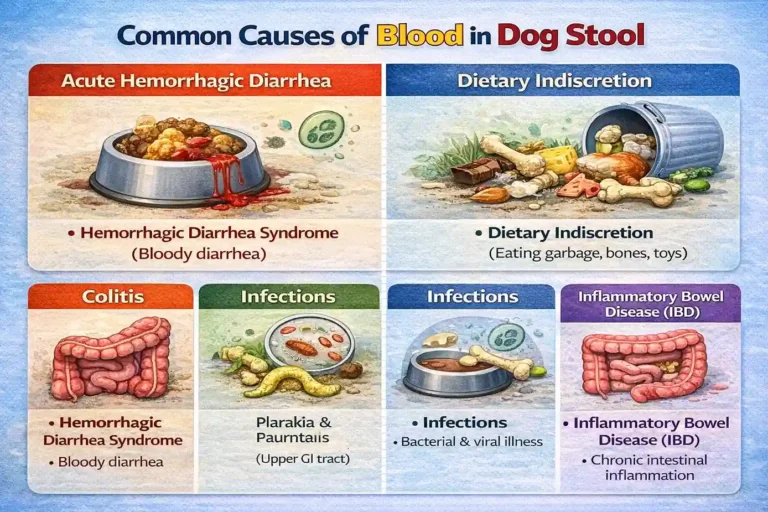
1. Acute Hemorrhagic Diarrhea Syndrome (AHDS)
AHDS causes sudden, severe bloody diarrhea, often accompanied by dehydration and rapid fluid loss.
Signs:
- Large volumes of blood in stool
- Vomiting
- Lethargy
- Dehydration
⚠️ Immediate veterinary care is critical.
2. Parasites and Worms in Dogs
Parasites damage the GI tract lining, which can lead to blood in the stool.
Common Parasites:
- Giardia, Coccidia, Roundworms, Hookworms, Whipworms
Symptoms: - Diarrhea
- Mucus in stool
- Weight loss
- Blood in poop
Diagnosis: Fecal exam by your vet.
3. Dietary Indiscretion (Eating Garbage, Bones, Toys)
When dogs eat foreign objects, such as garbage, bones, or toys, they can develop GI irritation or trauma, leading to blood in stool and vomiting.
Signs:
- Vomiting
- Abdominal pain
- Blood in stool
4. Colitis and Inflammation of the Colon
Colitis (inflammation of the colon) is a common cause of fresh blood in stool.
Triggers:
- Stress
- Sudden diet changes
- Food intolerance
- GI infections
Signs: - Frequent small stools
- Straining
- Mucus and blood in stool
5. Food Allergies and Intolerance
Food allergies or sensitivities can cause inflammation in the digestive tract.
Symptoms:
- Blood or mucus in stool
- Diarrhea
- Skin itching
- Ear infections
6. Infections (Bacterial, Viral, Parasitic)
GI infections caused by bacteria or viruses can lead to blood in the stool.
Common Pathogens:
- Salmonella, E. coli, Parvovirus, Giardia
Symptoms: - Bloody diarrhea
- Vomiting
- Fever
- Loss of appetite
7. Inflammatory Bowel Disease (IBD)
IBD is a chronic condition causing persistent inflammation of the intestines.
Signs:
- Recurrent blood in stool
- Weight loss
- Vomiting
Poor nutrient absorption
8. Bleeding Disorders and Blood Clotting Problems
Thrombocytopenia and other blood clotting disorders can cause spontaneous bleeding, which may lead to blood in stool.
Examples:
- Immune-mediated thrombocytopenia (ITP)
- Rodenticide poisoning
⚠️ These are emergencies.
9. Trauma to the Rectum or Anus
Trauma from hard stools, foreign objects, or anal gland issues can result in bright red blood on the surface of the stool.
Signs:
- Bright red blood
- No other symptoms (usually mild)
10. Cancer of the Digestive Tract
Intestinal tumors can lead to chronic blood loss, weight loss, and changes in stool appearance.
Signs:
- Chronic blood in stool
- Weight loss
- Changes in stool appearance
- Weakness or anemia
Bloody Diarrhea in Dogs: When It Becomes Urgent
Bloody diarrhea in dogs is more concerning than a small streak of blood on formed stool. Diarrhea means the gut is already irritated or inflamed, and blood means the lining of the digestive tract may be damaged or bleeding.
Bloody diarrhea becomes urgent when your dog has:
- repeated watery diarrhea
- large amounts of blood
- black or tarry stool
- vomiting
- weakness
- pale gums
- dehydration
- abdominal pain
- fever
- poor appetite
- collapse
- puppy or senior age
- symptoms lasting more than 24 hours
Possible causes include AHDS/HGE, parasites, infections, parvovirus, toxin exposure, pancreatitis, foreign body, severe colitis, or bleeding disorders.
If your dog has bloody diarrhea and looks sick, do not wait to try home remedies. Contact a veterinarian or emergency clinic.
Blood in Dog Stool With Other Symptoms: What It Means
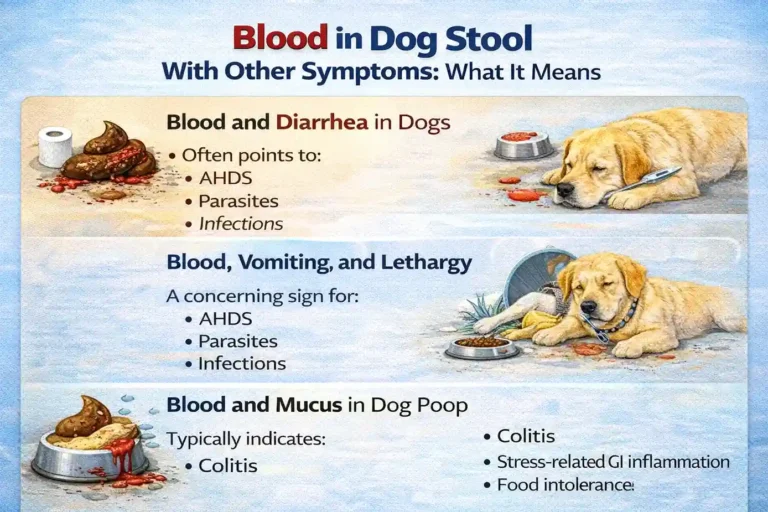
This combination often points to:
- AHDS
- Parasites
- Infections
- Dietary indiscretion
A concerning sign for:
- Parvovirus
- Pancreatitis
- GI obstruction
- Toxins
Typically indicates:
- Colitis
- Stress-related GI inflammation
- Food intolerance
When Is Blood in Dog Stool an Emergency?
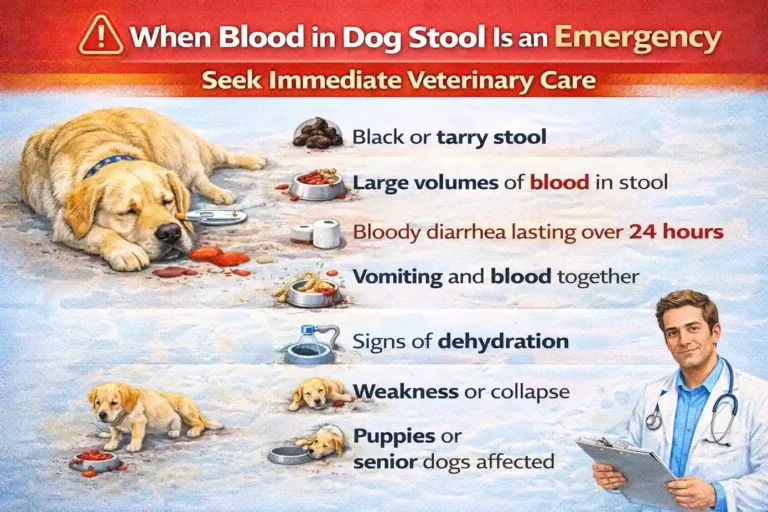
Seek immediate veterinary care if your dog has:
- Black or tarry stool
- Large volumes of blood in stool
- Bloody diarrhea lasting over 24 hours
- Vomiting and blood together
- Signs of dehydration
- Weakness or collapse
- Puppies or senior dogs affected
What to Do If You See Blood in Your Dog’s Stool
- Note color (bright red vs. black)
- Amount of blood
- Consistency of stool
- Frequency of stool
Watch for:
- Vomiting
- Loss of appetite
- Weight loss
- Lethargy
- Abdominal pain
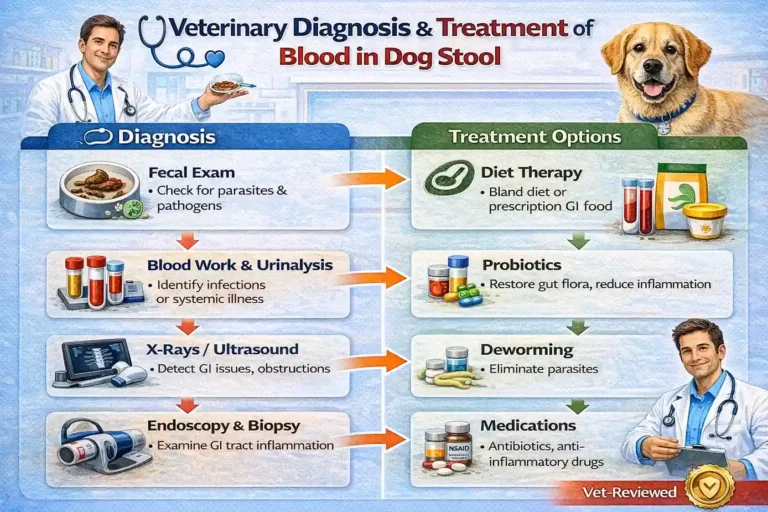
A veterinarian may recommend:
- Fecal examination for parasites
- Blood tests and urinalysis
- X-rays or ultrasound for imaging
- Endoscopy or biopsy for chronic cases
What Not to Do at Home
When you see blood in your dog’s stool, avoid guessing or giving unsafe home treatments.
Do not:
- give human pain medicine
- Give aspirin, ibuprofen, or naproxen
- give leftover antibiotics
- Give anti-diarrhea medicine without vet approval
- ignore black or tarry stool
- Wait several days if blood keeps appearing
- assume blood is from stress without checking warning signs
- Switch foods repeatedly in one day
- give bones, rich treats, or fatty food
- Delay care if vomiting or weakness appears
You can take a clear photo of the stool, note the color and amount of blood, monitor energy and appetite, and call your vet for advice. A stool sample may also help your veterinarian check for parasites or infection.
Treatment Options for Blood in Dog Stool
- Diet Therapy
- A bland diet (boiled chicken + rice) for mild cases
- Prescription GI food or hypoallergenic diets for food intolerance.
- Probiotics
Veterinary-formulated probiotics help:- Restore gut bacteria
- Reduce inflammation
- Improve stool consistency
- Deworming & Antiparasitic Treatment
Deworming is essential if parasites are identified. - Medications
- Antibiotics (only if infection is confirmed)
- Anti-inflammatory drugs for colitis or GI inflammation
- Immune-modulating therapy for IBD cases
- IV fluids for dehydration
Can Blood in Dog Stool Be Prevented?
While blood in stool may not always be preventable, you can reduce risks by:
- Gradually changing your dog’s diet
- Avoiding garbage, bones, and foreign objects
- Regular parasite prevention
- Routine vet checkups for early detection
- Stress management strategies
Frequently Asked Questions (FAQs)
1. Is a small amount of blood in dog stool normal?
No. Even small amounts of blood indicate irritation or injury to the GI tract and should be monitored closely.
2. Can stress cause blood in dog poop?
Yes. Stress colitis is a common cause of fresh blood and mucus in stool.
3. Should I give home remedies for blood in stool?
Never give human medication or supplements without veterinary approval.
4. What does it mean if my dog has bright red blood in stool?
Bright red blood typically points to lower GI tract issues, such as colitis or parasites.
5. How do I tell if my dog’s blood in stool is serious?
If your dog has melena (black, tarry stool), or if blood is accompanied by vomiting, lethargy, or diarrhea, seek immediate veterinary attention.
6. Can food allergies cause blood in dog stool?
Yes, food allergies can cause chronic inflammation, leading to blood or mucus in stool.
7. What should I do if my dog’s stool turns black and tarry?
Black, tarry stool can be a sign of upper GI bleeding and requires urgent veterinary care.
References
PDSA. Blood in your dog’s poo: Causes and when to contact a vet.
https://www.pdsa.org.uk/pet-help-and-advice/pet-health-hub/symptoms/blood-in-your-dogs-stools-
Cornell University College of Veterinary Medicine. Diarrhea in dogs.
https://www.vet.cornell.edu/departments-centers-and-institutes/riney-canine-health-center/canine-health-topics/diarrhea -
VCA Animal Hospitals. Colitis in dogs.
https://vcahospitals.com/south-county/know-your-pet/colitis-in-dogs -
VCA Animal Hospitals. Testing for diarrhea.
https://vcahospitals.com/know-your-pet/testing-for-diarrhea -
Merck Veterinary Manual. Acute hemorrhagic diarrhea syndrome in dogs.
https://www.merckvetmanual.com/digestive-system/diseases-of-the-large-intestine-in-small-animals/acute-hemorrhagic-diarrhea-syndrome-in-dogs