
Dog Diarrhea After Boarding: Stress Colitis, Mucus & When to Worry
Written by: Dr. Muhammad Ihsan Ullah, PhD
Medically Reviewed by: Dr. Khalid Mehmood, PhD (Assistant Professor in Clinical Veterinary Medicine)
Last updated on September 17, 2026
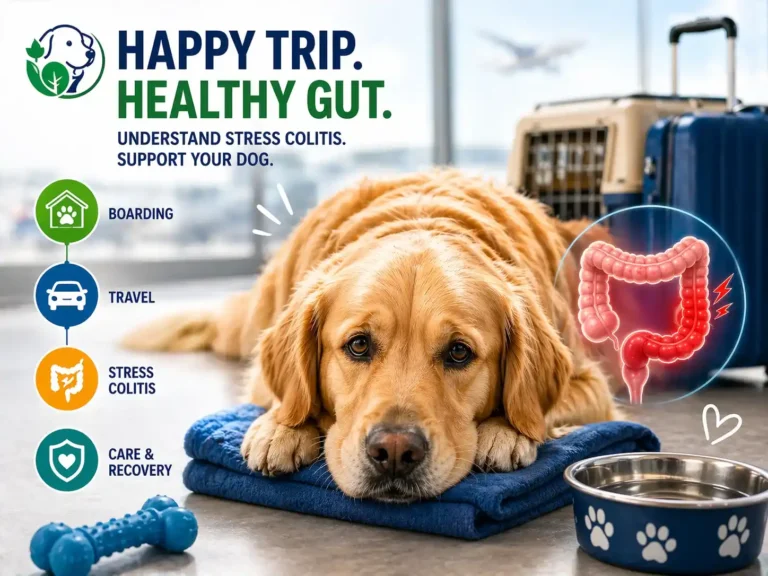
If your dog has diarrhea after boarding, a kennel stay, daycare, or travel, the cause is often linked to stress colitis in dogs—irritation of the colon triggered by routine changes, excitement, anxiety, new surroundings, altered feeding times, or disrupted bathroom habits. Many owners notice dog diarrhea with mucus after boarding, frequent urgent trips outside, straining, small loose stools, or even a small amount of bright red blood. This pattern can look alarming, but in stable dogs that are still bright, drinking, and acting mostly normal, it often fits a large-bowel diarrhea pattern rather than a simple “upset stomach.” This article explains why dog diarrhea after travel or boarding happens, how long dog diarrhea after boarding usually lasts, what signs point to stress colitis, and when symptoms are serious enough to call your veterinarian.
Can Boarding or Travel Cause Stress Colitis in Dogs?
- Stress colitis refers to inflammation and irritation of the colon after a trigger such as:
- boarding
- daycare
- kenneling
- separation from the owner
- car travel
- air travel
- unfamiliar surroundings
- routine disruption
- In practical terms, the colon becomes:
- more sensitive
- more reactive
- less efficient at forming normal stool
- This is why a dog may return from a boarding stay appearing fairly normal in energy but still develop:
- loose stool after boarding stress
- dog diarrhea with mucus after boarding
- frequent urgent bowel movements after travel
- diarrhea after daycare or boarding
- Stress does not automatically cause diarrhea in every dog.
- A more accurate explanation is that boarding and travel can trigger diarrhea in susceptible dogs.
- Contributing factors may include:
- emotional stress
- altered feeding times
- treat overload
- poor sleep
- delayed potty breaks
- unfamiliar water intake
- gut microbiome disruption
- overstimulation
- Some dogs tolerate these changes easily, while others develop a short-term colon flare that owners recognize as post-boarding diarrhea in dogs.
Why Does My Dog Have Diarrhea After Boarding or Travel?
Dog diarrhea after boarding or travel is often caused by stress colitis, a large-bowel irritation triggered by routine changes, excitement, anxiety, altered feeding times, or unfamiliar surroundings. Common signs include frequent small stools, urgency, mucus, straining, and sometimes small streaks of bright red blood. Mild cases often improve within a few days, but vomiting, weakness, dehydration, heavy bleeding, or worsening symptoms need veterinary attention.
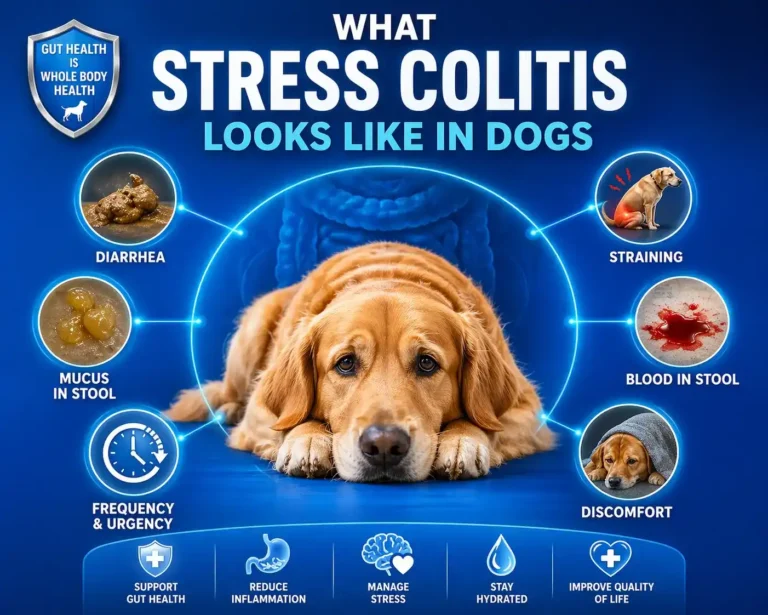
- The boarding and travel environment creates a trigger stack for the canine gut.
- Even when the food brand remains the same, dogs may still experience:
- different feeding times
- different water intake
- extra treats
- fewer or delayed bathroom breaks
- less restful sleep
- greater excitement or anxiety
- Add other factors such as:
- unfamiliar smells
- unfamiliar dogs
- crate time
- transport stress
- pickup/drop-off excitement
- The colonis responsible for:
- stool storage
- water handling
- motility
- the final stage of defecation
- When the colon becomes inflamed:
- Mucus secretion increases
- Stool urgency increases
- absorption becomes less efficient
- Frequent small bowel movements occur
What Does Stress Colitis Poop Look Like in Dogs?
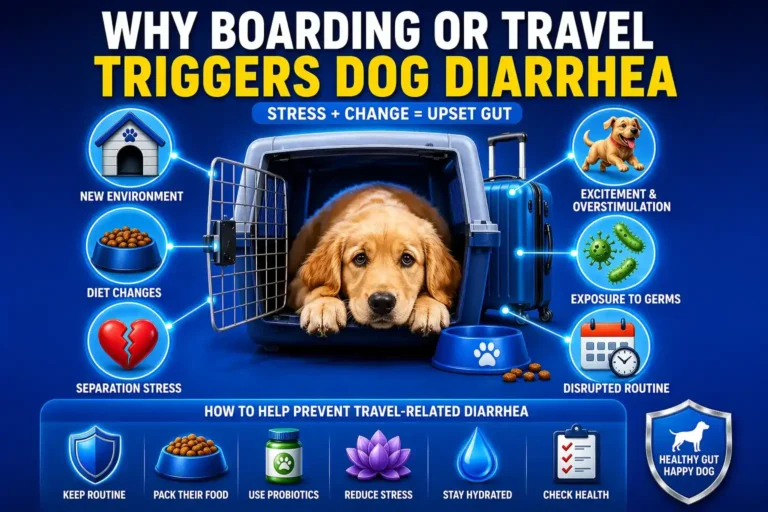
- The typical stress colitis pattern usually includes:
- frequent small stools
- soft stool or loose stool
- mucus in the stool
- bright red blood coating the stool
- urgency
- repeated straining or squatting
- restlessness
- repeated requests to go outside
- This is why owners commonly search:
- dog diarrhea with mucus after boarding
- bright red blood in stool after travel
- dog straining to poop after travel
- frequent small stools after boarding
- The dog keeps asking to go out after boarding
- The classic large-bowel diarrhea pattern is:
- increased urgency
- increased stool frequency
- reduced stool volume per bowel movement
- mucus
- fresh red blood
- Mild cases can look messy and alarming but may still involve a dog that is:
- alert
- hydrated
- interactive
- stable overall
- More concerning signs are:
- repeated vomiting
- large-volume watery diarrhea
- profuse bleeding
- weakness
- collapse
- obvious dehydration
How Long Does Dog Diarrhea After Boarding Last?
- One of the most common owner questions is
- How long does dog diarrhea after boarding last
- How long does stress colitis last in dogs
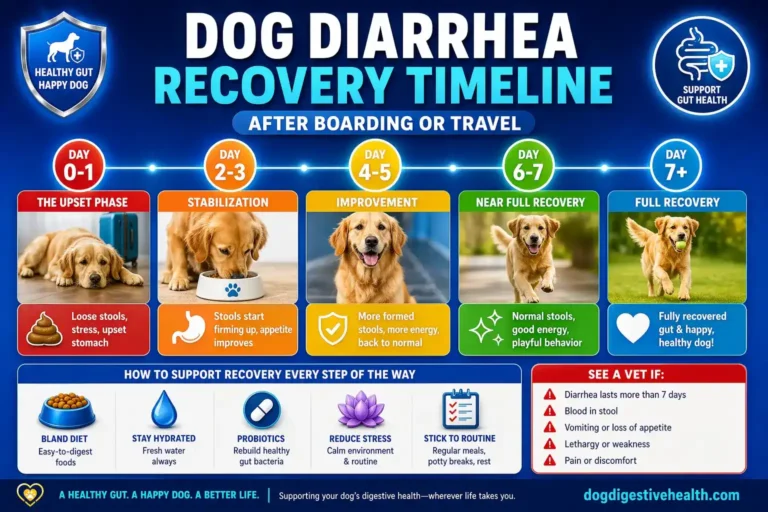
- Many uncomplicated cases improve within a few days.
- Recovery time depends on:
- severity
- hydration status
- underlying gut sensitivity
- whether the case is truly stress colitis or another disorder
- Practical expectations for mild cases:
- Improvement often begins within a few days
- Stool may gradually become less frequent and less urgent
- Mucus and small streaks of blood may settle as the colon recovers
- A mild case is more reassuring when the dog remains:
- bright
- drinking
- eating reasonably
- comfortable
- gradually improving
- A case is more concerning when diarrhea is:
- worsening
- becoming more bloody
- lasting longer than expected
- accompanied by vomiting, lethargy, pain, or weakness
What Can I Do for Dog Diarrhea After Boarding or Travel?
- A modern, evidence-based approach does not assume that antibiotics are automatically needed.
- Many mild and moderate cases of acute diarrhea do not require antimicrobial treatment.
- Unnecessary antibiotics may:
- fail to improve recovery
- disrupt the gut microbiome
- negatively affect normal bacterial balance
- In stable dogs, the focus is usually on:
- hydration
- observation of stool pattern
- monitoring energy level
- dietary support
- avoiding unnecessary medications
- seeking veterinary assessment if red flags appear
- Helpful recovery priorities include:
- keeping fresh water available
- watching for dehydration
- Keeping food routine consistent unless your veterinarian advises otherwise
- avoiding sudden food changes
- avoiding excessive treats
- monitoring whether stool frequency and urgency are improving
- The most useful owner question is not
- “What strongest medicine can I give?”
- The better question is:
- “Is my dog stable, drinking, and gradually improving, or is this moving beyond a simple post-travel colitis pattern?”
When Should I Call a Vet for Dog Diarrhea After Boarding?
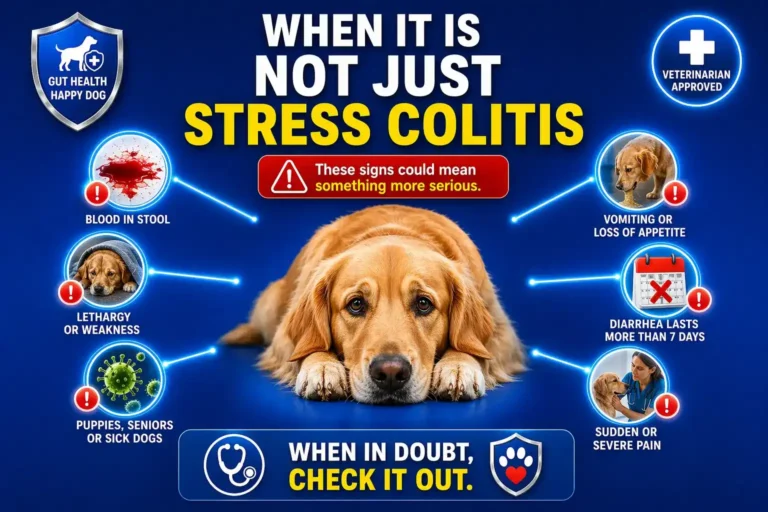
- Stress colitis should never become false reassurance.
- You should be more concerned if your dog has:
- repeated vomiting
- profuse or worsening bloody diarrhea
- marked lethargy
- weakness
- dehydration
- abdominal pain
- collapse
- refusal to drink
- no improvement
- These signs suggest the problem may be more serious than uncomplicated dog diarrhea after boarding or dog diarrhea after travel.
- Severe cases may require:
- veterinary examination
- fluid therapy
- fecal testing
- broader diagnostic workup
- Recurrent episodes should also be taken seriously, especially if your dog gets:
- diarrhea after every boarding stay
- dog diarrhea after every road trip
- dog diarrhea with mucus after boarding repeatedly
- Recurrent patterns may suggest:
- a sensitive colon
- dietary sensitivity
- parasite risk
- microbiome instability
- another underlying gastrointestinal condition
How Can I Prevent Dog Diarrhea Before the Next Boarding Stay or Trip?
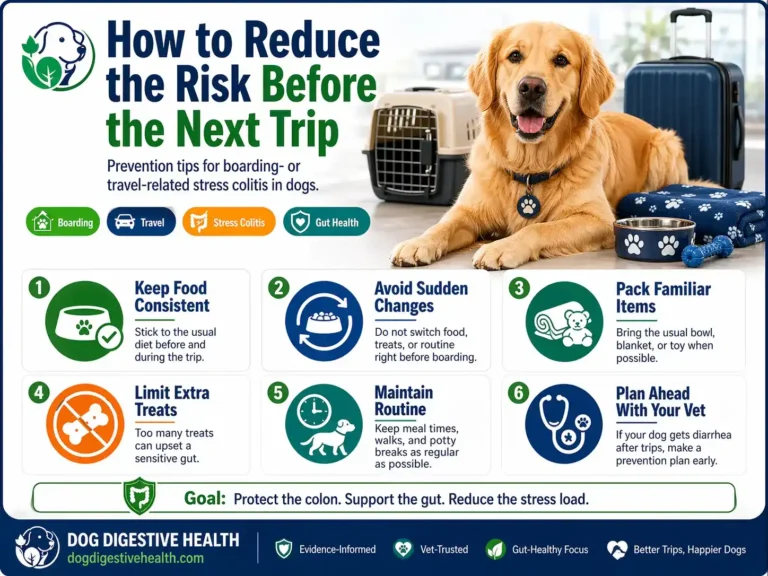
- If your dog has a history of dog diarrhea after boarding or dog diarrhea after travel, prevention should focus on reducing the triggers that irritate the colon.
- Helpful prevention steps include:
- keeping food consistent
- avoiding sudden diet changes
- limiting extra treats before and during boarding
- providing exact feeding instructions to the boarding facility
- maintaining a familiar routine as much as possible
- using familiar bedding, bowls, or comfort items when allowed
- minimizing drop-off and pickup chaos
- If your dog has repeat episodes:
- Discuss a preventive plan with your veterinarian before the next boarding stay or trip
- Do not wait until the flare has already started
- The prevention goal is not just “keep your dog calm.”
- The real goal is to support:
- the colon
- the gut microbiome
- consistent feeding patterns
- stable bathroom routines
- reduced transport stress
- better recognition of early signs
Conclusion:
- The most medically accurate explanation for dog diarrhea after boarding or travel is that many dogs develop a short-term stress colitis or large-bowel diarrhea pattern after:
- boarding
- kennel stays
- daycare
- car rides
- flights
- routine disruption
- environmental change
- The classic signs are:
- frequent small stools
- urgency
- mucus
- fresh red blood
- repeated attempts to pass stool
- Many uncomplicated cases improve within a few days.
- Persistent, worsening, or systemic signs should never be brushed off as “just stress.”
- Modern evidence also supports a more careful treatment approach:
- Mild and moderate cases often do not need antibiotics
- Unnecessary metronidazole may negatively affect the canine gut microbiome
- Close monitoring and supportive care are often more appropriate in stable dogs
Medical Disclaimer
This article is for educational purposes only and is not a substitute for professional veterinary diagnosis, advice, or treatment. Dog diarrhea after boarding, travel, daycare, or a kennel stay can have many possible causes, including stress colitis, dietary changes, infections, parasites, toxin exposure, or other gastrointestinal conditions.
Frequently Asked Questions(FAQs)
1. Is diarrhea after boarding normal in dogs?
- It is fairly common, especially in sensitive dogs.
- It should not be ignored if it is severe, persistent, or associated with vomiting, lethargy, or worsening blood in the stool.
2. Can stress colitis cause mucus in a dog’s stool?
Yes, mucus is one of the classic signs of large-bowel irritation and stress colitis.
3. Can stress colitis cause bright red blood?
- Yes
- A small amount of fresh red blood can happen with colon irritation.
- Heavy or worsening bleeding needs veterinary attention.
4. How long does dog diarrhea after travel usually last?
- Many mild cases improve within a few days.
- Ongoing or worsening diarrhea should be checked by a veterinarian.
5. What does stress colitis stool look like in dogs?
It is often soft or loose, passed in small amounts, and may contain mucus or streaks of bright red blood.
6. Should dogs with post-boarding diarrhea always get antibiotics?
- No
- Many mild and moderate cases do not need antibiotics and may recover with supportive care instead.
7. When should I worry about dog diarrhea after boarding?
You should worry more if there is repeated vomiting, marked lethargy, dehydration, worsening bloody diarrhea, pain, or no improvement.
References
- O’Neill, D. G., Prisk, L. J., Brodbelt, D. C., Church, D. B., & Allerton, F. (2025). Epidemiology and clinical management of acute diarrhoea in dogs under primary veterinary care in the UK. PLOS ONE, 20(6), e0324203. https://doi.org/10.1371/journal.pone.0324203
- Jessen, L. R., Werner, M., Singleton, D., Prior, C., Foroutan, F., Ferran, A. A., Arenas, C., Bjørnvad, C. R., Lavy, E., Allerton, F., Allensbach, K., Guardabassi, L., Unterer, S., Bodnárová, T., Windahl, U., Brennan, M. L., Weese, J. S., & Scahill, K. (2024). European Network for Optimization of Veterinary Antimicrobial Therapy (ENOVAT) guidelines for antimicrobial use in canine acute diarrhoea. The Veterinary Journal, 307, 106208. https://doi.org/10.1016/j.tvjl.2024.106208
- Stübing, H., Suchodolski, J. S., Reisinger, A., Werner, M., Hartmann, K., Unterer, S., & Busch, K. (2024). The effect of metronidazole versus a synbiotic on clinical course and core intestinal microbiota in dogs with acute diarrhea. Veterinary Sciences, 11(5), 197. https://doi.org/10.3390/vetsci11050197
- Holz, M., Fritz, J., Suchodolski, J. S., Werner, M., & Unterer, S. (2025). Effects of dietary cellulose on clinical and gut microbiota recovery in dogs with uncomplicated acute diarrhea: A randomized prospective clinical trial. Journal of the American Veterinary Medical Association, 263(2), 169–177. https://doi.org/10.2460/javma.24.07.0476
- Lyu, Y., Su, C., Sun, K., Wang, Y., Zhang, L., Pu, J., Wu, C., Thomas, D., & Che, L. (2026). Post-transport recovery trajectory of the canine gut microbiome and metabolome. Journal of Animal Science and Biotechnology, 17, 65. https://doi.org/10.1186/s40104-026-01385-z