Why Does My Dog’s Poop Smell So Bad Suddenly?
Written by: Dr. Akram Khan, DVM
Medically Reviewed by: Dr. Khalid Mehmood, PhD
Last updated on September 06, 2026
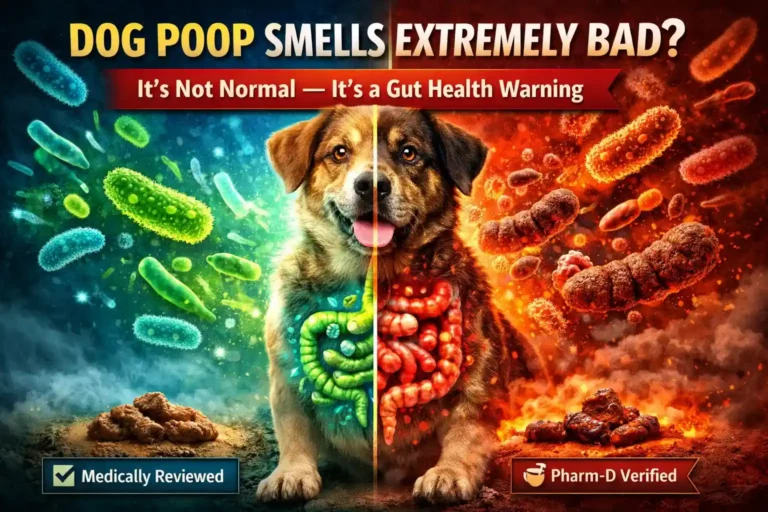
If you’re wondering why my dog’s poop smells so bad, especially when the odor is stronger than usual, sour, rotten, metallic, or like rotten eggs, it’s worth paying attention. Sometimes the cause is simple, such as a sudden food change, rich treats, or eating something outside. But when dog poop smells bad all of a sudden or keeps coming back, it may point to poor digestion, gut imbalance, food intolerance, parasites, malabsorption, exocrine pancreatic insufficiency, or inflammatory bowel disease. In this guide, you’ll learn the most common foul-smelling dog stool causes, how gut imbalance affects odor, and when to worry about smelly dog poop enough to call your veterinarian.
Why Extremely Bad-Smelling Dog Poop Is Not Always Normal
- Many dog owners assume stool is always supposed to smell awful.
- That is not true.
- Healthy stool usually has a noticeable but manageable odor.
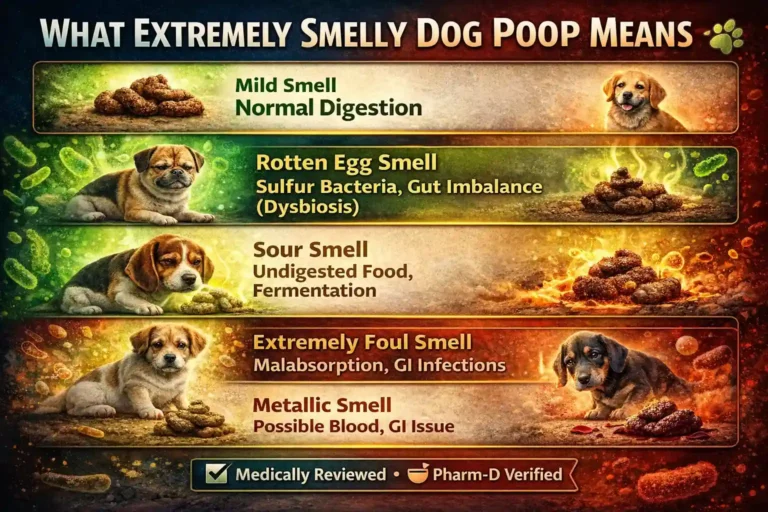
- When the smell becomes abnormally strong, persistent, putrid, sour, or unusually offensive, it may reflect:
- poor digestibility
- intestinal inflammation
- bacterial overgrowth
- dysbiosis
- malabsorption
- The smell of stool is influenced by:
- bacterial fermentation in the intestines
- breakdown of proteins and fats
- sulfur-containing compounds such as hydrogen sulfide
- the balance of beneficial and harmful gut microbes
- stool transit time
- how much undigested material reaches the colon
- This is why dog poop smells worse than normal in many gut-related conditions.
- A stool odor change alone is not a diagnosis, but it is often an important clue.
What Causes Dog Poop to Smell Extremely Bad
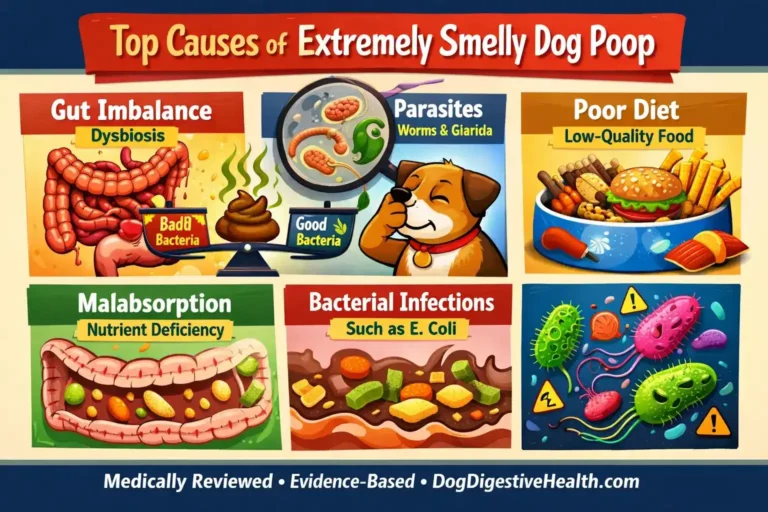
Poor-Quality or Poorly Digestible Dog Food
- One of the most common reasons dog poop smells extremely bad is poor digestibility.
- If a food contains:
- lower-quality ingredients
- excess fillers
- poorly digestible protein sources
- too much fat
- More undigested material reaches the large intestine.
- Bacteria then ferment that material and create stronger-smelling waste.
- This is also why owners ask: can dog food cause really smelly poop?
- Yes, it can.
Sudden Food Changes and Digestive Upset
- A sudden diet switch can disturb the gut microbiome in dogs.
- That can lead to:
- loose stool
- gas
- bloating
- dog poop smells bad after food change
- Even a healthy new diet can cause problems if introduced too quickly.
High-Fat or Very Rich Meals
- Greasy table scraps, rich treats, fatty meats, and sudden indulgent feeding can trigger digestive upset.
- Fat is harder for some dogs to process, especially dogs with:
- pancreatic problems
- sensitive stomachs
- The result may be:
- foul smelling dog stool
- flatulence
- diarrhea
Food Intolerance or Food Allergy
- A food intolerance dog poop smells badpattern is very common.
- Some dogs react poorly to:
- specific proteins
- dairy
- wheat
- certain additives
- These reactions can lead to:
- incomplete digestion
- intestinal irritation
- mucus in stool
- gas
- recurrent loose stool
- stronger stool odor
- If your dog repeatedly develops smelly stool after eating the same ingredient or formula, intolerance should be considered.
Undigested Food Fermentation in the Gut
- When digestion is inefficient, nutrients remain in the intestinal tract.
- These nutrients become fuel for microbial fermentation.
- This process increases:
- gas
- fermentation byproducts
- odor compounds
- That may make:
- dog stool smell sour
- stool smell unusually pungent
- stool smell intensely rotten
- This mechanism is closely tied to gut imbalance, also called dysbiosis.
Parasites, Worms, or Gut Infections
- If you are wondering, does dog poop smell bad from parasites?
- Yes, it can.
- Parasites such as
- giardia
- coccidia
- hookworms
- roundworms
- whipworms
- Can irritate the gut lining, worsen absorption, and trigger very foul-smelling stool.
- Infectious diarrhea from bacteria or viruses can do the same.
Malabsorption and Exocrine Pancreatic Insufficiency (EPI)
- A major medical cause of foul-smelling stool in dogs is exocrine pancreatic insufficiency, or EPI.
- In EPI, the pancreas does not produce enough digestive enzymes.
- Food is then poorly digested.
- This can cause:
- weight loss
- loose stools
- pale stool
- voluminous stool
- malodorous stool
- That means EPI in dogs with foul-smelling stool is a classic red-flag pattern.
- Dogs may also have:
- weight loss despite eating well
- increased appetite
- large stool volume
- greasy or pale stool
- poor coat quality
vitamin deficiencies
Inflammatory Bowel Disease and Chronic Enteropathy
- Chronic inflammatory enteropathies can cause smelly dog poop and gut imbalance.
- Inflammation changes:
- the intestinal barrier
- immune response
- microbial composition
- Dogs with chronic enteropathy may have:
- diarrhea
- vomiting
- flatulence
- weight loss
- poor appetite
- abdominal discomfort
- symptoms that come and go for weeks
Scavenging Trash, Rotten Food, or Outdoor Debris
- Dogs that eat:
- spoiled leftovers
- garbage
- feces
- dead material
- Often develop acute GI upset and intensely smelly stool.
- This is one of the most overlooked reasons why is my dog’s poop so smelly.
Antibiotics and Medication-Related Gut Disruption
- Antibiotics can disturb the normal microbial balance.
- In some cases, this can temporarily worsen:
- stool smell
- stool consistency
- flatulence
How Gut Imbalance Can Make Dog Stool Smell Worse
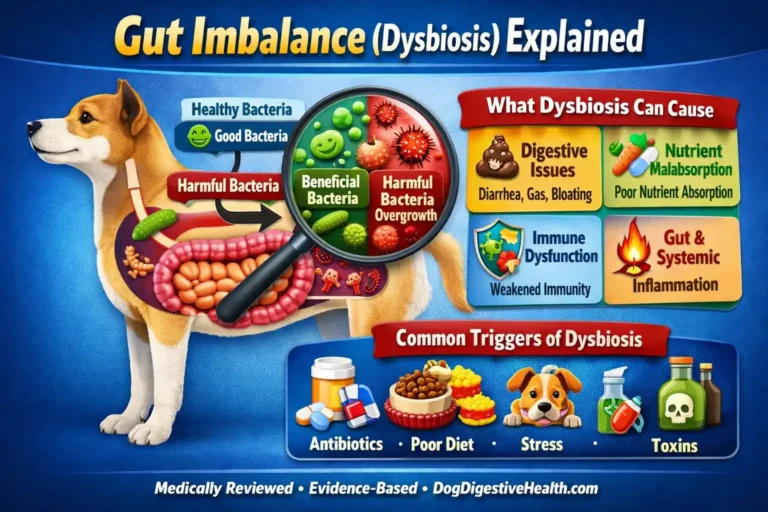
What “Gut Imbalance” Means in Dogs
- The canine gut microbiome is made up of trillions of microorganisms.
- These microbes influence:
- digestion
- immune regulation
- nutrient metabolism
- stool formation
- When that system is disrupted, less favorable bacterial patterns may become dominant.
- This state is called intestinal dysbiosis.
- Dysbiosis is linked with:
- diarrhea
- gas and bloating
- inconsistent stool
- intestinal inflammation
- poor fermentation patterns
- stronger fecal odor
How Odor-Producing Bacteria Increase Stool Smell
- Certain gut bacteria generate stronger-smelling compounds when they break down proteins and other substrates.
- When digestion is disturbed, this process intensifies.
- That is why dog poop smells like rotten eggs in some cases.
- Sulfur compounds, especially hydrogen sulfide, can become more prominent.
Why Fermentation Causes Rotten or Sour-Smelling Poop
- Poorly digested carbohydrates and proteins undergo abnormal fermentation.
- That fermentation can shift fecal metabolites and increase the release of irritating and odor-heavy compounds.
- Owners may describe the smell as:
- rotten
- sour
- metallic
- chemically strong
Can Probiotics Help?
- Probiotics, prebiotics, postbiotics, and synbiotics may help support gut balance in some dogs.
- They may be useful, especially when dysbiosis is part of the problem.
- However, they are not a replacement for diagnosing the actual cause.
When Extremely Bad-Smelling Dog Poop Is a Warning Sign
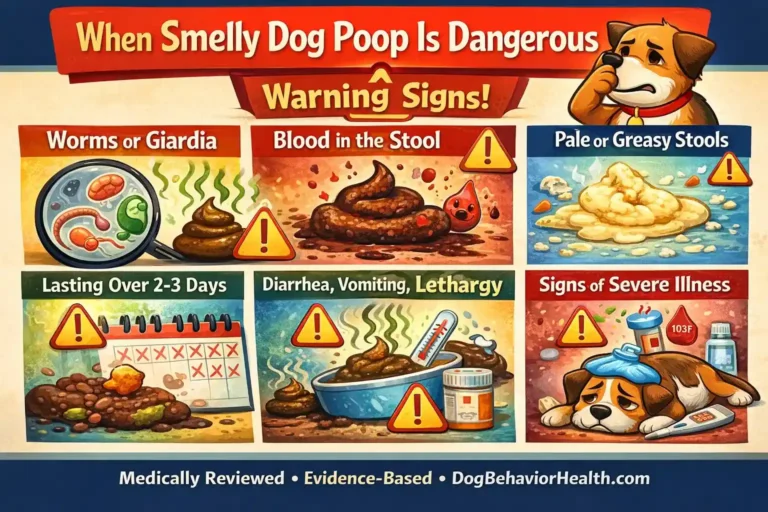
- Not every case of smelly dog poop is an emergency.
- But some combinations of symptoms should raise concern.
Bad Smell Plus Diarrhea
- If dog poop smells bad with diarrhea, the issue may be:
- dietary indiscretion
- infection
- parasites
- dysbiosis
- hemorrhagic diarrhea syndrome
- inflammatory bowel disease
Bad Smell Plus Blood or Black Stool
- Fresh red blood can suggest:
- colitis
- parasites
- hemorrhagic diarrhea
- severe irritation
- Black, tarry stool may indicate digested blood from higher in the GI tract.
- This needs prompt veterinary attention.
Bad Smell Plus Vomiting, Lethargy, or Abdominal Pain
- This combination can indicate a more serious illness.
- It should not be ignored.
Bad Smell Plus Weight Loss or Poor Appetite
- This pattern can suggest:
- malabsorption in dogs
- chronic enteropathy
- EPI
- another significant medical condition
- Weight loss together with loose, malodorous stools is especially important to investigate.
Bad Smell That Keeps Coming Back
- If you keep noticing dog poop smells bad but looks normal, but the problem keeps returning, do not ignore it.
- Recurrent odor changes can still point to:
- diet intolerance
- dysbiosis
- early digestive disease
When to Call Your Vet
- Contact your veterinarian sooner rather than later if your dog has:
- stool that smells extremely bad for more than a couple of days
- diarrhea lasting more than 24 to 48 hours
- blood in the stool
- black stool
- vomiting
- weakness
- lethargy
- dehydration
- abdominal pain
- loss of appetite
- weight loss
- repeated episodes after meals or food changes
- These patterns may require:
- a fecal test
- parasite screening
- diet history review
- bloodwork
- pancreatic testing
- further GI workup
What Helps if Your Dog’s Poop Smells Extremely Bad
- The right treatment depends on the cause.
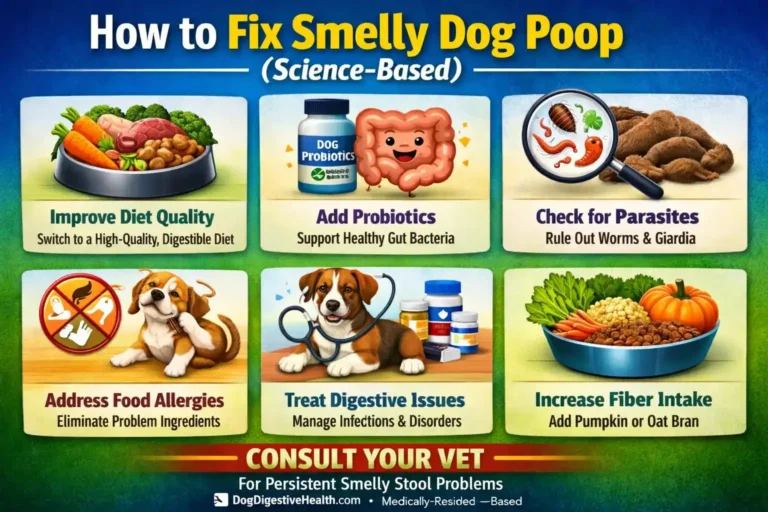
- Common evidence-based steps may include:
- reviewing the diet and ingredient quality
- making food changes gradually
- avoiding table scraps and fatty foods
- checking for parasites
- considering pancreatic disease if weight loss and voluminous stool are present
- addressing suspected food intolerance
- using probiotics or other microbiome-supportive options when appropriate
- avoiding unnecessary antibiotics unless clearly indicated
- The goal is not just to reduce odor.
The goal is to fix the reason the stool smells bad in the first place.
Final Takeaway
- Dog poop smells extremely bad for a reason.
- Sometimes the explanation is simple, such as
- a sudden diet change
- eating trash
- Other times, it can signal:
- gut microbiome imbalance
- food intolerance
- parasites
- malabsorption
- inflammatory bowel disease
- exocrine pancreatic insufficiency
- The most important question is not just, why does my dog’s poop smell so bad?
- It is whether the smell is happening with other warning signs such as:
- diarrhea
- blood
- vomiting
- lethargy
- weight loss
- repeated recurrence
- If the odor is
- intense
- unusual
- persistent
- paired with other digestive symptoms
- It is best to take it seriously and get veterinary guidance.
Medical Disclaimer
- This article is for educational purposes only.
- It is not a substitute for veterinary diagnosis or treatment.
- If your dog has severe, persistent, bloody, or recurrent foul-smelling stool, contact a licensed veterinarian promptly.
Frequently Asked Questions(FAQs)
1. Why does my dog’s poop smell so bad all of a sudden?
A sudden change is often linked to:
- diet change
- eating garbage
- infection
- parasites
- digestive upset
2. Can dog food cause really smelly poop?
- Yes
- Poor digestibility, excess fat, or an ingredient intolerance can make stool smell much worse.
3. Does dog poop smelling like rotten eggs mean something is wrong?
- It can.
- Rotten egg odor may happen when sulfur-producing bacteria and abnormal fermentation increase in the gut.
4. Can parasites make dog stool smell extremely bad?
- Yes
- Parasites and intestinal infections can irritate the gut and cause very foul-smelling diarrhea or stool.
5. When should I worry about smelly dog poop?
You should worry if it comes with:
- diarrhea
- blood
- vomiting
- weight loss
- lethargy
- poor appetite
- or if it lasts more than a day or two
6. Can gut imbalance make dog stool smell worse?
- Yes
- Gut imbalance, also called dysbiosis, can change fermentation patterns and increase odor-producing compounds.
7. Will probiotics help smelly dog poop?
- They may help in some dogs, especially when gut imbalance is part of the problem.
- But they do not replace a proper diagnosis.
References
- Dupouy-Manescau, N., Freiche, V., Charlot, K., Martinez-López, L. M., Dandrieux, J. R. S., Allenspach, K., Steiner, J. M., Suchodolski, J. S., German, A. J., Cerquetella, M., Heilmann, R. M., & Salavati Schmitz, S. (2024). Updating the classification of chronic inflammatory enteropathies in dogs. Animals, 14(5), 751.
- Salavati Schmitz, S. (2024). Evidence-based use of biotics in the management of gastrointestinal disorders in dogs and cats. Veterinary Record, 195(S2), 26–32.
- Steiner, J. M. (2025). Exocrine pancreatic insufficiency in dogs and cats. In MSD Veterinary Manual.
- Collier, A. (2025). Acute hemorrhagic diarrhea syndrome in dogs. In Merck Veterinary Manual.
- Llera, R., Williams, K., & Ward, E. (n.d.). Diarrhea in dogs. VCA Animal Hospitals.
- Pilla, R., & Suchodolski, J. S. (2020). The role of the canine gut microbiome and metabolome in health and gastrointestinal disease. Frontiers in Veterinary Science, 6, 498.