
Why Does My Dog Keep Having Diarrhea? Causes & Warning Signs
Written by: Dr. Akram Khan, DVM
Medically Reviewed by: Dr. Khalid Mehmood, PhD (Assistant Professor in Clinical Veterinary Medicine)
Last updated on September 17, 2026
This article is for educational purposes only and is not a substitute for professional veterinary advice. Always consult a veterinarian if your dog experiences recurring or severe diarrhea.
Why Does My Dog Keep Having Diarrhea Again and Again?
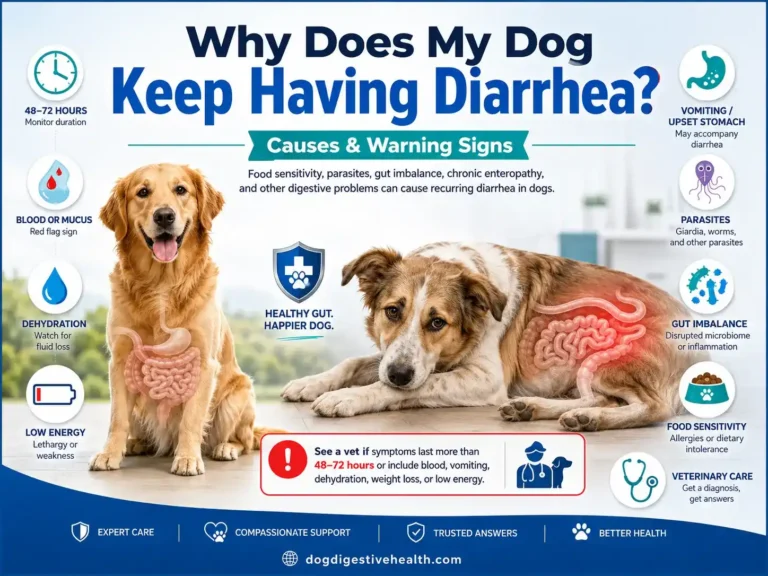
If your dog keeps having diarrhea, it can be stressful and confusing, especially when the loose stool improves for a few days and then comes back again. Recurring diarrhea in dogs may happen because of food sensitivity, parasites such as Giardia, gut microbiome imbalance, inflammatory bowel disease, or another health problem affecting digestion. While a one-time upset stomach is often mild, dog diarrhea that keeps coming back should not be ignored, especially if it lasts more than 48–72 hours or appears with blood, mucus, weight loss, vomiting, dehydration, or low energy. Understanding why your dog has diarrhea again and again can help you know when home care is enough and when to take your dog to the vet for diarrhea.
If your dog keeps having diarrhea, it may be due to food sensitivity, parasites such as Giardia, gut microbiome imbalance, inflammatory bowel disease, or another digestive health problem. See a vet if diarrhea lasts more than 48–72 hours, keeps coming back, or appears with blood, mucus, vomiting, weight loss, dehydration, or low energy.
Why Does My Dog Keep Having Diarrhea? Causes & When to See a Vet
Recurring diarrhea in dogs happens when loose stools return repeatedly due to chronic gastrointestinal issues, food sensitivities, or parasite infections. Dogs should be taken to a veterinarian if diarrhea lasts more than 48–72 hours, occurs frequently over weeks, or comes with weight loss, lethargy, blood in the stool, or signs of dehydration. Early veterinary care ensures proper diagnosis and effective treatment, improving your dog’s overall digestive health and quality of life.
Is My Dog’s Diarrhea Recurring or Just a One-Time Upset Stomach?
Acute diarrhea usually resolves within a day or two and often improves with rest and a bland diet. Recurring diarrhea, however:
- Comes back after seeming improvement
- Persists beyond a few days
- May indicate a more serious underlying condition
Paying attention to these patterns helps determine when a veterinary checkup is necessary.
Why Does My Dog’s Diarrhea Keep Coming Back After It Gets Better?
There are several possible reasons your dog might experience recurring diarrhea:
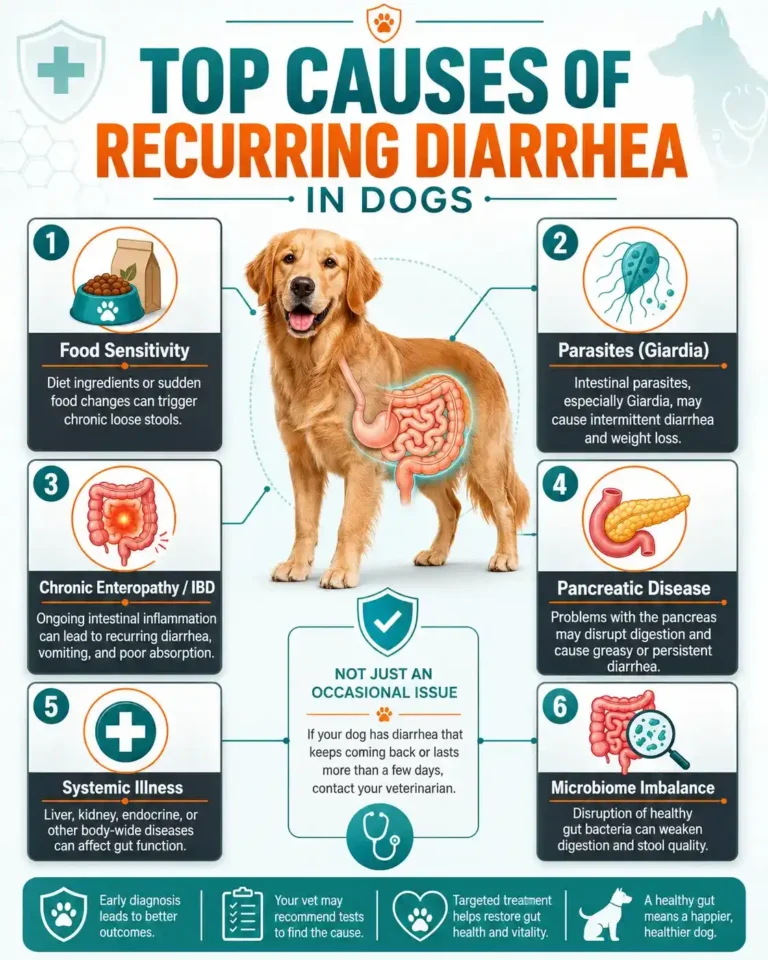
a) Chronic Inflammatory Enteropathy
Conditions such as inflammatory bowel disease or other chronic enteropathies often cause repeated diarrhea episodes.
b) Food Intolerance or Sensitivity
Some dogs react to certain proteins, fats, or additives in their diet, which can trigger ongoing digestive upset.
c) Parasites or Infections
Persistent infections or parasites like Giardia may contribute to repeated diarrhea, and imbalances in gut bacteria can worsen the problem.
d) Systemic Illness
Diseases affecting the liver, kidneys, pancreas, or endocrine system can cause chronic diarrhea.
e) Gut Microbiome Imbalance
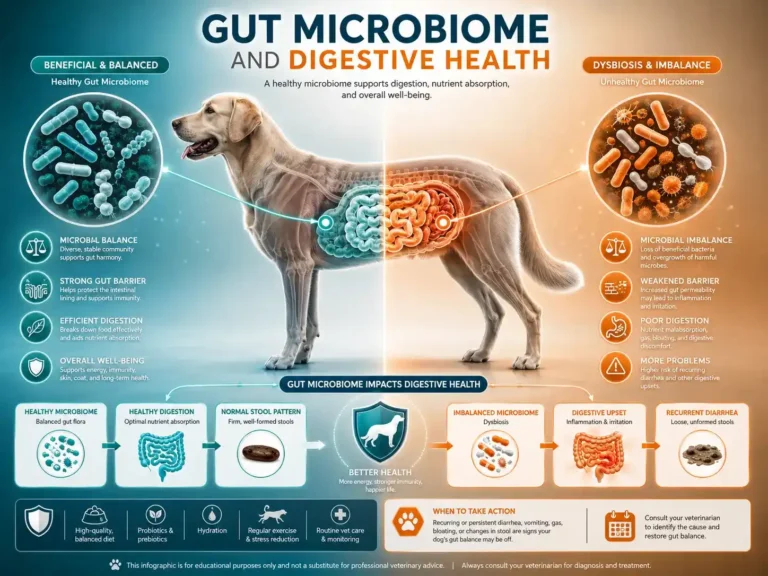
A disruption in the natural balance of gut bacteria can lead to recurring loose stools and inflammation.
What Happens Inside a Dog’s Body During Chronic Diarrhea?
Several mechanisms can contribute to recurring diarrhea:
- Malabsorption or maldigestion due to intestinal damage or pancreatic insufficiency
- Immune system disturbances, particularly in inflammatory bowel disease
- Gut bacterial imbalances, which affect nutrient absorption and inflammation
Understanding these mechanisms can help guide treatment decisions.
When Should I Worry About Recurring Diarrhea in My Dog?
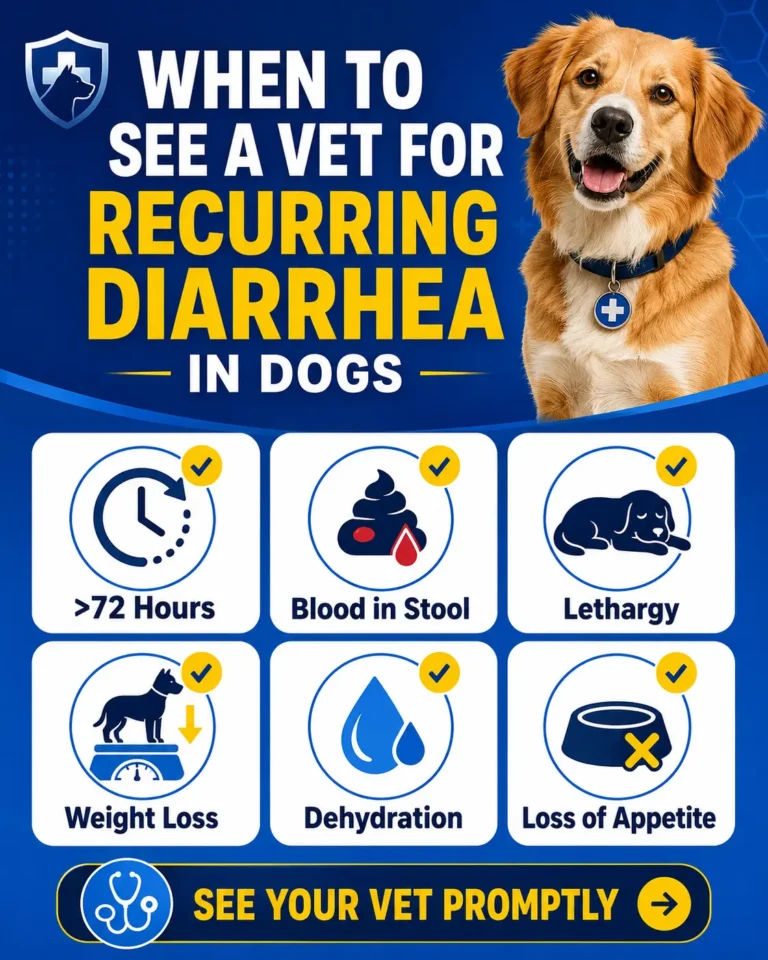
Recurring diarrhea should be addressed promptly if your dog shows:
- Diarrhea lasting more than 48–72 hours or coming back frequently
- Weight loss or decreased body condition
- Blood or mucus in the stool
- Signs of dehydration, lethargy, or reduced appetite
What Warning Signs Mean Dog Diarrhea Is Serious?
Other signs that warrant a checkup include:
- Persistent diarrhea despite home care
- Chronic vomiting or fever
- Pale gums or other changes in appearance
- Lab test abnormalities such as low protein or anemia
Timely evaluation can prevent more serious complications.
What Tests Do Vets Run for Chronic Diarrhea in Dogs?
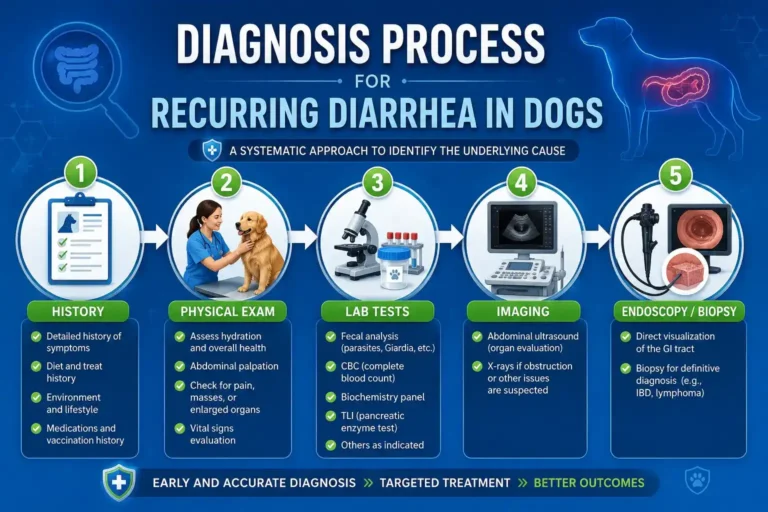
A veterinarian may use several steps to determine the cause:
Step 1: Detailed History
Information about diet, the frequency and pattern of diarrhea, recent changes in environment, and exposure to other animals.
Step 2: Physical Examination
Assessment of the abdomen, body condition, hydration, and overall health.
Step 3: Lab Testing
Bloodwork, including complete blood count and chemistry, pancreatic enzyme tests, and stool tests for parasites or bacterial imbalances.
Step 4: Imaging
X-rays and abdominal ultrasound to look for structural problems or masses.
Step 5: Endoscopy & Biopsy
If chronic inflammation or enteropathy is suspected, tissue samples may be collected to examine the intestinal lining.
What Else Can Cause Dog Diarrhea Besides Food?
Other possible causes include:
- Food-responsive enteropathy
- Antibiotic-responsive diarrhea
- Immune-mediated inflammation
- Parasitic infections
- Systemic illness affecting the digestive tract
A thorough examination helps narrow down the cause.
Can Recurring Diarrhea in Dogs Be Treated Successfully?
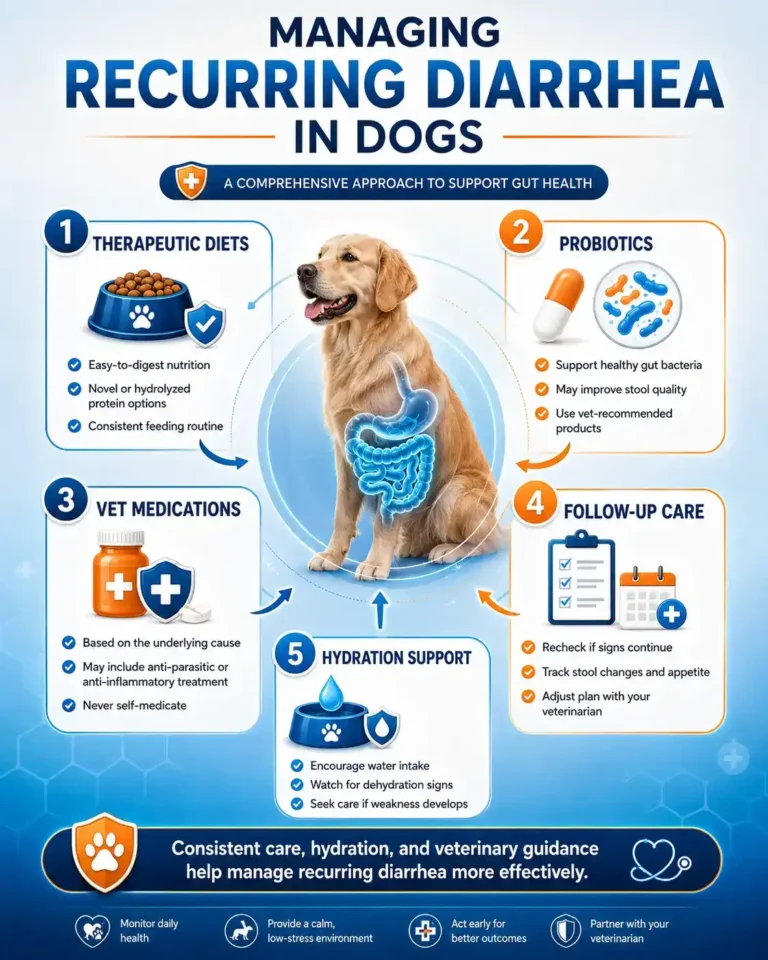
The outlook depends on the underlying cause:
- Diet-responsive conditions often improve quickly with an elimination or specialized diet
- Antibiotic- or immune-mediated enteropathies may require ongoing treatment and monitoring
- Serious systemic conditions may require long-term care
Adding fiber and appropriate nutrition can improve digestive health and reduce recurrence.
What Is the Best Treatment for Chronic Diarrhea in Dogs?
Common approaches include:
- Therapeutic or elimination diets suited to your dog
- Probiotics or prebiotics to support gut health
- Medications when indicated by a veterinarian
- Regular follow-up and adjustments to treatment as needed
Can Gut Microbiome Imbalance Cause Loose Stool in Dogs?
Changes in gut bacteria can influence inflammation, digestion, and overall gut health. Supporting the microbiome with a proper diet and supplements can reduce recurring diarrhea and promote better nutrient absorption.
What Are Common Myths About Chronic Diarrhea in Dogs?
- Frequently changing diets will fix diarrhea—it can sometimes make it worse
- Normal bloodwork always means nothing is wrong—some conditions require more advanced testing
- Home remedies can replace veterinary care—ongoing or serious conditions need professional evaluation
What Should Dog Owners Remember About Recurring Diarrhea?
- Recurring diarrhea is a sign that something may be affecting your dog’s digestive system
- Episodes lasting longer than a couple of days or happening repeatedly should prompt a veterinary visit
- A thorough examination helps identify the cause and guide effective treatment
Supporting your dog’s diet, gut bacteria, and medical care can improve long-term health and comfort
Medical Disclaimer
This article is for educational purposes only and is not a substitute for professional veterinary advice. Always consult a veterinarian if your dog experiences recurring or severe diarrhea.
FAQs:
1. Why does my dog keep having diarrhea?
Recurring diarrhea can be caused by food sensitivities, chronic intestinal issues, parasites, or other underlying health problems.
2. When should I take my dog to the vet for diarrhea?
If diarrhea lasts more than 2–3 days, recurs frequently, or comes with weight loss, lethargy, blood in stool, or dehydration, a veterinary visit is recommended.
3. Can diet changes help with recurring diarrhea in dogs?
Yes, elimination diets or specially formulated therapeutic diets often improve symptoms, especially if food sensitivities are involved.
4. Are parasites a common cause of recurring diarrhea?
Yes, persistent parasites such as Giardia can lead to repeated bouts of diarrhea if not properly treated.
5. How do veterinarians diagnose chronic diarrhea?
Diagnosis usually involves a detailed history, physical exam, lab tests, imaging, and sometimes endoscopy with biopsy to identify underlying conditions.
6. Can probiotics help my dog’s diarrhea?
Probiotics can support gut health and help restore microbial balance, which may reduce recurring diarrhea in some dogs.
7. Is recurring diarrhea dangerous for my dog?
Persistent diarrhea can lead to dehydration, nutrient deficiencies, or signal serious underlying illness, so timely veterinary evaluation is important.
References
- Fritsch, D. A., Wernimont, S. M., Jackson, M. I., MacLeay, J. M., & Gross, K. L. (2022). A prospective multicenter study of the efficacy of a fiber-supplemented dietary intervention in dogs with chronic large bowel diarrhea. BMC Veterinary Research, 18, 244. doi:10.1186/s12917-022-03302-8
- Kuzi, S., Zgairy, S., Byrne, B. A., Suchodolski, J. S., Koren, O., & Lavy, E. (2024). Giardiasis and diarrhea in dogs: Does the microbiome matter? Journal of Veterinary Internal Medicine, 38(1), 152–160. doi:10.1111/jvim.16894
- Volkmann, M., Steiner, J. M., Fosgate, G. T., Zentek, J., Hartmann, S., & Kohn, B. (2017). Chronic diarrhea in dogs — Retrospective study in 136 cases. Journal of Veterinary Internal Medicine, 31(4), 1043–1055. doi:10.1111/jvim.14739
- Werner, M., Suchodolski, J. S., Lidbury, J. A., Steiner, J. M., Hartmann, K., & Unterer, S. (2021). Diagnostic value of fecal cultures in dogs with chronic diarrhea. Journal of Veterinary Internal Medicine, 35(1), 199–208. doi:10.1111/jvim.15982
- Jergens, A. E., & Heilmann, R. M. (2022). Canine chronic enteropathy—Current state-of-the-art and emerging concepts. Frontiers in Veterinary Science, 9, 923013. doi:10.3389/fvets.2022.923013
- Suchodolski, J. S. (2016). Diagnosis and interpretation of intestinal dysbiosis in dogs and cats. The Veterinary Journal, 215, 30–37. doi:10.1016/j.tvjl.2016.04.011