
Best Wet Dog Food for Sensitive Stomach & Loose Stools
Written by: Dr. Akram Khan, DVM
Medically Reviewed by: Dr. Khalid Mehmood, PhD
Last updated on September 06, 2026
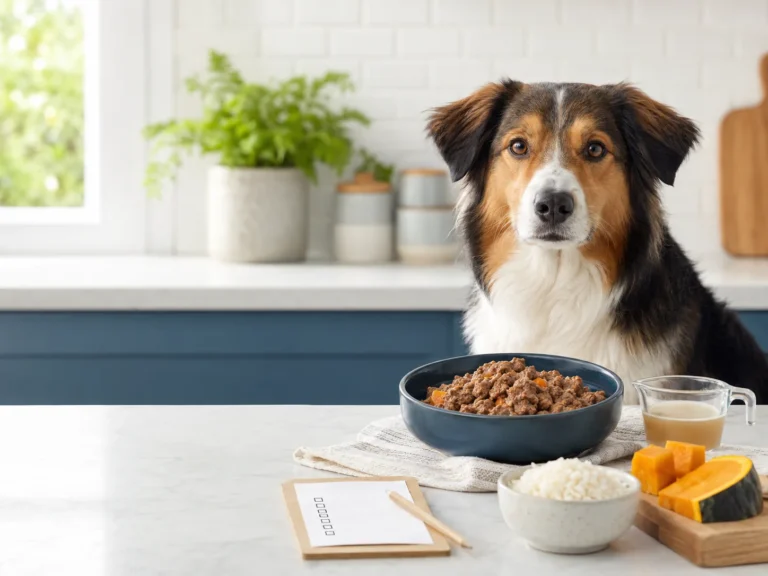
Choosing the best wet dog food for sensitive stomachs & loose stools is not about picking the softest canned food or the most expensive brand. Many dog owners look for the best canned dog food for loose stools, wet dog food for diarrhea-prone dogs, or vet-recommended wet dog food for sensitive stomachs because they want something gentle, digestible, and safe for daily feeding. The truth is simple: wet food can help with palatability and moisture intake, but it can also worsen loose stools if it is too fatty, too rich, introduced too quickly, or made with ingredients your dog does not tolerate.
Quick Answer:
The best wet dog food for sensitive stomachs & loose stools is a highly digestible canned formula with gentle protein, moderate or low fat, easy-to-digest carbohydrates like rice or oatmeal, and stool-supporting fiber such as pumpkin, beet pulp, or prebiotics. Dogs with recurring loose stools may need a vet-recommended gastrointestinal wet food instead of a regular sensitive-stomach formula.
The right wet dog food should be gentle on the stomach, appropriate in fat level, complete and balanced for your dog’s life stage, and supported by a clear digestive reason. Some dogs need simple chicken and rice canned food. Some need a salmon and rice sensitive stomach formula. Some need a low-fat gastrointestinal prescription diet. Others do better with limited-ingredient wet dog food because fewer ingredients make it easier to identify what they tolerate.
The goal is not to “cure diarrhea” with canned food. That claim would be irresponsible. The real goal is to support better stool quality, reduce unnecessary digestive workload, improve nutrient absorption, and give the gut a consistent diet it can tolerate. Nutritional decisions should consider your dog’s age, body condition, medical history, and veterinary assessment rather than relying only on front-label claims (Cline, M. G., et al. 2021).
Quick Comparison: Best Wet Dog Food for Sensitive Stomach & Loose Stools
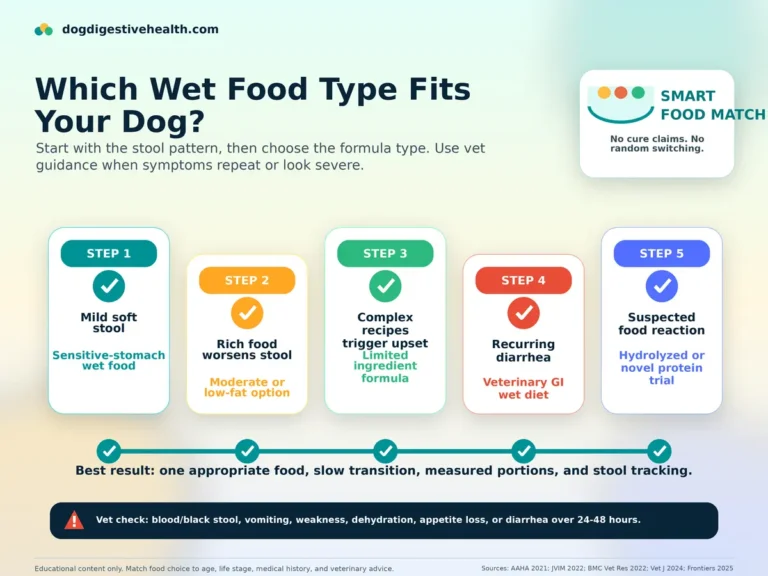
Category | Good Choice | Why It May Help |
Best overall | Sensitive stomach turkey/rice or chicken/rice wet food | Good starting point for mild, soft stool and sensitive digestion |
Best vet-recommended option | Prescription gastrointestinal wet dog food | Better for recurring loose stools or veterinarian-managed digestive problems |
Best low-fat option | Veterinary low-fat canned dog food | Useful when rich foods or fatty formulas worsen stool quality |
Best canned food for loose stools | Salmon- and rice-sensitive stomach wet food | Gentle protein and carbohydrate pairing for many adult dogs |
Best limited ingredient option | Single-protein wet dog food | Helpful when complex recipes trigger digestive upset |
Best bland-style canned food | Chicken and rice wet food | Simple option for dogs that tolerate chicken and rice |
Best pumpkin option | Wet food with pumpkin or mixed fiber | May support stool consistency in the right dog |
Best prebiotic option | Wet food with beet pulp, chicory root, or prebiotic fiber | May support gut bacteria and stool quality |
Best senior option | Highly digestible senior-friendly wet food | Softer texture and easier eating for older dogs |
Best small dog option | Small-breed sensitive stomach wet food | Better portion control and texture for small dogs |
Best prescription GI option | Hydrolyzed, low-fat, or gastrointestinal canned diet | Stronger choice when medical digestive support is needed |
Best Wet Dog Food for Sensitive Stomach & Loose Stools Overall
The best wet dog food for sensitive stomach & loose stools is usually a highly digestible adult maintenance formula made with a clear protein source, a gentle carbohydrate, moderate fat, and digestive-support ingredients such as prebiotic fiber. For many adult dogs with mild stool softness, this type of food is a smarter first step than jumping straight into random “premium” canned foods.
A good overall wet food should not be overloaded with multiple proteins, heavy gravies, rich organ meats, or unnecessary extras. Dogs with sensitive digestion often need consistency more than variety. If the formula changes too often, the gut never gets a fair chance to adjust.
A turkey and rice, chicken and rice, or salmon and rice sensitive stomach wet food can work well for adult dogs that have occasional loose stools but are otherwise bright, eating, drinking, and acting normally. These formulas are usually designed to be easier to digest than standard canned foods and may include fiber sources that support stool quality.
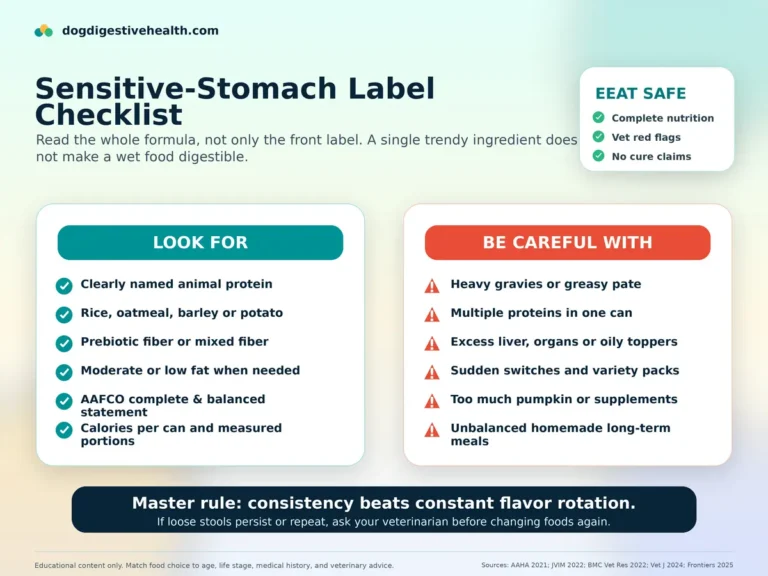
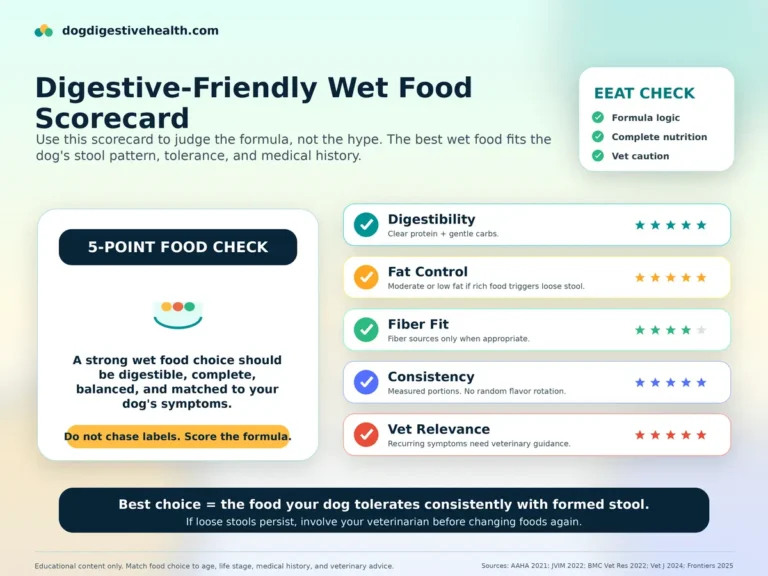
Look for these features:
- Clearly named animal protein
- Rice, oatmeal, barley, potato, or another digestible carbohydrate
- Prebiotic fiber or mixed fiber sources
- Moderate fat level
- Complete and balanced nutrition
- No unnecessary flavor rotation
- Clear feeding guidelines
- Reliable manufacturer information
A strong overall wet dog food should help your dog produce more predictable stools without turning the diet into a medical experiment. If loose stools keep returning despite a careful transition, the problem may not be simple food sensitivity. That is when a veterinarian needs to be involved.
Best Vet-Recommended Wet Dog Food for Dogs With Sensitive Stomach
The best vet-recommended wet dog food for dogs with sensitive stomach is usually a veterinary gastrointestinal diet. These foods are different from ordinary sensitive stomach canned foods because they are made for specific digestive needs, such as high digestibility, controlled fat, targeted fiber, electrolyte support, or gut microbiome support.
Veterinary gastrointestinal wet foods are often used when a dog has recurring loose stools, diarrhea-prone digestion, poor stool quality, or digestive upset that does not respond well to ordinary food changes. They are also useful when the veterinarian wants fewer diet variables while assessing how the dog responds.
This category may include:
- Prescription gastrointestinal wet dog food
- Low-fat gastrointestinal canned dog food
- Hydrolyzed protein wet dog food
- Novel protein veterinary wet food
- Recovery or digestive care canned diets
- Highly digestible veterinary mousse or pâté
Many owners waste months switching between over-the-counter foods when the dog actually needs a veterinary diet trial. That does not make the approach more natural or safer. It just delays useful care.
A 2025 randomized, double-blinded controlled trial found that a highly digestible prescription diet containing functional digestive ingredients helped dogs with mild acute diarrhea reach normal fecal consistency faster than a highly digestible control diet (Jeusette, I., et al. 2025). This does not mean one diet fixes every dog. It means thoughtful diet design matters.
Best for:
- Dogs with recurrent loose stools
- Dogs with diarrhea-prone digestion
- Dogs that do poorly on standard canned foods
- Dogs needing veterinarian-guided digestive support
- Dogs with suspected fat sensitivity or chronic digestive issues
Be careful with this category if your dog has not been examined by a veterinarian. Prescription diets are useful tools, but they are not a replacement for diagnosis.
Best Canned Dog Food for Loose Stools in Dogs
The best canned dog food for loose stools should focus on stool quality, not just taste. Many dogs love rich wet food, but rich wet food is often the exact reason their stools become soft. A good canned food for loose stools should be digestible, not greasy, not overly complex, and not loaded with several animal proteins in one can.
For mild loose stools, look for a formula built around:
- Salmon and rice
- Turkey and rice
- Chicken and rice
- Lamb and rice
- Oatmeal or barley
- Pumpkin or beet pulp
- Prebiotic fiber
- Moderate fat
- No artificial colors or unnecessary extras
Salmon and rice wet dog food is a popular option for sensitive stomachs because fish can be well tolerated by many dogs, and rice is commonly used in digestibility-focused diets. However, salmon is not automatically hypoallergenic. If your dog has eaten salmon for years and reacts poorly to it, salmon is not a novel protein for that dog.
Chicken and rice wet food can also be useful, but only for dogs that tolerate chicken. The internet has trained people to think chicken is always a problem. That is too simplistic. Chicken is a problem for some dogs, but it is not a problem for all dogs.
The best canned dog food for loose stools is the one your dog can eat consistently with formed, predictable stool, stable appetite, and no vomiting, gas, or discomfort.
Best Wet Dog Food for Dogs With Diarrhea-Prone Digestion
Dogs with diarrhea-prone digestion need a more careful approach than dogs with one random soft stool. If your dog repeatedly develops loose stools after food changes, treats, rich canned food, or table scraps, the formula needs to be chosen with discipline.
For diarrhea-prone dogs, the best wet food usually has one or more of these traits:
- Highly digestible protein
- Lower or moderate fat
- Controlled fiber
- One main animal protein
- A gentle carbohydrate
- Prebiotic fiber
- Complete and balanced nutrition
- Veterinary formulation or review
- Consistent recipe and feeding plan
The biggest mistake with diarrhea-prone dogs is overcorrecting. Owners add pumpkin, probiotics, bone broth, new wet food, new treats, and a bland diet all at once. Then they have no idea what helped or what made things worse.
Diet trials need clean execution. Pick one appropriate wet food. Transition slowly. Remove unnecessary treats. Keep portions consistent. Track stool quality for at least 7–14 days unless symptoms worsen.
Research on canine diarrhea supports the importance of diet selection, especially when the diet is designed around digestibility, fiber, and gut microbial function (Fritsch, D. A., et al. 2022). That does not mean every dog needs high fiber. It means the food should match the dog’s digestive pattern.
Best Limited Ingredient Wet Dog Food for Dogs With Sensitive Stomach
Limited-ingredient wet dog food can be useful for dogs with sensitive stomachs, especially when regular canned foods contain too many proteins, starches, gums, flavors, or extras. A limited-ingredient formula reduces dietary noise. That makes it easier to identify what your dog tolerates.
A good limited-ingredient wet dog food usually has:
- One main animal protein
- A short ingredient list
- One or two main carbohydrate sources
- No unnecessary flavor blends
- No constant recipe switching
- Complete and balanced nutrition
- Clear life-stage labeling
Common limited-ingredient wet food proteins include lamb, duck, salmon, turkey, venison, beef, and chicken. But do not confuse “limited ingredient” with “hypoallergenic.” They are not the same thing. A limited-ingredient lamb food is not hypoallergenic if your dog reacts to lamb. A salmon-limited ingredient food is not novel if your dog eats salmon every week.
Limited-ingredient wet dog food is best for dogs that need dietary simplification, not dogs that need random variety. If food allergy, food-responsive enteropathy, or chronic digestive disease is suspected, your veterinarian may recommend a true elimination diet using a hydrolyzed protein or selected novel protein.
Best for:
- Dogs with soft stools after complex canned foods
- Dogs that do better on simpler recipes
- Dogs needing single-protein feeding
- Dogs whose owners need a cleaner diet trial
- Dogs with mild ingredient sensitivity patterns
Not best for:
- Dogs needing urgent diarrhea treatment
- Puppies unless the formula is approved for growth
- Dogs with chronic symptoms and no veterinary workup
- Dogs needing a prescription elimination diet
Best Low-Fat Wet Dog Food for Dogs With Loose Stools
Low-fat wet dog food can be a smart choice when loose stools appear after rich foods, fatty toppers, greasy table scraps, or high-fat canned formulas. Fat is not bad. Dogs need fat. But some dogs do not tolerate high-fat diets well.
This category matters especially for dogs with:
- Fat-sensitive digestion
- History of pancreatitis
- Hyperlipidemia
- Certain gastrointestinal disorders
- Loose stools after rich canned food
- Poor tolerance of oily toppers
- Senior digestive sensitivity
A low-fat gastrointestinal wet dog food should not simply remove fat and call itself healthy. It should still provide complete and balanced nutrition, enough calories, digestible protein, and appropriate fiber. Veterinary low-fat gastrointestinal diets are usually the safest option when fat restriction is medically important.
For ordinary mild loose stools, a moderate-fat sensitive stomach formula may be enough. For pancreatitis history or repeated digestive flare-ups after fatty meals, do not guess. Ask your veterinarian which fat level is appropriate.
Best Chicken and Rice Wet Dog Food for Sensitive Stomach
Chicken and rice wet dog food is one of the most common choices for dogs with sensitive stomachs and loose stools. The appeal is obvious: chicken and rice are familiar, bland-style ingredients that many dogs tolerate well.
Good chicken and rice wet food should be complete and balanced if it is used as the main diet. This is important because homemade boiled chicken and rice is not complete nutrition for long-term feeding. It may be useful temporarily under veterinary direction, but it does not replace a properly formulated dog food.
Choose chicken and rice wet food if:
- Your dog tolerates chicken
- Your dog does well with rice
- You want a simple formula
- Your dog dislikes dry food
- Loose stools are mild and diet-related
- You need a gentle canned food during transition
Avoid chicken and rice wet food if:
- Your dog reacts to chicken
- Your dog needs a low-fat prescription diet
- Your dog has chronic diarrhea
- Your dog is a puppy, and the food is adult-only
- Your dog has vomiting, blood in stool, or weight loss
The phrase “chicken and rice” sounds safe, but it still needs label review. Some chicken and rice canned foods also contain liver, fish oil, egg, gums, flavorings, or multiple protein sources. That may be fine for many dogs, but not for every sensitive dog.
Best Turkey and Rice Wet Dog Food for Dogs With Sensitive Digestion
Turkey and rice wet dog food is another good option for dogs that need a gentle wet formula. Turkey may work well for dogs that do not tolerate chicken or beef, although it is still poultry and may not be suitable for every dog with poultry sensitivity.
Turkey and rice formulas are often useful for:
- Adult dogs with mild sensitive stomachs
- Dogs that need a softer wet food texture
- Dogs that prefer stew-style food
- Dogs needing a digestible protein and carbohydrate pairing
- Dogs that need a break from beef-heavy canned food
The same rule applies here: the whole formula matters. Turkey and rice wet food that is rich, fatty, or full of multiple proteins may not help loose stools. A controlled, digestibility-focused turkey and rice formula is more appropriate.
Best Wet Dog Food With Pumpkin for Loose Stools
Wet dog food with pumpkin can be useful for stool quality, but pumpkin should not be treated like a cure. Pumpkin has fiber and moisture, which may help some dogs produce more consistent stool. But pumpkin alone does not make a formula medically appropriate.
A wet food with pumpkin may help when:
- Your dog tolerates the main protein
- The fat level is not too high
- The formula is complete and balanced
- The total fiber level suits your dog
- The food is introduced slowly
- Loose stools are mild and diet-related
Pumpkin is only one part of the formula. A canned food can contain pumpkin and still be too rich, too fatty, or poorly tolerated. Always judge the whole food, not one ingredient on the label.
Best Wet Dog Food With Prebiotics for Sensitive Stomach
Probiotic fiber can support digestive health by feeding beneficial gut bacteria. In wet dog food, probiotic ingredients may include beet pulp, chicory root, inulin, fructooligosaccharides, or other fiber sources.
Useful fiber-related ingredients may include:
- Beet pulp
- Chicory root
- Fructooligosaccharides
- Psyllium
- Cellulose
- Oat fiber
- Inulin
- Mixed soluble and insoluble fibers
Fiber can support stool consistency by influencing water-holding capacity, stool bulk, fermentation patterns, and gut microbial activity. In a study of dogs with chronic large bowel diarrhea, a fiber-supplemented therapeutic food rapidly improved stool consistency and clinical signs (Fritsch, D. A., et al. 2022). Another study in shelter dogs with acute large bowel diarrhea found better fecal-score outcomes with a high-fiber diet compared with a standard-fiber diet (Lappin, M. R., et al. 2022).
But this is the part many people miss: not every loose stool needs more fiber. Some dogs need low-residue, highly digestible food. Some need low fat. Some need a hydrolyzed diet. Some need parasite testing. Fiber is useful only when it fits the case.
Best Wet Dog Food for Small Dogs With Sensitive Stomach
Small dogs with sensitive stomachs need careful portion control. A small dog can get loose stools simply because the owner overfed a rich canned food by a few tablespoons. That does not sound like much, but for a 7-pound dog, it can be a big calorie and fat jump.
The best wet dog food for small dogs with sensitive stomachs should have:
- Small-dog feeding guidelines
- Digestible protein
- Moderate fat
- Controlled calories
- Easy-to-portion texture
- No excessive richness
- Complete and balanced nutrition
- Good palatability without heavy gravy
Small breeds may also be picky, so wet food can help with acceptance. But do not let pickiness train you into constant food switching. That creates digestive chaos. Pick one appropriate food and use measured portions.
Best formats for small dogs include pâté, mousse, tender stew, minced wet food, small cans, or tray portions. Avoid using large-breed or high-calorie canned foods unless you calculate calories correctly.
Best Wet Dog Food for Senior Dogs With Loose Stools
Senior dogs with loose stools need more caution than young adult dogs. Older dogs may have dental disease, reduced appetite, kidney disease, endocrine disease, pancreatitis history, medication use, or chronic gastrointestinal problems. That means the best wet food should be chosen with the whole dog in mind, not just the stool.
Senior-friendly wet food for loose stools should be:
- Highly digestible
- Easy to chew
- Palatable
- Calorie-appropriate
- Not excessively fatty
- Complete and balanced
- Compatible with existing medical conditions
- Reviewed by a veterinarian if symptoms are recurring
Wet food can be especially useful for senior dogs because the texture is easier to eat and the moisture content may help dogs that do not drink much. But senior dogs with new diarrhea should not simply be switched to a new food without thinking. New loose stools in an older dog deserve more attention.
If your senior dog has loose stools plus weight loss, poor appetite, vomiting, weakness, increased thirst, or behavior change, book a vet visit. Do not keep shopping for canned food while the dog declines.
Best Budget Wet Dog Food for Sensitive Stomach & Loose Stools
Budget matters. The best wet dog food for sensitive stomachs does not have to be the most expensive food in the store. But cheap food becomes expensive if it keeps causing diarrhea, vet visits, or wasted cans.
A good budget wet food for loose stools should still meet basic standards:
- Complete and balanced
- Clear protein source
- Not too fatty
- Digestible carbohydrate
- No unnecessary flavor overload
- Consistent formula
- Good calorie information
- Appropriate for your dog’s life stage
Budget buyers should avoid the trap of buying mixed variety packs for sensitive dogs. Variety packs look convenient, but they often rotate proteins and recipes. For a dog with loose stools, that is a bad idea. Consistency beats excitement.
A budget-friendly, sensitive stomach wet food is a reasonable option for mild cases. If your dog needs prescription gastrointestinal food, trying to save money with random canned food may cost more in the long run.
Best Prescription Wet Dog Food for Gastrointestinal Problems
Prescription gastrointestinal wet dog food is the most medically targeted category in this article. These diets are typically used under veterinary direction and may be designed for digestibility, fat restriction, fiber response, hydrolyzed protein feeding, or gastrointestinal recovery.
Common prescription gastrointestinal wet food categories include:
- Gastrointestinal wet food
- Gastrointestinal low-fat canned food
- Hydrolyzed protein canned food
- Novel protein veterinary wet food
- Digestive care mousse
- Recovery gastrointestinal canned diet
Prescription wet dog food may be best when:
- Loose stools keep returning
- Diarrhea lasts longer than expected
- The dog loses weight
- The dog has vomiting or a poor appetite
- Fatty food worsens symptoms
- Food intolerance is suspected
- A controlled diet trial is needed
- A veterinarian has diagnosed a gastrointestinal condition
One reason prescription diets matter is that they reduce guesswork. Guesswork is the enemy of sensitive digestion. The more random ingredients, treats, toppers, and supplements you add, the harder it becomes to know what is working.
Common Product Types to Discuss With Your Veterinarian
The right product depends on your dog’s age, symptoms, medical history, and food tolerance. These are examples of commonly used wet food categories for dogs with sensitive stomachs and loose stools.
Product Type | Example Formula Style | Best For | Watch Out For |
Sensitive stomach, wet food | Turkey/rice, chicken/rice, salmon/rice | Mild soft stool and everyday sensitive digestion | Not enough for chronic diarrhea |
Veterinary gastrointestinal wet food | Digestive care canned diet | Recurring loose stools or poor stool quality | Usually needs vet direction |
Low-fat gastrointestinal wet food | Low-fat canned GI diet | Dogs that react badly to rich or fatty foods | Not every dog needs low fat. |
Limited ingredient wet food | Single-protein wet formula | Dogs that do better on simpler recipes | Not the same as hypoallergenic |
Bland-style canned food | Chicken and rice wet food | Dogs that tolerate simple chicken/rice formulas | Not right for chicken-sensitive dogs |
Pumpkin- or fiber-supported wet food | Pumpkin, beet pulp, or prebiotic fiber formula | Dogs that need stool-supporting fiber | Too much fiber may not help every dog. |
Hydrolyzed protein wet food | Veterinary hydrolyzed diet | Suspected food-responsive problems | Should be used with veterinary guidance |
Always check the current label before buying. Pet food formulas can change, and the same product line may have different recipes, textures, calories, or feeding instructions.
How We Chose the Best Wet Dog Foods for Sensitive Stomach & Loose Stools
This guide prioritizes food-selection logic over marketing hype. The goal is not to list trendy cans. The goal is to help you understand which wet food type best matches sensitive stomachs and loose stools.
Selection was based on the following criteria.
Highly Digestible Ingredients
Highly digestible wet dog food is usually a better starting point for loose stools than rich canned food. Digestibility helps reduce the amount of poorly digested material reaching the colon, which may support better stool quality.
Moderate or Low Fat Content
Some dogs develop loose stools after high-fat meals. Low-fat or moderate-fat wet foods may be better for dogs with fat-sensitive digestion. Dogs with a pancreatitis history or suspected fat intolerance should be managed with veterinary guidance.
Gentle Protein Sources
The best protein depends on the individual dog. Chicken, turkey, salmon, lamb, duck, beef, venison, and hydrolyzed protein can all be appropriate in different cases. No protein is universally gentle.
Rice, Oatmeal, Pumpkin, and Other Digestive-Friendly Ingredients
Rice, oatmeal, barley, pumpkin, beet pulp, and similar ingredients may support sensitive digestion in the right formula. The ingredient list should make sense as a whole, not just include one “digestive” ingredient for marketing.
Probiotic Fiber and Stool Support
Fiber can help some dogs produce firmer stool, especially when large-bowel diarrhea or colitis-like patterns are involved. The best formulas use fiber intentionally rather than adding pumpkin as decoration.
Complete and Balanced Nutrition
Daily wet food should be complete and balanced for your dog’s life stage. Foods labeled for intermittent or supplemental feeding should not be used as the main diet long-term unless directed by a veterinarian.
Veterinary Relevance and Safety
Because loose stools can be medical, veterinary diets and DVM-reviewed recommendations carry more weight than generic rankings. Responsible pet-health content should avoid cure claims and should separate mild diet-related stool changes from symptoms that require care.
What to Look for in Wet Dog Food for Sensitive Stomach & Loose Stools
Choose a Highly Digestible Wet Dog Food
Protein should be easy for the dog to tolerate and clearly identified on the label. Turkey, chicken, salmon, lamb, and hydrolyzed proteins are common options. A sensitive stomach formula should not hide behind vague protein wording.
Look for Gentle Proteins Like Chicken, Turkey, Salmon, or Lamb.
Do not assume one protein is always best. Chicken is not always bad. Salmon is not always safer. Lamb is not automatically hypoallergenic. The best protein is the one your dog tolerates consistently.
Pick Moderate-Fat or Low-Fat Wet Food if Rich Food Causes Loose Stools
Fat level matters. Dogs with loose stools after rich food may need a lower-fat wet food. This is especially important if your dog has a history of pancreatitis or fat-sensitive digestive upset.
Choose Wet Food With Rice, Oatmeal, Pumpkin, or Beet Pulp
Rice, oatmeal, barley, and certain starches are commonly used in digestibility-focused diets. Grain-free is not automatically better for sensitive stomachs. Many dogs tolerate rice and grains very well.
Consider Limited Ingredient Wet Food if Your Dog Reacts to Complex Recipes
Limited-ingredient wet food can help when your dog needs fewer dietary variables. Choose one protein and one main carbohydrate when possible. Avoid constantly rotating flavors.
Check the AAFCO Complete and Balanced Statement.
Check the nutritional adequacy statement. Adult maintenance food is not always right for puppies. All-life-stage food may be too calorie-dense for some adults. Prescription diets should be used as directed.
Watch Calories Per Can to Avoid Overfeeding
Wet foods vary widely in calories per can. Overfeeding wet food can cause loose stools even if the formula is good. Measure food by calories, not just by can size.
Wet Dog Food Ingredients That May Help Firm Loose Stools
Some ingredients and formula features may help dogs with sensitive stomachs and loose stools when used appropriately:
- Rice
- Oatmeal
- Barley
- Pumpkin
- Beet pulp
- Psyllium
- Chicory root
- Fructooligosaccharides
- Hydrolyzed protein
- Novel protein
- Fish oil in controlled amounts
- Low-fat formulation
- Highly digestible animal protein
- Mixed soluble and insoluble fiber
- Veterinary gastrointestinal formulation
The key phrase is “when used appropriately.” More fiber is not always better. More protein variety is not always better. More supplements are not always better.
Wet Dog Food Ingredients That Can Make Loose Stools Worse
For dogs with loose stools, be careful with:
- Sudden food changes
- Rich pâtés
- High-fat canned foods
- Heavy gravies
- Multiple animal proteins in one formula
- Excess liver or organ meat
- Oily toppers
- Dairy add-ons
- Table scraps
- Constant flavor rotation
- Treats that do not match the diet plan
- Unbalanced homemade diets
- Too much pumpkin
- Too many supplements at once
A food may look premium and still be wrong for a sensitive dog. A clean label does not automatically mean the food is digestible. A high price does not automatically mean the formula fits your dog’s gut.
How to Switch to Wet Dog Food Without Upsetting Your Dog’s Stomach
Small dogs with sensitive stomachs need careful portion control. A small dog can get loose stools simply because the owner overfed a rich canned food by a few tablespoons. That does not sound like much, but for a 7-pound dog, it can be a big calorie and fat jump.
The best wet dog food for small dogs with sensitive stomachs should have:
- Small-dog feeding guidelines
- Digestible protein
- Moderate fat
- Controlled calories
- Easy-to-portion texture
- No excessive richness
- Complete and balanced nutrition
- Good palatability without heavy gravy
Small breeds may also be picky, so wet food can help with acceptance. But do not let pickiness train you into constant food switching. That creates digestive chaos. Pick one appropriate food and use measured portions.
Best formats for small dogs include pâté, mousse, tender stew, minced wet food, small cans, or tray portions. Avoid using large-breed or high-calorie canned foods unless you calculate calories correctly.
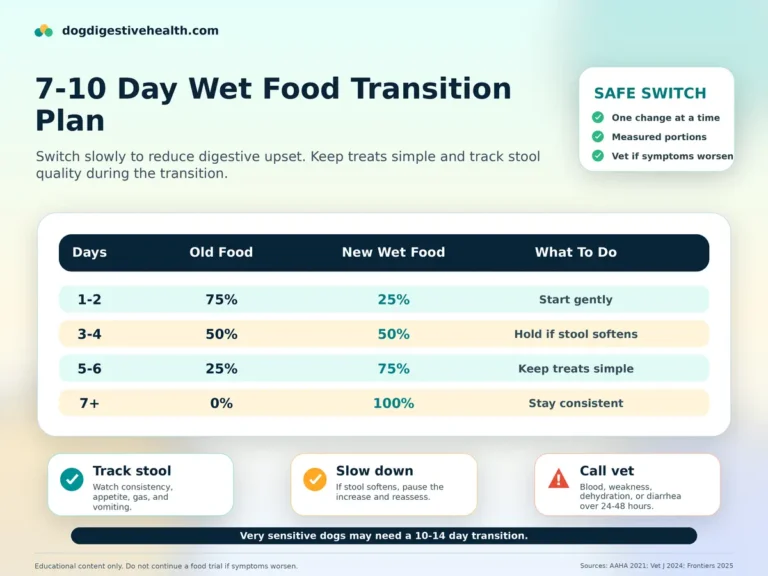
For most dogs, transition slowly over 7–10 days.
Day | Old Food | New Wet Food |
1–2 | 75% | 25% |
3–4 | 50% | 50% |
5–6 | 25% | 75% |
7+ | 0% | 100% |
For very sensitive dogs, use a 10–14 day transition. If stool worsens, stop increasing the new food and contact your veterinarian.
Do not add a new wet food, new treats, pumpkin, probiotics, bone broth, and supplements at the same time. That is not a plan. That is chaos. Change one major thing at a time so you can actually tell what helped.
How Long Does Wet Food Take to Help Loose Stools?
Small dogs with sensitive stomachs need careful portion control. A small dog can get loose stools simply because the owner overfed a rich canned food by a few tablespoons. That does not sound like much, but for a 7-pound dog, it can be a big calorie and fat jump.
The best wet dog food for small dogs with sensitive stomach should have:
- Small-dog feeding guidelines
- Digestible protein
- Moderate fat
- Controlled calories
- Easy-to-portion texture
- No excessive richness
- Complete and balanced nutrition
- Good palatability without heavy gravy
Small breeds may also be picky, so wet food can help with acceptance. But do not let pickiness train you into constant food switching. That creates digestive chaos. Pick one appropriate food and use measured portions.
Best formats for small dogs include pâté, mousse, tender stew, minced wet food, small cans, or tray portions. Avoid using large-breed or high-calorie canned foods unless you calculate calories correctly.
Mild diet-related loose stools may improve within a few days after a proper transition. Some dogs need 1–2 weeks to show stable stool quality. Dogs with chronic or recurring diarrhea may need a longer veterinarian-guided diet trial.
A systematic review on canine acute diarrhea found that antimicrobial and nutraceutical products did not show clinically meaningful benefits for many mild or moderate cases, which reinforces the need to avoid overclaiming supplements and to focus on appropriate veterinary assessment and diet selection (Scahill, K., et al. 2024).
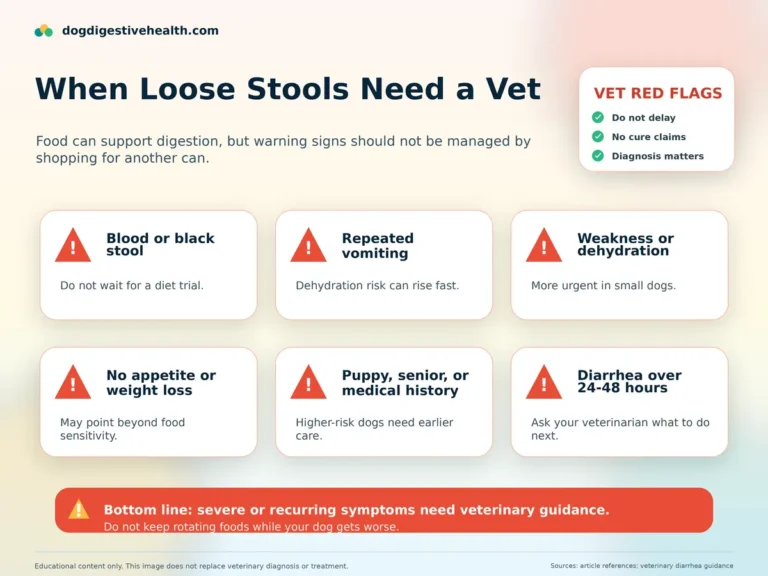
If your dog gets worse, develops blood in stool, vomits repeatedly, becomes weak, stops eating, or seems dehydrated, do not wait for a food trial to work.
Final Verdict: Best Wet Dog Food for Sensitive Stomach & Loose Stools
The best wet dog food for sensitive stomachs & loose stools is not the food with the prettiest label. It is the food that matches your dog’s digestive needs.
For mild, soft stool, start with a highly digestible, sensitive stomach wet food made with a clear protein, gentle carbohydrate, and appropriate fiber. For dogs that react to complex formulas, choose a limited-ingredient wet food. For dogs that get loose stools after rich meals, consider a lower-fat option. For recurring diarrhea, poor stool quality, or medically fragile dogs, ask your veterinarian about a prescription gastrointestinal wet dog food.
The worst approach is random switching. That keeps the gut irritated and makes it impossible to know what works. Choose carefully, transition slowly, measure portions, remove unnecessary extras, and involve your veterinarian when symptoms persist.
Medical Disclaimer:
This article is for educational purposes only and does not replace veterinary advice. If your dog has persistent loose stools, blood in stool, vomiting, weakness, dehydration, appetite loss, or symptoms lasting more than 24–48 hours, contact your veterinarian.
Frequently Asked Questions(FAQs)
1. What is the best wet dog food for sensitive stomach and loose stools?
The best option is a highly digestible wet food with gentle protein, moderate or low fat, easy-to-digest carbohydrates, and stool-supporting fiber.
2. Is wet food good for dogs with loose stools?
Yes, wet food can help if it is gentle and digestible. But rich, fatty, or suddenly introduced wet food can make loose stools worse.
3. What canned dog food is best for loose stools?
A sensitive stomach canned food, chicken and rice wet food, salmon and rice formula, limited ingredient wet food, or vet-recommended gastrointestinal diet may help.
4. Is chicken and rice wet dog food good for sensitive stomach?
Yes, if your dog tolerates chicken and rice. It may not suit dogs with chicken sensitivity or dogs needing a prescription gastrointestinal diet.
5. Is pumpkin wet dog food good for loose stools?
Pumpkin may help support stool consistency because it contains fiber and moisture. The full food formula still matters more than one ingredient.
6. Can wet dog food cause loose stools?
Yes. Wet food can cause loose stools if it is introduced too fast, overfed, too fatty, too rich, or made with ingredients your dog cannot tolerate.
7. When should I call a vet for loose stools?
Call a vet if your dog has blood in stool, repeated vomiting, weakness, dehydration, appetite loss, weight loss, black stool, or diarrhea lasting more than 24–48 hours.
References
- Cline, M. G., Burns, K. M., Coe, J. B., Downing, R., Durzi, T., Murphy, M., & Parker, V. (2021). 2021 AAHA nutrition and weight management guidelines for dogs and cats. Journal of the American Animal Hospital Association, 57(4), 153–178. https://doi.org/10.5326/JAAHA-MS-7232
- Lappin, M. R., Zug, A., Hovenga, C., Gagne, J., & Cross, E. (2022). Efficacy of feeding a diet containing a high concentration of mixed fiber sources for management of acute large bowel diarrhea in dogs in shelters. Journal of Veterinary Internal Medicine, 36(2), 488–492. https://doi.org/10.1111/jvim.16360
- Fritsch, D. A., Wernimont, S. M., Jackson, M. I., MacLeay, J. M., & Gross, K. L. (2022). A prospective multicenter study of the efficacy of a fiber-supplemented dietary intervention in dogs with chronic large bowel diarrhea. BMC Veterinary Research, 18, 244. https://doi.org/10.1186/s12917-022-03302-8
- Scahill, K., Jessen, L. R., Prior, C., Singleton, D., Foroutan, F., Ferran, A. A., Arenas, C., Bjørnvad, C. R., Lavy, E., Allerton, F., Weese, J. S., Allenspach, K., Guardabassi, L., Unterer, S., Bodnárová, T., Windahl, U., Brennan, M. L., & Werner, M. (2024). Efficacy of antimicrobial and nutraceutical treatment for canine acute diarrhoea: A systematic review and meta-analysis for European Network for Optimization of Antimicrobial Therapy guidelines. The Veterinary Journal, 303, 106054. https://doi.org/10.1016/j.tvjl.2023.106054
Jeusette, I., Apper, E., Fragua, V., Sanchez, N., Torre, C., Badiella, L., Puig, J., Ballester, E., Jurado, A., & Feo Bernabe, L. (2025). A new highly digestible prescription diet containing Bacillus velezensis DSM 15544, fructo-oligosaccharides, plasma immunoglobulin, yeast and sepiolite for the management of acute diarrhea in dogs—a randomized double-blinded, controlled trial. Frontiers in Veterinary Science, 12, 1665730. https://doi.org/10.3389/fvets.2025.1665730