
Vet Recommended Probiotics for Dogs: Best Options, Strains & Safety
Written by: Dr. Akram Khan, DVM
Medically Reviewed by: Dr. Muhammad Saeed, PhD
Last updated on November 09, 2026
Vet-recommended probiotics for dogs are dog-specific supplements used to support gut health, stool quality, diarrhea recovery, antibiotic-related digestive upset, and immune balance.
Vet-approved probiotics for dogs and other veterinary probiotic formulations are generally preferred over yogurt or human probiotics because they are designed specifically for canine digestive needs.
The best choice depends on the probiotic strain, CFU count, product quality, your dog’s weight, age, symptoms, and whether probiotics are being used short-term or daily for long-term digestive support.
What probiotics do vets recommend for dogs?
Vets usually recommend dog-specific probiotics with clearly listed strains, CFU counts, safe ingredients, and weight-based dosing. Common veterinary probiotic strains include Enterococcus faecium, Lactobacillus acidophilus, Bifidobacterium species, and Saccharomyces boulardii. These may support diarrhea recovery, antibiotic use, stool quality, gut balance, and daily digestive health.

Quick Comparison: Vet Recommended Probiotics for Dogs
Different dog probiotics are used for different needs. Some are made for daily digestive support, while others are commonly used during diarrhea, antibiotic recovery, stress-related digestive upset, or sensitive stomach episodes.
Probiotic Type | Common Use | Form | Best For |
FortiFlora-style powder | Stool quality and digestive support | Powder sachet | Dogs needing easy food mixing |
Proviable-style probiotic | Gut balance and diarrhea recovery | Capsules or paste | Dogs with short-term digestive upset |
Proviable DC-style probiotic | Daily digestive support | Capsules | Maintenance gut support |
Proviable Forte-style probiotic | Stronger digestive support | Capsules or paste | Vet-guided digestive support |
Pro-Kolin-style paste | Acute loose stool support | Paste | Short-term diarrhea support |
Promax-style paste | Digestive upset support | Paste | Dogs needing short-term gut support |
Visbiome-style probiotic | Higher-strength gut support | Capsules or sachets | Vet-guided chronic digestive cases |
This table is for general education only. Always follow the exact product label and your veterinarian’s advice because strains, CFU count, ingredients, and dosing instructions vary by product.
Important Note About “Vet Recommended” Probiotics
The phrase “vet-recommended probiotics for dogs” does not mean every probiotic is right for every dog. Veterinarians usually choose probiotics based on the dog’s symptoms, age, weight, medical history, stool quality, medication use, and whether the problem is short-term or chronic.
A probiotic may be recommended for:
- mild loose stool
- antibiotic recovery
- stress-related digestive upset
- sensitive stomach
- stool quality support
- chronic digestive conditions under vet guidance
- puppies or senior dogs with special needs
A product that works well for one dog may not be ideal for another. Dogs with bloody diarrhea, repeated vomiting, black stool, dehydration, severe lethargy, pancreatitis, immune suppression, or chronic disease should be checked by a veterinarian before starting supplements.
Why Do Veterinarians Recommend Probiotics for Dogs?
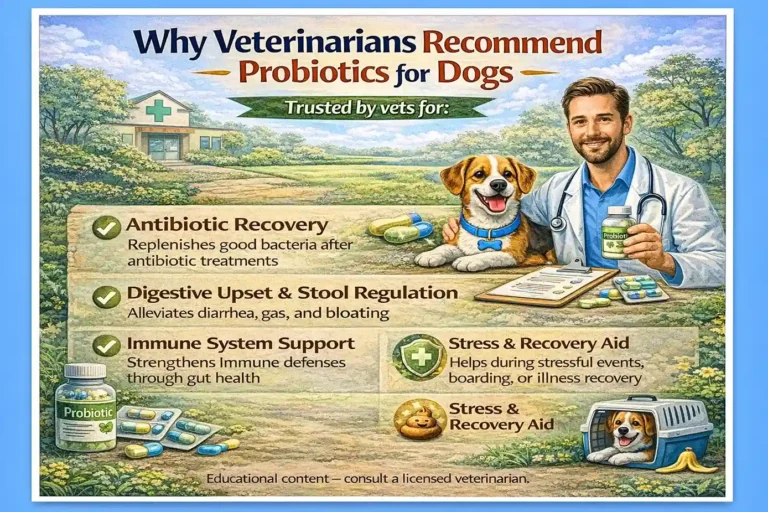
Veterinarians frequently recommend probiotics to address several common digestive and health concerns in dogs. Probiotics are commonly used to manage or prevent the following conditions:
- Antibiotic-associated diarrhea: Antibiotics can disrupt the balance of good and bad bacteria in the gut, leading to diarrhea.
- Stress-related gut imbalances: Stress from boarding, traveling, or environmental changes can trigger digestive issues.
- Digestive upset and stool irregularities: Bloating, gas, cramping, and constipation are common symptoms that probiotics help alleviate.
- Colitis and chronic diarrhea: Probiotics can support gut healing and improve stool consistency.
- Immune system support: A healthy gut microbiome plays a vital role in overall immune health.
- Recovery from infection or illness: Probiotics help replenish beneficial bacteria after illness or antibiotic treatments.
- Puppy digestive development: Probiotics can promote gut health in puppies, helping them develop a balanced microbiome.
By restoring microbial balance, probiotics help reduce digestive distress and support your dog’s overall wellness.
Best Vet-Recommended Probiotic Strains for Dogs

When selecting a probiotic for your dog, it’s essential to choose products that contain the right strains of beneficial bacteria. Here are some of the best vet-recommended strains for improving digestion and supporting immune health:
1. Lactobacillus Species (Digestive & Immune Support)
Lactobacillus strains, including Lactobacillus acidophilus and Lactobacillus plantarum, are known for:
- Improving digestion and stool consistency
- Inhibiting harmful bacteria and supporting the growth of healthy gut bacteria
- Enhancing immune function
2. Bifidobacterium (Gut Balance & Stool Quality)
Bifidobacterium bifidum is particularly beneficial for puppies and senior dogs, as it helps:
- Promote gut microbial diversity
- Manage loose stools and support overall gut health
3. Enterococcus faecium (Clinically Proven)
Certain clinically studied Enterococcus faecium strains are used in veterinary probiotic formulations. However, their effectiveness depends on the specific strain, product, and digestive condition, and results cannot be generalized to every probiotic containing this species.
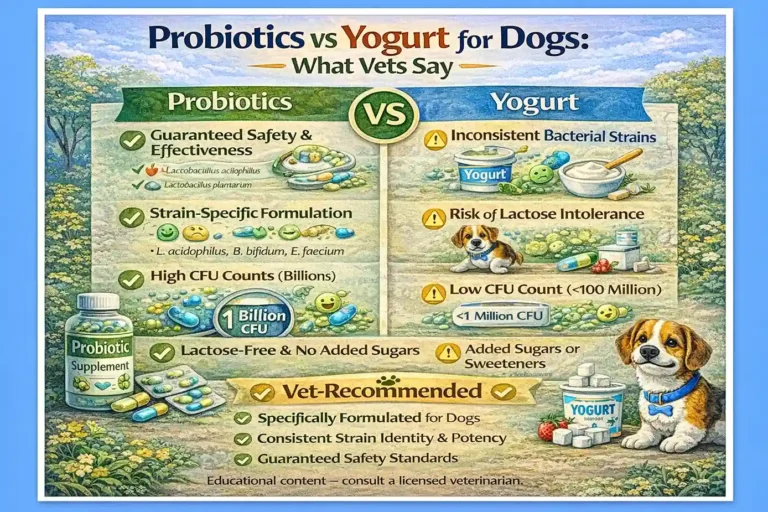
Probiotics vs. Yogurt for Dogs:
While yogurt and kefir do contain live probiotics, veterinarians generally do not recommend them as a reliable source of probiotics for dogs. Here’s why:
- Inconsistent bacterial strains: Yogurt may not contain the necessary strains that benefit dogs’ digestive health.
- Lactose intolerance risk: Many dogs are lactose intolerant, and yogurt can lead to upset stomachs, gas, and diarrhea.
- Low CFU counts: Yogurt contains fewer probiotics (colony-forming units, or CFUs) compared to professional probiotic supplements.
- Added sugars or sweeteners: Some yogurt products contain sugars or artificial sweeteners, which can be harmful to dogs.
Veterinary probiotic supplements, on the other hand, are specifically formulated for dogs and offer guaranteed strain identity, potency, and safety.
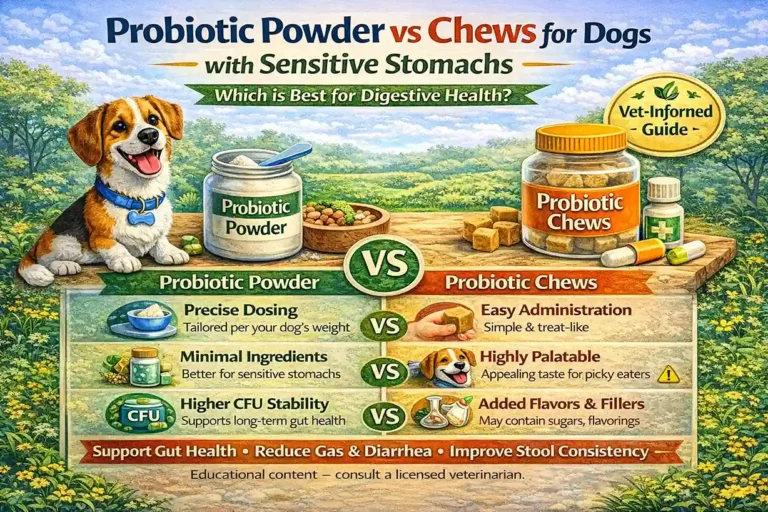
Vet-Recommended Probiotic Forms: Powders, Capsules, or Chews?
Veterinarians recommend several formats of probiotics depending on a dog’s needs, age, and health condition. Here’s a breakdown of the most common formats:
1. Probiotic Powders
- Ease of Administration: Powders are easy to mix with your dog’s food, which is ideal for picky eaters.
- Precise Dosing: Powders allow for more accurate dosing, which is essential for managing chronic conditions.
- Best For: Dogs with digestive disorders, food sensitivities, or those recovering from antibiotics.
2. Probiotic Capsules
- CFU Stability: Capsules often have better CFU stability, ensuring that the probiotics stay effective.
- Suitable for Dogs on Medications: Capsules are easy to incorporate into your dog’s medication routine.
- Best For: Dogs who tolerate capsules and need high CFU doses.
3. Probiotic Chews
- Highly Palatable: Chews are often like treats, making them an appealing option for dogs who refuse powders or capsules.
- Convenience: Chews are easy to administer daily, making them ideal for preventive care or long-term use.
- Best For: Healthy dogs who require maintenance support or pet owners prioritizing ease of use.
FortiFlora for Dogs
FortiFlora for dogs is a widely used veterinary probiotic powder that can be mixed with food, making it a convenient option for digestive and stool-quality support.
FortiFlora is often considered for:
- loose stool support
- antibiotic-associated digestive upset
- stool quality improvement
- daily digestive support
- dogs that prefer powder mixed with food
Before using it, check the product label for CFU count, strain information, flavoring ingredients, feeding directions, and your dog’s weight range. If your dog has ongoing diarrhea, blood in stool, vomiting, or poor appetite, ask your veterinarian before relying on any probiotic alone.
Proviable for Dogs
Proviable for dogs is often used as supportive care during digestive upset, diarrhea recovery, or periods when additional gut microbiome support may be helpful. Some Proviable-style products may come as capsules, paste, or kits, depending on the formula.
Owners may consider this type of probiotic for:
- short-term digestive upset
- diarrhea recovery
- gut balance support
- stool consistency support
- use after antibiotics
Because different versions may have different instructions, always follow the exact label. Do not assume every proviable product has the same dose, strength, or use case.
Proviable DC for Dogs
Proviable DC for dogs may be considered for daily digestive support and maintenance of a healthy intestinal microbial balance.
It may be considered when a dog needs regular gut microbiome support rather than only short-term diarrhea care.
It may be used for:
- daily stool quality support
- gut balance maintenance
- dogs with occasional digestive sensitivity
- recovery after mild digestive upset
Ask your veterinarian before using daily probiotics long-term if your dog has chronic diarrhea, IBD, pancreatitis, immune suppression, unexplained weight loss, or recurring vomiting.
Proviable Forte for Dogs
Proviable Forte for dogs is generally considered when more intensive digestive support is needed under veterinary guidance.
This type of product should be used carefully because “stronger” does not automatically mean better for every dog.
It may be considered for:
- vet-guided digestive support
- dogs with more frequent digestive upset
- antibiotic recovery
- stool quality support
- cases where a veterinarian wants a higher-support option
Do not increase probiotic strength without checking the product label or asking a veterinarian. Too much probiotic may cause gas, bloating, soft stool, or temporary diarrhea in some dogs.
Pro-Kolin for Dogs
Pro-Kolin for dogs is a paste-style digestive support product that may be useful during short-term episodes of loose stool or gastrointestinal upset. Paste probiotics are usually popular because they are easy to give and may be useful during short-term loose stool episodes.
Owners may consider paste products when:
- Stool is soft
- Diarrhea is mild
- The dog refuses capsules
- Fast and easy administration is needed
- Short-term digestive support is preferred
Paste should not replace veterinary care if diarrhea is bloody, watery, repeated, black, or linked with vomiting, weakness, dehydration, or poor appetite.
Promax for Dogs
Promax for dogs is another paste-style digestive support option designed for short-term gastrointestinal upset and stool-consistency support. Owners often compare it with other probiotic pastes for short-term digestive upset.
It may be considered for:
- temporary loose stool
- digestive upset support
- stool consistency support
- dogs that need an easy-to-give paste
Check the weight-based directions carefully. Paste products can differ by dog size, tube size, and serving instructions.
Visbiome for Dogs
Visbiome for dogs provides a higher-potency, multi-strain probiotic approach that may be considered for dogs needing more intensive gut microbiome support under veterinary guidance.
These products are often considered when owners want stronger gut microbiome support, but they should be used with veterinary guidance, especially for chronic digestive disease.
It may be considered for:
- vet-guided gut support
- chronic digestive sensitivity
- IBD-related support under veterinary care
- dogs needing multi-strain probiotic options
Do not use high-CFU probiotics casually for serious digestive signs. If your dog has chronic diarrhea, weight loss, blood in stool, vomiting, or poor appetite, diagnosis matters more than simply choosing a stronger probiotic.
Best Probiotic for Dogs With Diarrhea
The best probiotic for dogs with diarrhea depends on the cause of diarrhea. Mild stress-related or diet-related loose stool may improve with a dog-specific probiotic, but diarrhea from parasites, infection, AHDS, pancreatitis, toxin exposure, or foreign body obstruction needs veterinary care.
For diarrhea, owners usually look for:
- dog-specific strains
- clear CFU count
- weight-based dosing
- powder, paste, or capsule form
- safe ingredients
- no xylitol or unsafe sweeteners
- veterinary guidance if symptoms are severe
Call a vet if diarrhea is bloody, black, watery, repeated, or comes with vomiting, weakness, dehydration, abdominal pain, or poor appetite.
Best Probiotic for Dogs With Sensitive Stomach
Dogs with sensitive stomachs may need probiotics that are gentle, clearly labeled, and free from unnecessary additives. The best option depends on whether the dog has occasional soft stool, food sensitivity, gas, bloating, antibiotic recovery, or chronic digestive disease.
Look for:
- dog-specific formula
- clearly listed strains
- clear CFU amount
- simple ingredient list
- weight-based directions
- low-risk flavoring ingredients
- no artificial sweeteners
- no unnecessary fillers
If your dog reacts badly to many foods or supplements, start only with veterinary advice. A sensitive stomach can sometimes be linked to parasites, food intolerance, pancreatitis, IBD, or another condition that needs diagnosis.
How to Choose a Vet-Approved Probiotic for Dogs
When selecting a probiotic supplement for your dog, consider the following factors to ensure you’re getting a high-quality and effective product:
- Clear Strain Labeling: Ensure that the product clearly lists the probiotic strains by their Latin names.
- CFU Count: Check the number of live microorganisms per serving and whether the specific strains and dose are supported by veterinary research. A higher CFU count does not necessarily mean better effectiveness.
- Prebiotics: Prebiotics work synergistically with probiotics, so choose products that contain both for enhanced effectiveness.
- Compliance with AAFCO Guidelines: Look for products that meet pet food regulatory standards and AAFCO (Association of American Feed Control Officials)
- No Artificial Additives: Avoid products with artificial sweeteners, fillers, or harmful chemicals.
What to Check Before Buying a Dog Probiotic
Before buying a probiotic for your dog, check more than the front label. Marketing terms like “vet recommended,” “premium,” or “advanced” are not enough.
Check for:
- dog-specific use
- named probiotic strains
- CFU count per serving
- serving size by dog weight
- expiration date
- storage instructions
- added prebiotics or fiber
- flavoring ingredients
- artificial sweeteners
- dairy or allergens
- whether it is powder, paste, capsule, chew, or syrup
- whether your dog needs short-term or daily support
Avoid any human or pet supplement that contains xylitol, unsafe sweeteners, unclear ingredients, or vague dosing instructions.
Are Probiotics Safe for Long-Term Use in Dogs?
Yes, probiotics are safe for long-term use when administered as directed by a veterinarian. However, there are some considerations:
- Consult a Veterinarian: Always seek veterinary advice if your dog has underlying conditions such as immunocompromised status or chronic illness, or if they are on multiple medications.
- Dosage and Monitoring: Long-term use should be regularly monitored, especially for dogs with ongoing health issues.

When Should You Give Dogs Probiotics?
Veterinarians recommend probiotics during the following situations:
- Antibiotic treatment or recovery
- Stressful events (boarding, travel, training)
- Dietary transitions or changes in food
- Digestive upset or stool changes
- Puppy growth and immune development
Signs Probiotics Are Working
After starting probiotics, you may notice the following positive changes:
- Firmer stool and improved consistency
- Reduced gas and bloating
- Improved appetite
- Better digestion
- Fewer stomach upsets
- Enhanced overall health and energy
Typically, results are visible within 7–14 days, depending on the formulation and your dog’s unique health.
Medical Disclaimer:
This article is for educational purposes only and should not replace professional veterinary advice. Always consult with a veterinarian before starting a new supplement regimen for your dog.
Frequently Asked Questions (FAQs)
1. Do vets recommend probiotics for dogs?
Yes, especially for digestive health, antibiotic recovery, and immune support.
2. Can puppies take probiotics?
Yes, puppy-specific formulations are commonly vet-approved for digestive development.
3. How long should dogs take probiotics?
Short-term for digestive upset or long-term for chronic conditions—under vet guidance.
4. Are probiotics better than yogurt for dogs?
Yes. Veterinary probiotics are safer, more effective, and strain-specific compared to yogurt.
References:
Jensen, A. P., & Bjørnvad, C. R. (2019). Clinical effect of probiotics in prevention or treatment of gastrointestinal disease in dogs: A systematic review. Journal of Veterinary Internal Medicine, 33(5), 1849–1864. https://doi.org/10.1111/jvim.15554
Salavati Schmitz, S. (2021). Value of probiotics in canine and feline gastroenterology. Veterinary Clinics of North America: Small Animal Practice, 51(1), 171–217. https://doi.org/10.1016/j.cvsm.2020.09.011
Jessen, L. R., et al. (2024). European Network for Optimization of Veterinary Antimicrobial Therapy (ENOVAT) guidelines for antimicrobial use in canine acute diarrhoea. The Veterinary Journal, 307, 106208. https://doi.org/10.1016/j.tvjl.2024.106208
Cornell University College of Veterinary Medicine. The power of probiotics: Benefits for the whole dog. Riney Canine Health Center. https://www.vet.cornell.edu/departments-centers-and-institutes/riney-canine-health-center/canine-health-topics/power-probiotics
Nestlé Purina PetCare. Purina Pro Plan Veterinary Supplements FortiFlora Canine Health Supplement: Ingredients and feeding directions. https://www.purina.com/dogs/shop/pro-plan-veterinary-supplements-fortiflora
Nutramax Laboratories Veterinary Sciences. Proviable-DC capsules for dogs: Probiotic strains, CFU content, and directions. https://www.proviable.com/proviable-dc-capsules-for-dogs
Nutramax Laboratories Veterinary Sciences. Proviable-Forte sprinkle capsules for dogs: Product information and directions. https://www.proviable.com/proviable-forte-sprinkle-capsules-for-dogs
Probiotics International Ltd. Pro-Kolin+ for dogs: Veterinary product information and specifications. https://www.protexinvet.com/userfiles/file/vet_data_sheets/pro-kolin%2B_for_dogs_data_sheet.pdf
VetPlus. PROMAX Large Breed: Product composition, gastrointestinal support, and administration instructions. https://vetplusglobal.com/en/product/promax-large-breed/
Visbiome Vet. Veterinary dosing and product information: Probiotic strains, CFU content, and weight-based administration. https://visbiomevet.com/pages/vet-dosing