
Probiotics for Dogs on Antibiotics: Diarrhea Help & Safe Use
Written by: Dr. Akram Khan, DVM
Medically Reviewed by: Dr. Muhammad Saeed, PhD
Last updated on September 15, 2026
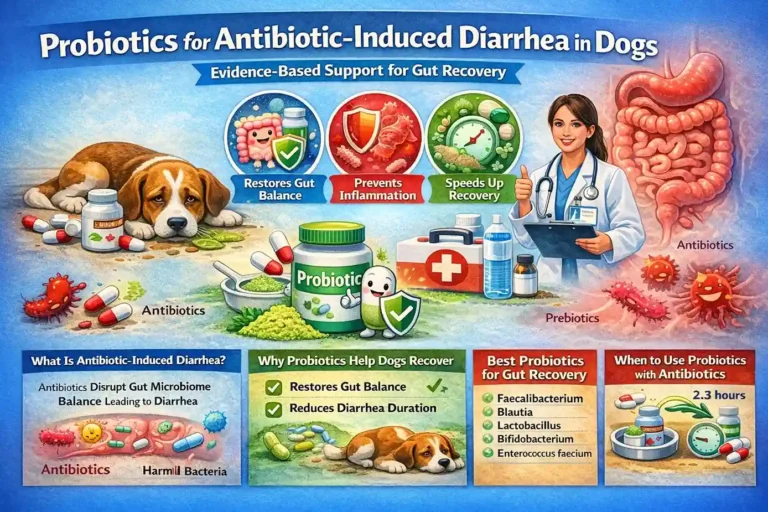
Antibiotics can help dogs fight infections, but they may also upset the gut and cause loose stool, gas, or diarrhea. That is why many owners ask, “can I give my dog probiotics while on antibiotics?” In many cases, a dog-specific probiotic may help support healthy gut bacteria and reduce the risk of antibiotic-related diarrhea. The key is to use the right product, follow your vet’s advice, and usually give probiotics a few hours apart from the antibiotic. If your dog’s diarrhea becomes severe, bloody, watery, or comes with vomiting, weakness, dehydration, or loss of appetite, contact your veterinarian instead of trying to manage it with probiotics alone.
Do Probiotics Help Dogs on Antibiotics?
Yes, probiotics may help some dogs on antibiotics by supporting healthy gut bacteria, improving stool quality, and reducing antibiotic-related digestive upset. They are often used during antibiotic treatment or for a short time after antibiotics end. However, probiotics do not replace antibiotics, and severe diarrhea, bloody stool, vomiting, dehydration, weakness, or symptoms that keep getting worse need veterinary care.
What Is Antibiotic-Induced Diarrhea in Dogs?
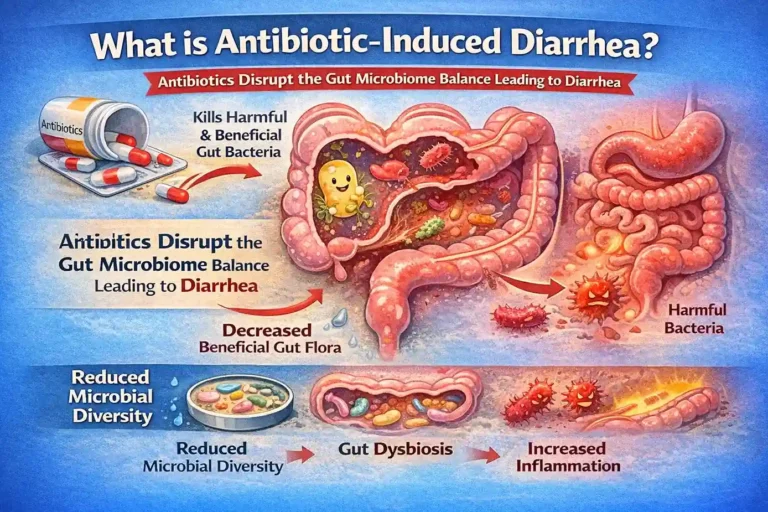
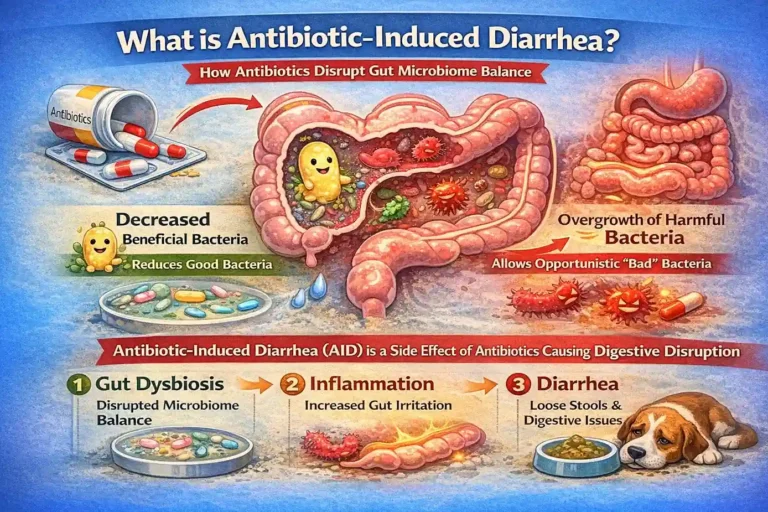
Antibiotic-induced diarrhea occurs when antibiotics disturb the gut microbiota, causing an imbalance in beneficial bacteria (Pilla & Suchodolski, 2020). This disruption can result in symptoms such as
- Loose stools
- Increased stool frequency
- Poor fecal consistency
- Abdominal discomfort
How Antibiotics Disrupt the Gut Microbiome
Antibiotics target harmful bacteria but may also kill beneficial gut microbes (Weese et al., 2019). The consequences include:
- Reduced microbial diversity
- Altered gut microbiota composition
- Impaired gut barrier integrity
- Increased intestinal inflammation and dysbiosis
These changes allow opportunistic bacteria like Clostridium perfringens to thrive, leading to diarrhea and discomfort (Pilla & Suchodolski, 2020).
Why Antibiotic-Induced Diarrhea Is a Clinical Concern
AID is more than a minor side effect. If untreated, it can lead to:
- Prolonged diarrhea: Disrupts recovery time and nutrient absorption (Westermarck et al., 2005)
- Reduced treatment adherence: Diarrhea affects overall wellbeing and compliance (Bybee et al., 2011)
- Increased risk of IBD: Repeated antibiotic exposure worsens chronic gut inflammation (Westermarck et al., 2005)
- Contribution to antimicrobial resistance (AMR): Repeated antibiotic use increases resistance risk (Weese et al., 2019)
Veterinary guidelines increasingly emphasize probiotics to minimize these complications (Weese et al., 2019).
How Probiotics Help Dogs with Antibiotic-Induced Diarrhea
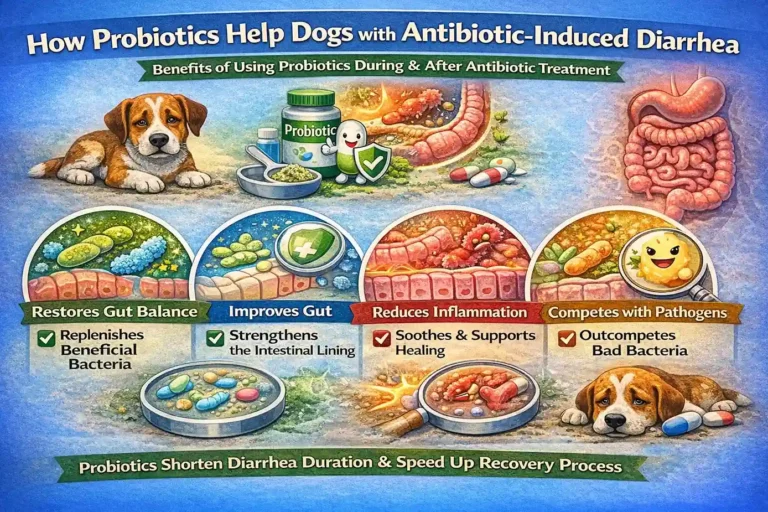
Probiotics play a crucial role in recovery from AID by:
- Restoring gut microbiome balance (Grześkowiak et al., 2015)
- Improving gut mucosal homeostasis (Pilla & Suchodolski, 2020)
- Strengthening gut barrier integrity (Grześkowiak et al., 2015)
- Reducing intestinal inflammation (Bybee et al., 2011)
- Competing with pathogenic bacteria (Grześkowiak et al., 2015)
Clinical studies show probiotics shorten diarrhea duration and improve stool consistency when used alongside antibiotics (Bybee et al., 2011).
Best Probiotic Strains for Antibiotic-Induced Diarrhea in Dogs
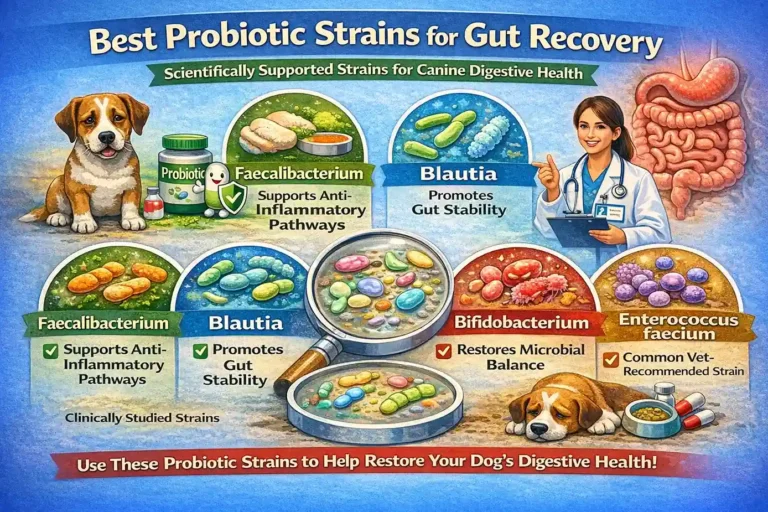
Research-supported strains include:
- Faecalibacterium: Supports anti-inflammatory pathways (Pilla & Suchodolski, 2020)
- Blautia: Helps stabilize bile acid metabolism (Grześkowiak et al., 2015)
- Lactobacillus species: Suppress pathogens and regulate gut pH (Grześkowiak et al., 2015)
- Bifidobacterium species: Restore microbial balance (Grześkowiak et al., 2015)
- Enterococcus faecium: Clinically proven to reduce antibiotic-associated diarrhea (Bybee et al., 2011)
Probiotics vs Additional Antibiotics (e.g., Metronidazole)
Historically, antibiotic-related diarrhea often led to more antibiotics like metronidazole. This approach can:
- Increase AMR risk (Weese et al., 2019)
- Further damage the gut microbiome (Pilla & Suchodolski, 2020)
Modern veterinary practice now favors probiotics as a safer alternative (Weese et al., 2019).
Probiotics, Prebiotics, and Synbiotics: What’s Best?
Veterinarians often recommend synbiotics, which combine probiotics and prebiotics to enhance bacterial survival and effectiveness (Grześkowiak et al., 2015).
When to Start Probiotics During Antibiotic Treatment
Veterinary guidance recommends:
- Starting probiotics during antibiotic therapy (Bybee et al., 2011)
- Separating probiotics and antibiotics by 2–3 hours
- Continuing probiotics for 1–2 weeks post-treatment (Grześkowiak et al., 2015)
Safety of Probiotics in Dogs on Antibiotics
Probiotics are generally safe and well tolerated in dogs (Bybee et al., 2011). Mild effects may include temporary gas or soft stools during initial use.
Antibiotic-Induced Diarrhea and Inflammatory Bowel Disease (IBD)
Repeated antibiotic exposure can:
- Damage gut mucosal integrity
- Alter immune signaling
- Increase inflammatory responses (Westermarck et al., 2005)
Probiotics help counteract these effects (Pilla & Suchodolski, 2020).
Role of Probiotics in Antimicrobial Resistance (AMR) Reduction
By reducing repeat antibiotic use, probiotics indirectly lower antimicrobial resistance risk (Weese et al., 2019).
Choosing the Right Probiotic Supplement for Dogs
Clinicians recommend:
- Dog-specific formulations
- Clinically studied strains
- Adequate CFU counts
- Clear labeling and dosage instructions (Grześkowiak et al., 2015)
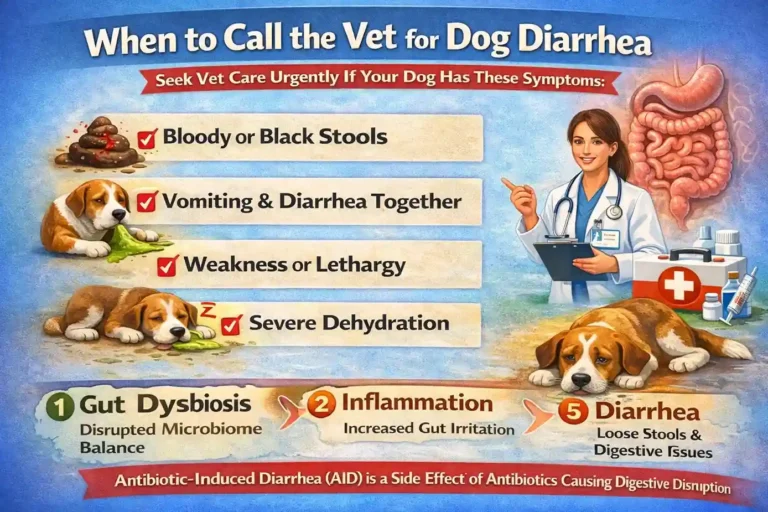
When to Contact a Veterinarian
Veterinary evaluation is needed if diarrhea persists, worsens, or is accompanied by blood, lethargy, or dehydration (Weese et al., 2019).
Medical Disclaimer
This article is for educational purposes only and does not replace professional veterinary advice. Always consult a licensed veterinarian for diagnosis or treatment of digestive conditions.
Frequently Asked Questions (FAQs)
1. Do probiotics really work for antibiotic-induced diarrhea in dogs?
Yes. Clinical studies show that probiotics can significantly reduce the duration of diarrhea and improve stool consistency in dogs receiving antibiotics (Bybee et al., 2011).
2. Can probiotics replace antibiotics in dogs?
No. Probiotics are a supportive therapy. They help protect and restore gut health but do not replace antibiotics when bacterial infections require treatment (Weese et al., 2019).
3. Should probiotics be given with every antibiotic course?
Many veterinarians recommend probiotics during antibiotic therapy, especially for dogs with a history of digestive sensitivity or prior antibiotic-associated diarrhea (Pilla & Suchodolski, 2020).
4. Can probiotics cause side effects in dogs?
Most dogs tolerate probiotics well. Mild gas, bloating, or temporary soft stools may occur during the first few days (Grześkowiak et al., 2015).
5. How long should probiotics be continued after antibiotics stop?
Veterinary guidance typically suggests continuing probiotics for 1–2 weeks after antibiotics end to support microbiome recovery (Bybee et al., 2011).
References
- Pilla, R., & Suchodolski, J. S. (2020).
The role of the canine gut microbiome and metabolome in health and gastrointestinal disease. Frontiers in Veterinary Science, 6, 498.
https://doi.org/10.3389/fvets.2019.00498 - Bybee, S. N., Scorza, A. V., & Lappin, M. R. (2011).
Effect of the probiotic Enterococcus faecium SF68 on presence of diarrhea in dogs administered antibiotics. Journal of Veterinary Internal Medicine, 25(4), 856–860.
https://doi.org/10.1111/j.1939-1676.2011.0736.x - Grześkowiak, Ł., Endo, A., Beasley, S., & Salminen, S. (2015).
Microbiota and probiotics in canine and feline welfare. Anaerobe, 34, 14–23.
https://doi.org/10.1016/j.anaerobe.2015.04.002 - Westermarck, E., Skrzypczak, T., Harmoinen, J., Steiner, J. M., Ruaux, C., Williams, D. A., & Eerola, E. (2005).
Tylosin-responsive chronic diarrhea in dogs. Journal of Veterinary Internal Medicine, 19(2), 177–186.
https://doi.org/10.1111/j.1939-1676.2005.tb02680.x - Weese, J. S., Giguère, S., Guardabassi, L., Morley, P. S., Papich, M., Ricciuto, D. R., & Sykes, J. E. (2019).
ACVIM consensus statement on therapeutic antimicrobial use in animals and antimicrobial resistance. Journal of Veterinary Internal Medicine, 33(6), 2284–2306.
https://doi.org/10.1111/jvim.15608