How to Manage IBD in Dogs: Causes, Symptoms, and Effective Diet & Supplement Options
Written by: Dr. Akram Khan, DVM
Medically Reviewed by: Dr. Khalid Mehmood, PhD
Last updated on September 05, 2026

Inflammatory bowel disease (IBD) in dogs is a chronic, immune-mediated disorder that causes persistent inflammation in the digestive tract. Unlike temporary digestive issues, IBD symptoms in dogs include chronic diarrhea, vomiting, and weight loss, which occur due to immune cells attacking the intestinal lining. This disruption leads to poor nutrient absorption and long-term digestive instability, affecting areas like the stomach, small intestine, or colon. Understanding the causes of IBD in dogs and how the immune system interacts with the gut is key to managing the condition and improving your dog’s quality of life.
What Causes IBD in Dogs?
There is no single cause of inflammatory bowel disease in dogs. Instead, IBD develops through a complex interaction of immune, dietary, genetic, and microbial factors.
Primary Causes and Triggers of Canine IBD
- Immune system overreaction
- Dietary antigens (proteins and carbohydrates)
- Imbalance of gut bacteria (dysbiosis)
- Chronic intestinal irritation
- Repeated infections or parasites
- Genetic predisposition
- Environmental stressors
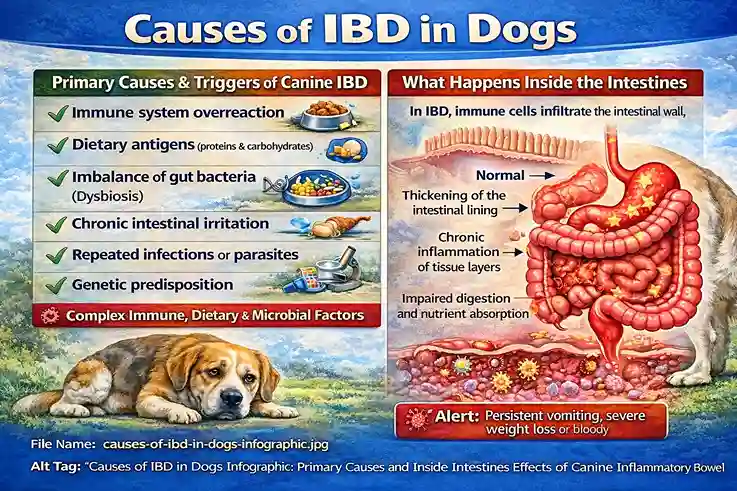
What Happens Inside the Intestines
In IBD, immune cells infiltrate the intestinal wall, causing:
- Thickening of the intestinal lining
- Chronic inflammation of tissue layers
- Impaired digestion and nutrient absorption
Over time, this inflammation leads to persistent clinical signs and nutritional deficiencies.
Common Signs and Symptoms of IBD in Dogs
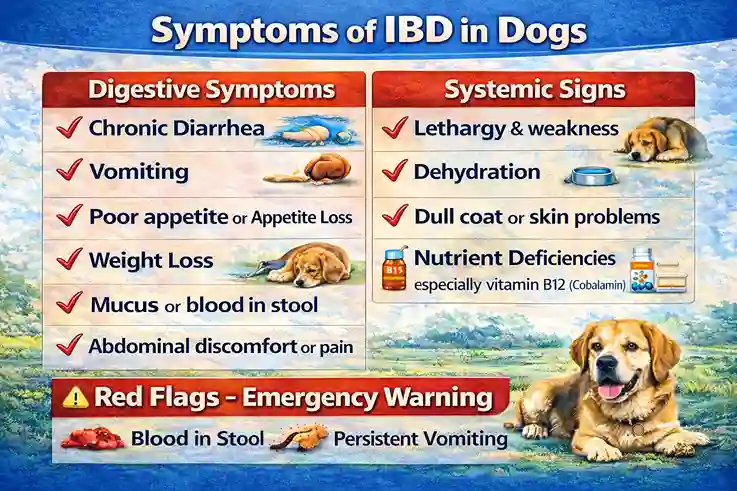
Digestive Symptoms
Dogs with inflammatory bowel disease may show:
- Chronic or recurrent diarrhea
- Vomiting
- Poor appetite or appetite loss
- Weight loss
- Mucus or blood in the stool
- Abdominal discomfort or pain
- Excessive gas and bloating
Systemic Signs
Long-term inflammation can also cause:
- Lethargy and weakness
- Dehydration
- Dull coat or skin problems
- Nutrient deficiencies, especially vitamin B12 (cobalamin)
⚠️ Red flag: Persistent vomiting, severe weight loss, or bloody diarrhea requires immediate veterinary attention.
IBD vs IBS in Dogs: Why the Difference Matters
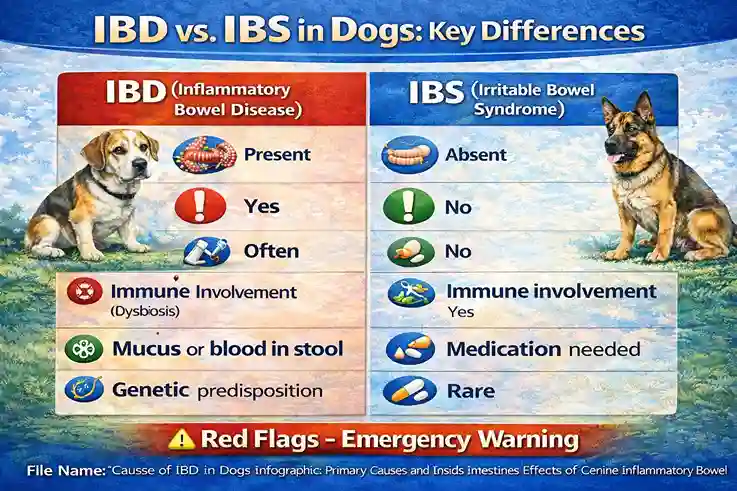
Feature | IBD (Inflammatory Bowel Disease) | IBS (Irritable Bowel Syndrome) |
Intestinal inflammation | Present | Absent |
Tissue damage | Yes | No |
Biopsy required | Often | No |
Immune involvement | Yes | No |
Medication needed | Common | Rare |
A correct diagnosis is essential because IBD requires medical management, while IBS is primarily managed through diet and stress control.
How IBD Is Diagnosed in Dogs
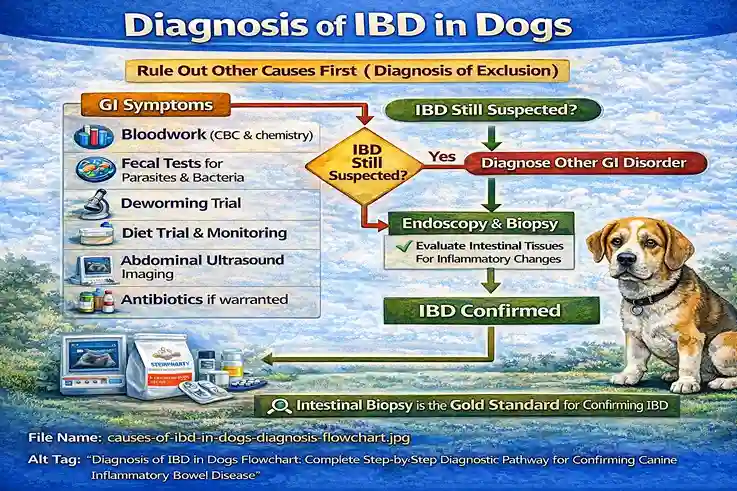
Inflammatory bowel disease is a diagnosis of exclusion, meaning other causes must be ruled out first.
Common Diagnostic Tests
Veterinarians typically perform:
- Complete blood count (CBC)
- Blood chemistry panel
- Fecal tests for parasites and bacteria
- Deworming trial
- Abdominal ultrasound or imaging
- Endoscopy with intestinal biopsies
- Veterinary pathologist evaluation
- Measurement of vitamin B12 (cobalamin) and folate levels
🔍 Intestinal biopsy remains the gold standard for confirming IBD.
Types of Canine IBD (Based on Immune Cell Involvement)
- Lymphocytic-plasmacytic IBD (most common)
- Eosinophilic enteritis
- Granulomatous IBD (rare)
- Neutrophilic inflammation
The type of immune cells involved influences treatment choices and prognosis.
Best Diet for Dogs With IBD (Core Treatment Strategy)
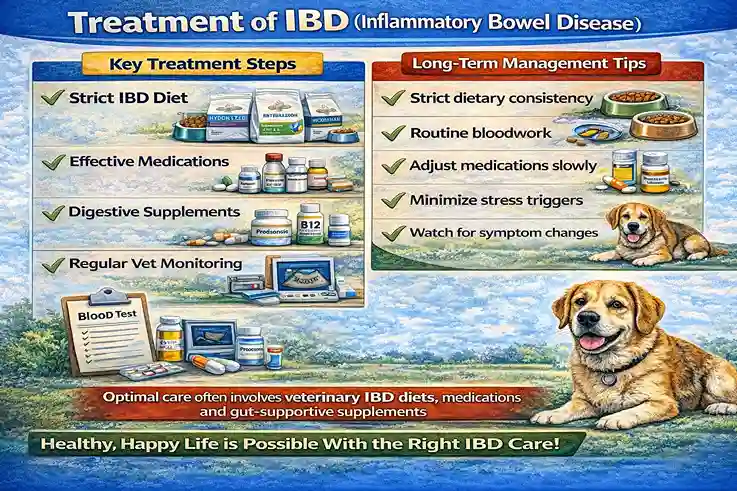
Why Diet Is Critical in Canine IBD
Food antigens are one of the strongest immune triggers in IBD. In some dogs, dietary management alone can induce remission.
Veterinary-Recommended IBD Diets
Common diet options include:
- Hydrolyzed protein diets
- Novel protein diets
- Single-protein elimination diets
- Low-fat gastrointestinal diets for severe cases
Veterinary prescription diets from brands such as Hill’s Prescription Diet are often used.
Key Diet Characteristics
- Highly digestible carbohydrates
- Limited ingredient profiles
- No artificial additives
- Controlled fat content
- Consistent protein source
Diet consistency is essential—frequent food changes often worsen symptoms.
Elimination Diets and Food Trials for IBD Dogs
Why Food Trials Are Essential
Food-responsive IBD is common, even when skin symptoms are absent.
Successful food trial rules:
- Feed only the test diet for 8–12 weeks
- No treats, table scraps, or flavored medications
- Monitor stool quality, vomiting, appetite, and weight
- Track improvements objectively
A positive response strongly supports a food-responsive form of IBD.
Supplements for Dogs With IBD (Digestive Support)
Help regulate gut bacteria and immune balance.
Benefits include:
- Reduced diarrhea
- Improved stool consistency
- Support for intestinal lining repair
Vitamin B12 (Cobalamin)
IBD commonly causes B12 deficiency due to malabsorption.
Benefits:
- Improved appetite
- Better weight maintenance
- Enhanced intestinal healing
Omega-3 Fatty Acids
- Reduce intestinal inflammation
- Support immune modulation
- Improve skin and coat health
May benefit dogs with poor digestion or pancreatic involvement.
All supplements should be used only under veterinary supervision.
Medications Used to Treat IBD in Dogs
Moderate to severe IBD often requires medication alongside diet.
Common Veterinary Medications
- Corticosteroids (e.g., prednisone, budesonide)
- Immunosuppressive drugs
- Antibiotics in selected cases
- Gut motility and anti-inflammatory medications
Medication choice depends on:
- Disease severity
- Biopsy findings
- Response to dietary therapy
- Risk of side effects
Long-Term Management of Canine IBD
Ongoing Care Strategies
- Strict dietary consistency
- Avoid unnecessary food changes
- Regular blood and vitamin monitoring
- Gradual medication adjustments
- Stress reduction and routine stability
IBD management is lifelong, not a one-time treatment.
Possible Complications of IBD in Dogs
Without proper control, IBD may lead to:
- Severe weight loss
- Protein-losing enteropathy
- Chronic malnutrition
- Secondary infections
- Long-term steroid side effects
- Rarely, increased cancer risk
Early diagnosis and consistent care greatly reduce these risks.
Prognosis: Can Dogs Live a Normal Life With IBD?
✅ Many dogs achieve long-term remission.
✅ Some require lifelong dietary management or medication.
✅ Quality of life is often excellent with proper care.
Prognosis depends on:
- Disease severity
- Response to diet and medication
- Early intervention
- Owner compliance
Medical Disclaimer
This article reflects current veterinary consensus and evidence-based practices supported by organizations such as the American Veterinary Medical Association.
Always consult a licensed veterinarian before diagnosing or treating inflammatory bowel disease in dogs. Medications and supplements should only be used under professional guidance.
Frequently Asked Questions (FAQs)
1. Is IBD in dogs curable?
No, but it is highly manageable.
2. Can diet alone control IBD?
In mild cases, yes. Severe cases usually require medication.
3. Is vitamin B12 supplementation necessary?
Very often—B12 deficiency is common in IBD dogs.
4. How long does IBD treatment take?
Improvement may take weeks to months.
5. Is IBD painful for dogs?
Yes, untreated inflammation can cause discomfort.
6. Can puppies develop IBD?
Yes, though it is more common in adult dogs.
References
Association of American Feed Control Officials. (2023). AAFCO dog food nutrient profiles.
Washabau, R. J., & Day, M. J. (2013). Canine and feline gastroenterology. Elsevier.