
What to Feed a Dog with Diarrhea: Safe Foods & What to Avoid
Written by: Dr. Akram Khan, DVM
Medically Reviewed by: Dr. Muhammad Saeed, PhD
Last updated on September 14, 2026
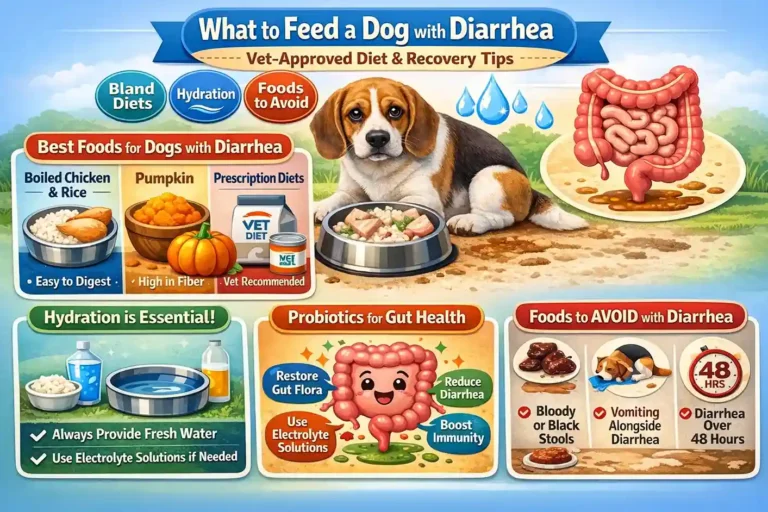
When your dog has diarrhea, the right food can help calm the stomach, support hydration, and make recovery easier. Many owners search for what to feed dogs with diarrhea or what I can feed my dog to help with diarrhea because they want a safe option before making the problem worse. In mild cases, a bland diet such as boiled chicken and white rice, small meals, fresh water, and sometimes plain canned pumpkin may help firm the stool. But food alone is not enough if your dog has blood in the stool, repeated vomiting, weakness, dehydration, black stool, puppy diarrhea, senior dog diarrhea, or diarrhea lasting more than 48 hours.
What Is the Best Food to Feed a Dog with Diarrhea?
The best food to feed a dog with mild diarrhea is usually a bland, easy-to-digest meal such as boiled skinless chicken with plain white rice, served in small portions. Plain canned pumpkin may also help some dogs by adding gentle fiber. Avoid fatty foods, dairy, raw food, table scraps, and sudden diet changes. If diarrhea is bloody, severe, or lasts more than 48 hours, contact a veterinarian.
Should You Feed a Dog with Diarrhea or Start with Fasting?
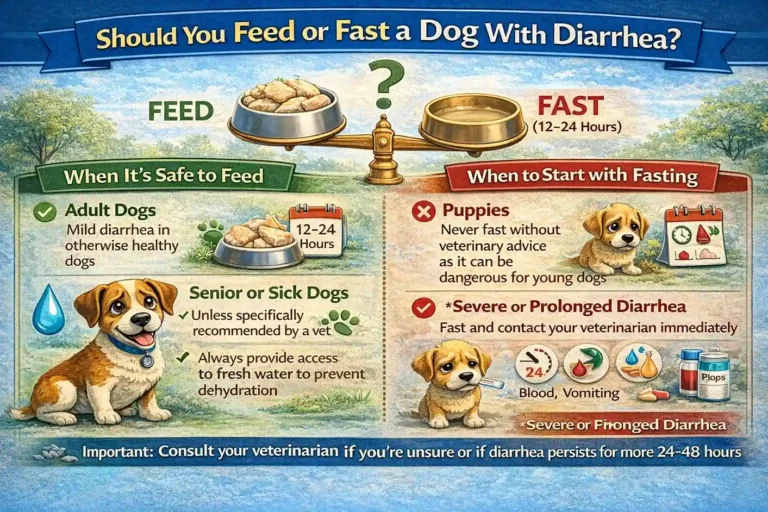
Short-Term Fasting (12–24 Hours)
In many uncomplicated cases, fasting allows the digestive system to rest and reset. Here’s what to keep in mind: (Mitchell, S. C., 2025)
• Adult Dogs: Typically, 12–24 hours of fasting can help alleviate symptoms. (Mitchell, S. C., 2025)
• Puppies: Never fast puppies without veterinary guidance, as they are more susceptible to dehydration. (Mitchell, S. C., 2025)
• Senior or Sick Dogs: Avoid fasting unless specifically recommended by a veterinarian. (Mitchell, S. C., 2025)
Important: Always provide free access to fresh water during fasting to prevent dehydration. (Mitchell, S. C., 2025)
Best Foods to Feed a Dog with Diarrhea (Vet-Recommended)
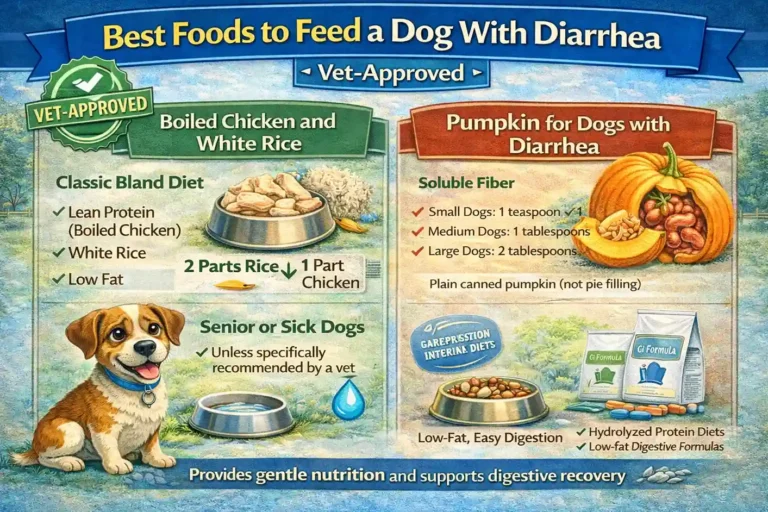
1. Boiled Chicken and White Rice (Classic Bland Diet)
This is the gold standard for managing acute diarrhea in dogs. Why it works: (Mitchell, S. C., 2025)
• Lean Protein (Boiled Chicken): It’s easily digestible, providing essential nutrients without putting strain on the digestive system. (Mitchell, S. C., 2025)
• White Rice: This gentle carbohydrate helps firm stools and soothes the digestive tract. (Mitchell, S. C., 2025)
• Low Fat: Boiled chicken with minimal fat reduces intestinal irritation. (Mitchell, S. C., 2025)
How to Prepare:
• Boil chicken without skin or seasoning. (Mitchell, S. C., 2025)
• Boil plain white rice in water. (Mitchell, S. C., 2025)
• Recommended ratio: 2 parts rice to 1 part chicken. (Burke, A., 2025)
2. Pumpkin for Dogs with Diarrhea
Plain canned pumpkin (not pie filling) is an excellent source of soluble fiber, which helps normalize stool consistency. Pumpkin can be easily added to your dog’s food without upsetting the stomach. (Burke, A., 2025)
Recommended Amount: (Burke, A., 2025)
• Small dogs: 1 teaspoon
• Medium dogs: 1 tablespoon
• Large dogs: 2 tablespoons
3. Prescription Gastrointestinal Diets
For moderate or recurring diarrhea, veterinarians may suggest specialized gastrointestinal diets. These are often necessary for dogs with chronic digestive issues or food sensitivities. (Mitchell, S. C., 2025)
• Hydrolyzed Protein Diets (Mitchell, S. C., 2025)
• Low-fat Digestive Formulas (Mitchell, S. C., 2025)
These diets help support the gastrointestinal tract and prevent further irritation, making them especially beneficial for dogs with ongoing issues. (Mitchell, S. C., 2025)
What NOT to Feed a Dog with Diarrhea
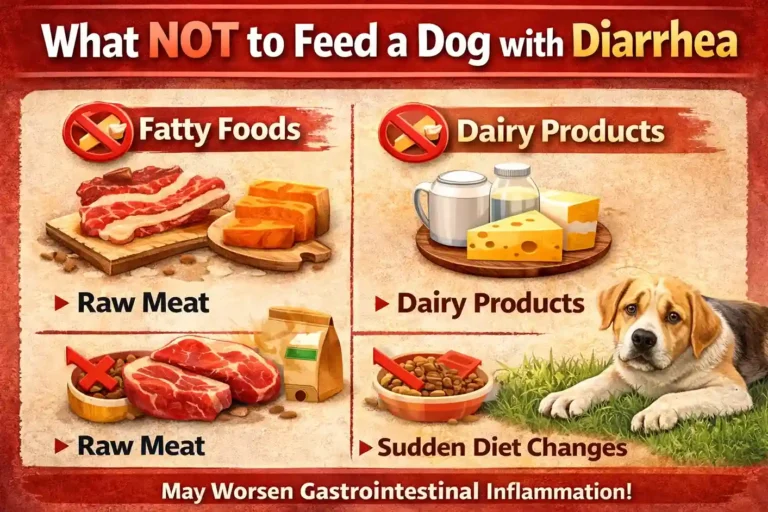
Certain foods can worsen diarrhea or slow down recovery: (Mitchell, S. C., 2025)
• Fatty Foods: Hamburger, greasy meats, and fatty table scraps can aggravate the gut. (Mitchell, S. C., 2025)
• Dairy Products: Many dogs are lactose intolerant, and dairy can irritate the digestive system. (Mitchell, S. C., 2025)
• Raw Food: During diarrhea episodes, raw food can introduce harmful bacteria. (Mitchell, S. C., 2025)
• Sudden Diet Changes: Abruptly changing your dog’s food can cause additional stress on the digestive tract. (Mitchell, S. C., 2025)
How Much to Feed a Dog with Diarrhea
Portion Control is Critical
Overfeeding your dog can prolong diarrhea and worsen the condition. The general feeding approach includes: (Mitchell, S. C., 2025)
• Start with small amounts of food, feeding your dog 2–4 small meals per day. (Mitchell, S. C., 2025)
• Gradually increase portion sizes as stools improve. (Mitchell, S. C., 2025)
• Transition to Normal Diet: Once stools normalize for 48 hours, gradually reintroduce their regular diet over 5–7 days. (Mitchell, S. C., 2025)
The Importance of Hydration During Diarrhea

(American Animal Hospital Association, 2024; World Small Animal Veterinary Association, 2025)
Water Intake
Diarrhea causes rapid fluid loss, which can lead to dehydration. Ensure your dog has constant access to fresh water. If your dog is vomiting, provide small, frequent sips of water to maintain hydration. In severe cases, a veterinarian may recommend oral rehydration solutions or subcutaneous fluids. (American Animal Hospital Association, 2024; World Small Animal Veterinary Association, 2025)
Should You Give Probiotics to Dogs with Diarrhea?
Role of Probiotics in Gut Health
Probiotics can be highly beneficial for dogs with diarrhea. They help restore gut flora, support digestion, and reduce recovery time. (Sun et al., 2025)
Probiotic Benefits
- Reduces diarrhea duration
- Improves stool quality
- Supports recovery after antibiotics
Make sure to use probiotics formulated specifically for dogs, not human probiotics, and always follow the vet-recommended dosage. (Mitchell, S. C., 2025)
Feeding Puppies with Diarrhea: Special Considerations
Puppies are particularly vulnerable due to their immature digestive systems and higher risk of dehydration. Special considerations include Mitchell, S. C., 2025; Burke, A., 2025.
• Never fast puppies without veterinary advice. (Mitchell, S. C., 2025)
• Puppies are more prone to parasitic infections, which can lead to diarrhea. (Burke, A., 2025)
• Always consult a veterinarian if diarrhea persists for more than 12–24 hours. (Mitchell, S. C., 2025)
Feeding Senior Dogs with Diarrhea
If your dog experiences any of the following symptoms, seek veterinary care immediately: (Mitchell, S. C., 2025)
• Diarrhea lasting more than 48 hours (Mitchell, S. C., 2025)
• Blood or black stools (Mitchell, S. C., 2025)
• Vomiting and diarrhea together (Mitchell, S. C., 2025)
• Severe lethargy or weakness (Mitchell, S. C., 2025)
• Weight loss and signs of dehydration (Mitchell, S. C., 2025)
When Diet Alone Is NOT Enough
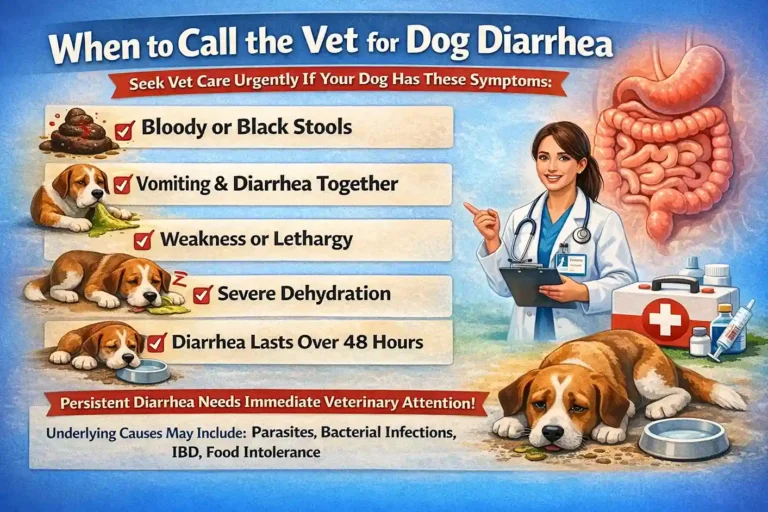
If your dog experiences any of the following symptoms, seek veterinary care immediately: (Mitchell, S. C., 2025)
• Diarrhea lasting more than 48 hours (Mitchell, S. C., 2025)
• Blood or black stools (Mitchell, S. C., 2025)
• Vomiting and diarrhea together (Mitchell, S. C., 2025)
• Severe lethargy or weakness (Mitchell, S. C., 2025)
• Weight loss and signs of dehydration (Mitchell, S. C., 2025)
Underlying causes may include:
- Parasites (requiring dewormers)
• Bacterial infections (requiring antibiotics)
• Inflammatory diseases such as IBD
• Food intolerance
• Systemic illness
Sample Feeding Schedule for Dogs with Diarrhea (Mitchell, S. C., 2025)
• Day 1: Fasting (for adults) and access to water (Mitchell, S. C., 2025)
• Day 2: Small bland meals (boiled chicken & rice) (Mitchell, S. C., 2025)
• Day 3–4: Gradually increase portion size, add probiotics if approved (Mitchell, S. C., 2025; Sun et al., 2025).
• Days 5–7: Gradually transition back to regular diet (Mitchell, S. C., 2025)
Frequently Asked Questions (FAQs)
1. Can I feed rice only to my dog with diarrhea?
o Rice alone is not nutritionally complete. Combine it with lean protein, such as chicken. (Mitchell, S. C., 2025)
2. Is pumpkin better than rice for diarrhea?
o Pumpkin helps improve stool consistency, while rice soothes the digestive tract. They can be used together for optimal results. (Burke, A., 2025; Mitchell, S. C., 2025)
3. How long should I feed a bland diet?
o Typically 2–5 days, depending on how quickly your dog recovers. (Mitchell, S. C., 2025)
4. What are the signs that my dog’s diarrhea is severe?
o Symptoms like blood in the stool, vomiting with diarrhea, lethargy, and dehydration require immediate veterinary attention. (Mitchell, S. C., 2025) o Typically 2–5 days, depending on how quickly your dog recovers. (Mitchell, S. C., 2025)
5. Can I use probiotics for my dog during diarrhea?
o Yes, probiotics specifically formulated for dogs can help restore gut health and reduce recovery time. (Sun et al., 2025)
Medical Disclaimer
This content is for educational purposes only and does not replace professional veterinary advice. Always consult a licensed veterinarian for diagnosis and treatment.
References
- Mitchell, S. C. (2025, May 16). What to feed a dog with diarrhea. PetMD. Retrieved January 23, 2026, from PetMD website.
- Burke, A. (2025, November 11). Can pumpkin help with dog diarrhea? Benefits, dosage, & tips. American Kennel Club. Retrieved January 23, 2026, from American Kennel Club website.
- American Animal Hospital Association. (2024, June 7). 2024 AAHA fluid therapy guidelines for dogs and cats. Retrieved January 23, 2026, from AAHA website.
- World Small Animal Veterinary Association. (2025, February). Canine acute diarrhea: Five steps of canine acute diarrhea treatment (V11) [Infographic]. Retrieved January 23, 2026, from WSAVA website.
- Sun, J., Gu, X., Zhang, H., Zhao, L., Wang, J., Wang, X., Tao, H., Wang, Z., & Han, B. (2025). Application of probiotics in cats and dogs: Benefits and mechanisms. Veterinary Sciences, 12(10), 1008. doi:10.3390/vetsci12101008