
Mucus in Puppy Poop: Causes, Parasites, and When to See a Veterinarian
Written by: Dr. Akram Khan, DVM
Medically Reviewed by: Dr. Khalid Mehmood, PhD
Last updated on September 06, 2026
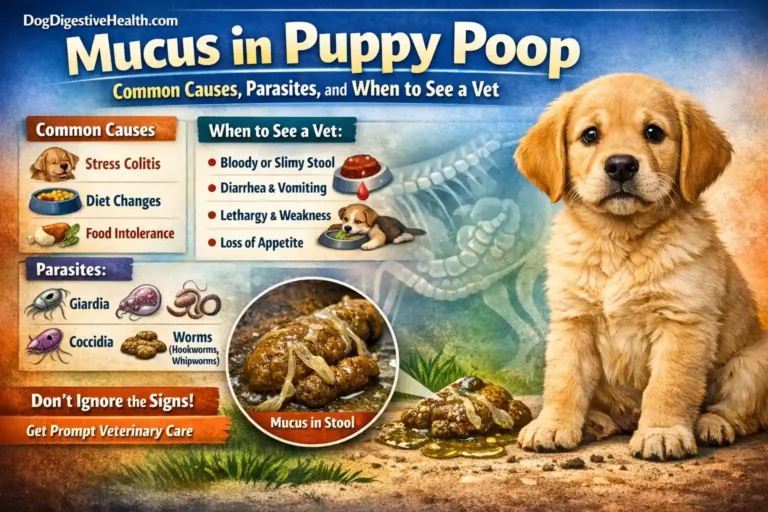
- Seeing mucus in puppy poop can be alarming, especially when the stool looks slimy, jelly-like, or coated with a clear, white, yellow, or bloody film.
- In many cases, puppy poop with mucus means the colon, large intestine, or broader gastrointestinal tract is irritated or inflamed.
- Common causes include stress colitis, dietary indiscretion, food intolerance, Giardia, coccidia, hookworms, whipworms, and other intestinal parasites.
- Because puppies can become dehydrated more quickly than adult dogs, mucus in puppy stool deserves closer attention when it happens with diarrhea, vomiting, blood in stool, lethargy, loss of appetite, or weakness.
What mucus in puppy poop usually means
- Mucus is a slippery substance naturally made by the intestines to help stool pass more easily.
- A small amount may sometimes appear in stool, but visible or repeated mucus usually suggests intestinal inflammation, especially in the colon.
- Many pet owners search for this using terms like
- mucus in puppy poop
- puppy poop with mucus
- mucus in puppy stool
- slimy puppy poop, mucus-covered puppy stool
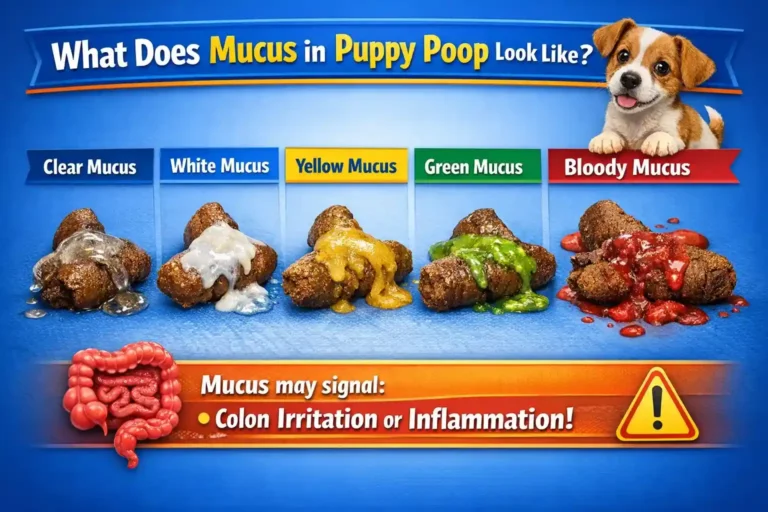
- Mucus may appear:
Clear, white, yellow, and green mixed with blood - When mucus appears with frequent small stools, straining, urgency, or soft stool, it often points to large-bowel diarrhea or colitis.
- Blood and mucus in puppy diarrheas are more concerning than mucus alone and may suggest more serious intestinal irritation, parasites, or infection.
Common causes of mucus in puppy poop
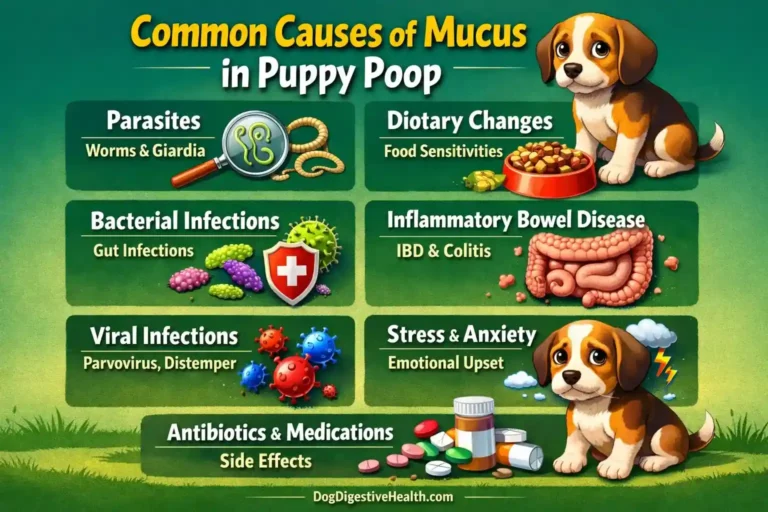
The most common causes of mucus in puppy poop include:
Stress colitis
- Stress colitis in puppies can happen after:
- travel
- rehoming
- boarding
- new environments
- changes in routine
- This causes inflammation in the colon and may lead to:
- mucus in stool
- straining
- frequent small bowel movements
- fresh blood in stool
Sudden diet changes
- A fast switch in food is one of the most common reasons for puppy diarrhea with mucus.
- Puppies may react to:
- a new kibble
- rich treats
- table scraps
- spoiled food
- scavenged items
- This type of dietary indiscretion can upset the gut and trigger mucus production.
Food intolerance
- Some puppies develop gut irritation from ingredients that do not suit them well.
- This may lead to:
- soft stool
- gas
- intermittent diarrhea
- mucus in puppy stool
Acute gastrointestinal irritation
- General gut inflammation may be caused by:
- mild infections
- bowel irritation
- dietary mistakes
- temporary inflammation
- In uncomplicated cases of acute colitis, nutritional management may play a major role in recovery.
Parasites that can cause mucus in puppy poop
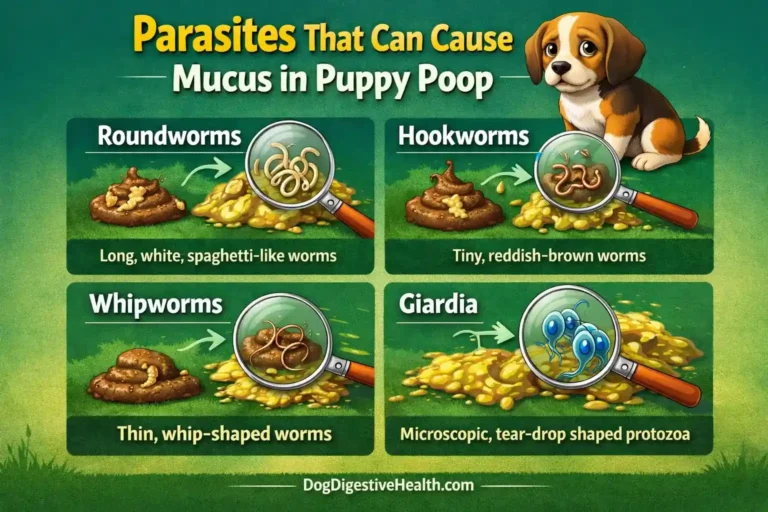
- Parasites causing mucus in puppy poop are especially important because puppies are at higher risk than many adult dogs.
- Major parasite-related causes include:
Giardia
- Giardia in puppiesis a major cause of:
- intermittent diarrhea
- foul-smelling stool
- soft stool
- mucus in puppy poop
- Giardia spreads through:
- contaminated water
- contaminated feces
- poor environmental hygiene
- Good treatment and environmental cleanup are both important because reinfection is common.
Coccidia
- Coccidia in puppies commonly affects young dogs and may cause:
- watery diarrhea
- mucus in stool
- poor appetite
- weakness
- This is one of the key conditions to rule out in a puppy with repeated loose stool and mucus.
Hookworms
- Hookworms can damage the intestinal lining and may lead to:
- abnormal stool
- weakness
- diarrhea
- blood loss
- poor growth
- Hookworms are important both medically and from a public health perspective.
Whipworms
- Whipworms are linked closely with large-bowel diarrhea.
- They may cause:
- mucus-covered stool
- straining
- urgency
- fresh blood
This makes them especially relevant to searches like worms causing mucus in puppy stool and parasites causing mucus in puppy poop.
Roundworms
- Roundworms are common in puppies and may contribute to:
- intestinal irritation
- poor growth
- diarrhea
- pot-bellied appearance
- Even if worms are not visible, a puppy may still have a parasite problem.
When to see a vet for mucus in puppy poop
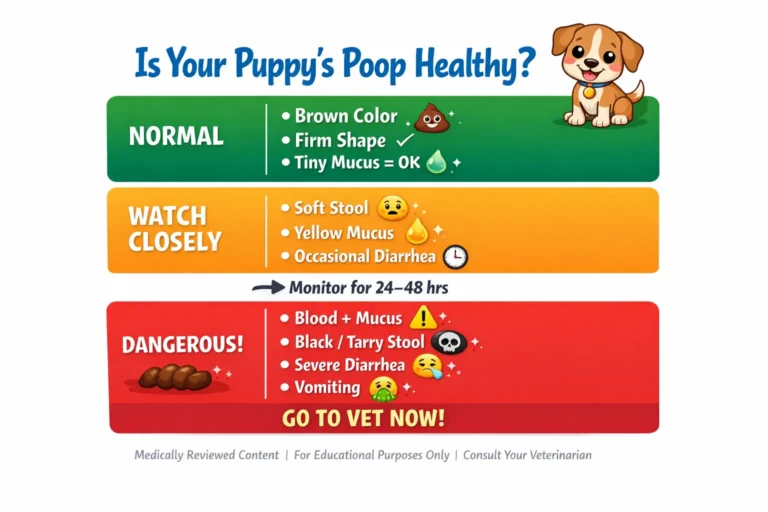
- This is the most important section for pet parents searching when to see a vet for mucus in puppy poop.
- A puppy should be seen by a vet sooner rather than later if the mucus is:
- persistent
- recurrent
- heavy
- foul-smelling
- mixed with blood
- Veterinary care is especially important if mucus appears with:
- diarrhea
- vomiting
- lethargy
- weakness
- loss of appetite
- dehydration
- straining
- abdominal discomfort
- Get prompt veterinary attention if your puppy has:
- mucus plus repeated diarrhea
- blood and mucus in puppy poop
- puppy mucus stool and vomiting
- poor appetite
- very low energy
- dehydration signs
- very young age with ongoing GI signs
- Puppies can deteriorate faster than adult dogs when fluid loss is involved, which is why puppy poop with mucus and blood or puppy diarrhea with mucus and lethargy should not be ignored.
How vets diagnose the cause
- A veterinarian will not diagnose mucus in puppy poop based on stool appearance alone.
- Diagnosis usually includes:
- history taking
- physical examination
- hydration assessment
- fecal exam
- parasite screening
- The vet may ask about:
- recent food changes
- deworming history
- vaccination history
- energy level
- appetite
- vomiting
- stool frequency
- exposure to contaminated areas
- A fecal test for puppy mucus stool is often one of the most useful first steps.
- This helps detect:
- Giardia
- coccidia
- hookworms
- whipworms
- roundworms
- Puppies need repeated testing during the first year of life because they are more vulnerable to intestinal parasites.
Treatment depends on the cause
- The best treatment for mucus in puppy poop depends on the underlying cause.
If parasites are involved
- Treatment may include:
- targeted deworming
- anti-parasitic medication
- follow-up stool testing
- bathing when indicated
- cleaning contaminated areas
- prompt stool pickup
- This is especially important for Giardia, where reinfection is common if the environment is not managed well.
If colitis or diet-related irritation is involved
- Treatment may involve:
- a highly digestible diet
- careful feeding
- hydration support
- veterinary monitoring
- Nutritional management can play a major role in uncomplicated acute colitis and may be better than unnecessary antibiotic use in some cases.
If probiotics are considered
- Probiotics may help some puppies with diarrhea, but results vary depending on the strain and the individual case.
- They should be seen as support, not a replacement for diagnosis when parasites or dehydration are possible.
How to help prevent mucus in puppy poop
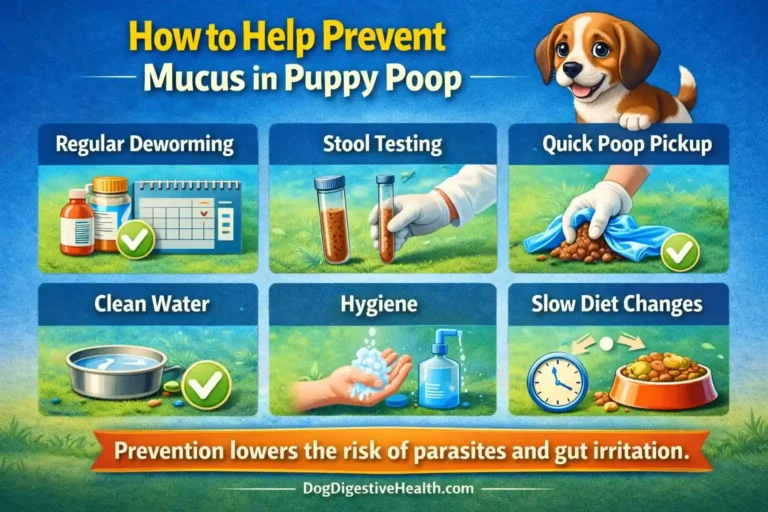
- Prevention strategies for mucus in puppy poop include:
Follow a parasite control plan.
- Use vet-guided deworming and stool testing during puppyhood.
- Puppies need more frequent parasite screening than adult dogs.
Pick up stool quickly.
- Fast stool removal helps reduce:
- reinfection
- environmental contamination
- exposure to parasites
Avoid contaminated water and feces.
- This is especially important for reducing the risk of Giardia and other intestinal parasites.
Transition foods slowly.
- Gradual food changes are better than abrupt changes.
- This helps reduce puppy diarrhea with mucus after diet change.
Do not ignore repeat episodes.
Recurrent slimy puppy poop may still point to parasites or ongoing bowel inflammation even if the puppy seems otherwise okay.
Bottom line
- Mucus in puppy poop is a symptom, not a final diagnosis.
- It usually signals irritation or inflammation in the colon or broader gastrointestinal tract.
- The most important causes include:
- stress colitis
- diet changes
- food intolerance
- Giardia
- coccidia
- hookworms
- whipworms
- other intestinal parasites
- The biggest medical concern is not just the mucus itself, but what comes with it:
- diarrhea
- vomiting
- blood
- dehydration
- lethargy
- poor appetite
If the mucus is persistent, severe, or paired with red-flag symptoms, your puppy needs a fecal exam, hydration check, and veterinary assessment.
Frequently Asked Questions (FAQs)
1. Is mucus in puppy poop normal?
A very small amount can sometimes happen with mild intestinal irritation, but repeated or heavy mucus is not considered normal.
2. What causes mucus in puppy poop?
Common causes include colitis, sudden diet changes, food intolerance, Giardia, coccidia, hookworms, whipworms, and other gut irritation.
3. Can worms cause mucus in puppy stool?
Yes, intestinal parasites such as whipworms, hookworms, roundworms, and protozoa like Giardia can contribute to mucus in stool.
4. When should I worry about puppy poop with mucus?
Worry more if it comes with blood, vomiting, diarrhea, lethargy, dehydration, or poor appetite.
5. Does Giardia cause mucus in puppy poop?
Yes, Giardia can cause soft stool, foul-smelling diarrhea, and mucus in puppy poop.
6. Should I take my puppy to the vet for mucus in stool?
Yes, especially if the mucus is repeated, severe, bloody, or associated with other warning signs.
7. How do vets test mucus in puppy poop?
Vets commonly use a fecal exam, parasite screening, hydration assessment, and a physical exam.
Medical Disclaimer
This article is for educational purposes only and is not a substitute for veterinary diagnosis or treatment. If your puppy has mucus in stool with diarrhea, vomiting, blood, weakness, or poor appetite, contact a veterinarian promptly.
References
- Companion Animal Parasite Council. (2025, February 28). Hookworms. CAPC.
- Companion Animal Parasite Council. (2025, February 6). Giardia. CAPC.
- Jones, S., et al. (2025). Treatment of giardiasis in dogs: Field clinical study to confirm the efficacy, safety, and acceptance of a metronidazole oral suspension. Parasitology Research.
- Rudinsky, A. J., et al. (2022). Randomized controlled trial demonstrates nutritional management is superior to metronidazole for treatment of acute colitis in dogs. Journal of the American Veterinary Medical Association.
- Xia, J., et al. (2024). The function of probiotics and prebiotics on canine intestinal health. Animals, 14(11).
Socha, P. A., et al. (2025). The impact of a multi-strain probiotic supplementation on acute nonspecific diarrhoea in puppy dogs. Animals, 15(12), 1700*.