
Dog Poop with Blood and Mucus: Causes, Jelly-Like Stool & When It’s an Emergency
Written by: Dr. Muhammad Ihsan Ullah, PhD
Medically Reviewed by: Dr. Zaheer Hussain, PhD
Last updated on October 23, 2026
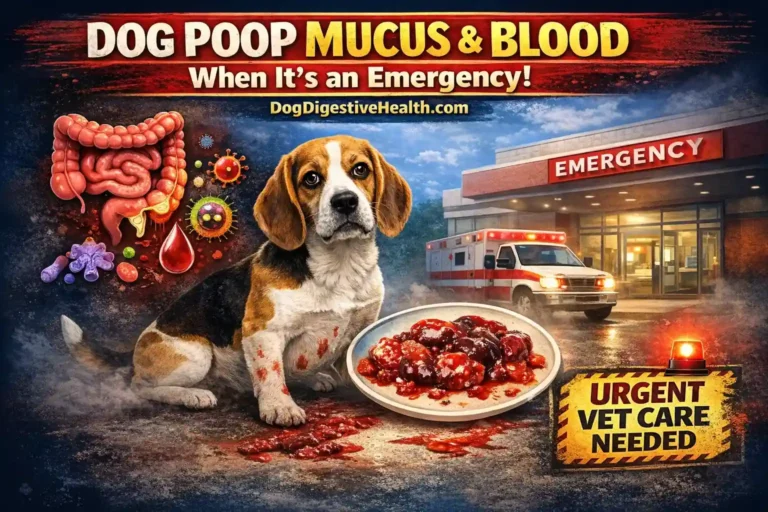
Dog poop with blood and mucus can be alarming and often points to irritation or inflammation in the lower digestive tract. The stool may also appear jelly-like, loose, or more frequent than usual. While mild colon irritation can sometimes cause small amounts of fresh blood and mucus, repeated episodes, heavy bleeding, vomiting, weakness, or dehydration require prompt veterinary attention.
Blood and Mucus in Dog Poop: What Does It Mean?

When blood and mucus appear together in dog stool, veterinarians commonly interpret it as colonic (large bowel) involvement. The colon normally secretes a small amount of mucus to lubricate stool, but irritation can trigger excess mucus, and inflammation can cause fresh bleeding from the lining.
Two medical terms help clarify what you’re seeing:
- Hematochezia: bright red blood, usually from the colon or rectum (lower GI).
- Melena: black, tarry stool, which suggests blood has been digested and may come from the upper GI
If your dog’s stool has mucus + bright red blood, the pattern most often fits hematochezia (lower-GI bleeding), especially when paired with frequent urges to poop or straining.
Why “Dog Poop Like Jelly With Blood” Happens
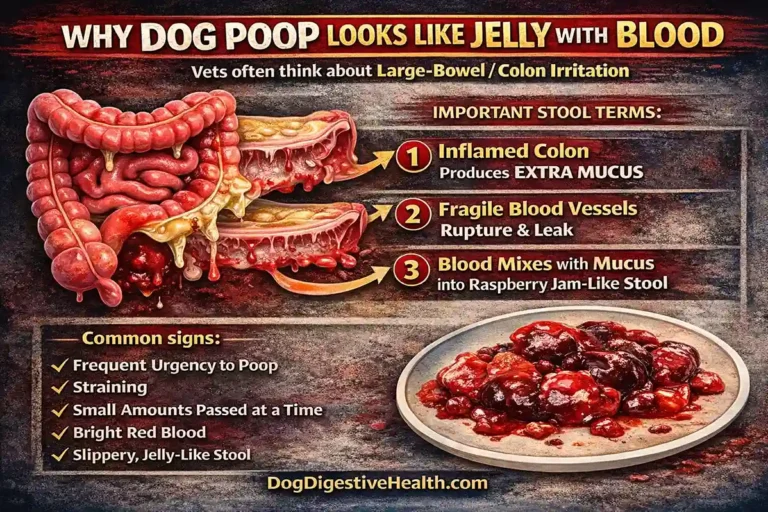
Many dog owners search for “dog poop like jelly with blood” or “raspberry jam stool.” That jelly look usually happens because:
- The inflamed colon produces extra mucus to protect itself.
- Fragile blood vessels near the surface rupture and leak fresh red blood.
- Blood mixes with mucus and fluid, creating a gel-like texture.
This combination is especially common in large-bowel diarrhea patterns, where dogs may pass smaller amounts more frequently, strain, or have an urgent need to go outside.
Blood and Mucus in Dog Stool but Dog Acts Normal
A common situation is your dog seems fine but has blood and mucus in the stool.
Yes, mild colon irritation can sometimes cause temporary bloody mucus even when your dog is still active and eating. However, “acting normal” does not guarantee the issue is harmless. Some GI problems can worsen quickly, and dehydration can develop faster than many owners expect—especially if diarrhea repeats.
A practical rule: The dog’s overall condition matters more than the stool alone—energy, hydration, appetite, vomiting, gum color, and frequency of diarrhea.
Is Blood and Mucus in Dog Poop an Emergency?
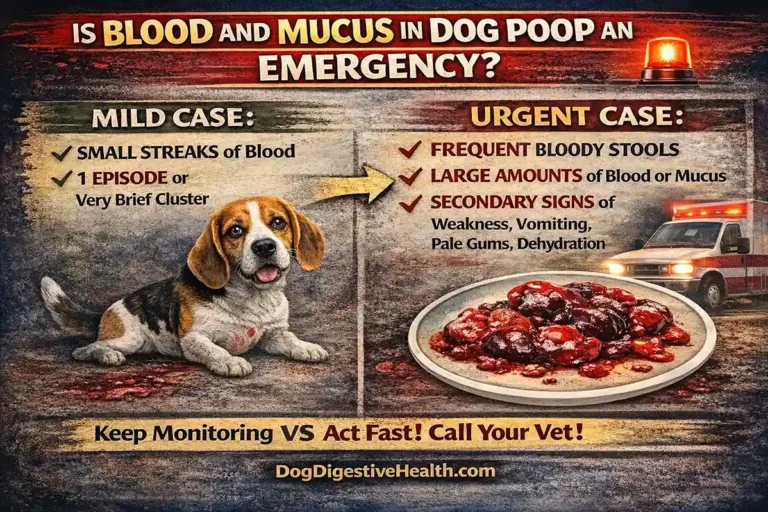
Sometimes yes. Urgency depends on:
- How much blood
- How often it’s happening
- Your dog’s overall status (energy, vomiting, hydration, gum color)
- Stool color (bright red vs. black/tarry)
One important “rule-out” entity is Acute Hemorrhagic Diarrhea Syndrome (AHDS). It can cause sudden, severe hemorrhagic diarrhea and rapid fluid loss, and it may deteriorate quickly without supportive care.
Warning Signs That Need Same-Day Emergency Vet Care
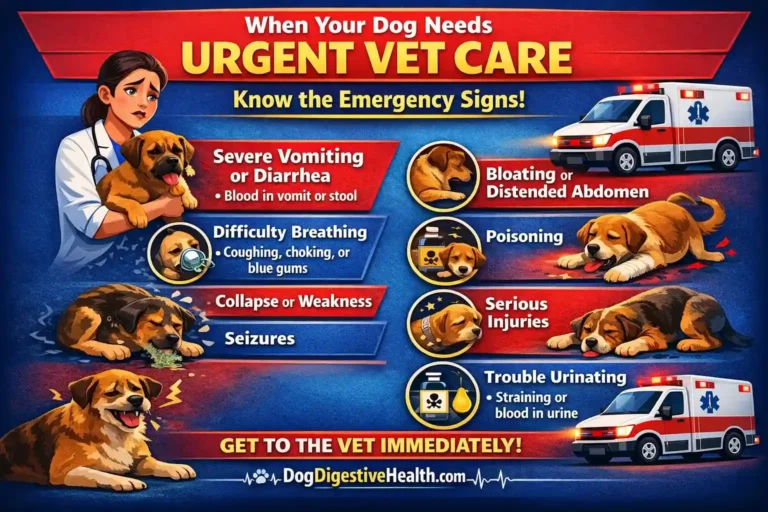
Treat blood + mucus in dog poop as urgent if you notice any of the following:
- Multiple episodes of bloody diarrhea in a short time
- Large amounts of blood or stool that is mostly blood/mucus
- Vomiting, especially with diarrhea
- Weakness, collapse, severe lethargy
- Pale gums or signs of shock
- Dehydration signs (tacky/dry gums, sunken eyes, extreme thirst, minimal urine)
- Black/tarry stool (melena)
- Puppies, seniors, or dogs with chronic illness (they dehydrate faster)
If your dog has jelly-like bloody stool plus vomiting, weakness, dehydration, pain, or pale gums, it’s safest to seek urgent veterinary care.
Spotting Mild vs Serious Cases
Mild-leaning pattern
- Small streaks of bright red blood with mucus
- One episode or a short cluster, then stops
- Dog is bright, drinking, eating, normal breathing, normal gum color
These may resolve within 24–48 hours, but you should still contact your veterinarian—especially if it returns.
Serious pattern
- Ongoing or worsening bloody diarrhea
- “Raspberry jam” / heavy mucus-blood output
- Vomiting, dehydration, weakness, refusing food, abdominal pain, pale gums
- Black/tarry stool
These patterns raise concern for severe inflammation, significant blood/fluid loss, or a more serious GI disorder and need prompt veterinary assessment.
What To Do Right Now If Your Dog Is Passing Blood and Mucus
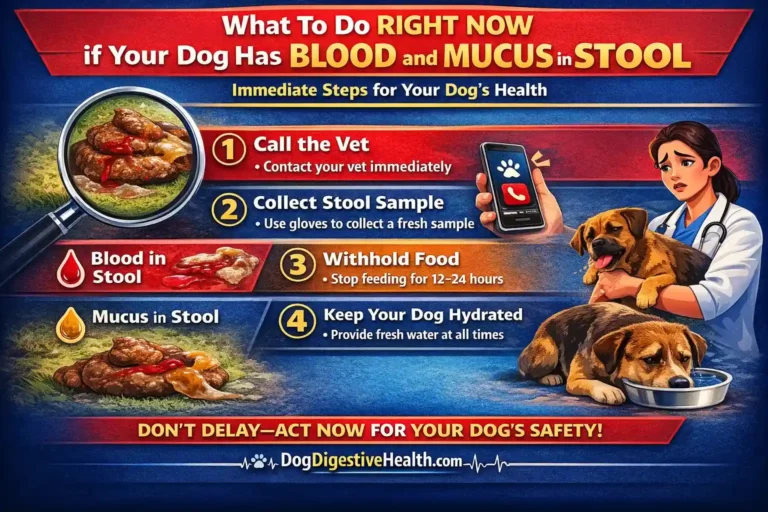
1) Check your dog first—not just the poop.
Look at:
- Energy level
- Gum color (healthy gums are typically pink and moist)
- Hydration (moist vs. tacky gums)
- Vomiting or abdominal pain
- Breathing effort
2) Document the stool.
Take a photo and note:
- Bright red vs. dark/black stool
- Jelly/mucus amount
- Frequency (how many times in 6–12 hours)
- Any new foods, treats, trash exposure, stress, or medication changes
3) Call your veterinarian (or an emergency clinic) with a clear summary.
Say: “My dog is passing blood and mucus together / jelly-like blood in stool,” plus duration, frequency, and any red-flag signs.
4) Avoid home medications unless your vet instructs
Some human medications can worsen bleeding or be toxic to dogs. If your dog is unstable or worsening, go in.
Medical Disclaimer:
This article is for educational purposes and does not replace veterinary diagnosis or treatment. If your dog has blood and mucus in the stool, especially with vomiting, weakness, dehydration, pale gums, black/tarry stool, or repeated episodes, contact a veterinarian or emergency clinic immediately.
Frequently Asked Questions(FAQs)
1) Why does my dog’s poop have mucus and blood together?
It often means the lower intestine/colon is irritated and producing extra mucus while small surface vessels bleed.
2) Is blood and mucus in dog poop an emergency?
It can be. It’s urgent if there are repeated episodes, large blood amounts, vomiting, weakness, dehydration, pale gums, or black/tarry stool.
3) What does “dog poop like jelly with blood” mean?
That jelly look is usually mucus mixed with fluid and fresh blood—commonly seen with large-bowel inflammation patterns.
4) My dog acts normal but has blood and mucus in stool—should I worry?
Yes—contact your vet. Some GI conditions can worsen quickly even if your dog seems okay at first.
5) What should I tell the vet on the phone?
Stool color (bright red vs black), frequency, jelly/mucus amount, duration, and whether there’s vomiting, lethargy, pain, dehydration, or pale gums.
6) Can dehydration happen quickly with bloody diarrhea?
Yes. Ongoing diarrhea (with or without vomiting) can cause rapid fluid loss—especially in small dogs, puppies, and seniors.
7) When should I go to an emergency vet instead of waiting?
Go now if your dog is weak, vomiting, dehydrated, has pale gums, passes large amounts of blood, has repeated bloody stools, or has black/tarry stool.
References:
- Busch, K., & Unterer, S. (2022). Update on acute hemorrhagic diarrhea syndrome in dogs. Advances in Small Animal Care, 3(1), 133–143. https://doi.org/10.1016/j.yasa.2022.06.003
- MSD Veterinary Manual. (2025). Acute hemorrhagic diarrhea syndrome in dogs.MSD Veterinary Manual.
- (2024). Mucus in dog poop: What it means.PetMD.
- Gulf Coast Veterinary Specialists (GSVS). (2025). Blood and mucus in dog poop: Is it an emergency?
- Wessely, V., et al. (2025). Prevalence of Clostridium perfringensencoding the netF toxin in dogs with gastrointestinal disease. Veterinary Sciences, 2(1).