
Probiotics for Senior Dogs: Benefits, Safety & Daily Use
Written by: Dr. Akram Khan, DVM
Medically Reviewed by: Dr. Khalid Mehmood, PhD
Last updated on September 14, 2026
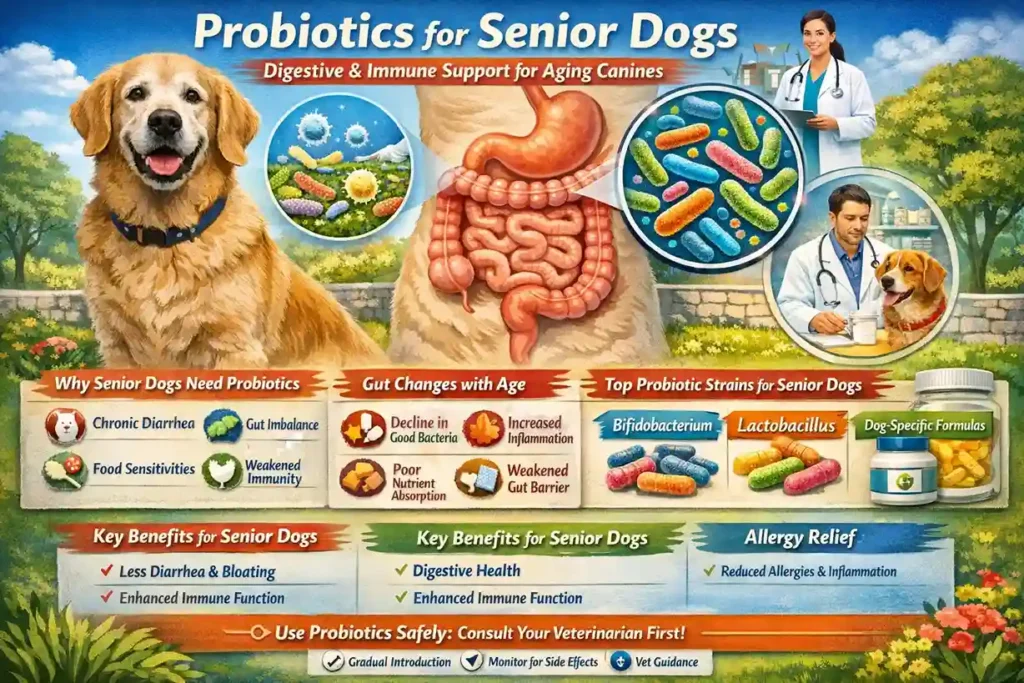
Probiotics for senior dogs can help support aging digestion, stool quality, immune balance, and gut microbiome health, especially in older dogs with sensitive stomachs, chronic diarrhea, food sensitivities, or age-related inflammation. Many owners ask whether senior dog probiotics can be used daily, how long a dog should be on probiotics, and how fast probiotics work for older dogs. In general, dog-specific probiotics may be useful for long-term digestive and immune support, but senior dogs with persistent diarrhea, vomiting, weight loss, blood in stool, or worsening symptoms should be evaluated by a veterinarian.
Are probiotics good for senior dogs?
Yes, probiotics can be good for senior dogs when they are dog-specific, properly dosed, and used under veterinary guidance. They may support digestion, stool consistency, gut microbiome balance, immune regulation, diarrhea recovery, and allergy-related inflammation. Older dogs with chronic illness, severe diarrhea, weight loss, or blood in stool should see a veterinarian.
Why Senior Dogs Need Probiotics More Than Younger Dogs
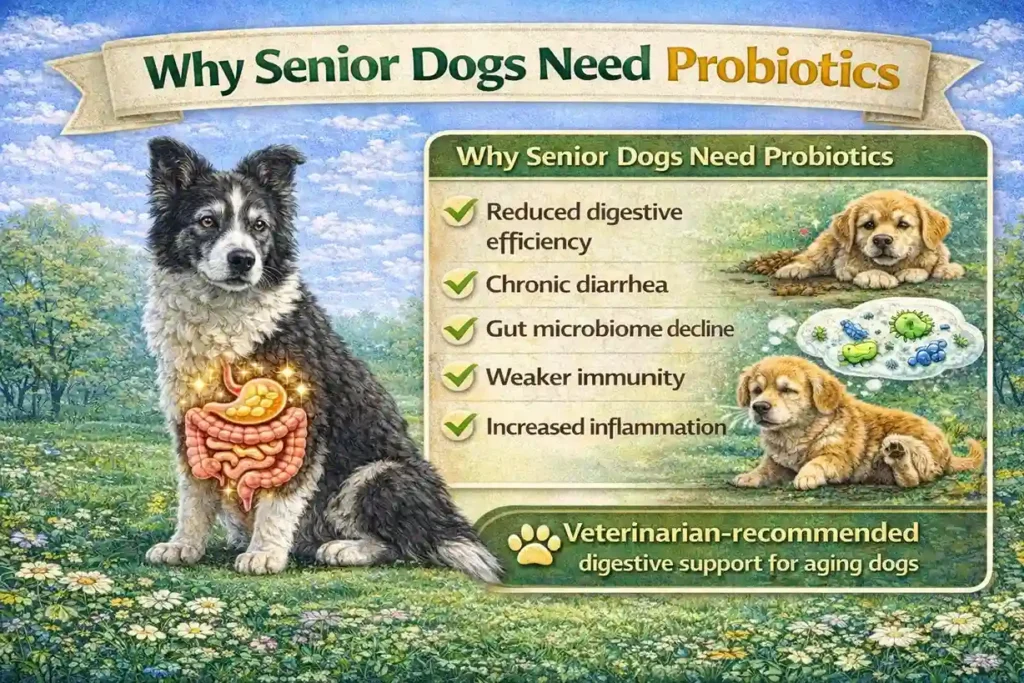
The gut microbiome—the community of beneficial bacteria living in the digestive tract—changes significantly with age. In senior dogs, microbial diversity often declines, allowing harmful bacteria to dominate.
Common age-related gut changes include:
- Reduced digestive efficiency
- Recurrent or chronic diarrhea
- Slower gut motility
- Weakened immune response
- Increased food sensitivities and allergies
- Higher levels of gut inflammation
Probiotic supplementation helps restore microbial balance, supporting digestion, immune resilience, and overall comfort in aging dogs.
How the Senior Dog Digestive System Changes With Age
As dogs enter their senior years, several physiological shifts occur:
- Decline in beneficial gut bacteria
- Increased presence of pathogenic microbes
- Weakened intestinal barrier integrity
- Reduced digestive enzyme activity
- Less efficient absorption of vitamins and minerals
- Increased inflammatory responses
These changes increase the risk of GERD-like symptoms, irritable bowel conditions, chronic gastrointestinal upset, and nutrient deficiencies in senior dogs.
What Are Probiotics and How Do They Help Senior Dogs?
Probiotics are live beneficial microorganisms that support digestive and immune health by:
- Rebalancing gut bacteria
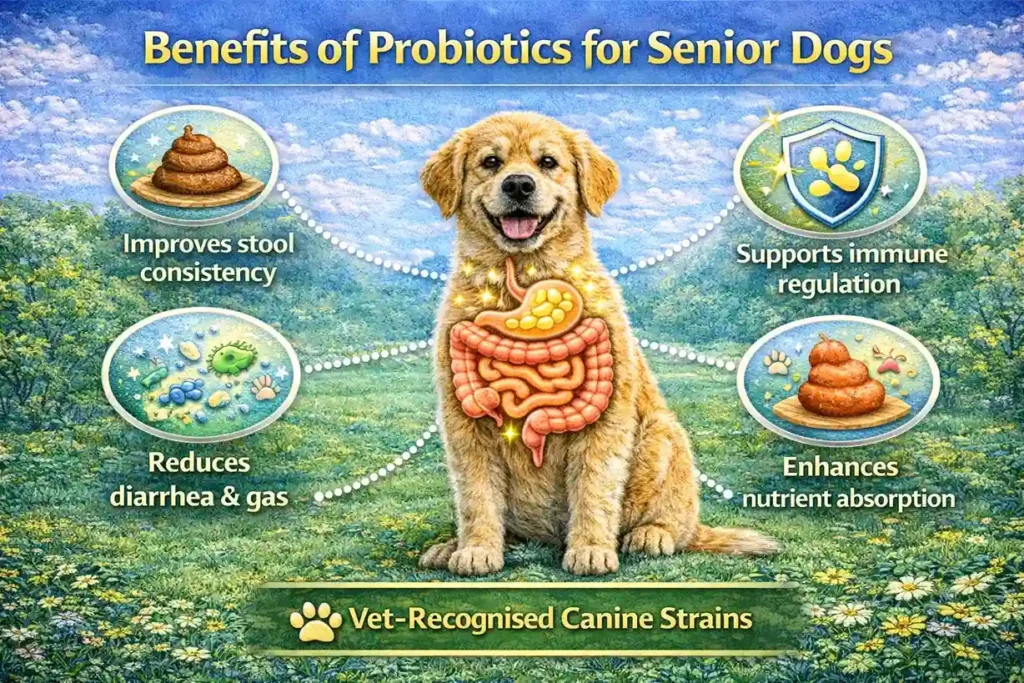
- Improving stool consistency
- Supporting immune system regulation
- Reducing gas, bloating, and diarrhea
- Helping manage allergy-related inflammation
In senior dogs, probiotics are often used as long-term maintenance support, not just short-term relief during illness.
Best Probiotic Strains for Senior Dogs (Science-Supported)
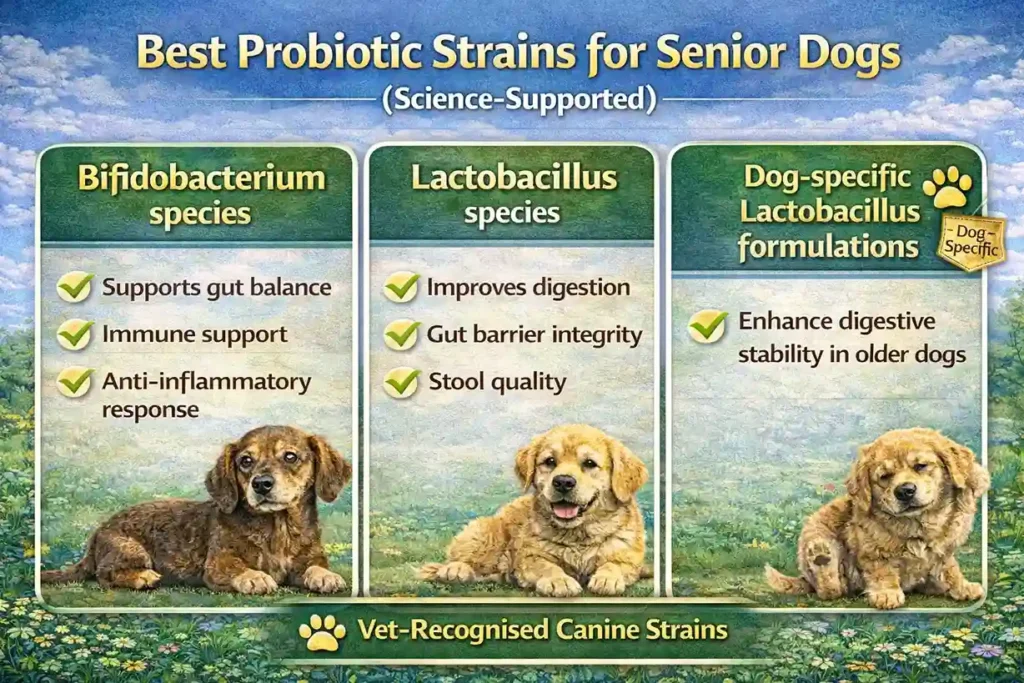
Not all probiotic strains are equally beneficial for aging dogs. Veterinary research and clinical use highlight the following dog-specific strains:
Key Probiotic Strains for Senior Dogs
- Bifidobacterium species – Supports gut balance, immune modulation, and anti-inflammatory responses
- Lactobacillus species – Improves digestion, gut barrier integrity, and stool quality
- Dog-specific Lactobacillus formulations—Enhance digestive stability in older dogs
These strains are commonly found in senior-specific probiotic supplements and are better tolerated by aging digestive systems.
Benefits of Probiotics for Senior Dogs
Digestive Health Benefits
- Reduced frequency of diarrhea
- Improved stool consistency
- Better digestive efficiency
- Less gas and bloating
Immune System Support
- Improved immune response regulation
- Reduced chronic inflammation
- Better resistance to infections
Allergy & Sensitivity Support
- May help manage food allergies
- Supports the gut-immune connection
- Can reduce skin and digestive sensitivities
Probiotics for Senior Dogs With Diarrhea
Chronic or recurring diarrhea is especially common in senior dogs due to:
- Age-related gut microbiome imbalance
- Reduced digestive enzyme production
- Long-term medication use
- Stress or dietary changes
Probiotics help restore microbial balance, often reducing diarrhea episodes and improving gut stability over time.
⚠️ Important: Persistent or severe diarrhea should always be evaluated by a veterinarian to rule out underlying disease.
How Long Should Senior Dogs Take Probiotics?
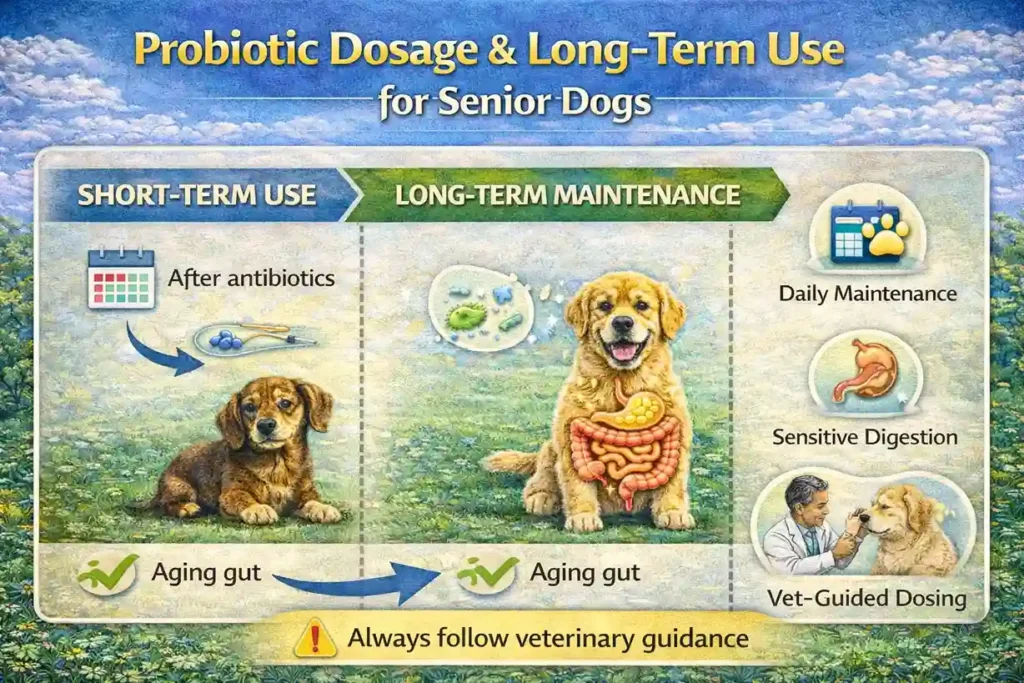
The duration of probiotic use depends on your dog’s condition:
- Short-term use: After antibiotics or acute digestive upset
- Long-term use: For chronic digestive disorders, immune support, or age-related gut decline
Many senior dogs benefit from daily maintenance probiotics when recommended by a veterinarian.
Risks and Safety Considerations for Senior Dogs
Probiotics are generally safe, but aging dogs require additional caution.
Possible Side Effects
- Temporary gas or bloating
- Mild loose stools during initial adjustment
Higher-Risk Situations
- Dogs with compromised immune systems
- Dogs with advanced chronic disease
- Dogs on long-term medications
Introduce probiotics gradually and monitor your dog’s response closely.
Probiotics, Allergies, and Inflammation in Senior Dogs
Gut health plays a critical role in immune regulation. In senior dogs, probiotics may help reduce:
- Chronic inflammatory responses
- Allergy-related digestive and skin symptoms
- Food sensitivities linked to gut imbalance
This makes probiotics especially valuable for older dogs with multi-system health concerns.
Choosing the Right Probiotic for Senior Dogs
When selecting a probiotic supplement for senior dogs, look for:
- Dog-specific probiotic strains
- Clearly labeled CFU counts
- Shelf-stable formulations
- No artificial colors, flavors, or sweeteners
- Veterinary backing or clinical research support
When to Consult a Veterinarian
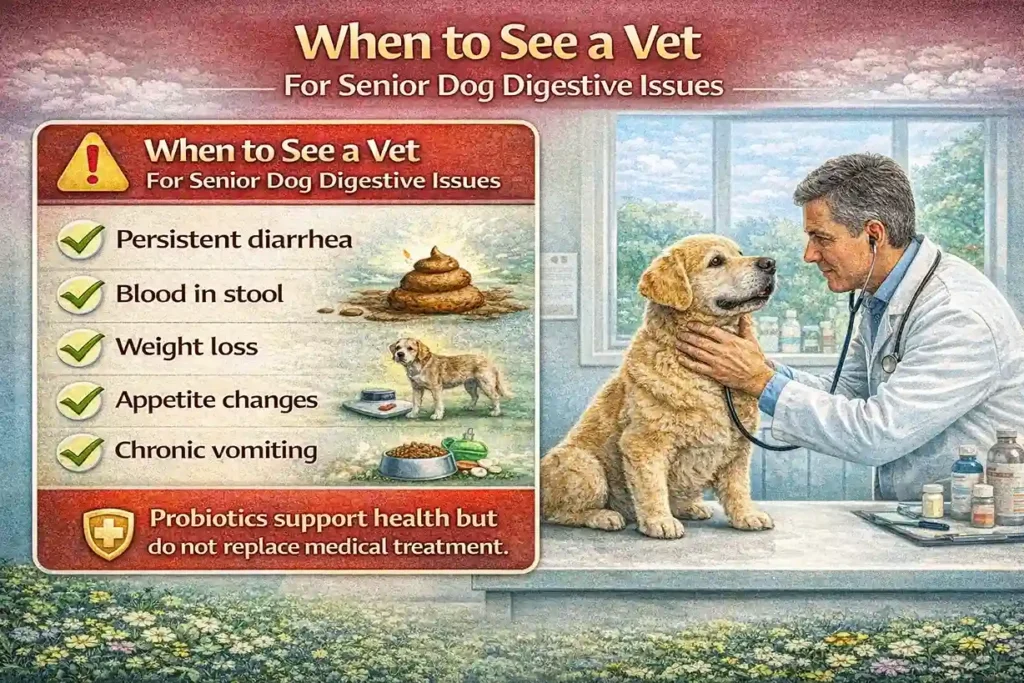
Seek veterinary advice if your senior dog experiences:
- Persistent diarrhea or vomiting
- Unexplained weight loss
- Appetite changes
- Blood in stool
- Worsening digestive symptoms
Probiotics are supportive tools, not replacements for medical treatment.
Final Verdict: Are Probiotics Good for Senior Dogs?
Yes—when chosen and used correctly.
Probiotics can significantly support digestive balance, immune health, and overall well-being in senior dogs, especially those with age-related gut changes or chronic digestive disorders.
Used responsibly and under veterinary guidance, probiotics are among the safest long-term supplements for aging canine health.
Medical Disclaimer
This article is for educational purposes only and does not replace professional veterinary diagnosis or treatment. Always consult a licensed veterinarian for medical concerns.
Frequently Asked Questions (FAQs)
1. Can senior dogs take probiotics every day?
Yes, when properly dosed and vet-approved.
2. Are probiotics safe for senior dogs with GERD?
Often yes, but strain selection and product quality matter.
3. Do probiotics replace digestive medications?
No. They complement prescribed treatments.
4. How long do probiotics take to work in senior dogs?
Improvements are often seen within 1–2 weeks.
5. Can probiotics help senior dogs with allergies?
They may help by supporting immune regulation.
6. Should probiotics be stopped if symptoms worsen?
Yes—stop use and consult your veterinarian.