
Best Natural Digestive Enzymes for Dogs: How to Boost Your Dog’s Gut Health
Written by: Dr. Akram Khan, DVM
Medically Reviewed by: Dr. Muhammad Saeed, PhD
Last updated on September 07,2026
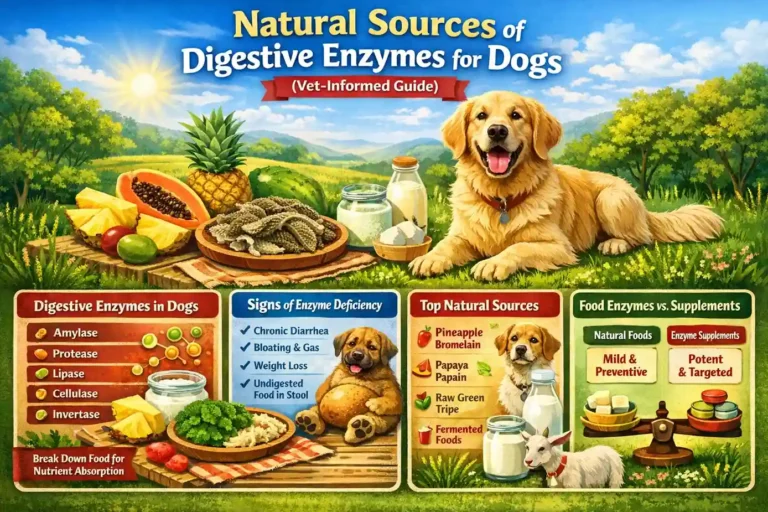
Digestive enzyme deficiency in dogs is more common than many pet owners realize. Factors like aging, low-quality kibble diets, chronic stress, and pancreatic disorders can all lead to poor digestion and nutrient malabsorption in dogs. When digestion suffers, even the best dog food for digestion may not deliver essential nutrients. While many pet owners turn to digestive enzyme supplements, natural sources of digestive enzymes for dogs can often provide a safer and more effective solution. This vet-informed guide explores the top natural digestive enzyme foods for dogs, how they support dog digestion, and whether they can be an ideal option for improving gut health and overall wellness in dogs.
What Are Digestive Enzymes and Why Do Dogs Need Them?
Digestive enzymes are biological proteins that break food into absorbable nutrients. Without adequate enzyme activity, dogs may eat enough food yet still suffer from malnutrition, loose stools, inflammation, and poor immune function.
Key Digestive Enzymes in Dogs
- Amylase – Breaks down carbohydrates and starches
- Protease / Pepsin / Trypsin – Converts proteins into amino acids
- Lipase – Digests dietary fats into fatty acids
- Cellulase – Breaks plant cellulose (dogs do not produce this naturally)
- Invertase – Converts sugars (sucrose) into glucose and fructose
These enzymes work throughout the digestive tract—from the stomach to the small intestine—with critical support from the pancreas, liver, bile production, and stomach acid (HCl).
Signs of Digestive Enzyme Deficiency in Dogs
Dogs with insufficient enzyme activity often show subtle but progressive symptoms, including:
- Chronic diarrhea or loose stools
- Excessive gas, bloating, or abdominal discomfort
- Undigested food visible in stool
- Poor nutrient absorption (malabsorption syndrome)
- Weight loss despite adequate food intake
- Food sensitivities and allergies
- Chronic skin issues and inflammation
- Pancreatic disorders, including Exocrine Pancreatic Insufficiency (EPI)
Early recognition is essential to prevent long-term gastrointestinal damage.
Natural Sources of Digestive Enzymes for Dogs
Pineapple (Bromelain)
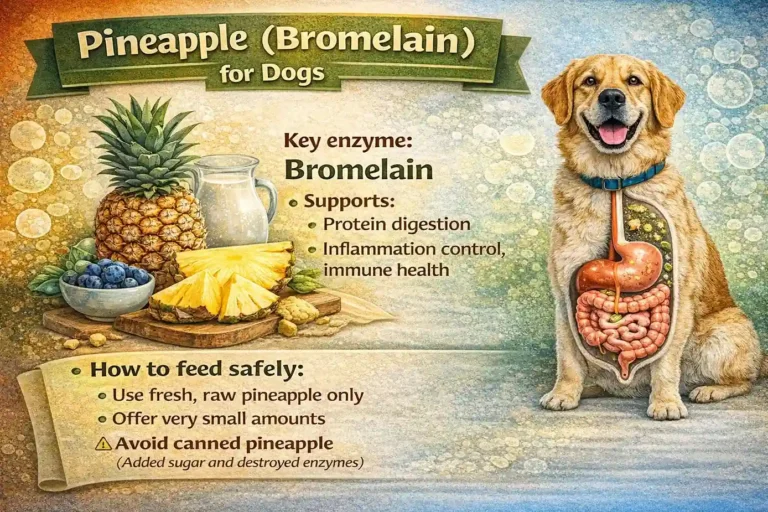
- Key enzyme: Bromelain
- Supports: Protein digestion, inflammation control, immune health
Bromelain is a potent plant-based proteolytic enzyme derived from the pineapple stem. It helps break down proteins and may also reduce inflammation.
How to feed safely:
- Use fresh, raw pineapple only
- Offer very small amounts
- Avoid canned pineapple (added sugar and destroyed enzymes)
Papaya (Papain)
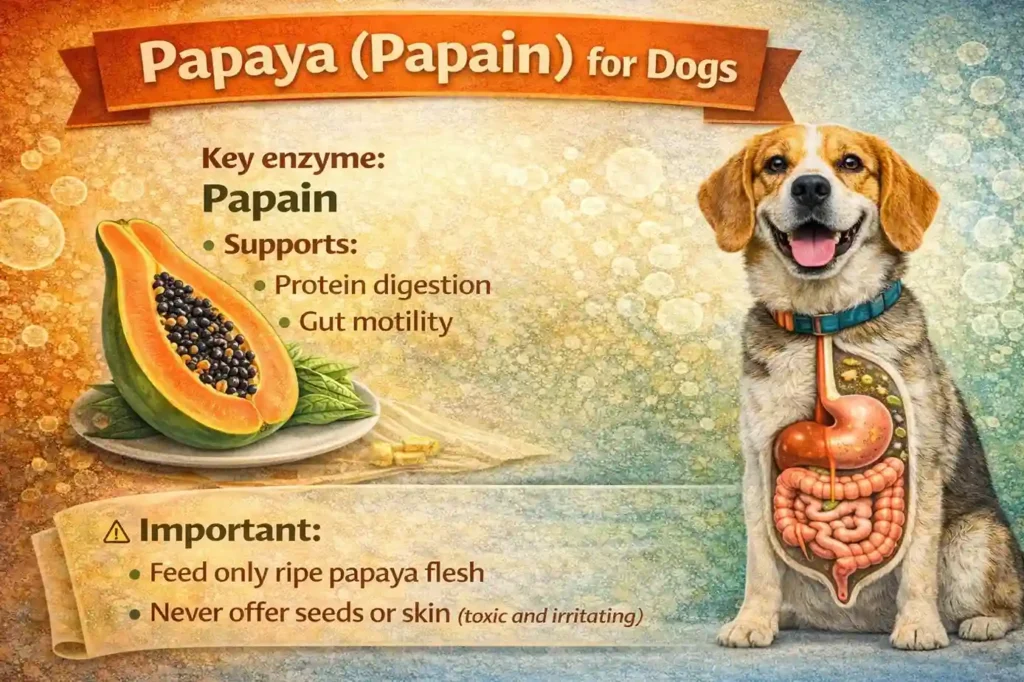
- Key enzyme: Papain
- Supports: Protein digestion, gut motility
Papain functions similarly to bromelain and is commonly used to support digestion and stool regularity.
⚠️ Important:
- Feed only ripe papaya flesh
- Never offer seeds or skin (toxic and irritating)
Raw Green Tripe (For Dogs Who Can Tolerate It)
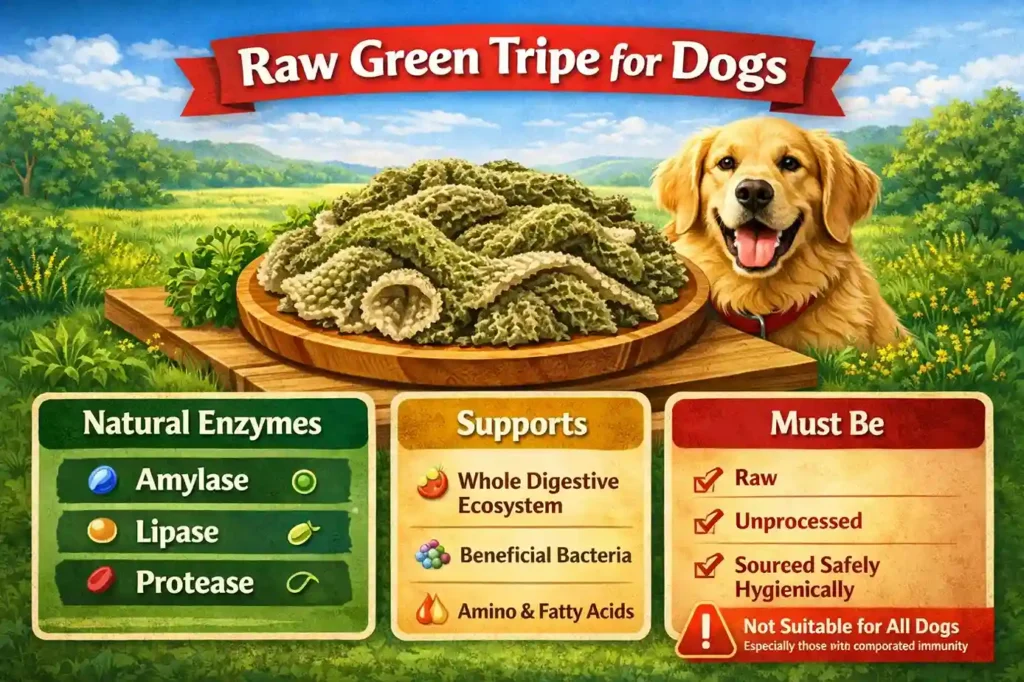
- Natural enzymes: Amylase, lipase, protease
- Supports: Whole digestive ecosystem
Green tripe is one of the most enzyme-rich natural foods available for dogs. It also provides beneficial bacteria, amino acids, and fatty acids that support gut health.
Must be:
- Raw
- Unprocessed
- Sourced safely and hygienically
Not suitable for all dogs, especially those with compromised immunity.
Fermented Foods (Used Sparingly)
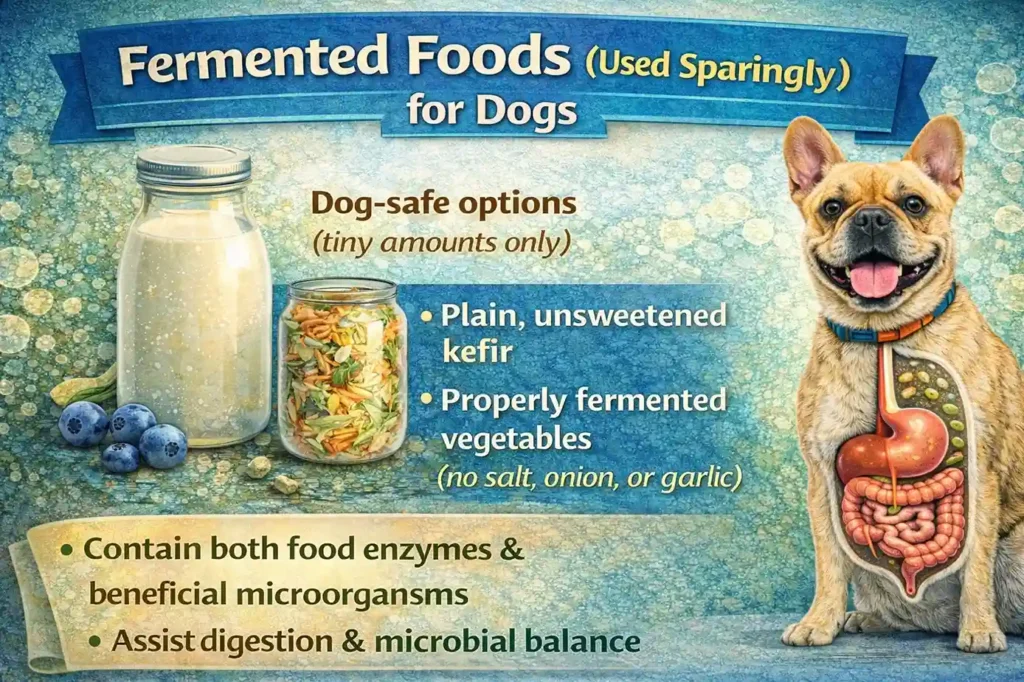
Fermented foods contain both food enzymes and beneficial microorganisms that assist digestion and microbial balance.
Dog-safe options (tiny amounts only):
- Plain, unsweetened kefir
- Properly fermented vegetables (no salt, onion, or garlic)
These foods may also help break down intestinal biofilm, improving probiotic effectiveness.
Sprouted Seeds & Plant Enzymes
Sprouting activates digestive enzymes such as
- Amylase
- Protease
- Cellulase
While dogs cannot efficiently digest cellulose, plant enzymes assist food breakdown, particularly in dogs consuming fiber-rich or plant-inclusive diets.
Raw Goat Milk (If Tolerated)
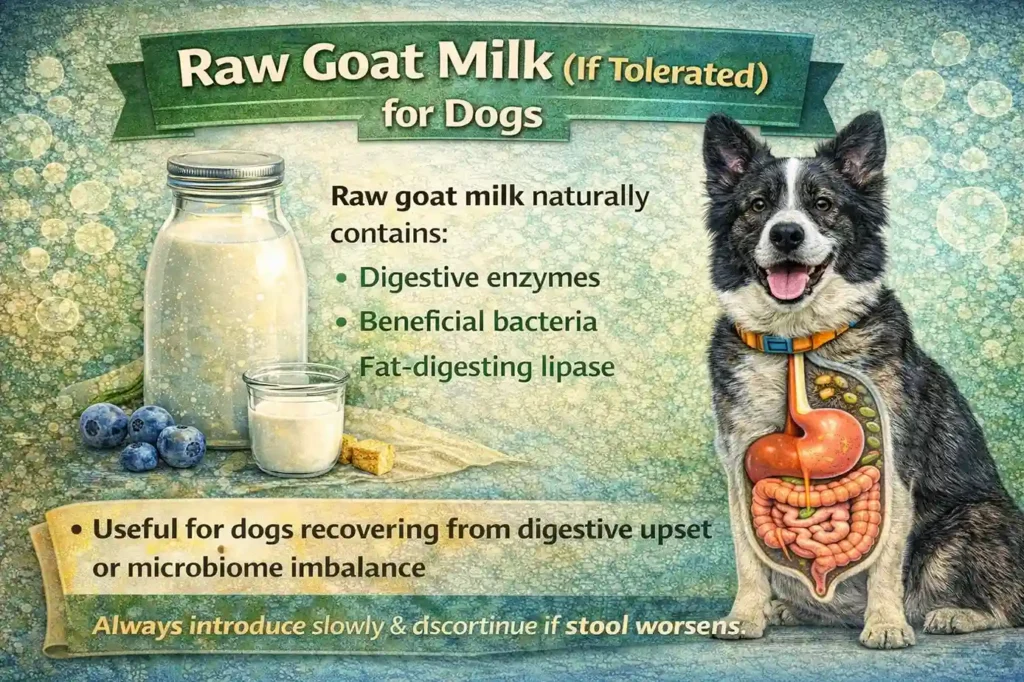
Raw goat milk naturally contains:
- Digestive enzymes
- Beneficial bacteria
- Fat-digesting lipase
It may be useful for dogs recovering from digestive upset or microbiome imbalance. Always introduce slowly and discontinue if stool worsens.
Supporting Digestive Enzyme Function Naturally
Stomach Acid & Betaine HCL
Low stomach acid reduces enzyme activation and protein digestion.
Under veterinary supervision, Betaine HCL may:
- Support protein breakdown
- Improve mineral absorption
- Enhance enzyme effectiveness
⚠️ Never use without professional guidance.
Bile and Fat Digestion
Bile is essential for fat digestion and enzyme function.
Natural bile support includes:
- Balanced dietary fats
- Vet-approved ox bile supplements (when indicated)
The Aging Process and Digestive Enzyme Decline in Dogs
As dogs age:
- Pancreatic enzyme output decreases
- Hydrochloric acid (HCl) production declines
- Nutrient absorption efficiency drops
This explains why senior dogs often benefit most from enzyme-rich diets or supplementation.
Natural Enzymes vs Digestive Enzyme Supplements
Feature | Natural Sources | Enzyme Supplements |
Enzyme potency | Mild–moderate | High & targeted |
Consistency | Variable | Precise dosing |
Best for | Maintenance & prevention | Deficiency & disease |
Safety | Generally safe | Requires vet oversight |
For conditions like EPI, SIBO, and chronic pancreatitis, supplements are often medically necessary.
Conditions That Require Veterinary Supervision
Natural food enzymes alone are not sufficient for dogs with:
- Exocrine Pancreatic Insufficiency (EPI)
- Severe malabsorption syndromes
- Chronic unexplained weight loss
- Small Intestinal Bacterial Overgrowth (SIBO)
- Liver or gallbladder disease
Professional diagnosis is essential.
Best Practices for Using Natural Digestive Enzymes
- Introduce foods slowly
- Use raw, fresh sources only
- Avoid sugars, fillers, and processed ingredients
- Monitor stool quality and energy levels
- Combine with a species-appropriate, high-quality diet
Affiliate Insight: When Enzyme Supplements Are More Effective
Natural sources work well for prevention and maintenance, but enzyme supplements are often more appropriate for:
- Senior dogs
- Dogs fed highly processed kibble
- Dogs with pancreatic stress
- Post-antibiotic digestive recovery
Look for supplements containing:
- Amylase, protease, lipase
- Cellulase
- Ox bile (when appropriate)
- Clearly labeled enzyme activity units
Medical Disclaimer
This content is for educational purposes only and does not replace professional veterinary advice. Always consult a licensed veterinarian for diagnosis and treatment of digestive conditions.
Frequently Asked Questions (FAQs)
1. Can dogs get enough digestive enzymes from food alone?
Healthy dogs often can, but aging or illness may reduce natural production.
2. Are natural digestive enzymes safe for daily use?
Yes, when introduced slowly and fed in appropriate amounts.
3. Can puppies have natural digestive enzymes?
Usually unnecessary unless advised by a veterinarian.
4. Usually unnecessary unless advised by a veterinarian.
Yes—heat destroys natural enzymes.
5. Can natural enzymes replace supplements?
Not for conditions like EPI or severe malabsorption.
6. Do digestive enzymes help dog allergies?
They may reduce gut inflammation that contributes to allergic responses.
References
- Elfenbein, H. (2017). Digestive health and its role in canine nutrition. Veterinary Science Review, 12(3), 45-58.
- Johns, M., & Johnson, P. (2020). The impact of digestive enzymes on gastrointestinal health in dogs. Journal of Animal Nutrition, 28(4), 201-214.
- Klein, R. L., & Tilley, L. P. (2022). Nutrition and digestive support in senior dogs. Journal of Veterinary Internal Medicine, 36(1), 18-29.
- Patel, S. A., & Johnson, T. F. (2021). Fermented foods and digestive health in dogs. Canine Health Journal, 19(2), 113-120.