
Best Dog Food for Sensitive Stomachs: Limited Ingredient Diets for Optimal Digestive Health
Written by: Dr. Akram Khan, DVM
Medically Reviewed: Dr. Muhammad Saeed, PhD
Last updated on September 04, 2026
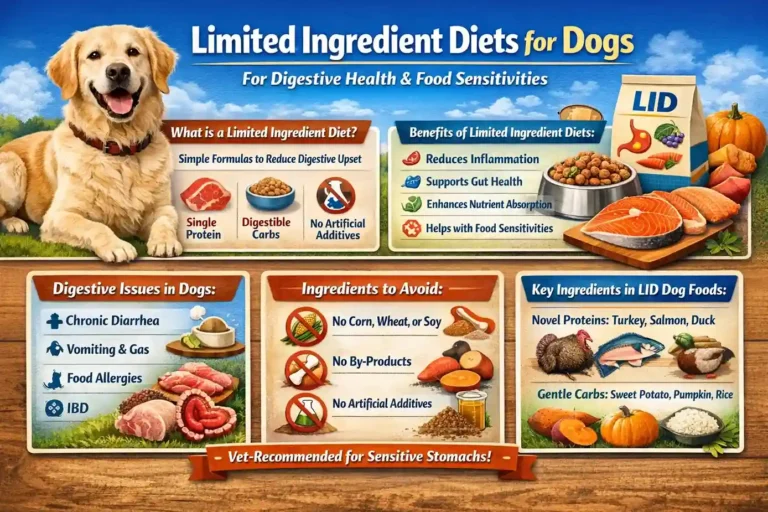
Digestive problems in dogs are among the most common health concerns, affecting everything from nutrient absorption and immune function to energy levels and overall quality of life. Whether it’s occasional stomach upset, chronic gastrointestinal issues like food sensitivities, inflammatory bowel disease (IBD), or persistent diarrhea, many dog owners search for solutions to improve their dog’s digestive health. If your dog suffers from sensitive stomach issues, vomiting, or irregular stools, a limited ingredient diet for dogs with food allergies may help identify dietary triggers and support symptom management. Veterinarian-recommended limited ingredient dog food is specifically designed to support digestive health and improve gut microbiome balance, providing the nutrients your dog needs to feel better.
What Is a Limited Ingredient Diet for Dogs?
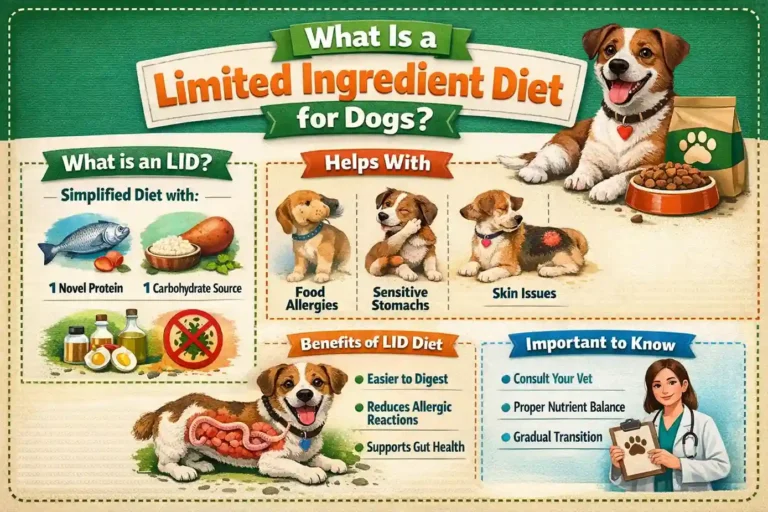
A Limited Ingredient Diet (LID) is a dog food formula created with a short, intentional ingredient list to reduce the risk of digestive upset and food intolerance. Most LIDs contain:
- One novel or single animal protein source
- One easily digestible carbohydrate
- Minimal additives, fillers, or artificial ingredients
Unlike conventional dog foods that may contain multiple proteins, grains, and synthetic additives, LIDs deliberately exclude common dietary triggers such as corn, wheat, soy, artificial colors, and meat by-products. This makes them especially suitable for dogs with sensitive stomachs, food allergies, or chronic gastrointestinal issues.
How Limited Ingredient Diets Support Digestive Health in Dogs
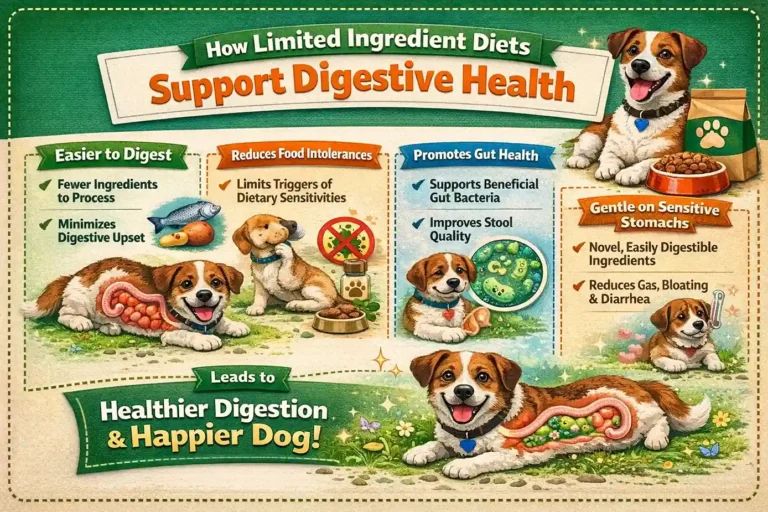
Reduced Gastrointestinal Inflammation
Fewer ingredients mean fewer potential irritants. By eliminating unnecessary fillers and allergenic components, LIDs help calm inflammation in the gastrointestinal tract and reduce chronic irritation.
Improved Gut Microbiome Balance
Many high-quality limited ingredient dog foods include prebiotic fibers and probiotics, which nourish beneficial gut bacteria. A healthier microbiome improves stool consistency, digestion, and immune response.
Enhanced Nutrient Absorption
Simplified formulas reduce digestive workload, allowing the intestines to absorb proteins, vitamins, and minerals more efficiently—especially important for dogs with compromised digestion.
Support for Food Sensitivities and Intolerances
Dogs with adverse food reactions often show significant improvement when switched to a single-protein, limited-ingredient diet, making LIDs a cornerstone of elimination diet trials recommended by veterinarians.
Digestive Problems That May Improve with Limited Ingredient Diets
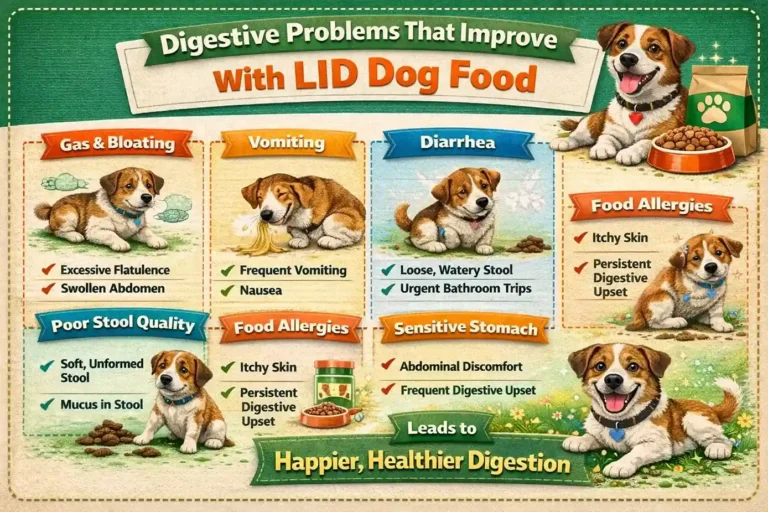
Limited ingredient diets are commonly recommended for dogs experiencing:
- Chronic or recurrent diarrhea
- Soft or inconsistent stools
- Vomiting or regurgitation
- Excessive gas and bloating
- Food allergies or intolerances
- Sensitive stomach
- Inflammatory bowel disease (IBD)
- Digestive upset after antibiotics
Veterinarians frequently use LIDs to help identify dietary triggers while supporting overall gut health.
Key Ingredients in Digestive-Friendly Limited Ingredient Dog Foods
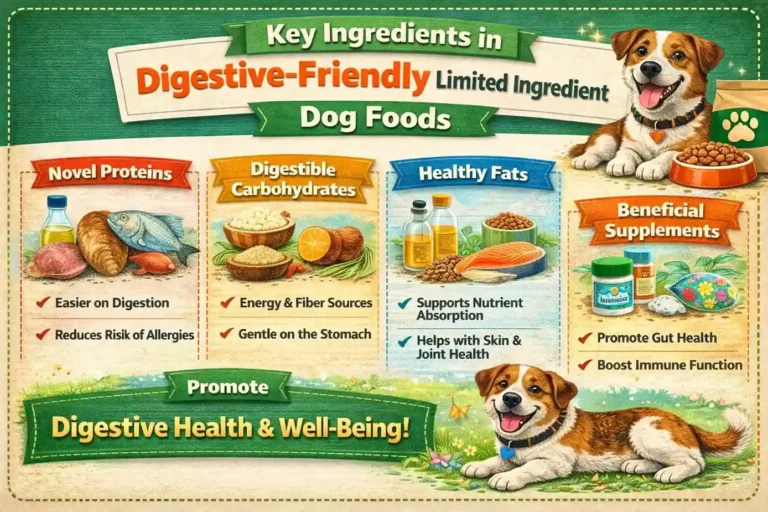
Novel Protein Sources (Single-Protein Focus)
Novel proteins are less likely to trigger immune responses, making them ideal for sensitive dogs. Common options include:
- Lamb
- Turkey
- Salmon
- Duck
- Bison
- Whitefish
These proteins provide essential amino acids while remaining gentle on the digestive system.
Easily Digestible Carbohydrates for Dogs
Low-irritation carbohydrates supply energy without overwhelming the GI tract, such as:
- White rice
- Brown rice
- Sweet potato
- Pumpkin
- Potato
These ingredients are commonly recommended in veterinary digestive diets due to their high digestibility.
Prebiotics and Probiotics for Gut Health
Digestive-supportive LIDs often include:
- Inulin
- Beet pulp
- Chicory root
- Prebiotic fibers
- Live probiotic cultures
These ingredients help maintain gut flora balance, improve stool quality, and support immune health.
Ingredients Commonly Avoided in Limited Ingredient Diets
To protect digestive health, most LIDs intentionally exclude:
- Corn, wheat, and soy
- Artificial colors and flavors
- Meat by-products
- Chemical preservatives
- Excessively high fat content
Avoiding these ingredients is especially important for dogs with chronic digestive sensitivity or inflammation.
Best Limited Ingredient Dog Food Brands for Digestive Health
The following vet-trusted, Commonly used veterinary and commercial options include are frequently recommended for dogs with digestive issues:
- Hill’s Science Diet Sensitive Stomach
- Hill’s Prescription Diet i/d
- Purina Pro Plan Sensitive Skin & Stomach
- Natural Balance L.I.D.
- Blue Buffalo Basics Limited Ingredient
- Canidae PURE Limited Ingredient
- Wellness Simple Limited Ingredient Diet
- Zignature
- Instinct Limited Ingredient Diet
- JustFoodForDogs Limited Ingredient Fresh Meals
Limited Ingredient Diet vs Hydrolyzed Protein Diet
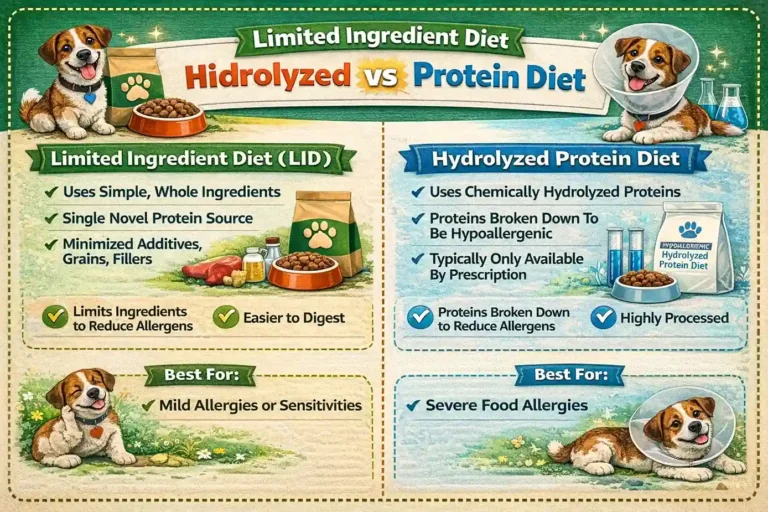
Feature | Limited Ingredient Diet | Hydrolyzed Diet |
Ingredient count | Low | Moderate |
Protein type | Whole novel protein | Broken-down protein |
Prescription required | Usually no | Yes |
Best for | Mild to moderate sensitivities | Severe food allergies |
For most dogs with digestive issues, limited ingredient diets are the first-line nutritional approach before moving to prescription hydrolyzed diets.
How to Transition Your Dog to a Limited Ingredient Diet Safely
Abrupt food changes can worsen digestive upset. Follow this gradual transition plan:
- Days 1–3: 75% old food, 25% new food
- Days 4–6: 50% old food, 50% new food
- Days 7–9: 25% old food, 75% new food
- Day 10: 100% new diet
Monitor stool quality, appetite, and energy levels throughout the transition.
Signs a Limited Ingredient Diet Is Working
Some dogs may show improvement within 2–4 weeks, including:
- Firmer, well-formed stools
- Reduced gas and bloating
- Improved appetite
- Less vomiting
- Healthier skin and coat
- Better overall energy
When to See a Veterinarian
Consult your veterinarian immediately if your dog experiences:
- Persistent diarrhea or vomiting
- Weight loss
- Blood or mucus in stool
- Severe lethargy
- No improvement after 4–6 weeks on an LID
Digestive symptoms may indicate underlying medical conditions requiring diagnosis and treatment.
Are Limited Ingredient Diets Safe for Long-Term Feeding?
Yes. High-quality, nutritionally complete limited ingredient diets that meet AAFCO nutritional adequacy standards are safe for long-term feeding when properly formulated.
Always choose reputable brands and consult your veterinarian for dogs with chronic digestive disease.
Medical Disclaimer (Veterinary & Nutrition Information)
The information provided in this article is for educational and informational purposes only and is not intended to replace professional veterinary advice, diagnosis, or treatment. While limited ingredient diets (LIDs) may help support digestive health and reduce food sensitivities in some dogs, every dog is different, and digestive symptoms can be caused by many underlying medical conditions
Frequently Asked Questions (FAQs)
1. Are limited ingredient diets good for dogs with diarrhea?
Yes, they are commonly recommended to improve stool consistency and reduce irritation.
2. How long does it take for a limited ingredient diet to work?
Most dogs show improvement within 2–4 weeks.
3. Can puppies eat limited ingredient dog food?
Yes, as long as the formula is AAFCO-approved for growth.
4. Are grain-free limited ingredient diets better?
Not always. Some dogs digest rice better than grain-free alternatives.
5. Do limited ingredient diets cure food allergies?
They help manage symptoms but do not cure underlying allergies.
6. Can I feed an LID long-term?
Yes, if it is nutritionally complete and balanced.
References
Association of American Feed Control Officials. (2023). AAFCO dog food nutrient profiles.
Hand, M. S., Thatcher, C. D., Remillard, R. L., Roudebush, P., & Novotny, B. J. (2010). Small animal clinical nutrition (5th ed.). Mark Morris Institute