
Mucus in Dog Poop: Causes, Meaning & When to See a Vet
Written by: Dr. Akram Khan, DVM
Medically Reviewed by: Dr. Khalid Mehmood, PhD
Last updated on September 15, 2026
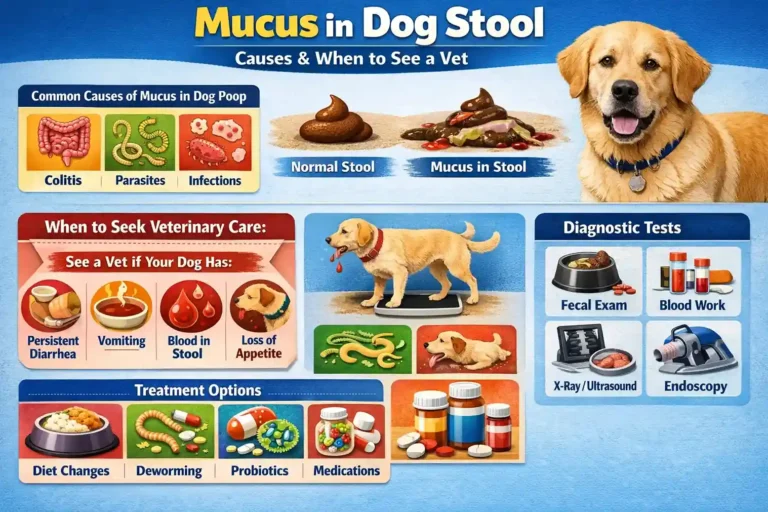
Seeing mucus in your dog’s poop can be worrying, especially if the stool looks jelly-like, slimy, or loose or keeps happening again and again. A small amount of mucus in dog stool can be normal because the colon naturally produces mucus to help stool pass smoothly. But frequent mucus, mucus-covered poop, runny dog poop with mucus, or mucus with diarrhea may point to irritation in the colon, stress, diet changes, parasites, infection, or inflammatory bowel disease. If your dog also has blood in the stool, vomiting, weakness, dehydration, weight loss, loss of appetite, puppy diarrhea, or symptoms lasting more than 24–48 hours, contact a veterinarian.
What Does Mucus in Dog Poop Mean?
Mucus in dog poop usually means the colon or lower digestive tract is irritated. Small occasional traces may be normal, but frequent, jelly-like, or slimy mucus can be linked to colitis, stress, sudden diet changes, parasites, infections, food intolerance, or inflammatory bowel disease. Mucus with blood, diarrhea, vomiting, weakness, dehydration, weight loss, or repeated episodes should be checked by a veterinarian.
What is Mucus in Dog Stool?
Mucus is a slippery, gel-like substance produced naturally by the colon and lower GI tract. Its primary purpose is to lubricate stool and protect the intestinal lining. A small amount of mucus in stool can be normal, but when it appears frequently, in large quantities, or with other concerning signs (like blood or diarrhea), it becomes a red flag for potential health issues.
Normal vs Abnormal Mucus in Dog Stool
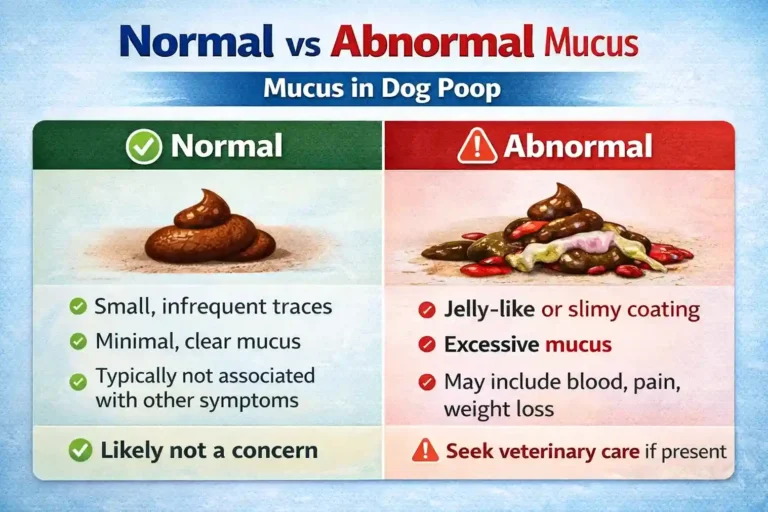
- Normal: Small traces occasionally (may be normal).
- Abnormal: Large amounts, jelly-like coating, or frequent recurrence of mucus, especially when paired with blood, pain, or weight loss.
Common Causes of Mucus in Dog Poop

1. Colitis (Most Common Cause)
Colitis, or inflammation of the colon, is the leading cause of mucus in dog stool. This condition triggers the production of excess mucus in response to irritation of the intestinal lining.
Common triggers include:
- Stress
- Sudden diet changes
- Food intolerance or allergies
- Bacterial overgrowth
Typical signs: - Frequent, small stools
- Straining to defecate
- Mucus, possibly with fresh blood
2. Parasites in the GI Tract
Parasites can irritate the colon, leading to mucus secretion as the body tries to flush out the invaders.
Common culprits include:
- Giardia
- Whipworms
- Roundworms
- Hookworms
- Tapeworms
Parasite infestations are diagnosed through a fecal exam conducted by a veterinarian.
3. Bacterial & GI Infections
Certain bacteria or viral infections disrupt the gut lining and cause inflammation, which results in increased mucus production.
Examples of pathogens include:
- E. coli
- Salmonella
- Clostridium
- Viral GI infections (e.g., parvovirus)
Symptoms: - Diarrhea
- Vomiting
- Fever
- Lethargy
4. Diet Change or Food Intolerance
Sudden changes in diet or exposure to food allergens can irritate your dog’s GI tract.
Common triggers:
- New protein source
- Dairy products
- Fatty foods
- Table scraps
A bland diet (e.g., boiled chicken and rice) often improves these cases.
5. Inflammatory Bowel Disease (IBD)
IBD causes chronic inflammation in the gastrointestinal tract and can lead to persistent mucus, weight loss, and diarrhea.
Symptoms include:
- Chronic mucus production
- Weight loss
- Appetite changes
- Intermittent diarrhea
Treatment may involve long-term dietary management, immunosuppressants, and probiotics.
6. Antibiotics & Medication Side Effects
Some medications can disrupt the natural gut flora, resulting in mucus-coated stools.
Common offenders:
- Antibiotics
- NSAIDs (Non-Steroidal Anti-Inflammatory Drugs)
- Immunosuppressants
Probiotics recommended by your vet can help restore gut balance.
Mucus and Other Symptoms: What It Means
- Fresh red blood + mucus: Colitis, parasites, or stress-related diarrhea
- Dark blood or black stool: Upper GI bleeding (this is an emergency)
This is often linked to:
- Acute colitis
- Stress diarrhea
- Dietary indiscretion
A red flag for:
- Chronic infections
- IBD
- Malabsorption
- Cancer (rare, but serious)
When Is Mucus in Dog Poop an Emergency?
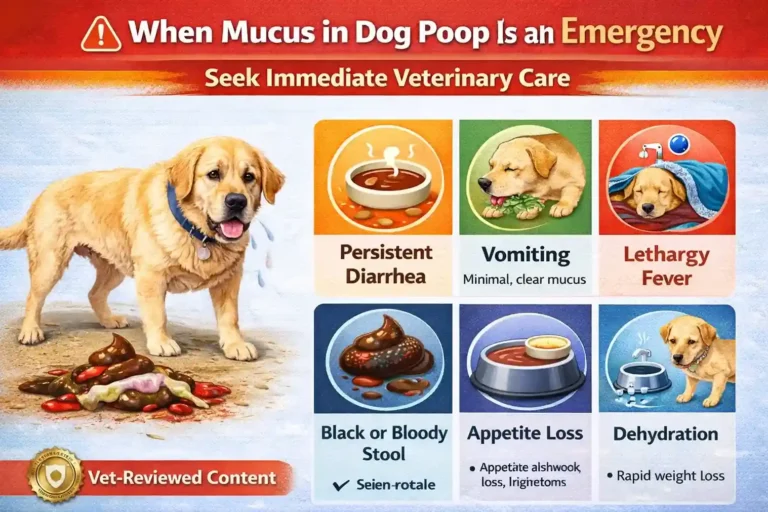
Seek immediate veterinary care if mucus is accompanied by any of the following:
- Persistent diarrhea lasting more than 24–48 hours
- Vomiting
- Lethargy or pain
- Appetite loss
- Fever
- Dehydration
- Black or bloody stool
- Rapid weight loss
- Puppies or senior dogs affected by these symptoms
How Veterinarians Diagnose the Cause

Your veterinarian will likely conduct several diagnostic tests to determine the cause of the mucus in your dog’s stool. These may include:
- Fecal exam: To check for parasites like Giardia and worms.
- Blood work & urinalysis: To check for infection or systemic issues.
- X-rays or ultrasound: To rule out obstructions or organ problems.
- Endoscopy with biopsy: For chronic or severe cases of IBD.
- GI infection screening: To identify bacterial or viral infections.
A proper diagnosis is critical to ensure the right treatment.
Treatment Options for Mucus in Dog Stool
- Diet Management
- A bland diet, such as boiled chicken and rice, can soothe the GI tract.
- Prescription GI diets or elimination diets for food allergies.
- Probiotics (Vet-Recommended)
Probiotics help restore the balance of good bacteria in the gut, reducing mucus production.
Recommended strains:- Enterococcus faecium
- Lactobacillus
- Bifidobacterium
Probiotics are especially useful in cases of colitis, antibiotic-related issues, and mild diarrhea.
- Deworming & Antiparasitic Treatment
Deworming is necessary if parasites are detected in the stool. - Medications
- Antibiotics: For bacterial infections.
- Anti-inflammatory drugs: For conditions like colitis or IBD.
- Immunosuppressants: In severe cases of IBD.
⚠️ Never self-medicate without consulting your veterinarian.
Can Mucus in Dog Poop Be Prevented?
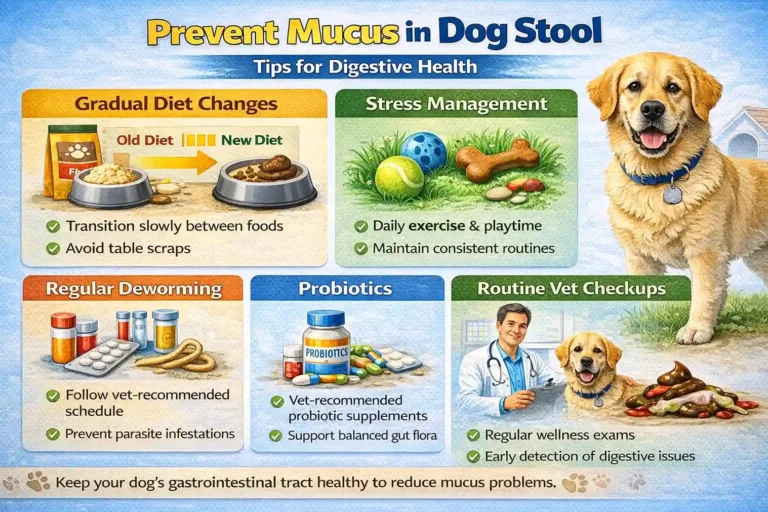
While mucus production may not always be preventable, several steps can reduce the risk:
- Gradual transitions between diets
- Regular deworming schedules
- High-quality, balanced nutrition
- Stress management techniques (e.g., exercise, a calm environment)
- Routine vet checkups for early disease detection.
Frequently Asked Questions(FAQs)
1. Is mucus in dog poop always serious?
No. Small amounts of mucus occasionally can be normal, but persistent or recurring mucus should be evaluated by a vet.
2. Can stress cause mucus in dog stool?
Yes. Stress colitis is common and often temporary. Stress can cause inflammation in the colon, leading to mucus in stool.
3. Should I give probiotics to my dog without seeing a vet?
Probiotics are generally safe, but it’s important to have a diagnosis first, especially if symptoms persist or worsen.
4. What does it mean if there’s mucus and blood in my dog’s stool?
This combination could indicate colitis or a parasite infection. Seek veterinary care for an accurate diagnosis.
5. How can I tell if my dog’s diarrhea is serious?
If diarrhea lasts more than 48 hours, or if it’s accompanied by vomiting, lethargy, fever, or blood, contact your vet immediately.
6. What are the most common causes of mucus in dog stool?
The most common causes include colitis, parasites, dietary changes, and inflammatory bowel disease (IBD).
7. Can mucus in my dog’s stool resolve on its own?
Mild cases may resolve with diet changes or probiotics. However, ongoing or severe mucus should be checked by a veterinarian.
8. How do I prevent mucus in my dog’s stool?
Prevention includes gradual diet changes, regular deworming, and stress management. Ensure your dog has a balanced diet and avoids sudden food changes.
References
- American Kennel Club. (2022). Common digestive issues in dogs and how to treat them.
- (2023). Colitis in dogs: Causes, symptoms, and treatment.
- VCA Animal Hospitals. (2021). Parasites in dogs: Symptoms and treatment.
- Merck Veterinary Manual. (2024). Inflammatory bowel disease in dogs.