
Diet for Dogs With Sensitive Stomachs: What to Feed & Avoid
Written by: Dr. Akram Khan, DVM
Medically Reviewed by: Dr. Zaheer Hussain, PhD
Last updated on September 15, 2026
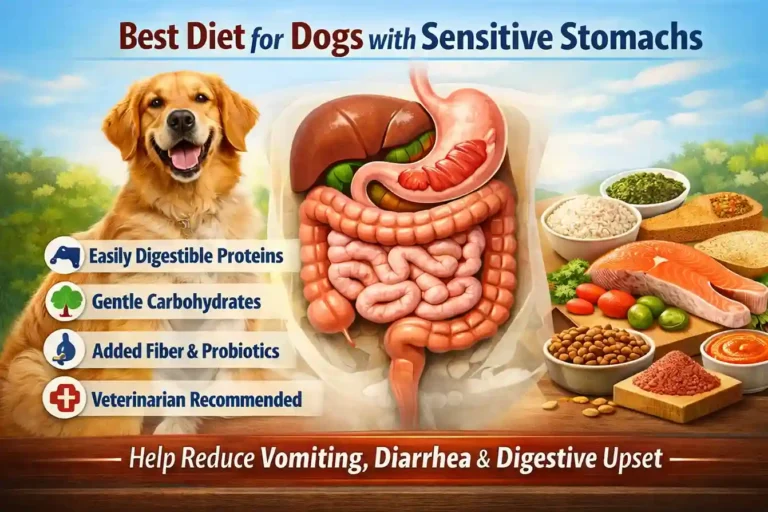
Choosing the right diet for dogs with sensitive stomachs can make a big difference if your dog often has vomiting, loose stool, gas, stomach gurgling, or discomfort after meals. Many dogs do better with a consistent, easy-to-digest diet that uses gentle protein sources, simple carbohydrates like rice or oatmeal, moderate fat, controlled fiber, and limited ingredients. Avoid sudden food changes, fatty table scraps, artificial additives, and mixed protein blends that may trigger digestive upset. If your dog has ongoing diarrhea, repeated vomiting, blood in the stool, weight loss, poor appetite, or symptoms lasting more than 48 hours, contact a veterinarian before changing the diet again.
What Is the Best Diet for Dogs With Sensitive Stomachs?
The best diet for dogs with sensitive stomachs is usually a consistent, highly digestible diet with one gentle protein source, simple carbohydrates such as rice or oatmeal, moderate fat, added fiber, and limited artificial additives. Some dogs may also benefit from prebiotics or probiotics. Avoid frequent food switching, table scraps, high-fat foods, and sudden diet changes. Persistent vomiting, diarrhea, blood, weight loss, or appetite loss needs veterinary care.
What Is a Sensitive Stomach in Dogs?
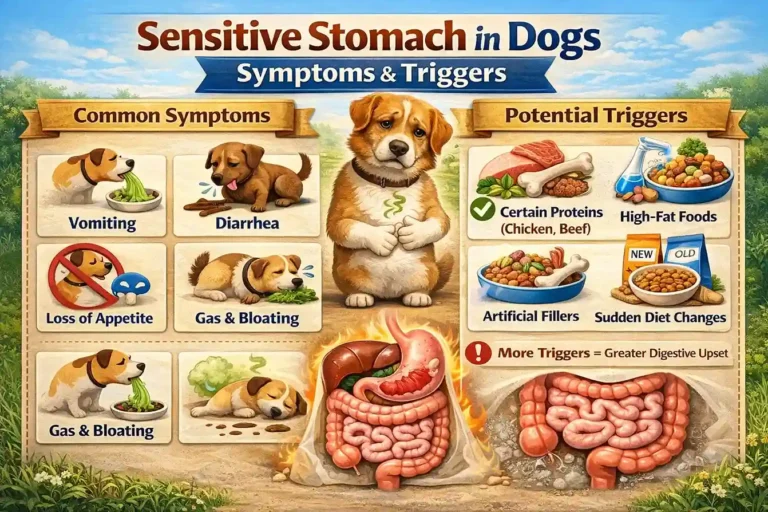
A sensitive stomach in dogs refers to a digestive system that reacts negatively to certain foods, ingredients, or feeding habits. Symptoms often include vomiting, diarrhea, reduced appetite, and stomach discomfort. Dogs with sensitive stomachs can experience problems digesting:
- Certain protein sources (e.g., chicken, beef)
- High-fat foods
- Artificial flavors or fillers
- Sudden food changes
- Low-quality carbohydrates
A sensitive stomach can affect not just one part of the digestive system but the entire system, including the stomach, intestines, and overall digestive tract.
What Is the Best Diet for Dogs With Sensitive Stomachs?
To manage a sensitive stomach effectively, you need to focus on a highly digestible diet that is tailored to your dog’s needs. The best diet for dogs with sensitive stomachs should include:
- Easily digestible proteins
- Gentle carbohydrates
- Moderate fat content
- Added fiber, prebiotics, and probiotics
- Limited ingredients
Consistency is more important than variety when managing a sensitive stomach. By providing a consistent, easily digestible diet, you can help reduce gastrointestinal issues over time.
Best Ingredients for Dogs with Sensitive Stomachs
1. Easily Digestible Protein Sources
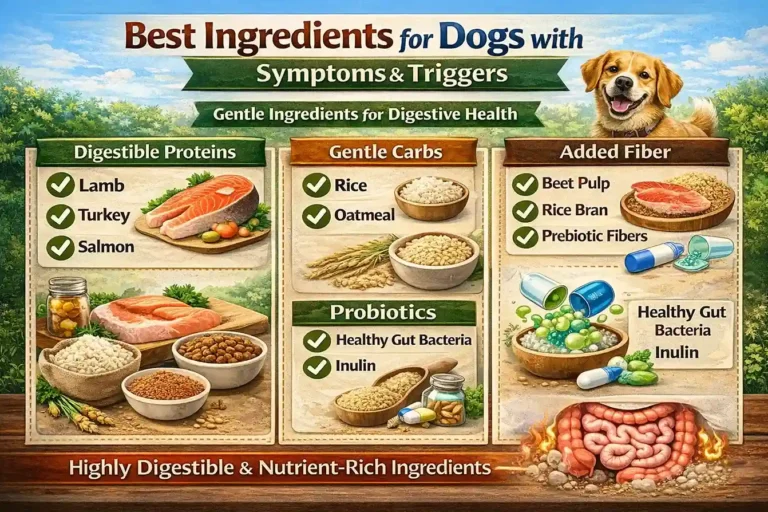
The quality of protein in your dog’s food plays a significant role in reducing digestive stress. Veterinary-approved protein sources include:
- Lamb
- Turkey
- Salmon
- Limited-ingredient chicken (for dogs without chicken sensitivity)
Protein should always be the first ingredient in your dog’s food. These proteins are gentle on the stomach and support overall health, including immune function.
2. Gentle Carbohydrates for Digestive Support
Carbohydrates are essential for energy, but it’s important to choose sources that are easy on your dog’s digestive system. Recommended gentle carbohydrates include:
- Brown rice
- White rice
- Oatmeal
- Rice-based formulas
Avoid overly processed carbohydrate fillers like macaroni or corn, which can exacerbate digestive issues.
3. Fiber for Stool Consistency
Fiber plays a critical role in maintaining regular bowel movements and controlling diarrhea. It also supports the growth of beneficial gut bacteria. Beneficial fiber sources include:
- Oatmeal
- Prebiotic fibers
- Rice bran
- Beet pulp (in controlled amounts)
These fibers help ensure proper stool consistency and promote digestive health.
4. Probiotics & Prebiotic Fibers
Many high-quality sensitive-stomach diets include probiotics to balance gut bacteria and prebiotic fibers to feed healthy microbes. These ingredients improve digestion, reduce stomach upset, and help restore a healthy gut microbiome over time.
5. Essential Vitamins & Minerals
Dogs with sensitive stomachs still need complete and balanced nutrition. Look for diets that provide essential vitamins and minerals for:
- Immune support
- Metabolic balance
- Skin and coat health
These nutrients are vital for overall health and ensure your dog gets the full benefits of their diet.
Best Commercial Dog Foods for Sensitive Stomachs
Many leading brands offer specialized formulas for dogs with sensitive stomachs. These foods are veterinary-recommended and often contain high-quality ingredients that are gentle on the digestive system. Some of the top commercial options include
Hill’s Sensitive Stomach & Skin
- Highly digestible ingredients
- Added prebiotics for digestive health
- Designed for adult and senior dogs
Sensitive Skin & Stomach
- Salmon or lamb-based proteins
- Rice and oatmeal carbohydrates
Trusted veterinary nutrition brand
Royal Canin Digestive Care
- Precision-formulated to support the digestive system
- Tailored kibble sizes for better digestion
- Supports stool quality and regularity
Best Food for Dogs with Sensitive Stomachs and Diarrhea
If diarrhea is the primary symptom, choose a dog food formula that is low in fat, contains single protein sources, and focuses on easy-to-digest ingredients. Some tips include:
- Choose low-fat formulas
- Stick to single-flavor diets
- Feed smaller portions more frequently
Diet by Life Stage: Puppies, Adults, and Seniors
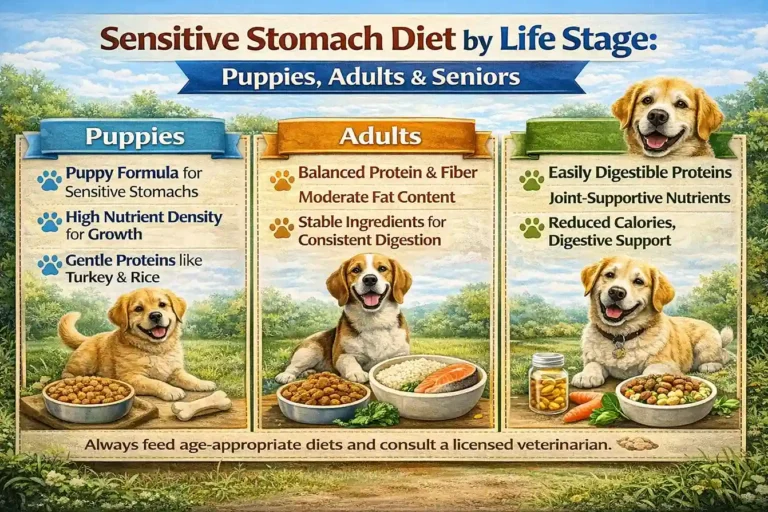
Dogs’ dietary needs vary by life stage. Here’s a breakdown of diet recommendations for each stage:
Puppies
- Puppy-specific sensitive stomach formulas
- Higher nutrient density for growth
- Gentle proteins like turkey and rice
Adult Dogs
- Balanced protein and fiber
- Moderate fat content
- Stable ingredient profile for consistent digestion
Senior Dogs
- Easily digestible proteins
- Joint-supportive nutrients
- Reduced calories with digestive support
Note: Never feed adult food to puppies or vice versa. Each stage requires a tailored diet to support growth, energy levels, and digestive health.
Foods to Avoid for Sensitive Stomachs
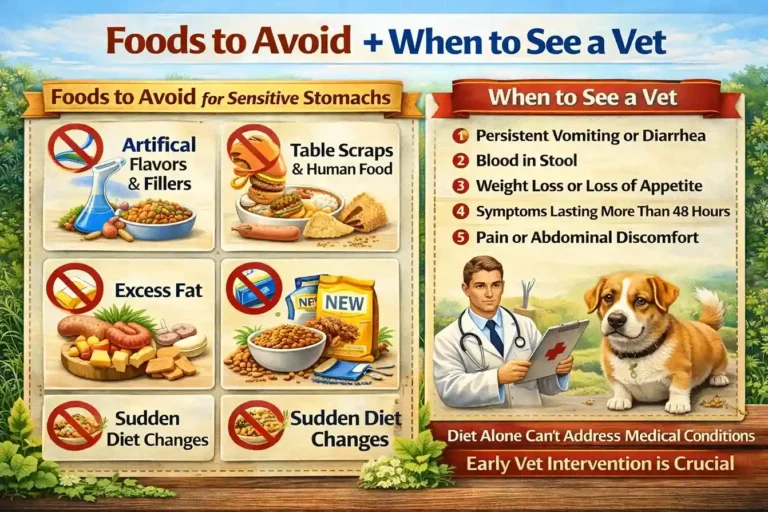
To manage a sensitive stomach, avoid the following:
- Artificial flavors and fillers
- Excess fat
- Table scraps and human food
- Sudden diet changes
- Unknown protein blends
Even foods labeled as “healthy” can trigger symptoms if introduced improperly or too quickly.
How to Transition to a New Sensitive Stomach Diet
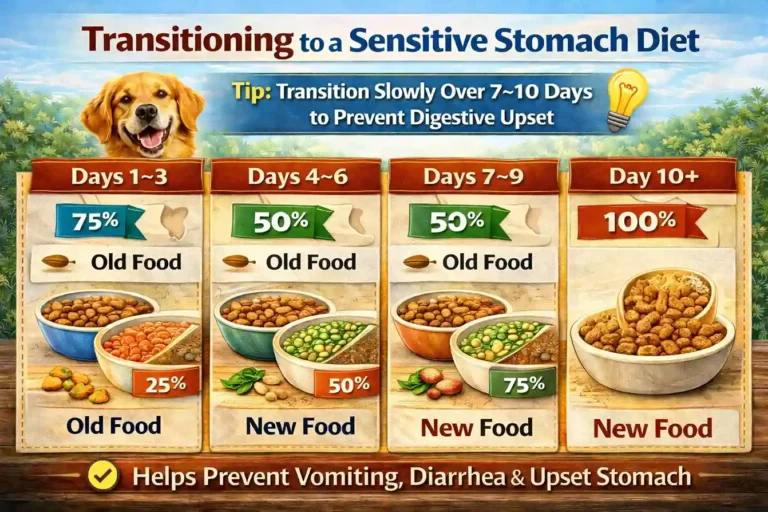
When switching to a new food, always transition slowly over 7–10 days to prevent digestive upset. The recommended transition schedule is
Day | Old Food | New Food |
1–3 | 75% | 25% |
4–6 | 50% | 50% |
7–9 | 25% | 75% |
10+ | 0% | 100% |
Homemade Diets: Are They Safe?
Homemade diets, such as turkey and rice, may provide temporary relief for a sensitive stomach. However, long-term feeding should only be done under veterinary guidance to ensure your dog gets balanced nutrition. Commercial complete diets are safer for most dogs and offer the necessary nutrients for long-term health.
When to See a Vet
Consult a veterinarian if your dog has:
- Persistent vomiting or diarrhea
- Blood in stool
- Weight loss or loss of appetite
- Symptoms lasting more than 48 hours
- Painor abdominal discomfort
Diet alone cannot address underlying medical conditions. Early veterinary intervention is crucial for proper treatment.
Sensitive Stomach Dog Food Ingredients to Look For
When choosing the best food for your dog with a sensitive stomach, look for:
- Single protein source
- Rice or oatmeal carbohydrates
- Prebiotic fibers
- Probiotics
- Clear ingredient labeling
These ingredients are gentle on the digestive system and promote overall health.
Frequently Asked Questions(FAQs)
1. What are the best proteins for dogs with sensitive stomachs?
Lamb, turkey, and salmon are gentle proteins that reduce digestive stress.
2. Can puppies have a sensitive stomach?
Yes, puppies may develop a sensitive stomach during diet changes or growth stages.
3. Is it okay to switch dog food frequently?
No, frequent changes in diet can worsen stomach sensitivity. Consistency is key.
4. How do I know if my dog’s food is causing stomach problems?
Monitor for symptoms like vomiting, diarrhea, and loss of appetite, and consult your vet for guidance.
5. Can I give my dog homemade food for a sensitive stomach?
Homemade food may help temporarily, but long-term feeding should only be done under veterinary guidance to avoid nutritional deficiencies.
References
- American Kennel Club. (2023). Choosing the best food for dogs with sensitive stomachs.
- (2022). How to manage a sensitive stomach in dogs: Causes and solutions.
- VCA Animal Hospitals. (2024). Dog food for sensitive stomachs: What to look for.