
Dog Diarrhea After Switching Food
Written by: Dr. Muhammad Ihsan Ullah, PhD
Medically Reviewed by: Dr. Khalid Mehmood, PhD (Assistant Professor in Clinical Veterinary Medicine)
Last updated on October 23, 2026
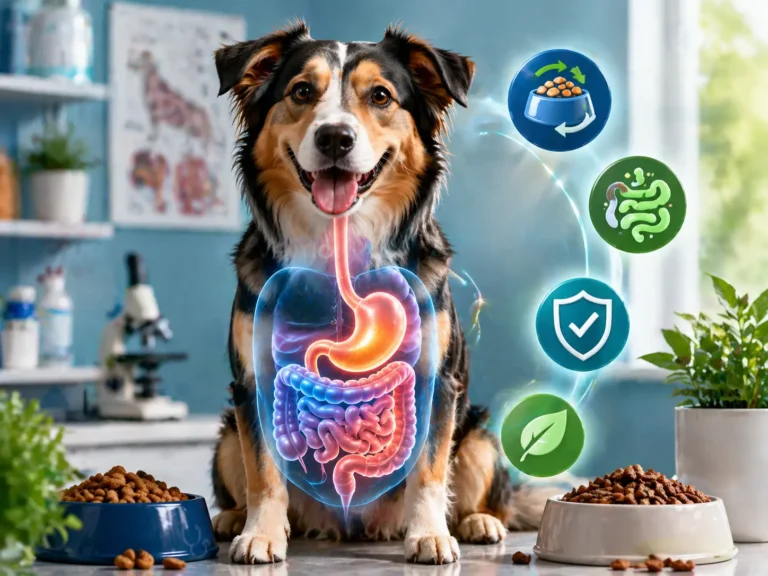
Dog diarrhea after switching food is common, especially when a new diet is introduced too quickly. Sudden changes in ingredients, fat content, fiber, or protein sources can temporarily upset the digestive system and lead to loose stools, gas, or more frequent bowel movements.
Why Does My Dog Have Diarrhea After Changing Food?
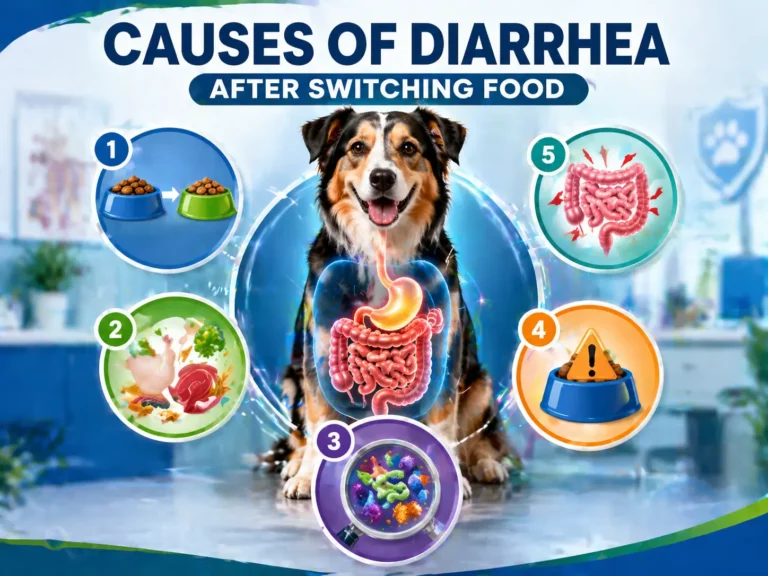
- Dogs have a short gastrointestinal tract designed for efficient nutrient absorption.
- Digestive enzymes and gut microbes need time to adapt to new foods.
- Transitioning food too quickly can overwhelm the system, leading to diarrhea.
- Research indicates that diet composition and transition protocols influence stool consistency and gastrointestinal health.
Can Switching Dog Food Too Quickly Cause Diarrhea?
What Happens If You Switch Dog Food Too Fast?
- Switching food suddenly can overwhelm the digestive system.
- Rapid movement of intestinal contents causes loose stools or diarrhea.
- It’s advised to avoid overnight food changes to prevent digestive upset.
How Do Gut Bacteria Adjust When Switching Dog Food?
- Gut microbiome: A balance of beneficial bacteria essential for digestion.
- Abrupt food changes disrupt this microbiome, leading to diarrhea.
- Research confirms that gradual transitions are effective at modulating gut microbial activity, reducing the risk of diarrhea.
Can Food Sensitivities Cause Diarrhea After Changing Dog Food?
- Food allergies: Some dogs may react to specific ingredients, causing gut inflammation.
- Common triggers include proteins, grains, and novel carbohydrates.
- Dogs with food sensitivities may experience diarrhea as their digestive system reacts.
What Should I Do If My Dog Has Diarrhea After New Food?
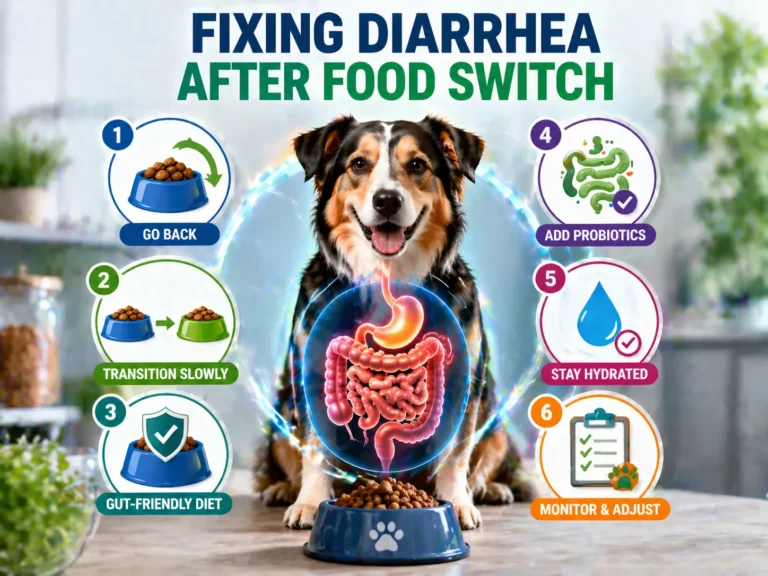
Dog diarrhea after switching food usually happens when a new diet is introduced too quickly and the digestive system does not have enough time to adjust. In mild cases, diarrhea may improve within 1–3 days by slowing the food transition, offering a bland diet, keeping your dog hydrated, and monitoring stool quality. If diarrhea lasts more than 72 hours, contains blood, or comes with vomiting, lethargy, fever, or loss of appetite, contact your veterinarian immediately.

Immediate Care
- Slow the transition: If diarrhea starts, reduce the amount of new food and increase the old food gradually.
- Feed a bland diet: Consider boiled rice and lean protein to soothe the stomach.
- Withhold food for 6–12 hours: A short fast can help the GI tract rest before reintroducing food.
How Do I Keep My Dog Hydrated During Diarrhea?
When Should I Call a Vet for Dog Diarrhea After Changing Food?
- If diarrhea persists for more than 72 hours, or if your dog shows other signs like vomiting or lethargy, consult your veterinarian.
- The vet may run tests to check for parasites, infections, or allergic reactions and prescribe treatment accordingly.
How Can I Prevent Diarrhea When Switching Dog Food?
What Is the Best Dog Food Transition Schedule to Avoid Diarrhea?
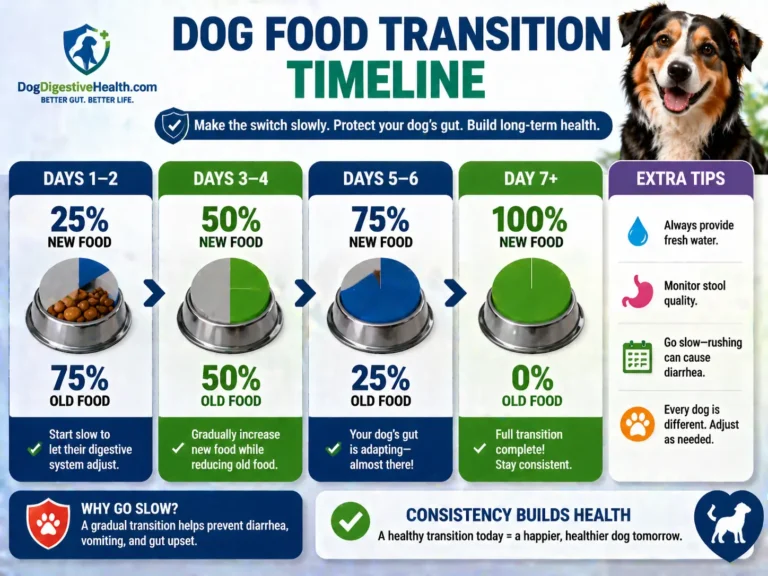
- Gradual changes are essential to avoid gastrointestinal upset:
- Days 1–3: 75% old food + 25% new food
- Days 4–6: 50% old food + 50% new food
- Days 7–9: 25% old food + 75% new food
- Day 10+: 100% new food
- For dogs with sensitive stomachs, consider extending the transition to 2–3 weeks.
What Signs Show My Dog Is Not Tolerating the New Food?
- Track stool quality: Use a fecal scoring system to monitor stool form.
- Watch for signs of intolerance, like mucus in stools, gas, or abdominal discomfort.
- Early detection helps prevent prolonged diarrhea.
How Can I Support My Dog’s Gut Health After Switching Food?
- Introduce probiotics gradually to support a healthy gut microbiome.
- Choose high-quality, highly digestible diets with moderate fat content to prevent intestinal irritation.
- Avoid frequent food changes unless necessary for health reasons.
When to Seek Veterinary Attention
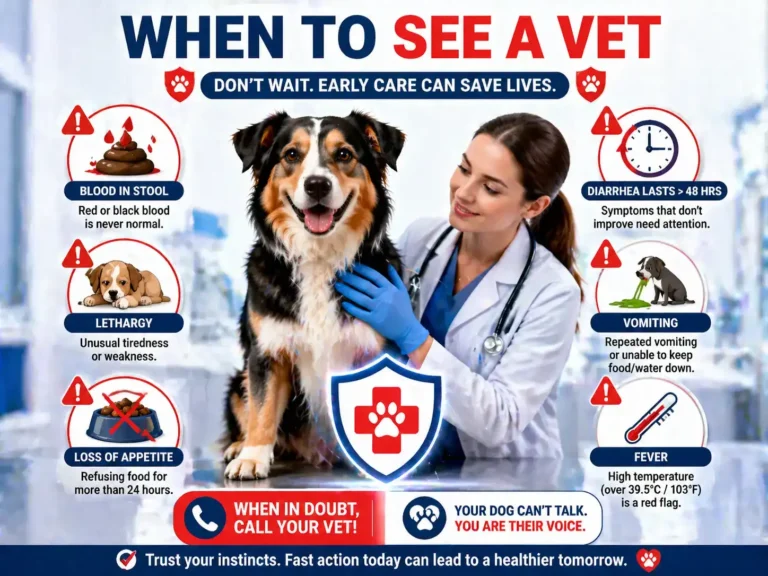
- If diarrhea lasts more than 3 days or if there are additional symptoms like vomiting, blood in stools, or lethargy, contact your veterinarian immediately.
- Chronic diarrhea may indicate underlying issues like intestinal disorders, metabolic diseases, or food allergies.
Final Thoughts: Is Diarrhea After Switching Dog Food Serious?
- Diarrhea after switching dog food is common but manageable.
- Understanding causes like digestive adaptation, gut microbiome shifts, and food sensitivities helps manage the issue effectively.
Preventive measures like gradual food transitions and careful monitoring can minimize the risk of diarrhea and ensure long-term digestive health for your dog.
Medical Disclaimer
- This article is for informational purposes only and is not intended as a substitute for professional veterinary advice, diagnosis, or treatment. Always seek the advice of your veterinarian with any questions you may have regarding your pet’s health or medical conditions.
Frequently Asked Questions (FAQs):
1.How do I prevent my dog from getting diarrhea when switching food?
Gradually transition your dog’s food over 7–14 days by mixing the new and old food, starting with a small amount of new food and gradually increasing it.
2.How long does diarrhea last after changing my dog’s food?
Diarrhea may last up to 72 hours. If it persists beyond that, consult your veterinarian to rule out other issues.
3.Can my dog’s diarrhea be caused by food allergies?
Yes, dogs may have sensitivities to specific ingredients like proteins or grains, which can cause diarrhea during a food switch.
4.Should I stop feeding my dog if they have diarrhea after a food change?
A brief fast of 6–12 hours can help rest the digestive system. After that, offer a bland diet such as boiled rice and lean protein.
5.When should I see a vet if my dog has diarrhea after changing food?
If the diarrhea lasts more than 72 hours or is accompanied by vomiting, blood in stools, or lethargy, contact your veterinarian.
References
Liao, P., Yang, K., Huang, H., Xin, Z., Jian, S., Wen, C., et al. (2023). Abrupt dietary change and gradual dietary transition impact diarrheal symptoms, fecal fermentation characteristics, microbiota, and metabolic profile in healthy puppies. Animals, 13(8), 1300. https://doi.org/10.3390/ani13081300
Lin, C.-Y., Jha, A. R., Oba, P. M., Yotis, S. M., Shmalberg, J., Honaker, R. W., et al. (2022). Longitudinal fecal microbiome and metabolite data demonstrate rapid shifts and subsequent stabilization after an abrupt dietary change in healthy adult dogs. Animal Microbiome, 4, 46. https://doi.org/10.1186/s42523-022-00194-9
Candellone, A., Cerquetella, M., Girolami, F., Badino, P., & Odore, R. (2020). Acute diarrhea in dogs: Current management and potential role of dietary polyphenols supplementation. Antioxidants, 9(8), 725. https://doi.org/10.3390/antiox9080725
Pilla, R., & Suchodolski, J. S. (2020). The role of the canine gut microbiome and metabolome in health and gastrointestinal disease. Frontiers in Veterinary Science, 6, 498. https://doi.org/10.3389/fvets.2019.00498
Schmidt, M., Unterer, S., Suchodolski, J. S., Honneffer, J. B., Guard, B. C., Lidbury, J. A., Steiner, J. M., Fritz, J., & Kölle, P. (2018). The fecal microbiome and metabolome differs between dogs fed Bones and Raw Food (BARF) diets and dogs fed commercial diets. PLOS ONE, 13(8), e0201279. https://doi.org/10.1371/journal.pone.0201279
Singleton, D. A., Noble, P. J. M., Sánchez-Vizcaíno, F., Dawson, S., Pinchbeck, G. L., Williams, N. J., Radford, A. D., & Jones, P. H. (2019). Pharmaceutical prescription in canine acute diarrhoea: A longitudinal electronic health record analysis of first opinion veterinary practices. Frontiers in Veterinary Science, 6, 218. https://doi.org/10.3389/fvets.2019.00218
O’Neill, D. G., Prisk, L. J., Brodbelt, D. C., Church, D. B., & Allerton, F. (2025). Epidemiology and clinical management of acute diarrhoea in dogs under primary veterinary care in the UK. PLOS ONE, 20(6), e0324203. https://doi.org/10.1371/journal.pone.0324203