
Best Dog Food for Gas and Bloating
Written by: Saad Aslam Khan, PharmD
Medically Reviewed by: Dr. Khalid Mehmood, PhD
Last Updated: September 06, 2026
Introduction
Finding the best dog food for gas and bloating can be challenging for pet owners who want to improve their dog’s comfort while supporting healthy digestion. Many dog parents ask, “What is the best dog food for a dog with gas?” or search for the best dog food for sensitive stomachs when their pets experience digestive sensitivity, excessive flatulence, or difficulty tolerating certain foods. Therefore, choosing the right nutrition involves more than selecting a popular brand; the ideal diet should contain highly digestible ingredients, appropriate protein sources, balanced fiber, and nutrients that support a healthy digestive system.
Accordingly, in this vet-reviewed guide, we evaluate the best dog food for dogs with gas problems and explore what dog food helps with sensitive stomachs and digestion by carefully comparing selected formulas based on ingredient quality, digestibility, nutritional composition, and evidence-based canine nutrition principles.
A dog’s food plays an important role in digestive comfort. Diets that are too rich, difficult to digest, poorly balanced, or unsuitable for an individual dog may contribute to excessive intestinal fermentation and discomfort. On the other hand, properly formulated diets with digestible proteins, controlled fat levels, appropriate fiber sources, and digestive-support ingredients may help many dogs maintain better gastrointestinal balance.
What Is the Best Dog Food for Gas and Bloating?
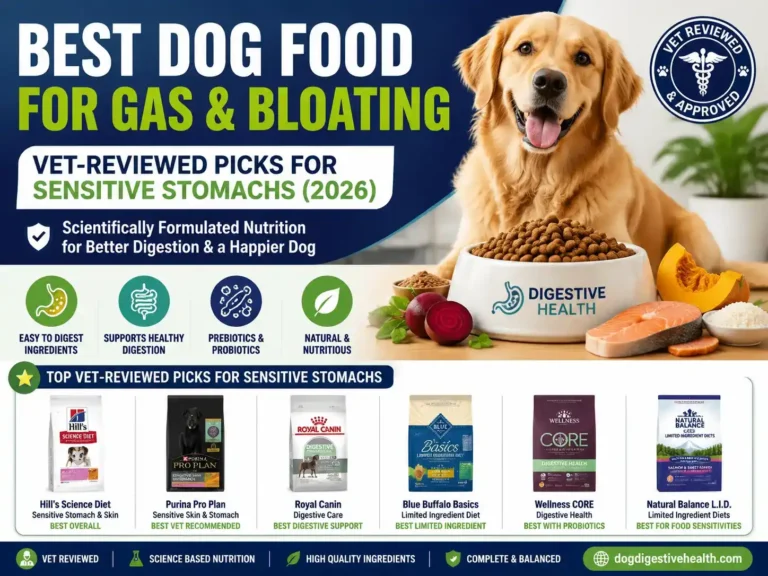
The best dog food for gas and bloating is a highly digestible formula made with quality protein sources, balanced fiber, and digestive-supporting ingredients such as prebiotics and probiotics. For dogs with sensitive stomachs, veterinarians often recommend diets containing easily digestible proteins like salmon, turkey, or lamb, moderate fat levels, appropriate fiber sources, and limited unnecessary ingredients. The ideal choice depends on your dog’s age, breed, activity level, food sensitivities, and individual digestive needs.
Best Dog Food for Gas and Bloating:
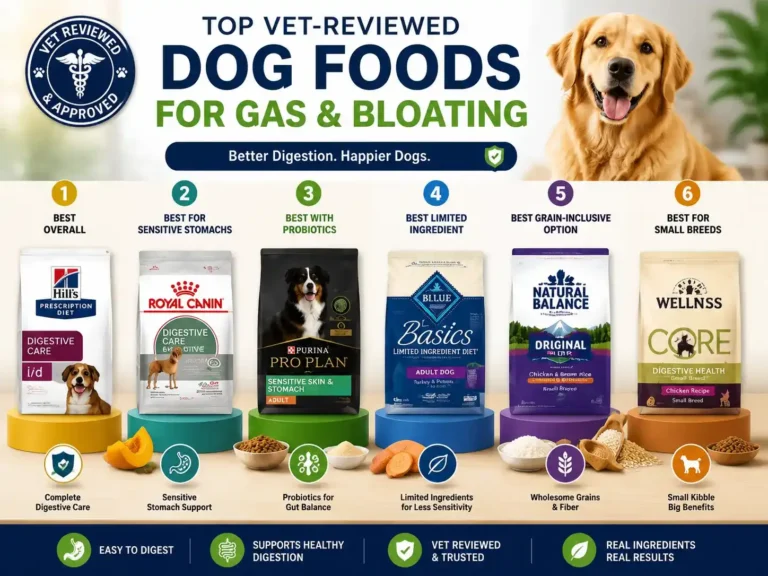
Choosing the right food depends on several factors, including your dog’s size, age, dietary tolerance, activity level, and previous food history. There is no single formula that works perfectly for every dog, but some diets are consistently preferred because they focus on digestibility, ingredient quality, and digestive support.
Below are our top categories for dogs needing nutrition support for gas, bloating, and sensitive stomach concerns.
Quick Comparison: Best Dog Foods for Gas and Sensitive Stomachs
Product | Best For | Key Digestive Features | Main Protein Source |
Hill’s Science Diet Adult Sensitive Stomach & Skin | Best Overall Sensitive Stomach Formula | Prebiotic fiber, highly digestible ingredients | Chicken |
Purina Pro Plan Sensitive Skin & Stomach | Best Veterinary-Recommended Option | Easily digestible carbohydrates, probiotics | Salmon |
Royal Canin Digestive Care | Best Digestive Support Formula | Balanced nutrients, digestive optimization | Chicken-based proteins |
Blue Buffalo Basics Limited Ingredient Diet | Best Limited Ingredient Option | Simple ingredient profile | Turkey or salmon |
Wellness CORE Digestive Health | Best Natural Digestive Formula | Probiotic and fiber blend | Chicken |
Natural Balance Limited Ingredient Diet | Best Food Sensitivity Option | Reduced ingredient approach | Salmon or lamb |
Best Overall Dog Food for Gas and Sensitive Stomachs
Hill’s Science Diet Adult Sensitive Stomach & Skin
Hill’s Science Diet Sensitive Stomach & Skin is frequently recommended among digestive-support diets because it focuses on highly digestible ingredients and balanced nutrition rather than unnecessary additives. Specifically, the formula is designed for adult dogs that require gentle nutrition while still meeting complete nutritional requirements. To understand why it may help dogs with sensitive digestion, keep in mind that this formula includes:
- Easily digestible protein
- Balanced levels of fat
- Prebiotic fiber to support beneficial gut bacteria
- Omega fatty acids for skin and coat health
Prebiotic fibers act as a food source for beneficial intestinal bacteria, helping support a balanced gut environment. Maintaining a healthy intestinal microbiome is increasingly recognized as an important factor in digestive health for companion animals (Yang, Q., & Wu, Z., 2023).
Best For:
✔ Adult dogs with sensitive digestion
✔ Canines transitioning from richer diets
✔ Pets needing a gentle everyday formula
Considerations:
Dogs with specific protein sensitivities may need a different protein source or a veterinarian-guided elimination diet.
Best Dog Food for Dogs With Gas Problems: Purina Pro Plan Sensitive Skin & Stomach
Purina Pro Plan Sensitive Skin & Stomach Salmon Formula
Purina Pro Plan Sensitive Skin & Stomach is one of the most commonly selected diets for dogs requiring a sensitive digestion formula. It uses salmon as the primary protein source and includes ingredients designed to support digestive health.
Why Many Dog Owners Choose This Formula
Key features include:
- Salmon as a highly palatable protein source
- Easily digestible rice
- Added prebiotic fiber
- Nutrients supporting intestinal health
Dogs often respond differently to protein sources. Some dogs may tolerate fish-based proteins better than certain poultry-based formulas, although individual response should always guide food selection.
Research suggests that dietary components influencing gut microbial composition, including probiotic and prebiotic ingredients, may contribute to improved gastrointestinal balance in dogs (Bastos, T. S., et al. 2023).
Best For:
✔ Dogs that do poorly on richer foods
✔ Pets needing a sensitive stomach formula
✔ Owners looking for a widely available veterinary nutrition option
Best Dry Dog Food for Gas and Bloating
Royal Canin Digestive Care Dry Dog Food
Royal Canin Digestive Care is formulated specifically around digestive efficiency and nutrient utilization. Unlike many standard maintenance foods, digestive-focused formulas aim to provide carefully controlled nutrition designed around gastrointestinal tolerance.
Digestive Benefits
Royal Canin Digestive Care emphasizes:
- Highly digestible ingredients
- Balanced fiber content
- Nutritional consistency
- Stool quality support
Fiber plays an important role in digestive nutrition because different fiber types can influence intestinal movement, water balance, and bacterial fermentation.
Best For:
✔ Dogs needing a specialized digestive formula
✔ Dogs with inconsistent stool quality
✔ Owners looking for a science-based formulation approach
Best Limited Ingredient Dog Food for Gas and Food Sensitivities
Blue Buffalo Basics Limited Ingredient Diet
Limited-ingredient diets are commonly selected by owners searching for the best limited-ingredient dog food for gas because they reduce the number of dietary components a dog consumes. As a result, these formulas generally focus on:
- A single primary animal protein
- Fewer carbohydrate sources
- Avoidance of unnecessary ingredients
A simplified ingredient profile may help owners identify whether their dog tolerates specific foods better.
Common Protein Options:
- Turkey
- Salmon
- Lamb
Best For:
✔ Dogs suspected of food sensitivities
✔ Dogs needing fewer ingredients
✔ Owners who want a simpler diet approach
Best Probiotic Dog Food for Reducing Gas and Supporting Digestion
Wellness CORE Digestive Health
Digestive health formulas increasingly include probiotics and prebiotic fibers because the intestinal microbiome plays a significant role in gastrointestinal function.
Specifically, probiotics are beneficial microorganisms that may support normal intestinal microbial balance when appropriately selected and used. Research continues to explore how probiotic strains influence digestion, stool quality, and gut health in dogs (Yang, Q., & Wu, Z., 2023).
Digestive-Support Ingredients Often Found in These Diets:
- Probiotic cultures
- Prebiotic fibers
- Chicory root
- Beet pulp
- Soluble fiber sources
Best For:
✔ Dogs needing digestive support
✔ Dogs whose diets lack microbiome-support ingredients
✔ Owners interested in functional nutrition
Best Wet Dog Food for Dogs With Sensitive Stomachs
Why Wet Food May Be Helpful for Some Dogs
Wet dog food can be a useful option for dogs that prefer softer textures or need increased moisture intake. However, on the other hand, wet food can cause gas, depending more on the formulation and ingredients than on the texture alone.
A high-quality wet formula should still provide:
- Complete and balanced nutrition
- Appropriate protein levels
- Digestible ingredients
- Controlled fat content
Best For:
✔ Senior dogs
✔ Dogs with dental challenges
✔ Dogs that prefer moist food textures
Best Dog Food for Puppies With Gas and Sensitive Stomachs
Puppies have developing digestive systems and require carefully balanced nutrition to support growth, immune function, and healthy digestion. Choosing the best puppy food for gas and sensitive stomachs requires attention to ingredient digestibility, appropriate nutrient levels, and a formula designed specifically for growth.
Puppy diets should not simply be adult sensitive stomach formulas with reduced ingredients. Growing dogs have different nutritional requirements, including higher energy needs and specific levels of essential nutrients.
What to Look for in Puppy Food for Sensitive Digestion
A suitable puppy formula may include:
- Highly digestible animal proteins
- Balanced fat levels
- Appropriate calcium and phosphorus ratios
- Prebiotic fibers
- Easily tolerated carbohydrate sources
Best For:
✔ Puppies experiencing digestive sensitivity during food transitions
✔ young dogs needing gentle but complete nutrition
✔ Growing dogs requiring balanced developmental support
Important Consideration:
Frequent food changes can disturb digestive adaptation. When changing puppy food, gradual transitions over several days are generally preferred rather than sudden diet replacement.
Best Dog Food for Senior Dogs With Sensitive Digestion
Senior dogs often experience changing nutritional needs as they age. The best senior dog food for sensitive stomachs should provide digestible nutrition while supporting healthy body condition, muscle maintenance, and overall wellness.
Older dogs may benefit from formulas that include:
- Moderate calorie levels
- High-quality protein
- Digestible ingredients
- Appropriate fiber
- Nutrients supporting healthy aging
Aging does not automatically mean a dog needs a restricted diet. The ideal food depends on the dog’s health status, activity level, body condition, and veterinary recommendations.
Best For:
✔ Older dogs with changing dietary tolerance
✔ Senior dogs needing easily digestible meals
✔ Pets requiring controlled nutrition
Best Budget-Friendly Dog Food for Sensitive Digestion
A common misconception is that only expensive dog foods can support digestive health. While premium formulas may offer specialized ingredients, a suitable diet is ultimately determined by nutritional quality, digestibility, and whether the individual dog tolerates the food.
When choosing an affordable sensitive stomach dog food, focus on:
- Complete and balanced nutrition
- Named animal protein sources
- Appropriate fiber content
- Reliable manufacturing standards
The most expensive formula is not always the best choice if a dog does not tolerate it well. a
How We Selected the Best Dog Foods for Gas and Sensitive Stomachs
Selecting a suitable food for dogs with digestive sensitivity requires evaluating more than marketing claims. A scientifically formulated diet should provide nutritional adequacy, ingredient quality, and appropriate nutrient balance.
The following factors were considered:
Digestibility of Ingredients
Digestibility refers to how efficiently a dog can break down and absorb nutrients from food.
Highly digestible diets generally provide:
- Better nutrient absorption
- Reduced digestive workload
- More consistent stool quality
Protein source, processing methods, ingredient quality, and formulation all influence digestibility.
Quality and Source of Protein
Protein is one of the most important components when selecting food for dogs with sensitive stomachs.
Commonly used digestible protein sources include:
- Salmon
- Turkey
- Lamb
- Chicken
- Whitefish
Some dogs may tolerate certain proteins better than others. A dog that struggles with one protein source may respond differently to another.
The goal is not to choose the “best” protein universally but to identify the protein source that suits the individual dog.
Balanced Fiber Content
Fiber plays an important role in digestive nutrition. Different fiber types influence intestinal movement, stool consistency, and fermentation.
Common fiber sources found in digestive-support diets include:
- Beet pulp
- Pumpkin
- Psyllium husk
- Chicory root
- Oat fiber
A balanced fiber profile can support normal intestinal function without creating excessive fermentation.
Too little fiber may affect stool quality, while excessive or poorly tolerated fiber sources may contribute to digestive discomfort in some dogs.
Prebiotics and Probiotics for Digestive Support
Many modern sensitive stomach formulas include prebiotics and probiotics.
Prebiotics
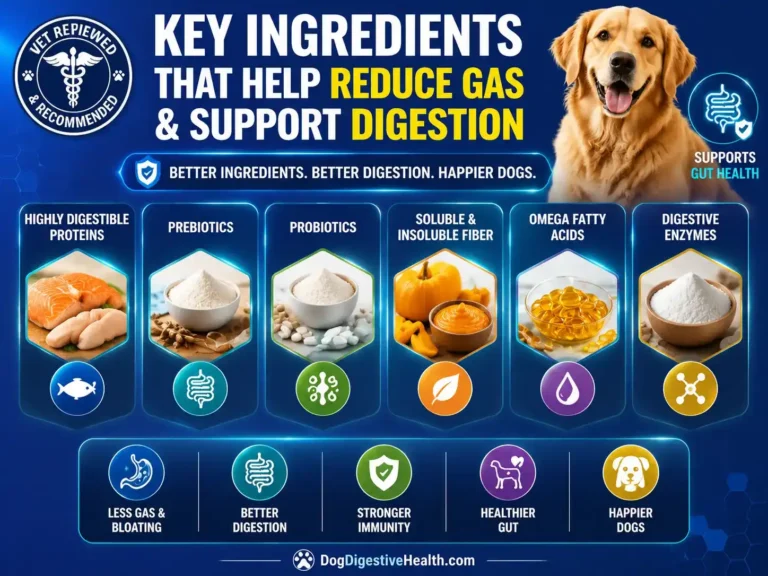
Prebiotics are dietary fibers that serve as nourishment for beneficial intestinal bacteria.
Common prebiotic ingredients include:
- Fructooligosaccharides (FOS)
- Chicory root
- Inulin
Probiotics
Probiotics are beneficial microorganisms that may help maintain intestinal microbial balance.
Research examining probiotic supplementation in dogs suggests that certain probiotic strains may influence gastrointestinal health, intestinal microbiota composition, and digestive function (Yang, Q., & Wu, Z. 2023).
Another study evaluating probiotic yeast supplementation found potential benefits related to digestibility, fermentation products, and fecal microbiota characteristics in dogs undergoing dietary changes (Bastos, T. S., et al. 2023).
What Ingredients Should You Look for in Dog Food for Gas and Bloating?
When searching for the best dog food for gas and bloating, ingredient selection matters. A good digestive-support formula usually focuses on simplicity, digestibility, and nutritional balance.
Easily Digestible Protein Sources
Dogs require protein for maintaining muscles, immune function, and overall health.
Common protein sources used in sensitive stomach formulas include:
Salmon
This option is frequently used in sensitive digestion diets because it provides high-quality animal protein and is often considered a palatable alternative protein source.Turkey
In addition, turkey is commonly used in limited-ingredient formulas because it provides a lean protein option.Lamb
Similarly, lamb is often selected as an alternative protein source for dogs that may not tolerate commonly used proteins
White fish
Fish-based proteins may provide digestible nutrition while also contributing beneficial fatty acids.
Digestible Carbohydrate Sources
Carbohydrates provide energy and can influence digestibility.
Common carbohydrate ingredients include:
Rice
As a rule, rice is frequently included in sensitive stomach formulas because it is generally easy for many dogs to digest.
Oatmeal
Oatmeal provides carbohydrates and soluble fiber that may support digestive function.
Sweet Potato
Sweet potato provides carbohydrates and fiber, although individual dogs may respond differently.
Fiber Ingredients Commonly Used in Digestive Dog Foods
Pumpkin
Pumpkin is commonly used by dog owners because it contains soluble and insoluble fiber.
Beet Pulp
Beet pulp is a fermentable fiber source used in many commercial diets to support stool quality.
Psyllium Husk
Psyllium provides soluble fiber that absorbs water and contributes to stool consistency.
Chicory Root
Chicory root is a source of inulin, a prebiotic fiber that can support beneficial bacteria.
Should You Choose Grain-Free Dog Food for Gas and Bloating?
Many owners ask:
“Is grain-free dog food better for sensitive stomachs?”
The answer is not always yes.
A grain-free diet is not automatically easier to digest. Digestibility depends on the complete formulation, ingredient quality, nutrient balance, and individual tolerance.
Some dogs may do well with grain-inclusive diets containing ingredients such as
- Rice
- Oatmeal
- Barley
Others may require different formulations based on specific dietary needs.
The best choice is the food your dog tolerates well while meeting nutritional requirements.
Is Wet Food or Dry Food Better for Dogs With Gas?
Many pet owners wonder:
“Is wet or dry food better for dogs with sensitive stomachs?”
Both can be appropriate depending on the formulation.
Dry Dog Food Advantages
- Convenient storage
- Provides a more calorie-dense option
- Easy portion control
Wet Dog Food Advantages
- Higher moisture content
- Appeals naturally to picky eaters
Softer texture - Softer texture
The most important factors are
- Ingredient quality
- Digestibility
- Nutritional completeness
- Individual response
How Long Does It Take for New Dog Food to Improve Gas?
When changing your dog’s diet, digestive adjustment does not happen immediately.
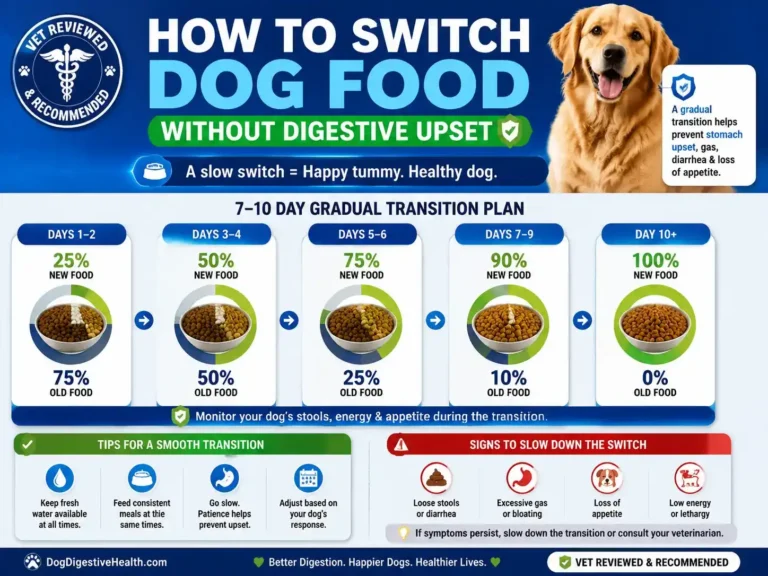
Many dogs require time to adapt to a new formula. A gradual transition allows intestinal bacteria and digestive processes to adjust more comfortably.
A typical transition approach:
Days 1–3: 25% new food + 75% old food
Days 4–6: 50% new food + 50% old food
Days 7–9: 75% new food + 25% old food
Day 10: Fully transitioned
Dogs with particularly sensitive digestion may require an even slower transition.
How to Choose the Right Dog Food for a Gassy Dog
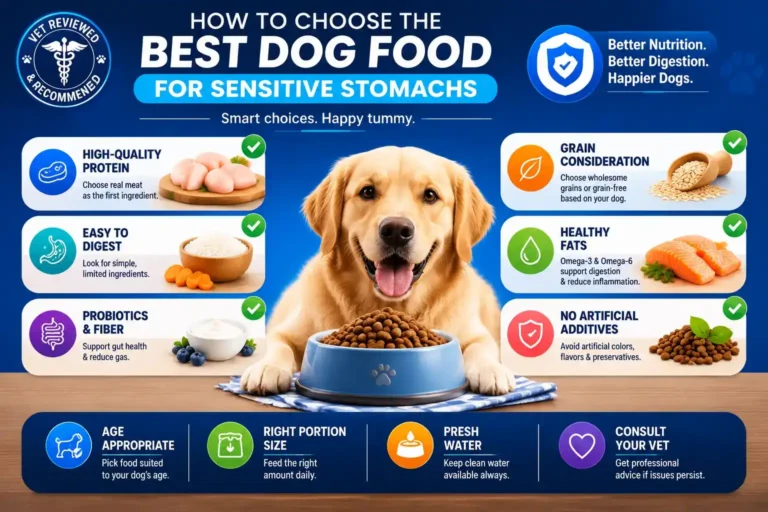
Finding the right food involves evaluating your dog rather than simply following popularity trends.
Consider:
Your Dog’s Age
Puppies, adults, and seniors have different nutritional requirements.
Your Dog’s Size
Small breeds and large breeds may have different feeding needs.
Protein Tolerance
Observe whether your dog responds better to:
- Chicken
- Salmon
- Turkey
- Lamb
Ingredient Simplicity
Dogs with suspected food sensitivities may benefit from fewer ingredients.
Digestive Support Ingredients
Look for:
- Prebiotics
- Probiotics
- Appropriate fiber
- Digestible proteins
Dog Food Selection Checklist for Sensitive Stomachs
Before choosing a formula, ask:
☑ Does it contain a high-quality protein source?
☑ Is it complete and balanced for my dog’s life stage?
☑ Does my dog tolerate the ingredients well?
☑ Does it contain appropriate fiber?
☑ Does the manufacturer follow quality control standards?
☑ Is the formula suitable for my dog’s individual needs?
Conclusions:
The best dog food for gas and bloating is not necessarily the most expensive product or the most heavily advertised formula. The right choice is a nutritionally complete diet that matches your dog’s individual digestive needs.
For many dogs, a good sensitive stomach formula includes:
- Highly digestible protein sources
- Balanced fiber
- Appropriate fat levels
- Prebiotics or probiotics
- Quality manufacturing standards
Among the commonly selected options:
Hill’s Science Diet Sensitive Stomach & Skin may be a strong overall choice for dogs needing gentle everyday nutrition.
Purina Pro Plan Sensitive Skin & Stomach is a popular option for owners looking for a widely available sensitive digestion formula.
Royal Canin Digestive Care may suit owners seeking a specialized digestive-support approach.
Limited ingredient formulas may be helpful for dogs that benefit from simpler ingredient profiles.
Ultimately, the best food is the one that provides complete nutrition while helping your dog maintain comfortable digestion, healthy body condition, and good quality of life.
Medical Disclaimer:
This article is for informational purposes only and is not a substitute for professional veterinary advice, diagnosis, or treatment. Every dog has unique nutritional needs. Consult your veterinarian before making significant dietary changes, especially if your dog has ongoing digestive problems or health concerns.
Frequently Asked Questions (FAQs)
1. What is the best dog food for gas and bloating?
The best dog food for gas and bloating is usually a highly digestible formula with quality protein, balanced fiber, and digestive-support ingredients like prebiotics and probiotics.
2. What dog food is best for sensitive stomachs?
The best sensitive stomach dog food contains easily digestible ingredients, appropriate protein sources, controlled fat levels, and complete balanced nutrition.
3. Can changing my dog’s food help reduce gas?
Yes, switching to a better-tolerated, more digestible formula may help reduce gas in some dogs when introduced gradually.
4. Is wet or dry dog food better for gas and bloating?
Both wet and dry foods can work well. The best choice depends on ingredient quality, digestibility, and how your individual dog responds.
5. Are probiotics good for dogs with gas?
Probiotic-containing dog foods may help support a healthy gut environment and improve digestive balance in some dogs.
6. What ingredients should I look for in dog food for gas?
Look for digestible proteins such as salmon, turkey, or lamb, along with balanced fiber sources, prebiotics, and gentle carbohydrate sources.
7. Is limited ingredient dog food better for sensitive stomachs?
Limited ingredient diets may benefit some dogs by reducing unnecessary ingredients and helping identify foods that are better tolerated.
References
- Yang, Q., & Wu, Z. (2023). Gut probiotics and health of dogs and cats: Benefits, applications, and underlying mechanisms. Microorganisms, 11(10), 2452. https://doi.org/10.3390/microorganisms11102452
- Bastos, T. S., et al. (2023). Effect of yeast Saccharomyces cerevisiae as a probiotic on diet digestibility, fermentative metabolites, and composition and functional potential of the fecal microbiota of dogs submitted to an abrupt dietary change. Microorganisms, 11(2), 506. https://doi.org/10.3390/microorganisms11020506
- Freeman, L. M., Chandler, M. L., Hamper, B. A., & Weeth, L. P. (2022). Current knowledge about the risks and benefits of raw meat-based diets for dogs and cats. Journal of the American Veterinary Medical Association, 243(11), 1549–1558. https://doi.org/10.2460/javma.243.11.1549
- WSAVA Global Nutrition Committee. (2021). Global Nutrition Guidelines: Selecting pet foods for dogs and cats. World Small Animal Veterinary Association. https://wsava.org/global-guidelines/global-nutrition-guidelines/
- AAFCO. (2024). Official Publication: Dog and cat food nutritional profiles and feeding standards. Association of American Feed Control Officials. https://www.aafco.org/