
Can Dogs Take Human Probiotics? Safety, Dosage Risks & Vet Advice
Written by: Dr. Akram Khan, DVM
Medically Reviewed by: Dr. Zaheer Hussain, PhD
Last updated on September 14, 2026
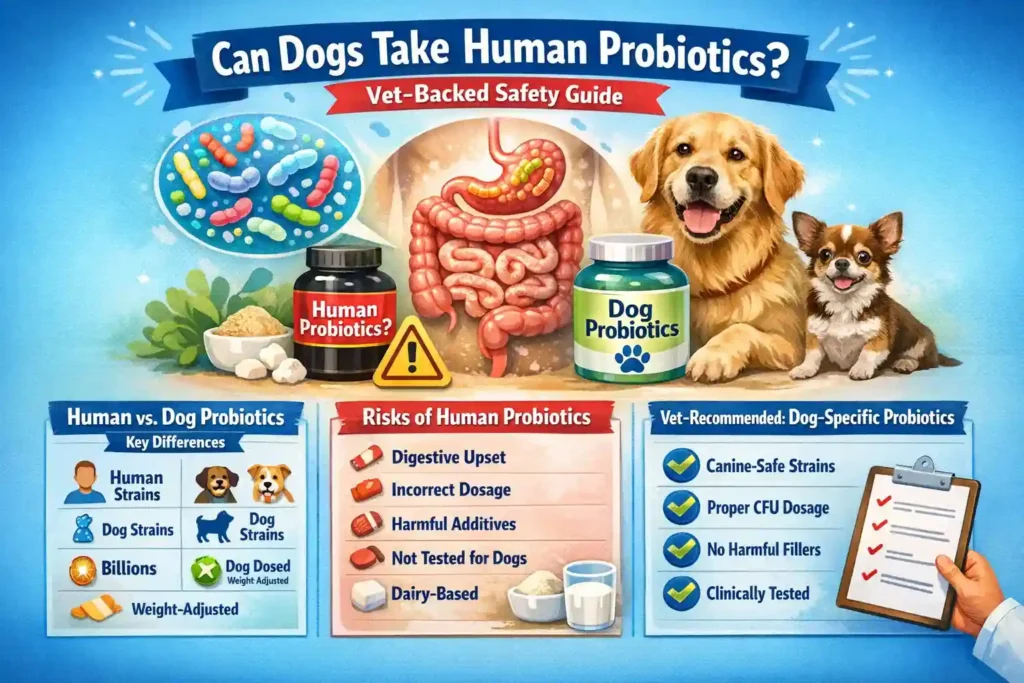
Can dogs take human probiotics? In some cases, certain human probiotics may be used short-term under veterinary guidance, but they are not the best routine choice for dogs. Many owners search for human probiotics for dogs’ dosage, whether human probiotics can help dog diarrhea, and if dog probiotics are safer than human ones. The main concerns are incorrect CFU dosing, human-focused strains, hidden additives, dairy ingredients, and toxic sweeteners such as xylitol. For most dogs, dog-specific probiotics are safer because they are formulated for the canine gut, labeled by weight, and designed for digestive support.
Can dogs take human probiotics?
Dogs can sometimes take certain human probiotics short-term, but only if the product has no toxic ingredients and the dose is approved by a veterinarian. Human probiotics are not ideal for daily or long-term use because they may contain the wrong strains, excessive CFUs, dairy, fillers, or sweeteners. Dog-specific probiotics are usually safer.
Human Probiotics for Dogs Dosage: Why There Is No Safe Universal Chart
A human probiotic for dogs dosage chart may seem helpful, but there is no single safe dosage that applies to every dog or every human probiotic product.Human probiotic products vary widely in:
- CFU strength
- bacterial strains
- capsule size
- serving instructions
- added ingredients
- sweeteners
- dairy content
- prebiotics or fiber blends
- storage requirements
This matters because one human probiotic capsule may contain 1 billion CFUs, while another may contain 50 billion CFUs or more. A dose that seems normal for an adult human may be too much for a small dog, puppy, senior dog, or dog with digestive disease.
The safest approach is to avoid guessing. If you want to use a human probiotic for your dog, show the exact product label to your veterinarian and ask whether the strain, CFU amount, and ingredients are safe.
For routine digestive support, a dog-specific probiotic with weight-based label directions is usually the safer option.
Can I Give My Dog Human Probiotics for Diarrhea?
Human probiotics may sometimes be used short-term for dog diarrhea only if a veterinarian approves the exact product. They should not be used as a replacement for veterinary care when diarrhea is severe, bloody, watery, repeated, or linked with vomiting or weakness.
Do not rely on human probiotics if your dog has:
- bloody diarrhea
- black or tarry stool
- repeated vomiting
- weakness or collapse
- dehydration
- loss of appetite
- fever
- abdominal pain
- diarrhea lasting more than 24–48 hours
- diarrhea in a puppy, senior dog, or small dog
A human probiotic may not contain the right strains or dose for canine diarrhea. It may also contain ingredients that irritate the gut or are unsafe for dogs.
For diarrhea recovery, dog-specific probiotics, probiotic pastes, or vet-recommended products are usually better because they are made for dogs and labeled by weight.
What Are Probiotics and Why Are They Used in Dogs?
Probiotics are live beneficial microorganisms, measured in CFUs (colony-forming units), that support digestive and immune health.
In dogs, probiotics are commonly used to help:
- Restore gut microbiome balance
- Improve stool consistency
- Support nutrient absorption
- Strengthen immune function
- Reduce antibiotic-associated diarrhea
- Ease stress-related digestive upset
Veterinarians frequently recommend probiotics for dogs experiencing diarrhea, gas, bloating, food transitions, stress, or recovery after medication use.
Human Probiotics vs Dog Probiotics: Key Differences
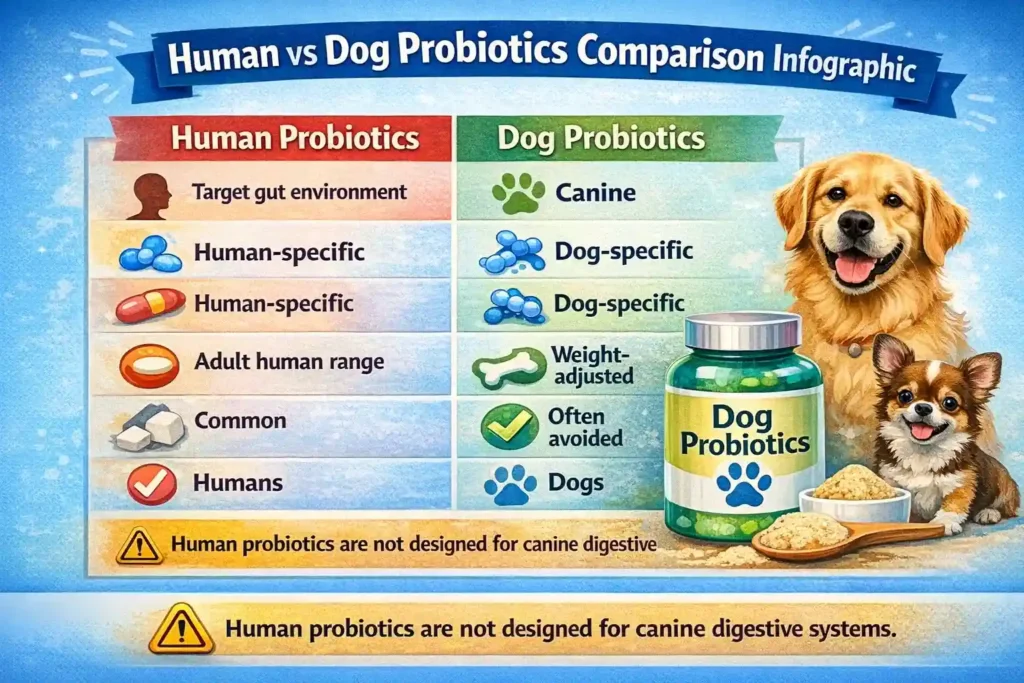
Although both products contain “good bacteria,” human probiotics are not designed for a canine digestive system.
Major Differences at a Glance
Feature | Human Probiotics | Dog Probiotics |
Target gut environment | Human | Canine |
Probiotic strains | Human-specific | Dog-specific |
CFU dosage | Adult human range | Weight-adjusted for dogs |
Fillers & additives | Common | Often avoided |
Safety testing | Humans | Dogs |
Dogs and humans have different gut pH levels, microbiome composition, enzyme activity, and immune responses, which makes formulation and dosing critically important.
Can Dogs Take Human Probiotics in an Emergency?
In short-term or emergency situations, some veterinarians may allow limited use of certain human probiotics—but only under strict conditions:
- No toxic ingredients
- CFU dosage adjusted for dog size
- Short-term use only
- Dog has no underlying health risks
⚠️ Human probiotics are not suitable for routine or long-term use in dogs.
CFUs Explained: Why Dosage Matters for Dogs
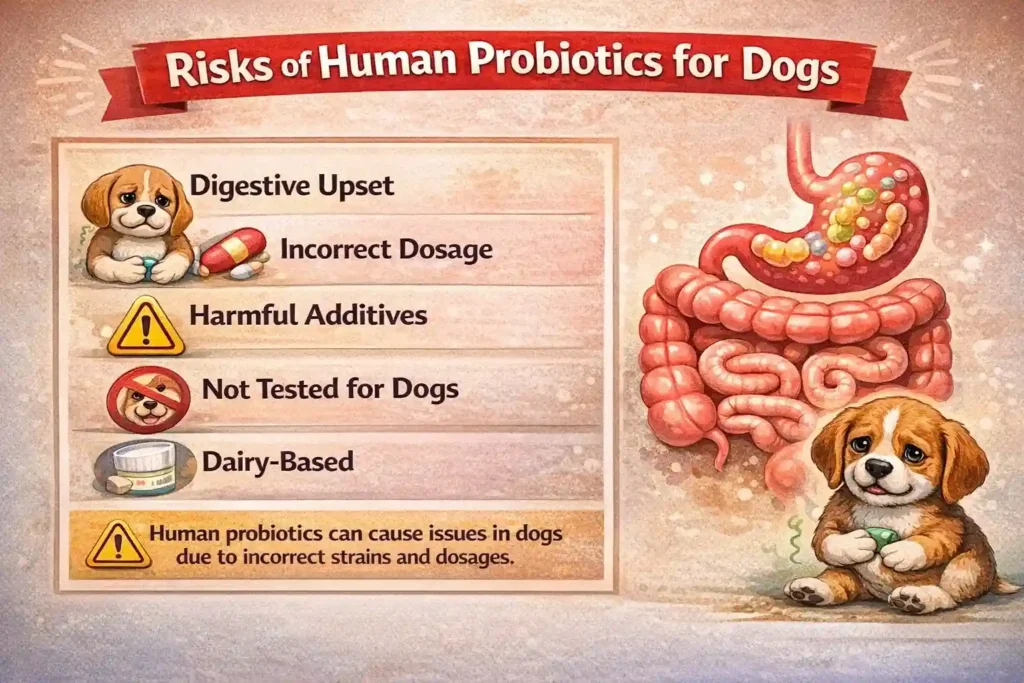
CFUs (colony-forming units) represent the number of live probiotic organisms.
Why CFUs Can Be Risky in Human Probiotics
- Human products often contain billions of CFUs
- Dogs require much lower, weight-based doses
- Excessive CFUs may cause:
- Gas and bloating
- Diarrhea
- Abdominal discomfort
- Gut imbalance
Without canine-specific dosing instructions, human probiotics increase the risk of over-supplementation.
Ingredient Labels: Hidden Risks in Human Probiotics
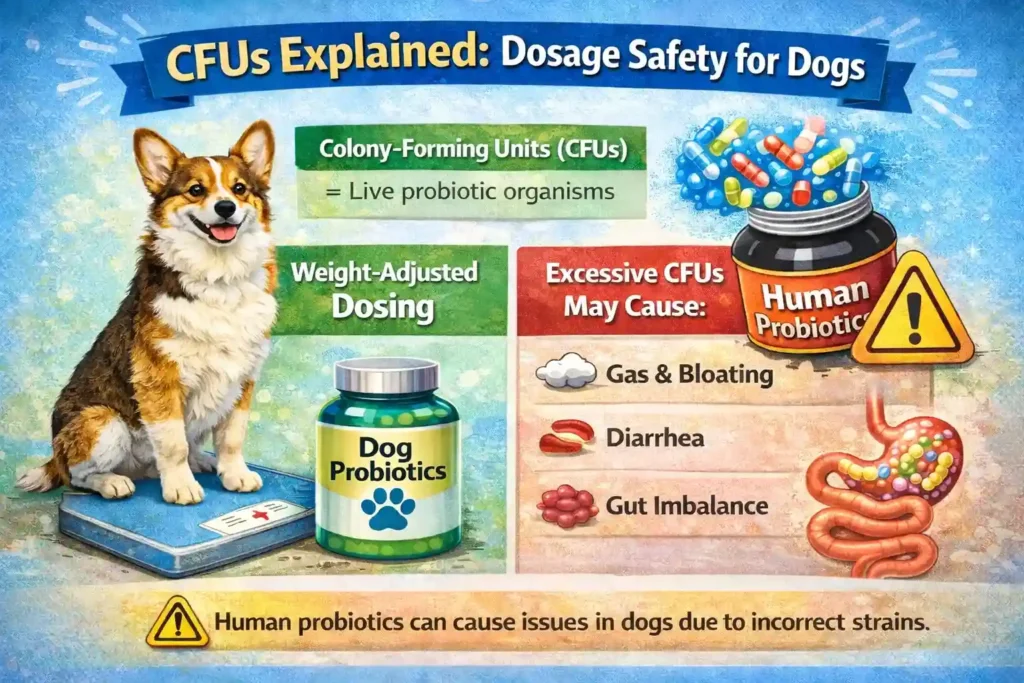
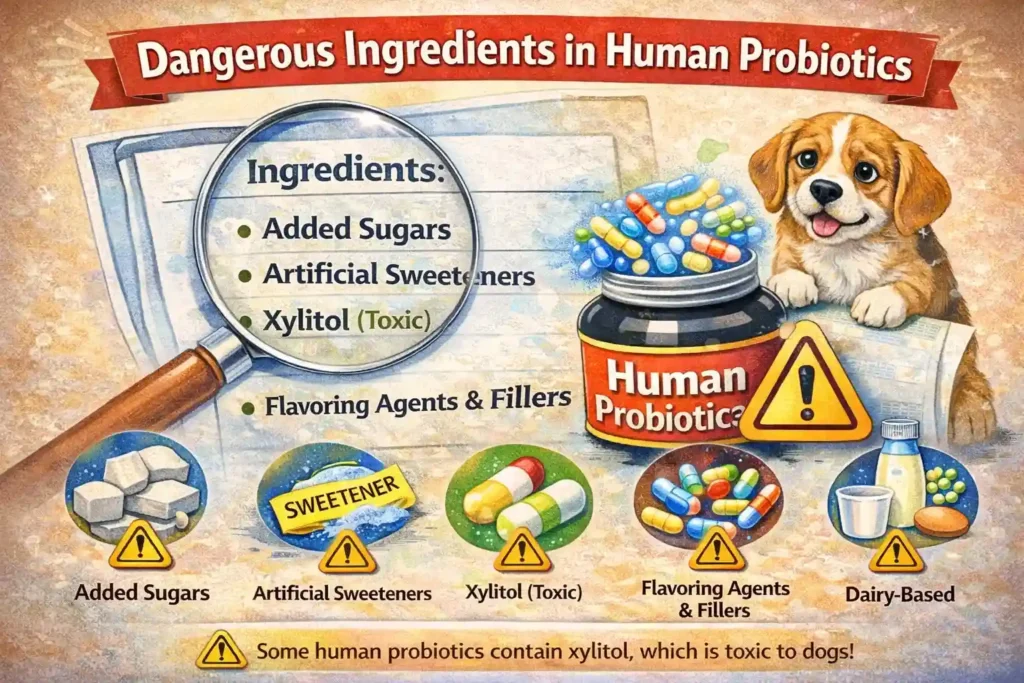
Many human probiotic supplements contain ingredients that may be unsafe or irritating for dogs, including:
- Added sugars
- Artificial sweeteners
- Flavoring agents
- Starches and fillers
- Dairy-based components
Some probiotic yogurts and gummies may even contain xylitol (toxic to dogs).
🔎 Always read ingredient labels carefully before giving any human supplement to a pet.
Unsafe Ingredients in Human Probiotics for Dogs
The biggest risk with human probiotics is not always the bacteria. The hidden ingredients can be the problem.
Avoid human probiotics that contain:
- xylitol
- artificial sweeteners
- chocolate flavor
- high sugar
- strong flavorings
- unknown herbal blends
- caffeine-containing ingredients
- high dairy content
- unnecessary fillers
- ingredients your dog is allergic to
Xylitol is especially dangerous for dogs and may appear in some human chewables, gummies, powders, and flavored supplements. Always check the full ingredient list before giving any human supplement to a dog.
If the label is unclear, do not use the product. Choose a dog-specific probiotic or ask your veterinarian.
Can Dogs Take Human Probiotic Capsules?
Dogs may be able to take some human probiotic capsules only if the product is free from unsafe ingredients and the dose is approved by a veterinarian. However, human capsules are not automatically safe just because they contain probiotics.
Problems with human probiotic capsules include:
- CFU dose may be too high
- Strains may not be chosen for dogs
- Capsule size may not match dog weight
- Ingredients may not be pet-safe
- The capsule may contain dairy, sweeteners, or additives
- The label may not provide canine dosing
Do not open random capsules and mix them into food without checking the product carefully. If your vet approves a human probiotic capsule, follow their exact instructions for dose, timing, and duration.
Is Probiotic Yogurt Safe for Dogs?
Probiotic yogurt is often promoted as a “natural” option, but it has significant limitations.
Potential Issues With Yogurt for Dogs
- Lactose intolerance is common in dogs
- Inconsistent and low CFU counts
- Human-focused bacterial strains
- Added sugars in many products
Small amounts of plain, unsweetened yogurt may be tolerated by some dogs, but it is not a reliable or therapeutic probiotic source.
Can Dogs Eat Probiotic Yogurt Every Day?
Some dogs may tolerate small amounts of plain, unsweetened probiotic yogurt, but it is not the best daily probiotic option for every dog.
Probiotic yogurt may be a poor choice if your dog has:
- lactose intolerance
- diarrhea
- gas or bloating after dairy
- pancreatitis risk
- food allergies
- sensitive stomach
- obesity or calorie restriction
Many yogurts also contain sugar, flavors, fruit mixes, or sweeteners that are not ideal for dogs. Never give yogurt that contains xylitol.
Plain unsweetened yogurt may be tolerated by some dogs in small amounts, but it does not provide precise CFU dosing and may not contain strains selected for canine gut health.
For daily use, a dog-specific probiotic is usually more reliable than yogurt.
What Veterinarians Recommend Instead
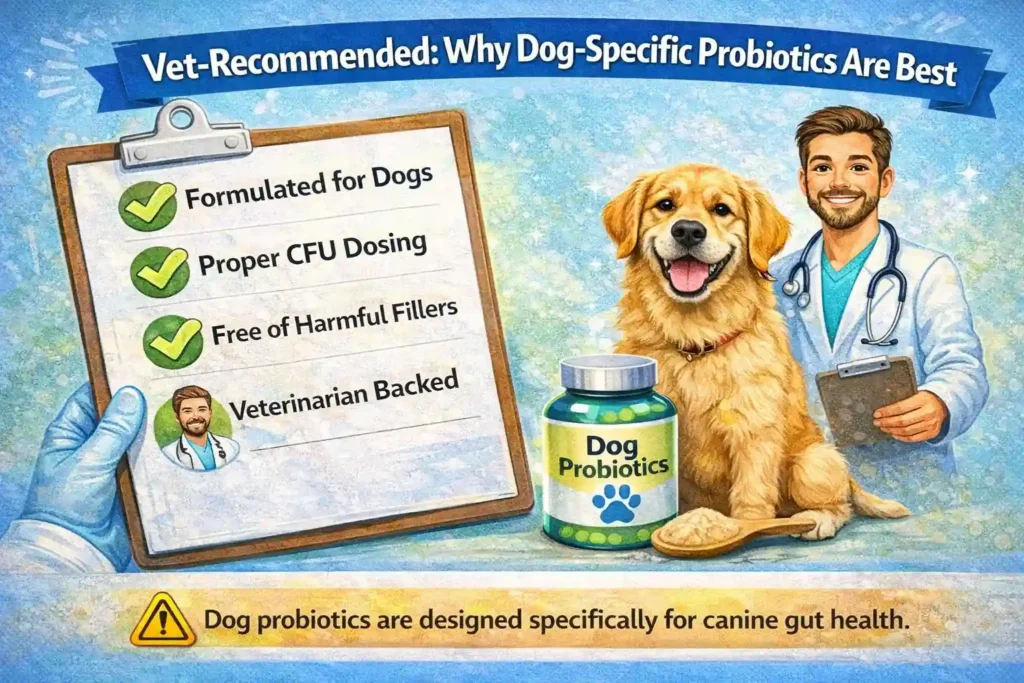
Most veterinarians recommend dog-specific probiotic supplements because they are:
- Formulated for the canine gut microbiome
- Properly dosed by size and weight
- Free from harmful fillers and sweeteners
- Backed by veterinary research and clinical use
Dog-Friendly Probiotic Forms
- Probiotic powder
- Probiotic chews
- Probiotic paste
- Probiotic bites or capsules
When Human Probiotics May Be Unsafe for Dogs
Avoid human probiotics entirely if your dog:
- Is a puppy or senior dog
- Has a weakened immune system
- Has chronic digestive disease (IBD, colitis, GERD-like symptoms)
- Is taking multiple medications
In these cases, incorrect strains or CFU levels may worsen digestive symptoms.
What Happens If a Dog Has Too Much Probiotic?
Too much probiotic may cause digestive upset in some dogs. Serious problems are uncommon in healthy dogs, but high doses can still cause discomfort.
Possible signs of too much probiotic include:
- gas
- bloating
- stomach rumbling
- soft stool
- diarrhea
- reduced appetite
- nausea
- temporary digestive discomfort
The risk may be higher in puppies, senior dogs, immunocompromised dogs, critically ill dogs, or dogs with chronic digestive disease.
If your dog accidentally ate too much probiotic, check the ingredient label first. If the product contains xylitol, chocolate flavor, unknown sweeteners, or unsafe additives, contact a veterinarian or pet poison helpline immediately.
Benefits of Dog-Specific Probiotic Supplements
Dog-specific probiotics are designed to:
- Support canine-specific gut bacteria
- Improve digestion and stool quality
- Restore balance after antibiotics
- Support immune function safely
They also provide clear dosing instructions, reducing the risk of adverse effects.
How to Choose the Right Probiotic for Your Dog
Look for products that include:
- Clearly stated CFU count
- Dog-specific probiotic strains
- Transparent ingredient labels
- No unnecessary fillers or sugars
- Veterinary backing or clinical testing
Avoid supplements that rely on vague marketing claims without science-based formulation.
What to Do If You Already Gave Your Dog a Human Probiotic
If you already gave your dog a human probiotic, do not panic. First, check the label carefully.
Look for:
- xylitol
- artificial sweeteners
- chocolate flavor
- caffeine-containing ingredients
- dairy content
- herbs or unknown blends
- CFU amount per capsule or serving
Next, watch your dog for signs such as vomiting, diarrhea, bloating, weakness, drooling, shaking, poor appetite, or unusual behavior.
Call a veterinarian if:
- The product contains xylitol or unsafe ingredients
- Your dog ate many capsules
- Your dog is a puppy, senior, pregnant, or chronically ill
- Diarrhea or vomiting develops
- Your dog seems weak, shaky, or lethargic
- Your dog already had digestive symptoms before the probiotic
For future use, switch to a dog-specific probiotic or ask your veterinarian which product is safest for your dog’s weight, age, and health condition.
Medical Disclaimer
This content is for educational purposes only and does not replace professional veterinary advice. Always consult a licensed veterinarian for diagnosis and treatment.
Frequently Asked Questions (FAQs)
Can dogs take human probiotics?
Some dogs may take certain human probiotics short-term if the product has safe ingredients and a veterinarian approves the dose. However, human probiotics are not the best routine option for most dogs.
Can I give my dog human probiotics every day?
Daily use of human probiotics is not recommended unless your veterinarian approves the exact product. Dog-specific probiotics are usually safer for daily use because they are formulated and labeled for dogs.
Is there a human probiotics for dogs dosage chart?
No universal human probiotics for dogs dosage chart is safe because human products vary in CFU strength, strains, capsule size, and ingredients. Ask a veterinarian before giving a human probiotic to your dog.
Can human probiotics help dog diarrhea?
Sometimes they may help, but they can also be the wrong strain, the wrong dose, or contain unsuitable ingredients. Bloody diarrhea, vomiting, weakness, dehydration, or ongoing diarrhea needs veterinary care.
Can dogs take human probiotic capsules?
Some human probiotic capsules may be safe only if they contain no toxic ingredients and the dose is approved by a veterinarian. Do not guess the dose based on human label directions.
Are dog probiotics better than human probiotics?
Yes, dog probiotics are usually better because they are designed for canine digestion, labeled by dog weight, and less likely to contain unsuitable human-focused ingredients.
Can dogs eat probiotic yogurt?
Some dogs can tolerate small amounts of plain, unsweetened yogurt, but yogurt is not a reliable therapeutic probiotic. Avoid flavored yogurt, sweetened yogurt, and any yogurt containing xylitol.
What ingredients should I avoid in human probiotics for dogs?
Avoid xylitol, artificial sweeteners, chocolate flavor, high sugar, strong flavorings, unknown herbal blends, high dairy content, and unnecessary additives.
Can too much probiotic hurt a dog?
Too much probiotic may cause gas, bloating, soft stool, diarrhea, stomach rumbling, or temporary digestive discomfort. Dogs with immune problems, chronic disease, or severe diarrhea should use probiotics only with vet guidance.
What should I do if I already gave my dog a human probiotic?
Check the label for unsafe ingredients, monitor your dog, and call a vet if the product contains xylitol, your dog ate many capsules, or symptoms like vomiting, diarrhea, weakness, shaking, or lethargy appear.