
Probiotic Dosage Chart for Dogs by Weight: CFU Guide
Written by: Dr. Akram Khan, DVM
Medically Reviewed by: Dr. Khalid Mehmood, PhD (Assistant Professor in Clinical Veterinary Medicine)
Last updated on November 09, 2026
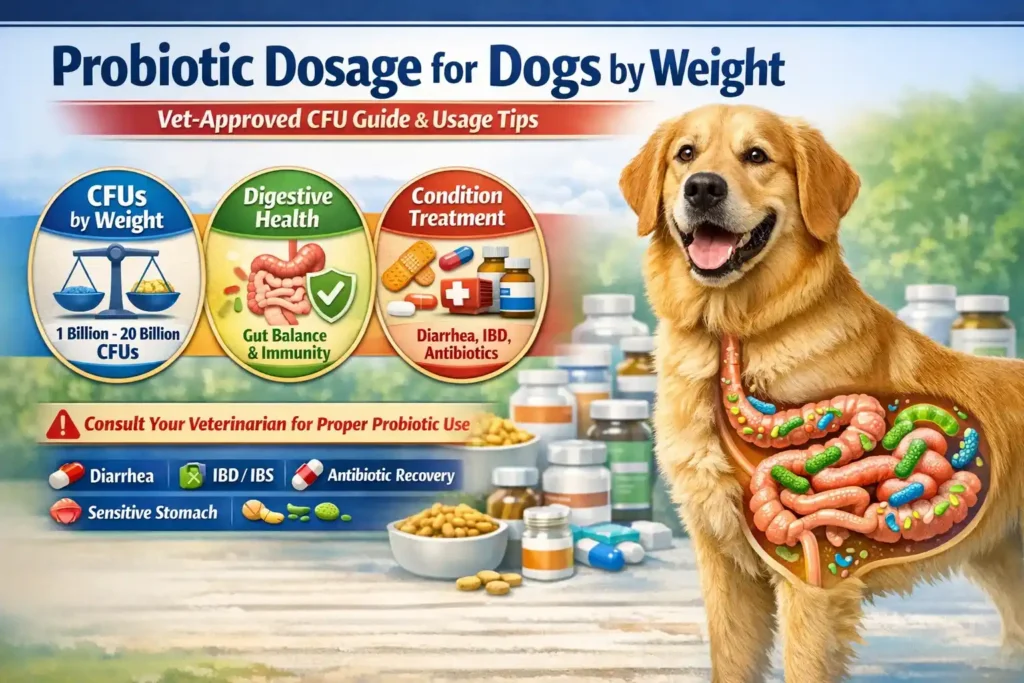
A probiotic dosage chart for dogs by weight helps owners understand how many CFUs their dog may need for daily gut support, diarrhea recovery, antibiotic use, IBS, IBD, or sensitive stomachs. An appropriate probiotic dosage for dogs depends on body weight, product strength, bacterial strain, age, health status, and the reason the supplement is being used.
The safest dose depends on your dog’s size, age, health condition, product strength, and whether probiotics are used for maintenance or short-term digestive support.
How much probiotic should I give my dog by weight?
There is no single probiotic dosage in CFUs that applies to every dog based on body weight alone. The appropriate amount depends on the specific probiotic strain, formulation, product label, and the dog’s health condition. For example, Purina FortiFlora provides 100 million CFUs per sachet, while Proviable-DC provides 5 billion CFUs per capsule. Both manufacturers provide once-daily directions without requiring a higher CFU serving solely because a dog is larger. Always follow the specific product label and consult a veterinarian when treating digestive illness.
Important Safety Note About Dog Probiotic Dosage
Use a probiotic dosage chart for dogs by weight as a general guide, not as a fixed medical prescription. The safest dose depends on the product label, CFU strength per scoop or capsule, probiotic strain, dog weight, age, health condition, and reason for use.
Two dog probiotics can look similar but contain very different CFU amounts. One scoop may contain 1 billion CFUs, while another product may contain 5, 10, or more billion CFUs per serving.
Before giving a probiotic, check:
- CFUs per scoop, chew, capsule, or sachet
- recommended dose on the product label
- dog weight range on the label
- Verify the product is specifically for dogs
- Check if it contains prebiotics, enzymes, flavors, dairy, or additives
- Assess whether your dog has vomiting, bloody diarrhea, fever, weakness, or chronic disease
If your dog has ongoing diarrhea, blood in stool, vomiting, weight loss, IBD, pancreatitis, or immune suppression, or is a very young puppy or senior dog, ask a veterinarian before using therapeutic probiotic doses.
What Are Probiotics for Dogs?
Probiotics for dogs are beneficial live microorganisms that support the gut microbiome, enhance nutrient absorption, and regulate immune responses. They are commonly used in veterinary medicine to support digestive recovery and long-term gut stability.
Common Veterinary-Approved Probiotic Strains for Dogs
- Lactobacillus acidophilus
- Lactobacillus rhamnosus
- Bifidobacterium animalis
- Enterococcus faecium
- Bacillus coagulans
Multi-strain probiotics are often preferred for digestive disorders, while single-strain products may be used for targeted therapy under veterinary guidance.
Understanding CFUs (Colony-Forming Units) in Dog Probiotics
CFUs indicate the number of live probiotic organisms per dose. More CFUs do not automatically mean better results.
Key points to understand:
- Correct CFU dosage depends on dog size and condition
- Maintenance doses are lower and used for long-term gut support
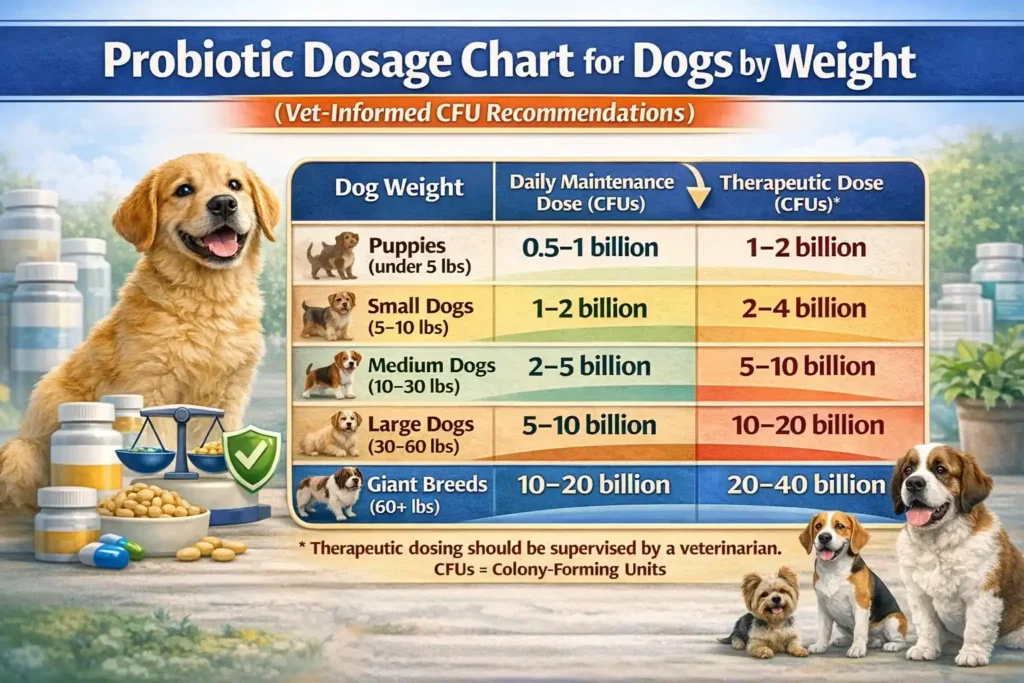
✅ Probiotic Dosage Chart for Dogs by Weight (Vet-Informed)

Dog Weight | Daily Maintenance Dose (CFUs) | Therapeutic Dose (CFUs)* |
Puppies (under 5 lbs) | 0.5–1 billion | 1–2 billion |
Small Dogs (5–10 lbs) | 1–2 billion | 2–4 billion |
Medium Dogs (10–30 lbs) | 2–5 billion | 5–10 billion |
Large Dogs (30–60 lbs) | 5–10 billion | 10–20 billion |
Giant Breeds (60+ lbs) | 10–20 billion | 20–40 billion |
*Therapeutic dosing is commonly used for diarrhea, IBD, IBS, antibiotic recovery, or stress colitis and should be supervised by a veterinarian.
These CFU ranges are general educational estimates, not a substitute for the dose on your dog’s probiotic product label or veterinary advice.
Popular Dog Probiotics: FortiFlora vs. Proviable-DC
When matching a probiotic dosage chart for dogs by weight to actual commercial products, owners frequently choose between two top veterinarian-recommended brands:
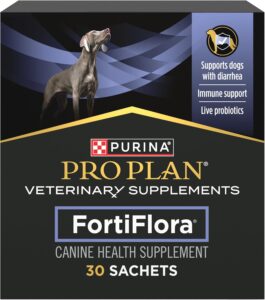
- **Purina Pro Plan FortiFlora:** This single-strain probiotic uses *Enterococcus faecium* SF68 (1×10^8 CFU per sachet) and is well studied for short-term acute diarrhea management, antibiotic recovery, or dietary indiscretions.
Use only as directed by a veterinarian.
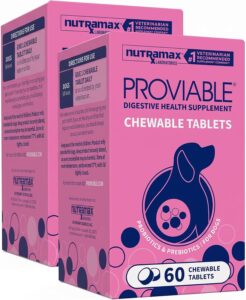
- **Nutramax Proviable-DC / Forte:** This is a multi-strain formula boasting 7 beneficial bacterial strains (such as *Lactobacillus acidophilus* and *Bifidobacterium animalis*) packed with billions of CFUs. It is widely studied for long-term maintenance, severe gut dysbiosis, or chronic conditions like IBD and IBS.
Always refer to the product packaging label to verify the specific capsule or powder serving size recommended for your dog’s weight bracket.
Use only as directed by a veterinarian.
How to Use the Probiotic Dosage Chart Safely
Use the chart as a starting point, then match it to your product label. Do not give multiple scoops just because a higher CFU number sounds better. More probiotics are not always better for every dog. Therefore, an excellent and safe approach is:
- Choose a dog-specific probiotic when possible.
- Read the CFU amount per serving.
- Match the serving size to your dog’s weight.
- Follow the product label or your veterinarian’s dosing instructions.
- Give it consistently at the same time each day.
- Watch for gas, bloating, loose stool, vomiting, or appetite changes.
- Contact a vet if symptoms worsen or diarrhea continues.
For mild digestive support, many dogs do better with steady daily use rather than frequent dose changes. For diarrhea, antibiotic recovery, IBD, IBS, or chronic gut problems, dosing should be guided by a veterinarian.
Probiotic Dosage for Puppies, Small Dogs, and Large Dogs
Puppies, small dogs, large dogs, and giant breeds should not all receive the same probiotic dose. Body size matters because the dose per serving, CFU amount, and digestive tolerance can vary.
Puppies:
Use only puppy-safe or veterinarian-recommended probiotics. Young dogs with diarrhea can become dehydrated quickly, so do not rely only on probiotics if diarrhea is watery, bloody, repeated, or comes with vomiting or weakness.
Small dogs:
These pets usually need a lower serving size. Starting too high may cause gas, bloating, or loose stool.
Medium dogs:
These animals may tolerate standard label dosing well, but the dose should still match the CFU strength of the product.
Large and giant dogs:
Furthermore, these dogs may need a higher CFU range or larger serving size, but follow the product label. Do not combine multiple probiotic products unless your vet advises it.
The best dose is not only about weight. It also depends on why the probiotic is being used: daily gut support, diarrhea recovery, antibiotics, sensitive stomach, IBS, IBD, or vet-directed therapy.
Probiotic Dosage for Specific Digestive Conditions
🦠 Probiotic Dosage for Dogs With Diarrhea
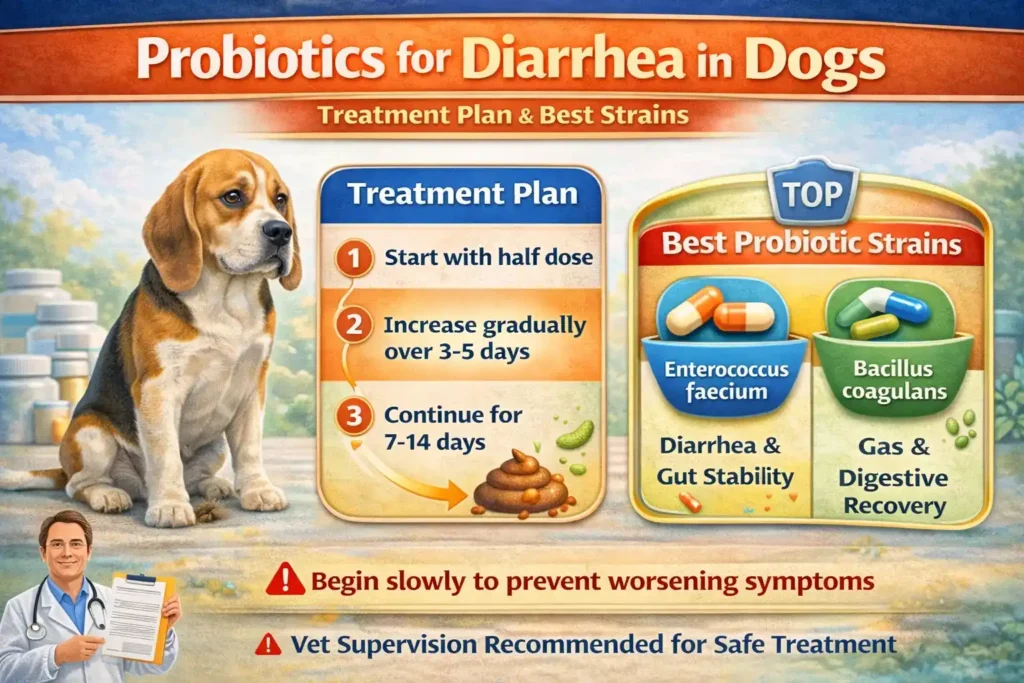
- Start with half the recommended dose
- Increase gradually over 3–5 days
- Continue for 7–14 days
Best strains: Enterococcus faecium, Bacillus coagulans
🧬 Probiotic Dosage for Dogs With IBD or IBS
Dogs with Inflammatory Bowel Disease (IBD) or Irritable Bowel Syndrome (IBS) often require consistent, multi-strain probiotics.
- Use the therapeutic CFU range
- Prefer synbiotics (probiotic + prebiotic)
- Long-term use may be necessary
IBD is a chronic disease—always involve a veterinarian.
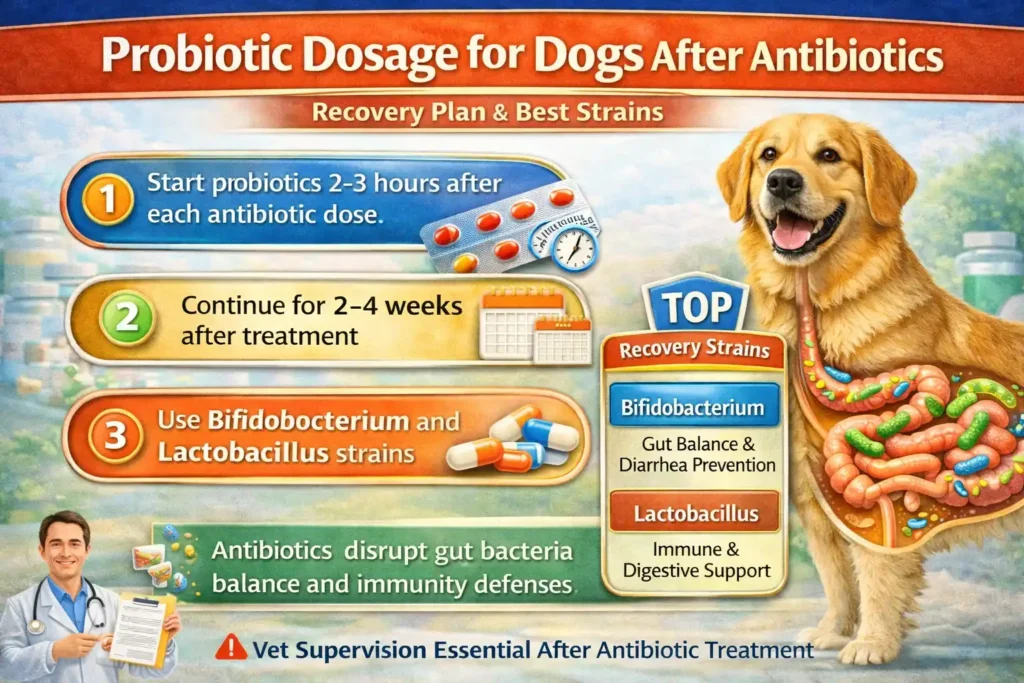
💊 Probiotic Dosage After Antibiotics

Antibiotics disrupt gut bacteria balance and immune defenses.
- Start probiotics 2–3 hours after each antibiotic dose
- Continue for 2–4 weeks after treatment
- Use Bifidobacterium and Lactobacillus strains
What Time of Day Should I Give My Dog Probiotics?
The best time of day to give your dog probiotics is the time you can give them consistently. For most dogs, probiotics are commonly given with a meal because food may improve tolerance and reduce stomach upset.
You can give probiotics:
- Alongside breakfast
- Mixed into dinner
- At the same time as a daily meal
- Following the time recommended on the product label
- Scheduled at a separate time from antibiotics if your dog is taking them
If your dog is on antibiotics, many veterinarians recommend separating the probiotic and antibiotic by a few hours so the antibiotic does not reduce the probiotic’s effect. Follow your veterinarian’s instructions for your dog’s specific medication schedule.
Consistency matters more than morning versus evening.
Should Dogs Take Probiotics With Food or on an Empty Stomach?
Many dog probiotics are best given with food, especially for dogs with sensitive stomachs. Giving probiotics with a meal may reduce the chance of nausea, gas, or loose stool.
Giving probiotics with food may be helpful when:
- Your dog has a sensitive stomach
- The pet is starting probiotics for the first time
- Your dog has loose stool
- The standard manufacturer label says to mix with food
- An animal refuses capsules or powders alone
Some products may be designed to work with or without food, so always follow the label.
If your dog vomits after taking a probiotic on an empty stomach, try giving it with food next time and ask your vet if vomiting continues.
Best Forms of Probiotics for Dogs (By Use Case)
Form |
Best For |
|
Powder probiotics |
Precise dosing, mixing with food |
|
Chewable probiotics |
Picky eaters |
|
Capsules |
Large dogs |
|
Probiotic paste |
Acute diarrhea |
|
Synbiotics |
Chronic gut disorders |
Can Dogs Overdose on Probiotics?
Probiotics are generally very safe, but overdosing may cause mild side effects, including:
- Gas and bloating
- Loose stools
- Temporary digestive discomfort
These effects usually resolve within 48–72 hours.
🚫 Avoid probiotics in dogs with:
- Severe immune suppression
- Critical illness
- Active sepsis
Always consult your veterinarian before therapeutic dosing.
Dog Probiotics Side Effects
Dog probiotics are usually well tolerated, but side effects can happen, especially when the dose is started too high or the dog has a sensitive digestive system.
Possible dog probiotic side effects include:
- gas
- bloating
- softer stool
- temporary loose stool
- stomach rumbling
- mild appetite change
- temporary digestive discomfort
These signs may improve as the gut adjusts. Starting with a lower dose and increasing gradually may help sensitive dogs.Dogs with immune suppression, critical illness, severe pancreatitis, sepsis risk, or chronic disease should use probiotics only under veterinary guidance.
Proviable Forte for Dogs Side Effects & Safety
While veterinary probiotics like Nutramax Proviable Forte are generally very safe for canine gut care, mild digestive transitions can occasionally occur.
The most common side effects of Proviable Forte for dogs include:
* Temporary abdominal gas or mild bloating
* Transient loose stools or brief diarrhea during the first 24–48 hours
* Mild stomach gurgling or rumbling sounds
These symptoms usually resolve within 3 days as the gut microbiome adjusts to the high CFU count. If your dog experiences persistent vomiting, severe bloody diarrhea, lethargy, or facial swelling, stop administration immediately and consult your veterinarian.
Can Probiotics Cause Diarrhea in Dogs?
Yes, probiotics can sometimes cause temporary loose stool or diarrhea in dogs, especially if started too quickly, given at a high dose, or combined with other diet changes.
Possible reasons include:
- dose started too high
- sudden change in gut bacteria balance
- added prebiotics or fiber in the product
- dairy or flavoring ingredients
- giving multiple supplements at once
- The original illness is getting worse, not better
If diarrhea is mild and your dog is otherwise normal, you may ask your vet whether to reduce the dose or pause the product. If diarrhea is watery, bloody, repeated, or comes with vomiting, weakness, dehydration, or poor appetite, do not assume the probiotic is the only cause. Contact a veterinarian.
How Long Should Dogs Take Probiotics?
- Short-term digestive upset: 7–14 days
- Antibiotic recovery: 2–4 weeks
- Chronic gut disorders (IBD, IBS): Long-term, vet-monitored
How Long Does It Take for Dog Probiotics to Work?
The timeline for seeing positive results depends entirely on why the probiotic is being administered:
* **Acute Diarrhea or Loose Stool:** You can expect to see stool firming within 24 to 48 hours of starting a targeted therapeutic dose (like FortiFlora or a high-CFU paste).
* **Antibiotic Recovery or Stress Colitis:** It typically takes 1 to 2 weeks for the gut flora to rebalance after a medication course.
* **Chronic Issues (IBD, Leaky Gut, Allergies):** Noticeable improvements in skin coat quality, energy, and overall digestion can take 4 to 6 weeks of consistent daily usage.
How Long Does One Tub of Dog Probiotics Last?
How long one tub of dog probiotics lasts depends on the tub size, scoop size, dog weight, and serving instructions.
To estimate how long a tub will last, use this simple formula:
Tub servings ÷ daily servings = number of days the tub lasts
Example:
- If a tub has 60 scoops
- and your dog takes 1 scoop daily
- The tub lasts about 60 days
If the label says:
- small dog: ½ scoop daily
- medium dog: 1 scoop daily
- large dog: 2 scoops daily
Then the same tub may last much longer for a small dog and much shorter for a large dog.
For accurate cost comparison, check:
- servings per container
- CFUs per serving
- dose by body weight
- whether your dog needs maintenance or short-term therapeutic support
- whether the product is powder, chew, capsule, paste, or sachet
Do not compare tubs only by price. A cheaper tub may have fewer servings or lower CFUs per serving.

Use only as directed by a veterinarian.
Signs Probiotics Are Working in Dogs
Positive improvements may include:
- Firmer, well-formed stools
- Reduced gas and bloating
- Improved appetite
- Healthier coat and skin
- Increased energy levels
Human Probiotics for Dogs Dosage Chart: Why You Should Be Careful
Many owners search for a human probiotic for dogs dosage chart, but there is no universal safe chart that works for every human probiotic and every dog.
Human probiotics vary widely in:
- bacterial strains
- CFU strength
- capsule size
- added ingredients
- sweeteners
- flavors
- prebiotics
- dairy content
- storage requirements
Some human probiotics may not be harmful, but they are not always ideal for dogs. They may contain strains that are not well studied in dogs or ingredients that are unsuitable for pets.
Avoid human probiotic products that contain:
- xylitol
- artificial sweeteners
- chocolate flavor
- high dairy content
- unknown herbal blends
- strong flavorings
- unnecessary additives
A dog-specific probiotic is usually the safer choice because the label is designed for canine use. If you want to use a human probiotic for your dog, ask your veterinarian first and show them the exact product label.
Looking for the Best Dog Digestive Enzymes to Combine with Probiotics?
Many pet parents reviewing our probiotic dosage chart also search for the best dog digestive enzymes to maximize their canine’s gut recovery. While probiotics introduce live, beneficial bacteria, digestive enzymes actively break down proteins, fats, and carbohydrates in food.
If you are looking for top-rated, veterinary-trusted digestive enzymes to use alongside your dog’s probiotic schedule, these are the leading choices:
* **Nusentia Enzyme Miracle:** The best plant-derived powder enzyme for everyday gas relief and sensitive stomachs.
* **Thomas Labs Bio Case:** A high-potency pancreatic enzyme supplement ideal for severe digestive disorders.
* **Prozyme Plus: An** excellent systemic enzyme blend to help dogs absorb maximum nutrients from dry kibble.
Medical Disclaimer
This article aligns with current veterinary nutrition principles and probiotic research. Guidance is consistent with standards supported by organizations such as the American Veterinary Medical Association.
Always consult a licensed veterinarian before starting therapeutic probiotic dosing—especially for dogs with IBD, immune disorders, or chronic disease.
Frequently Asked Questions (FAQs)
How much probiotic should I give my dog by weight?
The amount depends on your dog’s weight, product strength, CFUs per serving, age, and health condition. Always follow the product label first. A dosage chart can help estimate the range, but therapeutic dosing should be guided by a veterinarian.
What is a safe probiotic dose for dogs?
A safe probiotic dose is one that matches the dog’s weight and the product label. Start low if your dog has a sensitive stomach, and ask a vet before using high CFU doses for diarrhea, IBD, IBS, antibiotic recovery, or chronic gut disease.
What time of day should I give my dog probiotics?
Give probiotics at a consistent time each day. Many owners give them breakfast or dinner. If your dog is on antibiotics, ask your veterinarian whether to separate the probiotic and antibiotic by a few hours.
Should I give my dog probiotics with food or on an empty stomach?
Many dogs tolerate probiotics better with food. Mixing powder, paste, or capsules with food may reduce stomach upset and improve acceptance. Follow the product label because instructions vary.
How often should I give my dog probiotics?
Many dog probiotics are given once daily, but frequency depends on the product label and reason for use. Dogs with diarrhea, antibiotic use, IBD, or sensitive stomachs may need a vet-directed schedule.
Can probiotics cause diarrhea in dogs?
Yes, some dogs may develop temporary loose stool, gas, or bloating when starting probiotics. If diarrhea worsens, becomes bloody, or comes with vomiting, weakness, or dehydration, contact a veterinarian.
What are dog probiotics side effects?
Possible side effects include gas, bloating, soft stool, temporary diarrhea, stomach rumbling, or mild digestive discomfort. Serious or worsening signs should be checked by a veterinarian.
Can dogs overdose on probiotics?
Giving too much probiotic may cause gas, bloating, diarrhea, or stomach upset. Serious problems are uncommon in healthy dogs, but high doses should be avoided in immune-suppressed, critically ill, or chronically sick dogs unless a vet approves.
Can dogs take human probiotics?
Some human probiotics may be tolerated, but they are not always ideal for dogs. Human products can contain unsuitable strains, sweeteners, flavorings, dairy, or additives. A dog-specific probiotic is usually safer.
Is there a human probiotics for dogs dosage chart?
There is no universal human probiotic dosage chart for dogs because human probiotic products vary in strain, CFU strength, ingredients, and capsule size. Ask a veterinarian before giving a human probiotic to your dog.
References
- Salavati Schmitz, S. (2021). Value of Probiotics in Canine and Feline Gastroenterology. Veterinary Clinics of North America: Small Animal Practice, 51(1), 171–217. https://doi.org/10.1016/j.cvsm.2020.09.011
- Cornell University College of Veterinary Medicine. The Power of Probiotics. Riney Canine Health Center. https://www.vet.cornell.edu/departments-centers-and-institutes/riney-canine-health-center/canine-health-topics/power-probiotics
- Nutramax Laboratories Veterinary Sciences. Proviable-DC Capsules for Dogs — Directions for Use. https://www.proviable.com/proviable-dc-capsules-for-dogs