
Dog Vomiting and Diarrhea at the Same Time: Emergency Signs
Written by: Dr. Akram Khan, DVM
Medically Reviewed by: Dr. Muhammad Saeed, PhD
Last updated on November 17, 2026
Dog vomiting and diarrhea at the same time can be caused by mild stomach upset, diet changes, stress, parasites, pancreatitis, toxins, parvovirus, intestinal blockage, or acute hemorrhagic diarrhea syndrome. The biggest risk is rapid dehydration, especially in puppies, senior dogs, toy breeds, and weak dogs. Seek urgent veterinary care if there is blood, repeated vomiting, severe watery diarrhea, lethargy, collapse, abdominal pain, toxin exposure, or inability to keep water down.
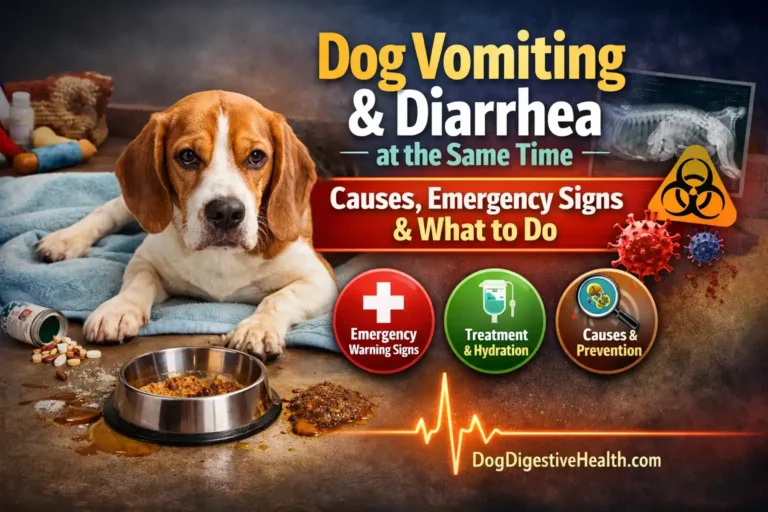
Quick Answer: Dog Vomiting and Diarrhea at the Same Time
Dog vomiting and diarrhea at the same time can happen from mild stomach upset, stress, diet change, parasites, infection, pancreatitis, toxins, intestinal blockage, parvovirus, or AHDS/HGE. The biggest concern is dehydration because your dog is losing fluid from both vomiting and diarrhea.
Mild cases may improve with short-term monitoring if your dog is bright, drinking small amounts, has no blood, and symptoms are not repeated. But vomiting and diarrhea together become urgent when there is blood, black stool, repeated vomiting, severe watery diarrhea, weakness, pale gums, abdominal pain, toxin exposure, or inability to keep water down.
If your dog is a puppy, senior dog, toy breed, pregnant dog, diabetic dog, or already weak, call a veterinarian sooner.
Is dog vomiting and diarrhea at the same time an emergency?
Dog vomiting and diarrhea at the same time can be an emergency if symptoms are severe, repeated, bloody, or linked with lethargy, dehydration, abdominal pain, toxin exposure, or inability to keep water down. Mild cases may improve with short-term monitoring, but puppies, senior dogs, small breeds, and weak dogs should be checked quickly.
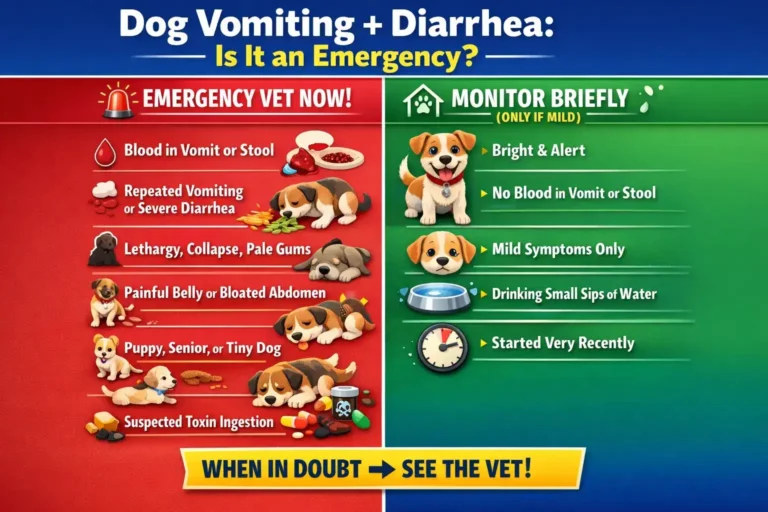
Seek emergency veterinary care immediately if your dog has:
- Blood in vomit or stool, or black, tarry diarrhea
- Repeated vomiting (commonly 3 or more episodes in 24 hours)
- Continuous watery diarrhea
- Inability to keep water down
- Signs of dehydration (dry or sticky gums, sunken eyes, skin tenting, reduced urination)
- Severe lethargy, collapse, pale gums, or weakness
- Abdominal pain, bloating, or repeated unproductive retching
- Suspected toxin ingestion (human medications, chemicals, rodent bait, chocolate, xylitol, plants)
- Unvaccinated or incompletely vaccinated puppies (high parvovirus risk)
- Existing chronic disease, pregnancy, or very small body size
If any of these apply, do not wait. Vomiting and diarrhea together can escalate quickly.
What to Do Immediately If Your Dog Is Vomiting and Has Diarrhea
This section addresses the most searched concern: what to do if a dog is vomiting and has diarrhea.
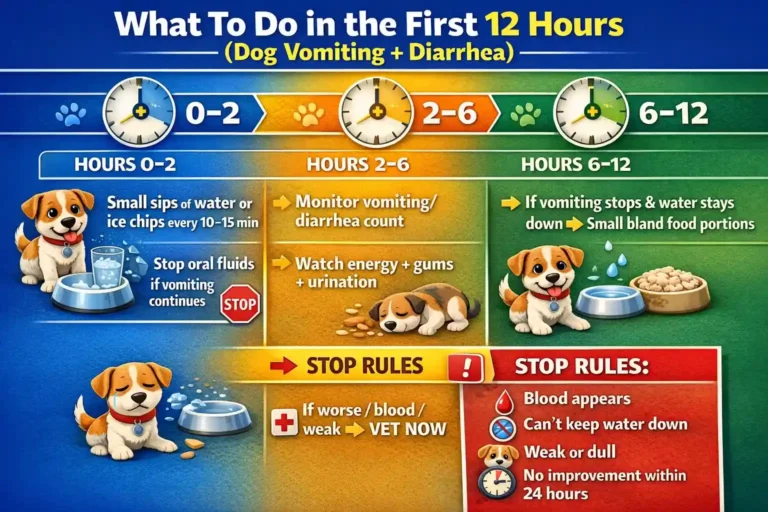
Protect hydration first
Dehydration is the most immediate threat.
- Offer very small sips of water every 10–15 minutes.
- If vomiting continues after small sips, stop oral fluids and contact a veterinarian
Pause food cautiously
A brief pause in food intake may help reduce vomiting, but do not withhold food from:
- puppies,
- toy breeds,
- diabetic dogs,
- dogs that are already weak or lethargic.
When in doubt, call your veterinarian before fasting.
Restart with a bland diet
Once vomiting has stopped for several hours and water is tolerated:
- Feed a bland, low-fat diet in small, frequent meals.
- Gradually increase portion size over 24–48 hours if symptoms improve.
- Transition slowly back to regular food.
Monitor trends closely
Track:
- number of vomiting episodes,
- frequency and appearance of diarrhea,
- appetite and energy level,
- water intake and urination.
Dog Vomiting and Diarrhea But Acting Normal: Should You Worry?
Yes, you should still monitor closely even if your dog is acting normal. Some dogs may look bright at first, especially in the early stage of stomach upset, stress colitis, dietary indiscretion, parasites, or mild gastroenteritis.
It may be reasonable to monitor briefly if:
- Vomiting happened only once
- Diarrhea is mild
- There is no blood
- Your dog is drinking small amounts
- energy level is normal
- Gums are pink and moist
- Your dog is not a puppy, senior, or very small breed
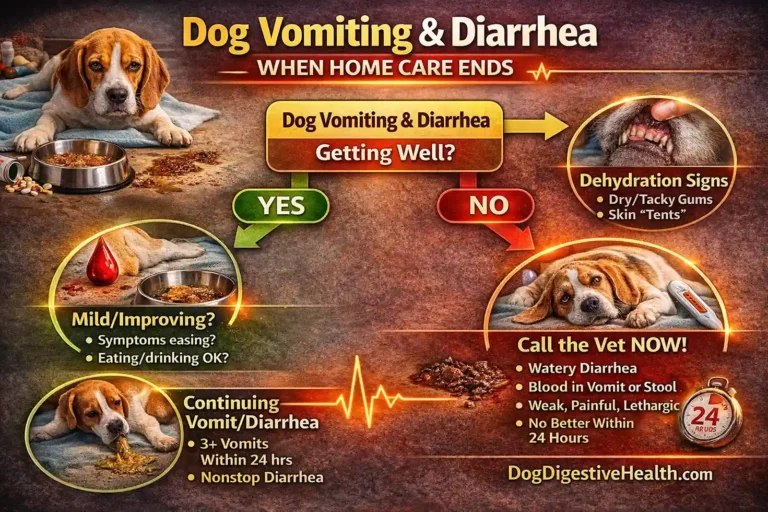
Call your vet if:
- Vomiting happens more than once
- Diarrhea continues or worsens
- blood or mucus appears
- Your dog refuses food or water
- Your dog becomes tired, painful, or weak
- symptoms last more than 24 hours
- Your dog cannot keep water down
Acting normal does not always mean the cause is harmless. It only means your dog is not showing obvious severe illness yet.
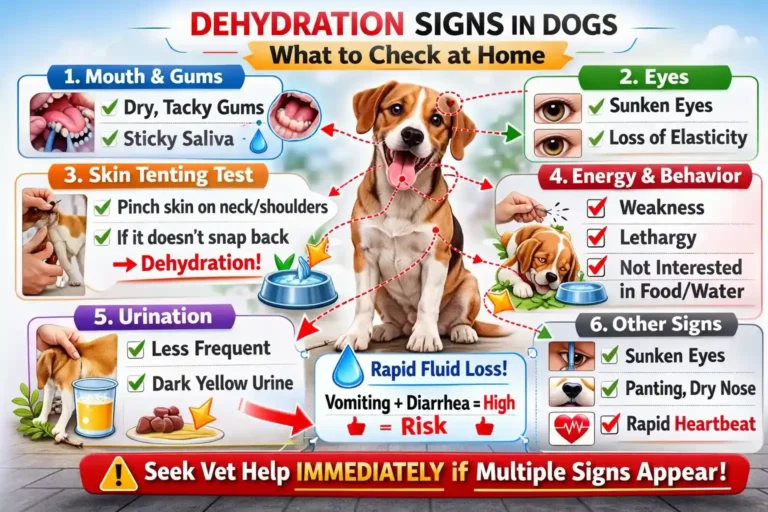
Know when home care ends
Go to the vet if:
- vomiting or diarrhea worsens,
- blood appears,
- Dehydration develops,
- Your dog becomes dull, painful, or weak
- There is no improvement within 24 hours.
Why Vomiting and Diarrhea Occur Together in Dogs
Acute gastroenteritis
The most common cause, often triggered by dietary indiscretion, stress, or sudden diet changes. Many mild cases resolve with supportive care, but dehydration risk remains.
Parvovirus and infectious diseases
Parvovirus causes severe vomiting and diarrhea, often bloody, especially in puppies. This condition requires urgent veterinary treatment and hospitalization.
Intestinal parasites
Parasites can cause vomiting, diarrhea, weight loss, and poor appetite, particularly in young dogs. Diagnosis typically requires fecal testing.
Toxin ingestion and foreign body obstruction
Dogs that ingest toxins or swallow objects may develop sudden vomiting, diarrhea, abdominal pain, and rapid decline. Obstructions often require imaging and surgery.
Pancreatitis
Often associated with fatty foods, pancreatitis causes vomiting, diarrhea, abdominal pain, and lethargy. Veterinary care is usually required.
Acute Hemorrhagic Diarrhea Syndrome (AHDS)
AHDS presents with sudden, severe diarrhea—frequently bloody—often accompanied by vomiting and rapid dehydration. Prompt treatment is critical.
Can Stress Cause Vomiting and Diarrhea in Dogs?
Yes, stress can cause vomiting and diarrhea in some dogs. Stress affects the gut through the nervous system, hormones, appetite changes, and intestinal movement. Some dogs develop soft stool, mucus, diarrhea, nausea, or vomiting after stressful events.
Common stress triggers include:
- travel
- boarding
- grooming
- fireworks
- thunderstorms
- moving house
- new pets
- separation anxiety
- vet visits
- routine changes
- loud noises
- unfamiliar environments
Stress-related digestive upset is usually mild and short-lived. However, stress should not be blamed automatically if your dog has blood, repeated vomiting, severe diarrhea, weakness, dehydration, abdominal pain, black stool, or poor appetite.
Serious diseases can look like stress stomach upset at first.
Dog Vomiting From Stress: What It Looks Like
Dog vomiting from stress may happen before or after a stressful event. The vomit may be food, foam, bile, or clear fluid. Some dogs also drool, pace, pant, refuse food, or have loose stool.
Stress vomiting is more likely when:
- Symptoms happen around a clear stress trigger
- Vomiting is mild or occasional
- Your dog is otherwise bright
- appetite returns
- Diarrhea is mild
- There is no blood
- Symptoms improve after the stress passes
But vomiting should not be assumed to be stress if it is repeated, severe, or paired with warning signs.
Call a vet if vomiting comes with:
- diarrhea that continues
- blood in stool or vomit
- weakness
- dehydration
- belly pain
- bloating
- repeated retching
- toxin exposure
- refusal to drink
Stress Diarrhea vs Serious Illness in Dogs
Stress diarrhea in dogs often causes soft stool, urgent bowel movements, mucus, or mild diarrhea after a stressful event. The dog may still be alert and interested in food.
Stress diarrhea may fit when:
- There is a clear stress trigger
- Diarrhea is mild
- There is little or no vomiting
- energy is normal
- Symptoms improve within a short time
- There is no black stool or large amount of blood
A more serious illness is possible when:
- Vomiting and diarrhea happen repeatedly
- blood appears
- Stool is black or tarry
- Diarrhea is very watery
- Your dog is weak or lethargic
- Gums are pale or sticky
- Your dog has abdominal pain
- Appetite is gone
- symptoms last more than 24 hours
- Your dog is a puppy, senior, or small breed
If you are unsure whether it is stress or illness, call your veterinarian and describe the vomiting, stool color, energy level, appetite, and hydration signs.
What NOT to Do
- Do not give human medications unless directed by a veterinarian.
- Do not assume antibiotics are necessary; many cases improve without them.
- Do not delay veterinary care if dehydration or worsening symptoms are possible.
How Long Can You Wait Before Calling a Vet?
How long you can wait depends on severity, age, size, and symptoms. Mild vomiting and diarrhea in a healthy adult dog may sometimes be monitored for a short period if symptoms are improving and there are no warning signs.
Do not wait if your dog has:
- blood in vomit or stool
- black or tarry stool
- repeated vomiting
- severe watery diarrhea
- inability to keep water down
- weakness or collapse
- pale gums
- dehydration signs
- abdominal pain or bloating
- toxin exposure
- unproductive retching
- poor appetite with lethargy
- symptoms in a puppy, senior dog, or toy breed
If vomiting or diarrhea persists, worsens, or does not improve within 24 hours, veterinary advice is recommended. Vomiting and diarrhea together can dehydrate dogs quickly.
What Your Vet May Do
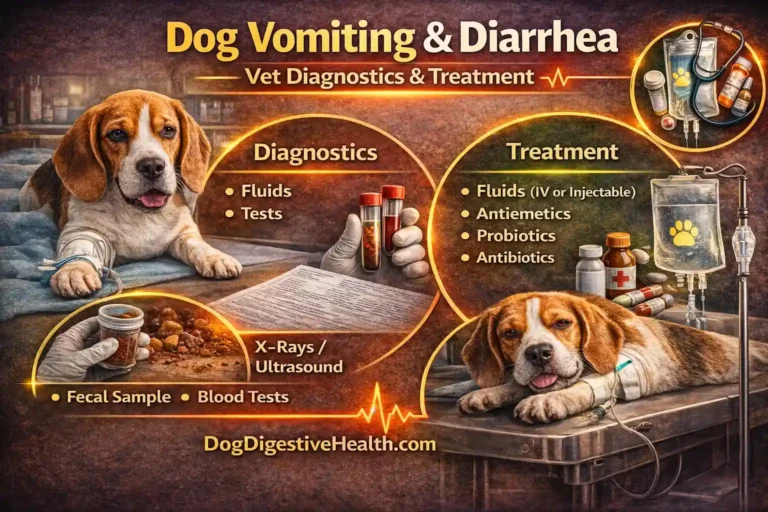
Diagnostic steps
- Physical exam and hydration assessment
- Fecal testing for parasites
- Blood tests to assess electrolytes and organ function
- Imaging (X-ray or ultrasound) for suspected obstruction or pancreatitis
- Parvovirus testing in at-risk dogs
Treatment options
- Fluid therapy (oral, subcutaneous, or IV)
- Anti-nausea medications
- Gastrointestinal protectants
- Targeted treatment based on the underlying cause
Prevention Tips
- Keep trash, toxins, and chewable objects secured.
- Avoid sudden diet changes.
- Maintain routine parasite prevention.
- Keep vaccinations up to date.
- Feed consistent meals and avoid fatty table scraps.
Frequently Asked Questions (FAQs)
1. How long can I monitor my dog at home?
If symptoms are mild and improving, short-term monitoring may be reasonable. If there’s no improvement within 24 hours, see a vet.
2. Can dehydration happen quickly?
Yes. Vomiting and diarrhea together can cause dangerous dehydration within hours, especially in puppies and small dogs.
3. Should I stop feeding my dog completely?
Only briefly and only if advised. Puppies and small breeds should not be fasted without veterinary guidance.
4. What foods are safest during recovery?
A bland, low-fat diet given in small portions is commonly recommended during recovery.
5. Can stress cause vomiting and diarrhea in dogs?
Yes. Stress can trigger gastrointestinal upset, but serious causes must be ruled out first.
Medical Disclaimer
This content is for informational purposes only and does not replace professional veterinary diagnosis or treatment. Always consult a licensed veterinarian for concerns about your dog’s health.
References:
- Ellis, C., et al. (2023). The use of metronidazole in acute diarrhea in dogs. Topics in Companion Animal Medicine.
- Jugan, M. C., et al. (2023). Clinical response in dogs with acute hemorrhagic diarrhea syndrome following randomized probiotic treatment or fecal microbiota transplant. Frontiers in Veterinary Science.
- (2024). ENOVAT guidelines for antimicrobial use in canine acute diarrhea. World Small Animal Veterinary Association (WSAVA).
- Zhou, H., et al. (2024). Overview of recent advances in canine parvovirus. Microorganisms, 13(1), 47.
- World Small Animal Veterinary Association (WSAVA). (2025). Five steps of canine acute diarrhea treatment(Version 11).