
Probiotics for Puppies: Are They Safe? Dosage & Diarrhea Help
Written by: Dr. Akram Khan, DVM
Medically Reviewed by: Dr. Zaheer Hussain, PhD
Last updated on September 14, 2026

Probiotics for puppies can support gut health, stool quality, immune development, and recovery from mild digestive upset when they are puppy-safe, dog-specific, and properly dosed. Many owners search for probiotics for puppies with diarrhea, probiotic dosage for puppies, and whether puppies can take probiotics daily. In general, vet-approved puppy probiotics may help with loose stools, stress-related diarrhea, weaning, diet changes, and antibiotic-associated gut imbalance, but persistent diarrhea, vomiting, blood, mucus, dehydration, or a weak puppy needs veterinary care.
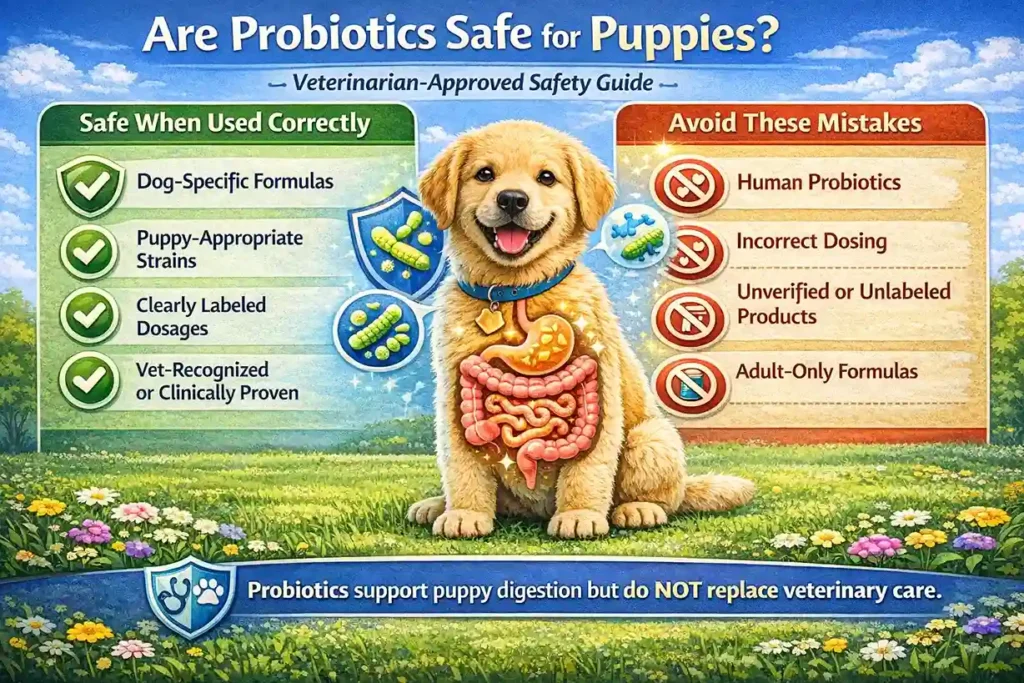
Are probiotics safe for puppies?
Yes, probiotics are generally safe for puppies when they are dog-specific, puppy-appropriate, and given at the correct dose. They may help support gut development, stool quality, diarrhea recovery, immune balance, and digestion during weaning, stress, antibiotics, or food changes. Human probiotics or incorrect dosing should be avoided unless approved by a veterinarian.
Why Puppies May Need Probiotics for Digestive Health
Common Puppy Conditions Probiotics Can Support
- Diarrhea or loose stools
- Stress from rehoming, travel, or vet visits
- Digestive upset during weaning
- Antibiotic-associated gut imbalance
- Gas, cramping, or mild colitis
- Weak or developing immune response
- Poor nutrient absorption
Probiotics help stabilize the gut environment, allowing a puppy’s digestive system to mature more smoothly and reducing the risk of recurring gastrointestinal issues.
How Probiotics Work in a Puppy’s Gut Microbiome
A puppy’s gut contains trillions of microorganisms that influence:
- Digestion and nutrient absorption
- Intestinal barrier integrity
- Vitamin synthesis
- Immune system programming
- Protection against harmful pathogens
When the microbial balance is disrupted (gut dysbiosis), puppies become more vulnerable to infections, diarrhea, and inflammatory digestive conditions. Probiotics restore beneficial bacteria, helping the gut function efficiently and strengthening immune defenses.
Best Probiotic Strains for Puppies
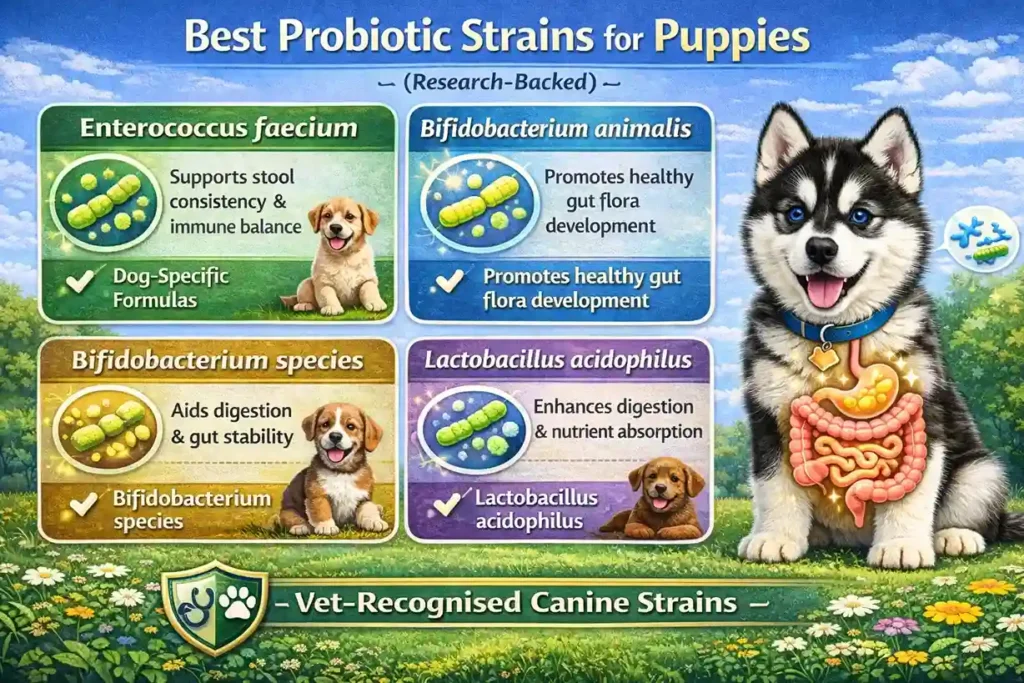
Not all probiotic strains are suitable for young dogs. The following strains are commonly used in veterinarian-recommended puppy probiotic supplements:
Proven Puppy-Friendly Probiotic Strains
- Enterococcus faecium – Supports stool consistency and immune balance
- Bifidobacterium animalis – Promotes healthy gut flora development
- Bifidobacterium species – Aids digestion and gut stability
- Lactobacillus acidophilus – Enhances digestion and nutrient absorption
These strains are widely studied in canine health and are frequently included in puppy-specific probiotic formulations.
Benefits of Probiotics for Puppies
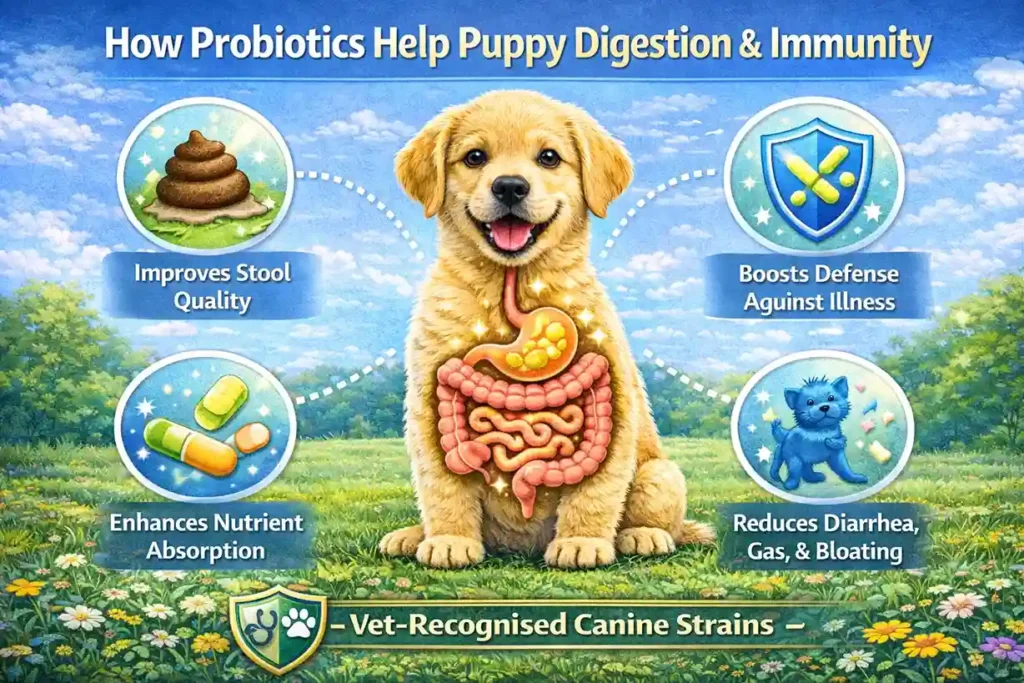
- Improves digestion and stool quality
- Strengthens gut barrier function
- Supports immune system maturation
- Reduces diarrhea, gas, and bloating
- Helps manage stress-related digestive upset
- Enhances nutrient absorption during growth
Early probiotic support may also contribute to long-term digestive resilience.
Probiotic Forms for Puppies: Which Is Safest and Most Effective?
Probiotics for puppies are available in several forms, each with advantages and limitations.
Common Probiotic Forms
- Powders – Easy to mix with food; excellent dosing accuracy
- Chews – Palatable but dose-sensitive
- Capsules—Useful for precise dosing in larger puppies
- Probiotic-infused puppy food—convenient but lower CFU control
- Yogurt or kefir – Limited and inconsistent benefits
💡 Powders and measured chews are generally preferred for puppies due to better dose control and safety.
Probiotics for Puppies: Safety Guidelines & Precautions
Essential Safety Tips
- Use dog-specific, puppy-safe probiotics only
- Avoid human probiotics unless vet-approved
- Start with lower doses, especially in young puppies
- Monitor stool quality and overall response
- Stop use if symptoms worsen
Possible Side Effects
Most puppies tolerate probiotics well. Rare, mild effects may include:
- Temporary gas
- Mild loose stools during adjustment
- Minor stomach discomfort
These effects usually resolve within a few days.
Probiotics vs Yogurt for Puppies: Which Is Safer?
Although yogurt and kefir contain live cultures, they are not ideal probiotic sources for puppies.
Limitations of Yogurt for Puppies
- Risk of lactose intolerance
- Inconsistent probiotic strains
- Uncontrolled CFU dosage
- Potential to worsen diarrhea
✔️ Puppy-formulated probiotic supplements are safer, more reliable, and more effective than yogurt.
Puppy Probiotic Dosage Guidelines
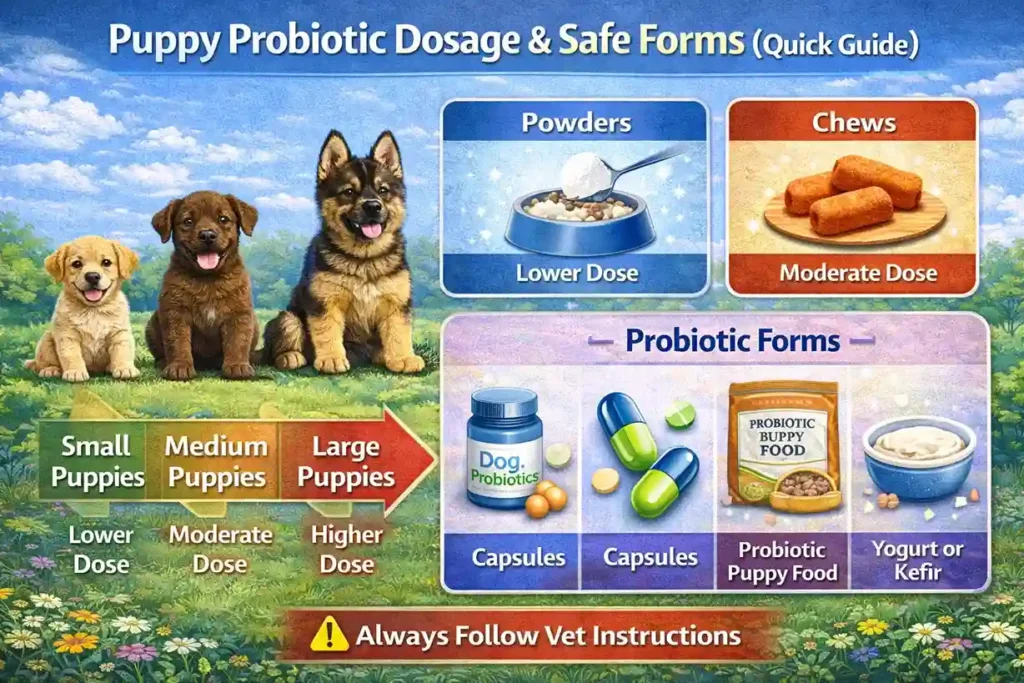
Probiotic dosage depends on:
- Puppy age and developmental stage
- Body weight and breed size
- Product formulation and CFU count
- Health condition and severity of symptoms
General Dosing Principles
- Small puppies: Lower starting dose
- Larger puppies: Weight-adjusted dosing
- Acute digestive upset: Short-term use
- Maintenance support: Lower ongoing dose
⚠️ Always follow product instructions or veterinary recommendations. Avoid exceeding suggested CFU levels.
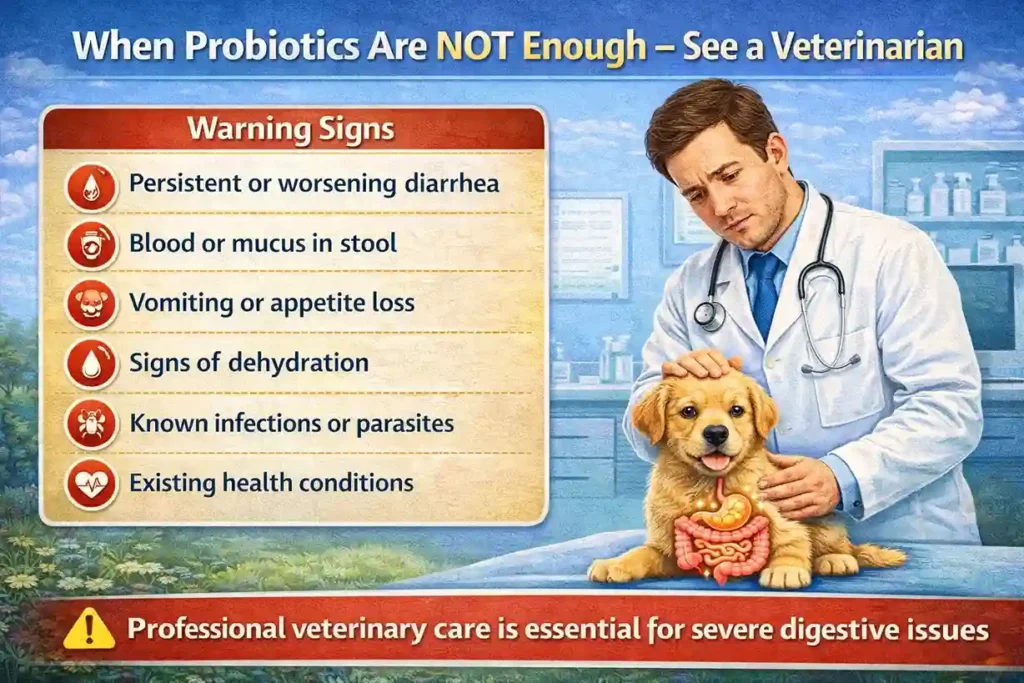
When Should You Consult a Veterinarian?
Seek veterinary advice immediately if your puppy experiences:
- Persistent or worsening diarrhea
- Blood or mucus in stools
- Vomiting or appetite loss
- Signs of dehydration
- Known infections or parasites
- Existing health conditions
Probiotics support digestive health but do not replace professional veterinary treatment.
How to Choose the Right Probiotic Supplement for Puppies
When selecting a puppy probiotic, look for:
- Puppy-safe, dog-specific strains
- Clear dosage and CFU labeling
- No artificial colours, flavours, or sweeteners
- Vet approval or clinical research backing
- Shelf-stable, quality-controlled formulations
Medical Disclaimer
This content is for educational purposes only and does not replace professional veterinary advice. Always consult a licensed veterinarian for diagnosis and treatment.
Frequently Asked Questions (FAQs)
1. Can puppies take probiotics daily?
Yes, when used at maintenance doses and vet-approved.
2. At what age can puppies start probiotics?
Some products are safe from weaning age; always follow product guidance.
3. Are probiotics safe during puppy vaccinations?
Generally yes, but consult your veterinarian if unsure.
4. How long do probiotics take to work in puppies?
Improvements are often seen within 24–72 hours, depending on the cause.
5. Can probiotics prevent diarrhoea in puppies?
They may reduce risk but cannot prevent all causes.
6. Should probiotics be stopped if diarrhoea worsens?
Yes—discontinue and consult your vet.