
Dog Food Allergy vs Intolerance Diarrhea Signs
Written by: Dr. Akram Khan, DVM
Medically Reviewed by: Dr. Khalid Mehmood, PhD (Assistant Professor in Clinical Veterinary Medicine)
Last updated on September 17, 2026
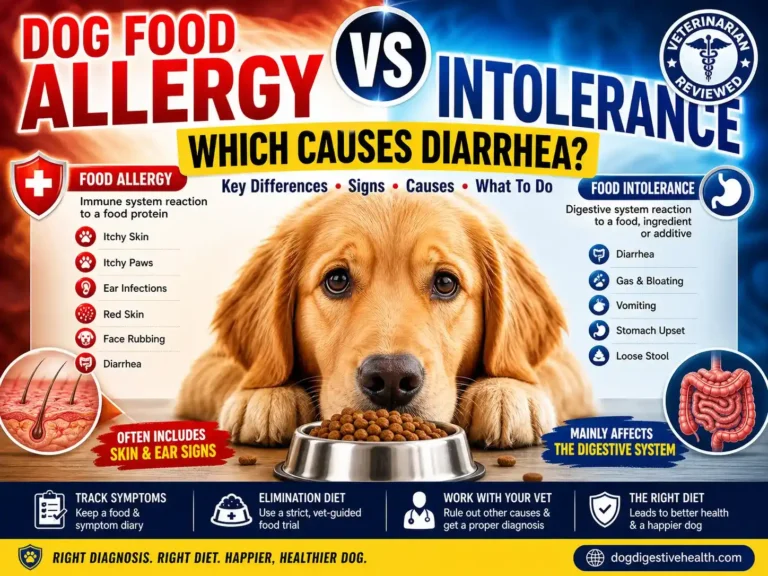
If your dog has diarrhea after eating, it is easy to wonder whether the problem is a dog food allergy or food intolerance. Both can cause loose stool, vomiting, gas, and stomach upset, but they are not the same. Dog food intolerance diarrhea is usually a digestive reaction to something your dog cannot handle well, such as a sudden food change, dairy, fatty food, treats, or table scraps. A true dog food allergy is an immune reaction, often linked to a protein, and becomes more suspicious when diarrhea appears with itchy paws, red skin, face rubbing, paw licking, or recurring ear infections. So, can dog food allergy cause diarrhea? Yes, but diarrhea alone is often more likely to point toward food intolerance unless skin or ear signs are also present.
Yes, both dog food allergy and food intolerance can cause diarrhea, but food intolerance is usually more likely when diarrhea happens after a new food, dairy, fatty meal, treat, or sudden diet change. Dog food allergy becomes more suspicious when diarrhea occurs with itchy paws, red skin, paw licking, face rubbing, or recurring ear infections.
Can Dog Food Allergy or Food Intolerance Cause Diarrhea?
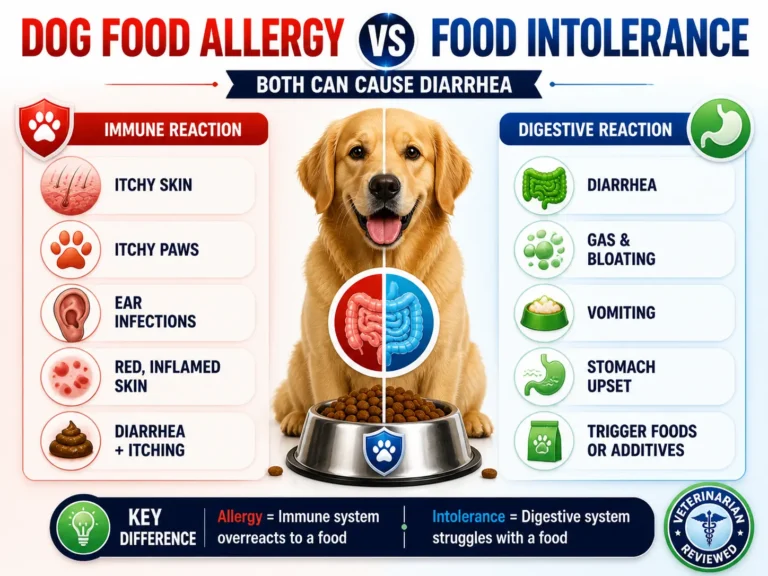
- Both dog food allergies and food intolerance can cause diarrhea.
- Diarrhea alone is more commonly linked with food intolerance.
- Food intolerance is usually a digestive reaction to:
- A food
- Fat level
- Dairy product
- Additive
- Treat
- Sudden diet change
- Dog food allergy is an immune reaction, usually to a food protein.
- Diarrhea is more suspicious for food allergy when it appears with:
- Itchy paws
- Red skin
- Face rubbing
- Paw licking
- Recurrent ear infections
- Chronic skin irritation
Is Dog Diarrhea More Likely From Food Allergy or Food Intolerance?
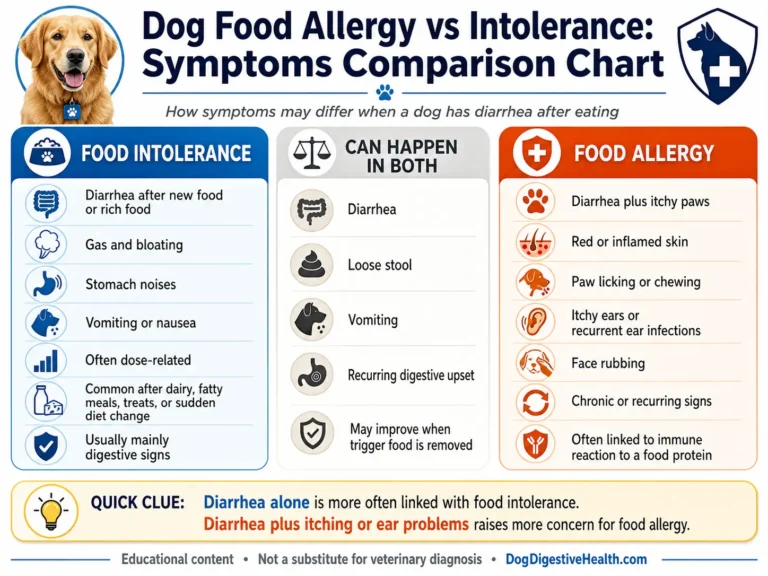
- Diarrhea is usually more directly linked to food intolerance because intolerance mainly affects the digestive system.
- However, dog food allergy can also cause diarrhea, especially when diarrhea appears with immune-related signs.
- Food allergy becomes more suspicious when diarrhea occurs with:
- Itchy paws
- Itchy ears
- Recurrent ear infections
- Red skin
- Paw licking
- Face rubbing
- Chronic skin inflammation
Clue | More likely food intolerance | More likely food allergy |
Main body system involved | Digestive system | Immune system |
Main diarrhea pattern | Loose stool after a trigger food, sudden diet change, rich food, dairy, treats, or table scraps | Diarrhea may occur with itching, paw licking, red skin, or ear infections. |
Timing | May happen quickly, sometimes after first exposure | Often develops after repeated exposure to a food protein |
Other digestive signs | Gas, bloating, vomiting, stomach noises, urgency | Vomiting or diarrhea may occur, but skin and ear clues are often important. |
Skin signs | Usually absent or not dominant | Itchy paws, itchy ears, red skin, face rubbing, recurrent skin infections |
Ear signs | Less typical | Recurrent ear infections or itchy ears can be a major clue. |
Trigger amount | Often dose-related; more of the food may cause worse diarrhea. | Small or repeated exposure may trigger signs in some allergic dogs. |
Common trigger type | Lactose, fat, additives, sudden food change, poorly tolerated ingredients | Food proteins such as beef, chicken, dairy, wheat, egg, soy, lamb, or fish |
Best confirmation method | Diet history, food diary, controlled diet change | Strict elimination diet followed by controlled food challenge |
Biggest owner mistake | Switching foods too quickly and too often | Using random over-the-counter “hypoallergenic” foods as a diagnostic test |
- A helpful way to remember it:
- Food intolerance says, “My dog’s gut cannot handle this food.”
- Food allergy says, “My dog’s immune system is reacting to this food.”
Both can cause diarrhea, but they involve different body systems and often need different long-term management plans.
What Is the Difference Between Dog Food Allergy and Food Intolerance?
- The main difference is the body system involved.
- Food intolerance is usually a digestive problem.
- Food allergy is an immune system problem.
- A food intolerance is usually a non-immune adverse food reaction.
- This means the immune system is not the main driver.
- Instead, the dog’s digestive system reacts poorly to something in the diet, such as
- A food ingredient
- Food additive
- Fat content
- Carbohydrate source
- Lactose
- Sudden food change
- Rich or greasy food
- Examples of food intolerance may include:
- A dog getting diarrhea after dairy because it cannot digest lactose well
- A dog getting loose stool after fatty table scraps
- A dog reacting to a sudden food change because the gut has not adapted yet
- A food allergy is different because the immune system is involved.
- In food allergy, the dog’s immune system mistakenly reacts to a food allergen, most often a protein.
- This immune response can affect:
- Skin
- Ears
- Gastrointestinal tract
- This is why dog food allergy often causes more than diarrhea.
- Dog food allergy may also cause:
- Itchy paws
- Itchy ears
- Recurrent ear infections
- Red skin
- Face rubbing
- Paw licking
- Recurring skin infections
- This distinction matters because the next steps are different.
- With suspected food intolerance, the focus is often on:
- Food history
- Recent diet changes
- Treats
- Dairy
- Fatty foods
- Additives
- Digestive tolerance
- With suspected food allergy, the plan usually needs to be stricter and may involve:
- Complete elimination diet
- No unapproved treats
- No table scraps
- No flavored medications unless approved by the veterinarian
- Controlled food challenge to confirm the trigger
- Real dogs do not always follow perfect textbook patterns.
- A dog with food intolerance can have dramatic diarrhea.
- A dog with a food allergy can have digestive signs.
- Some dogs have chronic enteropathy that improves with a special diet but is not a simple classic food allergy.
- The better question is not
“Which single symptom proves the answer?”
The better question is
“Does my dog’s diarrhea pattern look more digestive, more immune-related, or serious enough that a veterinarian needs to rule out another disease?”
Can Food Intolerance Cause Diarrhea in Dogs?
- Yes, food intolerance can cause diarrhea in dogs.
- Food intolerance directly involves the digestive system.
- In many dogs, food intolerance looks like the gut has been:
- Irritated
- Overwhelmed
- Unable to process something the dog ate
- Food intolerance may happen after:
- A sudden food change
- A new treat
- Dairy or lactose-containing food
- Fatty table scraps
- Fried or greasy foods
- Rich meat trimmings
- Human leftovers
- New chews or dental treats
- Food additives or flavorings
- A larger-than-usual portion
- Eating garbage or spoiled food
- A food that is too rich for that dog’s digestive system
- Diarrhea from food intolerance may appear as:
- Soft stool
- Watery stool
- Urgent stool
- Mucus-coated stool
- Frequent loose bowel movements
- The dog may also have:
- Gas
- Bloating
- Stomach gurgling
- Vomiting
- Nausea
- Reduced appetite
- Food intolerance is often dose-related.
- This means:
- A small bite of food may cause no obvious problem.
- A larger amount may cause diarrhea.
- For example: A tiny piece of cheese may not bother one dog.
- A bowl of milk or ice cream may cause gas and loose stool.
- This pattern is more consistent with digestive intolerance than a true immune-mediated food allergy.
- Food intolerance may also happen quickly.
- If diarrhea starts within hours of eating a new food, dairy, rich treat, or greasy meal, intolerance becomes more likely.
- However, timing alone is not enough to confirm the cause.
- Dogs can have delayed digestive responses.
- Allergic dogs can also flare after exposure.
- A stronger clue is repetition.
- Food intolerance becomes more suspicious if:
- Your dog gets diarrhea after eating the same food.
- Your dog improves when that food is removed.
- Your dog reacts again when that food is reintroduced.
- A simple food diary can be very helpful.
- Track:
- Main dog food
- Treats
- Chews
- Table foods
- Flavored medications
- Supplements
- Stool quality
- Vomiting
- Gas
- Itching
- Ear signs
- Timing of symptoms
- A food diary does not replace your veterinarian, but it gives your veterinarian better information.
Can Dog Food Allergy Cause Diarrhea in Dogs?
- Yes, dog food allergy can cause diarrhea.
- However, food allergy often has clues outside the digestive tract.
- A dog food allergy may cause:
- Chronic or recurring diarrhea
- Vomiting
- Intermittent digestive upset
- Itchy paws
- Paw licking or chewing
- Itchy ears
- Recurrent ear infections
- Red or inflamed skin
- Face rubbing
- Belly itching
- Armpit itching
- Groin itching
- Hair loss from licking or scratching
- Recurrent bacterial or yeast skin infections
- Year-round itch rather than seasonal itch only
- A dog with diarrhea plus itchy paws or recurring ear infections should raise stronger suspicion for food allergy.
- A dog with diarrhea alone after eating a greasy snack may fit food intolerance more closely.
- Food allergy usually develops after exposure to a food protein.
- This means a dog can become allergic to something it has eaten for months or years.
- Owners often say:
- “But my dog has eaten chicken forever, so it cannot be chicken.”
- Unfortunately, that is not always true.
- Prior exposure can be part of how the immune system becomes sensitized.
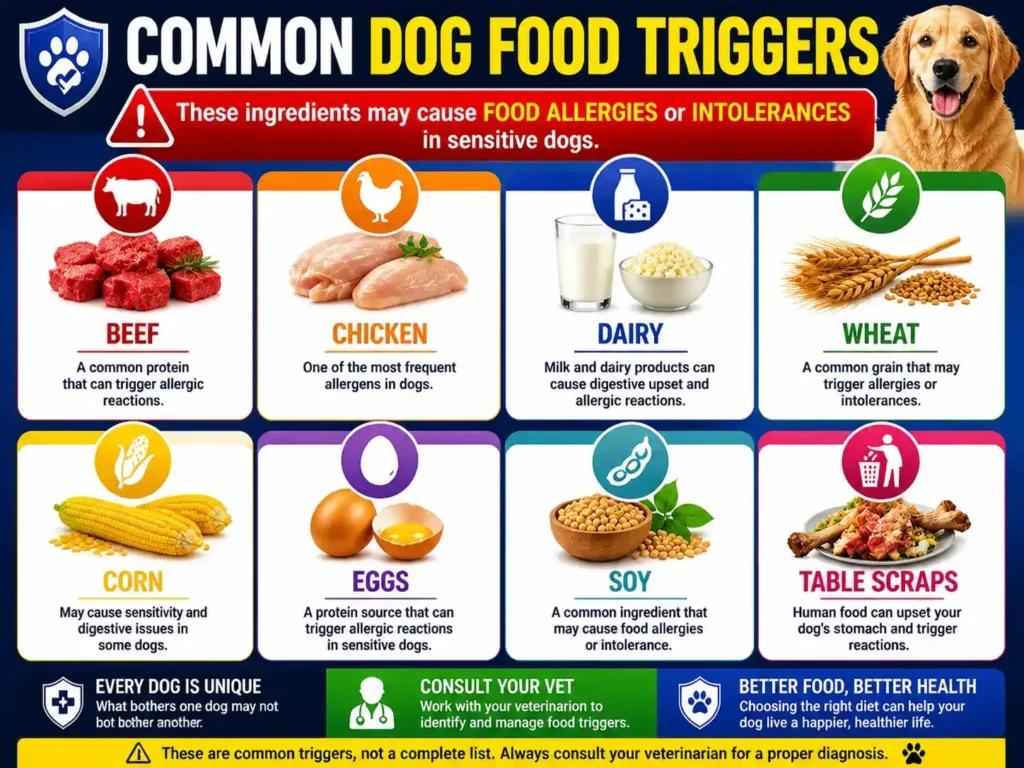
- Food allergy is commonly linked to proteins such as:
- Beef
- Chicken
- Dairy
- Wheat
- Egg
- Soy
- Lamb
- Fish
- These ingredients are not automatically bad for all dogs.
- Chicken is not bad for every dog.
- Beef is not bad for every dog.
- Grains are not automatically harmful.
- A dog can react to almost any protein it has been exposed to.
- Diagnosis depends on:
- The individual dog’s history
- Diet records
- Symptoms
- Response to a controlled food trial
- The owner-friendly takeaway is
- Diarrhea after a food may be an intolerance or allergy.
- Diarrhea plus year-round itching, paw licking, and ear infections makes food allergy more suspicious.
What Are the Key Differences Between Food Allergy Diarrhea and Food Intolerance Diarrhea?
Feature | Food intolerance diarrhea | Food allergy diarrhea |
Main mechanism | Digestive difficulty or irritation | Immune reaction to a food allergen |
Immune system involved? | Usually no | Yes. |
Main body system | Gastrointestinal tract | Immune system, skin, ears, and sometimes GI tract |
Typical diarrhea pattern | Loose stool after a trigger food, new diet, dairy, rich food, or treats | Chronic or recurring diarrhea, often with itch or ear disease |
Gas and bloating | Common | Possible but less specific |
Vomiting | Possible | Possible |
Itchy paws | Not typical | Common clue |
Itchy ears | Not typical | Common clue |
Recurrent ear infection | Less likely | Important allergy clue |
Skin redness | Usually absent | Maybe present |
Timing | May occur quickly after eating | May develop after repeated exposure; flare timing varies |
Dose effect | Often dose-related | May occur with repeated or smaller exposure in sensitive dogs |
Common examples | Lactose intolerance, fatty foods, sudden food changes, additives | Immune reaction to food proteins |
Can signs overlap? | Yes. | Yes. |
Best diagnostic clue | Gut signs dominate. | Gut signs plus skin/ear signs |
Best confirmation | Food diary and controlled diet change | Elimination diet plus controlled challenge |
Biggest risk of guessing | Missing parasites, pancreatitis, infection, or chronic enteropathy | Missing environmental allergies, flea allergies, infections, or gut diseases |
- One diarrhea episode is rarely enough to prove food allergy.
- Recurrent patterns are more useful than a single episode.
- Skin clues and ear clues can help separate allergy from intolerance.
A structured diet trial is often more useful than random food switching.
How Soon Can a Dog Get Diarrhea After Eating the Wrong Food?
- Timing can help, but it should not be used alone.
- Some dogs react within hours.
- Some dogs react days later.
- Some dogs only show problems after repeated exposure.
- Timing should always be interpreted with:
- Food history
- Stool pattern
- Skin signs
- Ear signs
- Vomiting
- Overall health
- Veterinary guidance
Does Diarrhea Right After Eating Mean Food Intolerance in Dogs?
- If your dog develops diarrhea shortly after a new food, new treat, fatty food, dairy, or table scraps, food intolerance is often more likely.
- The digestive system may be reacting to something it cannot process well.
- This is especially true if the main signs are
- Loose stool
- Gas
- Bloating
- Stomach noises
- Urgent bowel movements
- Vomiting
- No major itching
- No recurring ear infections
- This pattern may happen after:
- Sudden food change
- Dairy
- Greasy food
- Rich treats
- Table scraps
- Eating too much of a new food
Can a Dog Develop Food Allergy After Eating the Same Food for Years?
- Food allergy may appear after the dog has eaten the same food repeatedly.
- The immune system usually needs exposure before it can develop a hypersensitivity response.
- This is why a dog can develop a food allergy even if it has eaten the same food for a long time.
- Food allergy becomes more likely if diarrhea becomes:
- Chronic
- Recurring
- Paired with itchy paws
- Paired with itchy ears
- Paired with red skin
- Paired with recurrent ear infections
- Not every food reaction happens immediately.
- Some dogs may react within hours.
- Others may flare days later.
- This is why a structured food diary and veterinary-guided diet trial are more reliable than guessing from memory.
Does Dog Diarrhea With Itchy Skin or Ear Infections Mean Food Allergy?
- If your dog has diarrhea only, the list of possible causes is long.
- Possible causes may include:
- Food intolerance
- Sudden diet change
- Parasites
- Giardia
- Infection
- Stress colitis
- Pancreatitis
- Chronic enteropathy
- Medication reaction
- Dietary indiscretion
- If diarrhea appears with skin and ear signs, food allergy becomes more important to consider.
- Food allergy is more likely when diarrhea occurs with:
- Itchy paws
- Paw licking or chewing
- Red skin
- Face rubbing
- Itchy ears
- Recurrent ear infections
- Recurrent skin infections
- Year-round itching
- Hair loss from scratching
- Belly inflammation
- Groin inflammation
- Armpit inflammation
- Ear inflammation
- A dog with diarrhea after eating a rich table scrap may have intolerance.
- A dog with chronic soft stool, itchy paws, and recurring ear infections may need a proper food allergy workup.
- However, skin and ear signs do not automatically prove food allergy.
- Similar signs can also happen with:
- Environmental allergies
- Flea allergy dermatitis
- Mites
- Yeast infections
- Bacterial skin infections
- Canine atopic dermatitis
- Some dogs may have both environmental allergies and food-triggered flares.
- The safest approach is:
- Do not diagnose food allergy from itching alone.
- Rule out other causes.
- Use a controlled elimination diet when your veterinarian recommends it.
Can a Dog Have Both Food Allergy and Food Intolerance?
- Yes, a dog can have overlapping food-related problems.
- For example:
- A dog may be allergic to chicken protein but also get diarrhea from greasy table scraps.
- A dog may have lactose intolerance but also have environmental allergies causing itchy paws.
- A dog may have chronic enteropathy that improves with a special diet but does not have a classic food allergy.
- A dog may react to treats during a food trial, making the main diet look like it failed.
- A dog may have diarrhea from parasites while the owner assumes food allergy.
- The term “adverse food reaction” is useful because it includes:
- Immune-mediated food allergy
- Non-immune food intolerance
- Other abnormal food-related reactions
- Diet can play a major role in chronic gastrointestinal disease.
- Some dogs with chronic diarrhea respond to special diets.
- However, a response to diet does not always mean the dog has a true food allergy.
- The key message is:
- Food-related diarrhea is real.
- Not every food-related diarrhea case is a true food allergy.
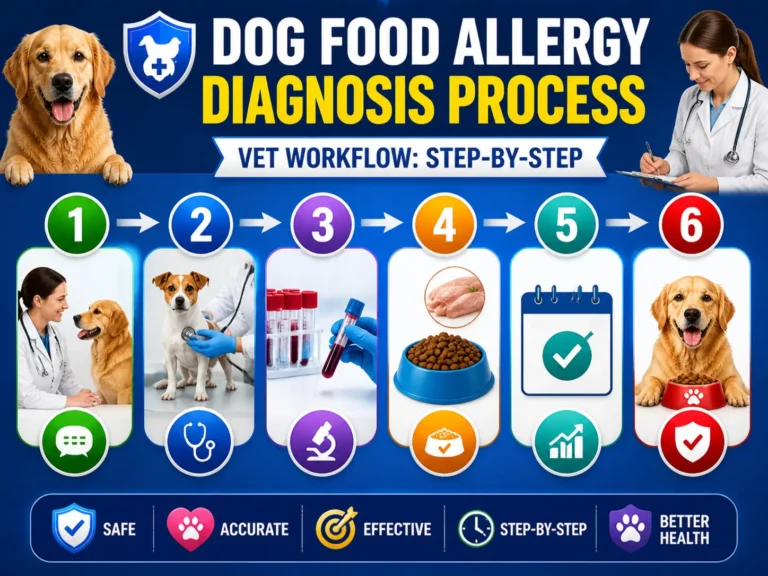
How Do Vets Diagnose Dog Food Allergy or Food Intolerance?
- The most reliable way to separate dog food allergy from food intolerance is not random food switching.
- A structured veterinary plan is usually more helpful.
- A proper plan may include:
- Diet history
- Physical exam
- Rule out other causes when needed
- Controlled elimination diet
- Monitoring of stool, skin, ears, and vomiting
- Re-challenge or food challenge when appropriate
Why Does Diet History Matter for Dog Diarrhea?
- Your veterinarian may ask about:
- Current dog food
- Previous dog foods
- Protein sources
- Treats
- Chews
- Dental sticks
- Table scraps
- Supplements
- Flavored medications
- Pill pockets
- Human foods
- Rawhides or bones
- Training rewards
- Diet history matters because an elimination diet only works if the dog is not exposed to the suspected trigger.
- Even small exposures can confuse the results.
How Does an Elimination Diet Help Diagnose Dog Food Allergy?
- An elimination diet removes suspected food triggers.
- It uses a controlled diet for a set period.
- The diet may include:
- Hydrolyzed protein diet
- Novel protein diet
- Amino acid-based elemental diet
- Veterinary therapeutic diet
- Home-cooked elimination diet formulated by a veterinary nutritionist
- A hydrolyzed protein diet contains proteins broken into smaller pieces.
- A novel protein diet uses a protein the dog has not eaten before.
- An amino acid-based elemental diet provides protein in its most broken-down form.
- During a food trial, the dog should eat only the approved diet unless the veterinarian says otherwise.
- That means no:
- Random treats
- Table scraps
- Flavored chews
- Flavored toothpaste
- Unapproved supplements
- Flavored medications
- Pill pockets
- Training treats outside the plan
- “Just one bite” from family members
- Strict feeding is important because:
- Small exposures can confuse a food allergy trial.
- Treats can trigger diarrhea.
- Additives can worsen intolerance.
- Flavored medications can contain proteins or ingredients that interfere with the trial.
Why Is a Food Challenge Important After an Elimination Diet?
- If the dog improves during the elimination diet, the veterinarian may recommend a controlled challenge.
- A food challenge means reintroducing the previous food or a suspected ingredient to see whether signs return.
- A reaction after re-challenge may include:
- Diarrhea
- Vomiting
- Itching
- Ear signs
- Paw licking
- Skin redness
- If signs return after the challenge and improve again when the elimination diet is restarted, the evidence for adverse food reaction becomes stronger.
- Improvement alone is not always enough.
- A dog may improve because the new diet is:
- More digestible
- Lower in fat
- Higher in fiber
- Better suited for chronic enteropathy
- Free from a poorly tolerated ingredient
Re-challenge helps clarify whether a specific food trigger is involved.
Can Limited Ingredient Dog Food Help With Dog Diarrhea?
- Many owners try to solve diarrhea by buying an over-the-counter limited ingredient or hypoallergenic dog food.
- Sometimes a dog may improve, especially if the problem is:
- Simple intolerance
- Poor digestibility
- A sudden food change
- A rich or fatty previous diet
- But for diagnosing food allergies, over-the-counter foods can be risky.
- Some over-the-counter foods may contain:
- Undeclared animal proteins
- Cross-contact ingredients
- Hidden flavorings
- Proteins not clearly listed on the label
- This does not mean every over-the-counter dog food is bad.
- It means that when the goal is diagnosis, especially diagnosis of food allergy, diet purity matters.
- A common owner frustration is:
- “I switched to a limited-ingredient food, so why does my dog still have diarrhea?”
- Possible reasons include:
- The food still contains the trigger ingredient.
- The food contains undeclared animal protein.
- The dog is reacting to a different ingredient.
- Treats or chews are interfering.
- The dog has a food intolerance rather than an allergy.
- The dog has chronic enteropathy.
- The dog has parasites, infection, pancreatitis, or another disease.
- The trial was not long enough.
- The dog needs a veterinary therapeutic diet.
- For suspected food intolerance, a carefully selected diet may help.
For suspected food allergies, especially with itchy paws or ear infections, a veterinary-guided elimination diet is usually more appropriate.
Which Foods Can Cause Diarrhea in Dogs?
- Many common foods can be involved in diarrhea.
- The important question is why the food is causing the problem.
- A dog may have:
- Digestive intolerance to one food
- True immune reaction to another food
A separate gastrointestinal disease that only appears food-related
Can Chicken Cause Diarrhea in Dogs?
- Chicken can cause diarrhea in some dogs.
- Chicken may be involved as:
- A food allergen in some dogs
- A poorly tolerated ingredient in some dogs
- A treat or table food that upsets the stomach
- Chicken allergy is more suspicious if diarrhea occurs with:
- Itchy paws
- Ear infections
- Skin inflammation
- Paw licking
- Recurrent symptoms after chicken exposure
- But chicken is tolerated well by many dogs.
Chicken is not automatically harmful.
Can Beef Cause Food Allergy Diarrhea in Dogs?
- Beef is a commonly suspected food protein in dogs with adverse food reactions.
- Beef may appear in:
- Main diets
- Treats
- Chews
- Pill pockets
- Flavored products
- If beef is being tested as a possible trigger, all beef-containing items need to be removed during the trial.
- This should be done with veterinary guidance.
Can Dairy Cause Diarrhea in Dogs?
- Dairy can cause diarrhea through lactose intolerance.
- Lactose intolerance is digestive and non-immune.
- Dairy proteins can also be involved in true food allergy in some dogs.
- Dairy intolerance is more likely if the dog has:
- Gas
- Bloating
- Loose stool
- Diarrhea after milk, cheese, or ice cream
- No major skin or ear signs
- Dairy allergy becomes more possible if dairy exposure is linked with:
- Itching
- Ear infections
- Red skin
- Paw licking
- Diarrhea
Can Wheat or Grains Cause Diarrhea in Dogs?
- Wheat can be an allergen in some dogs.
- However, grain allergy is often over-blamed.
- Grain-free food is not automatically better for:
- Diarrhea
- Food allergy
- Food intolerance
- Digestive health
- Many dogs tolerate grains well.
The question is whether the individual dog reacts to a specific ingredient.
Can Egg, Soy, Fish, Lamb, Pork, Rice, or Corn Cause Dog Diarrhea?
- Any protein can potentially become a problem for an individual dog.
- Online ingredient lists should not replace veterinary diagnosis.
- A dog’s actual diet history matters more than internet popularity.
- A medically accurate way to think about it is:
- A dog can react to a specific food protein or ingredient, but the trigger should be identified through diet history and, when appropriate, a veterinary-guided elimination diet and challenge.
What Can Dog Poop Tell You About Food Allergy vs Intolerance?
- Dog stool can give clues.
- Stool cannot diagnose food allergy or food intolerance by itself.
- Soft stool, watery diarrhea, mucus, urgency, or frequent defecation may suggest digestive irritation.
- Gas and bloating may support a digestive intolerance pattern.
- But stool appearance alone does not prove the cause.
- Examples:
- Watery diarrhea after greasy food may suggest intolerance.
- Loose stool after dairy may suggest lactose intolerance.
- Chronic diarrhea with itchy paws may suggest food allergy.
- Mucus and urgency may suggest colitis.
- Bloody diarrhea may signal a more serious problem.
- Diarrhea with weight loss may suggest chronic disease.
- Diarrhea with vomiting and lethargy may need urgent care.
- Chronic enteropathy is also important.
- Some dogs with chronic diarrhea respond to diet.
- But the condition may not be a simple food allergy.
- Elemental, hydrolyzed, or carefully selected diets may help some chronic gastrointestinal cases under veterinary supervision.
- The medically accurate takeaway is:
- Stool pattern can guide suspicion, but it cannot confirm food allergy or food intolerance without veterinary context.
When Should You Call a Vet for Dog Diarrhea After Eating?

- Do not assume every diarrhea episode is food intolerance or food allergy.
- Diarrhea can also be caused by:
- Parasites
- Giardia
- Bacterial infection
- Viral disease
- Pancreatitis
- Toxins
- Medications
- Stress colitis
- Inflammatory bowel disease
- Chronic enteropathy
- Organ disease
- Endocrine disease
- Intestinal obstruction
- Contact a veterinarian promptly if your dog has:
- Bloody diarrhea
- Black or tarry stool
- Repeated vomiting
- Severe lethargy
- Weakness
- Collapse
- Dehydration
- Painful abdomen
- Fever
- Diarrhea lasting more than 24–48 hours
- Diarrhea in a puppy
- Diarrhea in a senior dog
- Diarrhea in a pregnant dog
- Diarrhea in a medically fragile dog
- Weight loss
- Chronic or recurring diarrhea
- Diarrhea plus persistent itching
- Diarrhea plus recurrent ear infections
- Hives, facial swelling, or breathing difficulty
- Food intolerance and food allergy are only two possible explanations.
- If diarrhea is severe, persistent, bloody, or recurring, your dog needs veterinary evaluation.
- A trustworthy pet health article should never encourage owners to delay care when diarrhea may signal something serious.
How Do I Know If My Dog Has Food Intolerance or Food Allergy?
What Signs Suggest Food Intolerance in Dogs?
- Diarrhea started after:
- A new food
- A treat
- Table scraps
- Dairy
- A fatty meal
- A sudden food change
- The main signs are:
- Loose stool
- Gas
- Bloating
- Vomiting
- Stomach upset
- There are no major skin or ear signs.
- The reaction seems dose-related.
- Your dog improves after the trigger is removed.
- Your dog reacts again when the same food is eaten.
- The problem started after a sudden food change.
What Signs Suggest Food Allergy in Dogs?
- Diarrhea is chronic or recurring.
- Diarrhea occurs with:
- Itchy paws
- Itchy ears
- Face rubbing
- Red skin
- Paw licking
- Ear infections
- Ear infections keep coming back.
- Your dog licks or chews the feet often.
- Signs are year-round rather than seasonal.
- Your dog has eaten the suspected protein before.
- Signs improve during a strict elimination diet.
- Signs return after a controlled food challenge.
What Signs Mean Dog Diarrhea May Not Be From Food Allergy?
- Diarrhea is sudden and severe.
- There is blood in stool.
- Vomiting is repeated.
- Your dog is very tired, weak, painful, or dehydrated.
- Multiple dogs in the home are sick.
- Your dog may have eaten:
- Garbage
- Toxins
- Bones
- Foreign material
- Diarrhea continues despite diet control.
- Weight loss is present.
- Your dog has fever or abdominal pain.
- The answer is not one symptom.
- The answer is the full pattern.
FAQs About Dog Food Allergy vs Intolerance and Diarrhea
Can Dog Food Intolerance Cause Diarrhea?
- Yes
- Food intolerance can cause:
- Diarrhea
- Loose stool
- Gas
- Bloating
- Vomiting
- Urgency
- Stomach upset
- It does not require an immune reaction.
- It may happen after:
- New food
- Dairy
- High-fat meal
- Treat
- Additive
- Table scrap
- Poorly tolerated ingredient
Can dog food allergy cause diarrhea?
- Yes
- Dog food allergy can cause diarrhea.
- Many dogs with food allergies also show skin or ear signs, such as:
- Itchy paws
- Itchy ears
- Red skin
- Face rubbing
- Paw licking
- Recurrent ear infections
Is Diarrhea More Common With Food Intolerance or Food Allergy in Dogs?
- Diarrhea is more directly associated with food intolerance because the digestive system is the main system involved.
- Food allergies can also cause diarrhea.
- Allergy is more suspicious when diarrhea appears with:
- Itching
- Paw licking
- Skin inflammation
- Ear infections
How Fast Does Food Intolerance Diarrhea Happen in Dogs?
- Food intolerance diarrhea may happen within hours of eating the trigger food.
- This is especially common after:
- Dairy
- Rich food
- Fatty table scraps
- Sudden food change
- New treats
- Timing can vary depending on:
- The dog
- The food
- The amount eaten
- The dog’s digestive health
How fast does food allergy diarrhea happen in dogs?
- Food allergy signs may not appear the first time a dog eats food.
- Allergy often develops after repeated exposure.
- Some dogs react within hours.
- Others may flare days later.
- A controlled diet trial is more reliable than guessing from timing alone.
Can a Dog Be Allergic to Chicken If It Has Eaten Chicken for Years?
- Yes
- A dog can develop an allergy after repeated exposure to a food protein.
- Eating chicken for years does not rule out chicken allergy.
- Chicken should not be blamed without:
- Proper diet history
- Veterinary guidance
- Elimination diet when appropriate
Can dairy cause diarrhea in dogs?
- Yes
- Dairy can cause diarrhea through lactose intolerance.
- Lactose intolerance is a digestive intolerance.
- Dairy proteins can also trigger food allergies in some dogs.
- Gas and diarrhea without skin signs may fit intolerance more closely.
- Diarrhea plus itching or ear infections may raise more suspicion for allergy.
Can dog food allergy cause diarrhea without itching?
- It is possible.
- However, diarrhea without itching is not specific for food allergy.
- Other possible causes include:
- Food intolerance
- Parasites
- Infection
- Pancreatitis
- Chronic enteropathy
- Stress colitis
- Other gastrointestinal conditions
- A veterinarian can help determine the most likely cause.
How do vets diagnose dog food allergy or intolerance?
- Vets may use:
- Diet history
- Physical exam
- Rule-out testing
- Elimination diet
- Controlled food challenge
- For suspected food allergy, a strict elimination diet followed by re-challenge is one of the most important diagnostic approaches.
How Long Should a Dog Elimination Diet Trial Last?
- The length depends on:
- The dog’s signs
- The veterinarian’s plan
- Whether symptoms are digestive, skin-related, or both
- Digestive signs may improve earlier in some dogs.
- Skin and ear signs may require a longer trial.
- Follow your veterinarian’s instructions closely.
Should I Switch My Dog’s Food If Diarrhea Happens After Eating?
- Do not keep switching foods randomly.
- Random switching can worsen diarrhea and make diagnosis harder.
- If diarrhea is mild and clearly linked to a sudden food change, ask your veterinarian how to transition safely.
- If diarrhea is severe, bloody, persistent, recurring, or paired with vomiting, lethargy, weight loss, itching, or ear infections, your dog needs veterinary evaluation.
Is Hydrolyzed Protein Dog Food Better for Food Allergy Diarrhea?
- A hydrolyzed protein diet may be recommended when food allergy is suspected.
- The proteins are broken into smaller pieces.
- This may reduce immune recognition in some dogs.
- The right diet depends on:
- Diet history
- Symptoms
- Age
- Health status
- Veterinary assessment
Is Novel Protein Dog Food Better for Food Intolerance?
- A novel protein diet may help if the dog reacts to a previously eaten protein.
- It is only truly novel if the dog has not eaten that protein before.
- Some dogs with food intolerance need:
- More digestible diet
- Adjusted fat level
- Fiber change
- Another nutrition plan
Can Treats Ruin a Dog Food Allergy Trial?
- Yes
- Treats can ruin a food trial.
- Other items that can interfere include:
- Dental chews
- Flavored medications
- Supplements
- Pill pockets
- Table scraps
- Flavored toothpaste
During an elimination diet, everything that goes into your dog’s mouth should be approved by the veterinarian.
Can Over-the-Counter Limited Ingredient Dog Food Diagnose Food Allergy?
- They are not ideal for diagnosis.
- Some over-the-counter diets may contain undeclared animal proteins or cross-contact ingredients.
- This can interfere with diagnosing adverse food reactions.
- A veterinary-guided diet trial is usually more reliable.
Final Answer: Is Dog Diarrhea From Food Allergy or Food Intolerance?
- Dog food allergy and food intolerance can both cause diarrhea.
- They are different conditions.
- Food intolerance is usually a digestive reaction.
- Food allergy is an immune reaction.
- Food intolerance often causes:
- Diarrhea
- Gas
- Bloating
- Vomiting
- Urgent stool
- Food intolerance is more likely after:
- Poorly tolerated food
- Sudden diet change
- Dairy
- Fatty meal
- Additive
- Treat
- Table scrap
- Food allergy may also cause diarrhea, but it more often comes with immune clues such as:
- Itchy paws
- Red skin
- Face rubbing
- Paw licking
- Recurrent ear infections
- Year-round itch
- So, which causes diarrhea?
- Both can.
- Diarrhea alone is often more suggestive of food intolerance.
- Diarrhea with itching, paw licking, skin inflammation, or ear infections is more suspicious for food allergy.
- The best way to tell the difference is not guessing after one diarrhea episode.
- The better approach is:
- Careful pattern recognition
- Diet history
- Veterinary evaluation
- Strict elimination diet when appropriate
- Controlled challenge when recommended by your veterinarian
- If your dog has severe, bloody, persistent, or recurring diarrhea, or diarrhea with vomiting, dehydration, lethargy, weight loss, swelling, hives, or breathing trouble, seek veterinary care instead of trying to diagnose food intolerance or food allergy at home.
Medical Disclaimer
This article is for educational purposes only and is not a substitute for veterinary diagnosis or treatment. Contact your veterinarian if your dog has severe, bloody, persistent, or recurring diarrhea, vomiting, lethargy, dehydration, weight loss, or signs of pain.
Frequently Asked Questions(FAQs)
1. Can dog food intolerance cause diarrhea?
Yes. Food intolerance can cause diarrhea, gas, bloating, vomiting, and loose stool, especially after a new food, dairy, fatty meal, treat, or sudden diet change.
2. Can dog food allergy cause diarrhea?
Yes. Dog food allergy can cause diarrhea, but it often appears with other signs such as itchy paws, red skin, face rubbing, or recurring ear infections.
3. Is diarrhea more common with food allergy or food intolerance in dogs?
Diarrhea alone is more commonly linked with food intolerance because it mainly affects the digestive system. Diarrhea with itching or ear infections may suggest a food allergy.
4. How fast does food intolerance diarrhea happen in dogs?
Food intolerance diarrhea may happen within hours after eating a trigger food, especially rich food, dairy, table scraps, or a sudden diet change.
5. Can a dog become allergic to a food it has eaten for years?
Yes. A dog can develop a food allergy after repeated exposure to a food protein, even if it has eaten that ingredient for months or years.
6. Should I switch my dog’s food if diarrhea happens after eating?
Do not keep switching foods randomly. If diarrhea is mild, ask your vet about a safe food transition. If it is severe, bloody, persistent, or recurring, contact your veterinarian.
7. How do vets tell food allergy from food intolerance?
Vets usually review diet history, check for other causes, and may recommend a strict elimination diet followed by a controlled food challenge.
References:
- Sofou, E. I., Aleksandrova, S., Chatzis, M., Samuel Badulescu, E., & Saridomichelakis, M. N. (2024). Establishment of clinical criteria for the diagnosis of adverse food reactions in dogs with atopic dermatitis. Veterinary Dermatology, 35(4), 418–431. doi: 10.1111/vde.13247
- Tinsley, J., Griffin, C., Sheinberg, G., Griffin, J., Cross, E., Gagné, J., & Romero, A. (2024). An open-label clinical trial to evaluate the efficacy of an elemental diet for the diagnosis of adverse food reactions in dogs. Veterinary Dermatology, 35(1), 40–50. doi: 10.1111/vde.13198
- Manchester, A. C., Dow, S., Chow, L., Gagne, J., & Lappin, M. R. (2023). Efficacy of an elemental diet in achieving clinical remission in dogs with chronic enteropathy. Journal of Veterinary Internal Medicine, 37(6), 2322–2333. doi: 10.1111/jvim.16846
- Kępińska-Pacelik, J., Biel, W., Natonek-Wiśniewska, M., & Krzyścin, P. (2023). Assessment of adulteration in the composition of dog food based on DNA identification by real-time PCR. Animal Feed Science and Technology, 298, 115609. doi: 10.1016/j.anifeedsci.2023.115609
- Udraite Vovk, L., Widorn, L., Lehner, G., & Müller, R. S. (2026). A prospective double-blinded study evaluating threshold doses of dietary allergens that trigger adverse food reactions in dogs and the time to flare after exposure. Frontiers in Veterinary Science, 13, 1767167. doi: 10.3389/fvets.2026.1767167