
Probiotic Powder vs Chews for Dogs: Which Is Better?
Written by: Dr. Akram Khan, DVM
Medically Reviewed by: Dr. Khalid Mehmood, PhD
Last updated on September 08, 2026
Probiotic powder vs. chews for dogs is an important comparison for owners choosing daily gut support, diarrhea help, or sensitive stomach supplements. Probiotic powder often gives better dosing control, fewer additives, and more reliable CFU stability, while probiotic chews are easier to give and more appealing for picky dogs. The best choice depends on your dog’s stomach sensitivity, food allergies, stool quality, age, daily routine, and whether probiotics are being used for maintenance or a digestive condition.
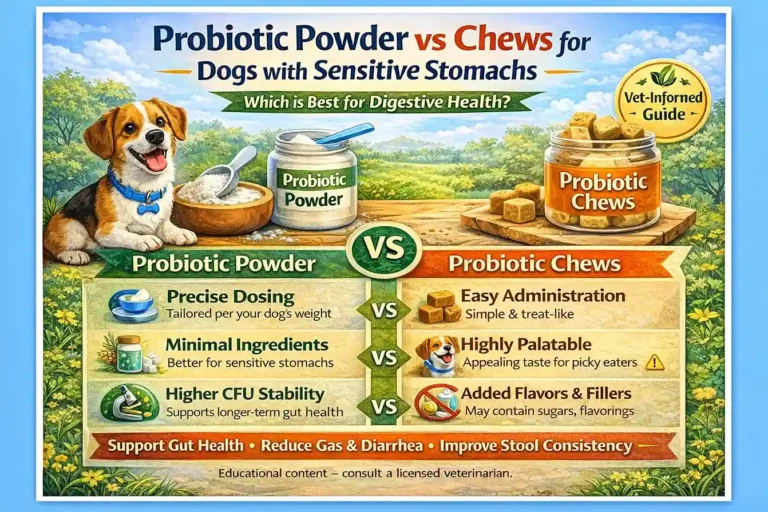
Is probiotic powder or chews better for dogs?
Probiotic powder is usually better for dogs with sensitive stomachs, diarrhea, food allergies, or chronic digestive issues because it allows more precise dosing and often has fewer additives. Probiotic chews may be better for picky dogs or for convenience, but they can contain flavorings, fillers, and less stable CFU levels.
What Are Probiotics for Dogs?

Probiotics are beneficial live bacteria that help balance the gut microbiome, aiding digestion and supporting overall gastrointestinal health. When properly administered, probiotics can:
- Improve digestive health
- Reduce gas, bloating, and diarrhea
- Help during antibiotic recovery
- Support the immune system
- Enhance stool consistency
Both probiotic powders and probiotic chews provide these benefits, but understanding their differences can help you choose the best option for your dog’s needs.
Probiotic Powder vs Chews for Dogs:
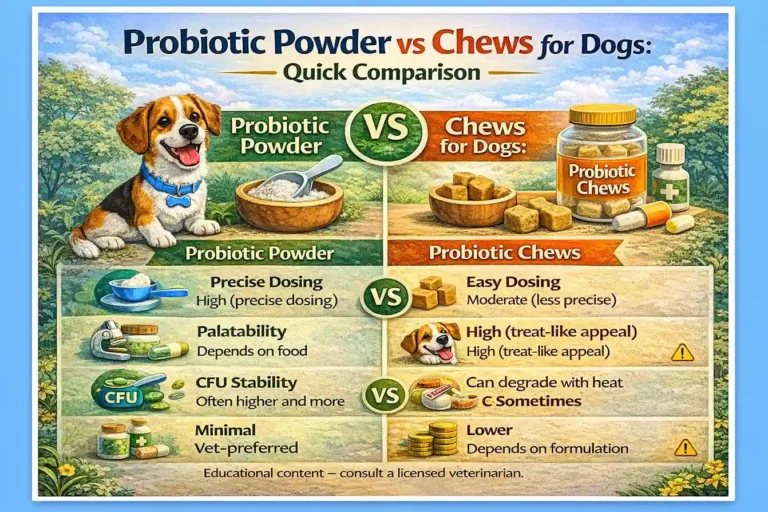
Here’s a comparison of the key features of probiotic powder and chews for dogs, outlining the advantages and potential downsides of each format:
Feature | Probiotic Powder | Probiotic Chews |
Ease of dosing | High (precise dosing) | Moderate (less precise) |
Palatability | Depends on food | High (treat-like appeal) |
CFU stability | Often higher and more stable | Can degrade with heat |
Best for sensitive stomachs | ✅ Yes | ⚠️ Sometimes |
Added ingredients | Minimal | Often includes flavorings |
Cost per serving | Lower | Higher |
Long-term use | Vet-preferred | Depends on formulation |
Powder, Chews, Syrup, Liquid, or Paste: Quick Comparison
Dog probiotics come in several forms, and each one has a different use. Powder and capsules may offer better dose control, chews may be easier for picky dogs, and syrup, liquid, or paste may be useful when a dog refuses solid supplements.
Form | Best For | Main Advantage | Possible Downside |
Powder | Daily use, sensitive stomachs, food mixing | Better dose control | Must be mixed with food |
Chews | Picky dogs, easy daily use | Treat-like and convenient | May contain more fillers or flavors |
Syrup | Dogs that refuse powder or chews | Easy to swallow | Can be harder to dose precisely |
Liquid | Dogs needing easy administration | Simple to give | Storage and stability vary. |
Paste | Short-term loose stool support | Easy during digestive upset | Usually used short-term |
The best form depends on your dog’s weight, symptoms, food tolerance, product quality, CFU count, and whether the probiotic is for daily support or short-term digestive upset.
What Is Probiotic Powder for Dogs?
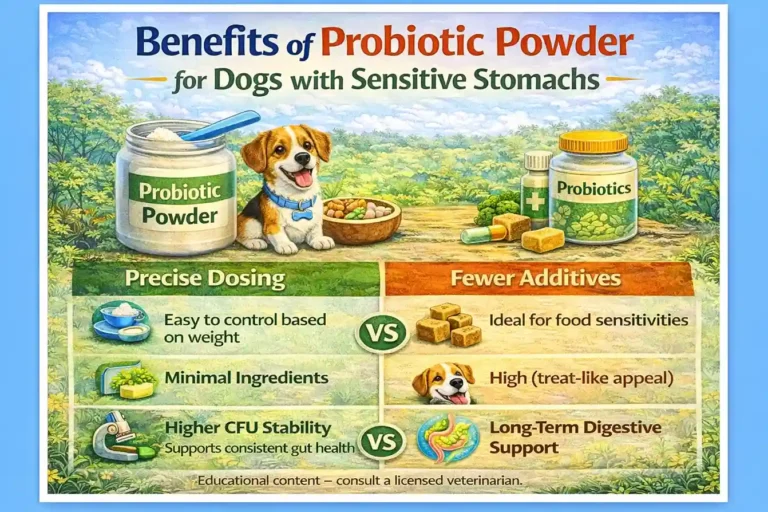
Probiotic powder is a fine supplement typically added directly to your dog’s food. It contains high CFU counts, multiple probiotic strains, and usually has minimal fillers.
Benefits of Probiotic Powder:
- Precise Dosage: Easier to control the dose based on your dog’s weight.
- Fewer Additives: Typically contains fewer fillers or artificial ingredients.
- Better for Food Allergies: Ideal for dogs with food sensitivities or allergies.
- Ideal for Long-Term Digestive Support: Powder form is often the preferred choice for ongoing digestive issues.
- Mixes Easily: Can be added to wet or raw food, making it flexible for picky eaters.
Potential Downsides of Probiotic Powder:
- Some dogs may refuse flavorless food, especially if the powder is not flavored.
- Requires consistent mixing with food.
- Less convenient for travel or quick administration.
Best For: Dogs with chronic digestive issues, sensitive stomachs, food intolerances, or those recovering from antibiotics.
What Are Probiotic Chews for Dogs?

Probiotic chews are soft, treat-like supplements designed to be palatable and easy to administer. They often include flavorings and binding agents and may even contain additional ingredients like prebiotics or digestive enzymes.
Benefits of Probiotic Chews:
- Highly Palatable: Chews are appealing, especially for picky eaters.
- Easy Administration: No mixing with food required, making it convenient for daily use.
- Ideal for Dogs Resistant to Powders: Great for dogs that don’t tolerate powders.
Potential Downsides of Probiotic Chews:
- May contain fillers, sugars, or artificial flavorings that could affect dogs with sensitivities.
- Heat processing can degrade the live cultures in chews, reducing effectiveness.
- Less precise CFU dosing: The amount of live bacteria can vary, which might affect effectiveness.
Best For: Healthy dogs needing maintenance gut support or pet parents prioritizing convenience.
Probiotic Syrup for Dogs
Probiotic syrup for dogs is a liquid-style supplement that may be easier to give to dogs that refuse powders, capsules, or chews. It can be placed directly into the mouth or mixed with food, depending on the product label.
Probiotic syrup may be useful for:
- dogs that refuse chews
- dogs that dislike powder on food
- puppies or small dogs needing easier administration
- short-term digestive support
- owners who prefer liquid dosing
Before using probiotic syrup, check the label carefully for CFU count, probiotic strains, serving size by weight, storage instructions, sweeteners, flavorings, and expiration date.
Avoid syrup products with unsafe sweeteners, unclear ingredients, or vague dosing instructions. If your dog has diarrhea, vomiting, blood in stool, or chronic digestive disease, ask your veterinarian before using any probiotic syrup.
Liquid Probiotics for Dogs
Liquid probiotics for dogs may be convenient for dogs that are difficult to pill or refuse powder. Some owners prefer liquid forms because they can be easier to mix into food or give with a syringe.
Liquid probiotics may be helpful when:
- Your dog refuses capsules
- Your dog does not eat powder-mixed food
- You need a flexible form
- Your dog has mild digestive sensitivity
- Your veterinarian recommends that format
However, liquid probiotics can vary in storage stability. Some may require refrigeration, and CFU levels can depend on proper storage and expiration dates.
Check the label for:
- live probiotic strains
- CFU count per serving
- serving size by weight
- storage requirements
- added flavors or sweeteners
- whether it is made for dogs
Do not choose a liquid probiotic only because it sounds “faster.” The strain, dose, and product quality matter more than the form alone.
Probiotic Paste for Dogs
Probiotic paste for dogs is often used for short-term digestive upset or loose stool support. Paste products may include probiotics, prebiotics, binders, or other gut-support ingredients.
Probiotic paste may be useful for:
- mild loose stool
- short-term digestive upset
- dogs that refuse powder or capsules
- travel-related stool changes
- stress-related soft stool
- temporary gut support
Paste is usually easier to give directly than powder, but it should still be used according to the label.
Probiotic paste should not replace veterinary care if your dog has bloody diarrhea, black stool, repeated vomiting, dehydration, weakness, abdominal pain, poor appetite, or symptoms lasting more than 24–48 hours.
Which Is Better for Dogs With Sensitive Stomachs?
For dogs with sensitive stomachs or chronic digestive problems, probiotic powder is generally the better choice. Here’s why:
- Fewer Ingredients: Powdered probiotics often contain fewer artificial flavoringsand preservatives.
- Higher CFU Stability: Powders are less likely to lose their effectiveness during manufacturing or storage, making them more reliable.
- Better Absorption Consistency: Without additional flavors or fillers, the probiotics in powder form are absorbed more evenly.
Veterinarians typically recommend powdered probiotics for dogs with:
- Chronic diarrhea
- Inflammatory bowel conditions (IBD)
- Food sensitivities
- Pancreatic insufficiency
CFUs and Probiotic Strains: Why Format Matters
The CFU count (colony-forming units) indicates the strength of the probiotic supplement. Probiotic powders generally offer higher and more stable CFU counts compared to chews, which may lose potency during processing or due to heat.
Common Dog-Specific Probiotic Strains:
- Lactobacillus acidophilus: Helps maintain a healthy gut flora balance.
- Bifidobacterium animalis: Supports digestion and immunity.
- Enterococcus faecium: Restores intestinal balance.
- Bacillus coagulans: Helps manage diarrhea and promote gut health.
When selecting a probiotic for your dog, choose multi-strain formulas with transparent CFU labeling for the best results.
Safety Considerations for Long-Term Use
Both probiotic powders and chews are generally safe for dogs. However, it’s essential to choose products that:
- Are vet-recommended
- List specific probiotic strains
- Avoid artificial preservatives and additives
- Provide clear dosing instructions
- Offer third-party testing for quality assurance
Always consult a veterinarian before starting probiotics, especially for dogs with immune disorders or chronic diseases.
Powder vs. Chews: Which Should You Choose for Your Dog?
Choose Probiotic Powder If:
- Your dog has digestive disorders or chronic GI issues.
- You want precise dosing tailored to your dog’s weight.
- Your dog has food allergies or sensitivities.
- You plan on long-term supplementation for digestive health.
Choose Probiotic Chews If:
- Your dog refuses food-mixed supplements or prefers treats.
- Convenience is a priority for daily administration.
- Your dog is healthy and requires maintenance gut support.

Which Probiotic Form Is Best for Diarrhea?
For mild diarrhea, powder, paste, or liquid probiotics may be easier to use than chews because they can be mixed with food or given more directly. Paste products are often used short-term, while powders may be better for longer digestive support.
A simple guide:
- Powder: good for dose control and daily support
- Paste: useful for short-term loose stool support
- Liquid or syrup: useful when dogs refuse other forms
- Chews: convenient, but may contain more flavorings or fillers
The best form depends on the cause of diarrhea. Probiotics may support mild diarrhea from stress, diet change, or antibiotic recovery, but they are not enough for serious warning signs.
Call a veterinarian if diarrhea is bloody, black, watery, repeated, or comes with vomiting, weakness, dehydration, pain, or poor appetite.
Which Form Gives the Most Accurate Dosing?
Probiotic powder usually gives the most flexible dosing because it can often be measured, split, or adjusted more easily according to dog weight and product directions. Capsules may also provide clear dosing if the product is labeled by weight.
Chews are convenient but less flexible because one chew may be the smallest available serving. Syrups and liquids can be flexible, but only if the label gives clear measurement instructions.
For accurate dosing, check:
- CFU count per serving
- serving size by weight
- scoop, capsule, chew, syringe, or dropper amount
- daily frequency
- product storage instructions
- expiration date
Do not guess the dose or double the serving. Too much probiotic may cause gas, bloating, soft stool, or temporary diarrhea in some dogs.
Vet Recommendation: Is One Format More Effective?
Veterinary professionals generally prefer powdered probiotics for therapeutic use, especially for dogs with specific health concerns. Clinical studies have shown that format stability and the survival of probiotic strains are crucial for effectiveness, and powders tend to outperform chews in this regard.
Medical Disclaimer:
This article is for informational purposes only and does not substitute professional veterinary advice.
Frequently Asked Questions(FAQs)
Is probiotic powder or chews better for dogs?
Probiotic powder is often better for dose control, sensitive stomachs, food allergies, and long-term digestive support. Chews may be better for picky dogs or owners who want convenience.
Are probiotic chews as effective as powder for dogs?
They can be effective, but powders often provide more flexible dosing and may contain fewer flavorings or fillers. Chews are easier to give but may not suit dogs with food sensitivities.
What is probiotic powder for dogs?
Probiotic powder is a supplement that can be mixed into food. It is often used for daily gut support, stool quality, antibiotic recovery, and dogs needing more precise dosing.
What are probiotic chews for dogs?
Probiotic chews are treat-like supplements that are easy to give. They may be useful for picky dogs, but owners should check ingredients, calories, CFU count, and flavorings.
Is probiotic syrup good for dogs?
Probiotic syrup may be useful for dogs that refuse powder, capsules, or chews. Choose dog-specific syrup with clear strains, CFU count, weight-based dosing, and safe ingredients.
Are liquid probiotics good for dogs?
Liquid probiotics can be convenient, but storage stability and CFU levels vary by product. Check storage instructions, expiration date, strains, and dosing directions.
Is probiotic paste good for dog diarrhea?
Probiotic paste may help mild loose stool or short-term digestive upset. It should not replace veterinary care if diarrhea is bloody, black, watery, repeated, or paired with vomiting or weakness.
Which probiotic form is best for dogs with diarrhea?
Powder, paste, or liquid forms may be easier during mild diarrhea. The best choice depends on the product, dog weight, cause of diarrhea, and whether warning signs are present.
Which probiotic form is best for picky dogs?
Chews, syrup, liquid, or paste may be easier for picky dogs than powder. However, check for fillers, flavorings, sweeteners, allergens, and clear CFU labeling.
Which dog probiotic form gives the most accurate dosing?
Powder usually gives the most flexible dosing, especially for small dogs or dogs needing weight-based adjustment. Capsules may also be clear if the label gives weight-based instructions.
References
- American Kennel Club (AKC)– Discusses the role of probiotics in dogs’ digestive health, including the benefits and drawbacks of powder vs. chew formats.
[Link: https://www.akc.org] - Veterinary Partner– Explains probiotics and prebiotics for dogs, comparing various supplement forms, including powders and chews.
[Link: https://www.veterinarypartner.com] - PetMD– Highlights the benefits of probiotics for dogs with sensitive stomachs, covering both powders and chews.
[Link: https://www.petmd.com] - Rover.com– Compares different probiotic formats, focusing on CFU stability and ease of administration for dogs.
[Link: https://www.rover.com] - Animal Wellness Magazine– Provides a guide to canine probiotics, explaining when to use powders or chews based on health needs.
[Link: https://www.animalwellnessmagazine.com]