How to Improve Gut Health in Dogs: Essential Tips for a Healthy Digestion
Written by: Dr. Akram Khan, DVM
Medically Reviewed by: Dr. Zaheer Hussain, PhD
Last updated on September 01, 2026

Gut health in dogs plays a crucial role in maintaining overall well-being, affecting everything from digestion to immune function and energy levels. A healthy digestive system ensures efficient nutrient absorption, strong immune defense, and well-formed stools. Understanding gut health in dogs is vital, as digestive issues like chronic diarrhea, bloating, or vomiting can often be signs of an imbalance in the digestive system. Poor gut health can lead to a range of problems, including food sensitivities, low energy, and dull skin. This guide will explore the importance of gut health and how to address digestive problems in dogs. We’ll cover effective treatments, including probiotics and digestive enzyme supplements, and provide actionable tips to improve gut health. By focusing on balanced gut bacteria and supporting the canine gut microbiome, you can help restore your dog’s digestive balance, boost their health, and prevent chronic issues. Whether you’re concerned about common digestive issues or simply want to know how to promote healthy gut function, this article will help guide you toward the best solutions to ensure your dog stays healthy and happy.
Gut Health in Dogs
Gut health in dogs is the state in which the digestive tract efficiently breaks down food, absorbs nutrients, maintains a balanced microbiota, protects the bloodstream from toxins, and eliminates waste without inflammation or dysfunction.
A healthy canine gut requires:
- Proper digestive enzymes
- Balanced gut bacteria (microbiota)
- An intact gut barrier
- Normal intestinal motility
- Effective immune signaling
Understanding the Dog Digestive System (From Mouth to Colon)
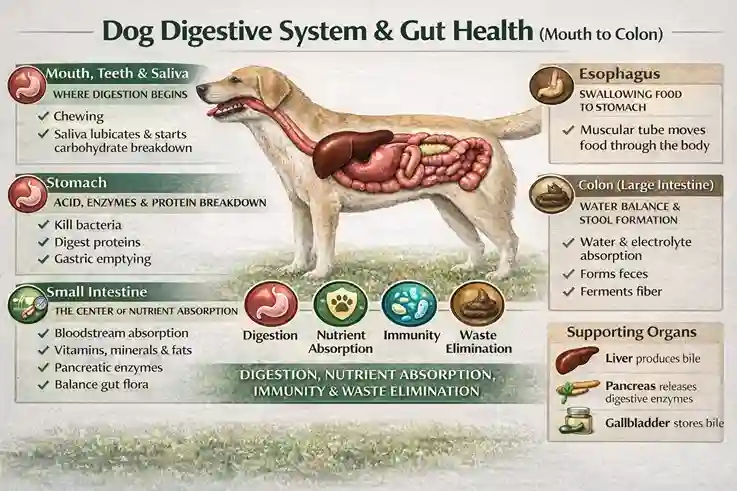
Mouth, Teeth & Saliva: Where Digestion Begins
Digestion starts in the mouth, where chewing mechanically breaks food into smaller pieces. Saliva lubricates food and begins carbohydrate breakdown, preparing it for swallowing through the esophagus.
Stomach: Acid, Enzymes & Protein Breakdown
In the stomach, food mixes with stomach acid and digestive enzymes that:
- Break down proteins
- Kill harmful bacteria
- Regulate food release into the small intestine
Disruption here can contribute to acid reflux (GERD), vomiting, and food intolerance.
Small Intestine: The Center of Nutrient Absorption
The small intestine plays a central role in digestion and nutrient absorption. Its inner surface is lined with villi, increasing surface area (comparable to a tennis court) for maximum absorption of nutrients, vitamins, minerals, fats, and carbohydrates.
Key functions include:
- Absorption into the bloodstream
- Interaction with immune cells
- Enzyme activation from pancreatic secretions
Colon & Large Intestine: Water Balance & Stool Formation
The colon absorbs water and electrolytes while fermenting plant fibres using beneficial bacteria. Healthy colon function results in:
- Well-formed stools
- Normal bowel movements
- Minimal gas or bloating
Poor colon health often causes diarrhea, constipation, mucus in stools, or dehydration.
The Gut Microbiome: Good vs Bad Bacteria in Dogs
What Is the Canine Gut Microbiota?
The gut microbiota consists of trillions of microorganisms, including bacteria living inside the intestines. These organisms:
- Aid digestion
- Produce vitamins
- Protect against pathogens
- Regulate immune responses
A balanced microbiome supports gut health, while dysbiosis may be associated with digestive problems and other health conditions.
Gut Barrier Function & Immune Defense
The gut lining acts as a selective barrier, allowing nutrients to pass while blocking toxins and pathogens. Tight junctions between gut cells prevent leakage into the bloodstream.
When this barrier is compromised (“leaky gut”):
- Toxins enter circulation
- Inflammation increases
- Chronic digestive and immune disorders develop
Signs of Poor Gut Health in Dogs (Early Warning Symptoms)
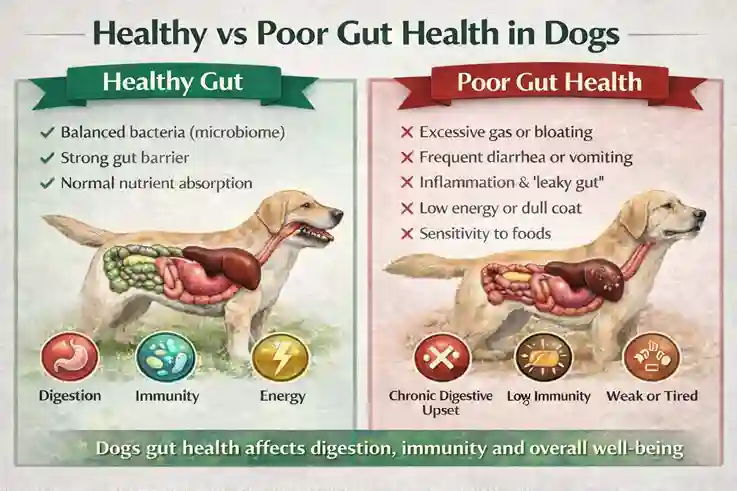
Dog owners should watch for:
- Chronic diarrhea or constipation
- Vomiting or regurgitation
- Excessive gas or bloating
- Poor appetite or weight loss
- Changes in stool color, shape, or frequency
- Low energy or dull coat
- Food sensitivities
These signs often indicate digestive system imbalance rather than isolated illness.
Common Causes of Gut Health Problems in Dogs
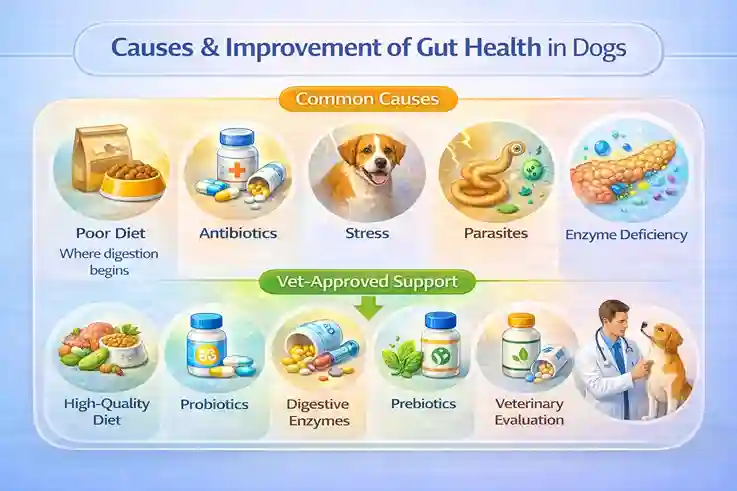
1. Poor-Quality Diet
Low-fiber, highly processed foods disrupt microbiota balance and reduce digestive efficiency.
2. Antibiotics & Medications
Antibiotics kill both harmful and beneficial bacteria, can temporarily alter the gut microbiota if not properly supported.
3. Stress & Environmental Changes
Stress alters gut motility, enzyme secretion, and immune responses.
4. Infections & Parasites
Bacteria, viruses, and parasites damage gut lining and interfere with nutrient absorption.
5. Pancreatic & Enzyme Deficiencies
Insufficient digestive enzymes impair protein, fat, and carbohydrate breakdown
How Gut Health Affects the Whole Body
Poor gut health does not stay limited to digestion. It impacts:
- Immune system regulation
- Nutrient delivery to cells
- Hormone signaling
- Inflammation levels
- Skin, coat, and joint health
This gut-body connection explains why digestive disorders often coexist with skin allergies, reduced activity or lethargy, and chronic inflammation.
How to Improve Gut Health in Dogs
1. High-Quality, Fiber-Rich Diet
Look for foods containing:
- Plant fibres
- Easily digestible proteins
- Limited artificial additives
2. Probiotics for Dogs
Some veterinary-formulated probiotics may help support normal stool consistency and gut function:
- Restore healthy bacteria
- Improve stool consistency
- Enhance immune response
👉 A veterinarian may recommend probiotics when dogs have diarrhea, stress, or antibiotic history.
3. Digestive Enzyme Supplements
Digestive enzymes support:
- Nutrient breakdown
- Reduced gas and bloating
- Improved absorption
👉 Especially helpful in senior dogs or pancreatic insufficiency.
4. Prebiotics & Gut-Supporting Nutrients
Prebiotics feed beneficial bacteria and strengthen gut barrier integrity.
When to See a Veterinarian
Seek veterinary evaluation if symptoms persist or if you notice:
- Blood in stools
- Severe dehydration
- Weight loss
- Chronic vomiting
Diagnosis may include fecal analysis, blood tests, imaging, or dietary trials.
Medical Disclaimer
This content is for educational purposes only and does not replace professional veterinary advice. Always consult a licensed veterinarian for diagnosis and treatment.
Frequently Asked Questions (FAQs)
1. Is gut health linked to immunity in dogs?
Yes. A large proportion of immune tissue is associated with the gastrointestinal tract and plays a critical role in immune tolerance and defense.
2. Can poor gut health cause behavioral changes?
Yes. Gut-brain communication may influence behavior, stress responses, and other physiological processes, stress response, and energy levels.
3. Are probiotics safe for daily use in dogs?
Vet-approved probiotics are generally safe when used as directed.