
Can Digestive Enzymes Cause Side Effects in Dogs? Understanding Risks and Safe Use
Written by: Dr. Akram Khan, DVM
Medically Reviewed by: Dr. Zaheer Hussain, PhD
Last updated on October 23, 2026
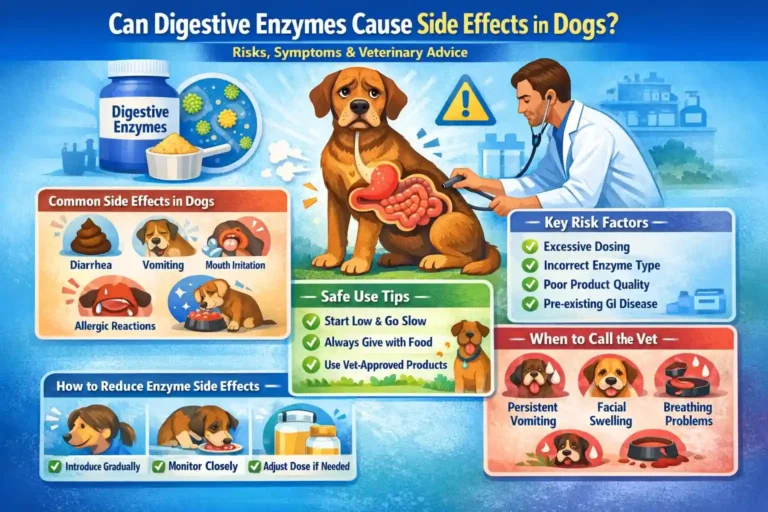
Can digestive enzymes cause side effects in dogs? The short answer is yes, especially if they are used incorrectly or in excessive amounts. While digestive enzyme supplements are commonly used to help dogs with digestion, malabsorption, and chronic gastrointestinal issues, side effects such as diarrhea, vomiting, and abdominal discomfort can occur. This comprehensive guide explores common digestive enzyme side effects in dogs, the risks associated with their use, how to reduce complications, and when veterinary supervision is necessary to ensure safe and effective supplementation.
What Are Digestive Enzymes for Dogs?
Digestive enzymes are biological catalysts that help break food into absorbable nutrients. In dogs, they assist with:
- Protein digestion (protease, pepsin, trypsin)
- Fat digestion (lipase)
- Carbohydrate digestion (amylase)
Supplemental digestive enzymes may be derived from:
- Pancreatic sources (pancreatin, pancrelipase)
- Plant-based enzymes (papain, bromelain)
- Microbial fermentation (fungal enzymes)
Veterinarians commonly recommend enzyme supplementation for dogs with chronic diarrhea, malabsorption, GERD, pancreatic stress, aging-related enzyme decline, or poor nutrient utilization.
Are Digestive Enzymes Safe for Dogs?
Most veterinary nutrition research and clinical experience indicate that digestive enzymes are safe when used correctly. However, side effects can occur due to:
- Excessive dosing
- Incorrect enzyme type
- Poor-quality or overly concentrated products
- Pre-existing gastrointestinal disease
- Lack of veterinary oversight
Common Side Effects of Digestive Enzymes in Dogs
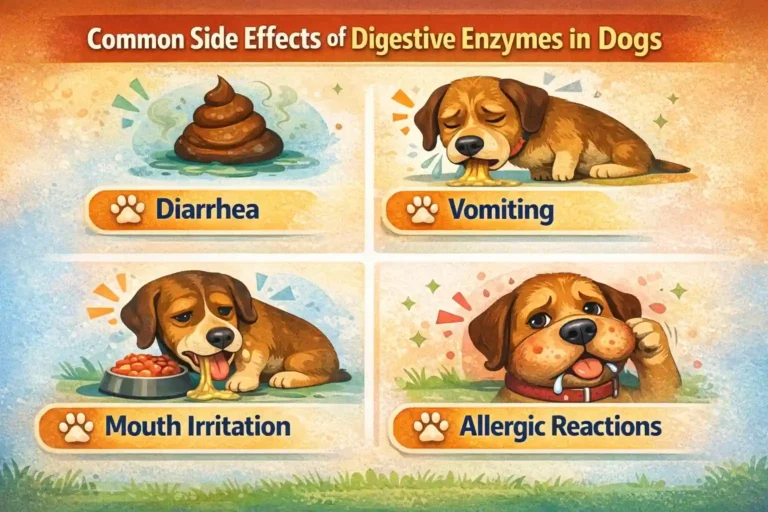
1. Diarrhea (Most Common Side Effect)
Digestive enzymes may cause loose stools or diarrhea, especially when:
- Introduced too quickly
- Given in excessive doses
- Administered on an empty stomach
Why it happens: Rapid food breakdown can overwhelm the digestive tract before it adapts.
✔️ This usually resolves within 24–72 hours with dose adjustment.
2. Vomiting and General Stomach Upset
Some dogs experience:
- Vomiting
- Nausea
- Reduced appetite
This is more common in dogs with:
- GERD
- Gastritis
- Acid reflux
- Highly sensitive stomachs
💡 Starting with a low dose and giving enzymes with meals significantly reduces this risk.
3. Mouth and Oral Irritation
Powdered digestive enzymes may cause:
- Mouth irritation
- Excessive drooling
- Lip licking
This occurs when enzymes activate before reaching the stomach.
Prevention tip:
✔️ Mix enzymes thoroughly into moist food.
✔️ Allow food to rest briefly if label instructions recommend it.
4. Allergic Reactions and Hypersensitivity (Rare)
Although uncommon, allergic reactions may include:
- Hives
- Facial swelling
- Itching or skin redness
- Vomiting or diarrhea
These reactions are often linked to:
- Microbial or fungal enzyme sources
- Animal-derived pancreatic enzymes
❗ Discontinue immediately and seek veterinary care if allergic signs appear.
5. Swelling and Enzyme-Induced Inflammation
High-potency or overdosed enzymes may cause:
- Gastrointestinal irritation
- Mild intestinal swelling
- Increased inflammation
This is more likely with long-term unsupervised use or incorrect dosing.
6. Restlessness or Behavioral Changes
Some dogs display:
- Restlessness after meals
- Signs of abdominal discomfort
This may be linked to:
- Rapid digestion
- Changes in gastric acid activity
7. Ulcers and Mucosal Irritation (Rare but Serious)
In dogs with:
- Active gastric ulcers
- Severe GERD
- Chronic NSAID use
Digestive enzymes may worsen stomach or intestinal lining irritation if not carefully managed.
Why Do Digestive Enzymes Cause Side Effects in Some Dogs?
Key Risk Factors
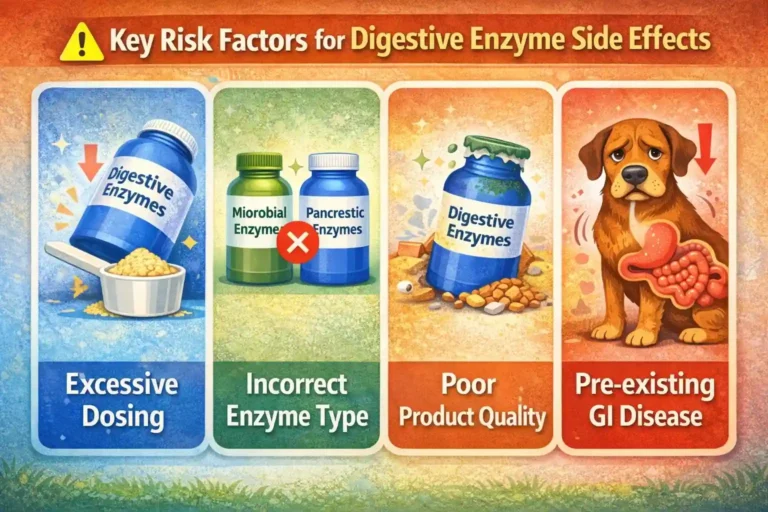
- Incorrect enzyme formulation
- Excessive CFU or activity units
- Poor product quality
- Existing GI disease
- Lack of veterinary guidance
🔬 Clinical insight: Most adverse effects are dose-dependent, not inevitable.
Digestive Enzyme Dosage: Why Correct Dosing Matters
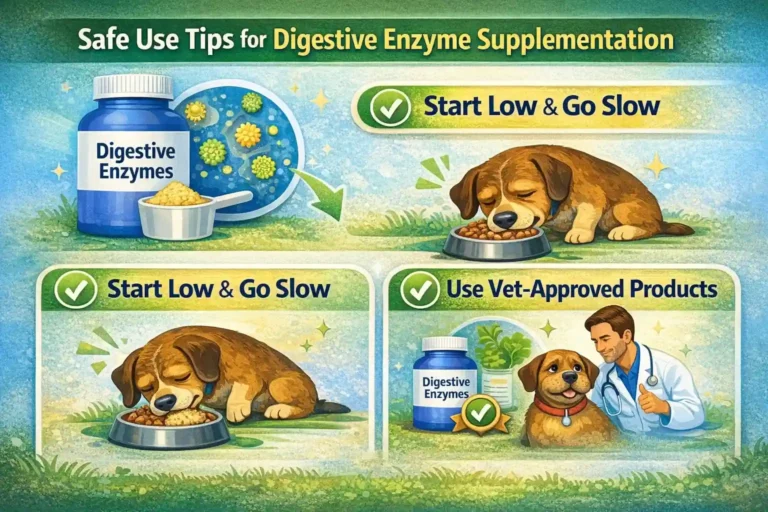
Safe Dosing Principles:
✔️ Start low
✔️ Increase gradually over 7–10 days
✔️ Match enzyme type to your dog’s condition.
✔️ Monitor stool, appetite, and behavior.  More enzymes do not equal better digestion.
Digestive Enzyme Supplements vs Natural Food-Based Enzymes
Feature | Enzyme Supplements | Natural Food Enzymes |
Potency | High | Mild |
Side-effect risk | Moderate | Low |
Dosing control | Precise | Variable |
Medical use |
|
|
 Yes
Food-based enzymes are best for maintenance, while supplements are necessary for clinical digestive disorders.
How to Reduce Side Effects of Digestive Enzymes in Dogs ?
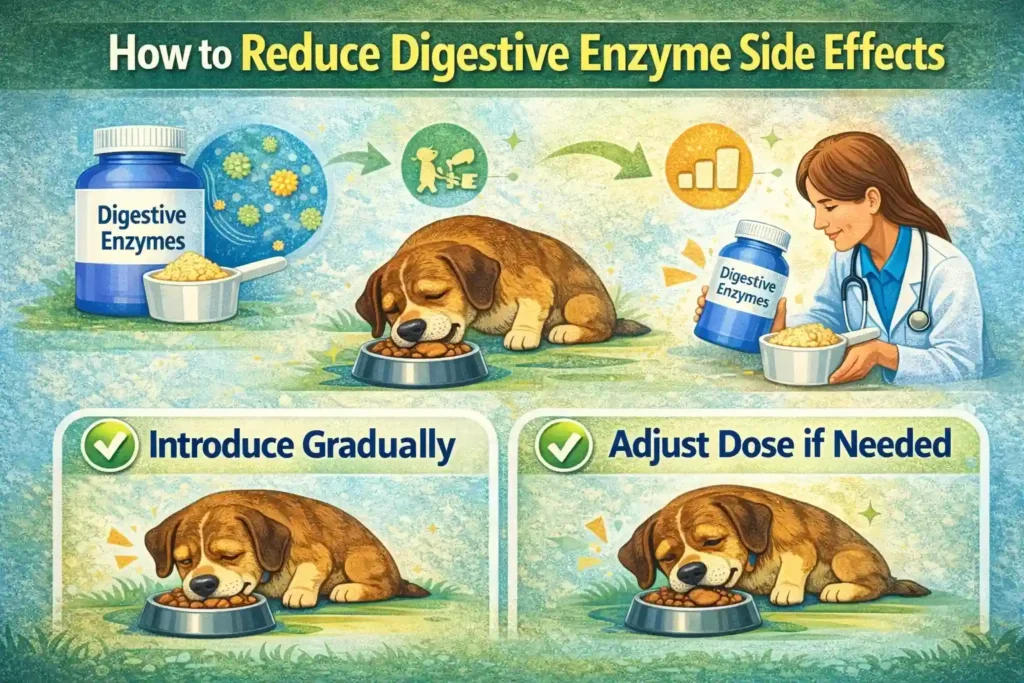
Best Practices for Safe Use:
- Introduce enzymes slowly
- Always give with food
- Use vet-recommended or clinically tested products
- Avoid combining multiple new supplements at once
- Stop supplementation if symptoms worsen.
When Digestive Enzymes Should Be Avoided
Digestive enzymes may not be appropriate for dogs with:
- Active gastric ulcers
- Acute pancreatitis (without veterinary approval)
- Severe, uncontrolled vomiting
- Known enzyme or protein allergies
When to Contact a Veterinarian Immediately
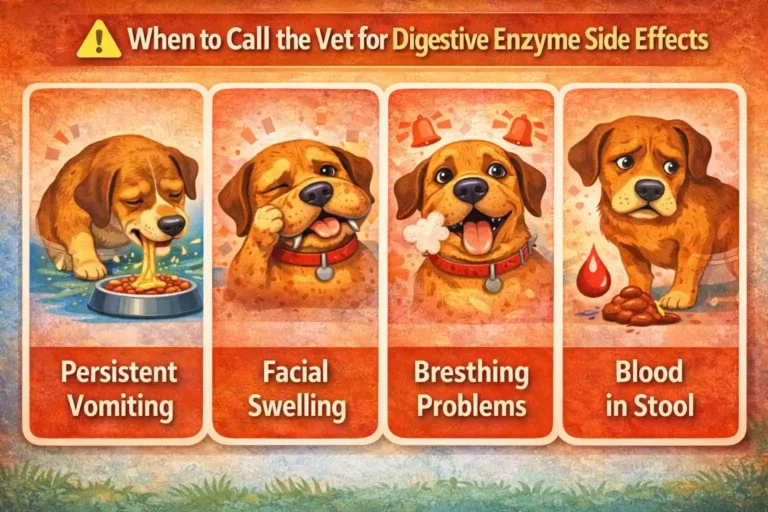
Seek veterinary care if your dog develops:
- Persistent vomiting or diarrhea
- Facial swelling or hives
- Difficulty breathing
- Severe lethargy
Medical Disclaimer
This article is for educational purposes only and does not replace professional veterinary advice. Always consult a licensed veterinarian for diagnosis or treatment of digestive conditions.
Frequently Asked Questions (FAQs)
1. Can digestive enzymes make diarrhea worse in dogs?
Yes, especially if started at a high dose.
2. Are digestive enzyme side effects permanent?
No. Most resolve after stopping or adjusting the dose.
3. How long do enzyme side effects last?
Typically 24–72 hours.
4. Are plant-based enzymes safer than pancreatic enzymes?
They are gentler but may be less effective for severe conditions.
5. Should digestive enzymes be used daily?
Only if recommended by a veterinarian for long-term support.
6. Can puppies experience enzyme side effects?
Yes—puppies require extra caution and vet supervision.
References
Villaverde, C., Manzanilla, E. G., Molina, J., & Larsen, J. A. (2017). Effect of enzyme supplements on macronutrient digestibility by healthy adult dogs. Journal of Nutritional Science, 6, e12. https://doi.org/10.1017/jns.2017.10. PubMed Central (PMC)
Rutz, G. M., Steiner, J. M., & Williams, D. A. (2002). Oral bleeding associated with pancreatic enzyme supplementation in three dogs with exocrine pancreatic insufficiency. Journal of the American Veterinary Medical Association, 221(12), 1716–1718. https://doi.org/10.2460/javma.2002.221.1716. PubMed
Cridge, H., Williams, D. A., & Barko, P. C. (2024). Exocrine pancreatic insufficiency in dogs and cats. Journal of the American Veterinary Medical Association, 262(2), 246–255. https://doi.org/10.2460/javma.23.09.0505. Illinois Experts
Szkopek, D., Pierzynowski, S. G., Pierzynowska, K., et al. (2024). A review: Pancreatic enzymes in the treatment of chronic pancreatic insufficiency in companion animals. Journal of Veterinary Internal Medicine, 38(4), 2026–2033. https://doi.org/10.1111/jvim.17096.