
Best Digestive Enzymes for Dogs with Digestive Disorders: Improve Gut Health Naturally
Written by: Dr. Muhammad Ihsan Ullah, PhD
Medically Reviewed by: Dr. Khalid Mehmood, PhD
Last updated on September 07,2026
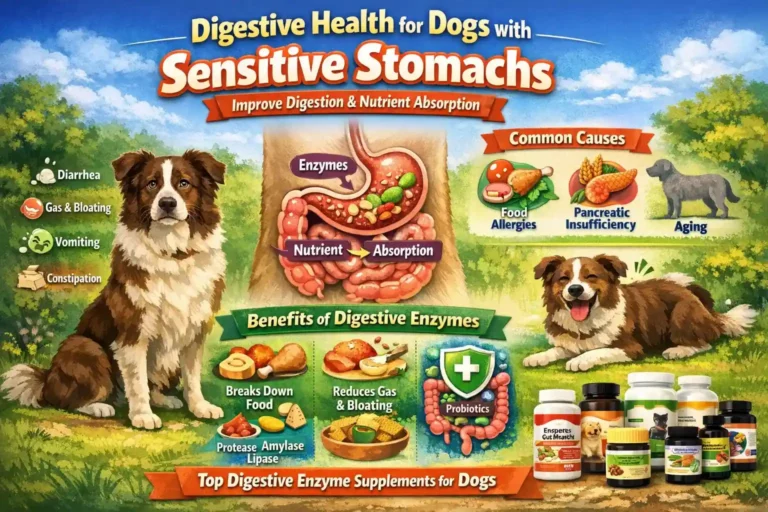
For dogs with sensitive stomachs or digestive problems, issues like chronic diarrhea, constipation, gas, and bloating are common and can lead to discomfort and long-term health concerns. These symptoms are often linked to food allergies, pancreatic insufficiency in dogs, or the natural aging process. To improve digestive health in dogs and provide relief from gastrointestinal discomfort, many pet owners turn to digestive enzyme supplements for dogs. These enzyme supplements for dogs help improve nutrient absorption in dogs, support overall gut health for dogs, and promote better digestion, especially for dogs with pancreatic insufficiency or sensitive stomachs. Additionally, they can assist in alleviating common digestive issues like gas and bloating in dogs.
What Are the Best Digestive Enzymes for Dogs with Sensitive Stomachs?
What are the best digestive enzymes for dogs? Dogs with sensitive stomachs, pancreatic insufficiency, or food sensitivities can benefit from enzymes like amylase (for carbs), protease (for proteins), and lipase (for fats). These enzymes help break down food, improving digestion and nutrient absorption and alleviating symptoms like gas, bloating, and diarrhea, promoting overall gut health.
What Are Digestive Enzymes and Why Are They Important for Dogs?
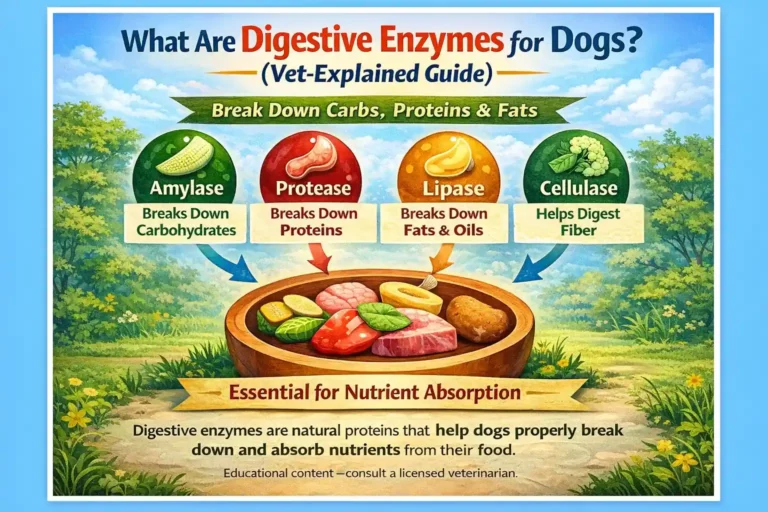
Digestive enzymes are naturally occurring proteins that help break down food molecules—carbohydrates, proteins, and fats—into absorbable nutrients. These enzymes play a crucial role in ensuring that your dog can properly digest food and absorb vital nutrients, leading to better overall health.
Common Digestive Enzymes for Dogs
- Amylase: Breaks down carbohydrates, aiding in the digestion of starches.
- Protease: Responsible for breaking down proteins into amino acids.
- Lipase: Breaks down fats and oils into fatty acids and glycerol.
- Bromelain & Papain: Plant-based enzymes that enhance protein digestion and reduce inflammation.
- Cellulase: Helps break down fiber, improving stool consistency.
These enzymes support the digestive process, reduce the risk of digestive discomfort, and can help your dog maintain a healthy, balanced gut.
Why Dogs Need Digestive Enzyme Supplements
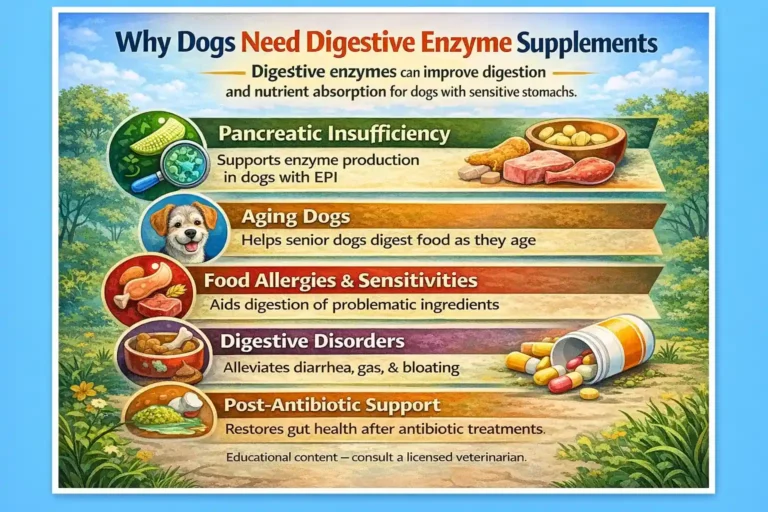
Certain factors may hinder a dog’s natural production of digestive enzymes, leading to digestive issues and nutrient absorption problems. Here are some reasons your dog may require digestive enzyme supplementation:
1. Pancreatic Insufficiency
Dogs with pancreatic insufficiency have difficulty producing the necessary enzymes for digestion. Supplementing with enzymes can help support proper digestion and nutrient absorption.
2. Aging
As dogs age, their digestive efficiency decreases, and they may benefit from enzyme supplements to aid digestion.
3. Food Sensitivities & Allergies
Some dogs struggle to digest certain ingredients due to food sensitivities or allergies, and digestive enzymes can help break down those difficult-to-digest foods.
4. Digestive Disorders
Dogs with chronic diarrhea, constipation, or other digestive issues may experience improved digestion and reduced symptoms with the right enzyme support.
5. Post-Antibiotic Support
Antibiotics can disrupt a dog’s gut microbiome, which affects digestive function. Probiotic and enzyme supplements can help restore balance and support recovery.
Research shows that enzyme supplementation improves nutrient absorption and reduces GI distress, ultimately supporting your dog’s vitality and overall wellness.
Top 7 Digestive Enzyme Supplements for Dogs
Here are some of the best digestive enzyme supplements available for dogs with sensitive stomachs. These products are well-regarded for their quality, effectiveness, and safety:
1. NaturVet Digestive Enzymes
- Key Ingredients: Protease, Amylase, Lipase, Bromelain, Papain
- Format: Chewable tablets
- Benefits: Supports digestion of proteins, carbs, and fats; reduces gas and bloating
2. Prozyme Plus by Nutramax
- Key Ingredients: Pancreatic enzymes, probiotics, herbs
- Format: Powder for mixing with food
- Benefits: Improves nutrient absorption and gut health
- Best For: Dogs with pancreatic insufficiency
3. Vet’s Best Enzyme Supplement
- Key Ingredients: Bromelain, papain, herbs
- Format: Soft chews
- Benefits: Supports digestive function and reduces inflammation
- Best For: Sensitive stomachs and mild food sensitivities
4. PetAlive Enzyme Blend
- Key Ingredients: Protease, Lipase, Amylase, Herbal Botanicals
- Format: Capsules
- Benefits: Aids digestion, improves energy, and overall health
5. Doggie Dailies Probiotics & Enzymes
- Key Ingredients: Enzyme blend, probiotics, vitamins
- Format: Chewable bites
- Benefits: Combines digestive enzymes with gut-supporting probiotics for enhanced nutrient absorption
6. FortiFlora Digestive Enzyme Support
- Key Ingredients: Digestive enzymes and probiotics
- Format: Powder
- Benefits: Supports stool consistency, gut balance, and immune health
7. Beasties Digestive Enzymes for Dogs
- Key Ingredients: Amylase, Protease, Lipase, Papain
- Format: Powder and chews
- Benefits: Reduces GI upset, improves digestion and nutrient absorption
How to Choose the Right Digestive Enzyme Supplement for Your Dog
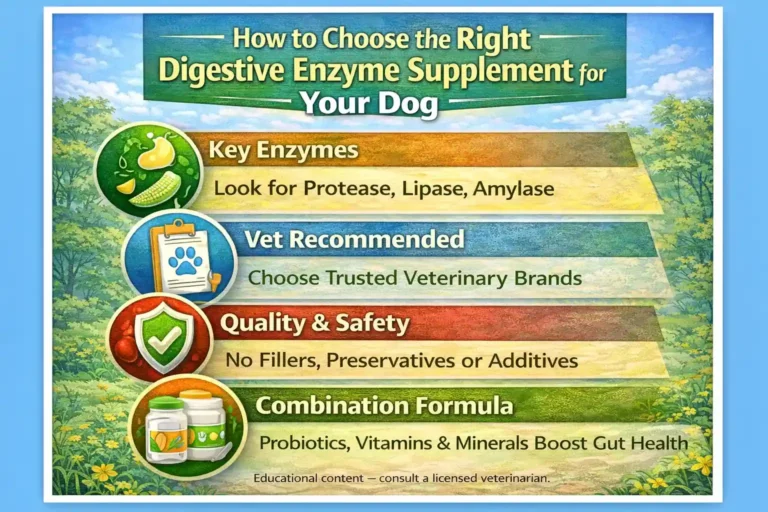
When selecting a digestive enzyme supplement for your dog, consider the following factors to ensure optimal digestive health:
1. Enzyme Types & Coverage
Look for supplements that contain the essential enzymes protease, lipase, and amylase, as these will ensure comprehensive digestive support. Plant-based enzymes like bromelain and papain can further enhance protein digestion.
2. Dosage & Administration
Follow the manufacturer’s directions and consult your veterinarian to ensure the correct dosage for your dog’s size and health condition.
3. Quality & Safety
- Choose supplements from FDA-approved manufacturers or Health Canada-approved brands.
- Avoid supplements that contain fillers, artificial preservatives, or harmful additives.
- Opt for veterinary-recommended brands to ensure the product is of high quality.
4. Combination Formulas
Some supplements combine enzymes with probiotics, vitamins, and minerals to support holistic gut health. These formulations may provide additional benefits.
Signs Your Dog May Benefit from Digestive Enzyme Supplements
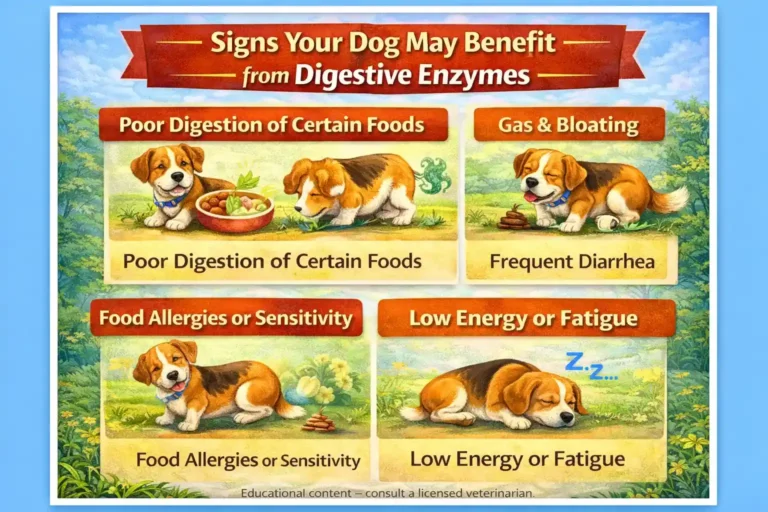
If your dog is showing any of the following signs, digestive enzyme supplementation could help:
- Poor digestion of certain foods
- Gas, bloating, or diarrhea
- Weight loss or poor nutrient absorption
- Fatigue or low energy
- Food allergies or sensitivity
With the right enzyme support, your dog’s digestion, nutrient absorption, and overall well-being can significantly improve.
Frequently Asked Questions(FAQs):
1. Can I give human enzyme supplements to dogs?
No, human formulations are not designed for dogs and may contain inappropriate dosing or ingredients that are harmful to pets.
2. How long does it take to see results from digestive enzymes?
Most dogs will show improved digestion within 1–2 weeks of proper supplementation.
3. Are digestive enzymes safe for long-term use?
Yes, digestive enzymes are safe for long-term use when administered correctly and under veterinary supervision.
4. What are the benefits of digestive enzymes for dogs?
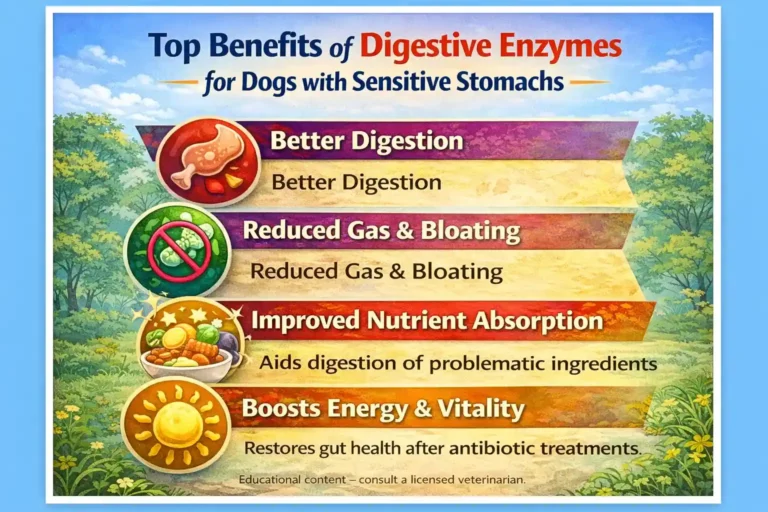
Digestive enzymes support digestion, improve nutrient absorption, and help reduce gas, bloating, and other digestive discomforts.
5. How do I choose the right digestive enzyme supplement for my dog?
Choose supplements with high-quality enzymes, proper dosage, and a reputable veterinary brand. Consider your dog’s specific needs and consult your vet for the best recommendation.
Medical Disclaimer:
This article is for informational purposes only. Always consult a veterinarian before introducing new supplements to your dog’s routine.
References
- American Veterinary Medical Association (AVMA).(2024). Understanding digestive health in pets and the role of supplements.
https://www.avma.org/resources-tools/pet-owners/petcare/digestive-health-pets - Merck Veterinary Manual.(2023). Pancreatic insufficiency and the role of digestive enzyme supplementation in dogs.
https://www.merckvetmanual.com/digestive-disorders/pancreatic-insufficiency - Freeman, L. M., & Chandler, M. L.(2018). Use and misuse of dietary supplements in companion animals.
Journal of the American Veterinary Medical Association, 252(2), 139–147.
https://doi.org/10.2460/javma.252.2.139 - (2023). How digestive enzyme supplements can help dogs with sensitive stomachs.
https://www.petmd.com/dog/nutrition/evr_dg_digestive_enzyme_supplements - WSAVA Global Nutrition Committee.(2021). Recommendations on gastrointestinal health, enzyme use, and supplementation for dogs.
https://wsava.org/global-guidelines/gastrointestinal-health-dogs