
Probiotics vs Digestive Enzymes for Dogs: Which Is Better?
Written by: Dr. Akram Khan, DVM
Medically Reviewed by: Dr. Khalid Mehmood, PhD
Last updated on September 07, 2026
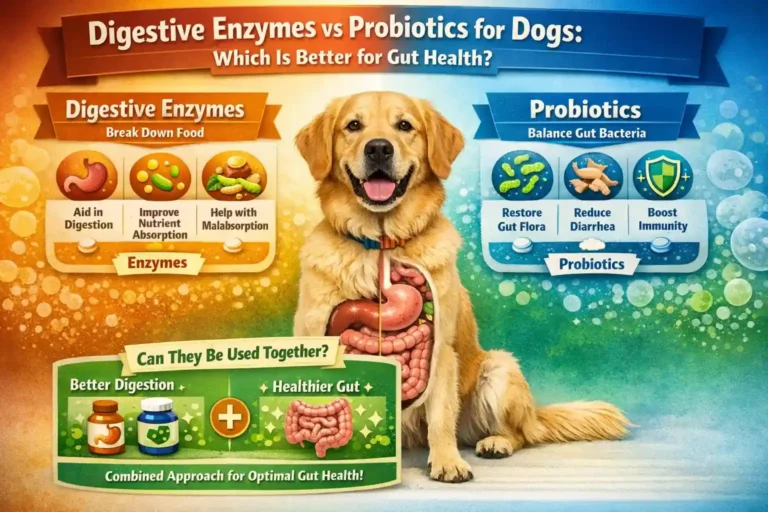
Probiotics vs. digestive enzymes for dogs is a common question when a dog has diarrhea, gas, bloating, greasy stool, poor nutrient absorption, or a sensitive stomach. Digestive enzymes help break down food into usable nutrients, while probiotics support healthy gut bacteria, stool quality, and immune balance. Some dogs need enzymes, some need probiotics, and dogs with chronic digestive issues may benefit from both under veterinary guidance. Choosing the right option depends on your dog’s symptoms, diet, age, stool changes, and underlying digestive condition.
Are probiotics or digestive enzymes better for dogs?
Probiotics are better for dogs with gut bacteria imbalance, diarrhea, antibiotic-related digestive upset, or sensitive stomachs. Digestive enzymes are better for dogs with poor food breakdown, greasy stool, gas after meals, or nutrient absorption problems. Some dogs may need both, especially with chronic digestive issues, but the right choice depends on the cause.
Understanding the Canine Digestive System (How Digestion Works in Dogs)
Digestion in dogs is a multi-stage process involving mechanical, chemical, and microbial actions (MSD Veterinary Manual, 2025).
• Mouth: Chewing and saliva initiate digestion.
• Stomach: Hydrochloric acid (HCl) and enzymes like pepsin begin protein digestion.
• Pancreas: Produces digestive enzymes (amylase, lipase, protease)
• Liver & Gallbladder: Release bile to emulsify fats
• Small Intestine: Primary site of nutrient absorption
• Large Intestine (Colon): Hosts beneficial gut bacteria (microbiome)
Disruption at any point—enzyme deficiency, poor bile flow, low stomach acid, or microbial imbalance—can lead to chronic digestive symptoms (MSD Veterinary Manual, 2025).
What Are Digestive Enzymes for Dogs?
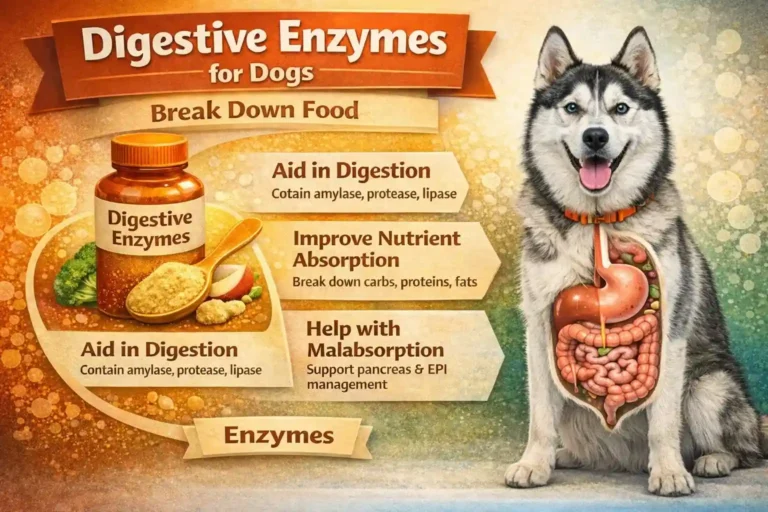
Digestive enzymes are biological catalysts that break food into smaller, absorbable nutrients. Dogs naturally produce enzymes, but production can decline due to age, illness, stress, or pancreatic disorders (Cridge et al., 2023).
Main Digestive Enzymes Used in Dogs
• Amylase – Breaks down carbohydrates and starches
• Protease (Trypsin, Pepsin)—Digests proteins into amino acids
• Lipase – Breaks fats into fatty acids
• Pancreatin / Pancrelipase – Broad-spectrum enzyme blends
• Bromelain & Papain – Plant-based enzymes (pineapple, papaya)
Primary role: Improve food breakdown and nutrient absorption.
What Are Probiotics for Dogs?
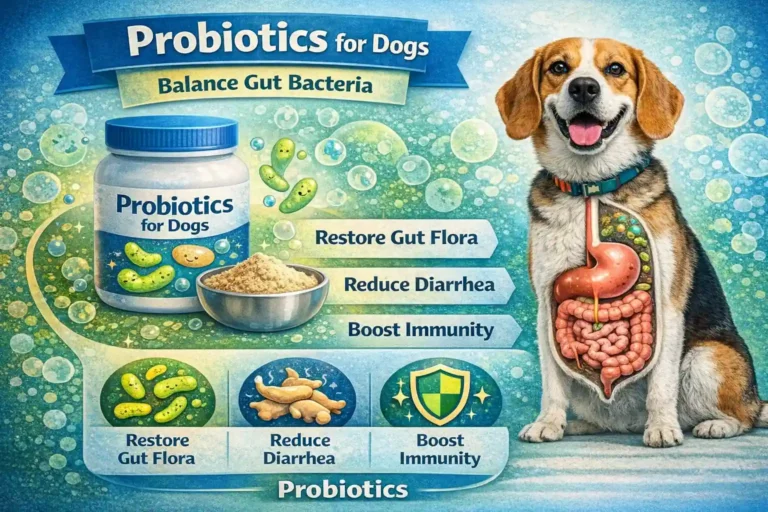
Probiotics are live beneficial microorganisms that support a healthy gut microbiome. Unlike enzymes, they do not digest food directly (PetMD, 2023).
Common Probiotic Strains for Dogs
• Lactobacillus acidophilus
• Bifidobacterium species
• Enterococcus faecium
• Beneficial yeast strains (useful in bacterial overgrowth)
Primary role: Maintain microbial balance, reduce inflammation, and support immune function (Weese & Martin, 2011).
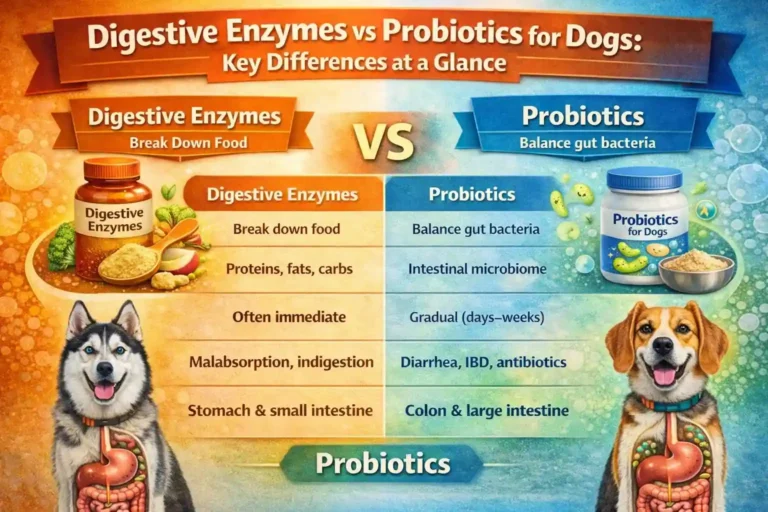
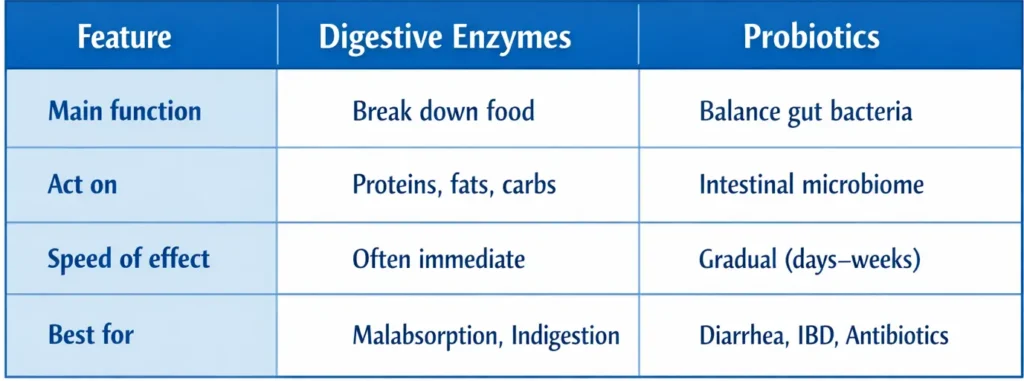
Digestive Enzymes vs Probiotics: Key Differences at a Glance
When Digestive Enzymes Are the Better Choice
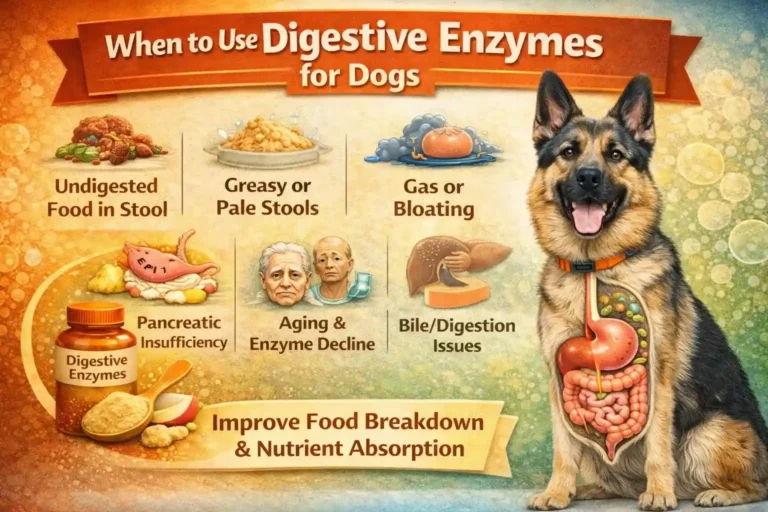
Digestive enzymes may be more effective if your dog experiences:
• Undigested food in stool
• Greasy or pale stools (fat malabsorption)
• Chronic gas or bloating after meals
• Pancreatic insufficiency (EPI) (Cridge et al., 2023).
• Aging-related enzyme decline
• Liver or bile-related fat digestion issues
• Poor nutrient absorption despite eating well
They are commonly recommended during diet transitions, senior years, post-surgery recovery, or digestive stress (MSD Veterinary Manual, 2025).
When Probiotics Are the Better Choice
chronic loose stools
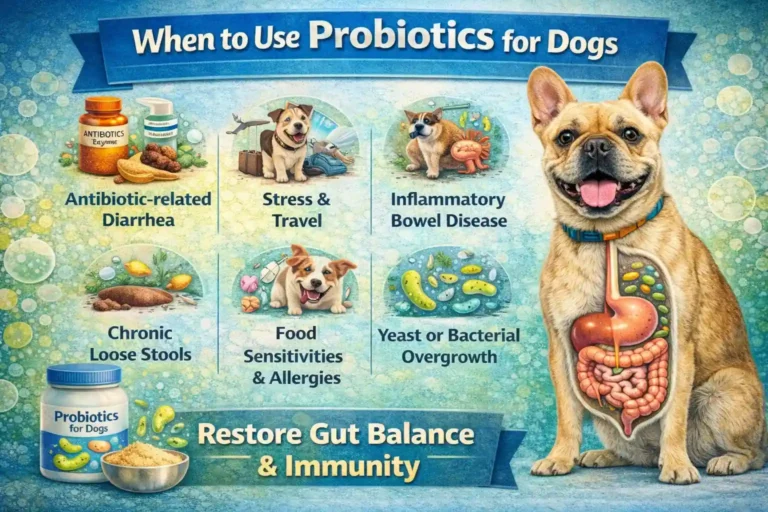
Probiotics are often preferred for dogs with:
• Antibiotic-associated diarrhea (Weese & Martin, 2011).
• Stress-related digestive upset (travel, boarding)
• Inflammatory Bowel Disease (IBD)
• Food sensitivities and allergies
• Chronic loose stools
• Yeast or bacterial overgrowth
Rather than digesting food, probiotics restore gut balance and intestinal immunity (Weese & Martin, 2011).
Can Dogs Take Digestive Enzymes and Probiotics Together?
Yes—and in many cases, this is the most effective approach.
• Enzymes reduce digestive workload.
• Probiotics improve gut environment.
• Together, they enhance nutrient absorption and stool quality.
Many veterinary-formulated supplements combine enzymes + probiotics for comprehensive digestive support (PetMD, 2023).
The Role of Bile, pH, and Hydrochloric Acid (HCl)
Digestive efficiency depends on proper internal conditions (MSD Veterinary Manual, 2025).
• Bile: Essential for fat digestion
• HCl (stomach acid): Activates protein-digesting enzymes
• Optimal pH: Enables enzyme function and microbial balance
Low stomach acid—common in senior dogs—can impair enzyme activation, leading to indigestion and nutrient deficiencies (MSD Veterinary Manual, 2025).
Digestive Enzymes and Probiotics for Dogs with IBD
Dogs with Inflammatory Bowel Disease (IBD) often require a tailored approach:
• Probiotics: Reduce inflammation and dysbiosis (Weese & Martin, 2011).
• Digestive enzymes: Lower digestive strain
⚠️ Veterinary supervision is essential, as incorrect supplementation may worsen symptoms.
Digestive supplements are generally safe, but misuse can cause problems:
• Excessive enzymes may irritate the stomach lining.
• Incorrect probiotic strains may worsen diarrhea.
• Dogs with cancer, pancreatitis, or severe illness need vet approval.
Best practice: Introduce supplements gradually and monitor stool, appetite, and behavior (PetMD, 2023).
How to Choose the Right Digestive Supplement for Dogs
When selecting a product, look for:
• Clearly listed enzyme types (amylase, protease, lipase)
• Dog-specific probiotic strains
• Weight-based dosing instructions
• No unnecessary sugars or fillers
• Veterinary-backed formulations
Combination supplements often provide the most balanced support for long-term gut health (PetMD, 2023).
Digestive Enzymes vs Probiotics: Final Verdict
There is no single “better” option for every dog.
• Digestive enzymes improve how food is broken down.
• Probiotics improve how the gut environment functions.
For many dogs—especially those with chronic digestive issues—using both together delivers the best results (PetMD, 2023).
Key Takeaway
If your dog struggles with digestion, gas, diarrhea, or nutrient absorption, understanding the difference between digestive enzymes and probiotics allows you to make a safer, smarter choice—ideally with veterinary guidance (MSD Veterinary Manual, 2025).
Medical Disclaimer
This article is for educational purposes only and does not replace professional veterinary diagnosis or treatment. Always consult a licensed veterinarian for medical concerns.
Frequently Asked Questions (FAQs)
1. How long do digestive enzymes take to work in dogs?
Often within a few meals, especially for stool consistency and gas.
2. How long do probiotics take to work in dogs?
Typically 5–14 days, depending on strain and condition.
3. Can puppies take digestive enzymes or probiotics?
Yes, but only puppy-specific formulations and vet guidance are recommended.
4. Are digestive enzymes safe for long-term use?
Yes, when properly dosed and formulated for dogs.
5. Do probiotics help with dog allergies?
They may support immune balance and reduce inflammatory responses.
6. Should enzymes be given before or with food?
Most powdered enzymes are mixed directly with food.
7. Can probiotics cause diarrhea at first?
Mild, temporary stool changes can occur during adjustment.
References
- PetMD. (2023). Pancreatic enzymes for dogs and cats. PetMD. https://www.petmd.com/pet-medication/pancreatic-enzymes-dogs-and-cats
- MSD Veterinary Manual. (2025). Introduction to digestive disorders of dogs. MSD Veterinary Manual. https://www.msdvetmanual.com/dog-owners/digestive-disorders-of-dogs/introduction-to-digestive-disorders-of-dogs
- Cridge, H., Twedt, D. C., Marolf, A. J., Sharkey, L. C., & Steiner, J. M. (2023). Exocrine pancreatic insufficiency in dogs and cats. Journal of Veterinary Internal Medicine. https://pubmed.ncbi.nlm.nih.gov/37944252/
- Weese, J. S., & Martin, H. (2011). Assessment of commercial probiotic bacterial contents and label accuracy. Canadian Veterinary Journal, 52(1), 43–46. https://www.ncbi.nlm.nih.gov/pmc/articles/PMC3003575/