
When Is Dog Diarrhea an Emergency? Red Flags & Vet Signs
Written by: Dr. Akram Khan, DVM
Medically Reviewed by: Dr. Zaheer Hussain, PhD
Last updated on September 15, 2026
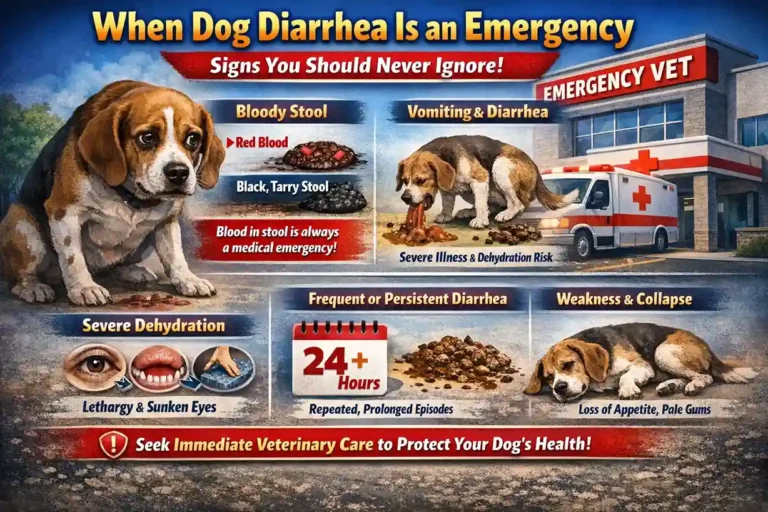
Dog diarrhea is not always an emergency, but some signs should never be ignored. If your dog has diarrhea with blood, black tarry stool, repeated vomiting, weakness, dehydration, pale gums, severe belly pain, or loss of appetite, it may point to a serious digestive or internal problem. Many owners search for when dog diarrhea is an emergency because mild loose stool can look similar to something dangerous at first. This guide explains the red flags, when home care is not safe, and when you should call your vet or visit an emergency animal hospital.
When Is Dog Diarrhea an Emergency?
Dog diarrhea is an emergency if it comes with blood in the stool, black tarry poop, repeated vomiting, weakness, collapse, dehydration, pale gums, severe abdominal pain, fever, or loss of appetite. Diarrhea lasting more than 24–48 hours can also be risky, especially in puppies, senior dogs, small dogs, or dogs with existing health problems. In these cases, contact a veterinarian or emergency animal hospital right away.
Is Dog Diarrhea Always an Emergency?
Occasional loose stools may occur due to:
- Minor diet changes
- Stress or excitement
- Mild gastroenteritis
However, diarrhea becomes an emergency when it is accompanied by systemic signs, blood, dehydration, or repeated episodes, which could indicate a serious underlying problem affecting your dog’s health.
Emergency Signs of Diarrhea in Dogs
When to Call an Emergency Vet Immediately
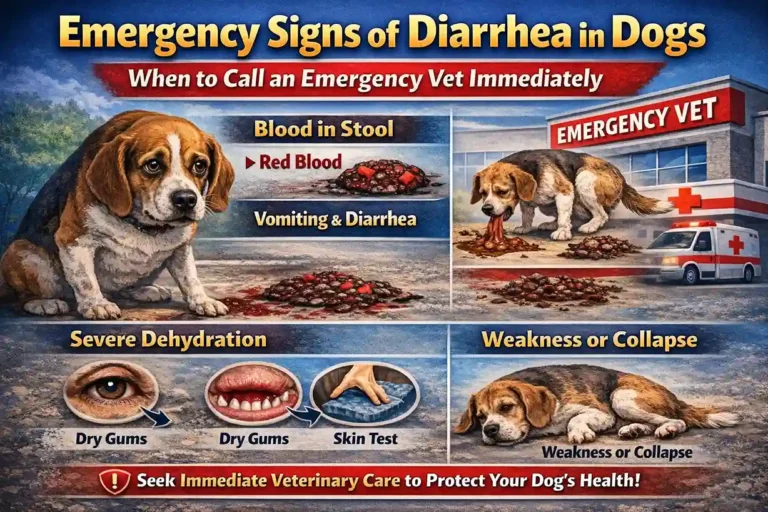
If your dog has diarrhea and experiences any of the following symptoms, seek urgent veterinary care:
- Blood in stool (haematochezia or melena)
- Black, tarry stools (melena, indicating digested blood)
- Vomiting with diarrhea
- Weakness or collapse
- Lack of appetite lasting more than 24 hours
- Dehydration (dry gums, sunken eyes)
- Pale gums or bleeding
- Repeated bouts or episodes of diarrhea
- Abdominal pain or bloating
- Fever or signs of infection
These symptoms indicate a potentially serious condition affecting the digestive tract, immune system, or circulatory system. Immediate veterinary attention is necessary to address these concerns.
Blood in Dog Stool: A Medical Emergency Explained
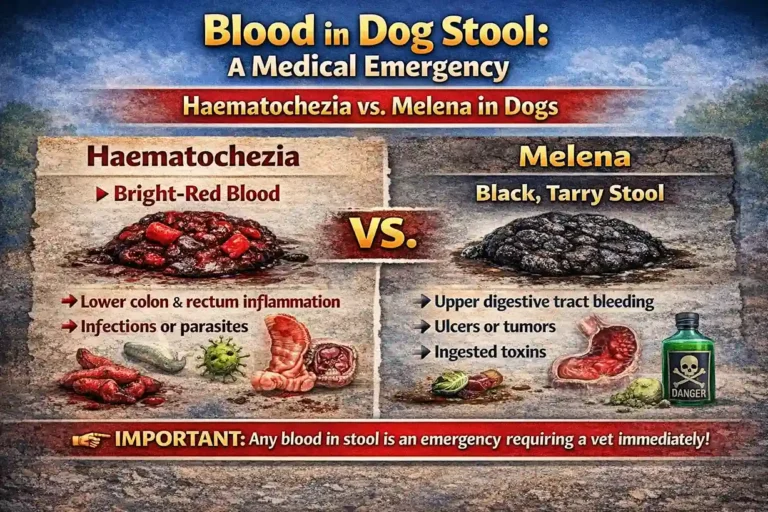
- Haematochezia: Bright red blood or streaks in the stool. Often linked to colon inflammation, infections, or parasites.
- Melena: Black, tarry stools. Indicates digested blood from the upper digestive tract, commonly associated with ulcers, internal bleeding, cancer, or toxins.
👉 Important: Both forms of bleeding are considered emergencies and require immediate veterinary examination to determine the underlying cause.
Repeated Diarrhea Episodes: Why Frequency Matters
Diarrhea becomes dangerous when:
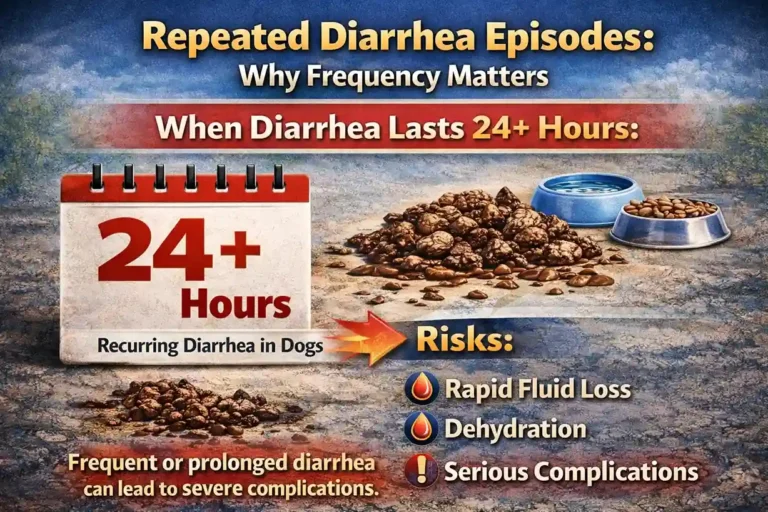
- It occurs more than 2–3 times in a short period.
- It persists beyond 24 hours.
- It increases in frequency or amount.
Repeated episodes of diarrhea can lead to rapid fluid loss, dehydration, and more serious complications, especially in puppies, senior dogs, and smaller breeds.
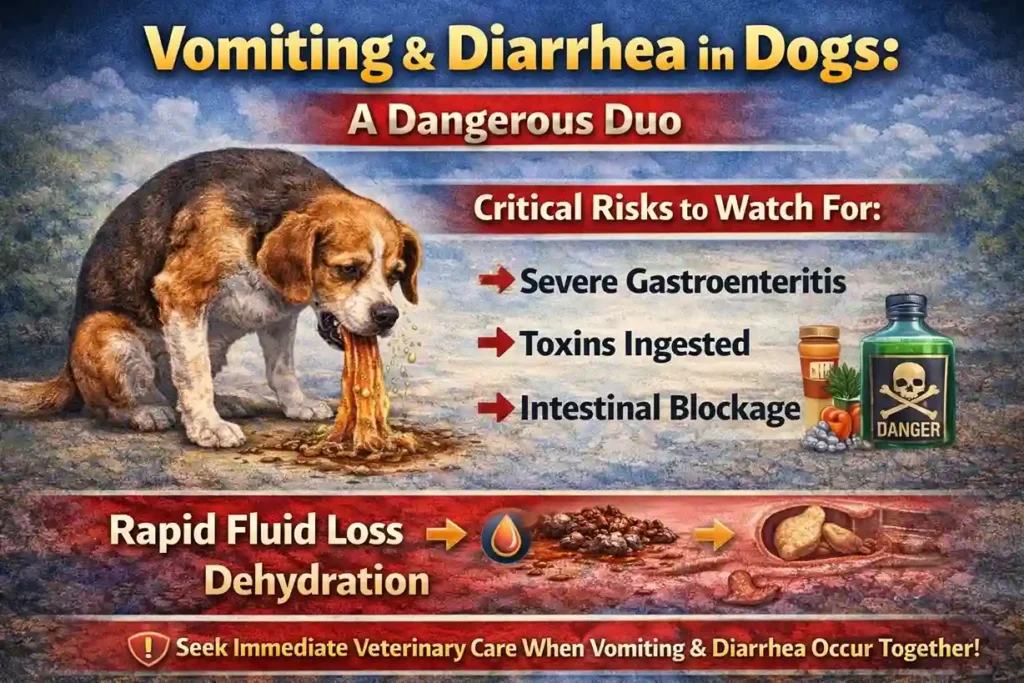
Vomiting and Diarrhea Together: A Red Flag Combination
The combination of vomiting and diarrhea in dogs is a red flag and can signal:
- Severe gastroenteritis (inflammation of the stomach and intestines)
- Parvovirus infection
- Toxin ingestion
- Intestinal blockage or foreign object ingestion
This combination of symptoms can overwhelm a dog’s system and should never be managed at home without veterinary input. Seek emergency care immediately.
Dehydration: A Silent but Deadly Risk
Dehydration worsens quickly in dogs with diarrhea, especially when combined with vomiting. Look for signs like
- Dry or sticky gums
- Sunken eyes
- Lethargy and weakness
- Reduced skin elasticity
If dehydration is left untreated, it can lead to serious complications and require IV fluids administered by an emergency vet.
Puppy Diarrhea: Always an Emergency?
Puppies are particularly vulnerable to diarrhea due to their immature immune systems and faster dehydration rates. Common emergency causes in puppies include:
- Parvovirus
- Intestinal parasites
- Immature immune system response
Any puppy with diarrhea—especially when accompanied by vomiting, blood, or weakness—should be seen by a veterinarian immediately for proper diagnosis and treatment.
Dangerous Causes of Emergency Diarrhea in Dogs
Certain conditions require immediate veterinary attention and can lead to severe health issues, including:
- Parvovirus
- Severe bacterial or viral infections
- Foreign body blockage (e.g., toys, bones, household items)
- Toxin exposure (e.g., chemicals, plants, or foods)
- Acute hemorrhagic diarrhea syndrome (AHDS)
- Cancer affecting the colon or digestive tract
- Immune-mediated diseases that cause severe inflammation
These conditions cannot be diagnosed or treated safely at home, and prompt veterinary care is crucial.
Foreign Object or Toy Ingestion and Diarrhea
Dogs are notorious for eating things they shouldn’t, including:
- Toys
- Fabric
- Rocks
- Household items
Ingestion of these foreign objects can cause an intestinal blockage, leading to diarrhea, vomiting, abdominal pain, and potential life-threatening complications. Surgery may be required to remove the object, and delaying care can increase the risk of injury.
Changes in Appetite, Gums, Eyes, and Nose: Subtle Emergency Indicators
Look for changes in your dog’s behavior and appearance:
- Sudden loss of appetite
- Pale or bleeding gums
- Dull eyes
- Dry nose combined with lethargy
These signs may indicate a more serious, systemic illness affecting your dog’s overall health—not just a stomach problem.
When Home Care Is NOT Appropriate for Dog Diarrhea
Do NOT rely on home remedies if:
- Blood is present in the stool
- Your dog appears weak or lethargic
- Diarrhea lasts longer than 24 hours
- Vomiting or fever accompanies diarrhea
- Your dog is a puppy, senior, or immunocompromised
Home care delays in these situations can worsen the outcomes, making veterinary intervention critical for recovery.
What to Expect at an Emergency Vet Visit
During an emergency vet visit, your dog will undergo a series of diagnostic tests to determine the cause of diarrhea and associated symptoms. Common procedures include:
- Physical examination
- Stool analysis
- Blood tests to check for infections or imbalances
- Imaging (X-ray or ultrasound) to detect blockages or tumors
- IV fluids to address dehydration and stabilize the dog
Timely intervention at an emergency clinic can help prevent complications and save lives.
How Quickly Should You Act?
Timing is Critical
If you’re unsure whether the situation requires emergency care, it’s always best to err on the side of caution:
- Call your veterinarian
- Visit an emergency animal hospital
- Do not wait “to see if it improves” when you notice red flags
Early treatment significantly improves prognosis and can prevent life-threatening complications.
Medical Disclaimer
This article is for educational purposes only and does not replace professional veterinary advice. Always consult a licensed veterinarian for diagnosis or treatment of digestive conditions.
Frequently Asked Questions(FAQs)
1. How long can a dog have diarrhea before it’s an emergency?
If diarrhea lasts more than 24 hours or is accompanied by blood, vomiting, or weakness, seek veterinary care immediately.
2. Is blood in dog diarrhea always an emergency?
Blood in the stool, whether bright red or black, indicates a serious issue and requires urgent veterinary attention.
3. Can dehydration kill a dog with diarrhea?
Severe dehydration can be fatal without prompt treatment, especially when diarrhea and vomiting are present.
4. What should I do if my dog’s diarrhea won’t stop?
If diarrhea persists for more than 24 hours, especially with symptoms like blood or weakness, seek immediate veterinary care.
5. Can puppies get diarrhea from anything?
Puppies are especially vulnerable to diarrhea, often caused by infections like parvovirus or parasites. Always seek veterinary help for puppies with diarrhea.
Medical Disclaimer:
This article is for informational purposes only and should not replace professional veterinary advice, diagnosis, or treatment. Always consult your veterinarian or an emergency veterinary hospital if you suspect your dog is experiencing a medical emergency.
References
- Cornell University College of Veterinary Medicine. (2024). Diarrhea in dogs. Retrieved from https://www.vet.cornell.edu/departments-centers-and-institutes/riney-canine-health-center/canine-health-information/diarrhea
- Ferguson Animal Hospital. (2024, June 15). Diarrhea in dogs: When is it an emergency? Retrieved from https://www.fergusonanimalhospital.com/site/blog/2024/06/15/diarrhea-dogs
- Fetch Specialty & Emergency Veterinary Centers. (2025). When is dog diarrhea an emergency? Retrieved from https://fetchvets.com/blog/dog-diarrhea-emergency/
- Tracy Vets. (2024, May 22). Diarrhea in dogs — When is it an emergency? Retrieved from https://www.tracyvets.com/site/blog/2024/05/22/diarrhea-dog-emergency
- VetCheck Pet Urgent Care Center. (2025). Vomiting or diarrhea in pets: When to seek emergency care. Retrieved from https://www.vetcheckforpetscarmel.com/blog/vomiting-or-diarrhea-in-pets-when-to-seek-emergency-care