
Dog Diarrhea After Antibiotics: How Long & What to Do
Written by: Dr. Akram Khan, DVM
Medically Reviewed by: Dr. Khalid Mehmood, PhD (Assistant Professor in Clinical Veterinary Medicine)
Last updated on October 20, 2026
Can Antibiotics Cause Diarrhea in Dogs?
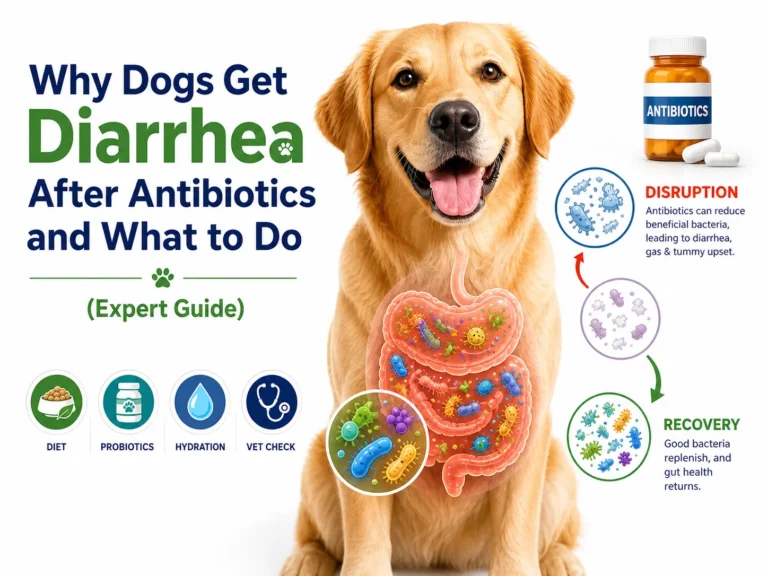
Why Does My Dog Have Diarrhea After Antibiotics?
Antibiotics are commonly prescribed by veterinarians to treat infections in dogs, but they often come with the side effect of diarrhea. If your dog is experiencing this, it’s essential to understand why it happens and how you can support their recovery.
If your dog has diarrhea after antibiotics, you are probably wondering how long dog diarrhea lasts after antibiotics and what to do next. Antibiotics can disturb the healthy bacteria in your dog’s gut, leading to loose stool, urgency, gas, or an upset stomach during or after treatment. In many mild cases, recovery starts with hydration, small bland meals, and vet-approved probiotics for dogs after antibiotics. This guide explains what to feed a dog with diarrhea after antibiotics, when symptoms are normal, and when diarrhea after antibiotics in dogs needs a vet check.
Dog diarrhea after antibiotics usually happens because antibiotics disturb the healthy bacteria in your dog’s gut. Mild diarrhea often improves within 2–5 days after the antibiotic course ends. To help your dog recover, offer fresh water, small bland meals, and vet-approved probiotics. Call your vet if diarrhea is bloody, severe, lasts more than 48–72 hours, or comes with vomiting, weakness, dehydration, or loss of appetite.
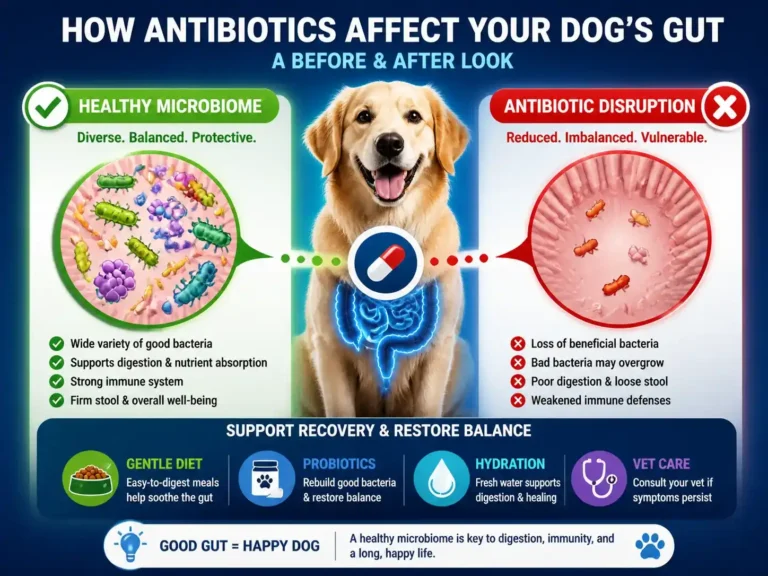
The gut microbiome is made up of trillions of beneficial bacteria and other microorganisms that play a vital role in digestion and overall health. Antibiotics, especially broad-spectrum ones, don’t differentiate between harmful and helpful bacteria, leading to a disruption in the balance of gut microbes. This disruption is known as dysbiosis and can cause your dog to experience digestive problems, such as diarrhea. Understanding this mechanism is key to managing your dog’s recovery.
What Are the Common Causes of Diarrhea After Antibiotics in Dogs?
Antibiotic-associated diarrhea can occur for a few reasons:
- Reduction in healthy gut bacteria necessary for digestion
- Overgrowth of harmful bacteria when the balance is disturbed
- Changes in carbohydrate fermentation, leading to watery stools
- Damage to the intestinal lining, which causes increased irritation
These factors can explain why diarrhea might start during the antibiotic treatment and continue even after the treatment is completed.
Is Diarrhea a Normal Side Effect of Antibiotics in Dogs?
Recent studies suggest that antibiotics are often overprescribed in cases of uncomplicated diarrhea in dogs, and this can lead to unnecessary gastrointestinal problems. Research from the UK found no significant difference in recovery rates between dogs treated with antibiotics and those that weren’t, suggesting that overusing antibiotics might worsen the problem rather than help. Long-term antibiotic use can also lead to antimicrobial resistance and further gut issues, highlighting the importance of using antibiotics carefully. (Patel, S., et al. 2023).
Are Probiotics Good for Dogs After Antibiotics?
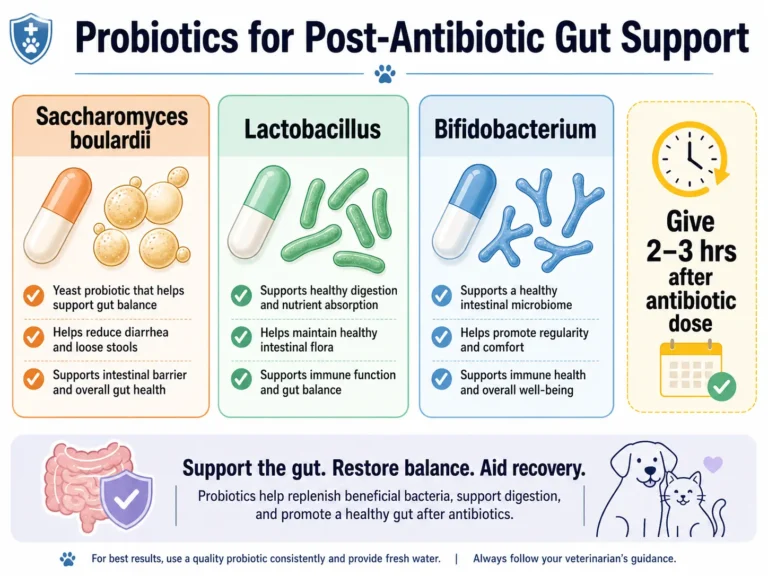
Probiotics are a useful tool in restoring balance to your dog’s gut after antibiotics. Certain strains of probiotics, such as Saccharomyces boulardii and Lactobacillus, can help to repopulate beneficial gut bacteria and support digestion during recovery. These probiotics, when used at the right time, have been shown to reduce the severity and duration of diarrhea. (Duffy, J., et al. 2024).
What Should I Feed a Dog With Diarrhea After Antibiotics?
Diet plays a critical role in your dog’s recovery. Here are some key dietary recommendations:
- Small, frequent meals of easily digestible foods
- Low-fat, bland diets that reduce stress on the digestive system
- Hydration support with water or electrolyte solutions to replace lost fluids
- Fiber-rich foods, like pumpkin, to absorb excess water and firm up stool
Proper nutrition can help restore normal stool consistency and ease digestion while supporting gut recovery.
How Do Probiotics Help Dogs Recover After Antibiotics?
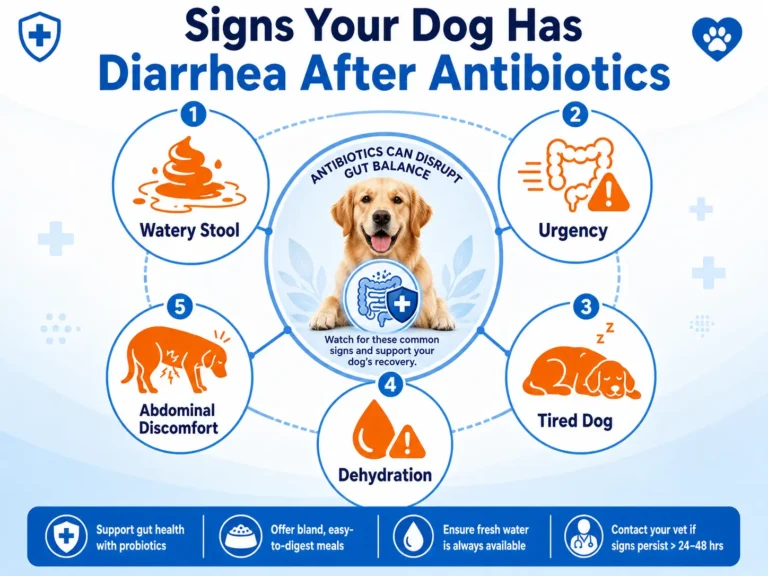
Probiotics work by introducing beneficial bacteria that antibiotics may have wiped out. Some great strains to consider include
- Saccharomyces boulardii—a particularly resilient strain
- Lactobacillus and Bifidobacterium—both of which support gut health
Probiotics, like inulin and psyllium, help nourish beneficial bacteria and encourage long-term gut health. Together, they can speed up the recovery process and support your dog’s digestive system in the long run.
When Should I Give My Dog Probiotics After Antibiotics?
It’s recommended to wait at least 2–3 hours after the antibiotic dose before giving probiotics.
How Long Does Diarrhea Last After Antibiotics in Dogs?
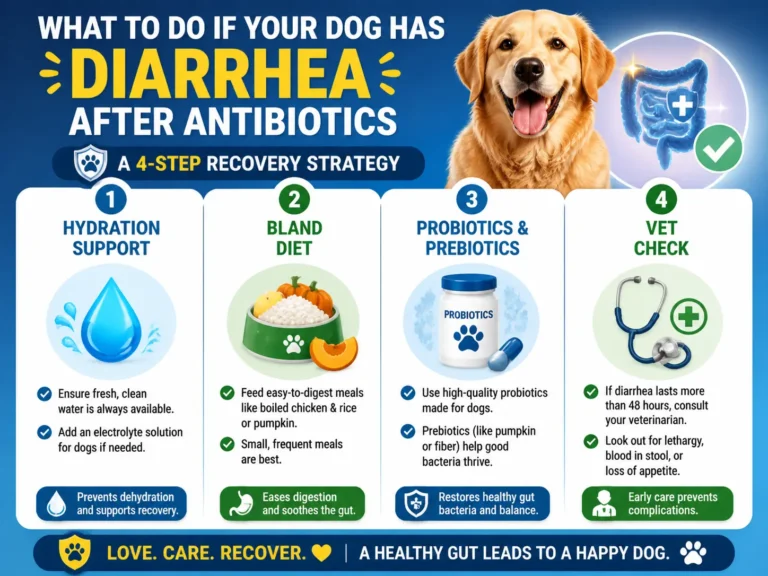
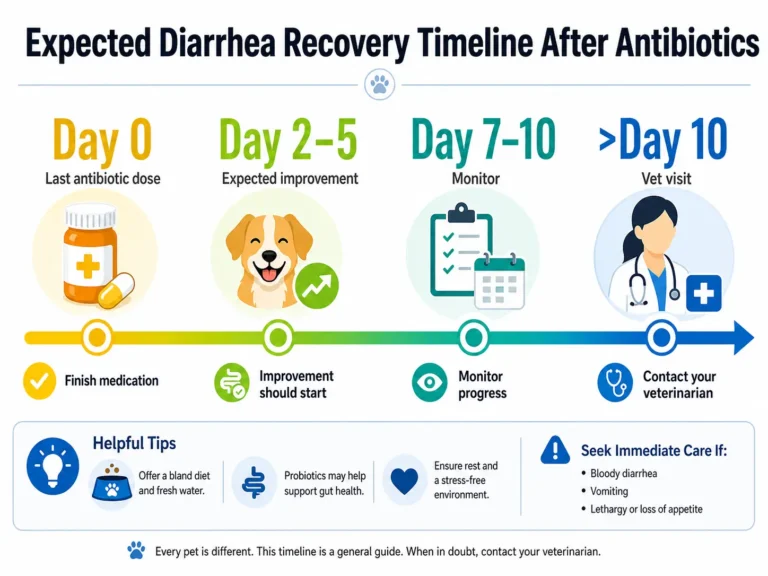
In most mild cases, diarrhea improves within 2–5 days after stopping antibiotics. However, if diarrhea lasts for more than 48–72 hours or if your dog seems unwell, it’s time to consult your veterinarian to rule out any other issues. If the diarrhea is severe or worsening, professional evaluation is needed.
When Should I Worry About Dog Diarrhea After Antibiotics?
If your dog shows any of these signs, it’s essential to seek veterinary care right away:
- Black, tarry, or bloody stools
- Severe vomiting or inability to keep fluids down
- Lethargy or weakness
- Severe abdominal pain or discomfort
- Signs of dehydration, like dry gums or sunken eyes
These symptoms may point to more serious health issues that require immediate medical attention
How Can I Help My Dog Recover From Diarrhea After Antibiotics?
Final Thoughts: Supporting Your Dog's Gut Health After Antibiotics
Antibiotic-associated diarrhea is a common issue that many dog owners face, but by understanding why it happens and implementing the right dietary changes, probiotics, and close monitoring, you can help your dog recover quickly. Following these expert recommendations will give your dog the best chance for a full recovery while supporting their long-term gut health.
Medical Disclaimer
This article provides general information and is not intended to replace professional veterinary advice. Always consult your veterinarian before making decisions regarding your pet’s health.
Frequently Asked Questions (FAQs)
1. Why does my dog get diarrhea after taking antibiotics?
Antibiotics can disrupt the balance of bacteria in your dog’s gut, leading to antibiotic-associated diarrhea.
2. How long does diarrhea last after antibiotics in dogs?
Most dogs improve within 2–3 days after stopping antibiotics, but if diarrhea lasts more than 48–72 hours, consult your vet.
3. What can I do to help my dog recover from diarrhea after antibiotics?
Support your dog’s recovery by offering a bland diet, introducing probiotics, and keeping them hydrated.
4. Can probiotics help with diarrhea after antibiotics?
Yes, probiotics can help restore beneficial bacteria in the gut and reduce the severity of diarrhea.
5. When should I call the vet for my dog’s diarrhea?
If your dog has blood in the stool, severe vomiting, lethargy, or diarrhea lasting more than 10 days, seek veterinary care.
6. Is it safe to stop antibiotics if my dog has diarrhea?
Never stop antibiotics without consulting your vet, as this can lead to incomplete treatment and possible infection recurrence.
7. Can I give my dog probiotics during antibiotics?
It’s best to give probiotics a few hours after the antibiotic dose or wait until the course is complete for the best results.
References :
D’Angelo, S., Fracassi, F., Bresciani, F., Galuppi, R., Diana, A., Linta, N., Bettini, G., Morini, M., & Pietra, M. (2018). Effect of Saccharomyces boulardii in dogs with chronic enteropathies: A double-blind, placebo-controlled study. Veterinary Record, 182(9), 258. DOI: 10.1136/vr.104241
Igarashi, H., Maeda, S., Ohno, K., Horigome, A., Odamaki, T., & Tsujimoto, H. (2014). Effect of oral administration of metronidazole or prednisolone on fecal microbiota in dogs. PLOS ONE, 9(9), e107909. DOI: 10.1371/journal.pone.0107909
Manchester, A. C., Webb, C. B., Blake, A. B., Sarwar, F., Lidbury, J. A., Steiner, J. M., & Suchodolski, J. S. (2019). Long-term impact of tylosin on fecal microbiota and fecal bile acids of healthy dogs. Journal of Veterinary Internal Medicine, 33(6), 2605–2617. DOI: 10.1111/jvim.15635
Marshall-Jones, Z. V., Patel, K. V., Castillo-Fernandez, J., Lonsdale, Z. N., Haydock, R., Staunton, R., Amos, G. C. A., & Watson, P. (2024). Conserved signatures of the canine fecal microbiome are associated with metronidazole treatment and recovery. Scientific Reports, 14, 5277. DOI: 10.1038/s41598-024-51338-7
Pilla, R., Gaschen, F. P., Barr, J. W., Olson, E., Honneffer, J. B., Guard, B. C., Blake, A. B., Villanueva, D., Khattab, M. R., AlShawaqfeh, M. K., Lidbury, J. A., Steiner, J. M., & Suchodolski, J. S. (2020). Effects of metronidazole on the fecal microbiome and metabolome in healthy dogs. Journal of Veterinary Internal Medicine, 34(5), 1853–1866. DOI: 10.1111/jvim.15871
Werner, M., Suchodolski, J. S., Straubinger, R. K., Wolf, G., Steiner, J. M., Lidbury, J. A., & Hartmann, K. (2020). Effect of amoxicillin-clavulanic acid on clinical scores, intestinal microbiome, and amoxicillin-resistant Escherichia coli in dogs with uncomplicated acute diarrhea. Journal of Veterinary Internal Medicine, 34(3), 1166–1176. DOI: 10.1111/jvim.15775