
IBS in Dogs: How Stress, Diet, and Probiotics Affect Digestive Health
Written by: Dr. Akram Khan, DVM
Medically Reviewed by: Dr. Muhammad Saeed, PhD
Last updated on September 05, 2026
IBS in dogs (irritable bowel syndrome) is a frustrating digestive disorder that affects many dogs. Unlike other digestive issues, IBS symptoms in dogs are linked to how the gastrointestinal system functions, rather than causing visible damage. Dogs with IBS may experience symptoms such as chronic diarrhea, constipation, and bloating, often triggered by stress or dietary changes. Understanding IBS management in dogs is crucial, as it requires targeted care to improve digestive health and reduce flare-ups.
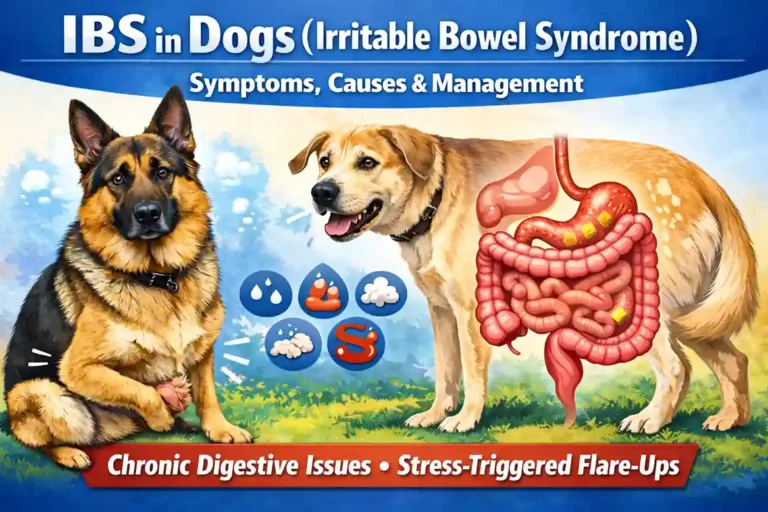
What Is IBS in Dogs?
Irritable bowel syndrome in dogs is a disorder of gut function rather than structure. The intestines appear normal on imaging and biopsy, but bowel motility and sensitivity are altered.
Key characteristics of canine IBS include:
- Abnormal intestinal contractions
- Heightened gut sensitivity
- Strong response to stress and diet changes
- Intermittent flare-ups with symptom-free periods
IBS is often stress-responsive and may worsen during travel, boarding, schedule changes, or dietary transitions.
IBS vs IBD in Dogs: What’s the Difference? (High-Intent Comparison)
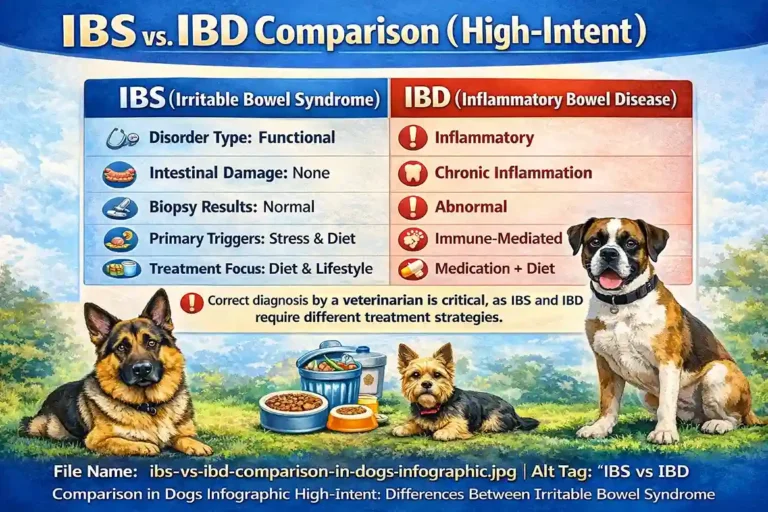
Feature | IBS (Irritable Bowel Syndrome) | IBD (Inflammatory Bowel Disease) |
Disorder type | Functional | Inflammatory |
Intestinal damage | None | Chronic inflammation |
Biopsy results | Normal | Abnormal |
Primary triggers | Stress & diet | Immune-mediated |
Treatment focus | Diet & lifestyle | Medication + diet |
Correct diagnosis by a veterinarian is critical, as IBS and IBD require different treatment strategies.
Common IBS Symptoms in Dogs
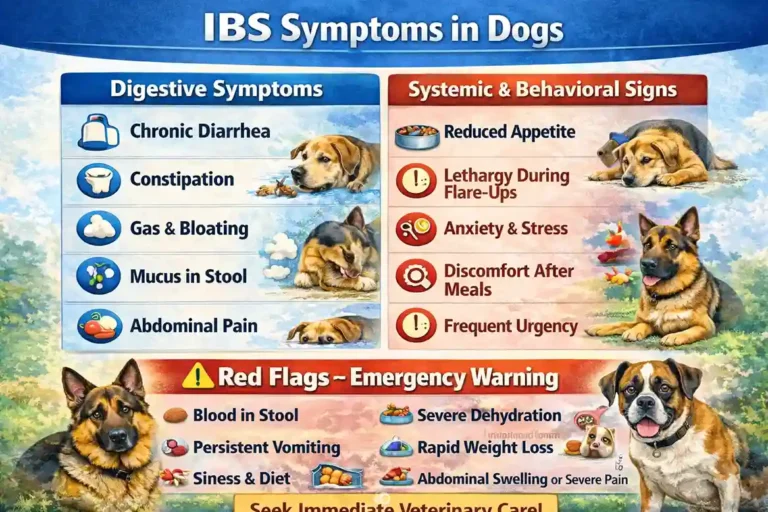
Digestive Symptoms
Dogs with IBS may experience:
- Chronic or intermittent diarrhea (often with mucus)
- Constipation
- Alternating diarrhea and constipation
- Gas and bloating
- Abdominal pain or cramping
- Frequent or urgent bowel movements
Systemic & Behavioral Signs
IBS can also cause:
- Reduced appetite
- Lethargy during flare-ups
- Anxiety-related symptoms
- Discomfort after meals
- Stress-triggered digestive episodes
⚠️ Emergency warning: Blood in stool, severe dehydration, unexplained weight loss, or persistent vomiting requires immediate veterinary care.
What Causes IBS in Dogs?
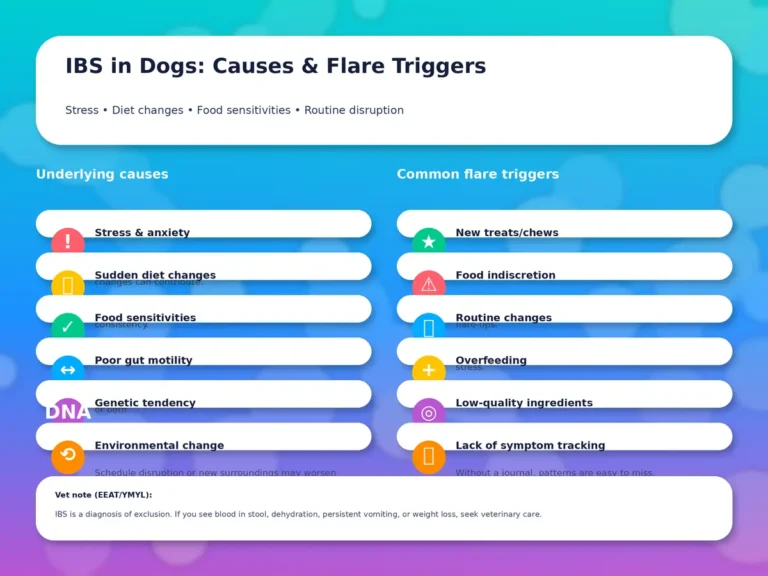
IBS is multifactorial, meaning several factors often interact.
Common IBS Triggers
- Stress and anxiety
- Sudden diet changes
- Food allergies or sensitivities
- Poor gut motility
- Genetic predisposition
- Environmental changes
Dog Breeds with Higher IBS Risk
Some breeds appear more prone to functional GI disorders, including:
- German Shepherds
- Boxers
- Yorkshire Terriers
Genetics may influence how the gastrointestinal tract contracts and responds to stress.
How Veterinarians Diagnose IBS in Dogs
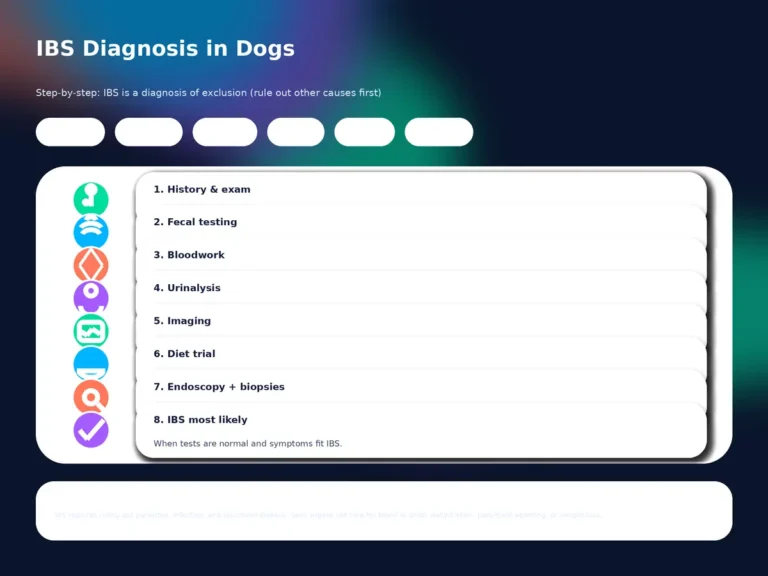
IBS is a diagnosis of exclusion, meaning other causes must be ruled out first.
Common Diagnostic Tests
Veterinarians may perform:
- Complete blood count (CBC)
- Comprehensive blood chemistry panel
- Fecal float and fecal smear (parasites, Giardia)
- Urinalysis
- Abdominal X-rays or ultrasound
- Endoscopy with biopsies (if needed)
When these tests return normal results and symptoms persist, IBS becomes the most likely diagnosis.
IBS Triggers That Cause Symptom Flare-Ups
Identifying and avoiding triggers is essential for long-term management.
Common IBS Flare Triggers
- Travel or boarding
- New foods or treats
- Food indiscretion (trash, table scraps)
- Changes in routine
- Overfeeding
- Poor-quality ingredients
Keeping a symptom journal often helps identify patterns.
Best Diet for Dogs With IBS (Core Management Strategy)
Diet is the foundation of IBS management.
IBS Diet Principles for Dogs
- Highly digestible ingredients
- Limited-ingredient formulas
- Low-fat content
- Single protein source (e.g., chicken or turkey)
- No artificial colors, flavors, or preservatives
Veterinary-Recommended Diet Options
Veterinarians may recommend:
- Hydrolyzed protein diets
- Prescription gastrointestinal diets
- Low-fat therapeutic formulas such as Hill’s Prescription Dietary gastrointestinal lines
(Diet selection should always be guided by a veterinarian.)
Food Trials & Food Allergies in Dogs With IBS
Why Food Trials Matter
Food sensitivities are a major IBS trigger—even without skin symptoms.
Food trial rules:
- Feed one diet exclusively for 8–12 weeks
- No treats, flavored medications, or table scraps
- Monitor stool quality, bloating, and discomfort
A successful food trial often leads to long-term symptom control.
Role of Probiotics in IBS Management
How Probiotics Help Dogs With IBS
- Balance intestinal bacteria
- Improve stool consistency
- Reduce gas and bloating
- Support the gut-brain axis
Choose probiotics formulated for dogs and supported by veterinary research.
Managing Stress & Anxiety in Dogs With IBS
Stress management is just as important as diet.
Stress-Reduction Strategies
- Predictable feeding schedules
- Calm feeding environments
- Regular daily exercise
- Behavioral training
- Vet-approved anxiety-reducing supplements
Reducing stress often dramatically reduces IBS flare frequency.
Medications Used for IBS in Dogs (When Needed)
In moderate to severe cases, veterinarians may prescribe:
- Antispasmodics to reduce intestinal cramping
- Anti-diarrheal medications
- Soluble fiber supplements
- Gut motility regulators
Medication is usually short-term and combined with diet and lifestyle changes.
Home Care Tips for Dogs With IBS
Daily IBS Management
- Feed small, frequent meals
- Avoid sudden dietary changes
- Track symptoms and triggers
- Maintain hydration
- Monitor body condition and energy levels
Consistency is the cornerstone of IBS control.
When IBS Becomes an Emergency
Seek immediate veterinary care if your dog develops:
- Severe dehydration
- Persistent vomiting
- Blood in feces
- Rapid weight loss
- Extreme lethargy
- Abdominal swelling or severe pain
Long-Term Outlook for Dogs With IBS
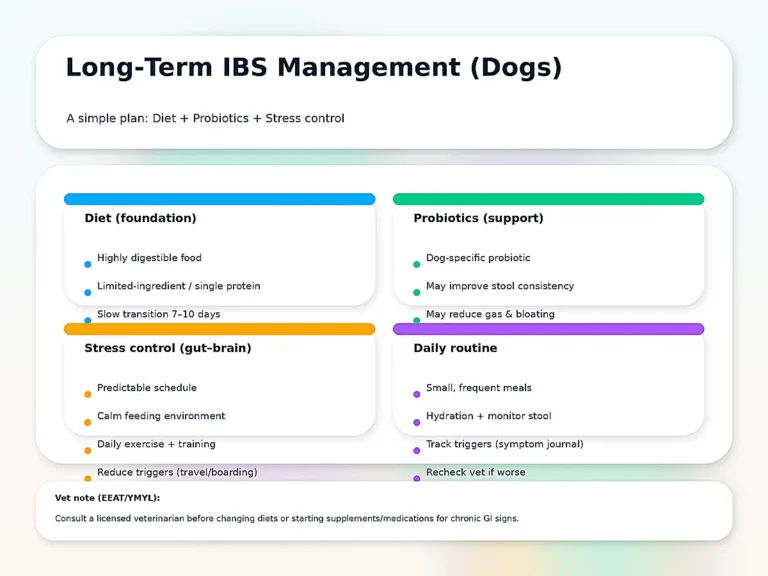
The prognosis for IBS is generally excellent:
✅ IBS does not shorten lifespan.
✅ Most dogs improve significantly with management.
✅ Many dogs remain symptom-free for years.
IBS requires ongoing management, not a one-time fix.
Medical Disclaimer:
This article reflects current veterinary consensus and guidance supported by organizations such as the American Veterinary Medical Association.
Always consult a licensed veterinarian before diagnosing or treating gastrointestinal disorders in dogs.
Frequently Asked Questions (FAQs)
1. Is IBS in dogs curable?
No, but it is highly manageable with diet and lifestyle changes.
2. Can stress alone trigger IBS in dogs?
Yes. Stress is one of the most common IBS triggers.
3. Is IBS the same as IBD in dogs?
No. IBS is functional, while IBD involves inflammation.
4. Do dogs with IBS need lifelong diet changes?
Most benefit from long-term dietary consistency.
5. Can probiotics help dogs with IBS?
Yes, when dog-specific and vet-approved.
6. Does IBS cause weight loss in dogs?
Not typically—weight loss suggests another condition.
References
Association of American Feed Control Officials. (2023). AAFCO dog food nutrient profiles.
Washabau, R. J., & Day, M. J. (2013). Canine and feline gastroenterology. Elsevier.