
Sensitive Stomach in Dogs: Symptoms, Causes & What to Do
Written by: Dr. Akram Khan, DVM
Medically Reviewed by: Dr. Zaheer Hussain, PhD
Last updated on September 15, 2026
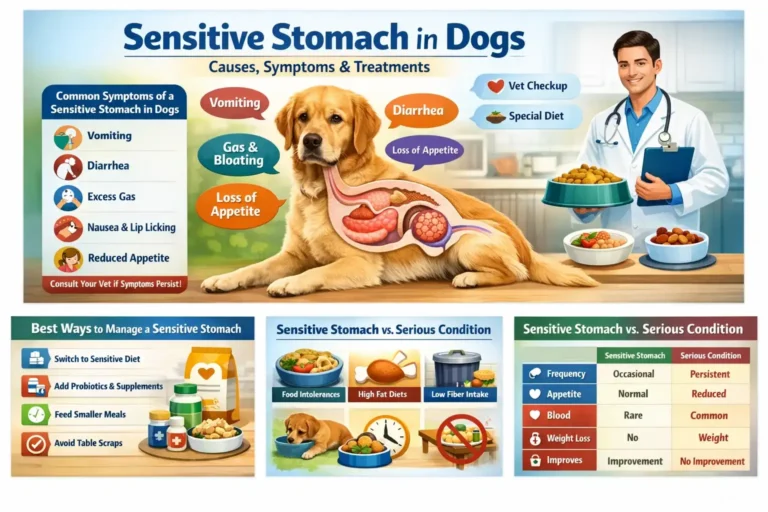
If you often wonder, “why is my dog’s stomach so sensitive?” you are not alone. A sensitive stomach in dogs usually means the digestive system reacts easily to certain foods, treats, table scraps, sudden diet changes, stress, or high-fat meals. Common dog sensitive stomach symptoms include vomiting after meals, loose stool, diarrhea, gas, stomach gurgling, nausea, reduced appetite, or discomfort after eating. Some dogs only need a more consistent diet and slower food transitions, but ongoing symptoms, blood in the stool, weight loss, repeated vomiting, fever, lethargy, or loss of appetite should be checked by a veterinarian.
What Are the Signs of a Sensitive Stomach in Dogs?
Signs of a sensitive stomach in dogs may include vomiting after eating, loose stool, diarrhea, gas, stomach noises, nausea, lip licking, reduced appetite, grass eating, bloating, or discomfort after meals. These symptoms may happen after food changes, fatty treats, table scraps, stress, or ingredient intolerance. If symptoms are persistent, severe, or include blood, weight loss, fever, or lethargy, contact a veterinarian.
What Does "Sensitive Stomach" Mean in Dogs?
A sensitive stomach in dogs refers to a digestive system that has a heightened reaction to certain foods, ingredients, or external factors. This can cause gastritis, nausea, and difficulty properly digesting foods. Dogs are omnivores, but their tolerance to food types varies widely. A dog with a sensitive stomach may have difficulty digesting:
- Certain protein sources (like chicken, beef)
- High-fat content
- Low-quality ingredients
- Sudden food switches
- Treats or table scraps
These digestive issues can affect not just one organ but the entire stomach, intestines, and overall digestive system.
Common Symptoms of a Sensitive Stomach in Dogs
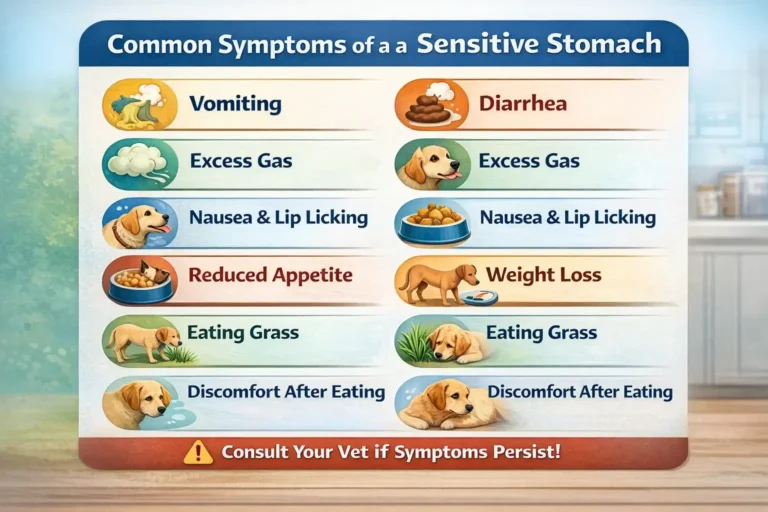
Dogs with a sensitive stomach often exhibit mild-to-moderate but recurring symptoms, including:
- Vomiting, especially after meals
- Diarrhea or loose stool
- Excess gasand stomach growling
- Nausea, often accompanied by lip-licking
- Reduced appetite or refusal to eat
- Weight fluctuations
- Occasional blood in stool(requires veterinary attention)
- Eating grassor avoiding food
- Discomfort after eating(e.g., bloating or gurgling stomach)
⚠️ If your dog experiences persistent symptoms such as fever, blood in stool, or lethargy, it’s important to consult a veterinarian to rule out serious conditions.
What Causes a Sensitive Stomach in Dogs?
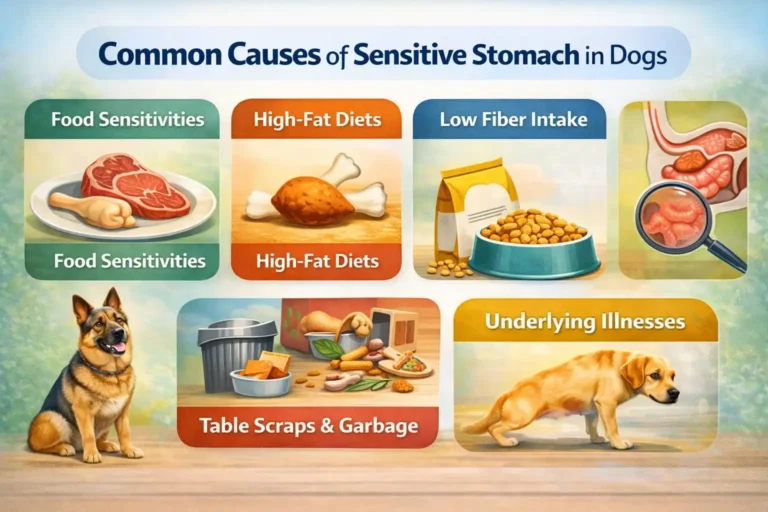
1. Dietary Sensitivity or Intolerance
Many dogs have poor tolerance to certain ingredients or sudden changes in their diet. Unlike food allergies, which involve the immune system, food sensitivities are digestive intolerances. Common triggers include:
- Certain proteins like chicken or beef
- Artificial additives or low-quality dog food
- High-fat diets
- Sudden diet changes
2. High Fat Content in Dog Food
Foods rich in fats can overwhelm a sensitive dog’s digestive system. High-fat diets can cause:
- Vomiting
- Diarrhea
- Pancreatic stress
Dogs with sensitive stomachs tend to do better on moderate-to-low-fat diets to ease digestion.
3. Low Fiber or Poor Fiber Sources
Fiber plays a critical role in regulating digestion and ensuring proper stool consistency. If the fiber in your dog’s diet is of poor quality or insufficient, it can lead to digestive upset. Gentle fiber sources like
- Beetroot pulp
- Psyllium
- Inulin
These fiber sources support digestion and help manage stool consistency.
4. Table Scraps, Bones, and Garbage
Feeding dogs human food or table scraps or allowing them to scavenge for garbage can irritate the stomach lining and disrupt their digestion. Even small amounts can trigger symptoms in sensitive dogs.
5. Underlying Digestive Conditions
Sometimes a sensitive stomach is a symptom of more serious conditions, such as
- Gastritis (inflammation of the stomach lining)
- Stomach ulcers
- Inflammatory bowel disease (IBD)
- Parasites
- Stomach cancer (rare, but serious)
If symptoms are persistent or recurring, veterinary evaluation is essential.
Breeds Commonly Prone to Sensitive Stomachs
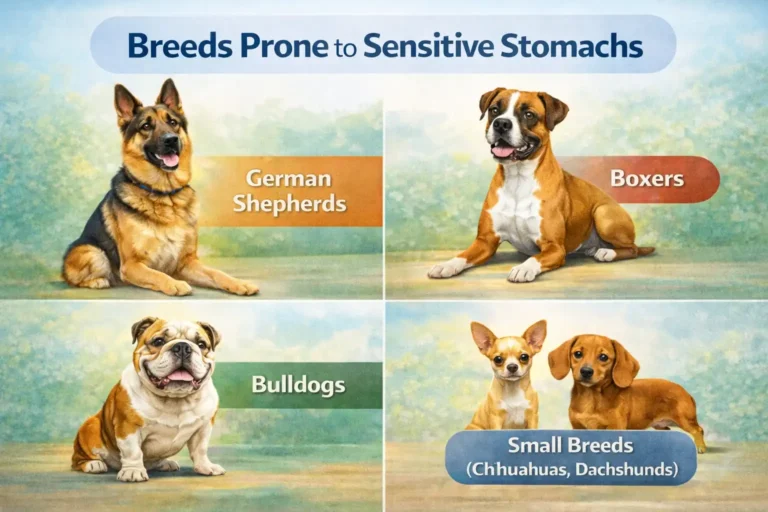
While any dog can develop stomach sensitivity, certain breeds are more prone due to their digestive systems being more delicate:
- German Shepherds
- Boxers
- Bulldogs
- Small breeds with delicate stomachs (e.g., Chihuahuas, Dachshunds)
Breed alone doesn’t guarantee a sensitive stomach, but it can increase the likelihood.
How Veterinarians Diagnose a Sensitive Stomach
To diagnose the cause of a sensitive stomach in dogs, veterinarians may recommend the following:
- Diet history review: To understand recent diet changes or food intolerance.
- Blood work: To check for systemic issues or infections.
- Fecal testing: To rule out parasites.
- Rule-out testing: For infections or other underlying conditions.
- Monitoring response to diet modification: In some cases, a vet may recommend changing the dog’s diet and observing how it affects symptoms.
Diagnosis is often made by excluding other conditions and observing improvement with the proper management approach.
Best Management Options for Dogs With Sensitive Stomachs
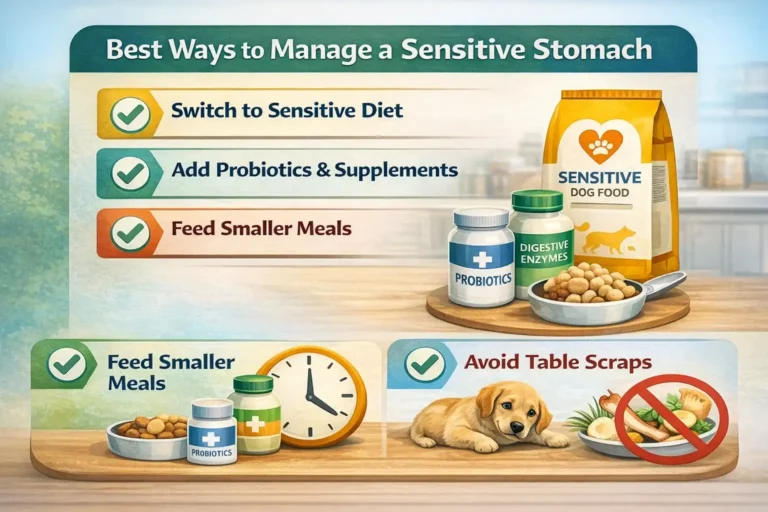
1. Switch to Sensitive Stomach Dog Food (Gradually)
A slow transition to a sensitive stomach dog food is essential. Transitioning over 7–10 days helps avoid sudden digestive upset. Look for food with:
- Limited ingredients
- High-quality protein sources (e.g., lamb, turkey, fish)
- Moderate fat content
- Easily digestible carbohydrates
- Added fiber sources to help digestion
In some cases, prescription dog food may be recommended for chronic cases
2. Choose the Right Protein Source
Single-source proteins are generally easier for sensitive dogs to digest. Gentle protein options include:
- Lamb
- Fish
- Turkey
- Hydrolyzed protein (recommended by veterinarians for extreme sensitivities)
3. Add Vet-Approved Supplements
Supplements can support digestive health, but it’s important to consult a vet before adding them. Some effective supplements include:
- Probiotics for gut health balance
- Digestive enzymes to support nutrient breakdown
- Fiber supplements for better stool consistency
Vitamins and minerals to support overall digestive health
4. Avoid Extras and Table Scraps
Remove any human food, snacks with unknown ingredients, table scraps, or fatty treats. Consistency is key when managing a sensitive stomach.
5. Feed Smaller, More Frequent Meals
Feeding smaller meals throughout the day can help prevent nausea and vomiting by reducing the digestive load.
When to See a Vet for a Sensitive Stomach
Seek veterinary care if your dog experiences:
- Persistent vomiting or diarrhea
- Blood in stool
- Fever or unusual lethargy
- Weight loss or lack of appetite lasting more than 24–48 hours
- Abdominal pain or discomfort after eating
Early veterinary care can help prevent complications and improve your dog’s quality of life.
Sensitive Stomach vs Serious Digestive Disease
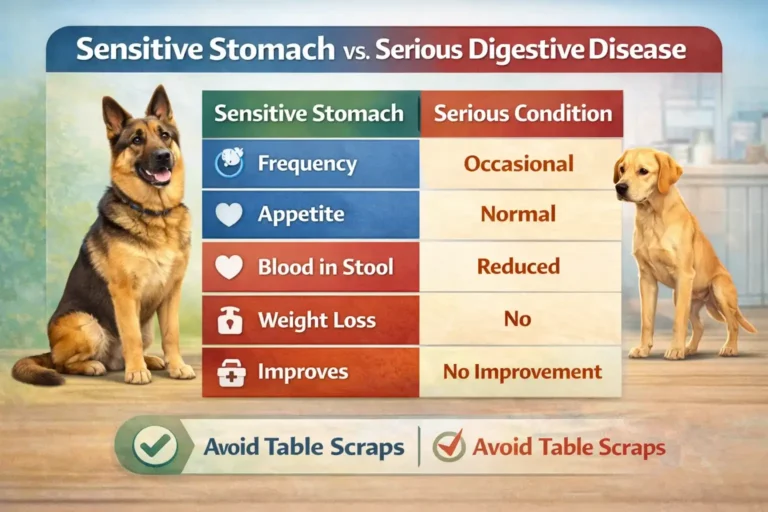
Feature | Sensitive Stomach | Serious Condition |
Frequency | Occasional | Persistent |
Appetite | Mostly normal | Reduced |
Blood | Rare | Common |
Weight loss | No | Yes. |
Response to diet | Improves | No improvement |
Can Sensitive Stomach Issues Be Cured?
There is no “cure” for a sensitive stomach in dogs, but most dogs experience long-term control and improved digestive health with the right approach. Consistent management, proper diet, and ingredient consistency can significantly improve your dog’s quality of life.
Frequently Asked Questions(FAQs)
1. Is a sensitive stomach the same as a food allergy?
No. Food allergies involve the immune system, while a sensitive stomach is a digestive intolerance.
2. Can puppies have sensitive stomachs?
Yes, puppies, especially during diet changes or growth stages, can develop sensitive stomachs.
3. Should I change food often for my dog’s sensitive stomach?
No. Frequent food switching can worsen sensitivity. Stick to a consistent diet for best results.
4. How can I manage my dog’s sensitive stomach?
Manage by feeding high-quality food, avoiding table scraps, and consulting a vet for proper management.
5. What foods should I avoid for my dog’s sensitive stomach?
Avoid high-fat foods, table scraps, dairy, and foods with artificial additives.
References
- American Kennel Club. (2023). Understanding sensitive stomachs in dogs: Causes and management.
- (2022). How to manage a dog with a sensitive stomach: Expert tips.
- VCA Animal Hospitals. (2024). Sensitive stomachs in dogs: Diagnosis and treatment options.