
Dog Digestive System: How It Works, Problems & Gut Health
Written by: Dr. Akram Khan, DVM
Medicaly Reviewed by: Dr. Khalid Mehmood, PhD
Last updated on August 28, 2026
Why Understanding the Dog Digestive System Matters
The dog digestive system plays a major role in your pet’s overall health, from breaking down food and absorbing nutrients to supporting immunity, gut health, and normal dog poop. When digestion is disturbed, pet owners may notice common dog digestive problems such as diarrhea, vomiting, bloating, gas, constipation, food intolerance, or mucus and blood in stool. This vet-reviewed guide explains how the canine digestive system works, the warning signs of dog digestive issues and symptoms, and how diet, probiotics, digestive enzymes, and timely veterinary care can help support better gut health in dogs.

Understanding how digestion works from mouth to anus, helps dog owners recognize early warning signs & symptoms, make informed dietary choices, and use digestive supplements, enzymes, and probiotics safely and effectively.
This vet-reviewed guide explains the structure, function, disorders, diagnosis, and treatment of the canine digestive system using current veterinary science.
Overview of the Dog Digestive System
The digestive system in dogs is a complex biological system designed to:
- Break down food (digestion)
- Absorb nutrients (absorption)
- Eliminate waste (elimination)
Main Components of the Canine Digestive Tract
- Mouth & teeth
- Esophagus
- Stomach
- Small intestine (duodenum, jejunum, ileum)
- Large intestine (colon, rectum)
- Anus
Supporting organs include:
- Pancreas (digestive enzymes)
- Liver (bile production)
- Gallbladder (bile storage)
Step-by-Step Digestion in Dogs (From Mouth to Poop)
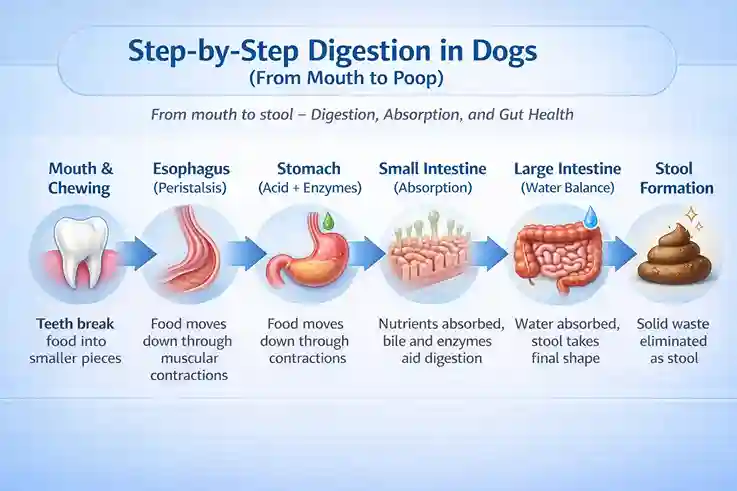
1. Mouth & Chewing
Digestion begins in the mouth, where food is broken down mechanically by teeth. Saliva helps with swallowing but contains minimal digestive enzymes compared to humans.
➡️ Poor chewing, dental disease, or rapid eating can contribute to bloating, gas, and vomiting.
2. Esophagus & Swallowing
Food travels down the esophagus through coordinated muscular contractions (peristalsis). Disorders here may cause regurgitation, which differs from vomiting.
3. Stomach: Acid & Breakdown
The stomach secretes hydrochloric acid and enzymes that:
- Kill bacteria
- Begin protein digestion
- Control gastric emptying
Common stomach-related issues:
- Gastritis
- Ulcers
- Bloating (gastric distention)
- Foreign body obstruction
4. Small Intestine: Nutrient Absorption
The small intestine is where most nutrients, fats, proteins, vitamins, and minerals are absorbed.
Key processes:
- Pancreatic enzyme release
- Bile secretion
- Microbial balance (gut flora)
Disorders here lead to:
- Malabsorption
- Weight loss
- Chronic diarrhea
- Nutrient deficiencies
5. Large Intestine: Water Balance & Stool Formation
The colon absorbs water and electrolytes and forms feces.
Abnormalities may cause:
- Constipation
- Mucus or blood in stool
- Straining during bowel movements
- Changes in stool color and consistency
Dog Poop as a Digestive Health Indicator
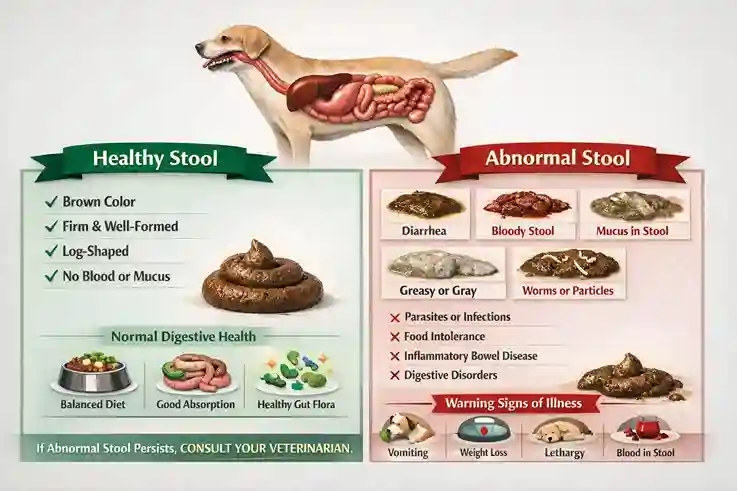
Dog poop provides critical clues about digestive health.
Healthy Stool Characteristics
- Brown color
- Firm but not hard
- Formed shape
- No blood or mucus
Abnormal Stool May Indicate:
- Parasites
- Infections
- Food intolerance
- Inflammatory bowel disease (IBD)
- Antibiotic-associated diarrhea
Common Digestive Disorders in Dogs
1. Diarrhea (Acute & Chronic)
Causes include:
- Dietary changes
- Parasites
- Bacterial or viral infections
- Antibiotics
- Stress
Risk: Dehydration and electrolyte imbalance.
2. Vomiting
May result from:
- Toxins
- Obstruction
- Infections
- Pancreatitis
- Gastric irritation
3. Malabsorption & Maldigestion
Often linked to:
- Pancreatic enzyme deficiencies
- Small intestinal disease
- Inflammatory disorders
4. Parasites & Infections
Common parasites include:
- Roundworms
- Hookworms
- Giardia
These disrupt digestion and nutrient absorption.
Diagnosis of Digestive System Disorders
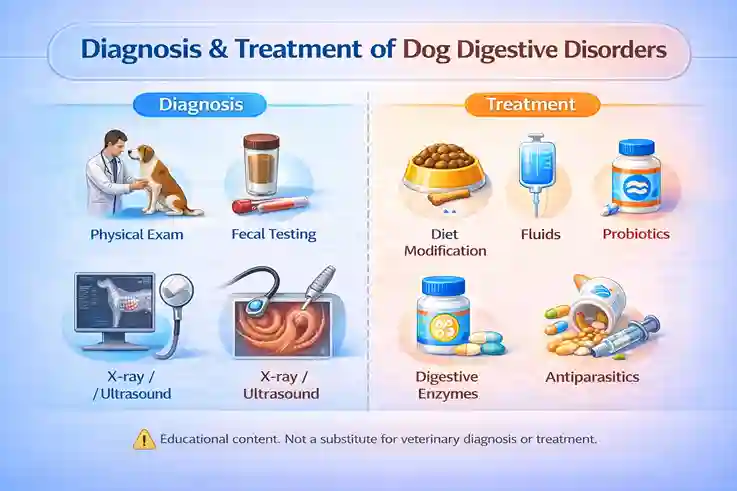
Veterinarians may use:
- Physical examination
- Fecal analysis
- Blood tests
- Imaging (X-ray, ultrasound)
- Endoscopy & biopsies
Early diagnosis improves outcomes and reduces complications.
Treatment Overview: How Digestive Disorders Are Managed
Treatment depends on the cause and severity.
Common Treatment Options
- Dietary modification
- Fluid therapy (for dehydration)
- Antibiotics (when indicated)
- Antiparasitic drugs
- Digestive enzyme replacement
- Probiotics for gut balance
⚠️ Never self-medicate without veterinary guidance, especially in chronic or severe cases.
Role of Digestive Enzymes in Dogs
Digestive enzymes help break down:
- Proteins
- Fats
- Carbohydrates
They are especially useful in:
- Pancreatic insufficiency
- Malabsorption disorders
- Senior dogs
Vet-approved digestive enzyme supplements (powders or capsules)
Probiotics and the Dog Gut Microbiome
Probiotics support:
- Beneficial bacteria balance
- Immune defense
- Stool consistency
- Recovery after antibiotics
They are commonly used for:
- Diarrhea
- Stress-related gut issues
- Antibiotic-induced dysbiosis
High-quality dog probiotics with clinically studied strains
Diet, Nutrition & Digestive Health
Foods That Support Digestion
- Highly digestible proteins
- Limited-ingredient diets
- Proper fiber balance
Foods That May Cause Problems
- Sudden diet changes
- Excess fat
- Food allergens
- Poor-quality fillers
When to See a Veterinarian Immediately
Seek veterinary attention if your dog has:
- Persistent vomiting or diarrhea
- Blood in stool
- Severe abdominal pain
- Lethargy or dehydration
- Rapid weight loss
Advances in Canine Digestive Health
Modern veterinary medicine now emphasizes:
- Gut microbiome science
- Precision nutrition
- Long-term digestive support
- Safer supplement formulations
These advances improve outcomes for chronic digestive conditions.
Medical Disclaimer
This article is for educational purposes only and does not replace professional veterinary diagnosis or treatment. Always consult a licensed veterinarian for medical concerns.
Frequently Asked Questions (FAQs)
1. How long does digestion take in dogs?
Typically 8–12 hours, depending on size, diet, and health.
2. Can dogs take human digestive supplements?
Only with veterinary approval—many human products are unsafe for dogs.
3. Are digestive supplements safe long-term?
When properly formulated and dosed, many are safe for long-term use under vet guidance.