
Greasy Stool in Dogs: Causes and Pancreas Problems
Written by: Dr. Muhammad Ihsan Ullah, PhD
Medically Reviewed by: Dr. Khalid Mehmood, PhD
Last updated on November 03, 2026
What Does Greasy Stool in Dogs Really Mean?
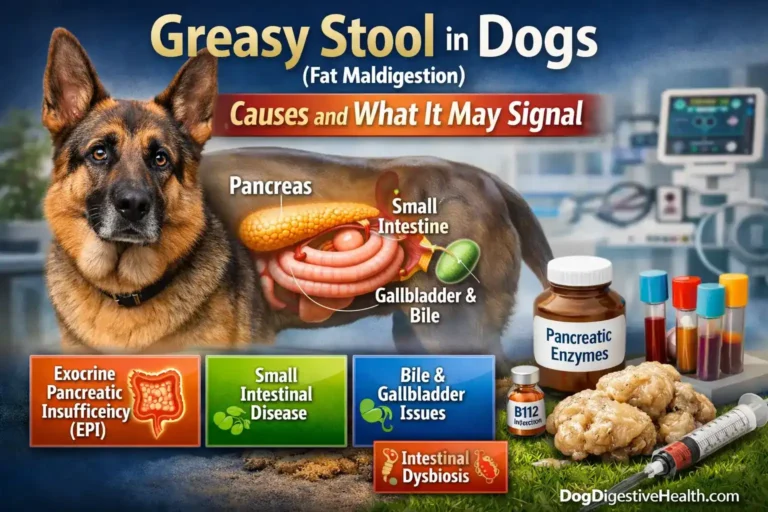
Many dog owners become concerned when they notice greasy stool in dogs, oily dog poop, or fatty stool in dogs. These changes in your dog’s feces are more than just a minor inconvenience—they may indicate fat maldigestion, digestive problems, or even a serious dog pancreas problem. In some cases, a pale dog poop appearance can signal issues with bile flow or the small intestine. Understanding what these signs mean can help you act in time and ensure your dog’s digestive health is properly addressed.
Quick Answer: What Does Oily Dog Poop Mean?
Oily dog poop means your dog’s stool looks shiny, greasy, or fatty, or leaves an oily residue. A single oily stool may happen after a rich or high-fat meal, but repeated oily poop can suggest poor fat digestion or fat absorption.
Veterinarians may call fatty stool steatorrhea. It can be linked with exocrine pancreatic insufficiency, chronic pancreatitis, small intestinal disease, bile flow problems, intestinal dysbiosis, parasites, or diet-related fat intolerance.
Oily dog poop is more concerning when it happens with:
- weight loss
- increased appetite
- pale or gray stool
- bulky stool
- foul smell
- chronic loose stool
- vomiting
- belly pain
- lethargy
- poor body condition
If your dog repeatedly has oily, greasy, pale, gray, or fatty stool, schedule a veterinary exam instead of only changing food at home.
What Is Steatorrhea in Dogs?
Steatorrhea in dogs means there is too much fat in the stool. Owners may describe it as oily dog poop, greasy stool, fatty feces, shiny stool, or poop that leaves an oily film.
Steatorrhea can happen when fat is not digested or absorbed properly. This may occur when the pancreas does not produce enough digestive enzymes, bile flow is reduced, or the small intestine cannot absorb nutrients normally.
Common signs linked with steatorrhea include:
- pale stool
- greasy stool
- bulky stool
- foul-smelling stool
- loose stool
- weight loss
- increased appetite
- gas
- poor coat condition
- poor body condition
Steatorrhea is not a diagnosis by itself. It is a clue that the digestive system may not be handling fat properly.
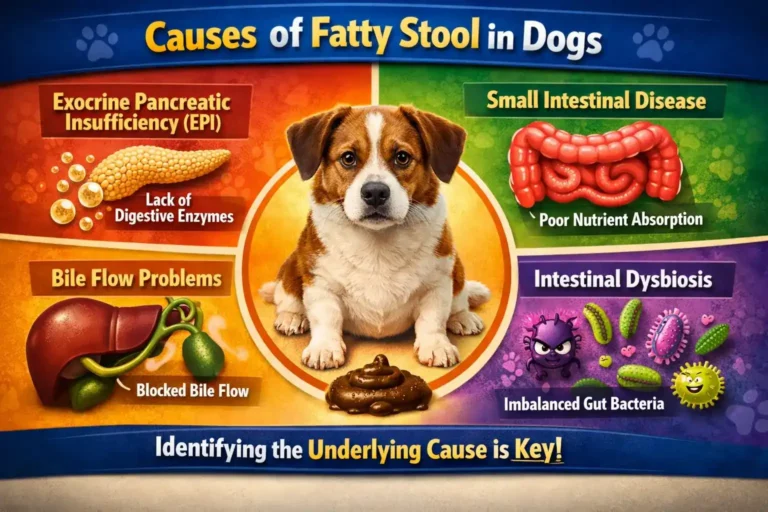
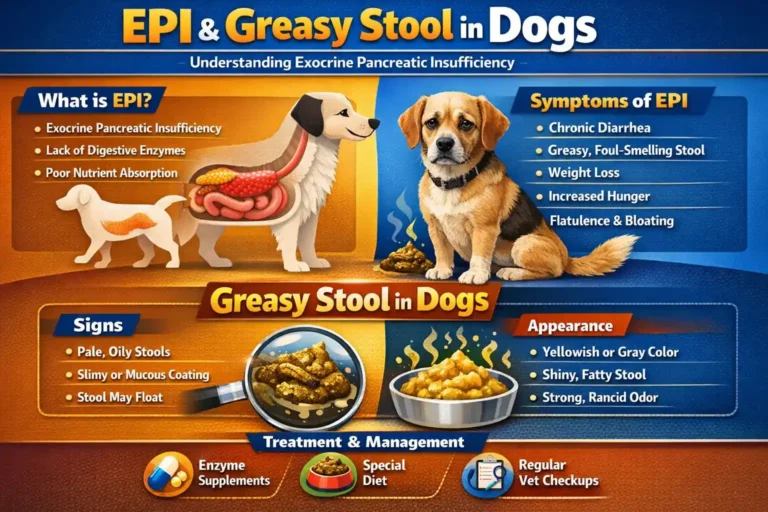
Causes and Signs of Greasy Stool in Dogs:
- Greasy, oily, or fatty stool may indicate fat maldigestion or malabsorption.
- Common causes include:
- Exocrine pancreatic insufficiency (EPI)—the pancreas cannot produce enough digestive enzymes.
- Small intestinal disease—inflammation or malabsorption.
- Bile flow problems—affect fat digestion.
- Intestinal dysbiosis—imbalance in gut bacteria.
- Signs to watch for:
- Pale, gray, or bulky stool
- Foul-smelling or greasy poop
- Weight loss, poor body condition, or increased appetite
- Action: Persistent greasy stool should prompt veterinary evaluation.
Why Should I Be Concerned About Greasy Stool in Dogs?
- The dog stool looking greasy or oily is not a disease by itself.
- It is a clinical clue that may point to a more important digestive disorder.
- The most important condition linked to this pattern is
- Exocrine pancreatic insufficiency (EPI)
- Other possible causes include:
- Chronic pancreatitis
- Small intestinal disease
- Bile-related disorders
- Intestinal dysbiosis
- Some parasitic infections
How Is Fat Normally Digested in Dogs?
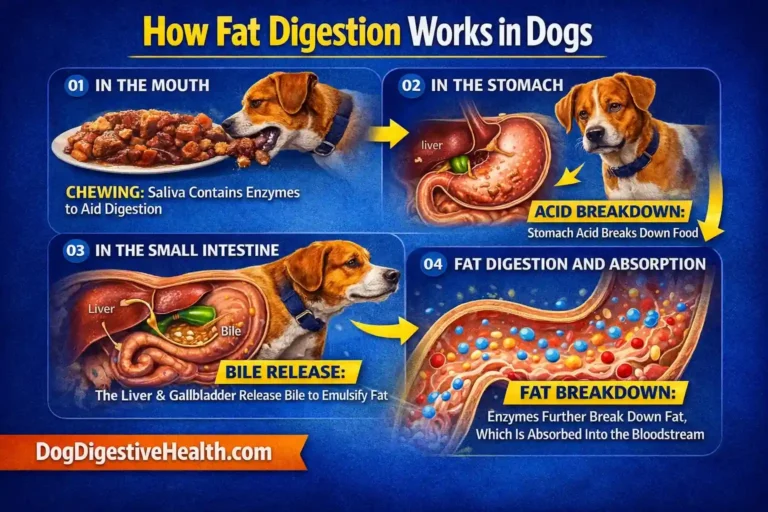
For normal fat digestion, several body systems must work together:
- The exocrine pancreas releases digestive enzymes
- Bile salts help emulsify fat
- The small intestine absorbs nutrients efficiently
If any step is disrupted:
- Undigested fat may remain in the intestinal tract
- That fat may pass into the feces
- The result can be:
- Pale, greasy stool
- Oily dog poop
- Bulky fatty feces
- Foul-smelling stool
Gray greasy poop
Could Greasy Stool in Dogs Be Caused by EPI (Pancreas Problem)?
- One of the most important causes of fatty stool in dogs is exocrine pancreatic insufficiency (EPI).
- EPI happens when the pancreas cannot produce enough digestive enzymes to properly break down:
- Fats
- Proteins
- Carbohydrates
- Because fat digestion is especially affected, many dogs with EPI pass:
- Pale stool
- Loose stool
- Voluminous feces
- Greasy stool
- Malodorous stool
Important point
- Clinical signs often do not appear until much of the pancreatic function has already been lost.
- That is why persistent greasy stool should never be ignored.
What Are the Main Causes of EPI in Dogs?
The two best-known causes of canine EPI are:
- Pancreatic acinar atrophy
- Chronic pancreatitis
Which Dog Breeds Are Most at Risk for Pancreas-Related Digestive Issues?
- German Shepherd Dog
- Rough Collie
- Eurasier
How Owners Commonly Describe Greasy Stool
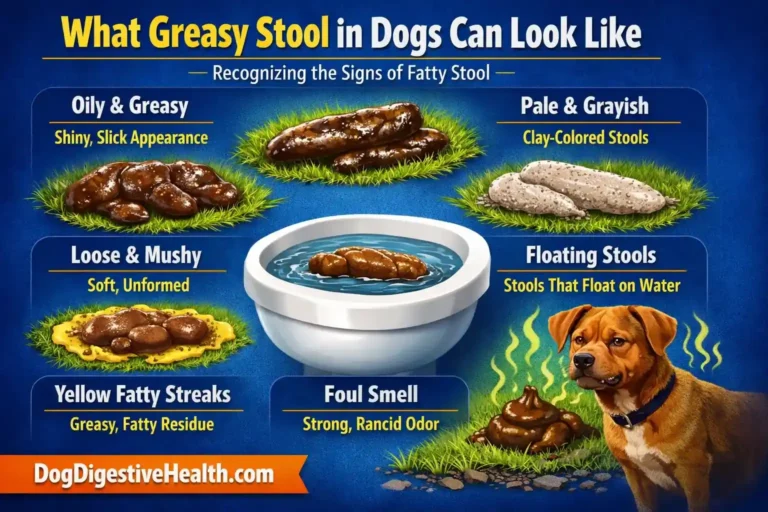
Owners often use phrases like:
- Greasy dog stool
- Oily dog poop
- Pale greasy stool in dogs
- Gray greasy stool in dogs
- Yellowish stool
- Poop that leaves an oily residue
These descriptions fit well with steatorrhea.
Dog Poop Looks Oily:
When dog poop looks oily, owners may notice more than just a color change. The stool may look shiny, greasy, sticky, pale, yellowish, gray, or unusually bulky.
Common descriptions include:
- “My dog’s poop looks oily.”
- “My dog has greasy poop.”
- “My dog’s stool leaves an oily residue.”
- “The poop is pale and shiny.”
- “The stool smells very foul.”
- “The poop is bulky and hard to pick up.”
- “My dog is losing weight but still hungry.”
These descriptions can fit fat maldigestion or malabsorption. However, stool appearance alone cannot confirm the cause. A vet may need tests such as TLI, cobalamin, folate, fecal testing, bloodwork, and imaging depending on the case.
Take a clear photo of the stool before cleaning it up. This can help your veterinarian understand what you are seeing.
Why Does My Dog’s Stool Look Pale, Gray, or Oily?
- A pale or gray greasy stool may increase suspicion for impaired bile delivery
- Bile is important for:
- Fat digestion
- Fat absorption
- This does not mean every pale stool is caused by biliary disease
But repeated pale or greasy stool should lead to a proper medical evaluation
Yellow Oily Dog Poop: Could It Be Pancreatitis?
Yellow, oily dog poop can happen for several reasons. It may be related to diet, rapid gut transit, bile changes, fat maldigestion, or pancreatic problems. Pancreatitis is one possible concern, especially if oily or yellow stool appears with vomiting, abdominal pain, lethargy, or loss of appetite.
Pancreatitis should be considered more urgently if your dog has:
- vomiting
- belly pain
- hunched posture
- poor appetite
- lethargy
- diarrhea
- greasy or yellowish stool
- symptoms after eating fatty food
Do not assume every yellow, oily stool means pancreatitis. But if your dog looks sick, painful, or weak, or keeps vomiting, contact a veterinarian promptly.
Dogs with repeated greasy stool, weight loss, and increased appetite may need evaluation for EPI or other malabsorption problems.
Gray or Clay-Colored Dog Poop With Greasy Texture
Gray or clay-colored dog poop with a greasy texture can be more concerning than one normal brown stool that looks slightly soft. Pale, gray, or clay-colored stool may suggest changes in fat digestion, bile flow, pancreas function, or small intestinal absorption.
Possible causes include:
- exocrine pancreatic insufficiency
- bile flow problems
- chronic pancreatitis
- small intestinal disease
- malabsorption
- high-fat diet
- digestive enzyme problems
A single pale stool after a diet change may not always be serious. But repeated gray, clay-colored, pale, greasy, or oily stool should be checked by a veterinarian, especially if your dog is losing weight, eating more than usual, vomiting, or having chronic diarrhea.
What Other Health Issues Can Cause Greasy Stool in Dogs?
Greasy stool does not always mean EPI.
Other important possibilities include
- Small intestinal disease
- Chronic enteropathies
- Inflammatory disease of the small intestine
- Mucosal damage
- Bile-related fat malabsorption
- Intestinal dysbiosis
- Parasitic infections
Why this matters
- Greasy stool should be viewed as a signal, not the final diagnosis
- If EPI is ruled out, the diagnostic focus often shifts toward the small intestine
How Can Intestinal Dysbiosis Affect a Dog’s Stool?
- Intestinal dysbiosis means disruption of the normal gut microbiome
- In some dogs, this may:
- Worsen digestion
- Affect bile salt handling
- Contribute to ongoing pale, loose, or greasy stool
- This may explain why some dogs continue to have digestive signs even after treatment begins
Can Vitamin B12 (Cobalamin) Deficiency Cause Greasy Stool in Dogs?
Vitamin B12 (cobalamin) deficiency commonly occurs alongside exocrine pancreatic insufficiency or certain intestinal diseases. It is not usually the direct cause of greasy stool, but it can affect a dog’s overall digestive health and response to treatment.
How Do Veterinarians Diagnose the Cause of Greasy Stool in Dogs?
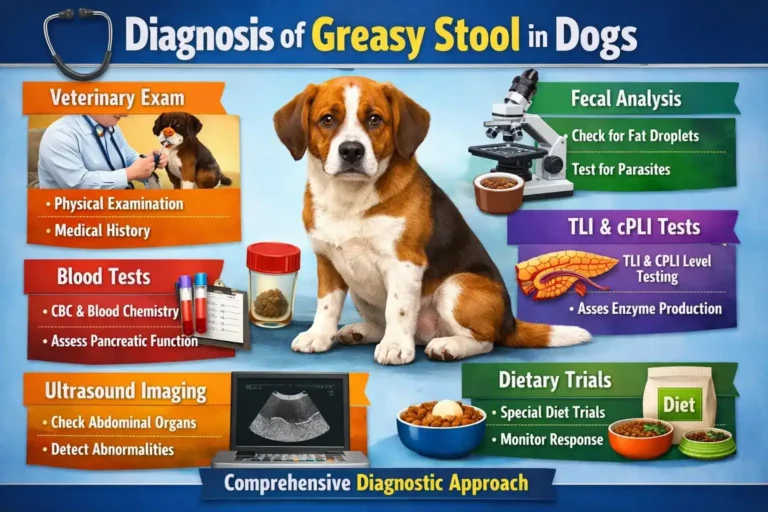
Veterinarians do not rely on stool appearance alone.
The main confirmatory test for EPI
- Serum trypsin-like immunoreactivity (TLI)
What TLI helps assess
- The amount of functioning pancreatic acinar tissue
Other tests that may be used
- Serum cobalamin
- Serum folate
- Fecal parasite screening
- Routine bloodwork
- Abdominal imaging
- Intestinal biopsy in selected cases
If EPI is not confirmed
The next step may be investigation for:
- Small intestinal disease
- Bile-related fat malabsorption
- Other causes of chronic digestive dysfunction
Can Diet Alone Make My Dog’s Stool Greasy or Oily?
- Yes, sometimes
- A dog that eats a rich or high-fat meal may temporarily pass:
- Softer stool
- Oily stool
But persistent or recurrent greasy stool is different
Oily Dog Poop After Fatty Food: When It May Be Temporary
Sometimes oily dog poop happens after a dog eats fatty food, table scraps, greasy meat, rich treats, or unfamiliar food. In these cases, the stool may become softer, shinier, smellier, or slightly oily for a short time.
This may be temporary if:
- It happens only once
- Your dog is bright and eating normally
- There is no vomiting
- There is no weight loss
- Stool returns to normal quickly
- There is a clear recent diet explanation
However, repeated oily stool is different. If greasy stool keeps happening even after the diet returns to normal, it may suggest fat maldigestion, malabsorption, pancreatic disease, bile-related problems, or small intestinal disease.
Avoid giving fatty leftovers, fried foods, bones with fat, rich sauces, or heavy treats to dogs with sensitive digestion.
When Should I Worry About Greasy Stool in Dogs?
If a dog repeatedly produces:
- Pale stool
- Fatty stool
- Bulky stool
- Foul-smelling stool
- Oily feces
Especially along with:
- Weight loss
- Increased appetite
- Excess gas
- Coprophagia
- Poor body condition
- Chronic loose stool
Then the concern shifts toward:
- True fat maldigestion
- Malabsorption
- Pancreatic disease
- Small intestinal disease
Oily Dog Poop vs Mucus in Dog Poop
Oily dog poop and mucus in dog poop can look similar, but they usually suggest different patterns.
Oily dog poop may look like:
- shiny
- greasy
- fatty
- pale or gray
- bulky
- foul-smelling
- oily on the surface
- difficult to pick up cleanly
Mucus in dog poop may look like:
- slimy
- jelly-like
- clear, white, or yellowish
- coating the stool
- stringy or slippery
- linked with frequent straining
Oily stool often points more toward fat digestion or absorption problems. Mucus often points more toward colon irritation or colitis-type inflammation.
Some dogs can have both oily stool and mucus, especially with chronic digestive disease. If stool changes persist, recur, or appear with blood, vomiting, weight loss, or lethargy, veterinary evaluation is needed.
How Is Greasy Stool in Dogs Treated?
Treatment depends on the underlying cause.
In dogs with confirmed EPI, treatment usually includes
- Pancreatic enzyme replacement therapy
- Dietary management
- Cobalamin supplementation, when needed
Dietary goals may include
- A highly digestible diet
- Adjustment of:
- Fiber content
- Fat content
- Monitoring:
- Stool quality
- Body condition
- Overall clinical response
If greasy stool is caused by another disorder
Treatment is directed toward the primary disease, such as
- Small intestinal disease
- Dysbiosis
- Bile-related disorders
- Parasitic disease
When Should I Take My Dog to the Vet for Greasy Stool?
Dogs with greasy stools should be assessed promptly if it is:
- Recurrent
- Persistent
- Getting worse
Seek veterinary care sooner if it appears along with:
- Weight loss
- Lethargy
- Vomiting
- Abdominal discomfort
- Chronic diarrhea
- Ravenous appetite
- Poor body condition
What Should I Learn from Greasy Stool in Dogs?
- Greasy stool in dogs is a visible sign that:
- Fat digestion
- Fat absorption
- Or both
may be impaired- The stool itself is not the disease
- It is a clue that the:
- Pancreas
- Bile flow
- Small intestine
- Or gut environment
may not be working properly- Early investigation can make a major difference
- In many dogs, especially those with EPI, treatment can lead to major improvement once the cause is identified
Medical Disclaimer
- This article is for educational purposes only
- It is not a substitute for veterinary diagnosis or treatment
- If your dog has persistent greasy stool, weight loss, vomiting, pain, or lethargy, seek veterinary care promptly.
Frequently Asked Questions (FAQs)
1. What does greasy stool in dogs usually mean?
- Greasy stool in dogs often suggests fat maldigestion or fat malabsorption
- It becomes more important when it happens repeatedly rather than once after a rich meal
2. Can greasy stool be a sign of EPI in dogs?
- Yes
- Exocrine pancreatic insufficiency (EPI) is one of the most important causes of:
- Pale stool
- Bulky stool
- Oily stool
- Fatty stool in dogs
3. Is greasy dog stool the same as diarrhea?
- Not always
- A dog can have greasy stool without classic watery diarrhea
- The main issue may be poor fat digestion, not just loose stool
4. Why is my dog’s poop pale and greasy?
- Pale, greasy stool may be linked to:
- Pancreatic enzyme deficiency
- Poor bile flow
- Small intestinal disease
5. Should I worry if my dog’s stool looks oily once?
- A single oily stool may happen after dietary indiscretion
- But repeated greasy stool should be checked by a veterinarian
6. What test is used for greasy stool caused by EPI?
- The main confirmatory test is serum trypsin-like immunoreactivity (TLI)
- It is often combined with:
- Cobalamin testing
- Folate testing
7. Can greasy stool in dogs improve with treatment?
- Yes
- If the cause is identified early, many dogs improve with:
- Enzyme therapy
- Diet changes
- Vitamin support, when needed
References:
- Cridge, H., Williams, D. A., & Barko, P. C. (2024). Exocrine pancreatic insufficiency in dogs and cats. Journal of the American Veterinary Medical Association, 262(2), 246–255. https://doi.org/10.2460/javma.23.09.0505
- Steiner, J. M. (2025). Exocrine pancreatic insufficiency in dogs and cats. Merck Veterinary Manual. https://www.merckvetmanual.com/digestive-system/the-exocrine-pancreas/exocrine-pancreatic-insufficiency-in-dogs-and-cats
- Collier, A. (2026). Malabsorption syndromes in small animals. Merck Veterinary Manual. https://www.merckvetmanual.com/digestive-system/diseases-of-the-small-intestine-in-small-animals/malabsorption-syndromes-in-small-animals
- Chang, C.-H., Lidbury, J. A., Suchodolski, J. S., & Steiner, J. M. (2022). Effect of oral or injectable supplementation with cobalamin in dogs with hypocobalaminemia caused by chronic enteropathy or exocrine pancreatic insufficiency. Journal of Veterinary Internal Medicine, 36(5), 1607–1621. https://doi.org/10.1111/jvim.16528