How to Transition Dog Food Without Diarrhea: 7–10 Day Schedule
Written by: Dr. Akram Khan, DVM
Medically Reviewed by: Dr. Khalid Mehmood, PhD
Last updated on September 15, 2026
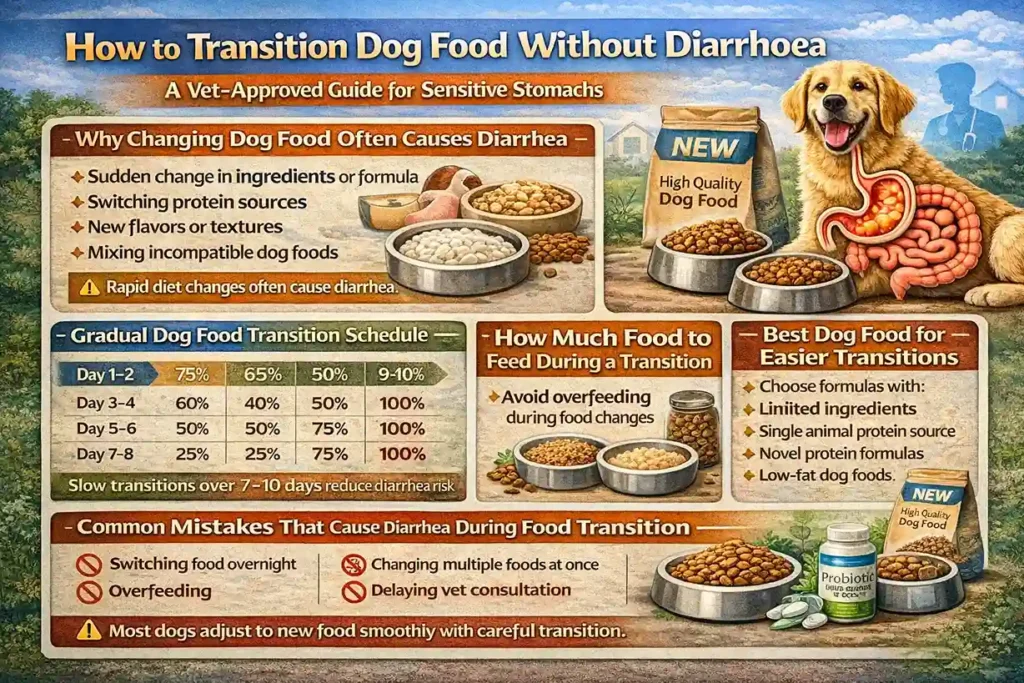
Switching dog food too quickly is one of the easiest ways to trigger loose stool, gas, vomiting, or diarrhea, especially in dogs with sensitive stomachs. If you are wondering how to transition dog food without diarrhea, the safest approach is to mix the old and new food gradually over 7–10 days while keeping portions consistent and avoiding new treats or table scraps. Some dogs may need an even slower switch if they have chronic diarrhea, food sensitivity, diabetes, reflux, or a history of digestive problems. If diarrhea becomes watery, lasts more than 48 hours, contains blood or mucus, or comes with vomiting, lethargy, or loss of appetite, contact your veterinarian.
How Do You Transition Dog Food Without Diarrhea?
To transition dog food without diarrhea, mix the old and new food gradually over 7–10 days. Start with about 75% old food and 25% new food for the first few days, then slowly increase the new food while reducing the old food. Keep meal portions the same, avoid new treats, and slow down the transition if your dog develops soft stool, gas, or vomiting.
Why Changing Dog Food Often Causes Diarrhea

Key Reasons Behind Digestive Upset During Food Switches
Dogs rely on a delicate balance of digestive enzymes and gut bacteria to process food. When that balance is disrupted, digestive symptoms quickly appear.
Common triggers include:
- Sudden change in ingredients or formula
- Switching protein sources (e.g., chicken to beef)
- New flavors or textures
- Changes in fiber or fat content
- Portion size differences
- Mixing incompatible dog foods
- Naturally sensitive digestive systems
A rapid food change does not allow the gastrointestinal tract time to adapt, often resulting in diarrhea, vomiting, gas, and abdominal discomfort.
Signs Your Dog Is Struggling With a Food Transition
Digestive Symptoms to Watch Closely
During a diet change, monitor your dog for:
- Loose stools or watery diarrhea
- Vomiting or regurgitation
- Excessive gas
- Food refusal
- Decreased appetite
- Abdominal discomfort
- Lethargy or low energy
⚠️ Important: Symptoms lasting longer than 48 hours require veterinary guidance.
Best Way to Transition Dog Food Without Diarrhea (Vet-Recommended)
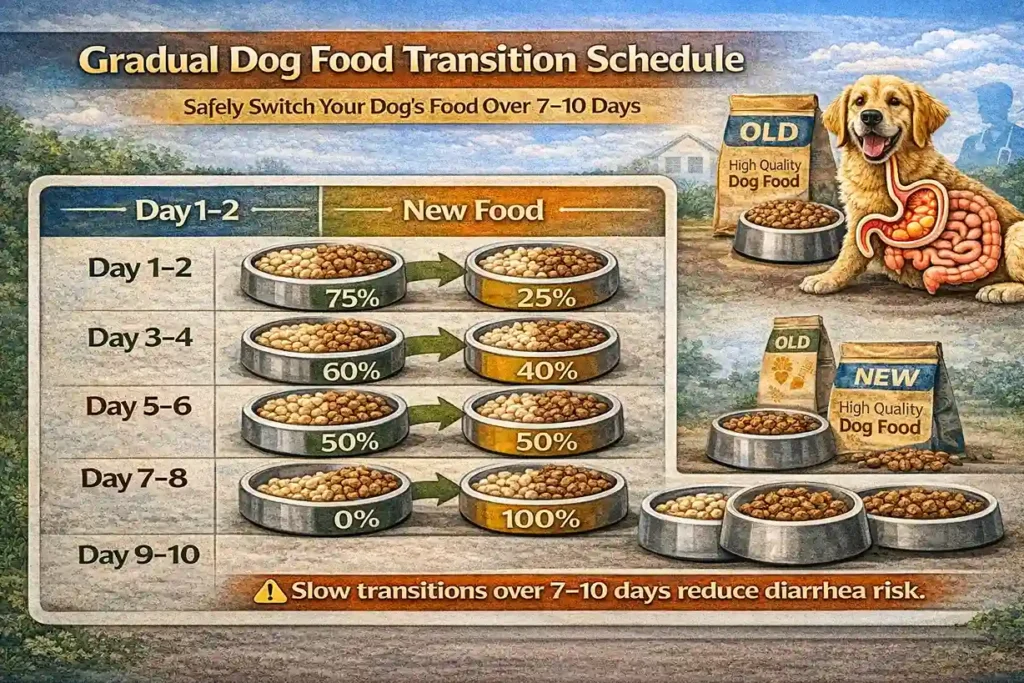
Gradual Dog Food Transition Schedule
Veterinarians recommend a slow transition over 7–10 days to allow the digestive system to adjust safely.
Day | Old Food | New Food |
1–2 | 75% | 25% |
3–4 | 60% | 40% |
5–6 | 50% | 50% |
7–8 | 25% | 75% |
9–10 | 0% | 100% |
This gradual process supports digestive enzyme and gut bacteria adaptation, significantly reducing the risk of diarrhea.
How Much Food to Feed During a Transition (Portion Control Matters)
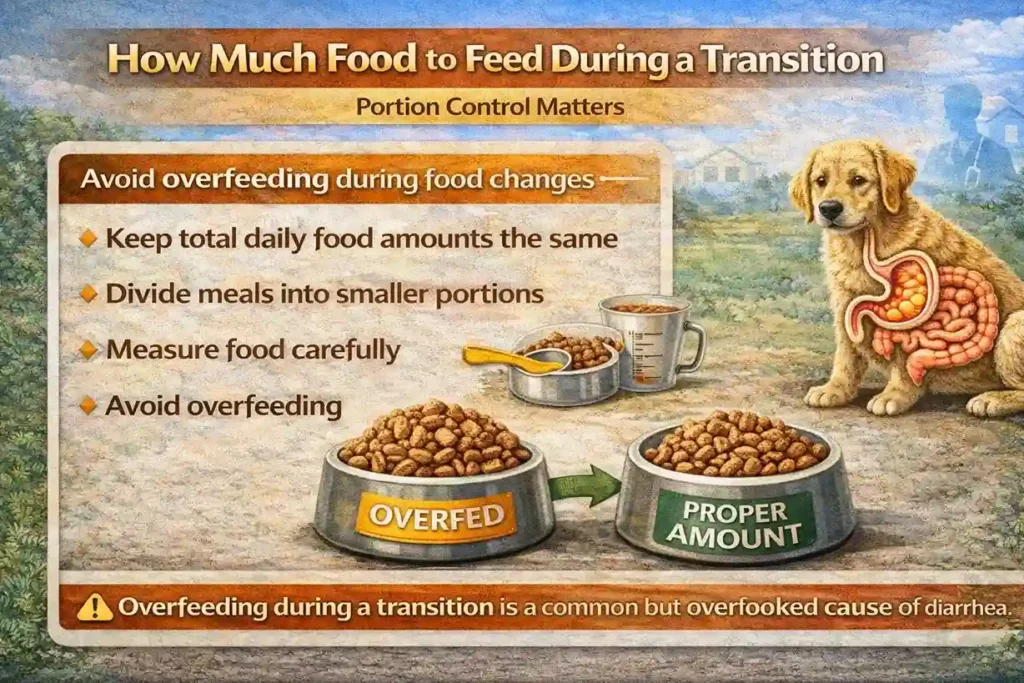
Avoid Overfeeding During Food Changes
Even high-quality food can cause stomach upset if fed incorrectly.
Best practices include:
- Keep total daily food amounts the same
- Divide meals into smaller portions
- Avoid overfeeding
- Measure food carefully
Overfeeding during a transition is a common but overlooked cause of diarrhea.
Choosing the Right Dog Food for an Easier Transition
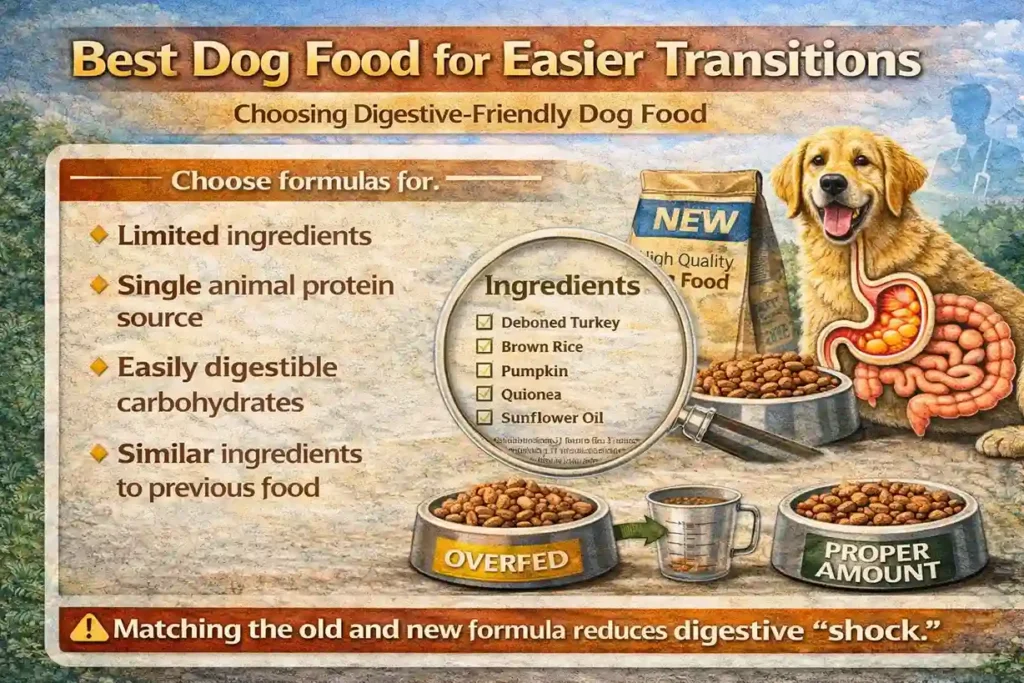
What to Look for on the Ingredient Label
Selecting the right new food makes transitions much smoother.
Choose formulas with:
- Limited ingredients
- Single animal protein source
- Easily digestible carbohydrates
- No artificial colors, flavors, or fillers
- Similar ingredient profile to the previous food
Matching the old and new formula reduces digestive “shock.”
Best Dog Food Options for Sensitive Stomachs
Dogs prone to digestive upset often do best with:
- Limited-ingredient diets
- Gastrointestinal prescription diets
- Novel protein formulas
- Low-fat dog foods
These options are especially helpful for dogs with:
- GERD (acid reflux)
- Chronic diarrhea
- Diabetes
- History of digestive disorders
Should You Use Meal Toppers During a Dog Food Transition?
Meal Toppers: Helpful or Harmful?
Meal toppers can encourage picky eaters, but they must be used carefully.
Safer options:
- Vet-approved meal toppers
- Plain boiled chicken (temporary only)
- Low-sodium bone broth
Avoid completely:
- Table scraps
- Rich or fatty toppers
- Frequent topper changes
Too many toppers can worsen digestive upset and delay adjustment.
Using Probiotics to Prevent Diarrhea During Food Switches
Do Probiotics Help Dogs Adjust to New Food?
Yes. Dog-specific probiotics help stabilize gut bacteria during dietary transitions.
Benefits include:
- Improved stool consistency
- Reduced gas and bloating
- Faster digestive adaptation
- Better overall gut balance
Always choose probiotics formulated for dogs and recommended by veterinarians.
Special Considerations: Puppies, Seniors & Medical Conditions
Puppies
- Transition more slowly (10–14 days)
- Feed smaller, more frequent meals
- Monitor closely for dehydration
Dogs With Diabetes
- Avoid abrupt changes that affect blood sugar
- Always consult a veterinarian
Dogs With Digestive Disorders
- Use longer transition periods
- Prescription diets may be necessary
Common Mistakes That Cause Diarrhea During Food Transitions
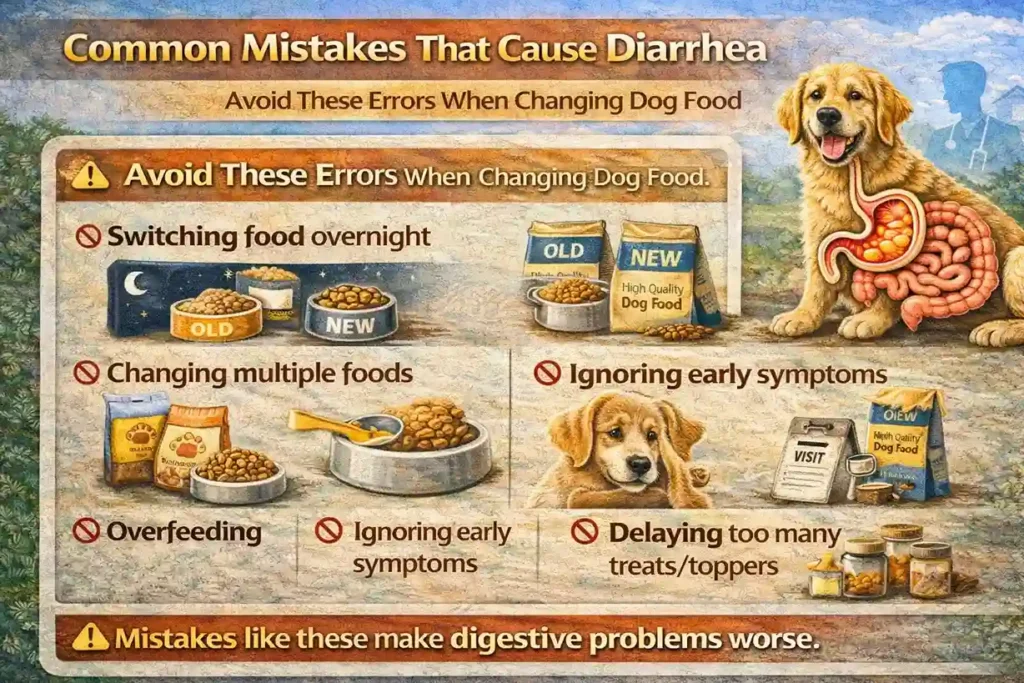
Avoid these frequent errors:
- Switching food overnight
- Changing multiple foods at once
- Overfeeding
- Ignoring early digestive symptoms
- Mixing treats from different brands
Delaying veterinary consultation
What to Do If Diarrhea Occurs During a Food Transition
Immediate Steps to Take
- Pause the transition and return to the last tolerated ratio
- Offer bland food temporarily if advised
- Ensure adequate hydration
- Stop all treats and toppers
Contact your veterinarian if symptoms persist
When to Call a Veterinarian
Seek professional help if:
- Diarrhea lasts longer than 48 hours
- Vomiting is persistent
- Blood or mucus appears in stool
- Your dog becomes lethargic
- A puppy or senior dog is affected
Medical Disclaimer
This article follows veterinary-reviewed feeding principles and aligns with guidance supported by organizations such as the American Veterinary Medical Association.
However, always consult a licensed veterinarian before making major dietary changes—especially for dogs with medical conditions.
Frequently Asked Questions (FAQs)
1.How long does it take to transition dog food without diarrhea?
Most dogs need 7–10 days; sensitive dogs may need longer.
2.Can I switch dog food faster if my dog seems fine?
No. Digestive upset can appear suddenly even after initial tolerance.
3.Is mild diarrhea normal during food transition?
Minor stool changes can occur, but persistent diarrhea is not normal.
4.Should I add probiotics during a food switch?
Yes, dog-specific probiotics can help stabilize digestion.
5.Can treats cause diarrhea during transition?
Yes. Treats can disrupt gut adaptation and should be limited.
References
Association of American Feed Control Officials. (2023). AAFCO dog food nutrient profiles.
Hand, M. S., Thatcher, C. D., Remillard, R. L., Roudebush, P., & Novotny, B. J. (2010). Small animal clinical nutrition (5th ed.). Mark Morris Institute.