
Can I Give My Dog Probiotics for Diarrhea? Safe Use & Vet Advice
Written by: Dr. Akram Khan, DVM
Medically Reviewed by: Dr. Khalid Mehmood, PhD
Last updated on September 08, 2026
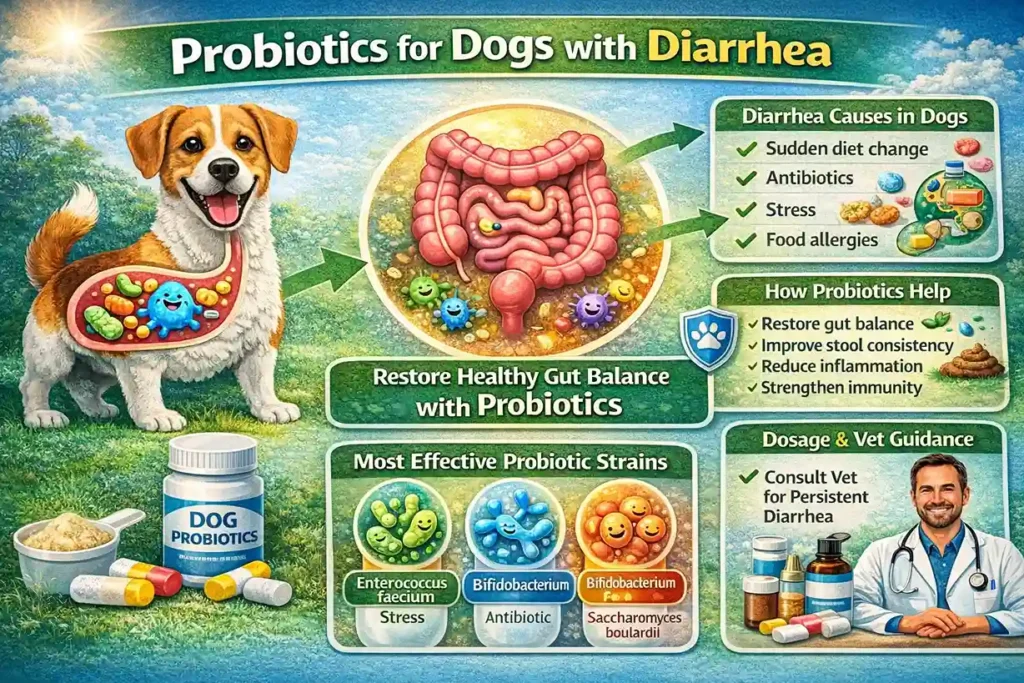
If your dog has diarrhea, probiotics may help in some mild cases, especially when the loose stool starts after a diet change, stress, antibiotics, or a simple upset stomach. Many owners search for dog probiotics for diarrhea because they want a safe way to support gut balance and improve stool consistency without overreacting to every soft poop. A dog-specific probiotic may help over the next few days, but it will not fix every cause of diarrhea. Also, some dogs can get temporary gas, bloating, or looser stool when starting a new probiotic, so stop and call your vet if symptoms get worse. If your dog has blood in the stool, repeated vomiting, weakness, dehydration, puppy diarrhea, senior dog diarrhea, or diarrhea lasting more than 48 hours, veterinary care is the safer choice.
Do Probiotics Help Dogs With Diarrhea?
Yes, probiotics may help some dogs with diarrhea by supporting healthy gut bacteria, improving stool consistency, and easing mild digestive upset from stress, diet changes, antibiotics, or an upset stomach. However, probiotics will not stop every type of dog diarrhea. Bloody diarrhea, vomiting, dehydration, weakness, puppy diarrhea, senior dog diarrhea, or symptoms lasting more than 48 hours should be checked by a veterinarian.
Understanding Diarrhea in Dogs
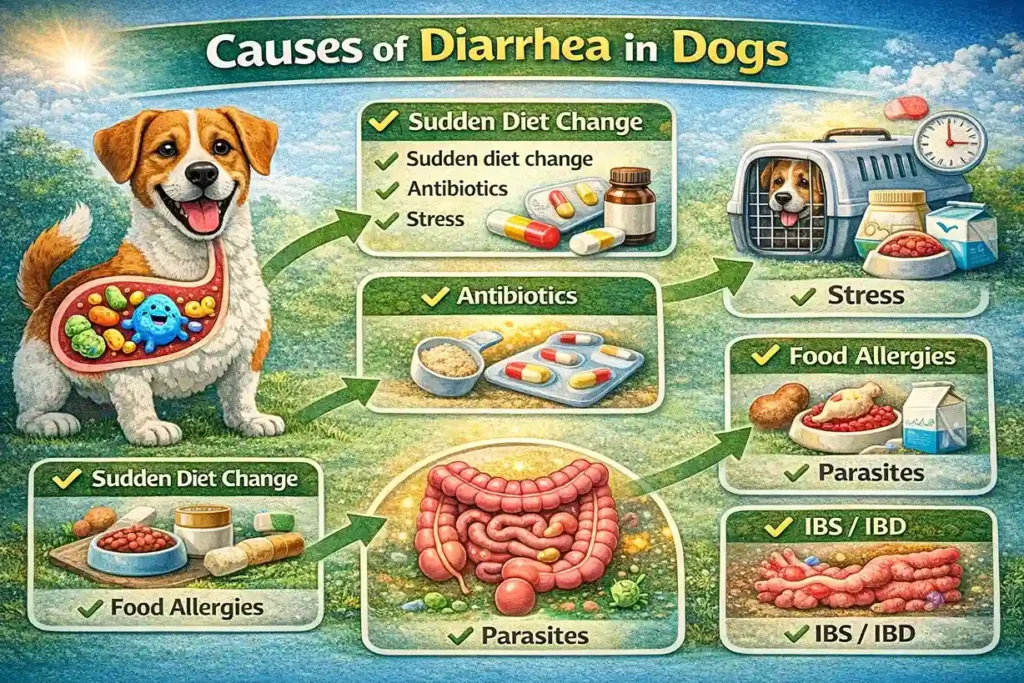
Dog diarrhea occurs when the digestive system fails to absorb water and nutrients properly, leading to loose or watery stools.
Common Causes of Diarrhea in Dogs
- Sudden diet changes
- Antibiotic use and medications
- Stress (boarding, travel, routine changes)
- Food allergies or food hypersensitivity
- Bacterial overgrowth or infections
- Parasites
- Inflammatory gut conditions (IBS / IBD)
- Dietary indiscretion (eating garbage or table scraps)
Repeated bouts can lead to dehydration, electrolyte imbalance, malnutrition, and compromised immune function.
The Gut–Diarrhea Connection

The dog’s gut contains trillions of bacteria and microorganisms responsible for:
- Digestion of carbohydrates, fats, and proteins
- Nutrient absorption
- Protecting the intestinal lining
- Regulating immune responses
When this microbial balance is disrupted (dysbiosis), harmful bacteria outnumber beneficial microbes, triggering inflammation, poor stool quality, bellyaches, gas, and diarrhea.
How Probiotics Help Dogs with Diarrhea
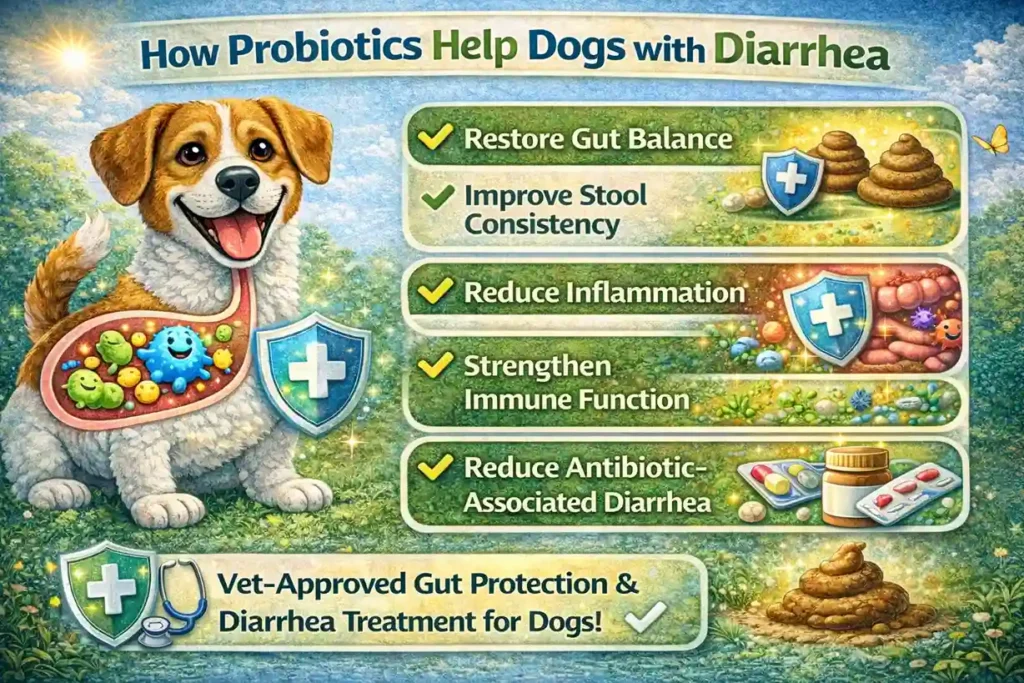
Probiotics are live beneficial bacteria that help restore gut balance and support recovery from digestive upset.
Key Benefits of Probiotics for Diarrhea
- Restore healthy gut bacteria balance
- Strengthen the gut lining
- Reduce inflammation
- Improve stool consistency
- Support immune system function
- Reduce antibiotic-associated diarrhea
Clinical evidence shows probiotics can shorten the duration and severity of diarrhea in dogs.
Best Probiotic Strains for Dogs with Diarrhea
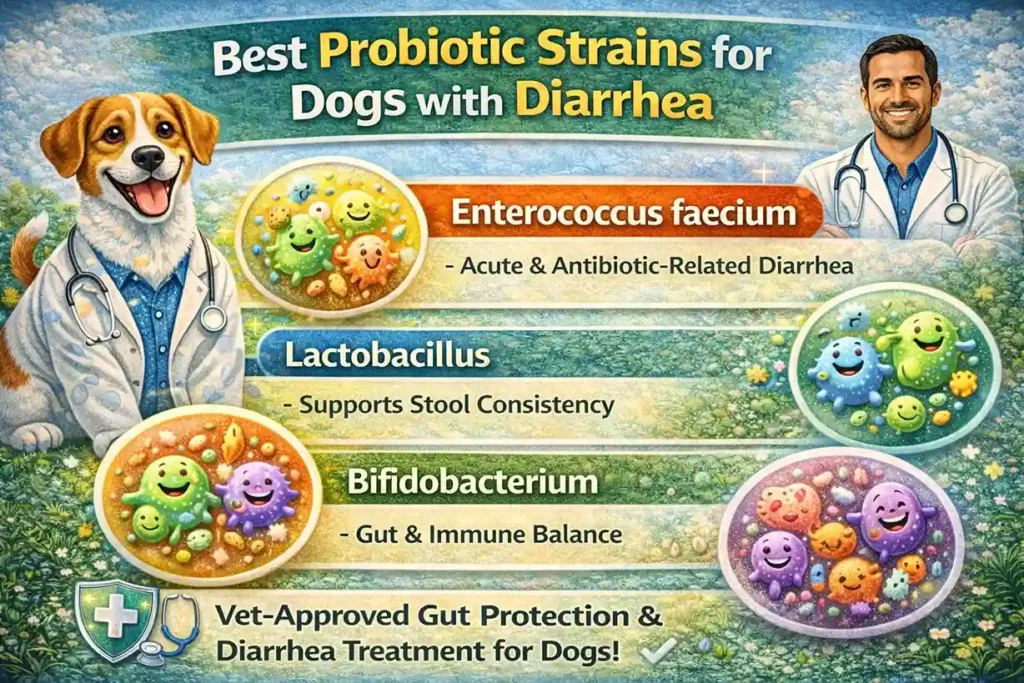
Not all probiotics are equal. Dog-specific, research-backed strains are critical.
Most Effective Probiotic Strains
- Enterococcus faecium – Strong evidence for treating acute and antibiotic-related diarrhea
- Lactobacillus – Supports digestion and stool consistency
- Bifidobacterium – Enhances gut balance and immune health
- Saccharomyces boulardii – A probiotic yeast effective against infectious diarrhea
These strains help rebalance gut microbes and protect the intestinal lining.
Probiotics for Puppies with Diarrhea
Puppies are particularly vulnerable due to immature digestive and immune systems.
Probiotics can help puppies by:
- Supporting gut development
- Reducing stress-related diarrhea
- Improving stool quality during weaning or food transitions
⚠️ Dosage issues are critical in puppies—always follow package instructions or veterinarian advice.
Probiotic Forms: Which Is Best for Diarrhea?
Probiotics for dogs come in multiple forms:
Common Probiotic Forms
- Powder (easy to mix with food)
- Liquid (fast absorption for acute cases)
- Tablets
- Chews or treats
- Capsules
For diarrhea, powder or liquid probiotics are often preferred due to better dosing control and faster action.
Probiotic Paste for Dog Diarrhea
Probiotic paste may help some dogs with mild diarrhea or short-term loose stool. Paste products are popular because they are easy to give and may include probiotics, prebiotics, binders, or other gut-support ingredients.
Probiotic paste may be useful when:
- Diarrhea is mild
- Stool is soft or loose
- Your dog is still bright and drinking
- There is no blood in the stool
- Vomiting is absent or mild
- Diarrhea is linked to stress, food change, or mild digestive upset
Paste should not replace veterinary care if diarrhea is bloody, black, watery, repeated, or paired with vomiting, weakness, dehydration, belly pain, or poor appetite.
If probiotic paste does not help within a few days, or symptoms get worse, contact your veterinarian.
Dosage Guidelines for Dogs with Diarrhea
Correct dosage depends on:
- Dog’s weight
- Severity of diarrhea
- Puppy vs adult vs senior dog
- Product CFU concentration
General guidance:
- Small dogs: lower CFU, split doses
- Large dogs: higher CFU as directed
- Acute diarrhea: short-term higher frequency
- Chronic issues: maintenance dosing
⚠️ Never exceed recommended amounts without veterinary advice.
Dosage Safety Note for Diarrhea
The correct probiotic dose for diarrhea depends on your dog’s weight, age, health condition, product strength, CFU count, and the reason for use. There is no single dose that fits every dog and every probiotic product.
Before giving probiotics for diarrhea, check:
- serving size by dog weight
- CFU count per dose
- probiotic strains
- whether the product is made for dogs
- frequency of use
- duration of use
- storage instructions
- added ingredients or sweeteners
Do not increase the dose just because diarrhea is present. Too much probiotic may cause gas, bloating, soft stool, or temporary diarrhea in some dogs.
For exact weight-based dosing, follow the product label or ask your veterinarian.
Probiotics vs Other Treatments for Diarrhea
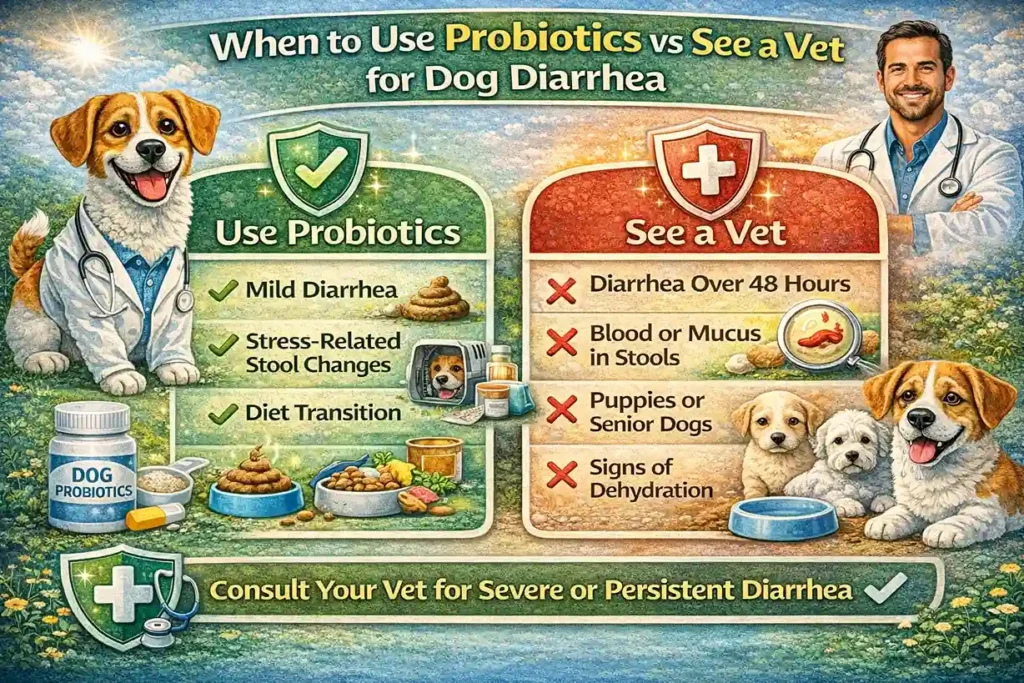
When Probiotics Alone May Be Enough
- Mild diarrhea
- Stress-related stool changes
- Diet transition issues
When Veterinary Care Is Required
- Persistent diarrhea (>48 hours)
- Blood or mucus in stools
- Lethargy, vomiting, appetite loss
- Puppies or senior dogs
- Signs of dehydration or infection
Probiotics support recovery but are not a substitute for medical treatment in serious cases.
When Probiotics Are Not Enough
Probiotics are supportive care, not emergency treatment. Some diarrhea cases need diagnosis, fluids, medication, parasite treatment, imaging, or hospitalization.
Do not rely only on probiotics if your dog has:
- bloody diarrhea
- black or tarry stool
- repeated vomiting
- severe watery diarrhea
- dehydration
- weakness or collapse
- pale gums
- abdominal pain
- fever
- loss of appetite
- diarrhea lasting more than 24–48 hours
- diarrhea in a puppy
- diarrhea in a senior dog
- suspected toxin exposure
- possible foreign object ingestion
In these cases, call a veterinarian. Waiting for probiotics to work may delay needed treatment.
Probiotics, Diet & Digestive Recovery
Combining probiotics with proper dietary care improves outcomes.
Supportive Diet Tips
- Temporary bland diet (vet-recommended)
- Avoid high-fat foods
- Eliminate known allergens
- Ensure access to clean water
Probiotics enhance nutrient absorption while the gut heals.
Possible Side Effects of Probiotics
Most dogs tolerate probiotics well. Rare side effects include:
- Mild gas or bloating
- Temporary stool changes during adjustment
If symptoms worsen, discontinue use and consult a veterinarian.
Can Probiotics Make Diarrhea Worse?
Yes, some dogs may get temporary looser stool, gas, bloating, or digestive discomfort when starting a new probiotic. This may happen if the dose is too high, the product contains added prebiotics or fiber, or the dog has a sensitive stomach.
Diarrhea may also seem worse because the original cause is getting worse, not because of the probiotic.
Stop the probiotic and call your veterinarian if:
- Diarrhea becomes watery
- blood appears
- vomiting starts
- Your dog becomes weak or lethargic
- Your dog refuses food or water
- Signs of dehydration appear
- symptoms continue or worsen
Choosing a High-Quality Probiotic Supplement
Look for:
- Dog-specific strains
- Clear CFU labeling
- Shelf stability
- No artificial additives
- Vet-approved or clinically studied products
Key Takeaway: Do Probiotics Help Dogs with Diarrhea?
Yes—when used correctly.
Probiotics are a science-supported, safe, and effective tool for managing diarrhea in dogs by restoring gut balance, improving stool quality, and supporting immune health.
However, persistent or severe diarrhea always requires veterinary evaluation.
Medical Disclaimer
This article is for educational purposes only and does not replace professional veterinary advice. Always consult a licensed veterinarian for diagnosis or treatment of digestive conditions.
Frequently Asked Questions (FAQs)
Do probiotics help dogs with diarrhea?
Yes, probiotics may help some dogs with mild diarrhea by supporting gut bacteria balance and stool consistency. They are most useful when diarrhea is linked to stress, diet change, antibiotics, or mild digestive upset.
How do probiotics help dogs with diarrhea?
Probiotics help by supporting beneficial gut bacteria, improving stool quality, supporting the intestinal lining, and helping the gut recover after stress, antibiotics, or digestive imbalance.
Does probiotic paste help dogs with diarrhea?
Probiotic paste may help mild loose stool or short-term diarrhea, especially when the dog is otherwise bright and there is no blood, repeated vomiting, weakness, or dehydration.
What is the best probiotic for dogs with diarrhea?
The best probiotic depends on the cause of diarrhea, dog weight, product strains, CFU count, and health condition. Dog-specific probiotics with clear label directions are usually safer than human probiotics or yogurt.
How long do probiotics take to work for dog diarrhea?
Some dogs with mild diarrhea may show improvement within 24–72 hours, but full gut support can take longer. If diarrhea worsens or lasts more than 24–48 hours, call a veterinarian.
What dose of probiotics should I give my dog for diarrhea?
Follow the product label or your veterinarian’s advice. The dose depends on dog weight, CFU count, product strength, age, and health condition. Do not guess or double the dose.
Can probiotics make dog diarrhea worse?
Yes, some dogs may develop temporary gas, bloating, soft stool, or looser stool when starting probiotics. Stop and call a veterinarian if diarrhea becomes severe, bloody, watery, or repeated.
Are probiotics enough for bloody diarrhea in dogs?
No. Bloody diarrhea can signal AHDS/HGE, parasites, infection, toxins, parvovirus, or other serious problems. Contact a veterinarian instead of relying only on probiotics.
When should I call a vet for dog diarrhea?
Call a vet if diarrhea is bloody, black, watery, repeated, lasts more than 24–48 hours, or comes with vomiting, weakness, dehydration, pale gums, abdominal pain, poor appetite, or symptoms in a puppy or senior dog.