
Green Dog Poop in Dogs: Grass, Infection, Toxins, or Fast Transit?
Written by: Dr. Akram Khan, DVM
Medically Reviewed by: Dr. Khalid Mehmood, PhD (Assistant Professor in Clinical Veterinary Medicine)
Last updated on September 15, 2026
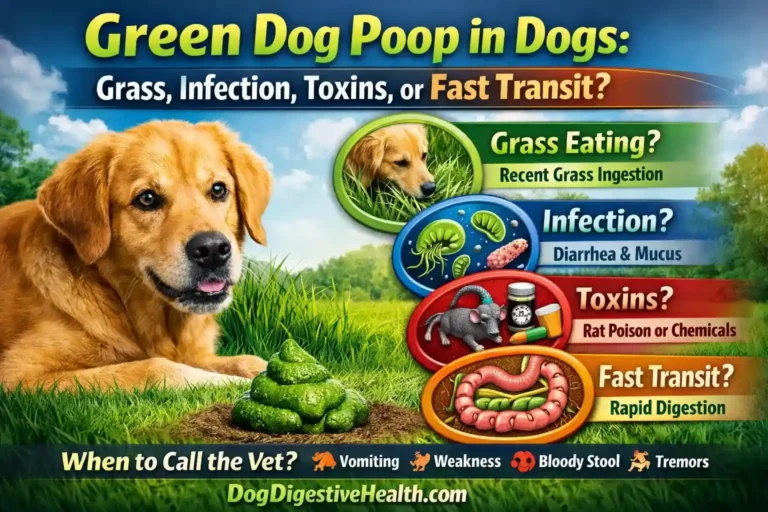
- Green dog poop in dogs usually comes down to four main explanations:
- grass or green plant ingestion
- intestinal infection
- toxin exposure
- fast intestinal transit that leaves bile pigments less altered than usual
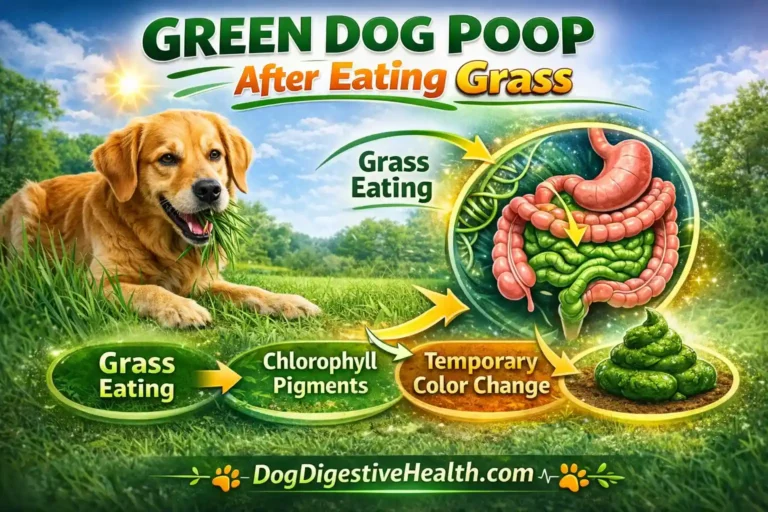
- For owners searching why my dog’s poop is green, green dog poop after eating grass, green dog diarrhea infection, or green dog poop rat poison, the real goal is to understand:
- which cause is most likely
- how serious it is
- when a vet is needed
- A single green stool in an otherwise normal dog is very different from:
- repeated green diarrhea
- green slimy dog poop
- green stool with mucus
- vomiting
- lethargy
- abdominal pain
- blood in the stool
- black stool
- possible poison exposure
- The most useful way to assess green stool in dogs is to ask:
- Does this look more like grass, infection, toxins, or fast transit?
Green dog poop after eating grass
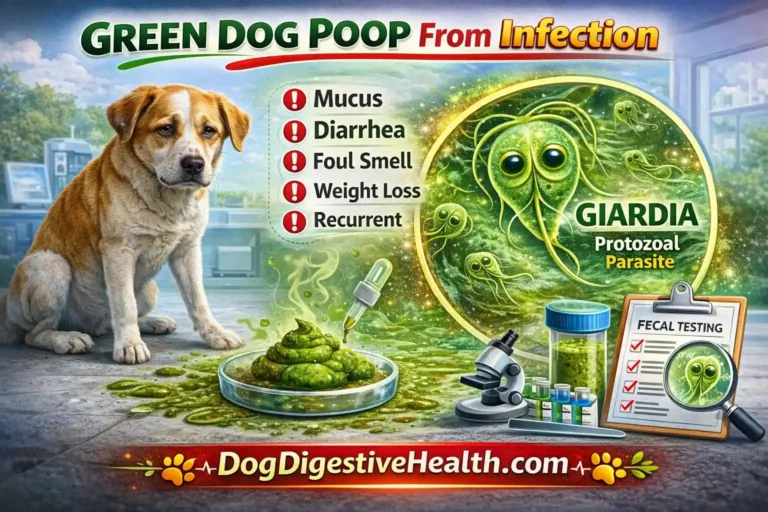
When green stool is most likely just grass
- Green dog poop after eating grass is most likely to be mild and temporary when:
- The stool is formed or only slightly soft
- The dog is acting normal
- Appetite is normal
- There is no repeated vomiting
- The dog recently grazed on grass, weeds, or other green plants
- In this situation, the most likely explanation is
- chlorophyll-rich plant material passed through the digestive tract
- The stool color changed temporarily
- This is one of the most common explanations for:
- dog poop green from grass
- green dog poop after eating grass
- If the dog is bright, hydrated, eating normally, and has no other symptoms, grass-related green stool is usually the least dangerous version of this problem.
Why dogs eat grass before green poop appears
- Dogs may eat grass for several reasons:
- normal canine behavior
- curiosity
- mild nausea
- habit
- environmental opportunity
- Grass eating alone does notconfirm disease
- It becomes more clinically relevant when it happens with:
- repeated vomiting
- abdominal pain
- repeated diarrhea
- lethargy
- appetite loss
- A dog that eats grass once and passes one green stool is different from a dog that:
- keeps eating grass
- keeps vomiting
- keeps having poor stool quality
Chlorophyll, green vegetation, and temporary stool color change
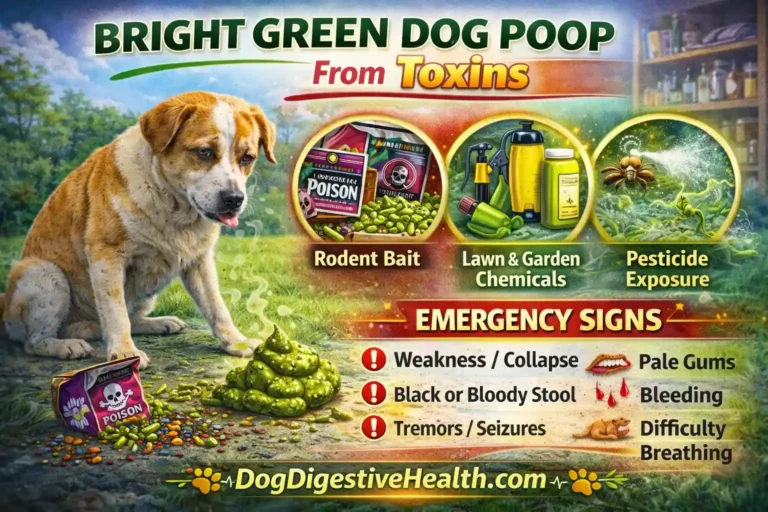
- Green vegetation can change stool color because of:
- chlorophyll
- plant pigment
- rapid passage of green material through the intestine
- This is why owners often notice:
- green stool from chlorophyll in dogs
- green dog poop after lawn grazing
- A temporary green stool is more likely to be benign when:
- It happens once
- The stool is still fairly formed
- The dog has normal energy
- There are no red-flag signs
- A grass-related explanation becomes less convincing if:
- Green stool keeps happening
- Diarrhea develops
- Vomiting begins
The dog becomes weak or dehydrated
Green dog poop from infection
Parasites that can cause green stool, especially giardia
- Infection becomes more likely when green stool is:
- watery
- slimy
- foul-smelling
- recurrent
- associated with weight loss
- One of the most important infectious causes is Giardia duodenalis.
- Giardia should be considered when a dog has:
- recurring diarrhea
- mucus-rich stool
- poor stool quality
- digestive upset
- exposure to dog parks, kennels, shelters, or contaminated water
- Important medical point:
- green dog poop does not diagnose giardia
- giardia requires proper fecal testing
- Green stool with these features makes infection more likely:
- mucus
- bad odor
- recurrence
- ongoing diarrhea
- poor appetite
Bacterial or other gastrointestinal infection and green diarrhea

- Not all infectious green dog poop is caused by giardia.
- Other possibilities include:
- bacterial enteritis
- viral gastrointestinal disease
- protozoal infection
- acute gastroenteritis
- Infection becomes more concerning when green stool comes with:
- vomiting
- fever
- dehydration
- abdominal pain
- weakness
- repeated bowel movements
- Mild acute diarrhea does not alwaysrequire antibiotics.
- Supportive care and proper diagnosis are often more appropriate than automatic antimicrobial use.
Green slimy, foul-smelling, or mucus-covered stool
- Green stool is more concerning when it is paired with:
- mucus
- foul smell
- urgency
- repeated episodes
- dehydration
- vomiting
- weight loss
- These features suggest:
- intestinal irritation
- inflammation
- infection
- abnormal digestive function
- If the stool keeps recurring, the best next step is to:
- Collect a fresh stool sample
- document frequency, color, odor, and mucus
- seek veterinary evaluation
Green dog poop from toxins
Bright green stool and rodenticide exposure
- Toxin-related green stool is one of the most important causes not to miss.
- Poison exposure should be considered when there is:
- bright green poop
- access to bait stations
- chewed packaging
- access to garages, sheds, or storage spaces
- recent roaming outdoors
- sudden vomiting or weakness
- Toxin-related green stool is more concerning than grass-related stool when the dog also shows:
- weakness
- collapse
- tremors
- bleeding
- breathing changes
- severe vomiting
Rat poison, mouse bait, herbicides, and pesticides
- Green stool after toxin exposure is not only about rat poison.
- Possible toxic exposures include:
- mouse bait
- rodenticide
- herbicides
- pesticides
- lawn chemicals
- treated grass
- contaminated prey
- Key exposure questions to ask:
- Was the lawn recently treated?
- Was there access to bait blocks?
- Did the dog chew suspicious packaging?
- Did the dog roam in a garage, shed, or garden area?
When toxin-related green stool is an emergency
- Green stool becomes an emergency when it appears with:
- weakness
- collapse
- pale gums
- black stool
- bloody vomit
- bleeding
- tremors
- seizures
- breathing difficulty
- Immediate veterinary care is the safer choice when:
- Poison exposure is possible
- The dog looks sick
- Neurologic or bleeding signs appear
- Toxin-related green stool is usually more urgent than simple grass-related stool change.
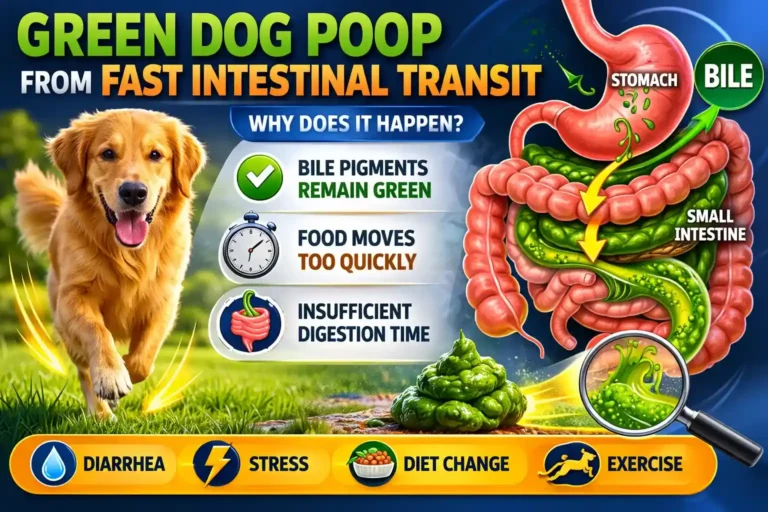
Green dog poop from fast transit
Rapid gut transit and why bile stays green
- Fast transit means stool moves through the intestine too quickly.
- When this happens:
- There is less time for normal digestion
- less water is absorbed
- Bile pigments may stay less altered
- Stool may appear greener
- In many dogs, green stool from fast transit is linked to:
- short-term digestive upset
- diarrhea
- stress
- dietary indiscretion
Diarrhea, stress, diet change, and high-fat foods
- Fast-transit green stool often follows:
- abrupt diet changes
- greasy leftovers
- garbage eating
- travel
- boarding
- stress
- acute gastroenteritis
- In these cases, the stool color may reflect:
- intestinal speed
- bile pigment changes
- temporary digestive upset
- Fast-transit green stool becomes more concerning when it is paired with:
- repeated vomiting
- dehydration
- abdominal pain
- weakness
persistent diarrhea
Bile, gallbladder, and liver-related green stool clues
- Bile is naturally yellow-green.
- Persistent green stool can sometimes raise broader questions about:
- bile flow
- bilirubin handling
- liver function
- gallbladder-related digestive changes
- Green stool does not automatically mean liver disease.
- A broader medical workup is more appropriate when green stool is accompanied by:
- jaundice
- appetite loss
- weight loss
- repeated vomiting
- ongoing illness
Grass, infection, toxins, or fast transit: how to tell the difference
- A formed green stool right after obvious grass eating most strongly supports:
- grass ingestion
- A soft or watery green stool with mucus, foul smell, recurrence, or weight loss is more suggestive of:
- infection
- especially giardia
- A bright green stool with bait, lawn chemical, or toxin exposure history raises concern for:
- poisoning
- A loose green stool after garbage eating, diet change, stress, or greasy food often fits:
- fast transit
- bile-related color change
- Simple summary:
- Grass
- one-off or brief green stool
- recent grazing
- normal energy
- Infection
- diarrhea
- mucus
- odor
- recurrence
- poor stool quality
- Toxins
- bright green stool
- exposure risk
- weakness
- bleeding
- tremors
- Fast transit
- diarrhea after stress
- food change
- dietary indiscretion
GI upset
When green dog poop needs same-day veterinary care
- Same-day veterinary care is the safer choice when green stool appears with:
- vomiting
- lethargy
- weakness
- dehydration
- abdominal pain
- blood
- black stool
- pale gums
- breathing changes
- seizures
- suspected poison exposure
- Monitoring at home may be reasonable only when:
- The stool change happened once
- There was obvious grass ingestion
- the dog remains normal in behavior, hydration, and appetite
- For suspected infection:
- Bring a fresh stool sample
- For suspected toxin exposure:
- Bring the packaging, product name, or a photo
- These details are far more helpful than stool color alone.
Final takeaways
- Green dog poop in dogs is not one diagnosis. It is a clue.
- The four most useful explanations are:
- grass
- infection
- toxins
- fast transit
- The correct interpretation depends on:
- recent exposure history
- stool consistency
- recurrence
- associated symptoms
- urgency level
- For some dogs, green dog poop after eating grass is temporary and harmless.
- For others, green dog diarrhea infection, green stool from bile in dogs, or green dog poop rat poison may signal a problem that should not be ignored.
- The safest approach is to interpret the color in context and act quickly when red-flag signs appear.
Medical disclaimer
This article is for educational purposes only and is not a substitute for veterinary diagnosis or treatment. If your dog has persistent green stool, vomiting, weakness, blood in the stool, or possible toxin exposure, contact a veterinarian promptly.
Frequently Asked Questions(FAQs)
1. Why is my dog’s poop green?
Green dog poop is most often caused by:
- grass eating
- infection
- toxin exposure
- fast intestinal transit with bile
2. Can grass make dog poop green?
Yes. Grass and other green plant material can temporarily change stool color.
3. Is green dog poop always serious?
No. A single green stool after grass eating may be harmless.
It becomes more concerning if it is:
- repeated
- watery
- slimy
- foul-smelling
- paired with vomiting or weakness
4. Can giardia cause green poop in dogs?
Giardia can contribute to:
- diarrhea
- mucus-rich stool
- recurring poor stool quality
- digestive upset
- It should be confirmed with proper fecal testing.
5. What does bright green dog poop mean?
Bright green dog poop can raise concern for:
- poison bait
- lawn chemicals
- toxin exposure
- This is especially important if the dog also looks sick.
6. Can bile cause green stool in dogs?
Yes. When stool moves too quickly through the intestine, bile pigments may remain less altered, making stool look greener.
7. When should I call the vet for green dog poop?
Call your vet the same day if green stool comes with:
- vomiting
- lethargy
- abdominal pain
- dehydration
- blood
- black stool
- tremors
- weakness
- suspected poison exposure
References
- Hart, B. L. (2008). Why do dogs and cats eat grass?Veterinary Medicine, 103(12), 648–649.
- Companion Animal Parasite Council. (2025). Giardia. https://capcvet.org/guidelines/giardia/
- Jessen, L. R., Allenspach, K., Guardabassi, L., Unterer, S., Bodnárová, T., Windahl, U., Brennan, M. L., Weese, J. S., & Scahill, K. (2024). European Network for Optimization of Veterinary Antimicrobial Therapy (ENOVAT) guidelines for antimicrobial use in canine acute diarrhoea. The Veterinary Journal, 307, 106208. https://doi.org/10.1016/j.tvjl.2024.106208
- Paulin, M. V., Bray, S., Laudhittirut, T., Flatland, B., Allen, A. L., & Perez Jimenez, T. E. (2024). Anticoagulant rodenticide toxicity in dogs: A retrospective study of 349 confirmed cases in Saskatchewan. The Canadian Veterinary Journal, 65(5), 496–503.
- Merck Veterinary Manual. (2024). Ascites in small animals. https://www.merckvetmanual.com/digestive-system/pathophysiology-of-hepatic-disease-in-small-animals/ascites-in-small-animals