
Why Does My Dog Have Diarrhea After Eating Grass?
Written by: Dr. Muhammad Ihsan Ullah, PhD
Medically Reviewed by: Dr. Khalid Mehmood, PhD (Assistant Professor in Clinical Veterinary Medicine)
Last updated on September 16, 2026
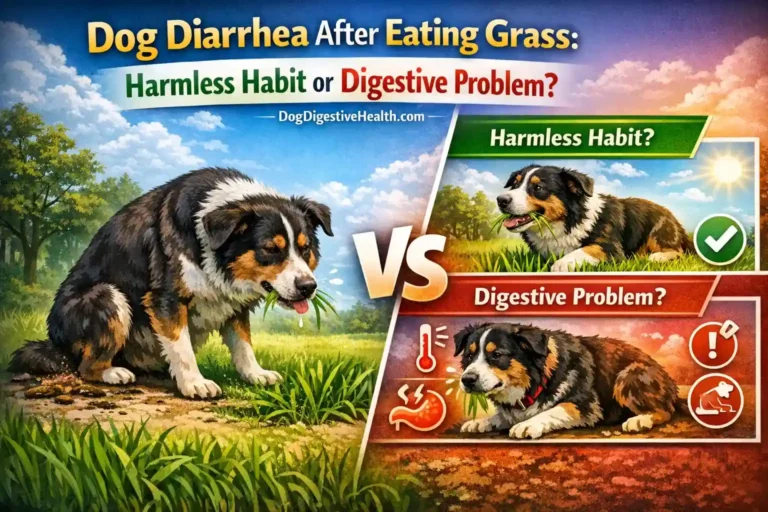
If your dog ate grass and now has diarrhea, it does not always mean the grass alone caused the problem. In some dogs, dog diarrhea after eating grass may be a mild, short-lived reaction to plant fiber or stomach irritation. In other cases, it may be a sign that your dog already had nausea, dietary upset, pica, or an underlying digestive problem before eating grass. That is why pet parents often ask, can eating grass cause diarrhea in dogs, or why is my dog eating grass and having diarrhea? The real answer depends on the full picture, including vomiting, appetite changes, lethargy, abdominal discomfort, repeated loose stool, or blood in the stool. This guide explains when grass eating is usually harmless, when it may point to a digestive issue, and when to worry about dog diarrhea after eating grass.
Can Eating Grass Cause Diarrhea in Dogs?
Yes, eating grass can sometimes cause diarrhea in dogs, especially if a dog eats a large amount, has a sensitive stomach, or the grass contains pesticides, fertilizer, parasites, or fecal contamination. However, grass is not always the only cause. Some dogs eat grass because they already feel nauseous or have an upset stomach.
If diarrhea is mild and your dog acts normal, short-term monitoring may be enough. Call a vet if diarrhea is repeated, worsening, bloody, or comes with vomiting, weakness, loss of appetite, or dehydration.
- Yes, can eating grass cause diarrhea in dogs is a valid medical question.
- Grass contains fiber, plant material, and roughage that some dogs tolerate well.
- In other dogs, especially those with a sensitive gastrointestinal tract, eating grass may:
- irritate the stomach
- irritate the intestines
- trigger vomiting
- lead to loose stool
- worsen mild colitis-like signs
- A few blades of grass may do nothing.
- A larger amount of grass, eaten quickly, may cause more irritation.
- This is why a dog can have loose stool after eating grass.
- In rare cases, eating too much plant material can contribute to a more serious problem:
- plant-fiber buildup in the gastrointestinal tract
- difficulty passing the material normally
- persistent vomiting
- abdominal discomfort
- So the most accurate answer is
- Yes, grass can sometimes contribute to diarrhea
- No, it is not always the only cause
- Context matters more than the grass alone
Did grass cause my dog’s diarrhea, or was my dog already sick?
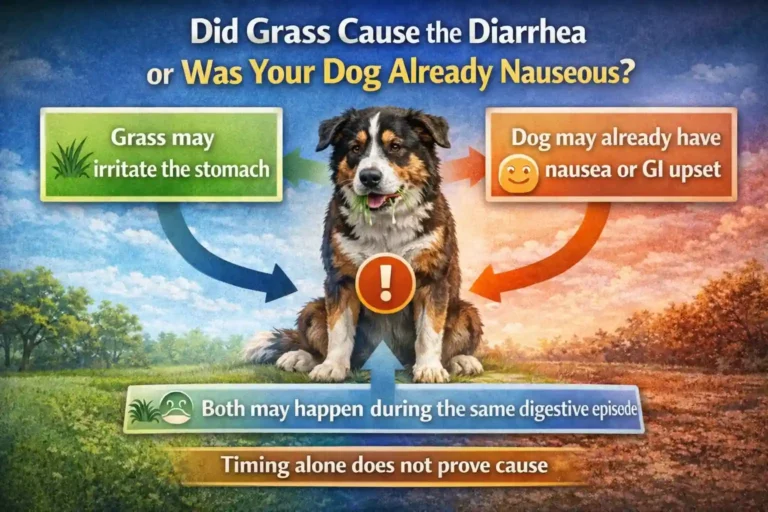
- This is the most important question in the entire article.
- Many owners assume:
- dog ate grass
- The dog had diarrhea
- Therefore, the grass caused the diarrhea
- But that sequence does not always prove cause and effect.
- A dog may already have:
- nausea
- acute gastritis
- mild enteritis
- dietary indiscretion
- a developing upset stomach
- In that case:
- The dog may eat grass during the episode
- The grass may be present in the timeline
- The real digestive problem may have started before the grass
- This is why why my dog eating grass and having diarrhea is a better question than simply blaming the grass.
- Grass may be:
- a clue
- part of the event
- a small trigger
- or just a behavior occurring during a larger GI episode
- The whole dog matters more than the sequence alone.
When Is Diarrhea After Eating Grass Usually Harmless?
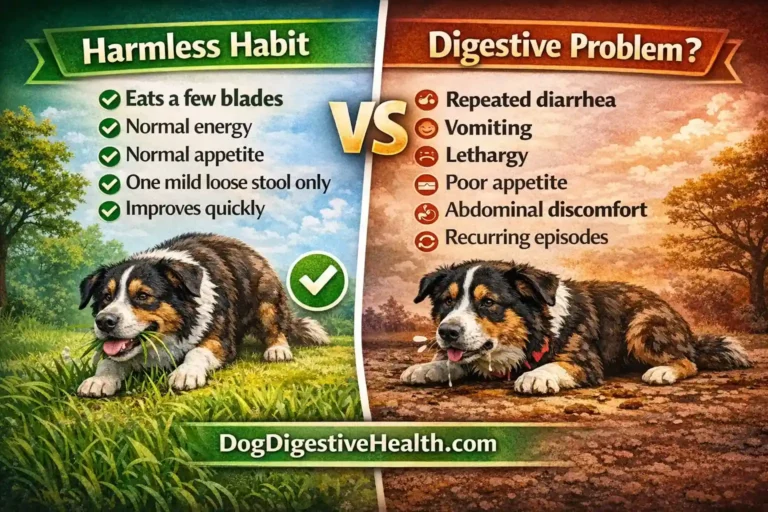
- Diarrhea after eating grass is more likely to be mild and self-limiting when:
- Your dog is bright and alert
- Your dog is still drinking normally
- Your dog still wants food
- There is no repeated vomiting
- There is no blood in the stool
- There is no obvious abdominal pain
- The loose stool is brief and not worsening
- In this situation, the episode may fit uncomplicated acute diarrhea.
- Mild cases can happen if:
- The grass mildly irritated the stomach or intestines
- Your dog ate too much too fast
- There was a short-lived digestive upset
- Not every case of dog diarrhea after eating backyard grass means a dangerous disease.
- Many mild cases improve with:
- time
- monitoring
- hydration
- supportive care
- A harmless episode is usually:
- short
- isolated
- mild
- not associated with whole-body illness
- Even so, “usually harmless” does not mean “ignore it.”
If it repeats or gets worse, it should not be dismissed.
When Is Grass Eating a Sign of Stomach Problems in Dogs?
- Grass-eating becomes more medically important when it is:
- repetitive
- urgent
- excessive
- linked with recurring digestive symptoms
- A dog that casually nibbles grass sometimes is very different from a dog that:
- repeatedly eats grass
- urgently searches for grass
- gulps large amounts
- repeatedly gets diarrhea afterward
- This is where picabecomes important.
- Picameans eating non-food material or eating abnormal amounts of inappropriate material.
- Repeated dog eating grass diarrhea may point toward:
- chronic enteropathy
- chronic gastritis
- chronic nausea
- ongoing GI irritation
- abnormal ingestion behavior
- Grass-eating may deserve more concern if it happens with:
- vomiting
- loss of appetite
- mucus in stool
- weight loss
- recurring soft stool
- repeated digestive flare-ups
- In these dogs, the grass may not be the disease itself.
- It may be a sign that the digestive system is not functioning normally.
- This is exactly where harmless habit vs. digestive problem in dogs becomes a real medical distinction.
Can Treated Grass or Pesticides Cause Diarrhea in Dogs?
- Yes, sometimes the problem is not the grass blade itself.
- Sometimes the bigger issue is what is on the grass or what is around
- Grass from a clean area is different from grass exposed to:
- pesticides
- fertilizer
- herbicides
- contaminated water
- fecal contamination
- public high-traffic dog areas
- That means dog diarrhea after eating lawn grass and dog diarrhea after eating backyard grass should always be interpreted with the environment in mind.
- Grass can act like a delivery system for:
- stomach irritants
- chemical residues
- environmental contaminants
- infectious material
- This matters even more if your dog ate grass from:
- a recently treated lawn
- a public dog area
- a contaminated yard
- an area with visible fecal exposure
- So when owners ask:
- Can treated grass make dogs sick
- Could the grass itself be the problem
- The safest answer is:
- Yes, it can contribute
- and environmental context matters a lot
Why Did My Dog Eat Grass, Vomit, and Then Have Diarrhea?
- When a dog eats grass and vomits and has diarrhea, the case becomes more important.
- This pattern suggests more than just a minor stool change.
- Once both the stomach and intestines are involved, veterinarians think more broadly about:
- acute gastroenteritis
- dietary indiscretion
- pica
- foreign material ingestion
- broader gastrointestinal disease
- A single soft stool is one thing.
- Vomiting plus diarrhea is a different level of concern.
- Repeated vomiting matters because it can:
- increase fluid loss
- worsen dehydration
- make home monitoring less reliable
- If your dog:
- vomits repeatedly
- cannot keep water down
- looks weak
- seems painful
- develops worsening diarrhea
- The episode should not be treated as a harmless grass habit.
How Long Should I Monitor Dog Diarrhea After Eating Grass?
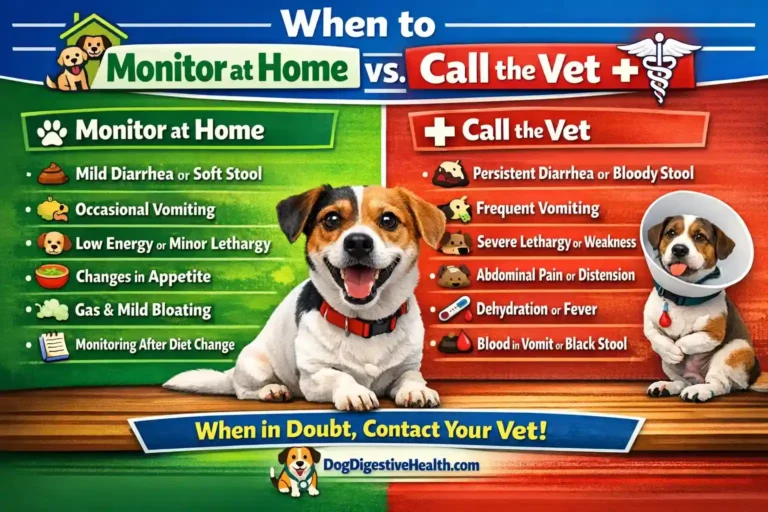
- For a healthy adult dog with:
- one mild loose stool
- normal energy
- normal drinking
- no repeated vomiting
- Short-term monitoring may be reasonable.
- But the longer the diarrhea continues, the less likely it is that this is “just grass.”
- You should contact a veterinarian sooner if:
- Diarrhea is repeated
- Diarrhea is worsening
- Vomiting is repeated
- appetite drops
- Your dog becomes lethargic
- blood appears in the stool
- Your dog seems painful
- The same pattern keeps recurring
- Puppies, seniors, and medically fragile dogs should be evaluated sooner.
- The safest approach is:
- monitor mild, short-lived cases
- Do not normalize persistent or worsening cases
Dog Diarrhea After Eating Grass: When Should You Worry?
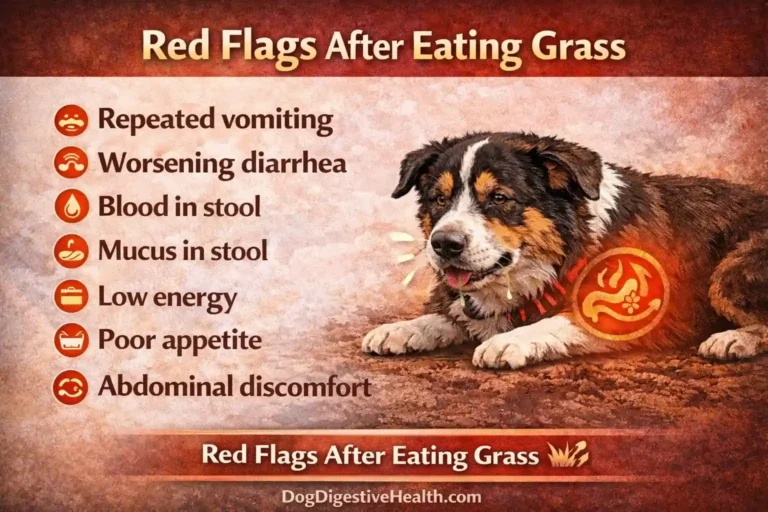
- Dog diarrhea after eating grass: when to worry becomes much clearer when you look for red flags.
- This is less likely to be harmless if your dog has:
- repeated vomiting
- frequent diarrhea
- worsening diarrhea
- blood in the stool
- obvious mucus in the stool
- reduced appetite
- lethargy
- weakness
- abdominal discomfort
- repeated episodes of grass-eating followed by GI upset
- Another warning sign is excessive grass ingestion rather than casual grazing.
- A dog that rapidly eats a lot of grass is more concerning than a dog that casually chews a few blades.
- Repeated dog upset stomach after eating grass should not be brushed off.
- A repeated pattern may point toward:
- pica
- chronic GI irritation
- a more significant digestive problem
How Do Vets Know If Grass Eating Is Normal or a Digestive Problem?
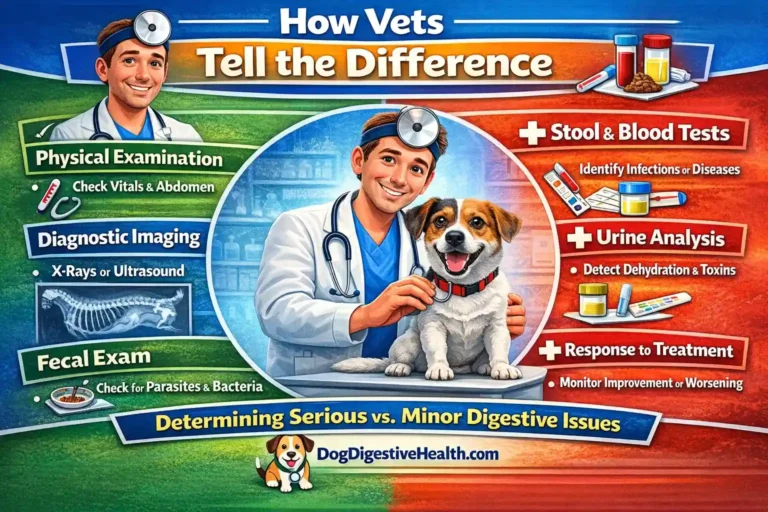
- Veterinarians do not judge the problem by grass alone.
- They look at the full clinical picture, including:
- how often it happens
- how much grass is eaten
- whether the dog vomits
- whether stool changes keep recurring
- appetite changes
- hydration
- body condition
- pain
- whether the pattern suggests normal grazing or true pica
- A one-time episode in a bright, hydrated dog is handled differently from:
- repeated dog eating grass diarrhea
- chronic vomiting
- weight loss
- chronic soft stool
- possible foreign material ingestion
- Mild cases may only need:
- monitoring
- diet review
- supportive care
- Recurrent or more serious cases may need:
- fecal testing
- abdominal imaging
- dietary review
- foreign-body assessment
- evaluation for chronic enteropathy
- This is how vets separate harmless habit vs digestive problem in dogsin real clinical practice.
Is Dog Diarrhea After Eating Grass Harmless or Serious?
- The most accurate answer is
- sometimes harmless
- sometimes a clue
- always worth interpreting in context
- Many dogs do eat grass, and occasional grass-eating does not automatically mean disease.
- But dog diarrhea after eating grass should not be ignored when:
- It is recurrent
- It is severe
- It happens with vomiting
- It happens with poor appetite
- It happens with lethargy
- It happens with blood in the stool
- It happens with repeated signs of digestive trouble
- For readers searching dog ate grass and now has diarrhea, the safest takeaway is:
- Watch the whole dog, not just the grass
- Mild and brief episodes may only need monitoring
- Recurrent or severe episodes need veterinary attention
Medical disclaimer
- This article is for educational purposes only.
- It does not replace veterinary diagnosis or treatment.
- If your dog has repeated vomiting, blood in the stool, severe diarrhea, weakness, pain, or possible toxin exposure, contact a veterinarian promptly.
Frequently Asked Questions(FAQs)
1. Can eating grass cause diarrhea in dogs?
Yes, it can irritate the stomach or intestines in some dogs, especially if a large amount is eaten.
2. Why is my dog eating grass and having diarrhea?
Your dog may have stomach upset, nausea, dietary indiscretion, or a wider digestive issue happening at the same time.
3. Is dog diarrhea after eating grass normal?
- It can be mild and short-lived in some dogs.
- It should not be ignored if it keeps happening or comes with other symptoms.
4. Should I worry if my dog ate grass and now has diarrhea?
Worry more if your dog is vomiting, weak, refusing food, dehydrated, or has blood in the stool.
5. Can too much grass make a dog sick?
Yes, eating large amounts of grass can irritate the GI tract and, in rare cases, lead to more serious problems.
6. When should I call the vet for diarrhea after grass eating?
Call sooner if the diarrhea is repeated, worsening, or linked with vomiting, lethargy, pain, or blood in the stool.
7. Is grass-eating a sign of a digestive problem?
Occasional grazing may be normal, but repeated grass-eating with diarrhea can point to an underlying GI issue.
References
- O’Neill, D. G., Prisk, L. J., Brodbelt, D. C., Church, D. B., & Allerton, F. (2025). Epidemiology and clinical management of acute diarrhoea in dogs under primary veterinary care in the UK. PLOS ONE, 20(6), e0324203. https://doi.org/10.1371/journal.pone.0324203
- Jessen, L. R., Werner, M., Singleton, D., Prior, C., Foroutan, F., Ferran, A. A., Arenas, C., Bjørnvad, C. R., Lavy, E., Allerton, F., Allensbach, K., Guardabassi, L., Unterer, S., Bodnárová, T., Windahl, U., Brennan, M. L., Weese, J. S., & Scahill, K. (2024). European Network for Optimization of Veterinary Antimicrobial Therapy (ENOVAT) guidelines for antimicrobial use in canine acute diarrhoea. The Veterinary Journal, 307, 106208. https://doi.org/10.1016/j.tvjl.2024.106208
- Holz, M., Fritz, J., Suchodolski, J. S., Werner, M., & Unterer, S. (2025). Effects of dietary cellulose on clinical and gut microbiota recovery in dogs with uncomplicated acute diarrhea: A randomized prospective clinical trial. Journal of the American Veterinary Medical Association, 263(2), 169–177. https://doi.org/10.2460/javma.24.07.0476
- Perez, J., Ford, S., & Lynch, H. (2025). Pica as a clinical sign of a chronic enteropathy in dogs and cats. Journal of the American Veterinary Medical Association, 263(8), 1027–1032. https://doi.org/10.2460/javma.25.02.0079
Sueda, K. L. C., Hart, B. L., & Cliff, K. D. (2008). Characterisation of plant eating in dogs. Applied Animal Behaviour Science, 111(1–2), 120–132. https://doi.org/10.1016/j.applanim.2007.05.018