
AHDS in Dogs: Symptoms, Emergency Treatment & Recovery
Written by: Dr. Akram Khan, DVM
Medically Reviewed by: Dr. Muhammad Saeed, PhD
Last updated on September 16, 2026
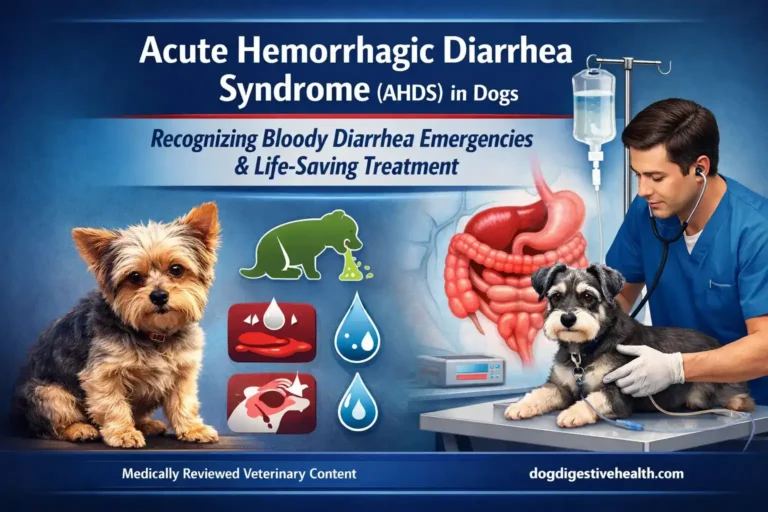
AHDS in dogs, also called acute hemorrhagic diarrhea syndrome or the older term HGE, is a sudden digestive emergency that can cause bloody diarrhea, vomiting, rapid dehydration, weakness, and shock. Many owners search for AHDS dog symptoms or HGE in dogs after seeing watery, jelly-like, or raspberry-jam-like bloody stool. This condition is not a wait-and-see problem because dogs can worsen within hours. Fast veterinary care, especially IV fluids and close monitoring, gives most dogs a much better chance of recovery.
Quick Answer: AHDS in Dogs
AHDS in dogs means acute hemorrhagic diarrhea syndrome. It is a sudden digestive emergency that can cause bloody diarrhea, vomiting, rapid dehydration, weakness, and shock. AHDS was previously called HGE, or hemorrhagic gastroenteritis.
The most important warning sign is sudden watery or jelly-like bloody diarrhea, especially when it happens with vomiting, weakness, pale gums, or dehydration.
AHDS should not be treated as a normal upset stomach. Dogs can lose fluid quickly and may need urgent veterinary care, IV fluids, anti-nausea medication, and monitoring.
What Is AHDS in Dogs?
AHDS in dogs stands for acute hemorrhagic diarrhea syndrome, a sudden and potentially life-threatening condition that causes bloody diarrhea, vomiting, rapid dehydration, and weakness. It was previously called hemorrhagic gastroenteritis, or HGE. Dogs with AHDS can decline quickly because large amounts of fluid move into the intestines. Emergency veterinary care, IV fluids, anti-nausea treatment, and monitoring are often needed.
AHDS Dog Symptoms
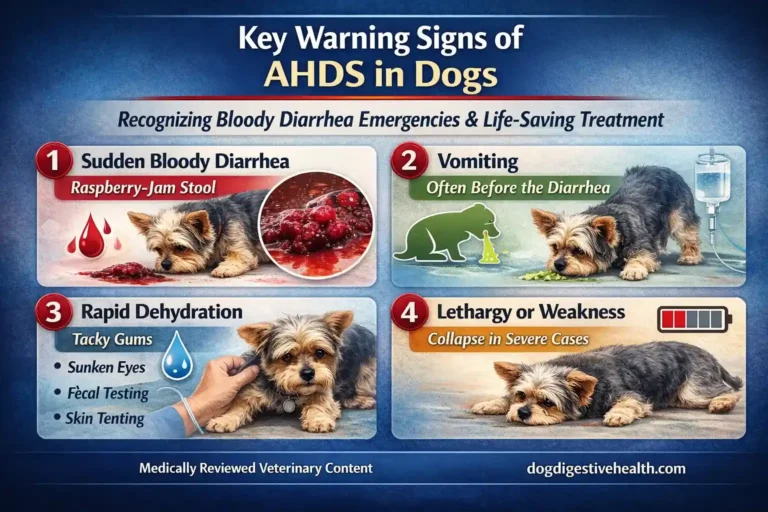
- The most common signs of acute hemorrhagic diarrhea syndrome in dogs usually begin suddenly.
- Many dogs appear normal one day and very sick the next.
- The classic clinical picture includes:
- vomiting
- watery or jelly-like bloody diarrhea
- rapid dehydration
- weakness or lethargy
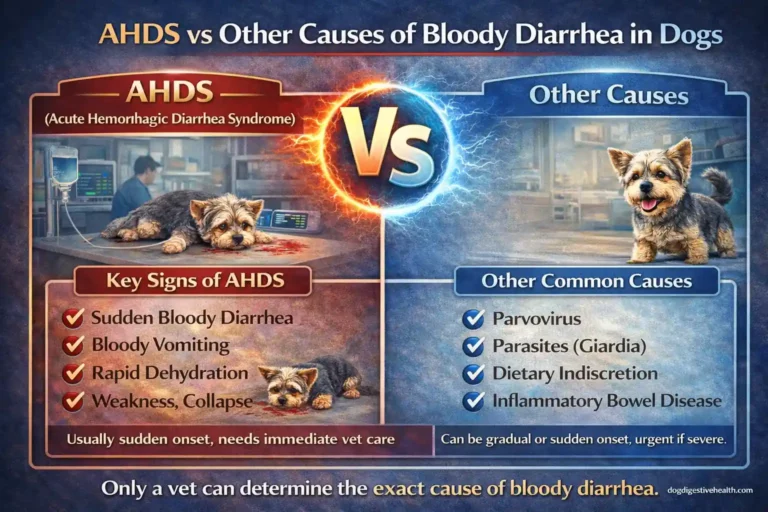
Sudden Bloody Diarrhea
- The hallmark sign of AHDS/HGE in dogs is sudden bloody diarrhea.
- Owners often describe the stool as:
- bright red
- dark red
- watery but gelatinous
- similar to raspberry jam
- This type of stool suggests severe intestinal fluid loss and bleeding into the gut.
- A dog with sudden hemorrhagic diarrhea should receive same-day veterinary attention.
Vomiting, Often Before or Along With Diarrhea
- Many dogs with AHDS begin with vomiting before bloody diarrhea becomes obvious.
- Vomiting can:
- worsen fluid loss
- increase weakness
- raise the risk of shock
- When a dog has vomiting and bloody diarrhea at the same time, it should be treated as an emergency.
Rapid Dehydration
- One of the most dangerous aspects of AHDS is how fast dehydration develops.
- Because large amounts of fluid shift into the intestinal tract, dehydration can occur within hours.
- Veterinarians commonly identify hemoconcentration, meaning:
- The blood becomes more concentrated
- Plasma volume has dropped
- Common dehydration signs include:
- dry or tacky gums
- sunken eyes
- skin tanning
- fast heart rate
- weakness
- reduced alertness
Lethargy, Weakness, and Collapse
- As dehydration and poor circulation worsen, dogs may become:
- lethargic
- weak
- shaky
- unable to stand normally
- Some dogs may collapse or appear severely depressed.
- These are major warning signs that circulation may already be affected.
Loss of Appetite and Abdominal Discomfort
- Many dogs with AHDS also show:
- loss of appetite
- abdominal pain
- restlessness
- reluctance to eat
- nausea
- Some dogs may:
- stand hunched
- appear uncomfortable
- assume a prayer-like posture because of abdominal pain
- When these signs appear with bloody diarrhea, concern for AHDS becomes much higher.
What Causes AHDS in Dogs?
The exact cause of AHDS in dogs is not always known. In many cases, veterinarians cannot identify one single trigger. AHDS may involve sudden intestinal inflammation, fluid movement into the intestines, gut barrier disruption, bacterial toxins, stress, diet changes, or an abnormal reaction inside the digestive tract.
Possible triggers or related factors may include:
- sudden diet change
- eating spoiled food or unusual treats
- stress
- intestinal bacteria or toxins
- gut inflammation
- dietary indiscretion
- pancreatitis-like signs
- parasites or infections that mimic AHDS
- toxin exposure
- other serious causes of bloody diarrhea
Because many conditions can look like AHDS, owners should not diagnose it at home. A veterinarian may need to rule out parvovirus, parasites, pancreatitis, toxin exposure, foreign body, clotting disorders, and other causes of bloody diarrhea.
AHDS Meaning: What Does AHDS Stand For?
AHDS stands for acute hemorrhagic diarrhea syndrome.
The term means:
- Acute: starts suddenly
- Hemorrhagic: involves bleeding
- Diarrhea: loose or watery stool
- Syndrome: a group of signs that occur together
In simple words, AHDS means a sudden episode of bloody diarrhea that can cause serious dehydration and weakness in dogs.
AHDS is the newer term for what many people still call HGE, or hemorrhagic gastroenteritis. Both terms are commonly used, but AHDS is now preferred because it better describes the sudden bloody diarrhea syndrome.
When AHDS/HGE Becomes an Emergency
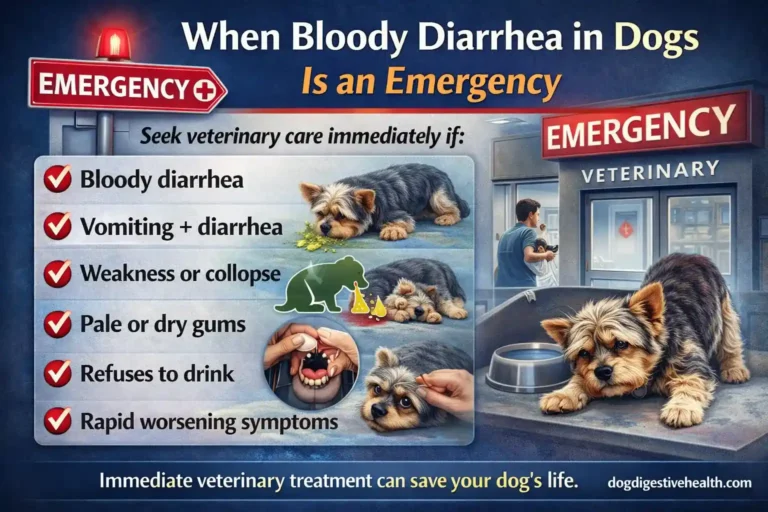
- AHDS should be treated as an emergency when signs are severe, especially when bloody diarrhea occurs with:
- vomiting
- weakness
- dehydration
- Dogs can deteriorate rapidly because the disease causes dramatic fluid shifts.
- In severe cases, AHDS can progress to:
- hypovolemic shock
- electrolyte imbalance
- poor tissue perfusion
Seek Emergency Veterinary Care Immediately If Your Dog Has:
- sudden bloody diarrhea
- vomiting plus diarrhea
- weakness or severe lethargy
- pale or tacky gums
- collapse
- refusal to drink
- worsening signs over a few hours
- These warning signs align with the search intent behind:
- dog hemorrhagic diarrhea emergency signs
- bloody diarrhea in dogs emergency room
- when to go to an emergency vet for dog diarrhea
Emergency Treatment for AHDS/HGE in Dogs
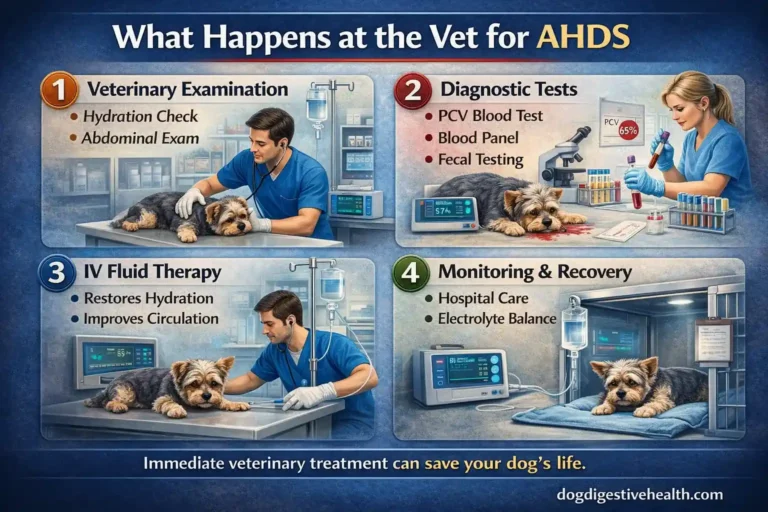
- The foundation of emergency treatment for acute hemorrhagic diarrhea syndrome in dogs is:
- rapid stabilization
- aggressive fluid therapy
- close monitoring
- Fluid replacement remains the most important part of treatment.
What the Vet Does First
- When a dog arrives with suspected AHDS, the veterinary team usually performs:
- triage
- hydration assessment
- cardiovascular evaluation
- abdominal examination
- immediate stabilization
- The goal is to determine:
- how dehydrated the dog is
- whether shock is developing
- What level of care is needed
IV Fluids: The Main Life-Saving Treatment
- Intravenous fluid therapy is the cornerstone of AHDS treatment.
- IV fluids help:
- restore circulating blood volume
- improve tissue perfusion
- correct dehydration
- normalize electrolyte levels
- reverse hemoconcentration
- Dogs with moderate to severe AHDS often need hospitalization for IV fluids, especially if they:
- cannot keep water down
- are weak
- show obvious dehydration
- Search phrases strongly connected to this treatment section:
- IV fluids for AHDS dogs
- emergency fluid therapy dog bloody diarrhea
- hospital treatment for hemorrhagic gastroenteritis in dogs
Diagnostic Tests Commonly Used
- There is no single definitive test that confirms AHDS.
- Veterinarians usually diagnose it based on:
- history
- physical examination
- laboratory findings
- exclusion of other serious causes
- Common diagnostic tests may include:
- packed cell volume (PCV)
- total solids or total protein
- complete blood count
- serum biochemistry
- fecal testing
- parvovirus testing when indicated
- abdominal radiographs
- abdominal ultrasound in selected cases
- Dogs with AHDS often show:
- elevated PCV
- hemoconcentration
- dehydration-related changes
Supportive Medications
- In addition to fluids, treatment may include:
- anti-nausea medication
- gastroprotective support
- pain management
- nutritional support when needed
- Antiemetics help:
- control vomiting
- improve comfort
- support recovery
Are Antibiotics Always Needed?
- Not always
- More recent veterinary evidence suggests that:
- Routine antibiotics are often unnecessary in uncomplicated AHDS
- Many dogs improve with supportive care alone
- This is important because older articles often suggest antibiotics for every case, while newer evidence supports a more selective approach.
Can AHDS in Dogs Be Treated at Home?
AHDS should not be treated as a simple home-care problem, especially if the dog has bloody diarrhea with vomiting, weakness, dehydration, pale gums, or collapse.
Home care may be appropriate only after a veterinarian has examined the dog and confirmed that outpatient care is safe. Many dogs with suspected AHDS need IV fluids, anti-nausea medication, bloodwork, and monitoring.
Do not rely on home remedies if your dog has:
- sudden bloody diarrhea
- repeated vomiting
- weakness or lethargy
- pale or tacky gums
- refusal to drink
- collapse
- signs of dehydration
- symptoms getting worse within hours
If your dog has bloody diarrhea and looks sick, call a veterinarian or emergency animal hospital immediately.
Hospitalization and Monitoring
- Many dogs with AHDS need 24 to 72 hours of hospitalization
- This is especially true when:
- Dehydration is marked
- Vomiting is ongoing
- Weakness is significant
- Monitoring may include:
- repeat hydration checks
- body weight
- perfusion parameters
- electrolyte status
- PCV
- response to treatment
- Most dogs improve once circulation and hydration are restored.
AHDS Dog Treatment: Quick Summary
AHDS dog treatment usually focuses on replacing lost fluids, controlling vomiting, correcting dehydration, and monitoring the dog closely.
Common veterinary treatment may include:
- IV fluids
- electrolyte support
- anti-nausea medication
- pain or abdominal discomfort support when needed
- bloodwork to check dehydration and red blood cell concentration
- stool testing or parvovirus testing when indicated
- hospitalization if vomiting, dehydration, or weakness is significant
- antibiotics only in selected cases
IV fluids are often the most important treatment because AHDS can cause rapid fluid loss. Dogs with vomiting and bloody diarrhea may not be able to recover safely with water by mouth alone.
Treatment should be guided by a veterinarian because bloody diarrhea can also be caused by infections, toxins, parasites, pancreatitis, foreign bodies, clotting problems, and other serious conditions.
Recovery and Prognosis After Emergency Treatment
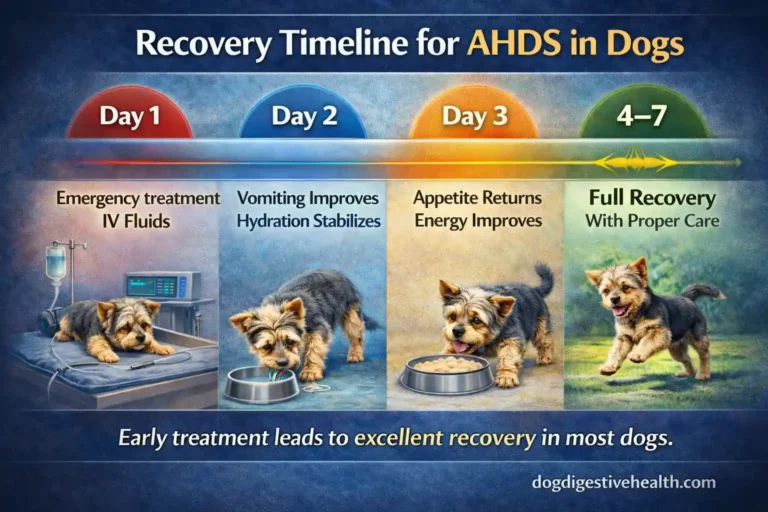
- The prognosis for AHDS in dogs is generally good when treatment starts early
- Many dogs improve within:
- 24 to 48 hours
- Recovery may include:
- short hospitalization
- gradual reintroduction of food
- a bland or highly digestible diet
- follow-up if signs recur
- Delayed treatment can increase the risk of serious complications such as:
- hypovolemic shock
- systemic inflammation
- clotting abnormalities
- organ dysfunction
AHDS vs HGE in Dogs
AHDS and HGE are closely related terms. HGE stands for hemorrhagic gastroenteritis, which is the older name many dog owners still search for. AHDS stands for acute hemorrhagic diarrhea syndrome, which is the newer and more accurate term.
In simple terms:
- HGE is the older/common term.
- AHDS is the newer veterinary term.
- Both are often used for sudden bloody diarrhea with vomiting and dehydration risk.
The term AHDS is preferred because not every case involves true stomach inflammation, and the main emergency feature is acute bloody diarrhea with rapid fluid loss.
If your veterinarian says AHDS and another source says HGE, they may be referring to the same general condition.
Key Takeaways
- If your dog develops:
- sudden bloody diarrhea
- vomiting
- lethargy
- weakness
- dehydration signs
- Assume it could be acute hemorrhagic diarrhea syndrome or another serious gastrointestinal emergency.
- Seek veterinary care immediately
- Fast treatment, especially IV fluid therapy, gives most dogs an excellent chance of recovery.
Frequently Asked Questions (FAQs)
What is AHDS in dogs?
AHDS in dogs means acute hemorrhagic diarrhea syndrome. It is a sudden digestive emergency that can cause bloody diarrhea, vomiting, dehydration, weakness, and shock.
What does AHDS stand for in dogs?
AHDS stands for acute hemorrhagic diarrhea syndrome. “Acute” means sudden, “hemorrhagic” means bleeding, and the condition mainly causes sudden bloody diarrhea.
What are AHDS dog symptoms?
Common AHDS dog symptoms include sudden bloody diarrhea, watery or jelly-like stool, vomiting, weakness, dehydration, pale or tacky gums, loss of appetite, abdominal discomfort, and collapse in severe cases.
Is AHDS the same as HGE in dogs?
AHDS and HGE are closely related. HGE, or hemorrhagic gastroenteritis, is the older name. AHDS is the newer term commonly used for sudden bloody diarrhea syndrome in dogs.
What causes AHDS in dogs?
The exact cause is not always known. Possible factors include sudden gut inflammation, stress, diet changes, eating spoiled food, bacterial toxins, gut barrier problems, or other digestive triggers. A vet may need to rule out other serious causes.
Is AHDS in dogs an emergency?
Yes, AHDS can be an emergency. Sudden bloody diarrhea with vomiting, weakness, pale gums, dehydration, or collapse should be checked by a veterinarian urgently.
What is the treatment for AHDS in dogs?
Treatment usually includes IV fluids, electrolyte support, anti-nausea medication, monitoring, and supportive care. Antibiotics may be used only in selected cases when a veterinarian decides they are needed.
Can AHDS in dogs be treated at home?
True AHDS should not be treated casually at home. Dogs with bloody diarrhea and vomiting can become dehydrated quickly and may need IV fluids and emergency veterinary care.
How long does AHDS recovery take?
Many dogs start improving within 24 to 48 hours after prompt veterinary treatment, but recovery depends on dehydration, vomiting, severity, complications, and how quickly treatment begins.
Can AHDS be fatal in dogs?
Yes, AHDS can be fatal if severe dehydration, shock, or complications are not treated quickly. Early veterinary care gives most dogs a much better chance of recovery.
Medical Disclaimer:
- This article is for educational purposes only and is not a substitute for veterinary diagnosis or treatment.
- If your dog has bloody diarrhea, vomiting, weakness, or signs of dehydration, contact a licensed veterinarian or emergency animal hospital immediately.
References:
- Unterer, S. (2021). Acute hemorrhagic diarrhea syndrome in dogs. Journal of Veterinary Internal Medicine, 35(3), 1383-1396.
- MSD Veterinary Manual. (2024). Acute hemorrhagic diarrhea syndrome in dogs.
- Veterinary Partner. (2024). Acute hemorrhagic diarrhea syndrome (AHDS or HGE).
- Reisinger, A., et al. (2024). Comparing treatment effects on dogs with acute hemorrhagic diarrhea syndrome. Journal of the American Veterinary Medical Association, 262(12).
- Huber, L., Kuropka, B., Doulidis, P., & Burgener, I. (2024). Plasma proteome signature of canine acute haemorrhagic diarrhoea syndrome. PLOS ONE, 19(2), e0297924.
- Reisinger, A., et al. (2024). Evaluation of intestinal barrier dysfunction with serum iohexol concentration in dogs with acute hemorrhagic diarrhea syndrome. Animals, 14(6), 963.
- VCA Animal Hospitals. (2025). Hemorrhagic gastroenteritis in dogs.