
Why Is My Dog’s Stomach Gurgling Loudly and Refusing to Eat?
Written by: Dr. Akram Khan, DVM
Veterinary review by: Dr. Khalid Mehmood, PhD (Assistant Professor in Clinical Veterinary Medicine)
Last medically reviewed: September 13, 2026
Quick Answer
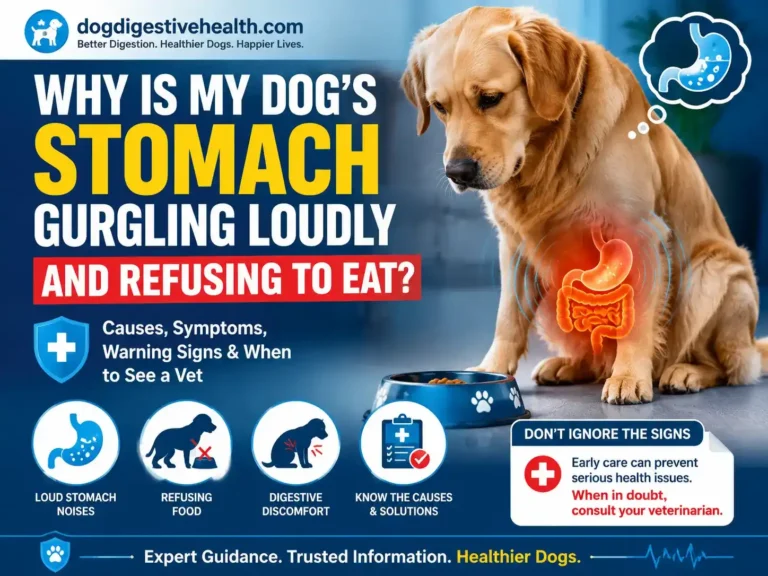
A dog’s stomach making loud gurgling, bubbling, or rumbling sounds can be concerning, especially when those noises occur together with refusing food. While occasional digestive sounds are a normal part of gastrointestinal function, a sudden change in appetite may indicate that your dog is experiencing discomfort somewhere along the digestive tract.
The sounds you hear are usually produced by movement inside the gastrointestinal (GI) tract. The medical term for these noises is borborygmi, which occurs when gas, fluid, and digestive contents move through the intestines during normal muscular contractions called peristalsis. Occasional gurgling is generally harmless, but when it is combined with loss of appetite, vomiting, pain, or behavior changes, it deserves closer attention (1).
A dog’s stomach may gurgle loudly because of normal digestion, hunger, gas movement, dietary changes, or temporary digestive upset. However, loud stomach noises combined with refusing food may also occur with nausea, gastritis, pancreatitis, intestinal irritation, or other gastrointestinal problems.
When Loud Stomach Sounds Need Attention
A noisy stomach by itself does not always mean your dog is sick. Many healthy dogs experience noticeable digestive sounds, especially when their stomach is empty or after eating certain foods.
The situation becomes more concerning when gurgling occurs with:
- Repeated refusal of food
- Vomiting or repeated retching
- Severe diarrhea
- Blood in stool
- Abdominal swelling or discomfort
- Weakness or unusual tiredness
- Reduced water intake
- Signs of dehydration
- Possible swallowing of a foreign object
A veterinarian generally evaluates the complete clinical picture rather than focusing only on the stomach sounds. A dog that has occasional gurgling but remains active and comfortable is very different from a dog with loud noises, appetite loss, and signs of illness (1).
Why Is My Dog’s Stomach Making Loud Noises but He Won’t Eat?
When a dog’s stomach is making loud noises but he refuses food, the digestive system may be responding to irritation, discomfort, or altered movement within the GI tract.
Common reasons include:
Empty stomach activity
When there is little food inside the digestive system, movement of gas and fluid can become more noticeable. Some dogs have louder stomach sounds early in the morning or before regular meal times.
Dietary changes or eating unusual foods
Dogs can develop digestive upset after eating fatty foods, table scraps, garbage, unfamiliar treats, or other items that are difficult to digest. Sudden changes in diet may also temporarily disturb normal intestinal function.
Gas accumulation
Gas naturally forms during digestion. However, increased gas production or swallowing excess air can make intestinal sounds more noticeable.
Nausea
Some dogs refuse food because eating feels uncomfortable. They may appear interested in food but walk away after smelling it.
Signs that may suggest nausea include:
- Lip licking
- Drooling
- Frequent swallowing
- Eating grass
- Restlessness around food
Why Is My Dog’s Stomach Gurgling but Refusing Food and Water?
A dog refusing both food and water requires more careful monitoring because reduced fluid intake can increase the risk of dehydration.
This combination may occur with:
- Gastritis (inflammation of the stomach lining)
- Gastroenteritis (inflammation of the stomach and intestines)
- Pancreatitis
- Intestinal obstruction
- Foreign body ingestion
- Significant abdominal discomfort
If your dog cannot keep water down, appears weak, has a painful abdomen, or becomes unusually quiet, veterinary assessment is recommended.
Water refusal is generally more concerning than skipping one meal because hydration is essential for circulation, kidney function, and normal body processes.
Is a Gurgling Stomach a Sign My Dog Is Sick?
Not always.
Digestive sounds are created by normal movement within the GI tract. The intestines continuously contract to move food, fluids, and gas through the digestive system.
However, stomach noises become more meaningful when they appear alongside other symptoms.
For example:
A healthy dog may have loud stomach sounds because of hunger or normal digestion.
A dog with loud gurgling, refusing food, vomiting, lethargy, or abdominal discomfort may have an underlying digestive problem.
Veterinarians consider multiple factors, including appetite, hydration, stool changes, abdominal findings, and overall behavior, before determining whether further investigation is needed (1).
Why Does My Dog Have Loud Stomach Noises but Seems Hungry?
Some dogs seem hungry but still refuse to eat. This often happens when appetite is present but eating causes discomfort.
Possible reasons include:
- Mild nausea
- Gastric irritation
- Gas-related discomfort
- Abdominal sensitivity
- Early gastrointestinal disease
A dog may approach the food bowl, smell the meal, and then leave because swallowing or digestion feels uncomfortable.
This distinction is important because food refusal caused by discomfort is different from simple picky eating.
What Digestive Problems Can Cause Stomach Gurgling and Loss of Appetite?
Several gastrointestinal conditions can cause a combination of stomach noises and reduced appetite.
Gastritis
Gastritis is inflammation of the stomach lining. It may occur after dietary irritation, certain medications, infections, toxins, or other triggers.
Affected dogs may develop:
- Reduced appetite
- Nausea
- Vomiting
- Abdominal discomfort
- Increased digestive sounds
Pancreatitis
Pancreatitis is inflammation of the pancreas, an organ involved in digestion and metabolism. Dogs with pancreatitis may experience appetite loss, vomiting, abdominal pain, and lethargy.
Because these signs overlap with other gastrointestinal disorders, diagnosis usually requires veterinary evaluation using clinical examination, laboratory testing, and sometimes imaging (2).
Food intolerance and dietary sensitivity
Some dogs may react poorly to certain ingredients. Dietary sensitivity can contribute to digestive discomfort, gas production, and changes in eating behavior.
Intestinal obstruction
Foreign objects such as toys, bones, fabric, or other non-food materials can interfere with movement through the digestive tract.
Possible signs include:
- Refusing food
- Vomiting
- Abdominal pain
- Reduced stool production
- Weakness
Intestinal obstruction can become serious and requires prompt veterinary assessment when suspected (3).
Dog Stomach Gurgling: Normal Digestive Sounds vs Concerning Signs
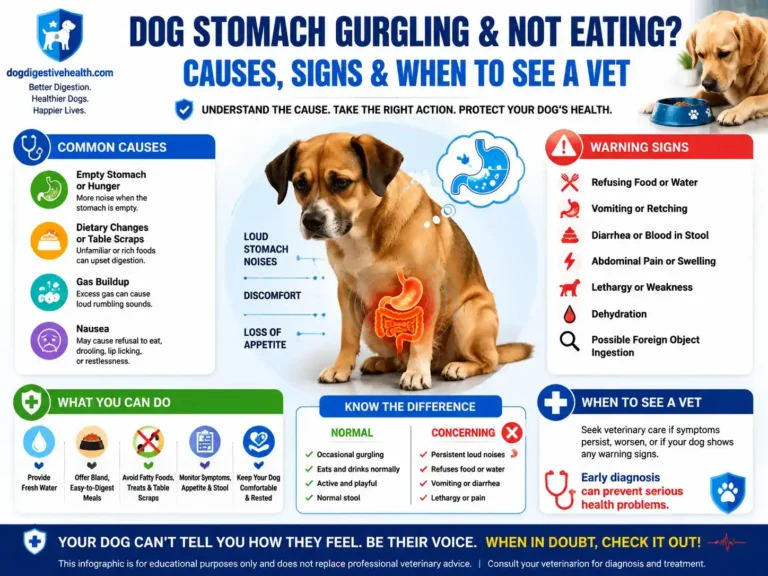
Normal digestive sounds | Signs that may require veterinary attention |
Occasional gurgling | Persistent or unusually loud stomach noises |
Dog eats normally | Dog refuses food |
Normal energy level | Lethargy or weakness |
Normal drinking habits | Refusing water |
No vomiting or diarrhea | Vomiting or diarrhea |
Comfortable behavior | Abdominal pain, swelling, or restlessness |
What Can I Do If My Dog’s Stomach Is Gurgling but They Seem Otherwise Fine?
If your dog is alert, comfortable, drinking normally, and has no concerning symptoms, you can monitor the situation carefully.
Helpful steps include:
- Provide fresh water.
- Avoid sudden diet changes.
- Avoid fatty treats and table scraps.
- Observe appetite and bowel movements.
- Monitor energy level and behavior.
- Avoid giving human stomach medications unless specifically advised by a veterinarian.
Keeping notes about when the noises occur, what your dog ate recently, and any changes in stool can help your veterinarian identify possible triggers.
When Should I Take My Dog to the Vet for Stomach Gurgling and Loss of Appetite?
Contact your veterinarian if your dog has:
- Persistent refusal to eat
- Vomiting or repeated retching
- Severe diarrhea
- Signs of abdominal pain
- A swollen abdomen
- Weakness or collapse
- Blood in stool or vomit
- Possible foreign body ingestion
Emergency veterinary care is especially important if your dog has abdominal enlargement, repeated unsuccessful attempts to vomit, severe discomfort, or sudden weakness because these may indicate serious conditions such as gastric dilatation-volvulus (GDV) (3).
Final Thoughts
A dog’s stomach gurgling loudly is often caused by normal movement of gas and digestive contents through the gastrointestinal tract. However, when those sounds occur together with refusing food, the reason behind the appetite change becomes the most important concern.
Monitoring your dog’s behavior, hydration, appetite, and additional symptoms can help determine whether the issue is temporary digestive upset or something requiring veterinary care.
A stomach sound alone rarely tells the whole story. Your dog’s overall condition provides the most valuable information.
Medical Disclaimer
This article is intended for educational purposes only and does not replace professional veterinary diagnosis, advice, or treatment. Each dog is unique, and symptoms such as stomach gurgling and refusing food may have different causes. Consult a qualified veterinarian if your dog has persistent symptoms, a worsening condition, or signs of illness.
Frequently Asked Questions (FAQs)
1. Why is my dog’s stomach gurgling loudly and refusing to eat?
Loud stomach sounds with refusal to eat may occur because of hunger, digestive upset, nausea, dietary changes, or gastrointestinal problems. Persistent appetite loss should be evaluated by a veterinarian.
2. Are loud stomach noises in dogs always dangerous?
No. Occasional digestive sounds are usually normal and result from movement of gas and fluids through the GI tract. They become more concerning when combined with other symptoms.
3. Why is my dog interested in food but refusing to eat?
A dog may want food but avoid eating because of nausea, stomach discomfort, or abdominal irritation. Signs such as lip licking or walking away from food may indicate discomfort.
4. How long can a dog go without eating when their stomach is gurgling?
Missing one meal may not be serious in an otherwise healthy dog, but prolonged refusal to eat or the presence of other symptoms requires veterinary advice.
5. When should I worry about my dog’s gurgling stomach?
Seek veterinary guidance if gurgling occurs with vomiting, abdominal swelling, pain, weakness, dehydration, or possible foreign object ingestion.
References
- Merck Veterinary Manual. Disorders of the Stomach and Intestines in Dogs. Merck & Co., Inc. Available from: https://www.merckvetmanual.com. DOI: Not applicable.
- Cridge H, Lim SY, Algül H, Steiner JM. Advances in the diagnosis of acute pancreatitis in dogs. Journal of Veterinary Internal Medicine. 2021;35(6):2572–2587. DOI: 10.1111/jvim.16251.
- Fossum TW. Gastric Dilatation-Volvulus: What’s New? Proceedings of the World Small Animal Veterinary Association Congress. DOI: Not applicable.