
Best OTC Dog Diarrhea Treatments: Vet-Approved Picks
Written by: Dr. Akram Khan, DVM
Veterinary review by: Dr. Khalid Mehmood, PhD (Assistant Professor in Clinical Veterinary Medicine)
Last medically reviewed: October 20, 2026
When your dog suddenly develops loose or watery stool, you may wonder what you can safely give at home. The best over-the-counter dog diarrhea treatment depends on your dog’s age, hydration, health history, medications, and accompanying symptoms. Mild cases may improve with supportive care, while vomiting, weakness, pain, dehydration, or significant blood can signal a condition that needs prompt veterinary treatment.
What Is the Best OTC Treatment for Dog Diarrhea?
For a healthy adult dog with mild, uncomplicated diarrhea, appropriate support may include a canine-specific probiotic or synbiotic, a veterinary kaolin-pectin paste, fresh water, and small portions of a highly digestible diet. Human medications such as Imodium, Pepto-Bismol, and Kaopectate should only be used when a veterinarian recommends the exact product and dose.
How Can You Treat Mild Dog Diarrhea at Home?
Support mild diarrhea by maintaining hydration, feeding small and frequent portions of an easily digested diet, and using a veterinarian-recommended canine gastrointestinal supplement when appropriate. Contact a veterinarian if symptoms worsen, continue beyond 24–48 hours, or occur with vomiting, weakness, pain, dehydration, black stool, or substantial blood.
Diarrhea is a symptom rather than a diagnosis. It may follow a sudden food change, table scraps, stress, dietary indiscretion, or a temporary disruption of the gut microbiome. It can also result from intestinal parasites, infection, pancreatitis, toxin exposure, chronic enteropathy, or a gastrointestinal obstruction.
A product that firms the stool may make the problem appear better without correcting dehydration or treating the underlying condition.
Current evidence-based veterinary guidance evaluates acute canine diarrhea according to the dog’s overall condition, hydration, circulation, appetite, vomiting, and signs of systemic illness. Mild cases often improve with supportive care, while moderate or severe illness may require diagnostic testing, fluid therapy, or hospitalization (1).
Quick Comparison of OTC Dog Diarrhea Remedies
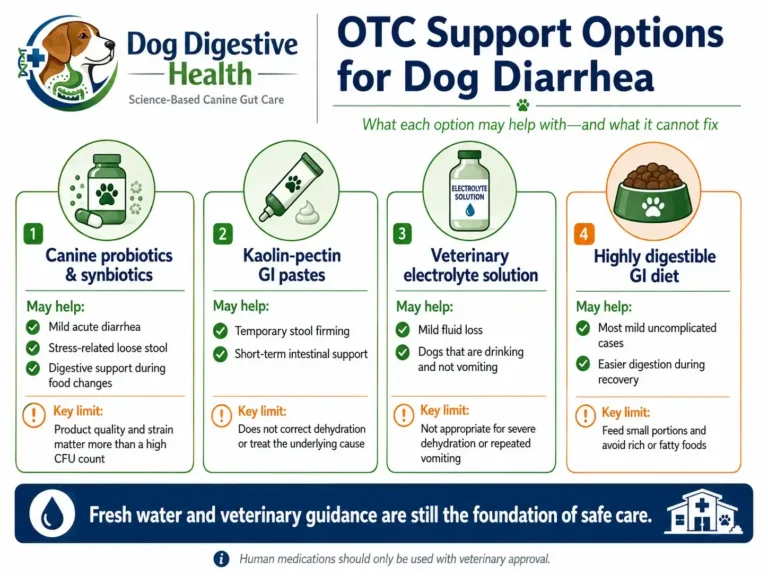
Treatment option | May be useful for | Important limitations |
Canine probiotic or synbiotic | Mild acute diarrhea, stress-related loose stool, or digestive support during food changes | Benefits depend on the strain and product; a high CFU count alone doesn’t guarantee effectiveness. |
Kaolin-pectin gastrointestinal paste | Temporary stool firming and intestinal support | May alter stool consistency without correcting dehydration or the underlying cause |
Smectite or montmorillonite clay | Short-term adsorption and mucosal support | Can interfere with oral medications and may cause constipation |
Veterinary electrolyte solution | Selected dogs with mild fluid loss that can drink and aren’t vomiting | Not appropriate for severe dehydration, repeated vomiting, or suspected obstruction |
Highly digestible gastrointestinal diet | Most mild, uncomplicated cases | Portions should remain small during the early recovery period. |
Chicken, turkey, and white rice | A temporary bridge when veterinary GI food isn’t available | Not complete and balanced for prolonged feeding |
Plain canned pumpkin | Selected dogs that may benefit from soluble fiber | Too much may worsen gas, urgency, or stool volume. |
Human antidiarrheal medication | Only carefully selected cases | May cause toxicity, drug interactions, constipation, neurologic effects, or delayed diagnosis |
Activated charcoal | Certain veterinarian-confirmed poison exposures | Not a routine remedy for loose stool and may cause serious complications |
“Over the counter” means a product can be purchased without a prescription. It doesn’t mean the product is safe, effective, or necessary for every dog.
Triage Protocol: When Can You Safely Treat Dog Diarrhea at Home?
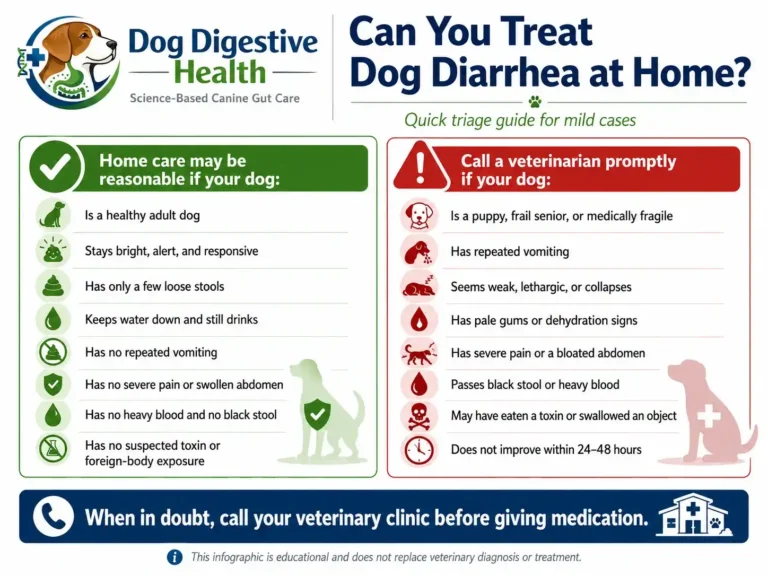
Before choosing an OTC canine anti-diarrheal product, assess the whole dog. A comfortable adult dog that passes two loose stools presents a very different situation from a weak puppy with vomiting and bloody diarrhea.
Home care may be reasonable when your dog:
- Is a generally healthy adult
- Remains bright, alert, and responsive
- Has passed only a few loose stools
- Continues drinking voluntarily
- Keeps food and water down
- Has no repeated vomiting
- Shows no significant abdominal pain or swelling
- Has no large amount of fresh blood
- Has no black, sticky, or tar-like stool
- Has no known toxin or foreign-body exposure
- Has no serious chronic medical condition
- Isn’t taking medication that may cause diarrhea
- Shows no obvious signs of dehydration
Even when your dog has diarrhea but is acting normal, contacting your veterinary clinic before giving medication is sensible. A short discussion can uncover breed-related risks, drug interactions, or health conditions that change the safest treatment plan.
High-risk dogs need earlier veterinary advice
Some dogs can deteriorate quickly or require a different diagnostic approach. Contact a veterinarian promptly when diarrhea affects:
- Puppies
- Toy breeds prone to low blood sugar
- Frail senior dogs
- Pregnant or nursing dogs
- Underweight dogs
- Dogs with diabetes
- Dogs with kidney, liver, heart, adrenal, or immune disease
- Dogs receiving chemotherapy or immunosuppressive medication
- Dogs with a history of pancreatitis
- Dogs with recurrent or chronic digestive problems
Puppy diarrhea deserves particular caution. Parasites, parvovirus, dietary indiscretion, sudden food changes, and foreign-body ingestion are important possibilities. A puppy can lose fluid quickly, even before dehydration appears severe.
How to check your dog for dehydration
Diarrhea removes water and electrolytes from the body. No single home test is perfect, so assess several signs together.
Examine the gums.
Healthy gums generally feel moist. Dry, sticky, or tacky gums may indicate fluid loss.
Watch water intake.
Notice whether your dog drinks normally, drinks excessively, or refuses water. A dog that cannot keep water down needs veterinary attention.
Monitor urination.
Less frequent urination or unusually dark urine may accompany dehydration.
Observe the eyes and face.
Sunken-looking eyes can occur with more advanced fluid loss, although age and facial structure influence appearance.
Evaluate energy and responsiveness.
Weakness, unusual sleepiness, trembling, confusion, or collapse should never be managed with an OTC supplement alone.
Use the skin test carefully.
Gently lifting the skin over the shoulders may provide a rough hydration clue. Skin that returns slowly can suggest dehydration, but age, weight loss, and skin elasticity affect the result.
OTC Canine Anti-Diarrheal Supplements
No single supplement is suitable for every dog or every cause of diarrhea.
In this context, “vet-approved” means your veterinarian has reviewed the product’s ingredients and determined that it’s appropriate for your dog’s individual condition. It doesn’t mean every product carrying a digestive-health claim has been proven effective.
A recent systematic review found that nutraceuticals, including probiotics, prebiotics, and synbiotics, didn’t provide a consistent clinically important benefit across every case of acute canine diarrhea. The studies used different organisms, formulations, diets, and outcome measures, which makes broad product claims unreliable (2).
That doesn’t mean all gastrointestinal supplements are ineffective. It means each product should be judged by its formulation, quality control, safety profile, and supporting evidence.
Clay Adsorbents: Kaolin-Pectin Pastes for Soothing the Mucosa
Kaolin-pectin products have long been used as supportive treatments for loose stool in dogs.
Kaolin is a type of clay, while pectin is a soluble carbohydrate commonly obtained from fruit. These ingredients may bind water and other material within the intestinal tract, coat irritated surfaces, and temporarily improve stool consistency.
Veterinary gastrointestinal pastes may combine kaolin and pectin with:
- Montmorillonite
- Smectite clay
- Psyllium
- Prebiotic fiber
- Beta-glucans
- Electrolytes
- Probiotic organisms
- Dextrose or other energy sources
A combination product may offer broader support than plain kaolin-pectin, but every added ingredient doesn’t automatically provide a meaningful benefit.
When kaolin-pectin may be appropriate
A pet-specific kaolin-pectin paste may be considered when:
- An otherwise healthy adult dog has mild acute diarrhea
- The dog remains alert and hydrated
- There is no repeated vomiting
- There is no suspected obstruction or poisoning
- The product is formulated specifically for dogs
- Your veterinarian has reviewed other medications and supplements
What kaolin-pectin cannot treat
Clay-based products cannot:
- Replace lost body fluid
- Correct moderate or severe dehydration
- Kill intestinal parasites
- Remove a foreign body
- Treat pancreatitis
- Reverse poisoning
- Cure parvovirus
- Diagnose chronic gastrointestinal disease
A firmer stool can create false reassurance. The dog may still be losing fluid, experiencing pain, or developing systemic illness.
Possible disadvantages of clay-based products
Kaolin, pectin, and other adsorbents may:
- Cause constipation
- Reduce absorption of oral medication
- Alter stool color or texture
- Make natural improvement harder to assess
- Delay veterinary care when attention remains fixed on stool firmness
Separate clay products from other oral medications according to your veterinarian’s instructions. The correct interval may vary depending on the drug.
How to compare canine gastrointestinal pastes
Look for a product that:
- Is labeled for dogs
- Lists every active ingredient
- Provides weight-based directions
- Displays an expiration date and lot number
- Includes clear storage instructions
- Identifies probiotic strains when probiotics are present
- Guarantees viable organism counts through expiration
- Provides manufacturer contact information
- Avoids unnecessary sweeteners or vague proprietary blends
Don’t combine several clay, fiber, and probiotic products unless your veterinarian recommends the combination. Stacking products can increase constipation, bloating, medication-binding, and feeding refusal.
High-Dose Synbiotic Powders for Digestive Support
A high-dose synbiotic powder may support the intestinal microbiome, but it doesn’t directly replace lost fluid or electrolytes.
- A probiotic contains live microorganisms intended to provide a health benefit.
- A prebiotic provides material that selected intestinal microorganisms can use.
- A synbiotic combines probiotics and prebiotics.
Synbiotics may support microbial balance and intestinal function. They don’t replace water, sodium, potassium, or chloride lost through watery diarrhea.
What makes a canine probiotic worth considering?
When choosing a probiotic for dog diarrhea, don’t select a product only because it displays a large number on the package.
A useful label should identify:
- Genus
- Species
- Strain
- Colony-forming units
- Storage conditions
- Expiration date
- Administration instructions
Common organisms used in canine products include strains of:
- Enterococcus faecium
- Bifidobacterium animalis
- Lactobacillus species
- Bacillus species
Results from one strain cannot automatically be applied to another. Two products may both say “probiotic” while containing different organisms, doses, carriers, and prebiotic ingredients.
Are higher CFU counts always better?
No. A higher colony-forming-unit count doesn’t prove that a product will shorten diarrhea or improve stool quality.
Effectiveness depends on:
- The exact strain
- Product stability
- Survival through the stomach
- Storage conditions
- The dog’s underlying condition
- The accompanying diet
- Duration of use
- Viability through expiration
A lower-dose product with a studied strain and reliable manufacturing may be more useful than a high-dose proprietary blend with limited quality information.
Synbiotics compared with antibiotics
Antibiotics aren’t routine treatments for uncomplicated acute diarrhea. Current evidence-based guidelines recommend against antimicrobial treatment in dogs with mild or moderate acute diarrhea when sepsis isn’t suspected (1).
A randomized 2024 clinical trial compared metronidazole with a synbiotic in dogs with acute diarrhea. Both groups had similar clinical outcomes, including fecal consistency and defecation frequency. Metronidazole, however, produced less favorable changes in several important intestinal bacterial populations, with some differences still present on day 30 (3).
The study was small and doesn’t prove that every synbiotic is superior to every antibiotic. It does support avoiding automatic antibiotic treatment in uncomplicated cases.
When a synbiotic isn’t enough
A probiotic or synbiotic will not correct:
- Significant dehydration
- Persistent vomiting
- Severe abdominal pain
- Intestinal blockage
- Poisoning
- Parvovirus
- Pancreatitis
- Advanced parasite infection
- Severe hemorrhagic diarrhea
- Chronic weight loss
Stop home treatment when your dog’s overall condition worsens, even when the stool appears slightly firmer.
Electrolyte Rehydration Solutions to Combat Mild Dehydration
Hydration is more important than finding the strongest stool-firming product. Dogs with watery diarrhea can lose both fluid and electrolytes.
A veterinary oral electrolyte solution may be appropriate for a dog that:
- Has only mild fluid loss
- Remains alert and responsive
- Can swallow normally
- Drinks willingly
- Isn’t repeatedly vomiting
- Has no suspected intestinal obstruction
- Has received veterinary guidance
Oral fluids aren’t adequate for every dog. Moderate or severe dehydration may require subcutaneous or intravenous fluid therapy, depending on circulation, laboratory results, and the underlying disease.
Can dogs drink human sports drinks?
Human sports drinks aren’t ideal canine rehydration solutions. Many contain unnecessary sugar, artificial flavors, excessive sodium, or sweeteners that may be unsafe.
Sugar-free products deserve particular caution because some foods, drinks, powders, and liquid medications contain xylitol, which is toxic to dogs.
Use:
- Fresh water
- A veterinarian-recommended canine electrolyte product
- A prescribed veterinary liquid diet when needed
Never force liquid into the mouth of a weak, vomiting, sedated, or poorly responsive dog. Fluid can enter the lungs and cause aspiration pneumonia.
Signs that oral fluids aren’t enough
Seek veterinary care when your dog:
- Refuses water
- Vomits after drinking
- Becomes increasingly lethargic
- Produces little urine
- Develops pale or sticky gums
- Has sunken-looking eyes
- Cannot stand normally
- Continues passing frequent watery stool
- Shows worsening blood loss
An electrolyte drink should never become a reason to delay professional fluid therapy.
The Clinical Bland Diet Baseline: Chicken, Plain Turkey, White Rice, and Pumpkin
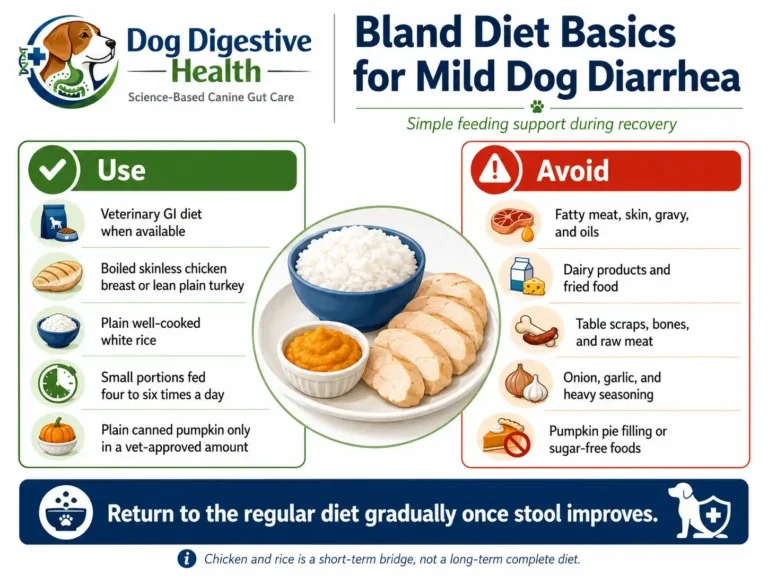
A bland diet can support selected dogs with mild diarrhea, but the traditional chicken-and-rice approach has important limitations.
A complete veterinary gastrointestinal diet is often the better choice because it provides controlled fat, digestible nutrients, selected fibers, vitamins, and minerals.
Why highly digestible food may help
During diarrhea, the gastrointestinal tract may have difficulty digesting and absorbing normal meals. A carefully formulated digestive diet can:
- Reduce undigested material reaching the colon
- Provide accessible calories and protein
- Support the intestinal lining
- Reduce digestive workload
- Help maintain nutrition during recovery
- Supply predictable amounts of fat and fiber
Small meals are generally easier to tolerate than one large serving.
Is chicken and rice good for dogs with diarrhea?
Plain chicken and white rice may serve as a short-term bridge when approved by your veterinarian and when veterinary GI food isn’t immediately available.
Prepare it safely:
- Use boiled, skinless, boneless chicken breast.
- Remove visible fat.
- Cook the chicken thoroughly.
- Use plain, well-cooked white rice.
- Add no oil, butter, salt, sauces, broth cubes, onion, or garlic.
- Refrigerate unused portions promptly.
Chicken and rice aren’t nutritionally complete or balanced. Its fat content also changes depending on whether you use breast, thigh, skin, or cooking drippings.
Don’t feed this mixture for an extended period unless a veterinary nutrition professional has balanced the recipe.
Can plain turkey replace chicken?
Lean, plain turkey may be used when your veterinarian considers it appropriate.
Choose:
- Skinless turkey breast
- Very lean ground turkey
- Completely cooked meat
- Meat drained of excess fat
Avoid:
- Turkey skin
- Gravy
- Seasoning
- Deli turkey
- Smoked turkey
- Processed turkey slices
- Meat cooked with onion or garlic
Turkey isn’t suitable for dogs with known poultry intolerance. A dog that reacts to chicken may also react to turkey.
Does pumpkin help dog diarrhea?
Plain canned pumpkin contains soluble and insoluble fiber. Soluble fiber can hold water and influence stool consistency, which may help some dogs with mild loose stool.
Use only:
- Plain canned pumpkin
- Plain cooked pumpkin
- A pet-specific pumpkin powder with clearly listed ingredients
Don’t use pumpkin pie filling. It may contain sugar, spices, fat, or sweeteners.
Pumpkin isn’t a universal remedy. Excessive amounts may increase:
- Gas
- Stool volume
- Bowel urgency
- Abdominal discomfort
- Loose stool
Fiber needs differ depending on the cause of diarrhea. Some dogs with large-bowel diarrhea respond to added soluble fiber, while others do better on a lower-fiber, highly digestible diet.
Should a dog with diarrhea be fasted?
Routine prolonged fasting isn’t necessary for every dog. The intestinal lining requires nutrients, and many dogs tolerate small meals of digestible food.
Never fast the following dogs without veterinary supervision:
- Puppies
- Toy breeds prone to hypoglycemia
- Pregnant or nursing dogs
- Diabetic dogs
- Underweight dogs
- Frail senior dogs
- Dogs taking medication that requires food
- Dogs with significant chronic disease
When diarrhea occurs with repeated vomiting, contact your veterinarian before repeatedly offering meals or withholding food for a prolonged period.
Foods to avoid during recovery
Avoid feeding:
- Fatty meat
- Bacon or sausage
- Fried food
- Dairy products
- Rich treats
- Raw meat
- Bones
- Table scraps
- Spicy food
- Butter or cooking oils
- Onion or garlic
- Sugar-free foods
- Heavily seasoned broth
- Large amounts of unfamiliar fiber
A dog that improves on a bland diet may relapse when regular food is reintroduced too quickly.
Is Human Kaopectate Safe for Dogs? The Formulation Shift
Don’t give a dog Kaopectate based on an old recommendation or a familiar brand name.
Historically, Kaopectate was associated with kaolin and pectin. Many modern US formulations contain bismuth subsalicylate, although ingredients can vary by product, country, and formulation.
Bismuth subsalicylate is also used in Pepto-Bismol products. The salicylate component is related to aspirin and can create clinically important risks.
Potential concerns include:
- Gastrointestinal irritation
- Constipation
- Salicylate exposure
- Drug interactions
- Increased bleeding risk
- Black or dark green stool
- Masking of gastrointestinal bleeding
- Problems in dogs with kidney disease or ulcers
Dark stool is especially important. Bismuth can turn feces black, while naturally black, sticky stool may indicate digested blood. Giving the medication can make a serious gastrointestinal bleed harder to recognize.
Medications that may interact
Tell your veterinarian when your dog takes:
- Aspirin
- Carprofen
- Meloxicam
- Deracoxib
- Firocoxib
- Prednisone
- Dexamethasone
- Anticoagulants
- Other salicylate-containing products
- Certain diabetes, gout, or seizure medications
Don’t rely on a dose found in a forum or general pet discussion. Liquid concentrations, tablet strengths, combination ingredients, and individual risks vary.
Bottom line: Human Kaopectate isn’t a routine home remedy for dogs. Read the current active-ingredient label and consult your veterinarian before giving any amount.
Can I Give My Dog Activated Charcoal for Sudden Loose Stools?
Activated charcoal isn’t a standard treatment for ordinary canine diarrhea.
Veterinarians use it for selected poison exposures because charcoal may bind certain substances inside the gastrointestinal tract. It doesn’t bind every toxin and may be ineffective or dangerous in the wrong situation.
Activated charcoal may cause:
- Vomiting
- Aspiration into the lungs
- Constipation
- Worsening diarrhea
- Dehydration
- Abnormally high blood sodium
- Black stool
- Interference with medication absorption
- Delayed diagnostic procedures
Charcoal can be especially dangerous when a dog is weak, sedated, vomiting, unable to swallow normally, dehydrated, or at risk of intestinal obstruction.
It also doesn’t reliably bind certain substances, including some alcohols, metals, caustic chemicals, and xylitol.
When poisoning is possible:
- Remove your dog from the source.
- Preserve the product packaging.
- Estimate the amount and time of exposure.
- Contact a veterinarian or veterinary poison-control service immediately.
- Don’t induce vomiting or give charcoal unless instructed.
Treating toxin-related diarrhea at home can waste the period during which specific decontamination or antidote therapy may be most effective.
Guidance on Bland Meal Portions for Dogs
There is no universal chicken-and-rice feeding amount that works for every dog. Calorie levels vary according to the cut of meat, fat content, meat-to-rice ratio, cooking method, and the dog’s individual needs.
A safer approach uses your dog’s usual meal amount as the starting reference.
A conservative feeding approach
For a healthy adult dog with mild diarrhea and no vomiting:
- Offer roughly one-quarter of the dog’s usual meal portion.
- Wait several hours and watch for vomiting, pain, or worsening diarrhea.
- Offer another small portion when the first meal stays down.
- Divide the day’s food into four to six small meals.
- Increase the amount gradually as stool and appetite improve.
- Return to the regular diet slowly over several days.
Your veterinarian may recommend a different plan based on your dog’s calorie requirements, body size, health history, and suspected diagnosis.
How to transition back to regular dog food
Once stool improves and your dog feels normal, mix the regular food back gradually.
A simple transition may look like this:
- Day 1: Mostly digestive diet with a small amount of regular food
- Day 2: About three-quarters digestive diet and one-quarter regular food
- Day 3: Equal portions
- Day 4: One-quarter digestive diet and three-quarters regular food
- Day 5: Regular food, provided stool remains normal
Slow the transition when stool softens again. Dogs with food intolerance or recurring diarrhea may need a veterinary diet trial rather than a return to the previous food.
Keep a diarrhea recovery log.
Record:
- Stool frequency
- Stool consistency
- Stool color
- Blood or mucus
- Vomiting
- Food portions
- Water intake
- Urination
- Energy level
- Abdominal discomfort
- Every medication or supplement given
Photographs of unusual stool can help your veterinary team. Your veterinarian may also request a fresh fecal sample to check for parasites.
Can Dogs Take Human Anti-Diarrhea Medicines?
Human OTC availability doesn’t prove canine safety.
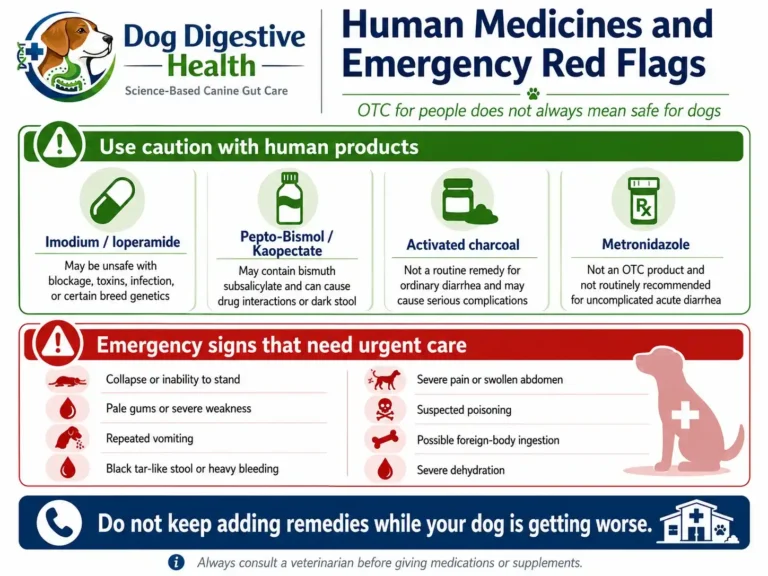
Loperamide or Imodium
Loperamide slows intestinal movement. That may be inappropriate when the bowel needs to clear toxins, infectious material, or irritating contents.
It can also create problems in dogs with:
- Suspected intestinal obstruction
- Infectious diarrhea
- Severe colitis
- Abdominal distension
- Certain toxin exposures
- Significant liver disease
- An ABCB1 genetic mutation
Dogs with an ABCB1 mutation may allow more loperamide to enter the central nervous system. This can cause profound sedation and other neurologic effects.
Herding breeds, including Collies, Australian Shepherds, and Old English Sheepdogs, are often associated with this mutation. Breed appearance alone cannot confirm genetic status.
Pepto-Bismol and bismuth subsalicylate
Bismuth subsalicylate may interact with common veterinary medications and can darken the stool. It should not be treated as a harmless liquid coating.
Dogs with bleeding disorders, gastrointestinal ulcers, kidney disease, or concurrent anti-inflammatory medication may face greater risk.
Antibiotics such as metronidazole
Metronidazole isn’t an OTC medicine, yet it’s still commonly associated with canine diarrhea treatment.
Evidence-based guidelines recommend against routine antibiotics for mild and moderate acute diarrhea when sepsis isn’t suspected (1). Antibiotics may disrupt the intestinal microbiome and contribute to antimicrobial resistance without providing a meaningful advantage in uncomplicated cases (2, 3).
This article intentionally doesn’t provide doses for loperamide, bismuth subsalicylate, or other human medications. Safe use depends on the exact product, concentration, dog’s weight, genetics, diagnosis, hydration, medical history, and concurrent medications.
Medical Disclaimer
This article is for educational purposes only and doesn’t replace veterinary diagnosis or treatment. Always consult your veterinarian before giving your dog medications, supplements, electrolyte products, or home remedies, especially when symptoms are severe, persistent, or accompanied by vomiting, blood, weakness, pain, or dehydration.
Frequently Asked Questions (FAQs)
1. What is the best OTC treatment for dog diarrhea?
A canine-specific probiotic or symbiotic, veterinary gastrointestinal paste, fresh water, and a highly digestible diet may help mild diarrhea.
2. Can I give my dog Imodium for diarrhea?
Only with veterinary approval. Imodium may be unsafe with certain breed genetics, infections, toxins, liver disease, or intestinal blockage.
3. Is pumpkin good for dogs with diarrhea?
Plain canned pumpkin may help selected dogs because it contains fiber. Excess pumpkin can worsen gas, urgency, or loose stool.
4. Can dogs take human Kaopectate?
Don’t give human Kaopectate without veterinary advice. Many current products contain bismuth subsalicylate rather than kaolin and pectin.
5. How long should dog diarrhea last?
Mild diarrhea should begin improving within 24–48 hours. Seek care sooner for vomiting, blood, weakness, pain, or dehydration.
6. When is dog diarrhea an emergency?
Emergency signs include collapse, pale gums, repeated vomiting, severe pain, black stool, heavy bleeding, dehydration, poisoning, or possible obstruction.
References
- Jessen LR, Werner M, Singleton D, et al. European Network for Optimization of Veterinary Antimicrobial Therapy guidelines for antimicrobial use in canine acute diarrhoea. The Veterinary Journal. 2024;307:106208. doi: 10.1016/j.tvjl.2024.106208.
- Scahill K, Jessen LR, Prior C, et al. Efficacy of antimicrobial and nutraceutical treatment for canine acute diarrhoea: A systematic review and meta-analysis for European Network for Optimization of Antimicrobial Therapy guidelines. The Veterinary Journal. 2024;303:106054. doi: 10.1016/j.tvjl.2023.106054.
- Stübing H, Suchodolski JS, Reisinger A, et al. The effect of metronidazole versus a synbiotic on clinical course and core intestinal microbiota in dogs with acute diarrhea. Veterinary Sciences. 2024;11(5):197. doi: 10.3390/vetsci11050197.