
Can I Give My Dog Imodium? Safety, Risks & Vet Advice
Written by: Dr. Akram Khan, DVM
Medically Reviewed by: Dr. Muhammad Saeed, PhD
Last updated: September 09, 2026
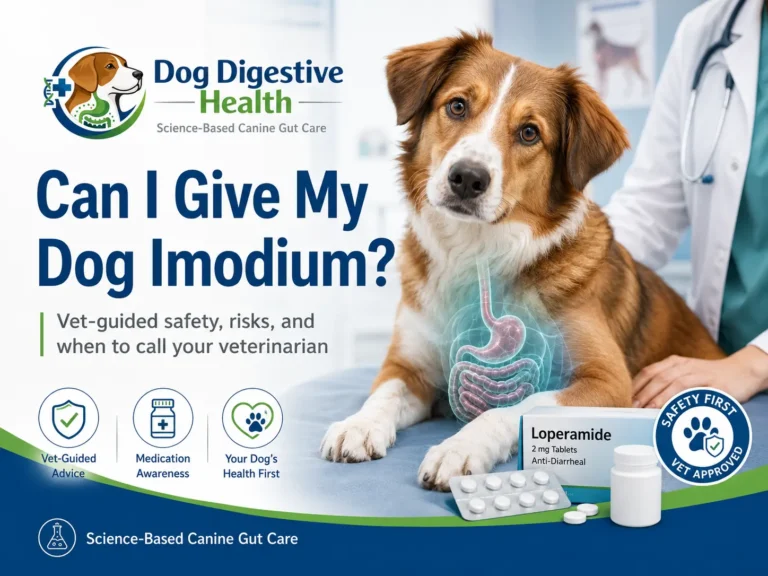
When your dog suddenly develops diarrhea, reaching for Imodium may feel like a sensible next step. It is familiar, inexpensive, and available without a prescription. However, a medicine that is widely used in people is not automatically safe for dogs. Imodium may help a carefully selected canine patient, but it can also worsen certain intestinal problems or cause serious toxicity. Before giving your dog loperamide, you need to understand what it does, which dogs face the greatest risk, and why veterinary guidance matters.
At a Glance: Is Imodium Safe for Dogs?
Imodium contains loperamide hydrochloride, an antidiarrheal medicine that slows movement through the intestines. Veterinarians occasionally prescribe it to selected dogs, but you should not give it without professional approval. It may be dangerous for dogs with an MDR1/ABCB1 gene mutation and may worsen diarrhea involving toxins, infections, severely reduced intestinal motility, or an obstruction.
Check These Warning Signs First
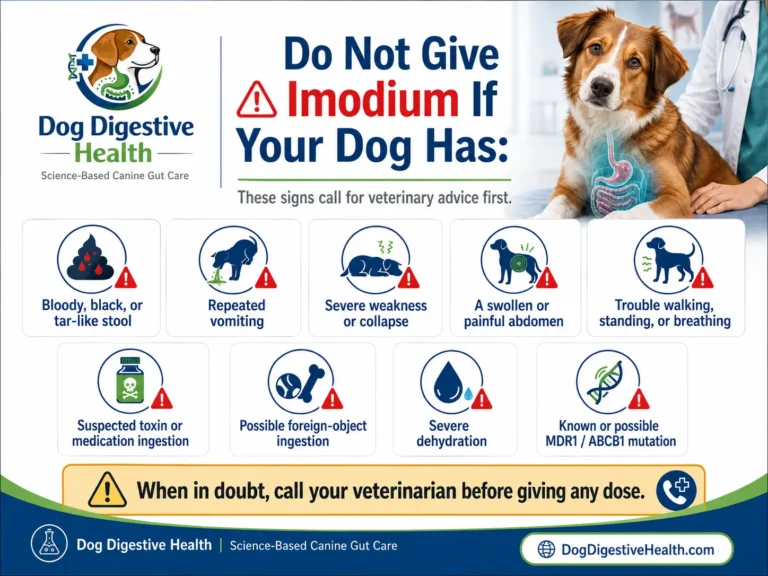
Do not give your dog Imodium before contacting a veterinarian if your dog has:
- Bloody, black, or tar-like stool
- Repeated vomiting
- Severe weakness or collapse
- A swollen or painful abdomen
- Difficulty walking, standing, or breathing
- Suspected toxin or human-medication ingestion
- Possible bone, toy, fabric, or foreign-object ingestion
- Severe dehydration
- A known or possible MDR1/ABCB1 mutation
- Rapidly worsening symptoms
Puppies, frail seniors, pregnant or nursing dogs, and dogs with chronic medical conditions also need individual veterinary assessment.
Does Imodium (Loperamide) Work for Sudden Canine Diarrhea?
Imodium is a brand name for loperamide, a medicine that acts mainly on opioid receptors in the intestinal wall. It reduces propulsive contractions and slows the movement of material through the gastrointestinal tract.
This slower transit may:
- Reduce the frequency of bowel movements
- Give the intestines more time to absorb water and electrolytes
- Reduce urgency
- Make loose or watery stool appear firmer
- Temporarily ease certain diarrhea symptoms
So, can loperamide work for sudden canine diarrhea? It may reduce stool frequency in some dogs, but that does not mean it treats the underlying problem.
A dog can develop acute diarrhea after:
- Eating spoiled food or garbage
- Switching diets too quickly
- Consuming a rich or fatty meal
- Experiencing stress
- Developing intestinal parasites
- Contracting a bacterial or viral infection
- Reacting to medication
- Developing pancreatitis
- Swallowing a toxin
- Eating a foreign object
- Developing severe intestinal inflammation
Loperamide cannot remove an obstruction, neutralize a poison, correct dehydration, eliminate parasites, or treat every infection. A dog may pass fewer stools while continuing to become weak, painful, dehydrated, or seriously ill.
Is Loperamide Approved for Veterinary Use?
Loperamide is not specifically FDA-approved as an over-the-counter diarrhea treatment for dogs.
When a veterinarian recommends human loperamide for a canine patient, it is generally being used off-label or extra-label. This type of prescribing is common in veterinary medicine and can be appropriate when the veterinarian knows the animal’s condition and determines that the expected benefits outweigh the risks.
Extra-label use does not mean pet owners should follow the adult or child instructions printed on the human package. FDA rules place extra-label drug use in animals within a valid veterinarian-client-patient relationship (U.S. Food and Drug Administration).
Human package directions cannot tell you:
- Whether slowing the intestines is appropriate
- Whether your dog has an at-risk genotype
- Whether an infection or toxin is involved
- Whether another medicine will interact with loperamide
- Which formulation is suitable
- How long treatment should continue
- What monitoring your dog needs
Availability without a human prescription does not make Imodium a routine home remedy for pets.
Does Every Dog With Loose Stool Need Medication?
No. Many mild cases of acute diarrhea improve with appropriate nutrition, hydration, rest, and veterinary-guided supportive care.
Current evidence-based guidance evaluates acute canine diarrhea according to the dog’s overall condition, hydration, and systemic signs rather than stool consistency alone. A bright, hydrated dog with mild loose stool requires a different approach from a dog with vomiting, fever, weakness, dehydration, circulatory changes, or blood loss (1) (PubMed).
The important question is not simply, “How can I stop my dog’s diarrhea?” It is, “Why does my dog have diarrhea, and how sick is my dog?”
Medication may reduce a visible symptom while leaving the original illness untouched. That is why veterinary assessment becomes especially important when diarrhea is severe, recurring, painful, bloody, or accompanied by changes in behavior.
The MDR1 Gene Danger: Why Imodium Can Be Toxic to Herding Breeds
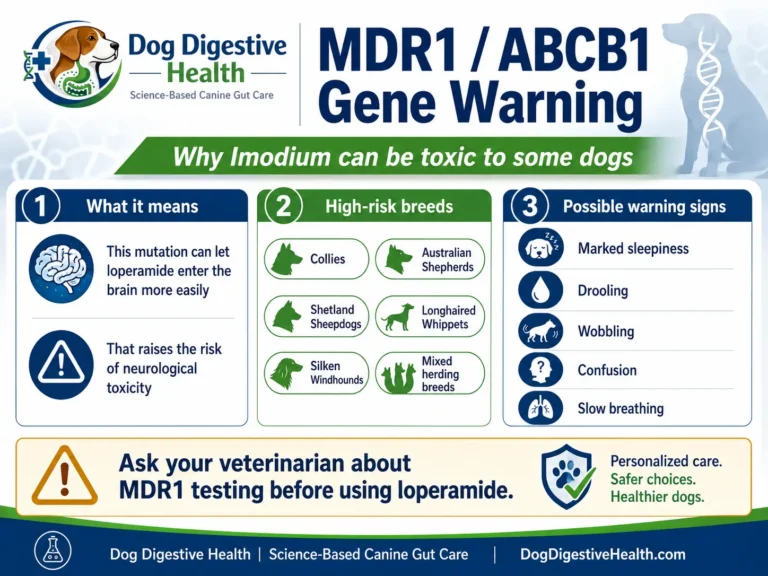
One of the most serious concerns with loperamide involves the MDR1 gene mutation, now commonly called the ABCB1 mutation.
The ABCB1 gene helps the body produce P-glycoprotein, a transport protein found in several tissues, including the blood-brain barrier. P-glycoprotein helps prevent certain medicines and toxins from accumulating in the brain.
In a genetically normal dog, loperamide remains mainly active in the gastrointestinal tract because P-glycoprotein limits its entry into the central nervous system.
Dogs with two defective copies of the ABCB1 gene may produce little or no functional P-glycoprotein. Loperamide can then cross the blood-brain barrier in greater amounts and produce opioid-like neurological toxicity.
Controlled research involving Collies found that ABCB1 genotype influenced loperamide exposure and sensitivity. Dogs carrying two copies of the mutation showed greater sensitivity to central nervous system effects than genetically normal dogs (2) (PubMed).
Washington State University specifically warns that loperamide doses used for diarrhea can cause neurological toxicity in dogs with the MDR1 mutation and advises avoiding the drug in affected dogs (Waddl).
Possible warning signs include:
- Marked sleepiness
- Confusion or disorientation
- Excessive drooling
- Panting
- Weakness
- Wobbling
- Poor coordination
- Difficulty standing
- Reduced responsiveness
- Slow or abnormal breathing
- Collapse
These effects may occur at exposures that a dog with normal P-glycoprotein function could tolerate more easily.
High-Risk Breeds: Collies, Shepherds, and Whippets
The ABCB1 mutation occurs most often in herding breeds and dogs with related ancestry.
Breeds known to carry the mutation include:
- Collies
- Australian Shepherds
- Miniature American or Miniature Australian Shepherds
- Shetland Sheepdogs
- Old English Sheepdogs
- English Shepherds
- German Shepherds
- Longhaired Whippets
- Silken Windhounds
- McNab dogs
- Some mixed-breed dogs with herding ancestry
Not every member of these breeds carries the mutation. Border Collies, for example, appear to have a lower reported frequency than Collies or Australian Shepherds, but individual testing remains more reliable than assumptions based on breed alone (Waddl).
A genetic test can show whether a dog carries:
- No copies of the mutation
- One copy of the mutation
- Two copies of the mutation
Dogs with two copies generally face the greatest risk. Dogs with one copy may also show increased sensitivity to some medications.
Physical appearance cannot reliably rule out the mutation in a mixed-breed dog. Do not assume loperamide is safe because your dog looks only partly like a herding breed or previously tolerated another medicine.
Safety Considerations for Imodium in Dogs (Weight-Based Guidance)
Body weight matters when calculating medication exposure, but it cannot determine whether a dog should receive Imodium.
Veterinary references may contain weight-based loperamide information. Those figures are intended for clinicians who have already assessed the patient, considered contraindications, and selected an appropriate product.
Before recommending loperamide, a veterinarian may consider:
- Exact body weight
- Age and physical condition
- Breed and ABCB1 status
- Duration and severity of diarrhea
- Hydration
- Vomiting or blood in the stool
- Abdominal pain or swelling
- Liver and kidney function
- Existing gastrointestinal disease
- Current medications and supplements
- Possible toxin exposure
- Possible foreign-body ingestion
- Product strength and formulation
Two dogs that weigh 25 pounds may require completely different care. One may have mild dietary diarrhea. The other may have parvovirus, pancreatitis, poisoning, acute hemorrhagic diarrhea syndrome, or an intestinal obstruction.
A weight chart cannot tell those conditions apart.
Can I Give My Dog One 2 mg Imodium Tablet?
Do not assume one 2 mg tablet is safe.
Many human Imodium tablets and caplets contain 2 mg of loperamide hydrochloride. A whole tablet represents a much larger amount per pound for a 7-pound dog than for a 70-pound dog.
Even a partial tablet may be inappropriate when:
- The dog has an MDR1/ABCB1 mutation
- Infectious diarrhea is suspected
- A toxin may have been swallowed
- An obstruction is possible
- The dog has liver or kidney disease
- Another medicine may interact with loperamide
- The product contains a second active ingredient
Splitting a tablet does not eliminate these concerns. Tablet fragments may also be uneven when the product is not designed for accurate division.
Call your veterinarian before giving a whole or divided 2 mg Imodium tablet.
Can I Give My Dog Human Imodium?
Human Imodium should only be used when your veterinarian has reviewed and approved the exact product.
The clinic may need to see:
- The complete product name
- Active ingredients
- Strength per tablet, caplet, capsule, or milliliter
- All inactive ingredients
- Sweeteners and flavorings
- Whether it is a single-ingredient or combination product
- The expiration date
Do not tell the clinic only that you have “Imodium.” Take clear photographs of the front package, drug facts panel, and ingredient list.
Human dosing instructions are not canine instructions. Do not use the child’s dose simply because your dog weighs about the same as a child.
Can I Give My Dog Liquid Imodium?
Liquid loperamide can be especially difficult to measure safely.
Concentrations may vary among products. A small measuring error may substantially change the amount given to a puppy or toy-breed dog.
Never use a household teaspoon to measure a small medication dose. When a veterinarian prescribes a liquid product, use a properly marked oral syringe and follow the exact volume provided.
Do not convert a tablet amount into milliliters unless your veterinarian has confirmed the liquid concentration.
Check the full ingredient list each time you purchase a new bottle. Generic and flavored preparations may not contain the same inactive ingredients.
Can My Dog Take Imodium A-D?
Imodium A-D generally contains loperamide, but the product name alone does not establish safety.
The medicine may be sold as a tablet, caplet, softgel, or liquid. The concentration and inactive ingredients can differ. A product selected for an adult person may not be practical or appropriate for a small dog.
Your veterinarian should approve the precise formulation rather than only the brand family.
How Often Can I Give My Dog Imodium?
Only follow the schedule provided by your veterinarian for the current illness.
Do not repeat a dose early because your dog has another loose bowel movement. Giving doses too close together can increase the risk of:
- Constipation
- Abdominal bloating
- Excessive sedation
- Severely reduced intestinal motility
- Drug accumulation
- Neurological toxicity
Do not double a missed dose unless the prescribing veterinarian specifically instructs you to do so.
A recommendation given during an earlier episode should not automatically be reused. Today’s diarrhea may have a different cause.
How Many Days Can I Give My Dog Imodium?
Continue loperamide only for the period recommended by your veterinarian.
Persistent or recurring diarrhea may require:
- A physical examination
- Hydration assessment
- Fecal testing
- Parasite screening
- Blood work
- Abdominal X-rays or ultrasound
- Pancreatic testing
- Dietary evaluation
- Investigation for chronic intestinal disease
Repeatedly suppressing bowel movements may hide worsening disease, delay diagnosis, or contribute to constipation and impaired motility.
Should Imodium Be Given With Food?
When a veterinarian prescribes loperamide, the administration instructions may depend on the product and the individual dog.
Do not hide an unapproved dose in food simply because it makes the tablet easier to give. Food does not prevent MDR1-related toxicity, drug interactions, overdose, or complications from an obstruction.
Follow the clinic’s instructions regarding food, timing, and missed doses.
Signs of Imodium Overdose and Central Nervous System Toxicity in Dogs
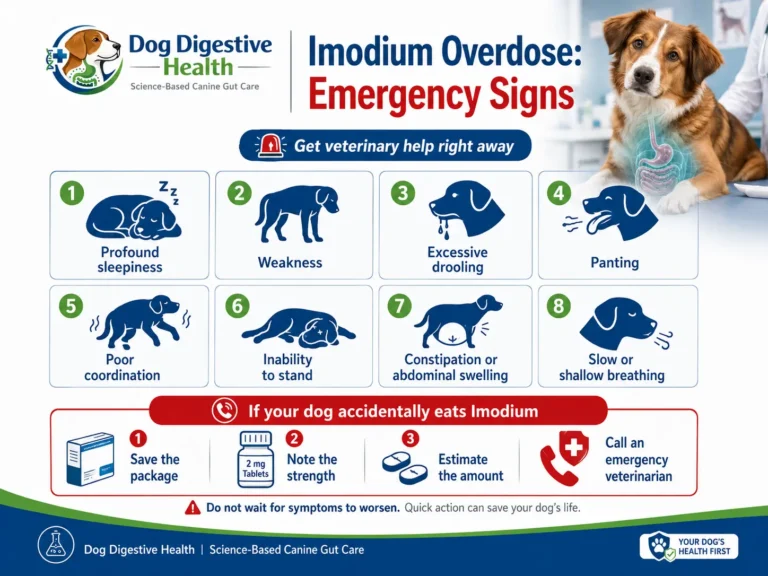
An Imodium overdose may affect both the gastrointestinal tract and central nervous system.
Risk depends on:
- The amount swallowed
- Product strength
- Dog’s weight
- Breed and ABCB1 genotype
- Liver and kidney function
- Other active ingredients
- Concurrent medications
- Time since exposure
Possible signs include:
- Profound sleepiness
- Lethargy
- Weakness
- Confusion
- Excessive drooling
- Panting
- Poor coordination
- Stumbling
- Inability to stand
- Constipation
- Abdominal swelling
- Severely reduced intestinal movement
- Slow or shallow breathing
- Reduced responsiveness
- Collapse
A dog with a known or suspected MDR1 mutation may develop serious neurological effects at an exposure tolerated by another dog.
What Should I Do if My Dog Accidentally Ate Imodium?
Treat accidental loperamide ingestion as a possible poisoning.
Take these steps:
- Remove the remaining medication.
- Find the original package.
- Count the missing tablets or estimate the missing liquid.
- Identify every active ingredient.
- Record the strength.
- Note the likely exposure time.
- Contact your veterinarian or an emergency animal hospital immediately.
- Follow the veterinary team’s instructions.
Do not induce vomiting unless a veterinary professional specifically tells you to do so. Vomiting may be dangerous in a dog that is already sedated, weak, uncoordinated, or neurologically affected.
Be prepared to provide:
- Age
- Breed
- Body weight
- Known medical conditions
- Current medications
- MDR1 test results, if available
- Product name
- Product strength
- Maximum possible amount consumed
- Time since ingestion
- Current symptoms
My Dog Ate One Imodium Tablet. Should I Worry?
Call a veterinarian even if only one tablet appears to be missing.
A single 2 mg caplet creates a very different exposure in a 6-pound dog than in a 75-pound dog. Risk also increases when:
- MDR1 status is positive or unknown
- The dog has herding-breed ancestry
- The product contains another active ingredient
- Liver or kidney disease is present
- The dog takes sedating or interacting medication
- The amount swallowed is uncertain
Do not wait for your dog to become unable to walk or difficult to wake. Early advice allows the veterinary team to decide whether monitoring, examination, decontamination, or hospital care is necessary.
Can Imodium Toxicity Kill a Dog?
Severe loperamide toxicity can become life-threatening.
Potential complications include:
- Profound central nervous system depression
- Respiratory depression
- Loss of coordination
- Inability to stand
- Aspiration
- Severe intestinal dysfunction
- Reduced consciousness
- Loss of protective reflexes
Prompt veterinary treatment improves the chance of recovery. A dog that appears only mildly sleepy may still deteriorate, especially when the dose or MDR1 status is unknown.
The Danger of Stopping Diarrhea: When the Gut Needs to Flush Out Toxins
Diarrhea is uncomfortable and can lead to significant fluid loss. However, it may also help move irritating or harmful material through the digestive tract.
Slowing intestinal transit may be dangerous when diarrhea involves:
- Bacterial toxins
- Spoiled food
- Poisonous substances
- Certain infections
- Human medication exposure
- Foreign material
- Severe intestinal inflammation
Loperamide may keep harmful material in contact with the intestinal lining for longer. It may also reduce the body’s ability to remove certain organisms or toxins efficiently.
This does not mean severe diarrhea should be ignored. Frequent watery stool can cause dehydration and electrolyte imbalances. The goal is to identify and treat the cause while protecting hydration and circulation—not simply to stop every bowel movement.
Can I Give My Dog Imodium After It Eats Garbage?
Do not automatically give loperamide after your dog raids the trash.
Garbage may contain:
- Spoiled food
- Mold toxins
- Bones
- Plastic
- Foil
- String
- Fatty leftovers
- Human medication
- Cleaning products
- Xylitol-containing foods or products
Your dog may have simple dietary indiscretion, but it may also have swallowed a toxin or an object that cannot pass safely.
Contact a veterinarian when the contents are unknown or your dog develops vomiting, appetite loss, abdominal pain, bloating, weakness, or repeated diarrhea.
Can I Give Imodium to a Dog With Bloody Diarrhea?
Do not give Imodium to a dog with bloody, black, or tar-like stool unless a veterinarian has assessed the dog and specifically recommends it.
Blood may occur with:
- Severe intestinal inflammation
- Acute hemorrhagic diarrhea syndrome
- Infection
- Parasites
- Gastrointestinal ulceration
- Toxin exposure
- Foreign-body injury
- A bleeding disorder
Sudden, profuse bloody diarrhea can cause rapid fluid loss and circulatory problems. Veterinary assessment should take priority over suppressing intestinal movement.
Can I Give Imodium if My Dog Is Vomiting?
Repeated vomiting with diarrhea raises the risk of dehydration and may point to a more serious condition.
Possible causes include:
- Pancreatitis
- Gastrointestinal obstruction
- Toxin exposure
- Severe gastroenteritis
- Dietary indiscretion
- Organ disease
- Systemic infection
Vomiting can also prevent reliable absorption of oral medicine.
Contact your veterinarian promptly when your dog cannot keep water down, repeatedly attempts to vomit, develops abdominal pain, or becomes weak.
Can I Give Imodium if My Dog May Have Eaten a Toxin?
Do not administer loperamide when poisoning is known or suspected unless a veterinarian or veterinary poison specialist instructs you to do so.
Slowing intestinal movement may increase the time that a harmful substance remains in the gastrointestinal tract.
Keep the product package or substance nearby when you call for help. Do not induce vomiting or give milk, oil, food, charcoal, or medication unless a professional provides specific instructions.
Can I Give My Dog Imodium Multi-Symptom Capsules? Xylitol Warning
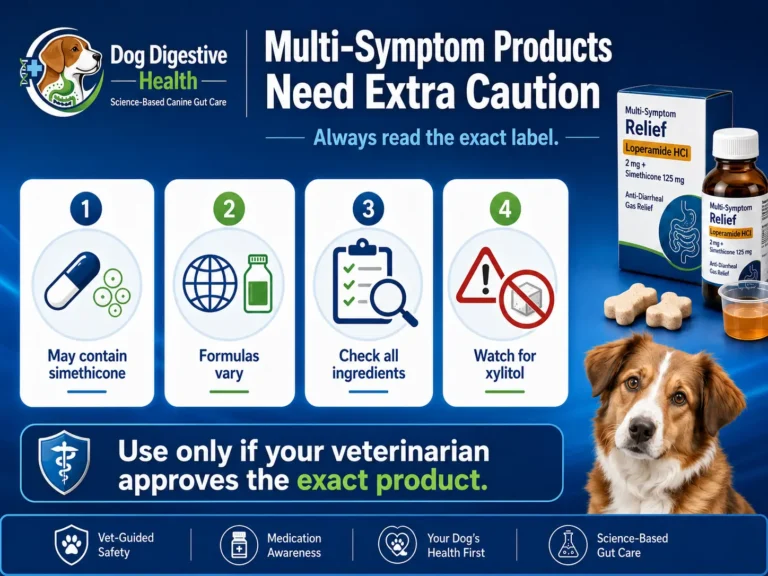
Do not give your dog an Imodium Multi-Symptom product unless your veterinarian has reviewed the exact label.
The current US-branded Imodium Multi-Symptom Relief product is a caplet, meaning a capsule-shaped tablet. Each caplet lists:
- Loperamide hydrochloride, 2 mg
- Simethicone, 125 mg
It is therefore not interchangeable with plain, single-ingredient loperamide (DailyMed).
Simethicone is an anti-gas ingredient. Its presence does not make the product safer or more suitable for a dog with diarrhea and bloating. Abdominal swelling can sometimes accompany reduced motility or an obstruction, both of which require veterinary assessment.
Does Imodium Multi-Symptom Contain Xylitol?
The current US-branded caplet label does not list xylitol. It would be inaccurate to say that every Imodium Multi-Symptom product contains it.
However, formulations vary among brands, countries, oral liquids, chewable medicines, and sugar-free products. Always read the full ingredient panel before giving any human medicine to a dog.
Xylitol may also appear as:
- Birch sugar
- Wood sugar
- A sugar-free sweetener
Xylitol is highly toxic to dogs and can cause a rapid drop in blood sugar. Larger exposures may also cause serious liver injury.
Warning signs may include:
- Vomiting
- Weakness
- Poor coordination
- Shaking
- Collapse
- Seizures
Treat suspected xylitol ingestion as an emergency. Do not wait for symptoms.
Why Are Multi-Symptom Products Riskier?
Combination products expose your dog to more than one active ingredient.
The second ingredient may:
- Be unnecessary
- Have separate precautions
- Complicate dose calculation
- Increase adverse-effect risk
- Make toxicity harder to assess
- Differ among products with similar packaging
Never choose a combination product because it seems to match several symptoms. Diarrhea, gas, cramping, and abdominal pressure can have many different causes.
How Long Does It Take for Imodium to Firm a Dog’s Stool?
When veterinarian-prescribed loperamide is appropriate, it may begin affecting intestinal movement within several hours. Visible stool improvement may take longer, and some dogs may not improve because loperamide does not address the underlying cause.
The response depends on:
- The cause of diarrhea
- Severity of intestinal inflammation
- Hydration
- Food intake
- Gastrointestinal transit time
- Product formulation
- Other medications
- Liver and kidney function
- Individual metabolism
Do not give another dose simply because the stool remains loose after a short period.
Improvement should involve more than firmer stool. A recovering dog should also show:
- Stable or improving energy
- Adequate water intake
- No repeated vomiting
- No blood in the stool
- No worsening abdominal pain
- Normal urination
- No neurological abnormalities
Contact your veterinarian if the diarrhea continues, worsens, or returns after the medication wears off.
Can Imodium Cause Rebound Constipation in Dogs?
Loperamide can cause constipation because it intentionally slows intestinal movement.
However, rebound constipation is not a precise, established veterinary diagnosis following loperamide use. A clearer description is medication-induced or persistent constipation.
Related adverse effects may include:
- Gas
- Abdominal bloating
- Reduced appetite
- Abdominal discomfort
- Severely reduced gastrointestinal motility
Warning signs include:
- Straining without passing stool
- Passing small, dry, hard stools
- Pain during defecation
- A firm or swollen abdomen
- Restlessness
- Appetite loss
- Vomiting
- Lethargy
Do not give mineral oil, milk, a human laxative, or a fiber supplement without veterinary guidance.
Constipation after Imodium may reflect excessive slowing of the bowel. It may also indicate dehydration, an obstruction, or another intestinal problem that needs treatment.
Contraindications: Health Conditions That Make Imodium High Risk
Loperamide may be unsuitable when a medical condition affects drug handling, increases neurological sensitivity, or makes reduced intestinal movement dangerous.
A Known or Suspected MDR1/ABCB1 Mutation
Dogs with the mutation face a significant risk of central nervous system toxicity. Washington State University advises avoiding loperamide in affected dogs (Waddl).
Infectious Diarrhea
Slowing intestinal movement may retain harmful organisms or toxins. Dogs with fever, marked weakness, severe diarrhea, or recent infectious exposure need veterinary evaluation.
Toxin or Medication Ingestion
Loperamide may delay the movement of harmful material through the intestinal tract. Contact a veterinarian or animal poison specialist immediately.
Intestinal Obstruction or Foreign Body
A dog with an obstruction may show:
- Repeated vomiting
- Abdominal pain
- Appetite loss
- Restlessness
- Straining
- Abdominal swelling
- Little or no stool production
A motility-suppressing medicine can mask worsening signs and delay emergency treatment.
Bloody or Black Stool
Blood may indicate severe intestinal inflammation, ulceration, toxin exposure, acute hemorrhagic diarrhea syndrome, a foreign-body injury, or a clotting problem.
Liver Disease
The liver helps metabolize many medicines. Reduced liver function may increase or prolong drug exposure.
Kidney Disease
Kidney disease can affect hydration, electrolyte balance, and medication handling. These dogs need individualized treatment.
Respiratory or Neurological Disease
Serious loperamide toxicity can depress the central nervous system and affect breathing. Existing respiratory or neurological disease may increase concern or make adverse reactions harder to recognize.
Hypothyroidism or Addison’s Disease
Endocrine diseases can affect gastrointestinal function, energy, circulation, and electrolyte balance. Diarrhea in these dogs should not be treated without veterinary guidance.
Pregnancy or Nursing
Medicine use during pregnancy or lactation requires an individual risk-benefit assessment.
Puppies, Toy Breeds, and Frail Seniors
Puppies and very small dogs can become dehydrated or develop low blood sugar quickly. Small body size also magnifies dosing errors.
Senior dogs are more likely to have reduced organ function, chronic disease, or several concurrent medications.
Concurrent Medications
Tell your veterinarian about every product your dog receives, including:
- Antibiotics
- Antifungal medicines
- Pain relievers
- Sedatives
- Behavioral medications
- Flea and tick products
- Heartworm preventives
- Vitamins
- Probiotics
- Herbal products
A product does not become irrelevant simply because it is natural or available without a prescription.
Safer Over-the-Counter Options for Immediate Loose Stool Management
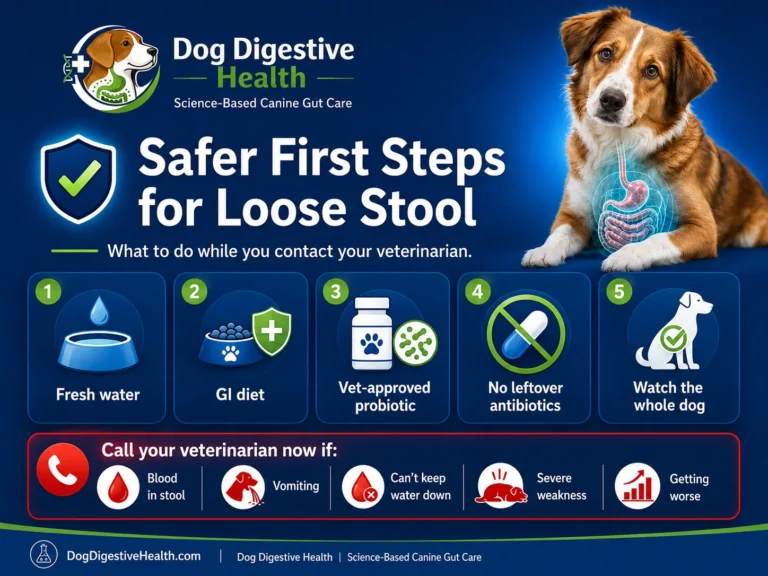
There is no universally safe human over-the-counter medicine for canine diarrhea.
Do not replace Imodium with bismuth products, human pain relievers, leftover antibiotics, herbal mixtures, or another multi-symptom medicine without professional guidance.
In a dog that remains alert and has no emergency warning signs, supportive steps may be more appropriate while you contact your veterinarian.
Keep Clean Water Available
Diarrhea causes water and electrolyte loss. Offer access to fresh water unless your veterinarian gives different instructions.
Seek veterinary help if your dog:
- Cannot keep water down
- Refuses to drink
- Produces very little urine
- Has dry or sticky gums
- Appears weak or faint
- Develops repeated watery diarrhea
- Becomes unusually sleepy
Do not force large volumes of water into a vomiting or poorly coordinated dog.
Ask About a Veterinary Gastrointestinal Diet
Your veterinarian may recommend a complete, highly digestible gastrointestinal diet.
These diets provide balanced nutrition while reducing digestive workload. They are generally more suitable than randomly combining chicken, rice, pumpkin, or other home ingredients for several days.
Do not assume prolonged fasting is safe. Puppies, toy breeds, diabetic dogs, and medically fragile animals may be harmed by extended food restriction.
Choose Probiotics Carefully
A veterinary probiotic may be helpful in selected cases, but products differ in strains, concentration, storage, and quality.
A 2024 systematic review found that antimicrobial and nutraceutical treatments did not consistently produce a clinically important improvement across uncomplicated cases of acute canine diarrhea. Treatment should therefore reflect the dog’s severity, hydration, examination findings, and suspected diagnosis rather than relying on one product for every case (3) (PubMed).
When your veterinarian recommends a probiotic, look for:
- Clearly named microbial strains
- Stated colony-forming units
- Storage instructions
- An expiration date
- Veterinary quality-control information
Do not use a probiotic as a substitute for examination when your dog has blood in the stool, repeated vomiting, weakness, dehydration, or pain.
Avoid Leftover Metronidazole or Other Antibiotics
Do not give leftover antibiotics from a previous illness or another pet.
Routine antibiotic use is not recommended for every mild case of acute diarrhea. Unnecessary treatment may cause adverse effects, disrupt the intestinal microbiome, and contribute to antimicrobial resistance (1,3) (PubMed).
Do Not Use Human Sports Drinks Automatically
Human sports drinks may contain large amounts of sugar, unsuitable electrolyte levels, artificial sweeteners, or unnecessary additives.
Ask your veterinarian whether a veterinary oral electrolyte product is appropriate. A dog with meaningful dehydration may need subcutaneous or intravenous fluids instead.
Monitor the Whole Dog, Not Just the Stool
Keep a simple record of:
- Stool frequency
- Stool color and consistency
- Vomiting
- Appetite
- Water intake
- Urination
- Energy level
- Abdominal discomfort
- Possible toxin or foreign-object exposure
- Medications already given
This information helps your veterinarian determine whether your dog is improving or needs an examination.
When Is Dog Diarrhea an Emergency?
Seek urgent veterinary care when your dog has:
- Large amounts of blood in the stool
- Black or tar-like stool
- Repeated vomiting
- Inability to keep water down
- A swollen or painful abdomen
- Repeated unproductive retching
- Collapse or extreme weakness
- Pale gums
- Breathing difficulty
- Poor coordination
- Seizures
- Suspected poisoning
- Possible foreign-object ingestion
- Rapidly worsening symptoms
Puppies, particularly those that are not fully vaccinated, need prompt assessment because serious infections can progress quickly.
The Bottom Line
Imodium is not a harmless, one-size-fits-all treatment for dog diarrhea.
Loperamide may have a role in carefully selected veterinary patients, but safe use depends on the cause of diarrhea, breed, MDR1 status, product formulation, dose, other medications, and monitoring plan.
Remember:
- Do not follow the human package directions.
- Do not rely on body weight alone.
- Do not assume a 2 mg tablet is safe.
- Do not use multi-symptom products without checking every ingredient.
- Do not give loperamide to a dog with a known MDR1 mutation.
- Do not suppress diarrhea after suspected poisoning or foreign-body ingestion.
- Contact your veterinarian before giving the first dose.
The safest decision focuses on your dog’s entire condition, not simply the appearance of the stool.
Medical Disclaimer
This article is for educational purposes only and does not replace professional veterinary advice, diagnosis, or treatment. Always consult your veterinarian before giving your dog Imodium, loperamide, or any human medication.
Frequently Asked Questions(FAQs)
1. Can I give my dog Imodium without calling a veterinarian?
No. A veterinarian should first determine the cause of the diarrhea and whether slowing intestinal movement is safe for your dog.
2. Is one 2 mg Imodium tablet safe for a dog?
Do not give a whole or divided 2 mg tablet without veterinary approval. Safety depends on breed, weight, health, symptoms, formulation, and MDR1 status.
3. Which dogs face the greatest risk from Imodium?
Collies, Australian Shepherds, Shelties, Longhaired Whippets, and some related or mixed-breed dogs may carry the MDR1/ABCB1 mutation.
4. How quickly can Imodium firm a dog’s stool?
It may begin affecting intestinal movement within several hours, but visible improvement varies. Never repeat a dose early without veterinary instructions.
5. Can Imodium make a dog constipated?
Yes. Loperamide can cause constipation, gas, abdominal bloating, discomfort, and excessively slow intestinal movement.
6. What should I do if my dog accidentally eats Imodium?
Contact your veterinarian or an emergency animal hospital immediately. Keep the package and report the product strength, possible amount, and exposure time.
References
- Jessen LR, Werner M, Singleton D, et al. European Network for Optimization of Veterinary Antimicrobial Therapy (ENOVAT) guidelines for antimicrobial use in canine acute diarrhoea. The Veterinary Journal. 2024;307:106208. doi: 10.1016/j.tvjl.2024.106208
- Myers MJ, Martinez M, Li H, et al. Influence of ABCB1 genotype in Collies on the pharmacokinetics and pharmacodynamics of loperamide in a dose-escalation study. Drug Metabolism and Disposition. 2015;43(9):1392–1407. doi: 10.1124/dmd.115.063735
- Scahill K, Jessen LR, Prior C, et al. Efficacy of antimicrobial and nutraceutical treatment for canine acute diarrhoea: A systematic review and meta-analysis for European Network for Optimization of Antimicrobial Therapy guidelines. The Veterinary Journal. 2024;303:106054. doi: 10.1016/j.tvjl.2023.106054