
Dog With Diarrhea and Loss of Appetite: Causes and Treatment
Written by: Dr. Akram Khan, DVM
Medically Reviewed by: Dr. Khalid Mehmood, PhD
Last updated on October 06, 2026
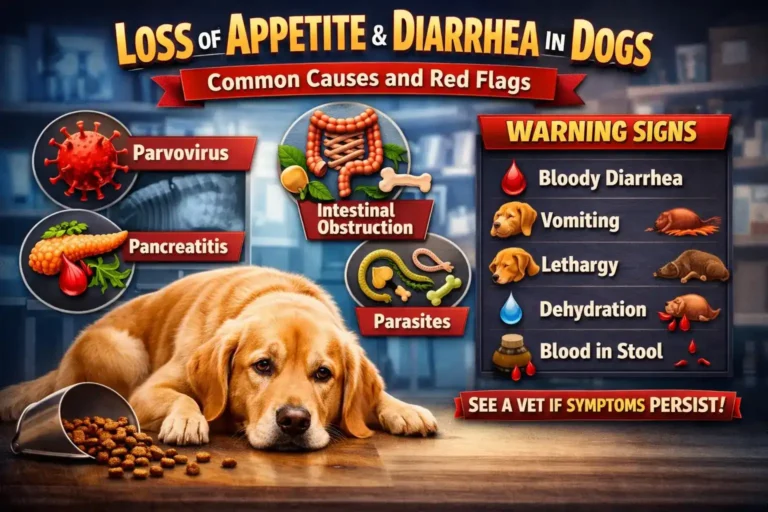
If your dog has diarrhea and won’t eat, it may be due to stomach upset, food changes, parasites, infection, pancreatitis, parvovirus, poisoning, or an intestinal blockage. Mild cases may improve within 24 hours, but you should contact a vet quickly if your dog has vomiting, blood in stool, lethargy, dehydration, abdominal pain, or symptoms lasting more than 24–48 hours.
If your dog has diarrhea and won’t eat, it usually means more than a simple stomach upset. Dog diarrhea and not eating can happen after a sudden food change, spoiled food, stress, parasites, or stomach inflammation. However, a dog not eating and diarrhea can also point to serious problems like parvovirus, pancreatitis, intestinal blockage, or toxin exposure. The risk becomes higher when you notice dog diarrhea, vomiting, not eating, blood in the stool, weakness, dehydration, or symptoms lasting longer than 24–48 hours. Puppies need extra attention because puppy diarrhea and not eating can become dangerous quickly due to fast dehydration.
Why Does My Dog Have Diarrhea and Won’t Eat?
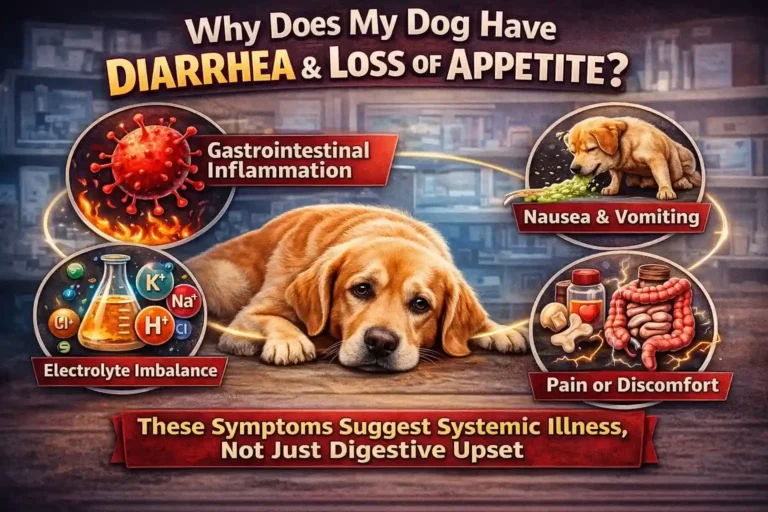
When a dog shows diarrhea and reduced appetite at the same time, it is not just a simple digestive issue. This combination often reflects systemic involvement, including inflammation, toxin exposure, or infection.
Common physiological reasons include:
- Gastrointestinal inflammation disrupting digestion
- Electrolyte imbalance causing weakness
- Nausea leading to refusal to eat
- Pain-suppressing appetite
In serious infections like dog parvovirus, early symptoms include loss of appetite, diarrhea, vomiting, and lethargy, which can rapidly progress to life-threatening dehydration.
This is why dog diarrhea and not eating should never be ignored.
What Causes Diarrhea and Loss of Appetite in Dogs?
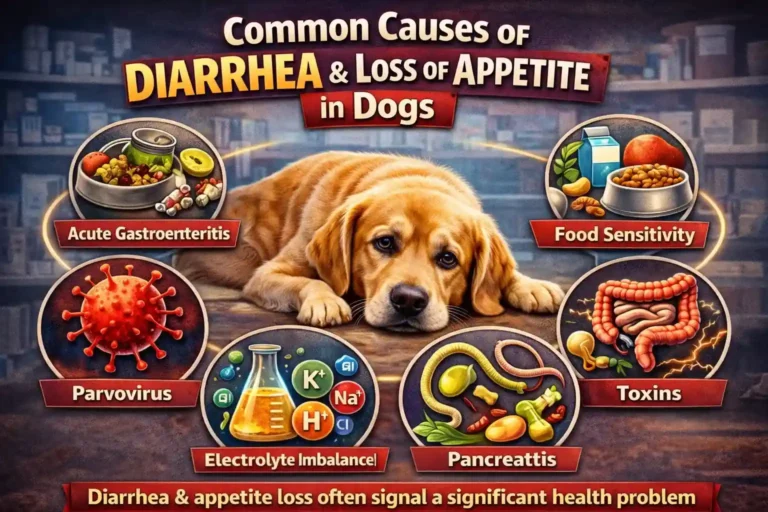
The most frequent reason for dog diarrhea and loss of appetite is acute gastroenteritis caused by sudden diet change, eating spoiled food, or dietary indiscretion.
This leads to intestinal irritation, diarrhea, nausea, and reduced appetite.
Can Parvo Cause Diarrhea and Loss of Appetite in Dogs?
A leading cause of puppy diarrhea and not eating.
Key symptoms include:
- Severe or bloody diarrhea
- Vomiting
- Lethargy
- Rapid dehydration
Parvovirus damages intestinal cells and weakens immune function, causing severe systemic illness.
Can Pancreatitis Cause Dog Diarrhea and Refusal to Eat?
Pancreatitis is common in dogs fed fatty meals.
Symptoms include:
- Abdominal pain
- Vomiting and diarrhea
- Loss of appetite
- Lethargy
Pancreatitis can trigger systemic inflammation and requires prompt treatment.
Can Worms or Giardia Cause Diarrhea and Not Eating in Dogs?
Common intestinal parasites include:
- Giardia
- Roundworms
- Hookworms
These can cause chronic diarrhea and decreased appetite, especially in puppies.
Can a Blockage Cause Dog Diarrhea, Vomiting, and Not Eating?
This occurs when dogs ingest foreign objects.
Symptoms include:
- Severe pain
- Vomiting
- Diarrhea or constipation
- Complete refusal to eat
This is a major cause of dog diarrhea with no appetite and vomiting.
Can a Food Change Cause Diarrhea and Loss of Appetite in Dogs?
Poor diet quality or sudden food changes can lead to intermittent diarrhea and reduced appetite.
Can Infection Cause Dog Diarrhea and Not Eating?
Examples include:
- Coronavirus
- Salmonella
- Clostridium
These infections cause intestinal inflammation, diarrhea, and anorexia.
Can Poisoning Cause Sudden Diarrhea and Not Eating in Dogs?
Examples include:
- Chocolate
- Household chemicals
- Toxic plants
These can cause sudden diarrhea and refusal to eat.
What If My Dog Has Diarrhea and Won’t Eat for Several Days?
Chronic causes include:
- Inflammatory bowel disease
- Addison’s disease
- Gastrointestinal tumors
These may cause long-term diarrhea and appetite loss.

How Long Can a Dog Have Diarrhea and Not Eat Before Seeing a Vet?
Duration | Meaning |
Less than 24 hours | Usually mild |
24 to 48 hours | Monitor closely |
More than 48 hours | Vet visit required |
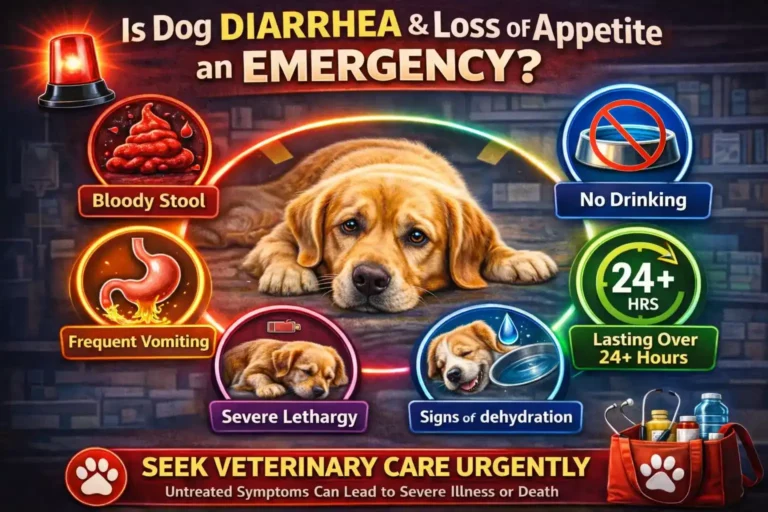
Severe symptoms at any time | Emergency |
What Happens When a Dog Has Diarrhea and Stops Eating?
When a dog has diarrhea and loss of appetite:
- The intestinal lining becomes inflamed
- Nutrient absorption decreases
- Water loss increases and dehydration develops
- Electrolyte imbalance occurs
- The immune response may weaken
In diseases like parvovirus:
- Intestinal cells are destroyed
- White blood cells drop
- Secondary infections can occur
This explains why the condition can worsen quickly if left untreated.
Which Dogs Are Most at Risk from Diarrhea and Not Eating?
Dogs at higher risk of complications include:
- Puppies
- Senior dogs
- Unvaccinated dogs
- Dogs with chronic illness
- Immunocompromised dogs
How Do Vets Diagnose Diarrhea and Loss of Appetite in Dogs?

To diagnose dog diarrhea and appetite loss, veterinarians may perform:
- Fecal tests for parasites or pathogens
- Blood tests, including CBC and electrolytes
- Imaging such as X rays or ultrasound
- Parvovirus testing
Diagnosis is based on symptom combination and clinical findings.
Medical Disclaimer
This content is for informational purposes only and does not replace professional veterinary advice. Always consult a qualified veterinarian for diagnosis and treatment of your dog’s condition.
Frequently Asked Questions (FAQs)
1. Why does my dog have diarrhea and not eating?
It is usually caused by gastrointestinal upset, infection, inflammation, or toxin exposure affecting both digestion and appetite.
2. When should I worry about dog diarrhea and loss of appetite?
You should worry if symptoms last more than 24 to 48 hours or include vomiting, lethargy, dehydration, or blood in stool.
3. Can dog diarrhea and not eating be serious?
Yes, it can indicate conditions like parvovirus, pancreatitis, or intestinal blockage.
4. What should I do if my dog has diarrhea and won’t eat?
Monitor for a short period, encourage hydration, and contact a veterinarian if symptoms persist or worsen.
5. Is diarrhea and loss of appetite common in puppies?
Yes, but it is more dangerous in puppies because they become dehydrated more quickly and are more vulnerable to infections.
6. Can food changes cause diarrhea and appetite loss?
Yes, sudden dietary changes are a common cause of mild digestive upset in dogs.
References
O’Neill, D. G., Prisk, L. J., Brodbelt, D. C., Church, D. B., & Allerton, F. (2025). Epidemiology and clinical management of acute diarrhoea in dogs under primary veterinary care in the UK. PLOS ONE, 20(6), e0324203. doi:10.1371/journal.pone.0324203
Decaro, N., & Buonavoglia, C. (2012). Canine parvovirus—A review of epidemiological and diagnostic aspects, with emphasis on type 2c. Veterinary Microbiology, 155(1), 1–12. doi:10.1016/j.vetmic.2011.09.007
Mylonakis, M. E., Kalli, I., & Rallis, T. S. (2016). Canine parvoviral enteritis: An update on the clinical diagnosis, treatment, and prevention. Veterinary Medicine: Research and Reports, 7, 91–100. doi:10.2147/VMRR.S80971
Watson, P. (2015). Pancreatitis in dogs and cats: Definitions and pathophysiology. Journal of Small Animal Practice, 56(1), 3–12. doi:10.1111/jsap.12293
Dandrieux, J. R. S. (2016). Inflammatory bowel disease versus chronic enteropathy in dogs: Are they one and the same? Journal of Small Animal Practice, 57(11), 589–599. doi:10.1111/jsap.12588
Jergens, A. E., & Heilmann, R. M. (2022). Canine chronic enteropathy—Current state-of-the-art and emerging concepts. Frontiers in Veterinary Science, 9, 923013. doi:10.3389/fvets.2022.923013
Marks, S. L., Rankin, S. C., Byrne, B. A., & Weese, J. S. (2011). Enteropathogenic bacteria in dogs and cats: Diagnosis, epidemiology, treatment, and control. Journal of Veterinary Internal Medicine, 25(6), 1195–1208. doi:10.1111/j.1939-1676.2011.00821.x
Ellis, C., Odunayo, A., & Tolbert, M. K. (2023). The use of metronidazole in acute diarrhea in dogs: A narrative review. Topics in Companion Animal Medicine, 56–57, 100824. doi:10.1016/j.tcam.2023.100824
Hascall, K. L., et al. (2016). Prevalence of enteropathogens in dogs attending three regional dog parks in Northern California. Journal of Veterinary Internal Medicine, 30(6), 1838–1845. doi:10.1111/jvim.14603