
Why Is My Dog Vomiting Clear Liquid With White Foam at Night?
Written by: Dr. Akram Khan, DVM
Veterinary review by: Dr. Khalid Mehmood, PhD (Assistant Professor in Clinical Veterinary Medicine)
Last medically reviewed: September 18, 2026
Finding your dog vomiting clear liquid with white foam at night can be alarming. Many owners immediately worry that something serious is wrong, especially when the vomiting happens suddenly during sleeping hours or early in the morning.
In many cases, this type of vomiting occurs when the stomach has been empty for a prolonged period. Digestive secretions such as gastric fluid, mucus, saliva, and sometimes bile may irritate the stomach and trigger nausea. One possible explanation is bilious vomiting syndrome, a condition associated with intermittent vomiting during fasting periods, although other gastrointestinal disorders must also be considered (1).
Understanding the timing, appearance of the vomit, and your dog’s overall condition can help determine whether this is likely a mild digestive issue or something requiring veterinary attention.
Quick Answer
A dog vomiting clear liquid with white foam at night may be experiencing irritation from an empty stomach, accumulated gastric secretions, or possible bile reflux. Occasional episodes in an otherwise healthy dog may be related to fasting-related digestive upset, but repeated vomiting or additional signs such as lethargy, abdominal pain, bloating, or loss of appetite require veterinary evaluation.
Why Is My Dog Throwing Up White Foam at Night but Acting Normal?
A common concern among dog owners is seeing their pet vomit white foam at night but appear completely normal afterward.
When a dog vomits once and then continues eating, drinking, and behaving normally, the episode may be related to temporary stomach irritation. During long fasting periods, some dogs experience increased sensitivity to digestive fluids, resulting in the production of frothy vomit.
The white foam is usually not the stomach contents itself. It is often a mixture of:
- saliva
- mucus
- stomach fluid
- swallowed air
Dogs with fasting-related vomiting may otherwise have:
- normal energy levels
- normal appetite
- normal bowel movements
- no obvious discomfort
However, a normal appearance after vomiting does not completely rule out disease. Persistent or recurring episodes should be assessed rather than repeatedly assumed to be harmless.
Why Does My Dog Vomit Clear Liquid Before Breakfast or After Sleeping?
Some dogs vomit clear liquid early in the morning or shortly before breakfast because their stomach has remained empty overnight.
During fasting, normal digestive processes continue. Gastric acid and other secretions are produced even when food is not present. In susceptible dogs, this may contribute to stomach irritation and nausea.
This pattern is often associated with:
- vomiting after a long gap between meals
- clear or foamy fluid rather than food
- episodes occurring at night or early morning
- improvement after eating
Bilious vomiting syndrome is thought to involve reflux of intestinal contents, including bile, back into the stomach, leading to irritation of the gastric lining (1).
Is White Foam Vomit in Dogs Caused by an Empty Stomach?
An empty stomach can be one reason a dog vomits white foam, particularly when vomiting occurs after several hours without food.
When the stomach remains empty for extended periods, some dogs may develop discomfort from digestive secretions. This does not mean every case of white foam vomiting is caused by hunger. Similar signs can occur with medical conditions affecting the gastrointestinal tract.
Possible factors involved include:
- altered gastric motility
- reflux of bile or intestinal fluids
- stomach inflammation
- dietary sensitivity
The pattern of vomiting is important. A dog that occasionally vomits foam after fasting is different from a dog vomiting multiple times daily or showing other symptoms.
Why Does My Dog Vomit White Foam Every Night?
A dog vomiting white foam every night should not be considered a normal pattern.
Frequent nighttime vomiting may indicate an underlying digestive problem, including:
- gastritis
- gastroesophageal reflux
- pancreatitis
- inflammatory bowel disease
- dietary intolerance
- delayed gastric emptying
- intestinal obstruction
Veterinarians usually evaluate vomiting by considering the complete picture, including:
- age of the dog
- breed
- diet
- medication history
- vomiting frequency
- weight changes
- stool changes
A diagnosis of bilious vomiting syndrome is generally considered after other important causes of vomiting have been excluded (1).
Why Is My Dog Vomiting Saliva and White Foam at Night?
Foamy vomiting often occurs because saliva mixes with stomach fluid and air, creating a white, bubbly appearance.
Before vomiting, some dogs show signs of nausea such as:
- excessive swallowing
- lip licking
- drooling
- restlessness
- repeated gagging
These signs indicate that the digestive system is responding to nausea rather than simply producing excess fluid.
How Can I Tell If Nighttime Vomiting Is Mild or Serious?
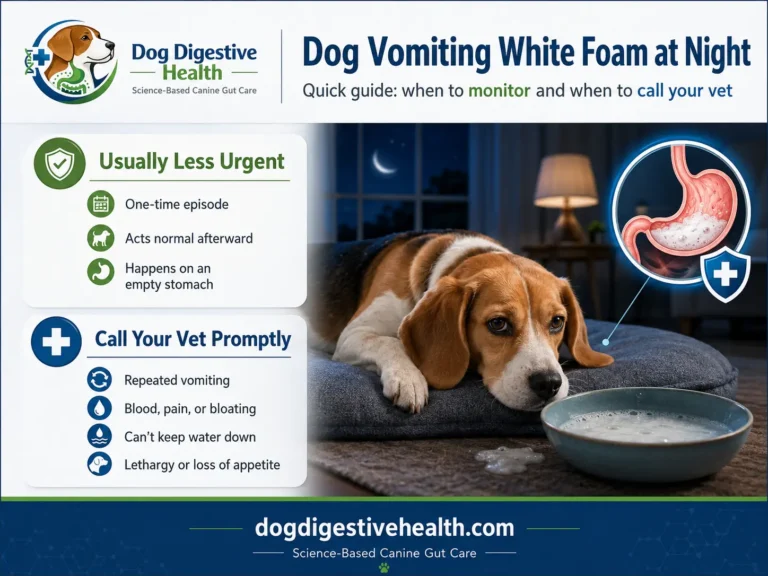
Pattern | Possible Interpretation | Recommended Action |
Occasional white foam vomiting with normal behavior | Possible fasting-related stomach irritation | Monitor and discuss patterns with your veterinarian |
Vomiting mainly after long periods without food | Possible bile reflux or empty stomach sensitivity | Review feeding schedule with veterinary guidance |
Vomiting every night or increasing frequency | Possible underlying digestive disorder | Arrange veterinary assessment |
Vomiting with weakness, pain, bloating, or repeated retching | Possible emergency condition | Seek veterinary care promptly |
When Should I Worry About My Dog Vomiting Clear Liquid and White Foam?
Veterinary advice should be sought if vomiting is associated with:
- repeated episodes
- inability to keep water down
- blood in vomit
- loss of appetite
- weight loss
- severe tiredness
- abdominal discomfort
- swollen abdomen
- repeated attempts to vomit without producing material
Repeated unproductive retching, especially with abdominal enlargement or distress, can indicate serious conditions such as gastric dilatation-volvulus (GDV) and requires urgent attention.
Vomiting can sometimes resolve quickly, but research on canine vomiting emphasizes that the cause ranges from self-limiting digestive upset to potentially serious gastrointestinal or systemic disease, making clinical context essential (2).
What Can Help Reduce Fasting-Related Vomiting in Dogs?
If a veterinarian determines that your dog’s vomiting pattern is consistent with fasting-related irritation, management may involve reducing the length of time the stomach remains empty.
Possible strategies discussed with veterinary guidance include:
- dividing meals into smaller portions
- adjusting feeding timing
- providing a late evening meal when appropriate
- reviewing whether the current diet suits the dog
A late-night meal may help some dogs with suspected bilious vomiting syndrome by reducing prolonged fasting periods. However, dietary changes should not replace veterinary evaluation when vomiting is persistent or accompanied by concerning signs (3).
Never give human medications for vomiting or acid control without veterinary advice because treatment depends on the underlying cause.
Key Takeaway
A dog vomiting clear liquid with white foam at night may sometimes be related to an empty stomach, digestive secretions, or fasting-associated irritation. However, repeated nighttime vomiting is not something to ignore.
The most important factors are
- how often vomiting occurs
- whether your dog behaves normally afterward
- whether appetite and hydration remain normal
- whether additional symptoms develop
Careful observation combined with veterinary assessment when needed is the best way to protect your dog’s digestive health.
Medical Disclaimer
This article is intended for educational purposes only and does not replace professional veterinary advice, diagnosis, or treatment. If your dog has persistent vomiting, worsening symptoms, or signs of illness, consult a licensed veterinarian for proper evaluation and care.
Frequently Asked Questions (FAQs)
1. Why is my dog vomiting clear liquid with white foam at night?
This may occur when the stomach is empty for several hours, allowing digestive fluids and mucus to irritate the stomach. Repeated episodes should be evaluated by a veterinarian.
2. Why does my dog throw up white foam at night but act normal?
Some dogs vomit foam due to fasting-related stomach irritation and return to normal afterward. Continued episodes still require monitoring.
3. Is white foam vomit in dogs caused by an empty stomach?
An empty stomach can contribute to foamy vomiting in some dogs, especially after long fasting periods.
4. Why does my dog vomit clear liquid before breakfast?
This may happen because the stomach has been empty overnight and becomes irritated by digestive secretions.
5. When should I worry about my dog vomiting white foam at night?
Seek veterinary advice if vomiting is frequent or occurs with lethargy, pain, bloating, blood, appetite loss, or inability to keep fluids down.
References
- Ferguson LE, Wennogle SA, Webb CB. Bilious Vomiting Syndrome in Dogs: Retrospective Study of 20 Cases (2002–2012). Journal of the American Animal Hospital Association. 2016;52(3):157–161. doi:10.5326/JAAHA-MS-6300. (PubMed)
- Elwood CM, Devauchelle P, Elliott J, et al. Emesis in dogs: a review. Journal of Small Animal Practice. 2010;51(1):4–22. doi:10.1111/j.1748-5827.2009.00851.x. (ncbi.nlm.nih.gov)
- Veterinary Partner (VIN). Bilious Vomiting Syndrome in Dogs and Cats. Updated 2024. (vin.com)