
Best Dog Treats for Sensitive Stomachs & Loose Stool
Written by: Dr. Muhammad Ihsan Ullah, PhD
Medically reviewed by: Dr. Khalid Mehmood, PhD (Assistant Professor in Clinical Veterinary Medicine)
Last medically reviewed: September 06, 2026
Editorial disclosure:
Product ingredients, nutritional values, and availability may change. Always check the current label and consult your veterinarian before introducing a new treat to a dog with ongoing digestive problems.
What Are the Best Training Treats for Dogs With Sensitive Stomachs?
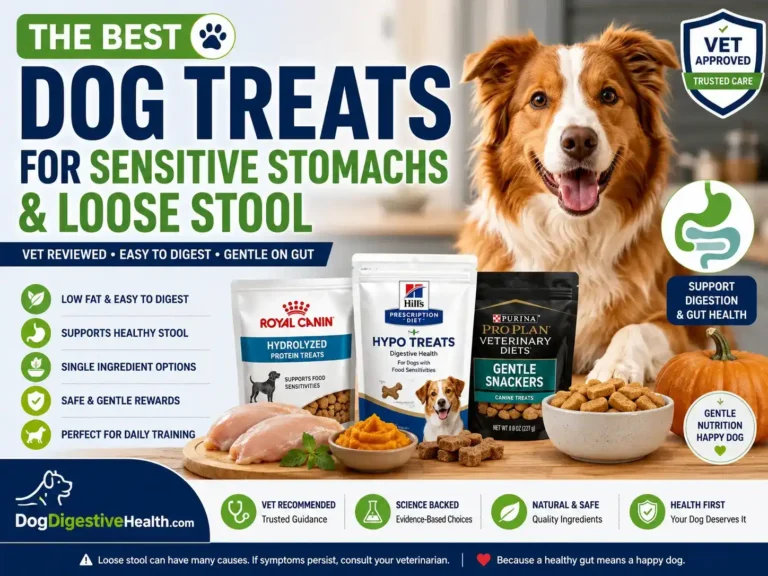
Finding the best dog treats for sensitive stomachs and loose stool is not as simple as choosing a package labeled “natural,” “digestive” or “grain-free.” A treat that works beautifully for one dog may make another dog’s stool softer because digestive tolerance depends on the individual dog, its regular diet, previous protein exposure, fat tolerance and any underlying health condition.
Which Dog Treats Are Best for Sensitive Stomachs and Loose Stool?
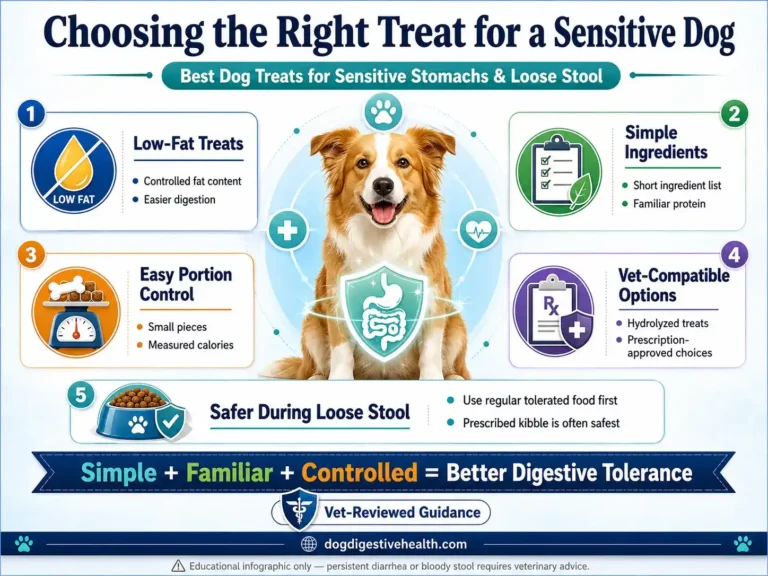
The best dog treats for sensitive stomachs and loose stool are generally low-fat, easy-to-digest products with a short ingredient list and a familiar protein source. Suitable choices may include veterinarian-approved hydrolyzed treats, single-ingredient lean-protein treats, measured pumpkin biscuits, and small portions of the dog’s regular tolerated food.
For a dog with active loose stool, the safest reward is often a small portion of its regular or veterinarian-prescribed diet. Avoid rich chews, fatty meat treats, dairy-based snacks, multiple animal proteins, and several newly introduced ingredients until the stool has returned to normal.
A dog completing an elimination diet should receive only the prescribed food or a treat specifically approved by its veterinarian. Even a small unapproved biscuit can interfere with the results of a carefully controlled food trial.
Current veterinary guidance supports diet as an important first-line strategy for dogs with chronic inflammatory enteropathy. Hydrolyzed, novel-protein, and other therapeutic diets may be selected according to the dog’s clinical condition and dietary history (1). However, this research applies mainly to complete veterinary diets—not automatically to every commercial treat advertised for digestive health.
This guide therefore evaluates treats according to practical features that matter: ingredient simplicity, protein source, fat content, fiber, calories, compatibility with therapeutic diets, and ease of portion control.
Important safety note:
Loose stool is not a diagnosis. Treats should not replace veterinary assessment. Contact a veterinarian when diarrhea is persistent, severe, or bloody, or when it occurs with repeated vomiting, weakness, pain, dehydration, reduced appetite, or unusual behavior.
Our Top Dog Treats for Sensitive Digestion at a Glance
Best use | Recommended option | Why it may work | Main limitation |
Best overall for a compatible hydrolyzed diet | Royal Canin Hydrolyzed Protein Canine Treats | Designed to complement certain hydrolyzed veterinary diets | Contains chicken fat and may not suit every low-fat plan |
Best alternative to hydrolyzed biscuit | Hill’s Prescription Diet Hypo Treats | Hydrolyzed protein with published calories and nutrient information | Larger calorie content than many training treats |
Best low-fat veterinary-style option | Purina Pro Plan Veterinary Diets Gentle Snackers | Intended as a therapeutic treat option for food-sensitive dogs | Must match the dog’s prescribed feeding plan |
Best choice during an elimination diet | The dog’s prescribed kibble | Introduces no additional protein or flavor | Less exciting than a conventional treat |
Best simple homemade reward | Tiny pieces of plain cooked lean protein | One identifiable ingredient and easy portion control | Only suitable when that protein is already tolerated |
Best pumpkin-based biscuit | Fruitables Baked Pumpkin Apple | Measured calories, pumpkin, and published fiber content | Not a limited-ingredient therapeutic treat |
Best chicken-free strategy | Veterinarian-approved single novel protein | Limits exposure to multiple animal proteins | “Novel” differs from one dog to another. |
Best high-frequency training reward | Small pieces of tolerated regular food | Supports frequent rewards without changing the diet | Daily portions must be adjusted |
How These Sensitive-Stomach Treats Were Selected
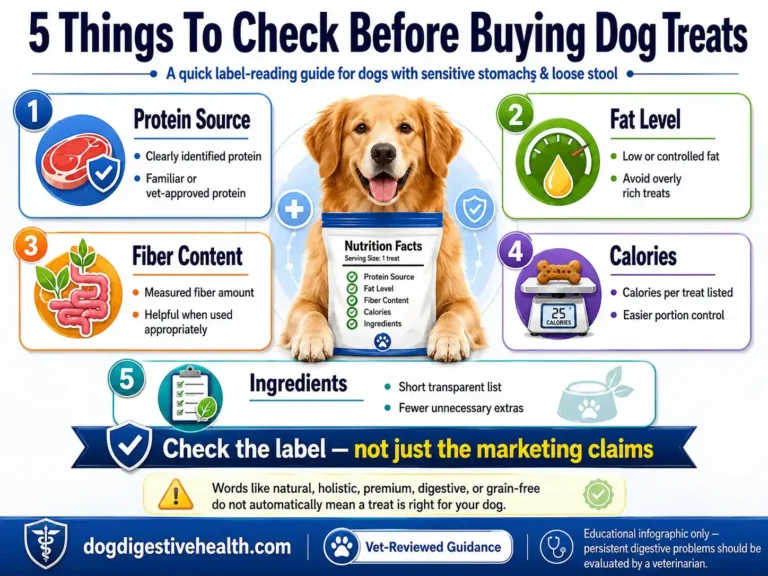
The products and treat types in this guide were assessed using criteria that are more meaningful than advertising claims.
Priority was given to treats with:
- A clearly identified protein source
- A reasonably short and transparent ingredient list
- Published calories per treat or serving
- A texture that can be divided into smaller portions
- Compatibility with a veterinary or elimination diet
- A low or controlled fat profile where appropriate
- Limited exposure to unfamiliar ingredients
- Manufacturer-provided nutritional information
- Practical use as a training reward
- No suggestion that the treat can medically cure diarrhea
No dog treat can be guaranteed to prevent loose stool in every dog. The purpose of this list is to help owners identify options that may be less disruptive to a carefully managed diet.
1. Royal Canin Hydrolyzed Protein Canine Treats — Best Overall for a Compatible Hydrolyzed Diet
Royal Canin Hydrolyzed Protein Canine Treats are designed to complement certain Royal Canin veterinary hydrolyzed-protein diets. They use hydrolyzed soy protein and are intended for intermittent or supplemental feeding under veterinary guidance.
The currently published Canadian formulation lists approximately 5.8 calories per treat, with 22% minimum crude protein, 14% minimum crude fat, and 2.6% maximum crude fiber. The formula also contains brewers rice, chicken fat, vegetable oil, beet pulp, and fish oil (Royal Canin).
These treats can be useful for dogs already eating a compatible hydrolyzed diet because they reduce the need to introduce an ordinary multi-protein biscuit.
Why this option stands out
- Compatible with selected veterinary hydrolyzed diets
- Clearly published protein, fat, fiber, and calorie information
- Easy to use as a controlled reward
- Formulated specifically for veterinary dietary management
What owners should consider
The word “hydrolyzed” does not make a treat universally appropriate. This product includes chicken fat, natural flavors, and several additional ingredients. A dog undergoing a strict elimination trial should receive it only when the supervising veterinarian confirms that it matches the trial.
Its published minimum crude-fat value also means it should not automatically be selected for a dog requiring a particularly strict low-fat diet.
Best suited to: Dogs already eating a compatible Royal Canin hydrolyzed veterinary diet.
May not suit: Dogs requiring a different protein trial, an extremely low-fat feeding plan, or a completely ingredient-restricted diet.
2. Hill’s Prescription Diet Hypo Treats — Best Alternative Hydrolyzed Biscuit
Hill’s Prescription Diet Hypo Treats are designed for dogs receiving several compatible Hill’s Prescription Diet formulas. The product uses hydrolyzed chicken liver and includes cornstarch, powdered cellulose, and soybean oil.
Hill’s currently reports approximately 17 calories per treat, with average dry-matter values of 17.7% protein, 11.5% fat, and 4.9% crude fiber (Hill’s Pet Nutrition).
Because these biscuits provide more calories per piece than many tiny training treats, portion size matters—especially for small dogs or dogs receiving frequent rewards.
Reasons to Consider Hill’s Hypo Treats
- Features a hydrolyzed protein source
- Published dry-matter nutrient information
- Suitable for use with several compatible Hill’s therapeutic diets
- Crunchy texture that many dogs enjoy
- Can be divided into smaller rewards when safe to do so
Possible limitations
Hydrolyzed chicken liver is not the same as a chicken-free treat. It may also be inappropriate for an elimination plan built around a different prescription formula.Given that each whole biscuit contains 17 calories, a single treat can represent a meaningful portion of a small dog’s daily energy intake. Consequently, breaking one biscuit into several pieces may provide multiple training rewards without multiplying the calories.Best suited to: Dogs eating a compatible Hill’s Prescription Diet and needing an occasional crunchy reward.May not suit: Dogs needing very small, low-calorie rewards, soft treats, or a diet excluding all chicken-derived ingredients.
3. Purina Pro Plan Veterinary Diets Gentle Snackers — Best Low-Fat Therapeutic Treat Option
Purina identifies Gentle Snackers as a therapeutic treat option that may be considered for dogs with food sensitivities. Purina’s current consumer guidance recommends consulting a veterinarian about therapeutic treats when a dog has known dietary sensitivities (Purina).
Gentle Snackers may be useful when a dog needs a controlled treat that fits an established veterinary feeding plan. They are frequently considered for dogs whose regular commercial treats are too rich or contain several animal proteins. Therefore, owners may choose them
- Intended for dogs needing a more controlled treat
- Suitable for discussion with a veterinarian managing food sensitivity
- Easier to standardize than random table foods
- Can help owners avoid rich jerky, cheese, and fatty chews
What to confirm before purchasing
Check the current regional label because formulations, calorie information, and availability can change. Ask the veterinarian whether the treat is compatible with the dog’s exact diet rather than assuming that all veterinary treats are interchangeable.
Best suited to: Dogs requiring a veterinary-approved, controlled treat that fits their existing diet.
May not suit: Dogs whose veterinarian has instructed the household to use only the prescribed complete food.
4. The Dog’s Prescribed Kibble — Best Reward During an Elimination Diet
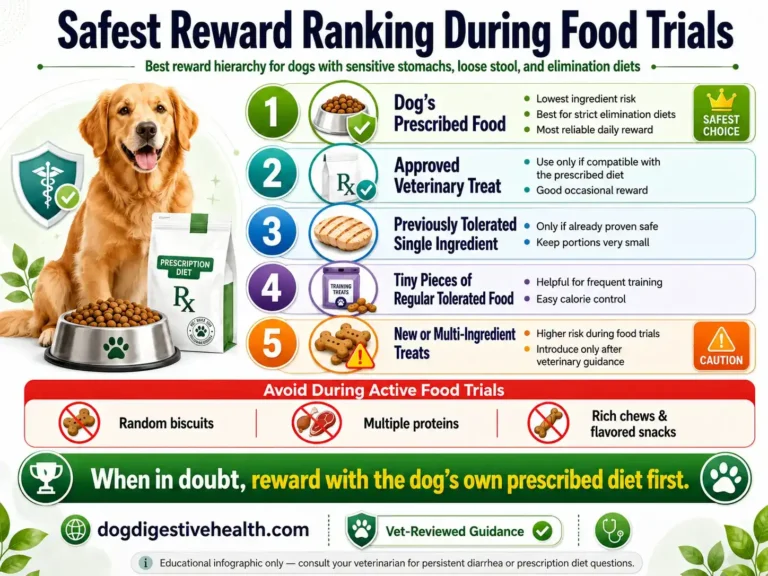
For a dog completing an elimination diet, the safest treat is often its own prescribed kibble.
This option may not look exciting in a product roundup, but it is one of the most reliable ways to reward a food-sensitive dog without introducing an undeclared protein, animal fat, flavoring agent, or botanical ingredient. In fact, using prescribed kibble as a treat can:
- Protect the accuracy of an elimination trial
- Prevent exposure to additional animal proteins
- Make calorie tracking easier
- Reduce unnecessary ingredient changes
- Allow frequent training without adding a separate snack
- Lower the risk of accidentally feeding an incompatible treat
Set aside part of the daily ration each morning and use those pieces for training, enrichment activities, and food-dispensing toys. Subtracting the treat portion from the dog’s meals prevents accidental overfeeding.
How to make regular kibble more rewarding
- Deliver it rapidly during training.
- Use several small pieces for a difficult behavior.
- Place it inside a puzzle toy.
- Scatter it across a clean snuffle mat.
- Hand-feed part of a meal during a walk.
- Use a few pieces after grooming or medication.
- Reserve the highest-value portion of the meal for training.
Novelty can come from the activity rather than from changing the ingredient list.
Best suited to: Dogs on strict elimination, hydrolyzed, or prescription diets.
May not suit: Dogs that do not find dry food sufficiently motivating for demanding training tasks.
5. Plain Cooked Lean Protein — Best Simple Homemade Treat When Tolerated
Tiny pieces of plain cooked lean protein can be an effective homemade dog treat for a sensitive stomach, provided the protein is already known to be tolerated.
A suitable homemade reward should be
- Fully cooked
- Lean and unseasoned
- Free from oil, butter, and sauces
- Boneless
- Cut into very small pieces
- Stored safely in the refrigerator
- Used within a short period
- Included in the dog’s daily calorie allowance
Plain cooked chicken breast may suit a dog that regularly eats chicken without digestive problems. Another dog may need a veterinarian-approved alternative, such as turkey, rabbit, or a specific fish.
Why the familiar protein matters
A food is not “gentle” simply because it is lean. Chicken can still be unsuitable for a dog reacting to chicken. Salmon can be too rich for a dog requiring strict fat control. Venison is not a novel protein for a dog that has eaten venison-based food before.
The best single-ingredient treat is not the most unusual protein—it is the simplest protein that fits the individual dog’s diet history.
Best suited to: Dogs that tolerate the chosen lean protein and are not undergoing a restricted commercial-food trial.
May not suit: Dogs on hydrolyzed diets, strict food trials, or medically prescribed nutrient restrictions.
6. Fruitables Baked Pumpkin Apple — Best Pumpkin-Based Biscuit
Fruitables Baked Pumpkin Apple is a crunchy commercial biscuit made with pumpkin, oats, pearled barley, potatoes, and apple pomace. The manufacturer currently lists 8 calories per treat, 6% minimum crude fat, and 8% maximum crude fiber (Fruitables).
This makes it an appealing option for owners searching for pumpkin dog treats for loose stool, but the full ingredient list must be considered.
What makes it useful?
- Published calorie content
- Measured crude-fiber value
- Pumpkin as the first ingredient
- Small, crunchy format
- Easy to divide for some dogs
- Less rich than many meat-heavy chews
What it cannot do
A pumpkin biscuit is not a treatment for diarrhea. It also is not a limited-ingredient product, because the recipe includes several plant ingredients, oil, molasses, flavors, and botanical extracts.
It may be appropriate for a dog with generally sensitive digestion that already tolerates oats, barley, potatoes, and apples. It would be a poor choice for a strict elimination trial involving any of those ingredients.
Best suited to: Dogs with stable digestion that tolerate the complete recipe and benefit from a measured crunchy treat.
May not suit: Dogs on grain-free trials, strict elimination diets, or highly restricted gastrointestinal plans.
7. A Veterinarian-Approved Novel Protein — Best Chicken-Free Strategy
Many owners search for the best dog treats for sensitive stomachs without chicken. A single-ingredient, novel-protein treat may help, but “novel” depends on the dog.
Rabbit is not novel for a dog that previously ate rabbit food. Venison is not novel if it has appeared in earlier kibble or treats. Salmon is not novel for a dog that regularly receives fish oil, salmon biscuits, or seafood-based food.
Before purchasing a novel-protein treat, check that:
- Only one animal ingredient is listed.
- The dog has not eaten that protein previously.
- No mixed animal fat is included.
- No broth or liver coating is present.
- “Natural flavor” has been clarified with the manufacturer.
- The calorie and fat levels are available.
- Cross-contact controls can be explained.
- The supervising veterinarian approves its use.
Potential novel proteins may include rabbit, venison, selected fish, kangaroo, or insect protein, depending on the dog’s complete dietary history.
No animal protein is naturally hypoallergenic for every dog. Any protein can potentially become a dietary trigger after prior exposure.
Best suited to: Dogs whose veterinarian has selected a specific novel protein.
May not suit: Dogs whose previous dietary history is unknown or whose trial requires a hydrolyzed diet instead.
8. Tiny Pieces of Regular Tolerated Food — Best High-Frequency Training Treat
For frequent training, the most practical dog treats that do not upset the stomach are often tiny pieces of food the dog already eats successfully.
Suitable possibilities include:
- Regular dry kibble
- Small pieces of a compatible veterinary biscuit
- Tiny portions of tolerated canned food
- A measured amount of plain cooked lean protein
- Pieces of an approved limited-ingredient treat
A dog usually responds to receiving a reward, not to the physical size of the reward. One treat divided into eight safe pieces can provide eight successful training repetitions without eight times the calories.
A simple training strategy
Use the lowest-value tolerated food for easy tasks and reserve a higher-value approved reward for more difficult behaviors.
For example:
- Regular kibble for eye contact
- Kibble for sitting before a doorway
- A tiny approved meat piece for recall
- A small compatible veterinary biscuit after nail trimming
This approach keeps rewards motivating without constantly changing the dog’s diet.
Best suited to: Dogs that need frequent reinforcement without frequent ingredient exposure.
May not suit: Dogs that require non-food reinforcement because any additional feeding worsens digestive control.
What Treats Can I Give My Dog With Loose Stool?
When stool is currently loose, choose the reward that changes the diet the least.
Use the following order of preference:
- Part of the dog’s regular tolerated food
- A small portion of its prescribed gastrointestinal diet
- A compatible veterinary treat already approved by the veterinarian
- A previously tolerated low-fat treat after the stool begins improving
Avoid testing several new products during an active digestive episode. A pumpkin biscuit, probiotic chew, fish skin, and freeze-dried meat may all sound helpful, but introducing them together makes it almost impossible to identify which one improved or worsened the stool.
During active loose stool, consistency is generally more useful than variety.
What Dog Treats Help Firm Up Stool?
No treat can reliably firm every dog’s stool. However, better-tolerated treats often share certain features:
- Moderate and consistent fiber
- Low or controlled fat
- A familiar protein
- A limited number of ingredients
- Small serving size
- Clearly published calories
- No rich coating or greasy texture
Fiber can affect intestinal water, transit time, and stool bulk, but the effect depends on its type, dose, and the individual dog. A randomized clinical trial found that dietary cellulose improved fecal consistency in a subset of dogs with uncomplicated acute diarrhea, although it did not significantly change overall diarrhea severity or intestinal microbiota composition (2).
This means a fiber-containing treat may support stool quality in some dogs, but a high-fiber label does not guarantee a successful result.
Too much fiber may increase stool volume, gas, or urgency. More is not always better.
What Dog Treats Will Not Cause Diarrhea?
No manufacturer can guarantee that a treat will never cause diarrhea.
Even a one-ingredient treat can lead to loose stool when:
- The dog is sensitive to that protein.
- Too much is fed at once.
- The treat is richer than the regular diet.
- It is introduced abruptly.
- The product has spoiled.
- It disrupts a therapeutic food trial.
- The dog swallows large pieces.
- Several new treats are introduced together.
The lowest-risk treat is generally a food that the dog has already eaten repeatedly without digestive problems.
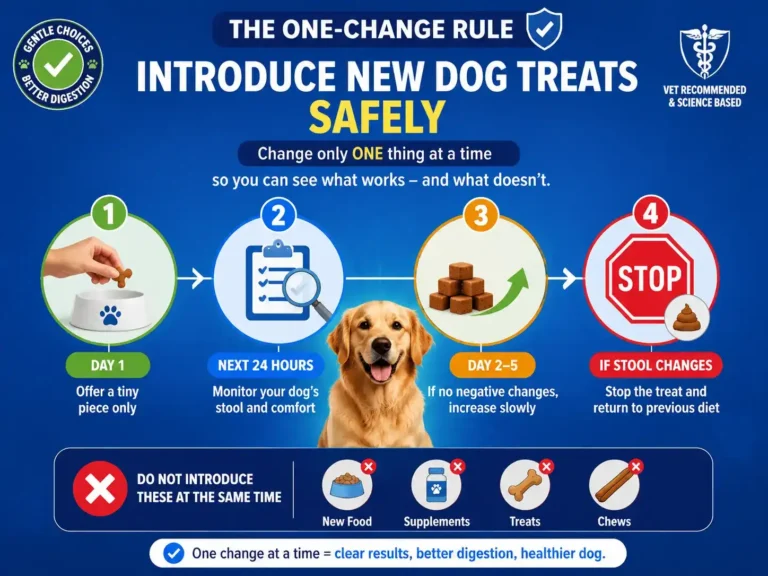
Follow the one-change rule.
When introducing a new treat:
- Change only one product at a time.
- Begin with a very small piece.
- Keep the dog’s normal food unchanged.
- Avoid adding a new supplement simultaneously.
- Observe stool quality over the next several days.
- Increase the serving gradually only if tolerance remains good.
- Stop the treat when stool becomes noticeably softer.
For a small dog, one whole biscuit can be a substantial dietary change. Use tiny pieces rather than automatically following the maximum quantity printed on the package.
What Ingredients Should I Look for in Sensitive-Stomach Dog Treats?
The front of the package is designed to attract attention. The back of the package is where useful decisions are made.
Look for these features.
- A clearly named animal or plant protein
- A short, understandable ingredient list
- Calories per treat or per gram
- A fat value that fits the dog’s needs
- A measured fiber level
- A texture that can be divided
- A manufacturer contact number
- Transparent feeding directions
- Compatibility with the primary diet
Treat these marketing terms cautiously.
- Natural
- Holistic
- Premium
- Digestive
- Gut healthy
- Superfood
- Hypoallergenic
- Human grade
- Veterinary-inspired
- Grain-free
These terms do not automatically tell you whether a treat is low in fat, appropriate for an elimination diet, or easy for a particular dog to digest.
Check every source of animal protein.
Animal ingredients may appear in less obvious forms, including:
- Chicken fat
- Liver flavor
- Meat broth
- Fish oil
- Pork gelatin
- Natural flavor
- Egg
- Dairy
- Mixed animal digest
A biscuit promoted as “salmon” may contain chicken fat. Similarly, a pumpkin treat may contain poultry flavor. Furthermore, a venison treat may include beef gelatin.
The complete label matters more than the flavor named on the front.
Are Pumpkin Dog Treats Good for Loose Stool?
Pumpkin dog treats can be suitable for some dogs because pumpkin supplies fiber. However, a commercial pumpkin biscuit may also contain grains, potatoes, oils, sweeteners, fruit, dairy, or animal flavorings.
A pumpkin treat may be reasonable when the dog:
- Tolerates every ingredient
- Is not on a strict food trial
- Has stable or improving stool
- Does not require very low fat
- Receives a carefully measured serving
A pumpkin treat should not be used as a substitute for veterinary assessment when diarrhea continues.
It is also important to distinguish between plain pumpkin and pumpkin-flavored treats. A product can display a large pumpkin image while containing multiple other ingredients that are more relevant to the dog’s tolerance.
Are Probiotic Dog Treats Good for Loose Stool?
A probiotic treat should not be assumed to work simply because “probiotic,” “microbiome,” or “gut support” appears on the packaging.
A 2024 systematic review and meta-analysis found that the studied probiotics, prebiotics, and synbiotics did not produce a clinically significant overall reduction in the duration of canine acute diarrhea. The products, strains, and dosing protocols also varied considerably between studies (3).
Probiotic effects can be strain-specific and dose-specific. Evidence involving one defined microorganism at a measured dose cannot be applied automatically to every chew or biscuit.
Before choosing a probiotic dog treat, look for:
- Full strain identification
- Colony-forming units guaranteed through expiration
- Clear storage instructions
- Published evidence for the finished product
- Calories per serving
- Fat per serving
- Complete ingredient disclosure
- Veterinary guidance
A probiotic chew containing several animal proteins, oils, and flavorings may still be unsuitable for a food-sensitive dog.
Are Freeze-Dried Dog Treats Good for Sensitive Stomachs?
Freeze-dried treats can be useful when they contain one tolerated ingredient and are easy to break into tiny pieces.
Their benefits may include:
- Short ingredient lists
- Strong aroma
- Small training portions
- No flour or biscuit binders
- Availability in single-protein formulas
However, not every freeze-dried treat is low in fat. Liver, duck, lamb, cheese, oily fish, and organ-meat products may be richer than lean breast meat.
In addition, raw and raw-style freeze-dried products also require careful hygiene. The FDA notes that pet foods and treats—including freeze-dried raw products—can become contaminated with Salmonella. Recent FDA recall records continue to include pet foods and treats recalled for microbial contamination (U.S. Food and Drug Administration).
Wash your hands after handling treats, store the package correctly, and check current recall notices before use.
Are Grain-Free Dog Treats Better for Sensitive Stomachs?
Not automatically.
A grain-free treat may still be:
- High in fat
- Packed with extra calories
- Made with several animal proteins
- Rich in legumes or potatoes
- Flavored with chicken or beef
- Unsuitable for an elimination diet
- Difficult for an individual dog to tolerate
Grain-free products commonly replace grains with ingredients such as peas, lentils, chickpeas, potatoes, or tapioca. These ingredients are not automatically better or worse; their suitability depends on the dog.
For instance, a simple oat-based biscuit is better than a rich, grain-free meat chew. Therefore, choose a treat based on the dog’s demonstrated tolerance—not the assumption that all grains are harmful.
What Are the Best Training Treats for Dogs With Sensitive Stomachs?
The best training treats for dogs with sensitive stomachs are:
- Small
- Low in calories
- Easy to divide
- Consistent with the dog’s regular diet
- Made from familiar ingredients
- Motivating without being excessively rich
Practical choices include regular kibble, compatible hydrolyzed biscuits, tiny portions of tolerated lean protein, and small pieces of veterinarian-approved treats.
Keep training portions genuinely small
A reward does not need to be the size of a commercial biscuit. For many dogs, a piece approximately the size of a pea is sufficient.
Before each session:
- Measure the complete treat allowance.
- Break rewards into small pieces.
- Use part of the dog’s meal first.
- Reserve richer approved rewards for difficult behaviors.
- Stop when the premeasured portion is finished.
- Record any change in stool quality.
This creates a clear link between the treat used and the dog’s digestive response.
Can I Use My Dog’s Regular Kibble Instead of Treats?
Yes. Regular kibble is often one of the best training treats for a dog that gets diarrhea easily.
In particular, it works well for:
- Puppies receiving frequent rewards
- Canines undergoing elimination diets
- Pets with specific weight-management needs
- Animals eating hydrolyzed food
- Dogs that react to rich snacks
- Households trying to identify a dietary trigger
Subtract training kibble from the daily meal ration rather than adding it on top.
To increase its value, use it in short, energetic training sessions or combine it with praise, play, and access to enjoyable activities.
How Many Treats Can a Dog With a Sensitive Stomach Have?
Treat quantity should be based on calories, body size, health status, and digestive tolerance—not simply the number of pieces.
Dogs with sensitive digestion often benefit from a conservative approach:
- Use the regular diet for most rewards.
- Keep optional treats to a small part of daily intake.
- Avoid feeding by the handful.
- Break large biscuits into smaller pieces.
- Introduce only one treat at a time.
- Reduce or stop treats when stool softens.
- Ask the veterinarian for a specific calorie allowance.
A small dog can consume a large portion of its daily energy needs through only a few commercial biscuits. Counting pieces without checking calories can therefore be misleading.
How Should a New Treat Be Introduced to a Sensitive Dog?
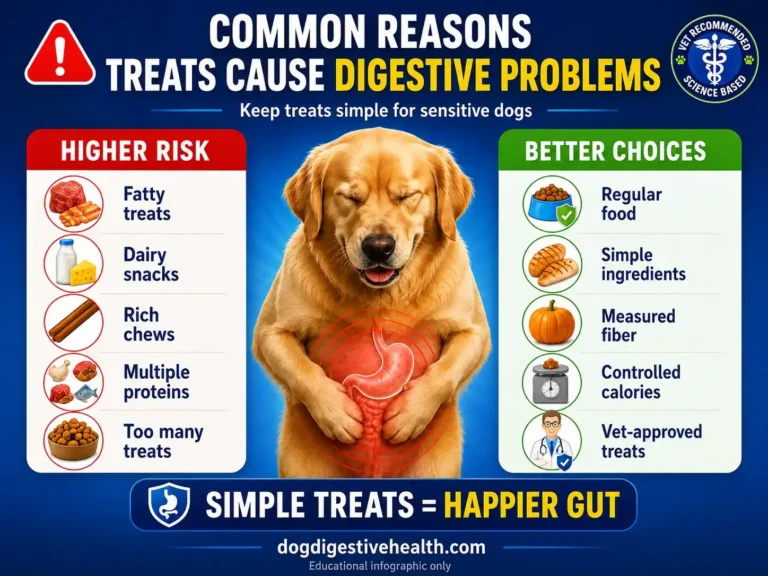
Introduce a new product slowly, even when it is labeled for sensitive stomachs.
A cautious introduction can look like this:
First serving: Offer one tiny piece.
Next 24 hours: Keep the rest of the diet unchanged and observe stool quality.
Following servings: Increase gradually only when stool remains normal.
If stool softens, stop the new treat and return to the previously tolerated feeding plan.
Do not introduce a new treat on the same day as a new food, supplement, medication, or chew. When several things change together, it becomes difficult to determine what caused the digestive reaction.
Final Verdict: The Best Treat Depends on the Dog’s Existing Diet
Medical Disclaimer
The best dog treat for sensitive stomachs and loose stool is not necessarily the product with the most digestive ingredients. It is the treat that fits the dog’s regular diet while adding the fewest unnecessary variables.
A practical hierarchy is
- During periods of active loose stool: Use part of the dog’s regular tolerated or prescribed diet.
- If managing a hydrolyzed food trial, use only a compatible veterinary hydrolyzed treat or the prescribed food itself.
- When feeding fat-sensitive dogs: Choose a veterinarian-approved, controlled low-fat option.
- In cases where dogs tolerate one lean protein: Use a tiny single-ingredient reward.
- With pumpkin-tolerant dogs: Consider a measured pumpkin biscuit after confirming the full recipe.
- To support frequent training: Use tiny pieces of regular food and premeasure the complete allowance.
A treat does not need to contain probiotics, enzymes, ten superfoods, or a long list of botanicals to be useful. For many sensitive dogs, the most successful reward is small, simple, familiar, and consistent.
This article is for educational purposes only and is not a substitute for veterinary diagnosis or treatment. Consult a licensed veterinarian before changing your dog’s food or treats, particularly when loose stool is persistent, severe, bloody, or accompanied by vomiting, weakness, pain, dehydration, or reduced appetite.
Frequently Asked Questions(FAQs)
1. Can a dog with a sensitive stomach eat treats every day?
Some dogs can have a small daily treat if it is compatible with their regular diet and does not soften the stool. Keep portions small and consistent.
2. Is chicken always unsuitable for dogs with loose stool?
No. Chicken may be appropriate for dogs that tolerate it, but it should be avoided when chicken sensitivity is suspected or excluded during a food trial.
3. Does every pumpkin treat contain a useful amount of fiber?
No. Recipes vary considerably. Check the guaranteed analysis and complete ingredient list rather than relying on the pumpkin image on the package.
4. Can one small new treat upset a dog’s stomach?
Yes. A sensitive dog may react to a new protein, rich ingredient or sudden dietary change even when the serving appears small.
5. Are dental chews suitable for dogs with sensitive digestion?
Some may be too rich or contain multiple proteins and flavorings. Review the full label and ask your veterinarian before offering one regularly.
6. When should all treats be stopped?
Stop treats when loose stool worsens, vomiting develops, appetite decreases or your veterinarian recommends a strict prescribed diet without additional foods.
References
- Heilmann RM, Jergens AE, Kathrani A, et al. ACVIM-endorsed statement: Consensus statement and systematic review on guidelines for the diagnosis and treatment of chronic inflammatory enteropathy in dogs. Journal of Veterinary Internal Medicine. 2026;40(1):aalaf017. doi:10.1093/jvimsj/aalaf017(OUP Academic)
- Holz M, Fritz J, Suchodolski JS, Werner M, Unterer S. Effects of dietary cellulose on clinical and gut microbiota recovery in dogs with uncomplicated acute diarrhea: A randomized prospective clinical trial. Journal of the American Veterinary Medical Association. 2025;263(2):169–177. doi:10.2460/javma.24.07.0476(AVMA Journals)
Scahill K, Jessen LR, Prior C, Singleton D, Foroutan F, Ferran AA, et al. Efficacy of antimicrobial and nutraceutical treatment for canine acute diarrhoea: A systematic review and meta-analysis for European Network for Optimization of Antimicrobial Therapy guidelines. The Veterinary Journal. 2024;303:106054. doi:10.1016/j.tvjl.2023.106054 (ScienceDirect)