
Can a Dog Vomit From Having an Empty Stomach For Too Long?
Written by: Dr. Akram Khan, DVM
Veterinary review by: Dr. Khalid Mehmood, PhD (Assistant Professor in Clinical Veterinary Medicine)
Last medically reviewed: September 26, 2026

Seeing your dog vomit can be worrying, especially when there is no food in the vomit—only yellow fluid, foam, or mucus. Many owners notice this pattern early in the morning or after a long gap between meals and wonder whether an empty stomach itself can make a dog sick.
Yes, some dogs can vomit after going too long without food. This pattern is often associated with a condition called bilious vomiting syndrome (BVS), where bile and digestive fluids may irritate an empty stomach and trigger vomiting. However, vomiting is a clinical sign rather than a diagnosis, and repeated episodes should always be assessed carefully to exclude other gastrointestinal problems (1).
Can a Dog Vomit From an Empty Stomach?
Yes, a dog can vomit after going a long time without eating. When the stomach remains empty for many hours, bile and digestive secretions may contribute to irritation in some dogs, resulting in vomiting of yellow liquid or foam. This is commonly seen in dogs with suspected bilious vomiting syndrome, particularly when vomiting occurs early in the morning.
Why Does My Dog Throw Up Yellow Bile When He Has Not Eaten?
A dog may vomit yellow bile when there is no food in the stomach because bile from the small intestine can move backward into the stomach and irritate the stomach lining. This often happens after prolonged fasting periods, although other medical causes should be considered if vomiting is frequent or accompanied by other symptoms.
Can a Dog Vomit From Having an Empty Stomach for Too Long?
A dog’s digestive system remains active even when the stomach is empty. The stomach continues producing gastric secretions, while bile is continuously produced by the liver and released into the digestive tract to help process food.
In some dogs, especially those with increased sensitivity of the gastrointestinal tract, a long fasting period may allow bile-containing fluid to move back into the stomach. This process is known as duodenogastric reflux and may irritate the stomach lining, leading to nausea and vomiting (1).
This is why some dogs vomit:
- Early in the morning before breakfast
- After sleeping through the night without food
- After missing a meal
- When there is an unusually long interval between meals
The important point is that the empty stomach may contribute to vomiting, but it is not the only possible explanation.
Why Does My Dog Vomit When His Stomach Is Empty?
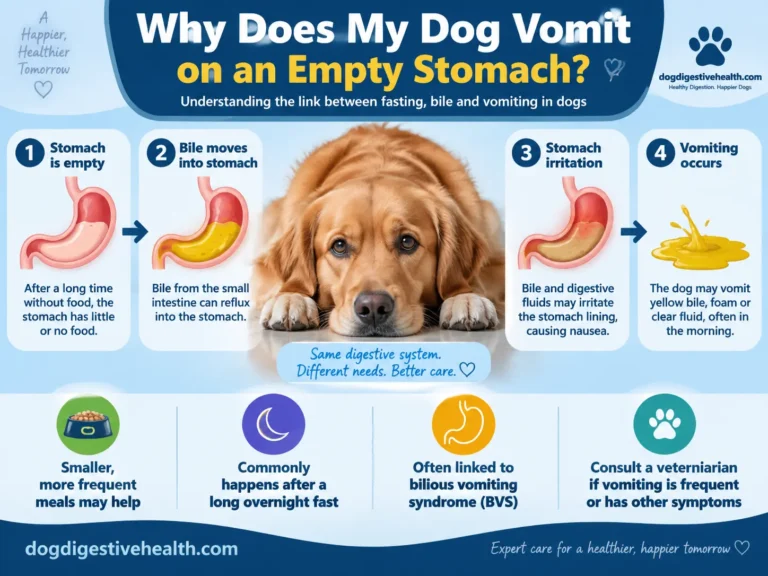
The most recognized condition associated with empty-stomach vomiting is bilious vomiting syndrome (BVS).
Dogs with BVS typically experience intermittent vomiting of bile, often when their stomach has been empty for several hours. The vomit may appear as:
- Yellow liquid
- Yellow foam
- Clear fluid mixed with mucus
The underlying mechanism is not completely understood, but researchers believe bile reflux, gastric irritation, and changes in gastrointestinal motility may play a role (1).
A typical dog with suspected BVS may:
- Vomit once or a few times during an episode
- Return to normal behavior afterward
- Maintain a normal appetite and body weight
- Have no other obvious signs of illness
However, veterinarians usually consider BVS only after other possible causes of vomiting have been evaluated.
Why Does My Dog Throw Up Yellow Bile in the Morning?
Morning yellow bile vomiting is one of the most common patterns associated with an empty stomach.
During the night, a dog may go many hours without eating. If bile refluxes into the stomach during this period, it may contribute to irritation and trigger vomiting before the first meal of the day.
This pattern is often noticed in dogs that:
- Eat only one large meal daily
- Have dinner early in the evening
- Have a naturally sensitive digestive system
Yellow bile does not automatically mean that a dog has bilious vomiting syndrome. The overall pattern, frequency, and presence of other symptoms are important when determining the likely cause.
How Long Can a Dog Go Without Eating Before Vomiting?
There is no universal fasting duration that causes vomiting in every dog.
Some dogs tolerate overnight fasting without any problem, while others may vomit after a long period without food. Factors that influence tolerance include:
- Age
- Body size
- Diet composition
- Individual digestive sensitivity
- Existing gastrointestinal conditions
A healthy adult dog may tolerate a normal overnight period without food, but a dog that repeatedly vomits after long gaps between meals may need a feeding schedule review with a veterinarian.
Why Does My Dog Vomit Yellow Foam When There Is No Food in His Stomach?
Yellow foam usually contains a mixture of bile, mucus, and stomach fluid. When there is no food present, these digestive secretions become more visible.
Dogs experiencing empty stomach vomiting may produce:
- Small amounts of yellow foam
- Watery yellow fluid
- Clear mucus-like material
The appearance of vomit can provide clues, but it cannot confirm the exact cause. Similar vomiting patterns can occur with other digestive disorders, which is why persistent cases require proper evaluation (2).
Is Empty Stomach Vomiting Normal in Dogs?
Occasional vomiting associated with a long fasting period may occur in otherwise healthy dogs. A dog that vomits once in a while and immediately returns to normal behavior is different from a dog with frequent or worsening episodes.
The following comparison can help owners understand when the pattern appears more consistent with empty stomach vomiting versus when veterinary assessment may be needed.
Feature | More Consistent With Empty Stomach Vomiting | Requires Veterinary Attention |
Timing | Often early morning or after a long gap between meals | Occurs repeatedly throughout the day or without a pattern |
Vomit appearance | Yellow bile, yellow foam, or clear fluid | Blood, dark material, or unusual vomit appearance |
Behavior afterward | Returns to normal activity | Weakness, lethargy, pain, or unusual behavior |
Appetite | Eats normally afterward | Refuses food or loses interest in eating |
Frequency | Occasional episodes | Frequent or increasing vomiting |
Other signs | No additional symptoms | Weight loss, diarrhea, dehydration, abdominal discomfort |
Why Does My Dog Vomit but Act Normal Afterwards?
Some dogs with empty stomachs vomiting appear completely normal after vomiting. Once the stomach empties, temporary irritation may settle, allowing the dog to resume normal behavior.
However, acting normal afterward does not always mean the problem is harmless. Dogs can hide discomfort, and repeated vomiting may indicate an underlying gastrointestinal issue.
A veterinarian may consider conditions such as
- Gastritis
- Chronic enteropathy
- Pancreatitis
- Intestinal obstruction
- Dietary intolerance
before confirming that the vomiting is related only to an empty stomach (2).
Can Feeding Changes Help Prevent Empty Stomach Vomiting in Dogs?
For dogs suspected of having bilious vomiting syndrome, veterinarians may recommend adjustments that reduce the length of time the stomach remains empty.
Possible approaches include:
- Dividing daily food into smaller meals
- Avoiding very long gaps between meals
- Adjusting meal timing when appropriate
- Monitoring whether vomiting follows a predictable fasting pattern
A late evening meal or smaller, more frequent feeding schedule may help some dogs, but dietary changes should be tailored to the individual dog’s nutritional and medical needs (1).
When Should Empty Stomach Vomiting Be Checked by a Veterinarian?
Not every episode of yellow bile vomiting is caused by an empty stomach.
Veterinary evaluation is recommended if your dog has:
- Frequent vomiting episodes
- Vomiting that is getting worse
- Blood in vomit
- Loss of appetite
- Weight loss
- Abdominal pain
- Persistent diarrhea
- Reduced energy
- Difficulty keeping water down
Bilious vomiting syndrome is generally considered after other potential causes have been ruled out (1).
Key Takeaway
A dog can vomit from having an empty stomach for too long, particularly when bile and digestive secretions irritate the stomach during prolonged fasting periods. This pattern is commonly associated with bilious vomiting syndrome, especially when vomiting occurs early in the morning and the dog remains otherwise healthy.
However, yellow vomit should not automatically be dismissed as hunger-related. Understanding the timing, frequency, and overall health of your dog is essential for deciding whether simple feeding adjustments are appropriate or whether veterinary evaluation is needed.
Medical Disclaimer
This article is intended for educational purposes only and does not replace professional veterinary advice, diagnosis, or treatment. If your dog has persistent vomiting, worsening symptoms, or signs of illness, consult a qualified veterinarian for proper evaluation and care.
Frequently Asked Questions (FAQs)
1. Can a dog vomit from having an empty stomach for too long?
Yes. Some dogs may vomit after a prolonged period without food, especially overnight. This may occur when bile and stomach secretions irritate an empty stomach.
2. Why does my dog throw up yellow bile in the morning?
Morning yellow bile vomiting can happen when the stomach remains empty for many hours, allowing digestive fluids to irritate the stomach.
3. How long can a dog go without eating before vomiting?
There is no specific time that applies to every dog. Some dogs tolerate longer gaps between meals, while others may vomit after extended fasting periods.
4. Is empty stomach vomiting normal in dogs?
Occasional episodes may occur in otherwise healthy dogs, but frequent vomiting should be evaluated by a veterinarian.
5. Why does my dog vomit but act normal afterward?
Some dogs recover quickly after vomiting caused by temporary stomach irritation, but repeated episodes still require attention.
References
- Ferguson LE, Wennogle SA, Webb CB. Bilious Vomiting Syndrome in Dogs: Retrospective Study of 20 Cases (2002–2012). Journal of the American Animal Hospital Association. 2016;52(3):157–161. doi:10.5326/JAAHA-MS-6300.
- Elwood CM, Devauchelle P, Elliott J, Freiche V. Emesis in dogs: a review. Journal of Small Animal Practice. 2010;51(1):4–22. doi:10.1111/j.1748-5827.2009.00820.x.
- Lyngby JG. Bilious Vomiting Syndrome. In: Côté’s Clinical Veterinary Advisor: Dogs and Cats. 4th ed. Elsevier; 2020. doi:10.1002/9781119376293.ch50.